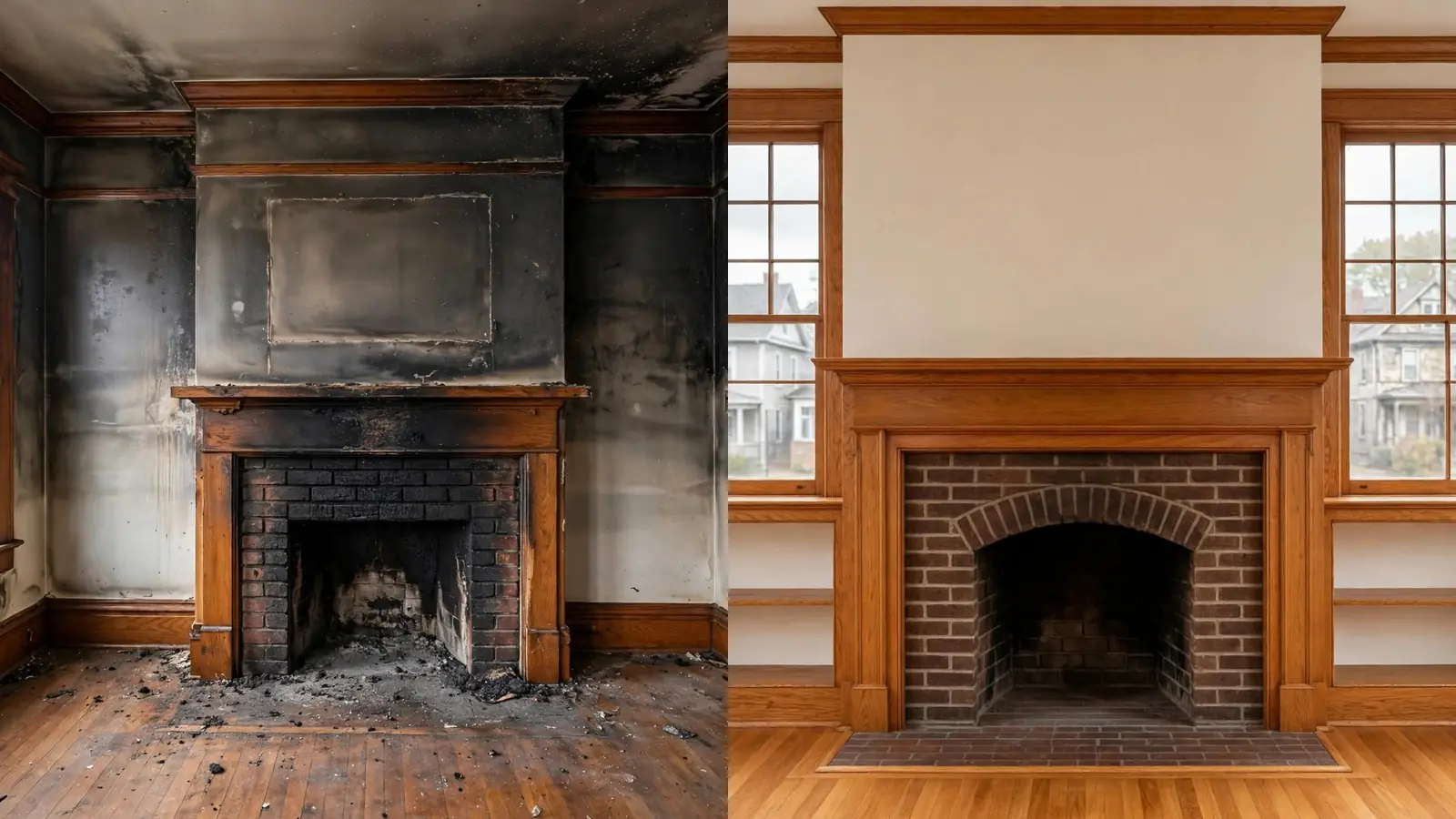
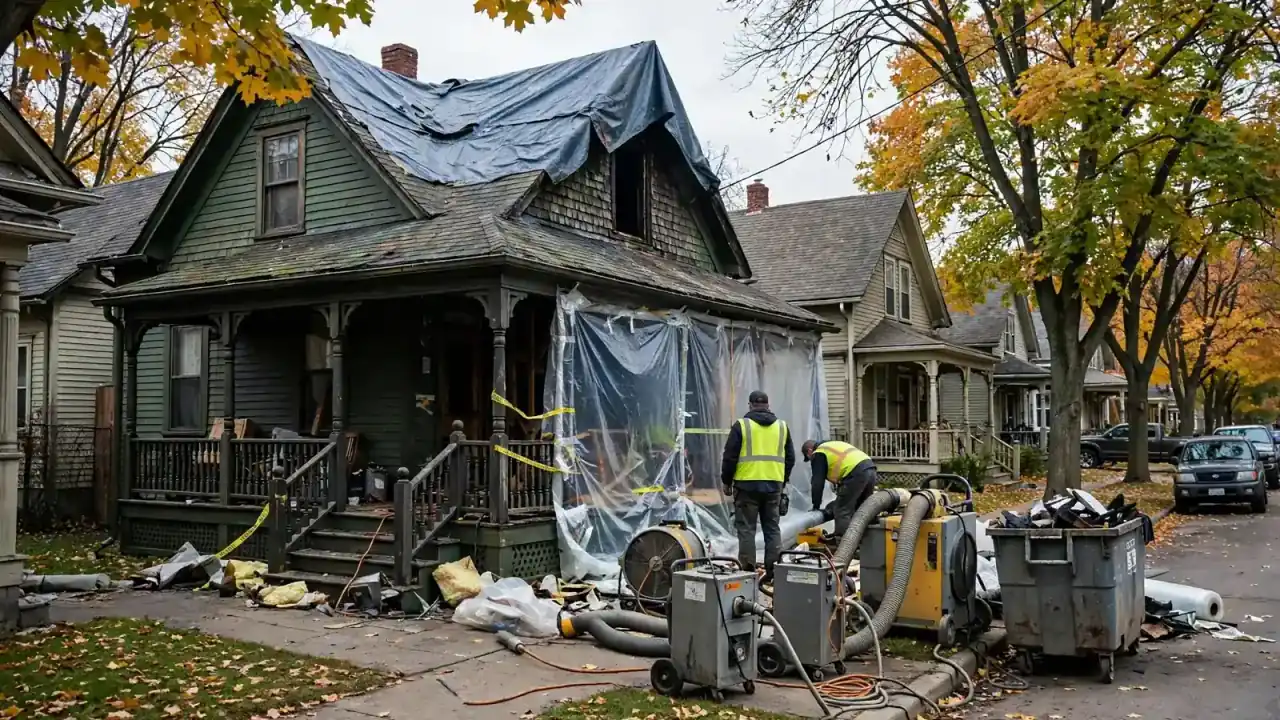
Key facts: Soot Removal in Longfellow
Telling Longfellow soot types apart
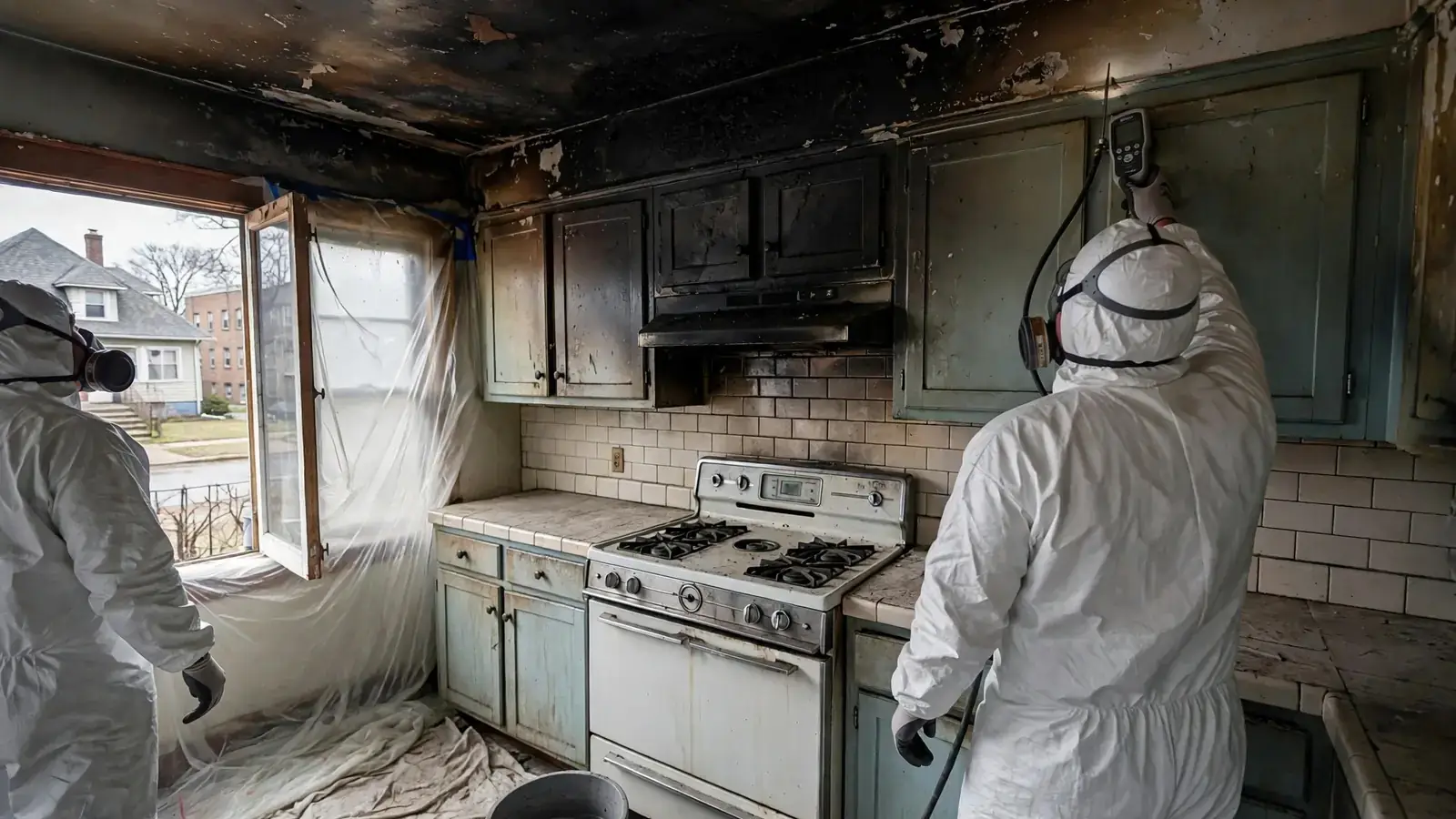
The soot a fire leaves depends on what burned and how. A hot, fast fire leaves dry, powdery soot that lifts with a vacuum or dry sponge. A slow, smoldering fire or burning plastic leaves oily soot that smears at a touch. A pan fire leaves a thin, sticky protein film that is hard to see but carries a strong smell.
Technicians test a patch in each room before deciding how to clean it [2]. In a hundred-year-old bungalow, they also check the surface underneath, since old paint, shellac on trim and bare plaster all respond differently to the same cleaner.
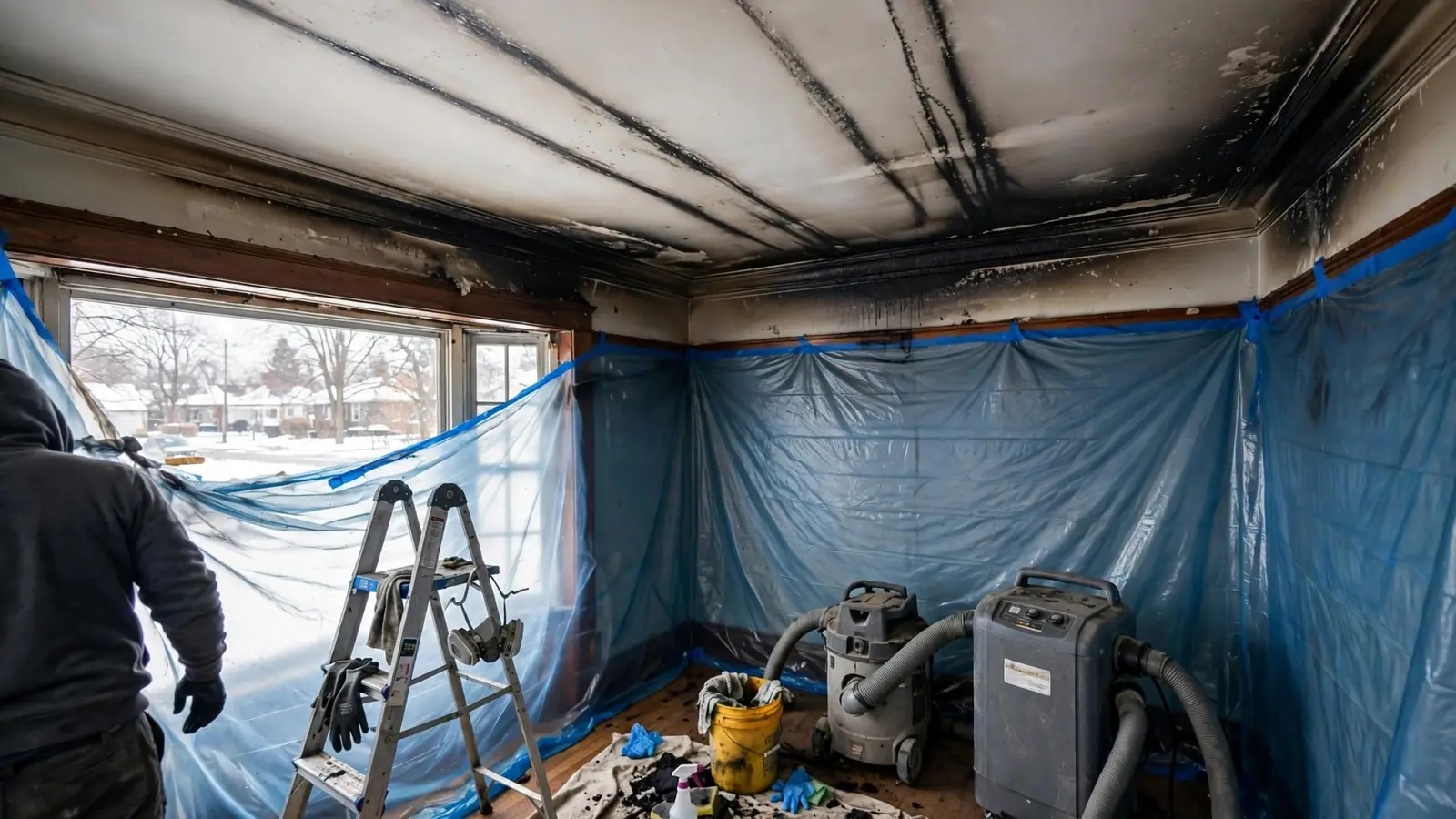
Plaster on lath in a 1910s bungalow
Most Longfellow houses built between about 1906 and the 1920s have plaster walls and ceilings on wood lath [6]. Plaster is hard and fairly smooth, which helps. Dry chemical sponges, pulled in straight strokes, take off much of the loose soot without any water.
Only then does a wet cleaner come out, matched to the residue. Rushing to a wet rag first pushes the soot into the pores of the plaster and paint and leaves gray shadows. Some walls still need a sealing primer and paint, but far fewer than when cleaning starts wet.
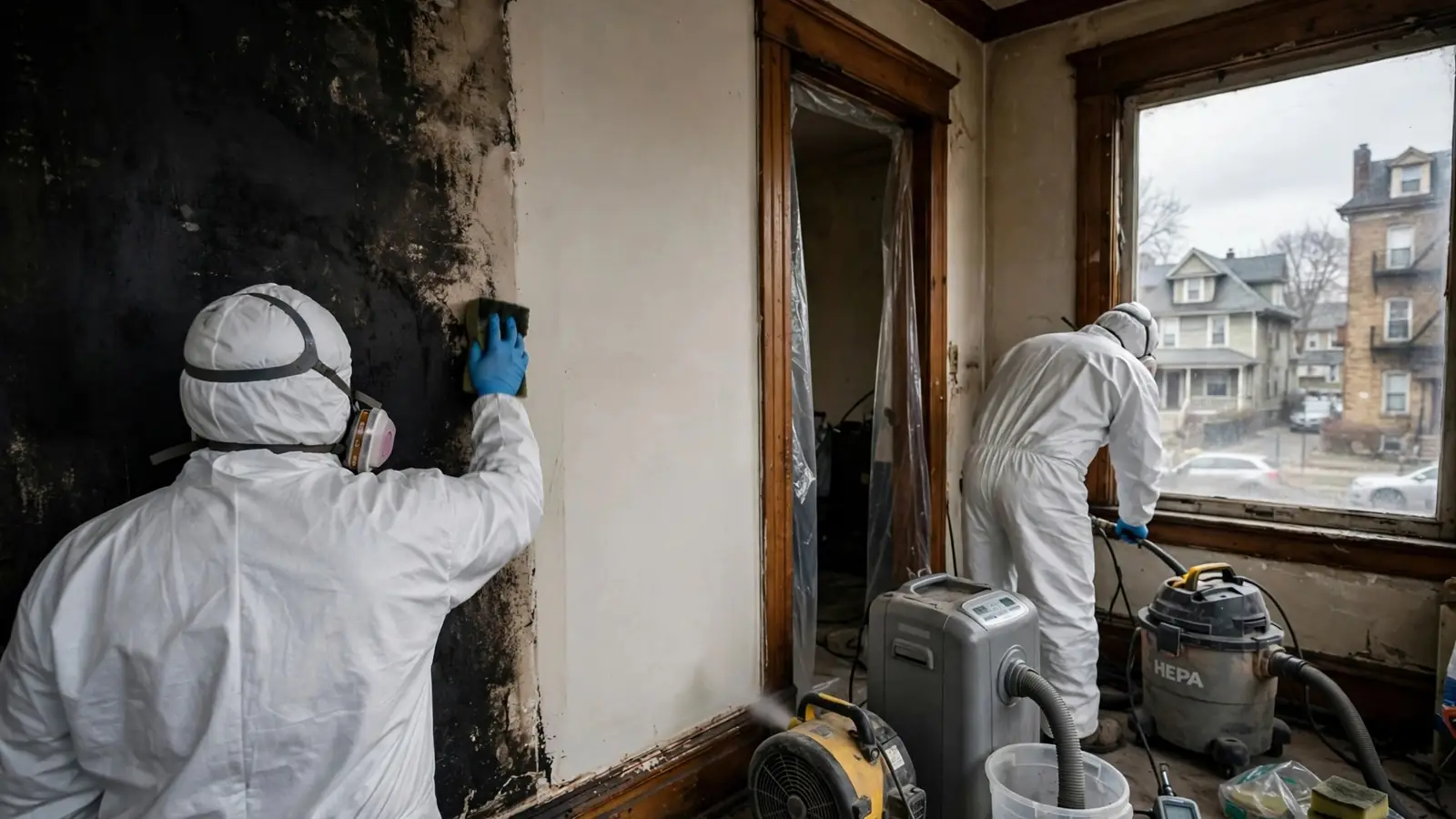
Radiator fins and the walls behind them
Hot-water and steam radiators are common in older Longfellow houses. Their fins and columns trap soot in places a cloth cannot reach. Technicians use narrow vacuum tools and brushes, and clean the floor and wall behind each unit, where a dark outline often forms.
Radiator covers, if you have them, come off and are cleaned separately. The boiler and its piping should be checked by a heating contractor before the system runs, because residue on a hot radiator gives off a smell every time it warms.
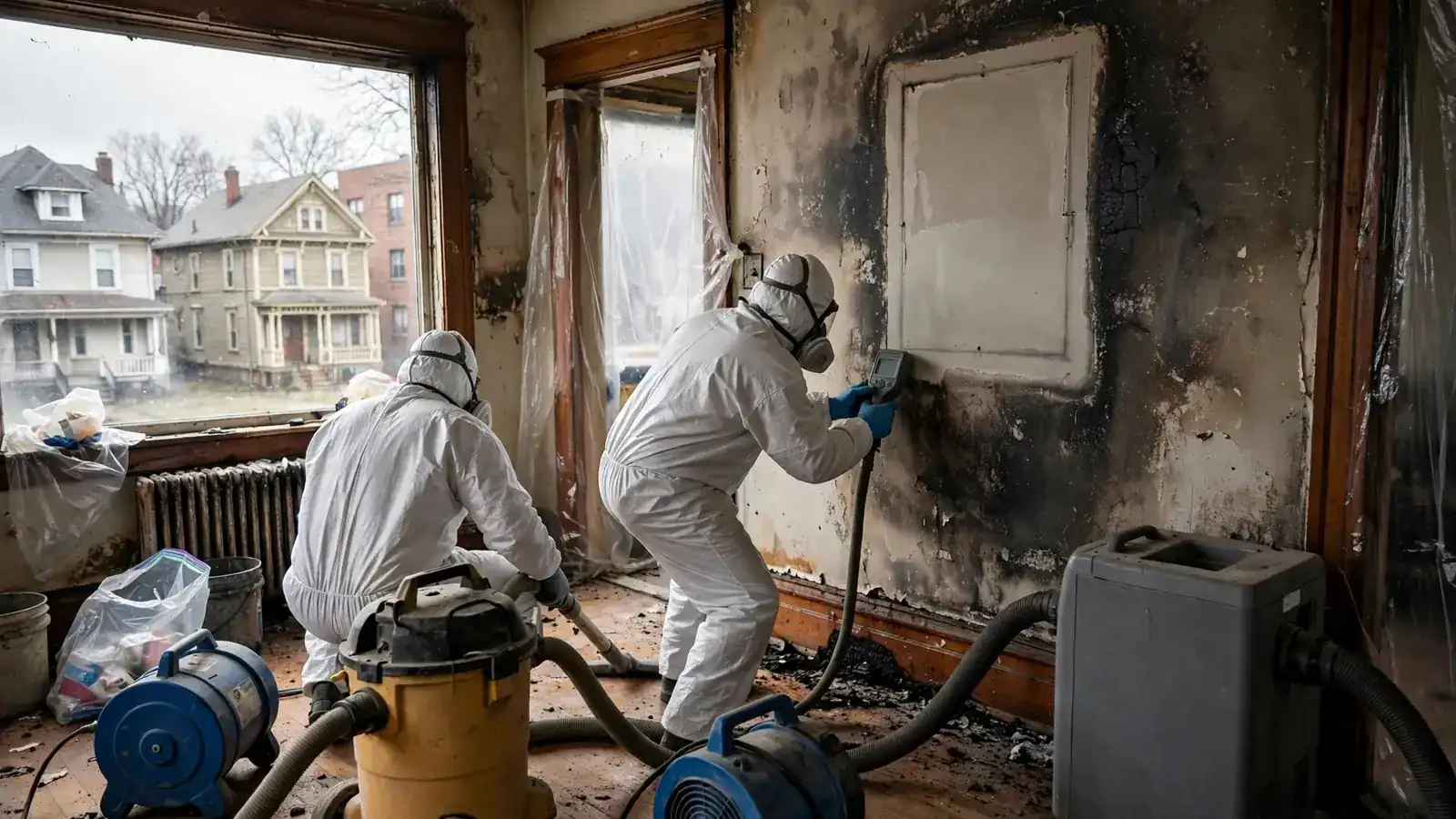
Lifting soot from a Longfellow bungalow
The order most crews follow.
- 1
Patch-test every Longfellow room
Each room is sampled for dry, oily or protein soot before work starts [2].
- 2
Close off the rooms soot missed
Plastic sheeting and taped doors keep it from spreading during work.
- 3
Vacuum, then dry-sponge
Filtered vacuums and dry sponges take the loose layer off first.
- 4
Wash with the right cleaner and recheck
Residue-matched cleaners, then a close look in daylight.
Soot in the half story and behind the knee walls
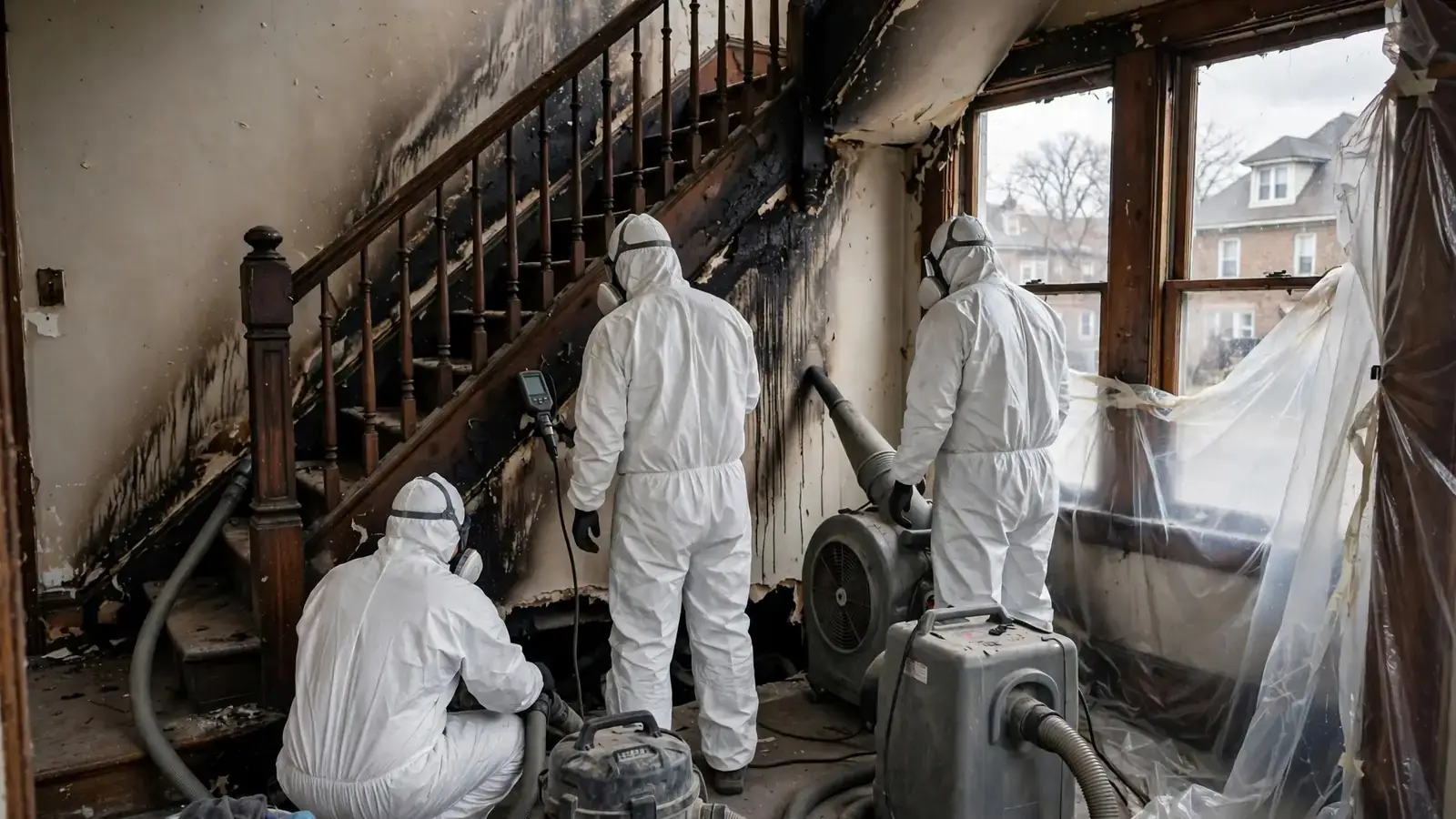
Smoke rising up the bungalow stair carries soot into the upstairs rooms under the roof. It settles on the sloped ceilings and works into the storage space behind the knee walls through the small hatches. Boxes, clothes and the insulation back there are often coated.
The insulation usually comes out. Older loose-fill, such as vermiculite, may contain asbestos, so it should be tested by a qualified firm before anyone disturbs it [3]. Once the space is clear, roof boards and rafters are vacuumed and cleaned.
Fir and oak trim, doors and floors
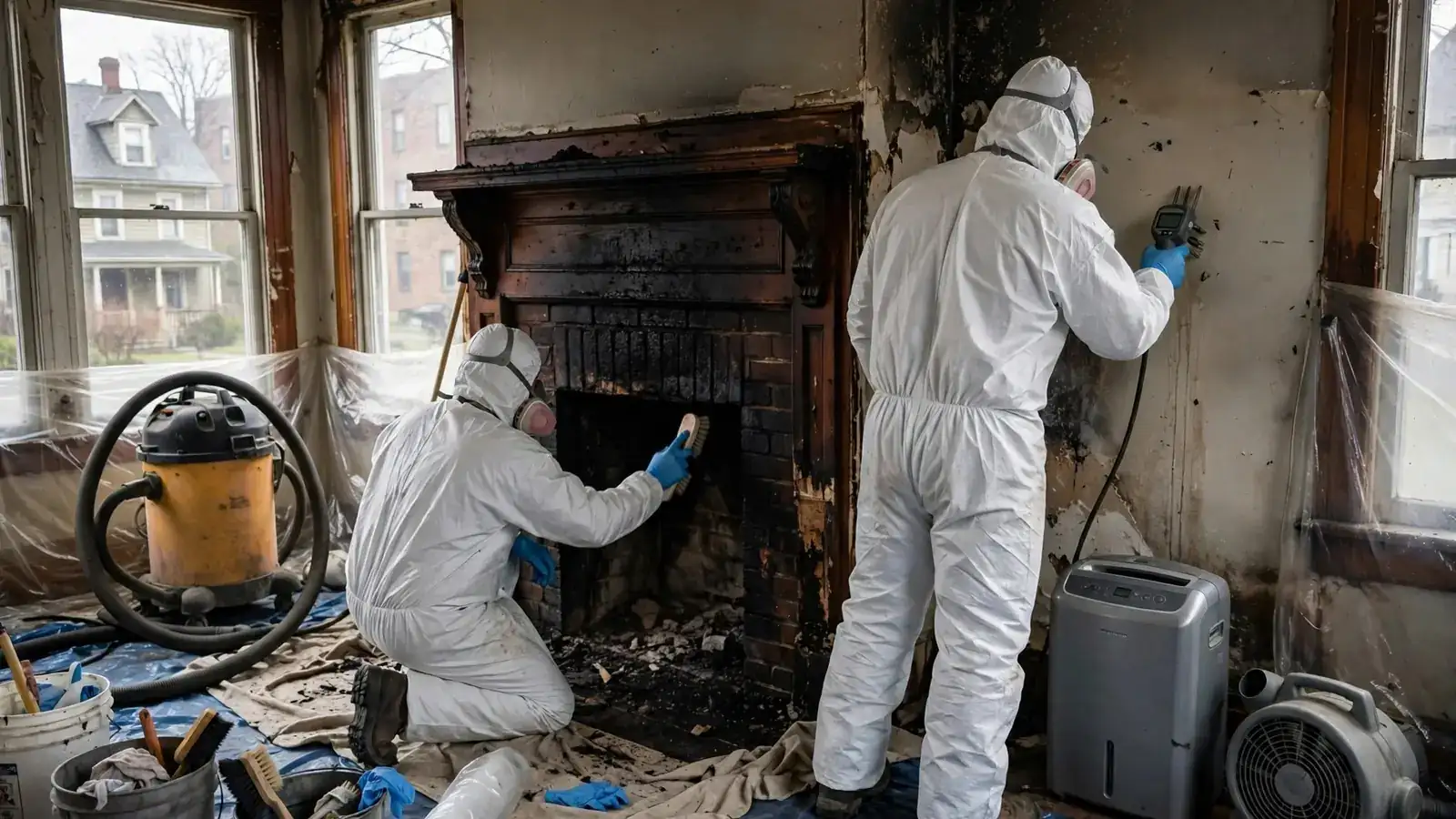
Original stained woodwork is a big part of what makes a Longfellow bungalow worth keeping. Soot settles into the grain of fir and oak and dulls the old finish. Mild cleaners and soft pads remove most of it. Where the finish stays dark, a refinisher can often revive it without stripping to bare wood.
Painted trim and doors in houses this age almost always have older lead layers underneath [4]. Cleaning is fine; sanding or scraping should only be done with lead-safe containment and cleanup.
Soot on basement joists after a lower-level fire
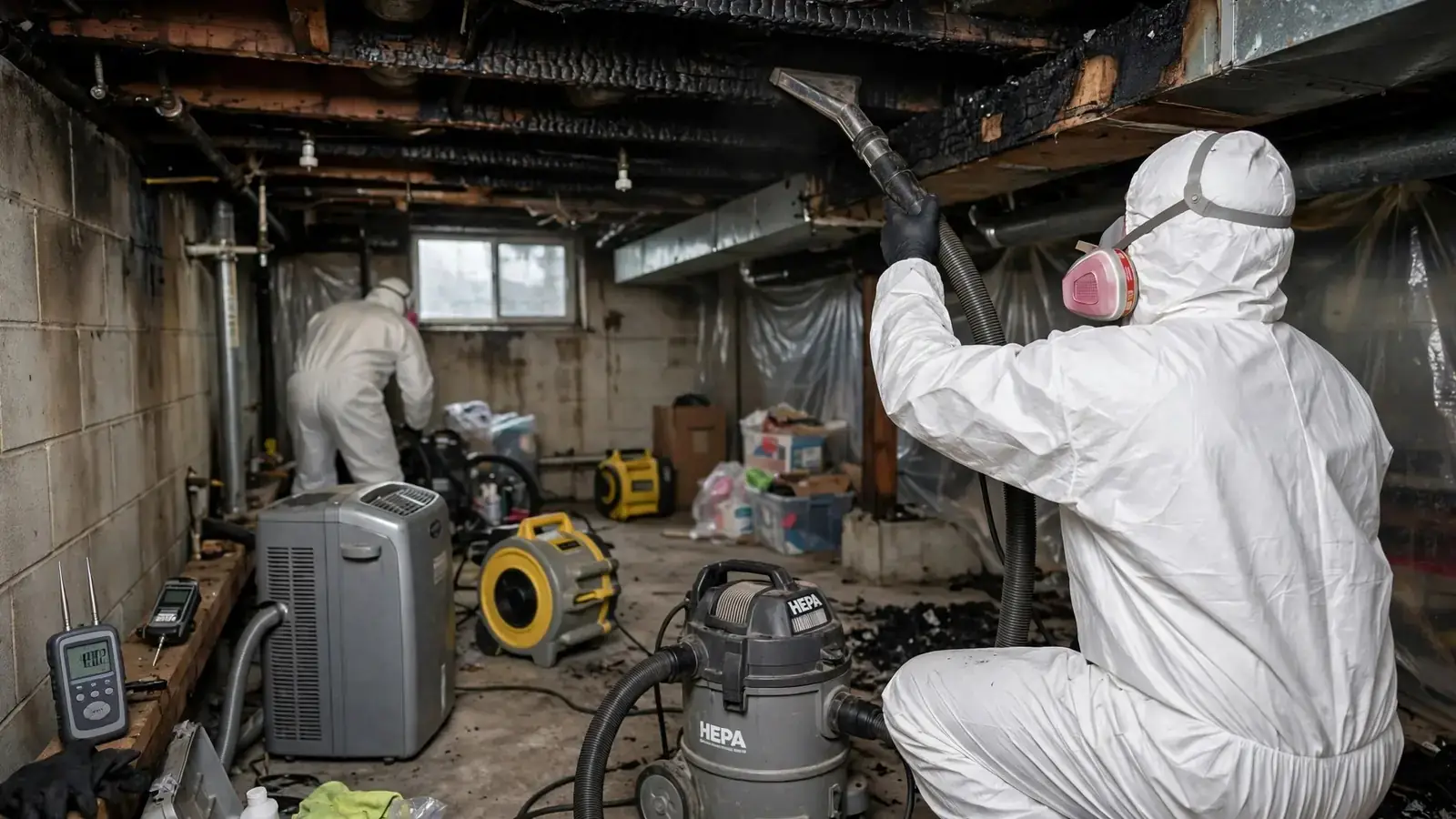
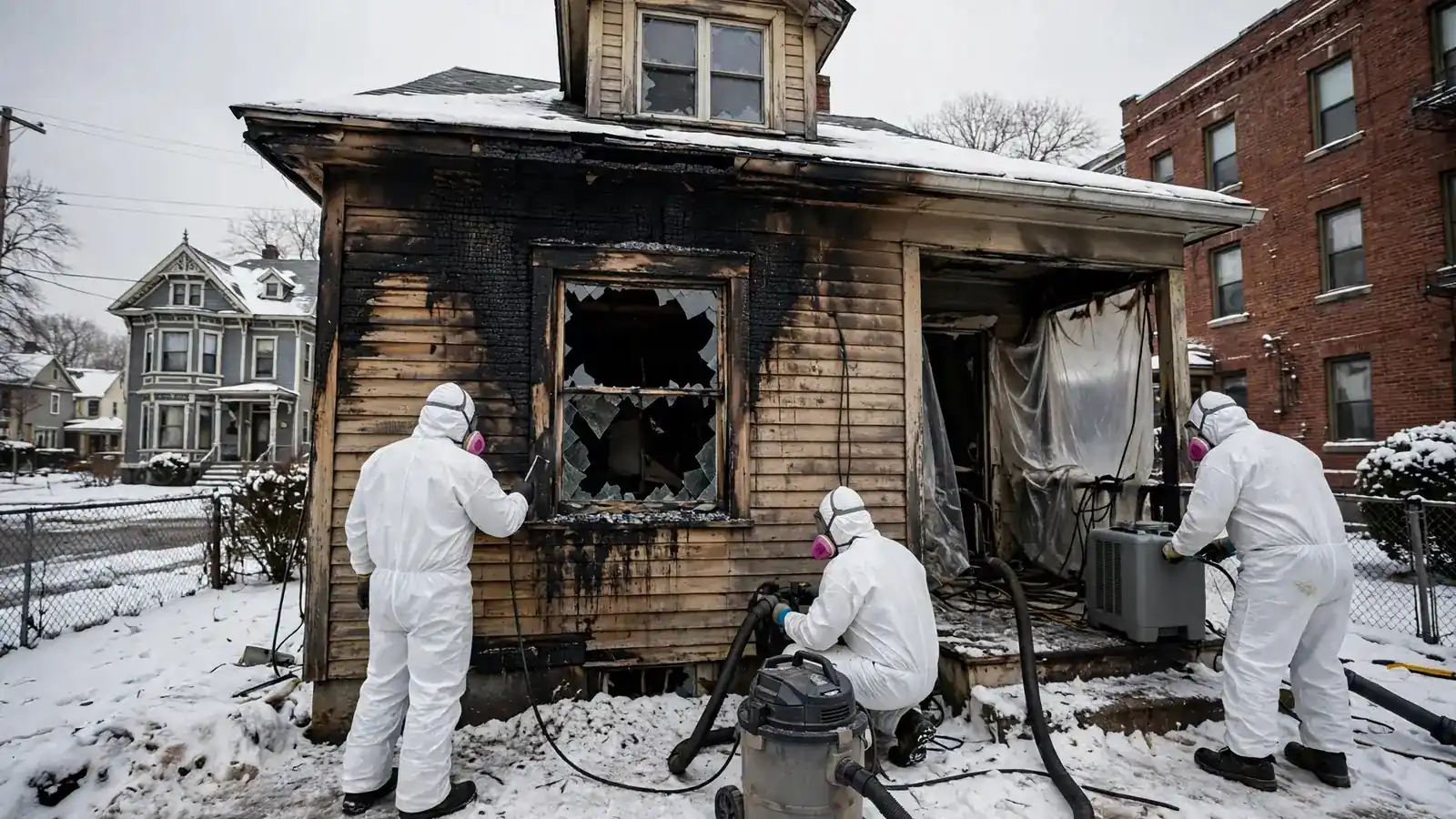
When a fire starts in the basement, at the furnace, a dryer or a workbench, soot coats the bare joists and subfloor overhead. Rough-sawn lumber holds it in every crack. Media blasting or careful scrubbing is often used, followed by a sealer to lock in what remains.
Stamped, numbered lumber from a catalog kit may be visible in some basements [6]. If you want it kept visible, say so before any sealer goes on.
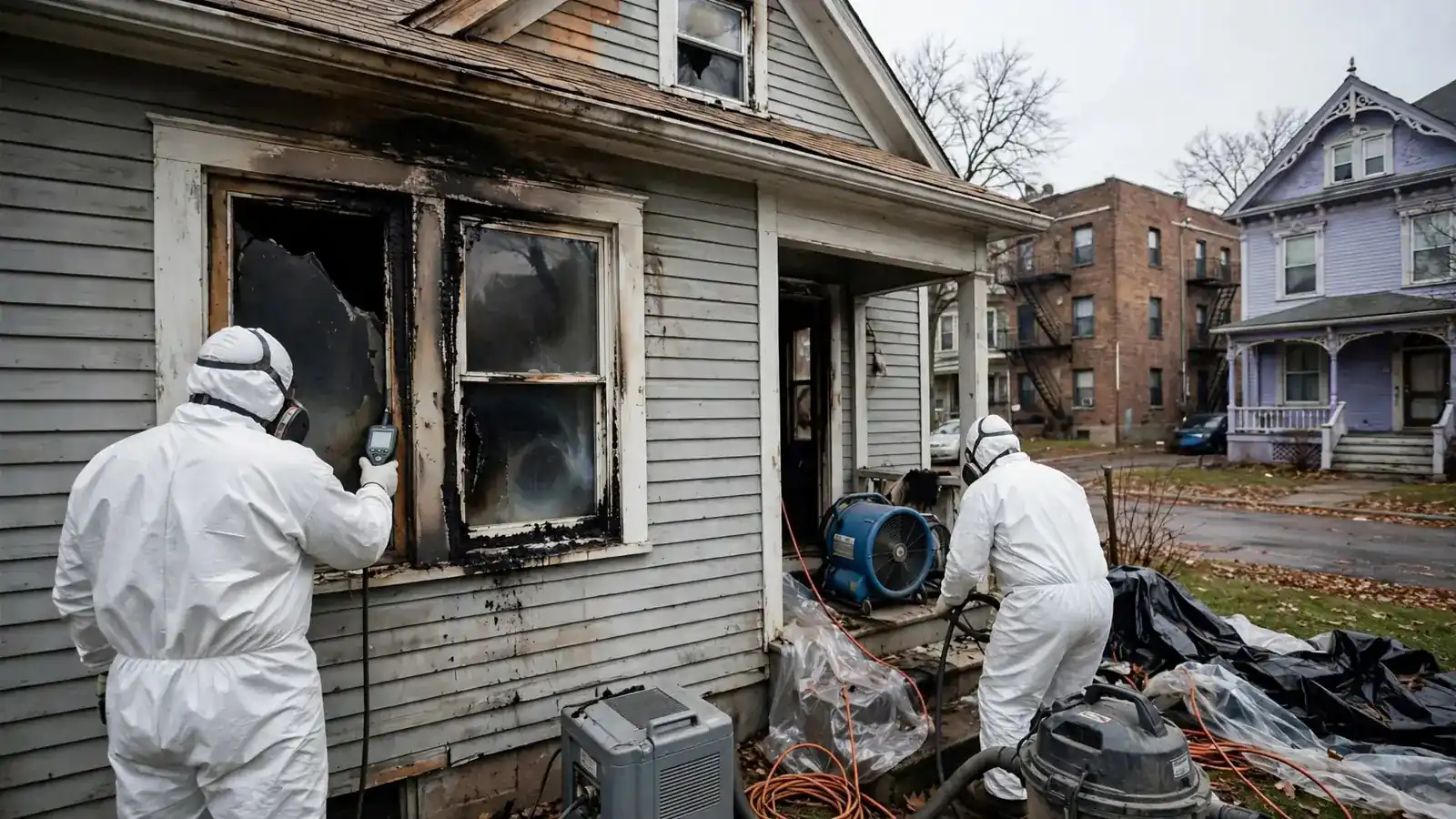
Places Longfellow soot hides
Look at these before the crew arrives so you can point them out.
- The wall behind each radiatorA dark outline shows where hot air carried soot.
- Inside the buffet and linen cupboardUnfinished cabinet wood soaks it in.
- Along the stairway wall to the half storySmoke rose that way.
- Window tracks and storm sashesSoot packs into the channels.
Original windows and storms
Double-hung wood windows with exterior storms are still common in the neighborhood. Soot coats glass, sash and the tracks between the window and the storm. Glass cleans easily. Wood sash is cleaned like trim, and the tracks are vacuumed out.
If heat cracked panes or loosened glazing, a window restorer can reglaze rather than replace. Ask that the crew set aside any original storms that come off.
Dishes, clothing and family items
Contents are handled apart from the house. Hard items like dishes clean well. Clothing and bedding usually go to a specialist cleaner. Paper and photos need gentle care.
Photograph each item before it leaves and keep the inventory the contractor gives you. The Minnesota Department of Commerce encourages complete records for your claim [5]. Our guide to soot on walls and ceilings covers what to expect room by room.
Staying safe around soot before cleanup
Soot is fine enough to breathe in and can carry irritating residue. The U.S. Fire Administration lists steps to take before you go back into a burned home [1]. Wear gloves, a well-fitted mask and old clothes if you must enter, and avoid touching walls.
If the fire happened in winter and the heat is off, keep an eye on the plumbing too. Read what to do after a house fire for first steps, and see our smoke damage cleanup page for the wider job.
FAQ
Soot Removal in Longfellow: questions
Can I clean soot off my radiators myself?
It is better to let a technician do it. Soot smears easily and radiators are hard to clean thoroughly.
Does my Longfellow attic insulation need testing?
Yes, older loose-fill should be tested for asbestos before removal.
Will the plaster need repainting?
Sometimes. Light soot may clean off; heavier soot needs sealing and paint.
Sources and citations
- [1]U.S. Fire Administration: After a fire
- [2]IICRC: S700 Standard for Professional Fire and Smoke Damage Restoration
- [3]U.S. EPA: Protect your family from exposures to asbestos
- [4]U.S. EPA: Protect your family from sources of lead
- [5]Minnesota Department of Commerce: Disaster Information Center
- [6]Wikipedia: Longfellow, Minneapolis