Key facts: Linden Hills
- Linden Hills sits on a hill in southwest Minneapolis overlooking Lake Harriet, with Bde Maka Ska to the north [1].
- The neighborhood grew after the Como-Harriet streetcar line reached it, and its main commercial corner around 43rd Street and Upton Avenue was built along the line in the 1920s [1].
- Water damage in finished basements needs drying within 24 to 48 hours to limit mold growth [2].
- Older homes may contain lead paint and asbestos-containing materials that need testing before demolition [3][4].
Coverage
Linden Hills addresses in ZIP 55410
This page covers Linden Hills and nearby southwest Minneapolis neighborhoods. Calls from this ZIP code are inside this service's coverage:
- ZIP 55410Linden Hills, Fulton, Lynnhurst and the blocks around Lake Harriet and the 43rd and Upton and 50th and France areas.
- Close to Edina?Some nearby addresses are in Edina, a separate city. Mention your address on the call and the contractor will confirm coverage.
The neighborhood
From streetcar getaway to established neighborhood
Linden Hills sits on a rise above Lake Harriet, with Bde Maka Ska to the north [1]. Until the late 1800s it was mostly cottages and open land; the Como-Harriet streetcar line brought it within easy reach of the city, and it became a popular retreat that turned into a year-round neighborhood [1]. The small commercial district around 43rd Street and Upton Avenue grew along the streetcar line in the 1920s [1].
Homes range widely. Early cottages and bungalows, Tudor Revival houses with steep gables and stucco, Colonial Revival homes and some Craftsman designs make up much of the older stock. Over recent decades, many smaller houses have been remodeled heavily or replaced with larger homes, so a block can mix a century-old cottage with a modern two-story rebuild.
Lots are relatively small and houses are close together. Mature trees shade most streets. Basements are typically full and often finished as family rooms, offices or guest space.
Common findings
What Linden Hills fire jobs often involve
Finished basements soaked from above
Firefighting water drains into finished lower levels, soaking carpet, drywall and furniture.
Read moreOld and new construction side by side
Original plaster cottages and modern rebuilds clean and dry differently; each needs its own plan.
Read moreTudor gables and steep roofs
Steep roofs and stucco walls make temporary protection and exterior cleaning trickier.
Read moreBranches over damaged roofs
Big trees can tear temporary roof covers in wind or under snow.
Read more
Mixed housing
Restoring an original cottage versus a modern rebuild
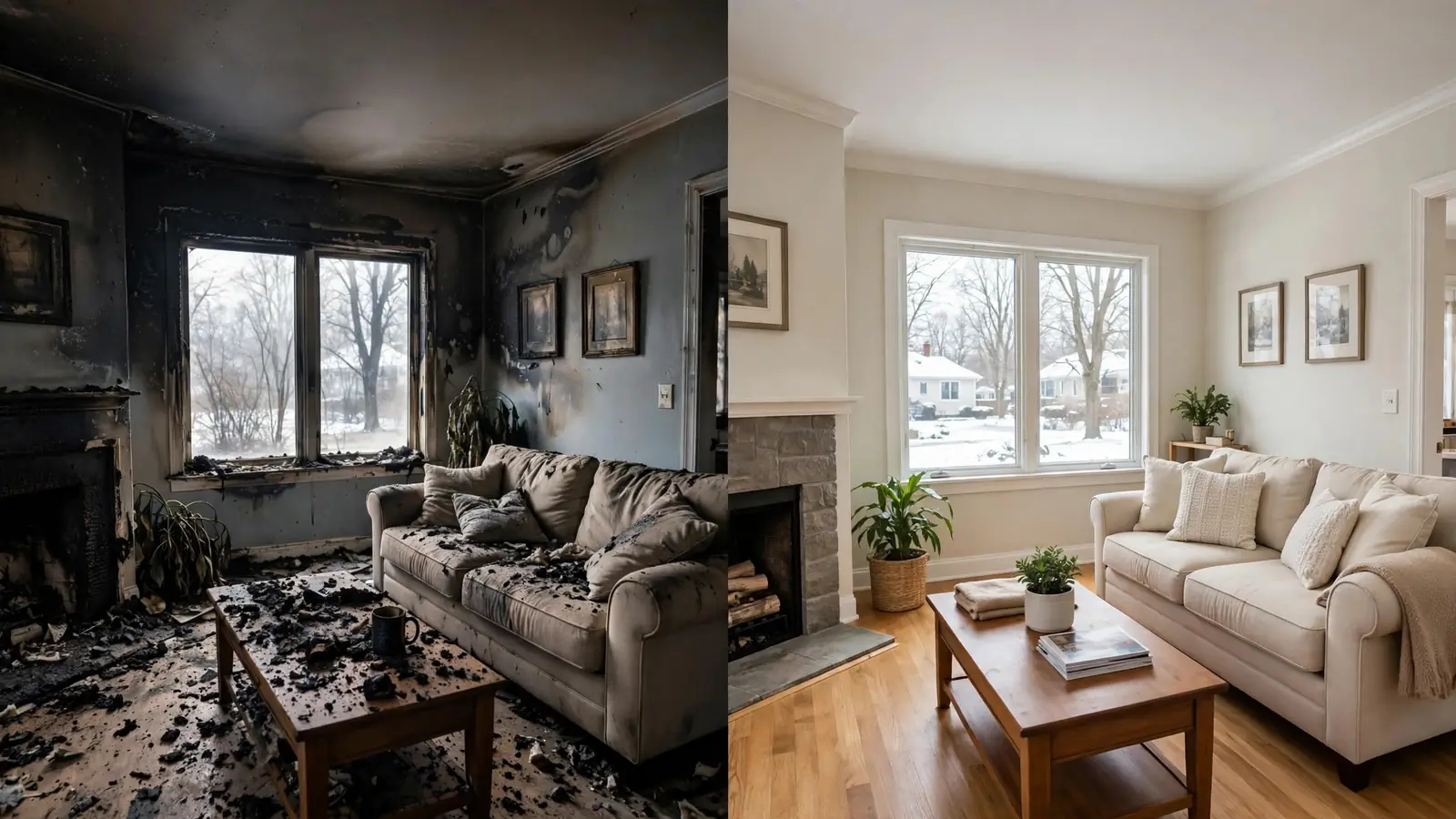
In an original Linden Hills cottage or Tudor, expect plaster walls, wood trim, hardwood floors, a smaller attic and a basement that may have been finished later. Plaster cleans well when soot is removed dry; old paint may contain lead [3]; and older materials such as some textured coatings, pipe insulation and floor tile may contain asbestos [4]. Testing comes before demolition.
In a modern rebuild, expect drywall, engineered floors, open plans, vaulted ceilings, multiple heating and cooling zones, and a large finished basement. Smoke spreads quickly across open plans and rises into high ceilings. Engineered flooring and particleboard cabinets do not tolerate soaking well and are often replaced after water damage.
Many houses are a mix: an original front section with a large addition at the back. The seam between the two often traps smoke and needs careful inspection.
Finished basements
Finished lower levels after firefighting water
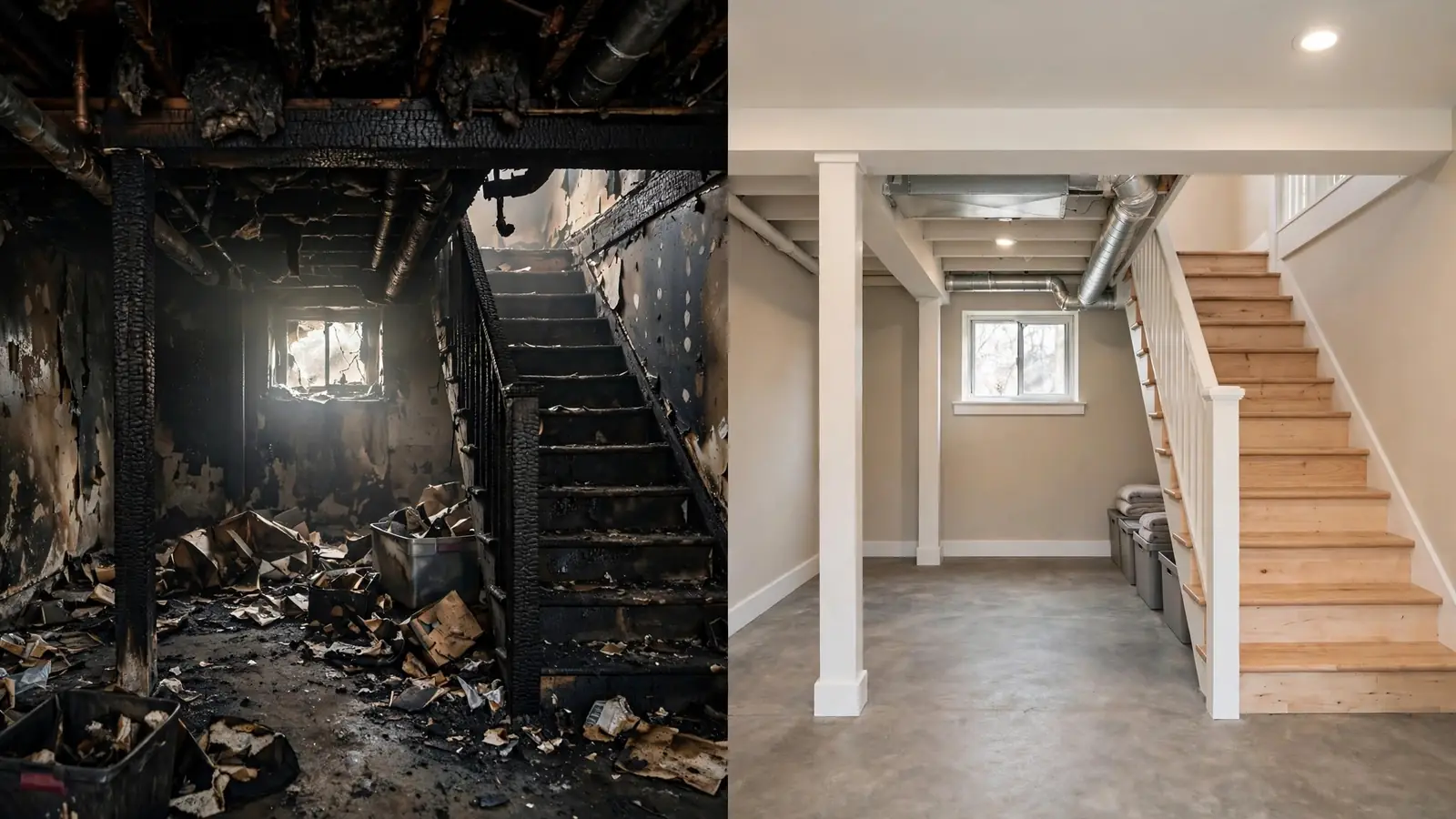
Finished basements are common in Linden Hills, with carpet, drywall, built-in shelving, home offices and guest rooms. Water from a fire above flows down the stairs and through the floor, and finished materials trap it.
Carpet and pad usually come out. Drywall is cut above the waterline so wall cavities can dry. Built-ins on the floor may swell. Dehumidifiers and air movers run until the concrete and framing are dry. The EPA advises drying within 24 to 48 hours where possible to prevent mold [2]; finished basements often need materials removed to meet that.
- Remove wet carpet and pad
- Cut drywall above the waterline
- Check built-ins for swelling
- Dry the slab before rebuilding
Tudors and stucco
Steep roofs, stucco and half-timbering
Tudor Revival homes in Linden Hills have steep gabled roofs, stucco walls and sometimes decorative half-timbering. Smoke venting from a window streaks the stucco above it. Stucco is porous; careful cleaning usually improves it a lot, and a fresh finish coat may follow if staining remains.
Steep roofs complicate temporary protection. Covering an opening on a steep slope needs roof anchors or a lift, and tarps must be secured so wind and snow cannot lift them. Never try to cover a steep, fire-damaged roof yourself.
Trees
Big trees, small lots and temporary covers
Mature trees are part of what makes Linden Hills attractive, but after a fire they can work against you. Branches over a tarped roof can tear it in wind, drop snow on it, or block drainage with leaves. Ask the contractor about trimming limbs over the damaged area and clearing gutters.
Small lots and big trees also limit where trucks, lifts and containers can go. Equipment may need to come through the alley or be placed carefully to protect roots and lawns.
A certified arborist can advise on which limbs to remove without harming the tree, which matters for the large old trees that shade many Linden Hills homes.
Heating and cooling
Air systems in old and new Linden Hills homes
Older homes may still have hot water radiators or may have been converted to forced air. Newer homes usually have forced air with central cooling and sometimes several zones. Each needs inspection after a fire: radiators hold soot in their fins, and ducts carry it to every room.
Ducts, the furnace, the cooling coil and returns are cleaned or replaced as needed. Filters need changing several times after restart. In winter, temporary heat may be needed while the system is serviced.
Kitchens
Kitchen fires in remodeled kitchens
Many Linden Hills kitchens have been opened to living spaces during remodels. A stovetop fire in an open kitchen sends protein residue across the family room and up any open stair. Cooking is the leading cause of home fires in the United States, according to the NFPA [5].
Stone counters and tile usually clean well; cabinets near the range may need replacing; particleboard cabinet boxes swell if they got wet. Range hoods and their ducts should be inspected.
Permits
City boundaries and permits
Linden Hills is inside the City of Minneapolis, so permits for structural, electrical, plumbing and mechanical repairs go through the city's licenses, permits and inspections services [6]. Nearby addresses across the border in Edina fall under Edina's building department instead, so confirm which city your address is in before work starts.
For work on a Linden Hills home, ask about the Minnesota residential contractor licence issued by the Department of Labor and Industry [7].
Planning
Working around the lakes and the business district
Streets near Lake Harriet and the 43rd and Upton district are busy on weekends and summer evenings. Parking is tight. Alleys behind most lots are the best route for containers and deliveries. Let neighbors know how long equipment will be there.
Winter snow emergencies limit street parking, and alleys may be narrowed by snowbanks. Mention any access issues on the call.
Insurance
Documenting finishes and contents
Photograph every room, the finished basement, built-ins, floors and any original features before cleanup starts. In remodeled homes, note recent finishes and appliances. The Minnesota Department of Commerce encourages policyholders to document damage and keep records [8].
Keep receipts for temporary housing and other expenses while displaced, and keep a log of contractor visits and decisions.
Upstairs
Second floors, dormers and attic spaces
Older Linden Hills cottages often have a half story with dormers and sloped ceilings; Tudors and colonials have full second floors with attic space above. Smoke rises up the stairway into these rooms and pushes into knee-wall storage and the attic. Upper bedrooms frequently need more cleaning than the room where the fire began.
Every knee-wall door and attic hatch should be opened during inspection. Smoky insulation is removed, and roof boards and rafters are cleaned and sealed. Older loose-fill insulation should be tested before removal.
Woodwork
Original trim, built-ins and fireplaces
Older homes here often have stained or painted trim, built-in bookcases, arched doorways and a fireplace in the living room. Soot settles on every ledge. Stained wood is cleaned gently and refinished where the finish darkened; painted wood is cleaned with care because older layers may contain lead.
Fireplaces should be inspected before reuse after any fire. Brick and stone surrounds are cleaned with masonry methods; wood mantels with gentle products.
Garages
Detached and attached garages
Older lots have detached garages on the alley; many rebuilds have attached garages. A detached garage fire sends smoke toward the back of the house; an attached garage fire pushes it directly into living space through the shared wall and connecting door. In either case, the rooms nearest the garage and the attic above them need inspection.
Rebuilding a garage needs a city permit. The fire separation between an attached garage and the house must be restored to code during repairs.
Winter
Cold-weather fires on the hill
If a fire knocks out heat in winter, pipes in exterior walls and in the basement can freeze within hours. Finished basements hide pipes behind drywall, so a frozen pipe can leak unseen. Temporary heat or draining the plumbing comes before cleaning.
Snow and ice on steep Tudor roofs make temporary protection harder and riskier. Plan roof work with the contractor, and stay off the roof yourself.
Contents
Belongings, art and home offices
Many Linden Hills homes include home offices, art, books and musical instruments. Electronics exposed to smoke should not be powered on until they are evaluated, since residue from burned plastics is corrosive. Art, instruments and books may need specialists. Ask for an itemized list of what is cleaned, sent out or discarded, and photograph items before they leave the house.
Smoke paths
How smoke moves through a Linden Hills house
In an older cottage, smoke follows the stairway upward, collects under the roof and seeps into knee-wall spaces and the attic. It also drifts down the basement stairs and through gaps around pipes into the lower level. Plaster walls with hairline cracks let it into wall cavities, where it shows up later as grey lines around outlets and baseboards.
In a modern rebuild, open plans and two-story spaces let smoke spread across the whole main floor and rise into high ceilings and upper hallways at once. Recessed lights, bath fans and return grilles pull it into attic spaces and ducts. Multiple cooling and heating zones mean several duct systems to check.
Understanding these paths is the first step. A good contractor walks every level, opens every access door and maps where residue is heavy and where it is light before deciding what to clean, seal or remove.
Exterior
Siding, stucco and trim on a tight lot
Houses on small Linden Hills lots stand close to their neighbors. A fire can scorch the siding or stucco of the house next door, crack its windows and drop embers on its roof. If your home was affected by a neighbor's fire, photograph the facing wall, windows and roof edge, and check the rooms and attic on that side.
Exterior repairs in narrow side yards may require ladders on a neighbor's property. Talking with neighbors early about access, timing and debris makes the work smoother for everyone.
If both homes need exterior work, scheduling it together can save time, reduce the number of days equipment sits in the shared side yard and make it easier to match materials along the property line.
Additions
Where old meets new
Many older Linden Hills homes have been expanded with rear additions, second-story additions or new kitchens and family rooms. These changes create joints between old plaster and new drywall, old attic framing and new roof sections, and old and new heating systems.
Smoke hides in those joints. Odor that lingers in one part of the house after cleaning often traces back to a seam between old and new construction. Point out any additions to the contractor at the first visit so they know where to look.
If you have the original plans or permits for an addition, keep them handy. They show where framing, ducts and attic spaces connect, which helps the contractor trace smoke and water paths faster and plan repairs that match the existing structure.
Timeline
What the restoration sequence looks like
Securing the house comes first, especially if the roof or windows are open. Water extraction and drying start right away, including the finished basement. Ruined materials are removed, then soot is cleaned from the top of the house down. Heating and cooling systems are cleaned before they run full-time. Odor treatment and sealing follow, and permitted repairs and finishes come last.
Ask the contractor to explain their order for your house and roughly how long each part should take, so you can plan temporary housing and decisions about finishes.
Floors
Hardwood, engineered floors and tile
Original homes usually have solid oak or maple floors, which often recover from firefighting water if dried promptly and can be sanded and refinished afterward. Newer homes may have engineered wood or laminate, which swell at the edges when soaked and rarely flatten again; these are usually replaced after significant water exposure.
Tile floors in kitchens and baths handle water well on the surface, but water can sit underneath on the subfloor or slab. Moisture readings at edges and thresholds show whether drying is needed below. In finished basements, flooring over concrete should go back down only once the slab has dried to the level the flooring maker requires.
Electrical
Wiring in older and newer homes
Older Linden Hills homes may still have sections of early wiring alongside newer circuits; modern rebuilds have current wiring but often more electronics and equipment. In either case, heat from a fire can damage wiring inside walls and ceilings without visible signs at outlets.
Keep power off to affected areas until an electrician inspects. Smoke alarms exposed to the fire should be replaced, and carbon monoxide alarms should be near bedrooms as Minnesota law requires.
Living nearby
Staying close to school and the lakes
Many families want to stay near school, work and the lakes during a restoration. If the house is not livable, check your policy's additional living expenses coverage and keep receipts. Ask the contractor for a realistic timeline by phase so you can choose the right length of temporary housing.
Visit the house regularly if you can, especially after storms, to check temporary covers and see progress.
If neighbors offer to help keep an eye on the house, share the contractor's contact details so they can report anything unusual.
FAQ
Linden Hills fire restoration questions
Our finished basement flooded from firefighting. What happens?
Water is extracted, wet carpet and pad are removed, drywall is cut above the waterline, and the space is dried with dehumidifiers until the concrete and framing reach dry targets.
Is restoring an older cottage different from a newer home?
Yes. Older homes have plaster, old paint and materials that may need testing; newer homes have drywall, engineered floors and open plans. Each gets its own cleaning and drying plan.
Can stained stucco be cleaned after a fire?
Usually it improves a great deal with careful cleaning. If staining remains, a fresh finish coat or masonry paint can follow.
My address is near Edina. Who issues permits?
It depends on which city your address is in. Minneapolis addresses use Minneapolis permits; Edina addresses use Edina's building department. Confirm before work starts.
Should branches over the damaged roof be trimmed?
Often yes. Limbs can tear temporary covers in wind or dump snow on them, and leaves block drainage. Ask the contractor whether trimming is needed.
Will a contractor take my call from Linden Hills?
Calls from ZIP 55410 are inside this service's coverage. You speak with an independent local restoration contractor on that same call.
Why does odor linger near our addition?
Joints between old and new construction often have framing gaps and separate attic spaces that trap smoke. Ask the contractor to inspect the seam, including the attic above it, and to seal it after cleaning.
Can we stay in the house during restoration?
Sometimes, if smoke did not reach the bedrooms and utilities are safe. The work area can be sealed off with plastic and air filtration. The contractor decides after seeing how smoke traveled.
What should I mention when I call from Linden Hills?
Whether the home is original or rebuilt, whether there is a finished basement, any additions, where the fire started, whether the heat works and whether the roof was opened.
Can engineered floors be dried and kept?
Usually not if they were soaked. Engineered and laminate floors swell at the edges and rarely flatten. Solid hardwood often recovers if dried promptly and can then be refinished.
Do smoke alarms need replacing after a fire?
Yes. Alarms exposed to heat and soot may not work reliably. Replace them during the rebuild and make sure carbon monoxide alarms are near every sleeping area.
Will my electronics be safe to use?
Do not power them on until they are checked. Residue from burned plastics is corrosive and can damage circuits over time. Back up important data as soon as it is safe.
Sources and citations
- [1]Wikipedia: Linden Hills, Minneapolis
- [2]U.S. EPA: A brief guide to mold, moisture and your home
- [3]U.S. EPA: Protect your family from sources of lead
- [4]U.S. EPA: Protect your family from exposures to asbestos
- [5]NFPA: Home structure fires
- [6]City of Minneapolis: Licenses, permits and inspections
- [7]Minnesota Department of Labor and Industry
- [8]Minnesota Department of Commerce: Disaster Information Center