Key facts: Board-Up and Tarping
- Fire can weaken roofs and floors, so working on a fire-damaged roof needs care and the right equipment [1].
- Board-up and tarping are temporary steps that limit further damage while the claim and repairs are arranged.
- The National Weather Service office for the Twin Cities issues local snow, wind and cold warnings that affect temporary covers [2].
- Minnesota's Department of Commerce suggests reviewing your policy and keeping records of every step after a loss [3].
Why it matters
Why an open house is a bigger problem in Minnesota
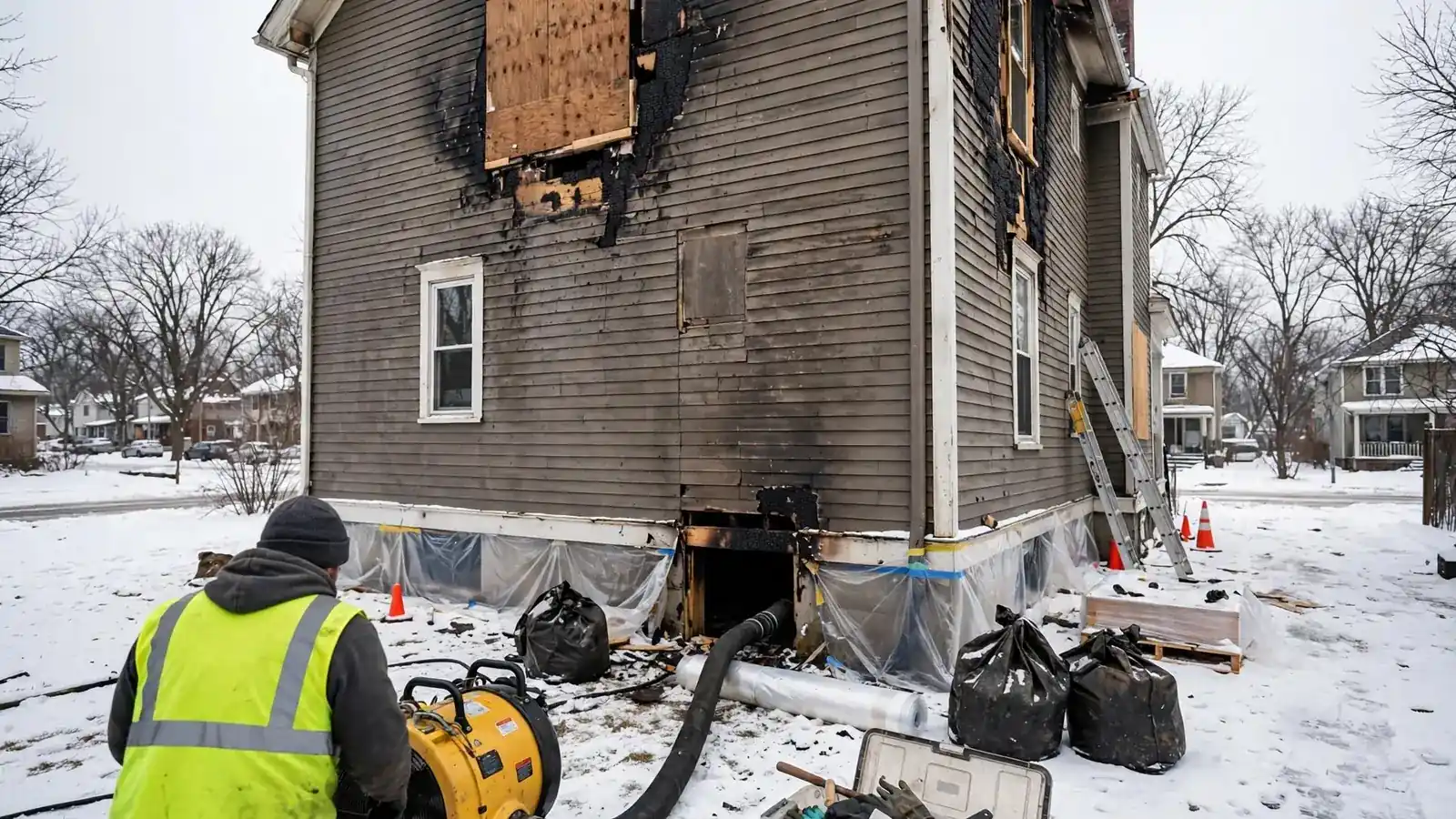
Fire and firefighting leave openings. Heat breaks windows, crews force doors to reach people, and firefighters may cut through the roof to release heat and gases. Once the trucks leave, each of those openings lets in weather and lets out heat.
In much of the country, the main worry is rain. In Minneapolis, cold is just as serious. An open house loses heat fast in winter, and pipes, radiators and the boiler can freeze. Snow blows in through broken windows and settles on floors and furniture, then melts when temporary heat comes on. Wind can lift a poorly fastened tarp and drop a load of snow into the attic.
There is also security. A damaged, empty house can attract theft and trespassing. Board-up closes it off while keeping one controlled way in for the restoration crew, the adjuster and you.
Insurers generally expect owners to take reasonable steps to prevent further damage after a loss. Temporary protection is the standard way to do that. Ask your insurer how your policy handles it.
What gets covered
Openings that usually need securing
Broken windows and storms
Original windows and storm windows broken by heat or firefighters are covered with plywood fitted to the frame.
Read moreForced doors
Doors damaged during the response are secured, with one lockable access panel for the crew.
Read moreRoof ventilation cuts
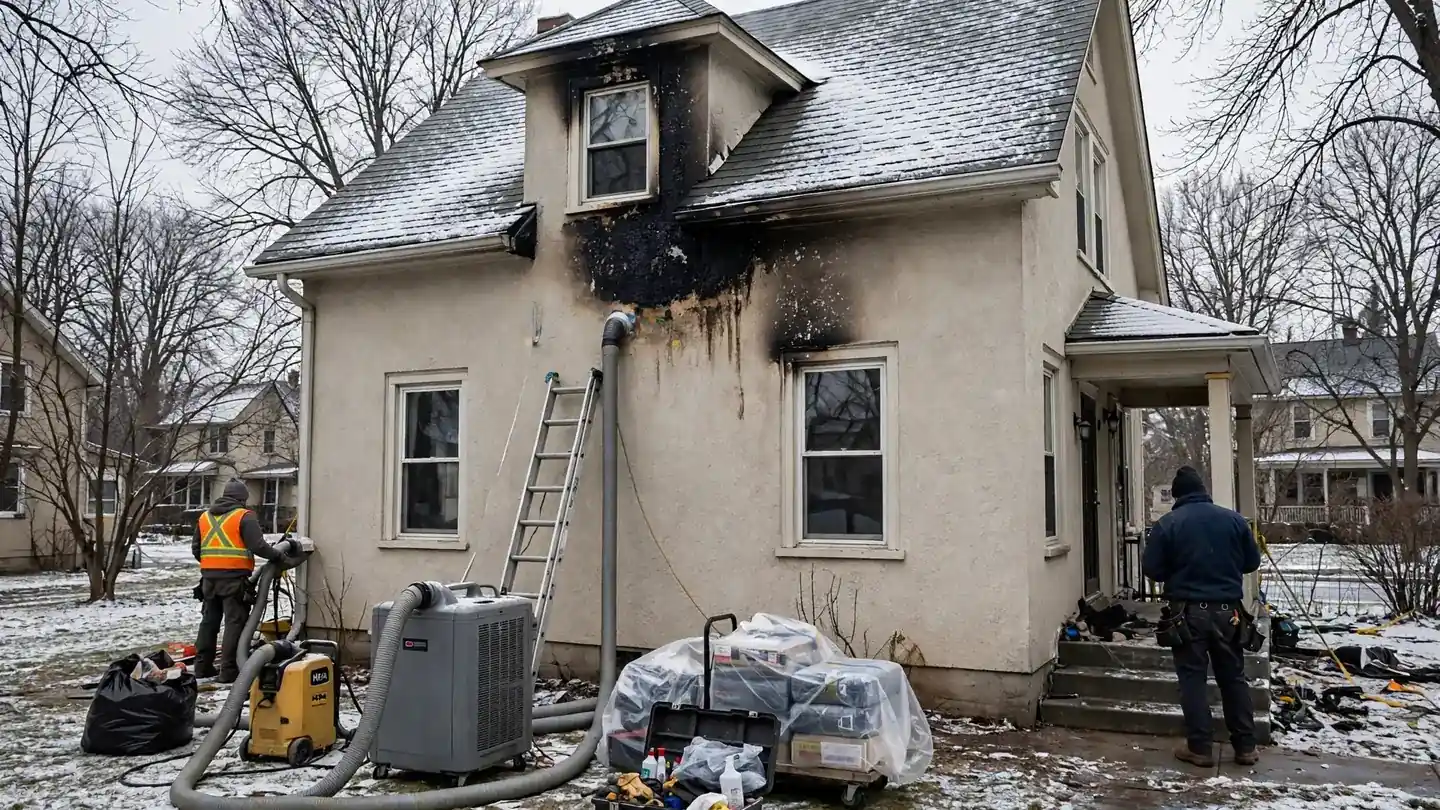
Holes cut by firefighters are covered with plywood and tarps fastened to shed snow and water.
Read moreBurned roof sections
Areas where the roof burned through are covered after the structure is checked from below.
Read morePorch and entry openings
Enclosed porches with broken windows are closed so cold air does not reach the main door and pipes.
Read moreGarage doors
Damaged garage doors on alley garages are secured with plywood or temporary framing.
Read more
The process
How a house is secured after a fire
- 1
Wait until the fire department releases the house
Work starts only after the Minneapolis Fire Department has finished at the scene and released the property.
- 2
Check the structure
The contractor looks at roof framing and walls near openings from below and from ladders before anyone goes on the roof [1].
- 3
Photograph each opening
Every broken window, forced door and roof hole is photographed before it is covered, for the claim file.
- 4
Clear glass, snow and debris
Loose glass is removed from frames, and snow and debris are cleared from openings and walkways.
- 5
Fasten plywood
Panels are cut to fit, overlapping frames, and fastened securely. One door gets a lockable panel.
- 6
Cover the roof
Plywood goes over large holes, then heavy tarps extend well past the damage, held with battens so wind and snow cannot lift them.
- 7
Keep heat in and check after storms
With openings closed, temporary heat can protect pipes. Covers are checked after snow, wind or thaw.
Materials
Temporary protection materials and their limits
| Material | Used for | Strength | Limitation |
|---|---|---|---|
| Plywood | Windows, doors, roof holes | Secure; supports snow over small spans | Heavy; must be well fastened |
| Heavy tarp | Roof openings and damaged sections | Sheds water and snow | Can tear or lift in wind; snow must be cleared |
| Wood battens | Holding tarp edges | Spreads fastening load | Fasteners go through roofing |
| Plastic sheeting | Interior separation, small openings | Quick, light | Not secure; little insulation |
| Rigid foam board | Behind plywood in winter | Adds insulation to openings | Needs plywood over it for security |
The contractor chooses materials based on the openings, roof pitch and the weather expected.
Your part
What you can do while the house is secured
- Get essentials out if allowedMedication, documents, phones, chargers and warm clothes, if the fire department permits brief entry.
- Tell your insurerLet them know the house is being secured and ask how temporary protection is handled.
- Mention the heat statusTell the contractor whether the furnace or boiler is working, so freeze protection is planned.
- Stay off the roofFire-weakened roofs, especially with snow and ice, are dangerous. Leave roof work to the crew.
- Keep the sidewalk clearMinneapolis requires sidewalks to be cleared after snow; ask a neighbor or the contractor to help while you are away.
- Check after stormsLook for sagging tarps, drifting snow at openings or panels that have moved.
Snow and ice
Tarps under snow load and ice dams
A tarp that works well in summer rain can fail under Minnesota snow. Snow piles up on a flat or gently sloped cover, sags it into the opening and eventually tears it or pulls fasteners. Wet snow is especially heavy. For winter fires, contractors often put plywood under the tarp over larger holes so snow sits on a solid surface.
Covers need clearing after heavy snowfall, done from a safe position by people with the right equipment. The National Weather Service office for the Twin Cities posts snowfall and wind forecasts that help with timing [2].
Damaged roofs also lose heat unevenly, which can cause ice dams at the eaves when snow melts on warm sections and refreezes at the cold edge. Ice dams push water under shingles and into walls. Keeping the damaged area well covered and clearing snow from the lower roof helps.
Heat
Keeping heat in a damaged house
In winter, board-up is as much about holding heat as keeping people out. Plywood alone insulates poorly, so some contractors add rigid foam board behind it in cold weather. Sealing gaps around panels and covering broken storm windows reduces drafts on pipes along exterior walls.
With openings closed, temporary heaters can keep the house above freezing until the furnace or boiler is repaired. Heaters must be used safely, away from debris and combustibles, and checked regularly. Ask the contractor how heat will be monitored while the house is empty.
- Foam behind plywood in cold weather
- Seal drafts near pipes
- Safe temporary heat
- Regular temperature checks
Roof safety
Why no one should climb a fire-damaged roof unprepared
A roof can look fine from the sidewalk while the rafters and boards underneath are charred. The U.S. Fire Administration warns that roofs and floors damaged by fire may be unsafe [1]. Snow and ice add weight and make footing treacherous.
Contractors assess the roof from inside and from ladders before deciding how to reach the opening, and may use roof brackets, planks or lifts rather than walking on damaged areas. Homeowners should never go on a fire-damaged roof, especially in winter.
Older homes
Protecting original windows and trim
Many Minneapolis homes still have original wood windows, storm windows and decorative trim. Board-up can protect them: fastening through the frame rather than the sash, padding contact points, and removing intact storm windows for safekeeping before covering the opening.
If your home is in a local heritage preservation district, replacing windows, doors or siding later may need review by the city. Temporary protection usually does not. Keep damaged original pieces when possible to help match replacements.
Security
Keeping an empty house secure
Agree with the contractor on one lockable access point and who holds keys or codes. Remove or secure valuables the fire spared. Tell a trusted neighbor the house is empty and how to reach you.
Visit regularly if you can. Look for signs of entry, loose panels, sagging tarps and drifting snow at openings. Call the contractor about anything that has changed.
Records
Documenting temporary protection
Ask for photos of each opening before and after it was covered, the dates of installation and any later checks or repairs, and a list of materials. If a storm damages the covers and more water or snow gets in, document that separately.
The Minnesota Department of Commerce encourages homeowners to keep records throughout a claim and reminds them that they choose their contractor [3]. Keep all of this in one folder with your other fire paperwork.
Spring and summer
Board-up in warmer months
Fires happen year-round, and summer brings its own weather. Twin Cities thunderstorms can deliver heavy rain, strong straight-line winds and hail in a short time. A roof opening that is only loosely covered can let in a great deal of water in one storm, soaking rooms the fire never touched.
In warm months the priority shifts from holding heat to shedding water and resisting wind. Tarps are extended well past the damage, edges are fastened under battens, and drainage is directed toward gutters. Debris in gutters is cleared so water does not back up under the cover.
Humidity also matters. A closed, damp house in July grows mold quickly, so board-up is usually paired with drying equipment and air movement inside.
Debris
Glass, debris and snow around the house
Broken glass from windows ends up inside and outside. Before board-up, loose shards are removed from frames so they do not fall later. Glass on steps, sidewalks and the yard is cleaned up, which matters on Minneapolis blocks where neighbors walk past every day.
Firefighting leaves debris outside: roofing, insulation, furniture pulled from the house and ash. Some may be needed for the fire investigation or the adjuster, so ask before anything is hauled away. In winter, debris can freeze into snowbanks and become hard to remove, so clearing it early helps.
A roll-off container may be needed. On narrow streets or alleys it may require a city permit; the contractor can explain the options.
Utilities
Power, gas and water in a closed-up house
After a fire, utilities are often shut off. Before the house is closed for days or weeks, confirm the status of each. Gas stays off until lines and appliances are inspected by a qualified professional. Electric service may stay disconnected until an electrician checks damaged circuits.
Water deserves special attention in Minnesota. If heat cannot be maintained, the water supply should be shut off and the lines drained. If heat will be maintained with temporary heaters, someone needs to check that they are running and the house stays above freezing.
The restoration crew may need temporary power for equipment. Ask the contractor how they plan to supply it if the house's service is off.
Duplexes
Securing duplexes and attached homes
In an up-and-down duplex, a fire in one unit often damages the other through the shared roof, floors and stairway. Temporary protection has to cover both units, and the roof cover may extend over the whole building.
Coordinate with the other owner, tenants and any management company. Each household's insurance usually covers its own part, but temporary protection works best when it is planned for the whole building at once.
Next steps
From temporary covers to permanent repairs
Board-up and tarping come first, not last. With the house secure, the contractor can plan water extraction, soot and smoke cleanup, removal of ruined materials and eventually rebuilding with permits and inspections. The temporary covers stay in place until permanent roofing, windows and doors are installed.
Keep the covers maintained the whole time. A tarp that fails partway through a long claim can cause more damage than the original fire in some rooms. Make sure photos of the original openings are in your files before the covers come off.
Interior
Protecting the inside once the outside is closed
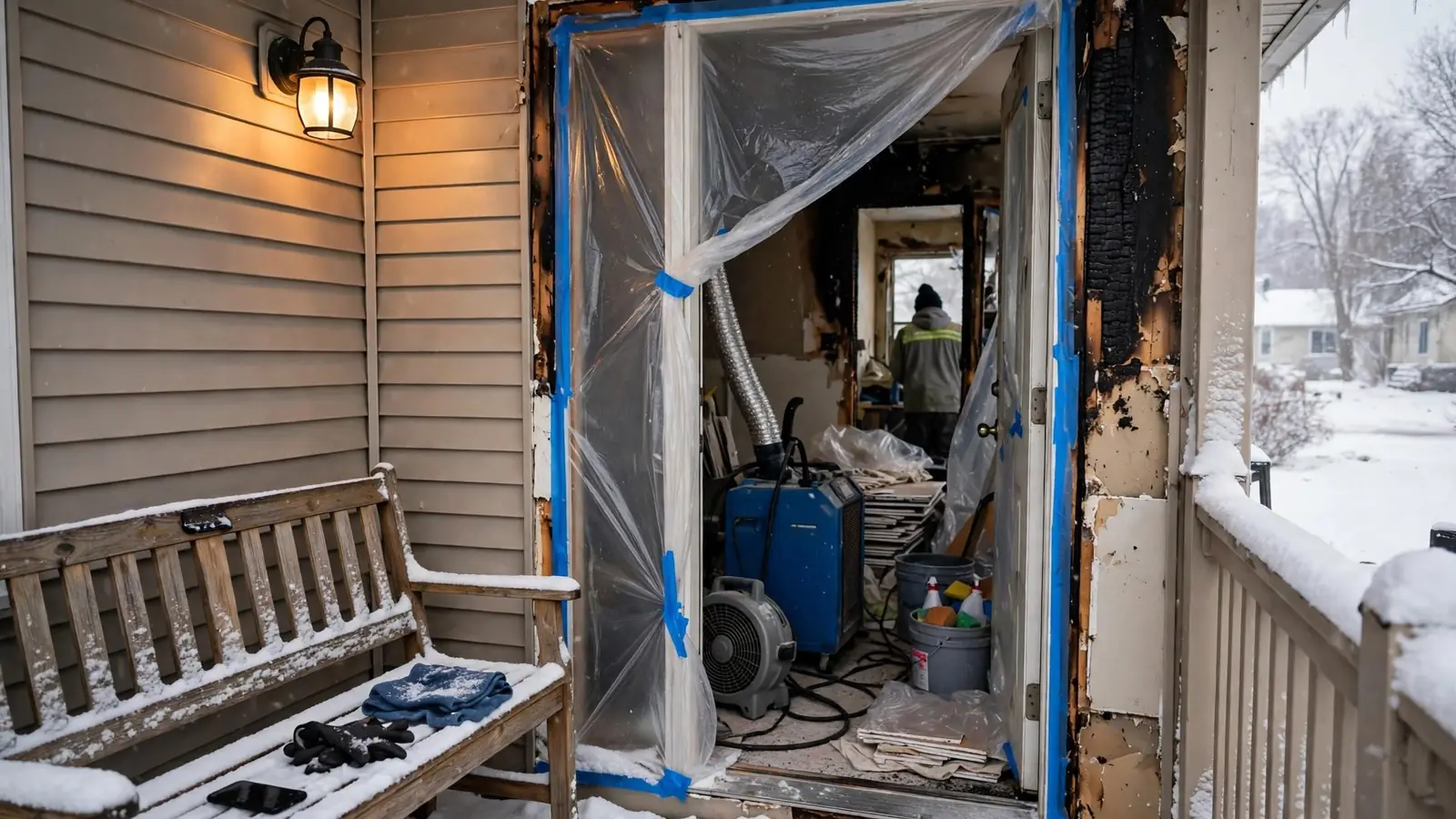
With openings secured, attention turns inside. Plastic sheeting separates damaged rooms from undamaged ones so soot and dust from later work stay contained. Floors in clean rooms get protective film. Zippered plastic doors let crews pass while keeping air separated.
In winter, interior separation also helps temporary heat do its job. Heating a few closed-off spaces is easier than heating an open, damaged house. Keep doors where the crew leaves them.
Separation helps with odor too. Closing off the damaged area keeps smoke smell from settling into furniture and clothing in the rooms that survived.
Alleys
Alley garages and backyard access
Most Minneapolis blocks have alleys with detached garages. They are often the best access for crews, dumpsters and equipment, keeping the front street clear. In winter, alleys may not be plowed as well as streets, so access needs planning after snowfall.
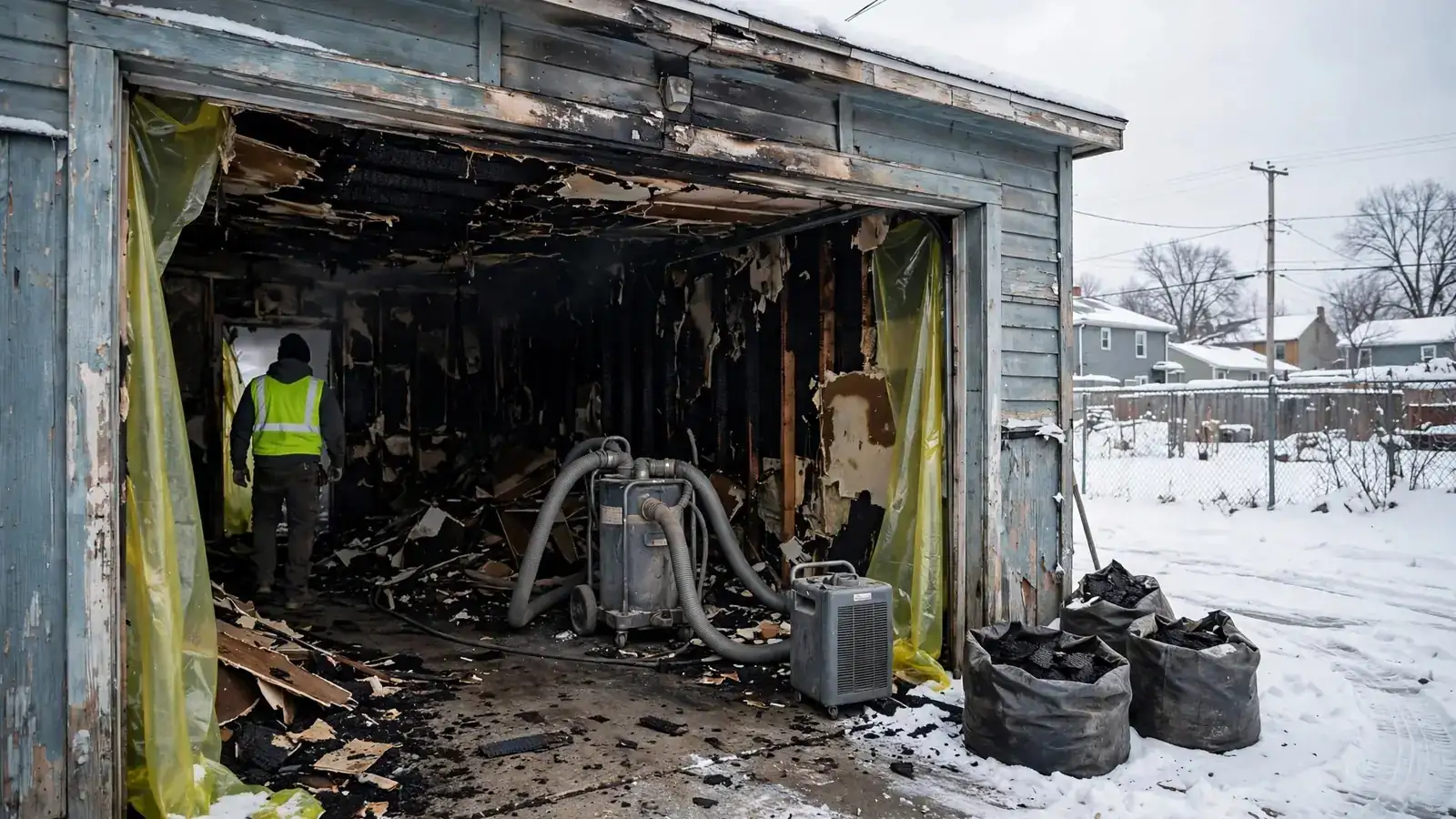
If the fire started in or damaged a detached garage, the garage may need its own board-up: plywood over a broken overhead door, windows and any roof opening. Neighboring garages close by may also need inspection for heat damage.
Wind
What to do if a cover blows loose
Strong wind can loosen even good temporary covers. If you see a tarp flapping or a panel pulled away, do not climb up to fix it. Photograph it from the ground, note the time and call the contractor. If snow or rain is getting in, move belongings away from the opening if it is safe to enter.
Quick repairs usually limit extra damage. A cover left flapping through several storms can let in a lot of water or snow and tear the roofing around it.
Smoke alarms
Smoke and carbon monoxide alarms during repairs
Temporary heaters, generators and fuel-burning equipment used during restoration bring carbon monoxide risk. Working carbon monoxide alarms should be in place whenever fuel-burning heaters run indoors, and alarms exposed to fire and soot should be replaced. Minnesota law requires carbon monoxide alarms near sleeping rooms in homes [4]; ask the contractor to include new alarms in the rebuild.
Porches
Enclosed porches and front entries
Enclosed front porches are common on older Minneapolis houses, often with a row of windows on three sides. Heat from a fire can break many of those panes at once, and firefighters often enter through the porch. A porch with broken windows lets cold air reach the front door and the pipes along the front wall.
Porch windows are covered with plywood fitted to each opening, or the whole porch front is closed with framing and sheathing if many panes are gone. The porch door is secured, with the main access usually through the back of the house or the side door.
Original porch windows and trim can often be repaired later. Keep intact sashes and hardware for reuse.
Timing
Board-up the same day when possible
In freezing weather, every hour the house sits open matters. Pipes can freeze overnight, and snow can drift onto floors and furniture. If the fire department releases the house in the evening, ask the contractor whether temporary covers can go up that night, even if the full board-up is finished the next day.
In mild weather there is a little more time, but rain, wind and the risk of entry still make same-day protection the safer choice.
Have the contractor's number saved in your phone and written down somewhere outside the house, so you can reach them quickly if a cover fails during a storm or a cold snap.
FAQ
Board-up and tarping questions in Minneapolis
How quickly should openings be covered after a fire?
As soon as the fire department releases it. In winter, open windows and roof holes let heat escape and pipes freeze, and snow blows in, so delays add damage quickly.
Can a tarp hold up under Minnesota snow?
Not on its own over a large hole. Contractors often put plywood under the tarp so snow sits on a solid surface, and covers need clearing after heavy snowfall.
Should I put a tarp on my roof myself?
No. Fire can weaken rafters and decking, and snow and ice make footing dangerous. Leave roof work to a contractor with the right equipment.
How do I keep pipes from freezing in a boarded-up house?
Close openings, add insulation behind panels if needed, and run safe temporary heat until the furnace or boiler is repaired, or have the plumbing drained.
Will the insurer cover board-up?
Many policies treat temporary protection as part of the fire loss, but policies differ. Tell your insurer the house is being secured and keep receipts and photos.
Is my call answered by a contractor?
Yes. Your call connects to an independent local contractor who speaks with you on that call. This site does not perform work or collect your details for later contact.
Can the house be boarded up the same night as the fire?
Often, once the fire department releases it. In freezing weather that matters, because an open house can lose enough heat overnight for pipes to freeze. Ask about temporary covers that night.
Do I need carbon monoxide alarms during repairs?
Yes, especially if fuel-burning heaters or generators are used. Minnesota requires carbon monoxide alarms near sleeping rooms, and alarms exposed to the fire should be replaced.
What should I tell the contractor about my house?
Whether the heat works, which windows and doors are broken, whether the roof was opened, whether there is an enclosed porch or detached garage involved, and whether it is a duplex. That helps them bring the right materials.
Can original storm windows be saved?
Intact storm windows can be taken down and stored before the opening is covered. Broken ones can often be reglazed later, which keeps the original look of the house.