Key facts: Soot Removal
- The U.S. Fire Administration says soot and the dirty water left by firefighting may carry substances that harm health [1].
- The IICRC S700 standard guides professional assessment and removal of fire residue [2].
- Older plaster, joint compound and some textured coatings can contain asbestos; the EPA advises testing before disturbing suspect material [3].
- Painted surfaces in homes built before 1978 may hold lead, which affects how soot-damaged paint is scraped or sanded [4].
Soot basics
What soot is made of and why it smears
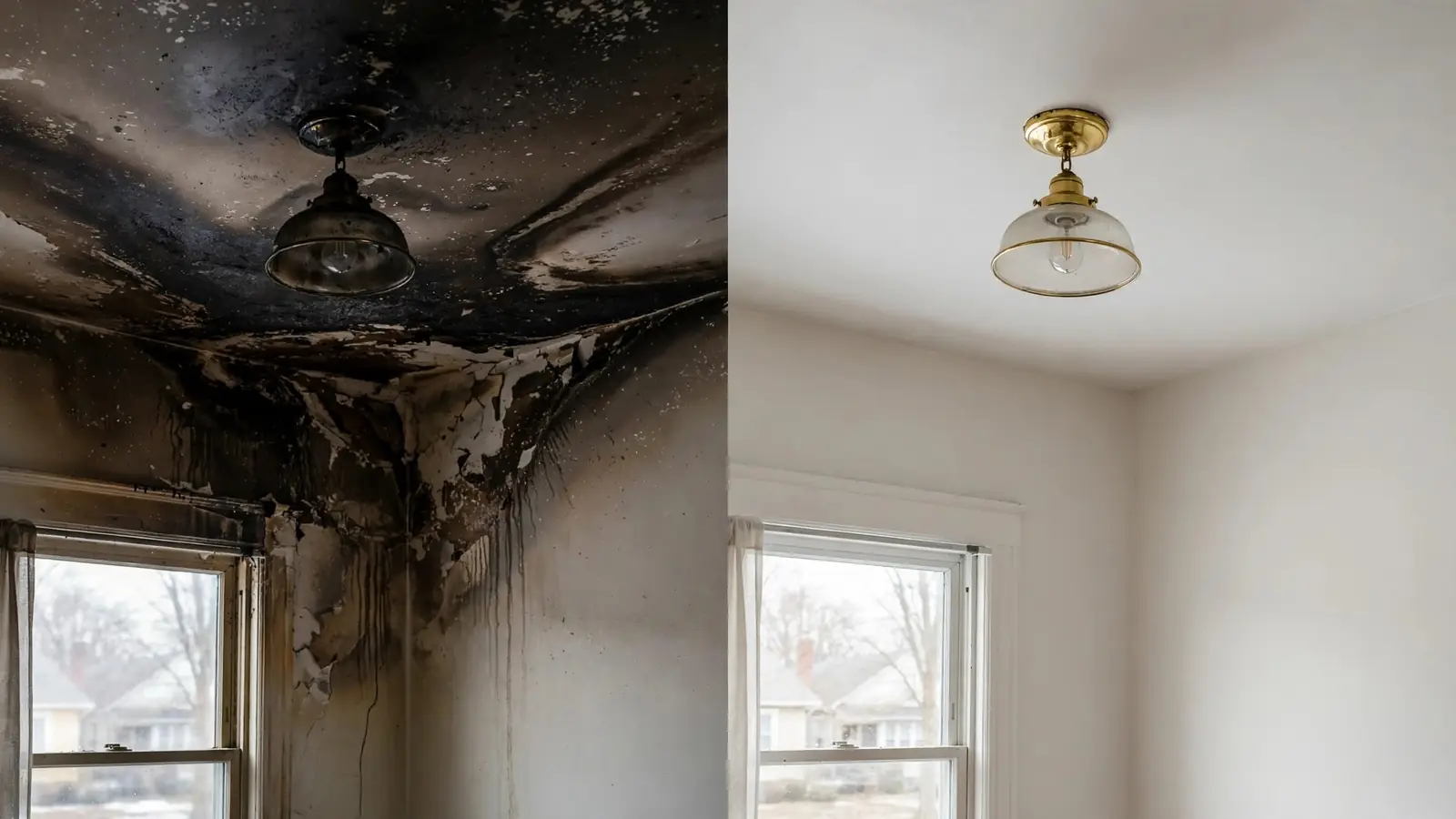
Soot is unburned carbon carried on hot air, mixed with oils, tars and acids from whatever was burning. A fire in a wood-framed room with paper and cotton tends to leave a dry, dusty black layer. A fire that burned a sofa, carpet, plastic toys or electronics leaves an oily residue that grabs onto surfaces and smears into streaks at the slightest touch.
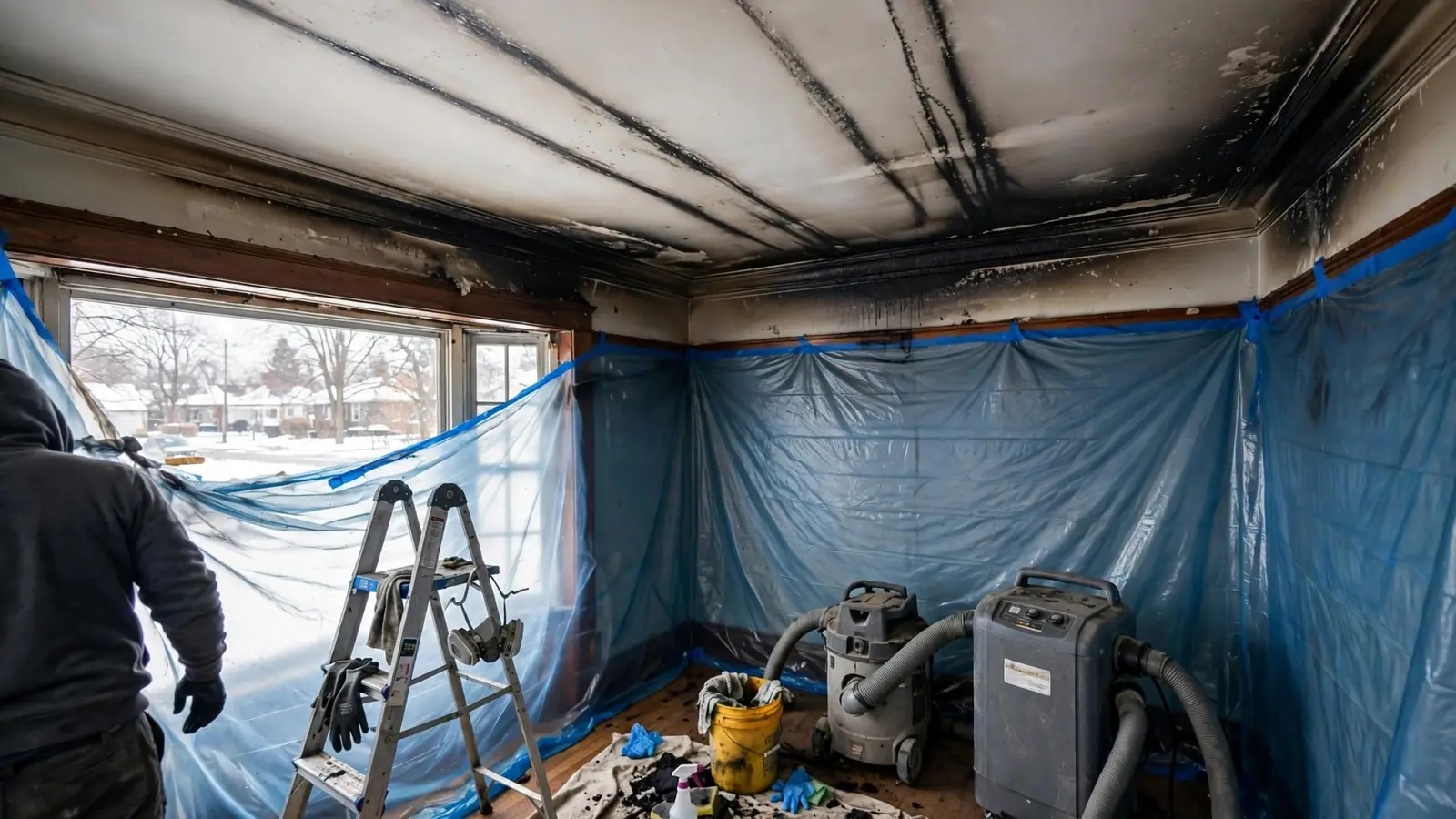
The particles are fine enough to float through an entire house and settle wherever air slows or meets a cool surface. In Minneapolis homes that often means ceilings under cold attic spaces, exterior walls, window glass and the tops of door and window casings. The dark lines that trace the framing behind a plaster ceiling, sometimes called ghosting, form for the same reason.
The U.S. Fire Administration warns that the soot and water left after a fire can contain substances harmful to health [1]. Removing heavy soot is work for people wearing respirators with HEPA-filtered equipment, following the IICRC S700 approach to fire residue [2].
Problem spots
Where soot is hardest to remove in older Minneapolis homes
Crown molding and plaster cornices
Detailed profiles hold soot in every groove and need soft brushes and HEPA vacuums, not rags.
Read moreBrick and tile fireplaces
Porous brick and old glazed tile surrounds absorb soot and may keep a faint shadow after careful cleaning.
Read moreStone and block basement walls
Rough foundation walls trap soot from basement fires and need masonry cleaning methods.
Read moreCast iron radiators
Fins and columns hold residue that releases odor when the heat runs.
Read moreWindow glass and storm windows
Cold glass attracts soot; storm windows trap it between panes.
Read moreAttic rafters and roof boards
Soot that rose through the house coats old framing under the roof, a major odor source.
Read more
The method
The soot removal sequence, step by step
- 1
Contain and protect
Crews wear respirators and suits, run HEPA air scrubbers, and seal off clean rooms and stairwells with plastic so loosened soot stays in the work area.
- 2
Check for hazardous materials
In older homes, suspect textured coatings, joint compound and pipe insulation are tested before anything is scraped or removed.
- 3
Test how the soot behaves
A dry sponge swipe on each surface type shows whether residue lifts cleanly or smears, which decides the next steps.
- 4
HEPA vacuum first
Soot webs, loose powder and residue on moldings and radiators are vacuumed with soft brush attachments, without rubbing.
- 5
Dry sponge flat surfaces
Walls and ceilings are wiped with dry chemical sponges in single strokes, turning to a clean face often.
- 6
Wash off the film that is left
Remaining film gets a cleaner chosen for the residue and the finish, tested on a hidden spot of plaster or woodwork first.
- 7
Clean masonry, metal and glass
Brick, stone, radiators, hardware and glass are cleaned promptly, since acidic residue keeps etching them.
- 8
Seal before painting
Plaster and framing that absorbed soot are primed with a stain-blocking sealer so marks do not bleed through new paint.
By surface
How soot comes off common Minneapolis finishes
| Surface | Approach | Notes |
|---|---|---|
| Painted plaster walls | Dry sponge, cleaning, sealer, paint | Plaster's hard face cleans well |
| Plaster ceilings with cornices | HEPA brush vacuum, sponge, careful cleaning | Detail work is slow |
| Varnished oak or fir trim | Gentle cleaners; refinish if darkened | Avoid harsh solvents on old varnish |
| Brick fireplace | Masonry cleaning | Porous brick may stay shadowed |
| Fieldstone or block basement walls | Dry brushing and masonry cleaning | Rough texture holds soot |
| Cast iron radiators | Vacuum fins, wash, touch-up paint | Covers removed and cleaned too |
| Attic framing | Soda or dry ice blasting, then sealer | Replace only if structurally charred |
Every house differs. The contractor tests before choosing a method.
Do and do not
Safe steps and mistakes to avoid with soot
- Do: leave soot webs aloneThey look like cobwebs but are chains of residue. Brushing them leaves long black streaks on plaster.
- Do: keep people away from heavy sootFine particles are easy to inhale. Keep children, older relatives and anyone with asthma out of affected rooms.
- Do: protect glass and metalIf valuable fixtures or art glass are affected, tell the contractor so they are cleaned first.
- Do not: use a household vacuumMost are not sealed and blow the finest soot back into the room.
- Do not: scrub with water or all-purpose cleanerThis spreads oily soot and can set stains in flat paint and porous plaster.
- Do not: sand old trim or plasterLead paint and asbestos-containing materials are possible in older homes [3][4].
Minneapolis homes
Soot and the way Minneapolis houses were built
A large share of Minneapolis houses date from before 1930, with plaster on wood lath, solid wood trim, hardwood floors and fireplaces in the living room. Those materials are durable and can usually be cleaned, but they need gentler handling than modern drywall and laminate. Rushing them with harsh chemicals or aggressive scrubbing does more harm than the soot.
Story-and-a-half homes, common in Longfellow, Nokomis and Camden, have sloped upstairs ceilings and knee-wall storage spaces. Soot collects heavily on those sloped ceilings and in the dark spaces behind the knee walls, where it sits against the underside of the roof.
Larger houses in Kenwood and parts of Powderhorn and Marcy-Holmes have tall ceilings, plaster cornices, paneled rooms and grand stairways. Soot rises into those high ceilings and settles into every decorative profile. Cleaning them takes scaffolding, soft brushes and patience.
Cold weather adds one more factor: ceilings under poorly insulated attics are cooler in winter, so soot settles more heavily on them and on exterior walls, often tracing the joists and studs behind the plaster.
Fireplaces
Fireplaces, chimneys and soot backdrafts
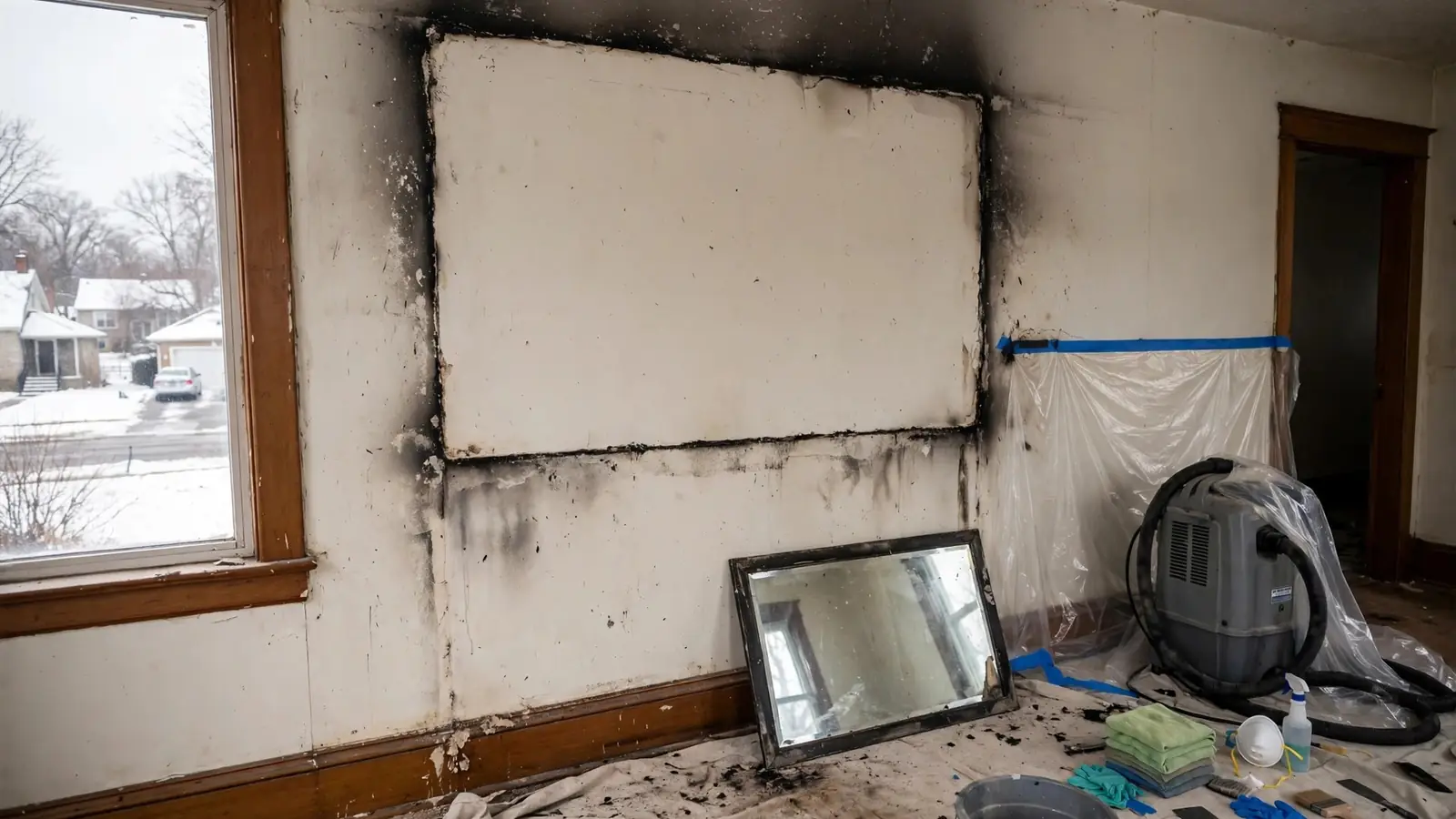
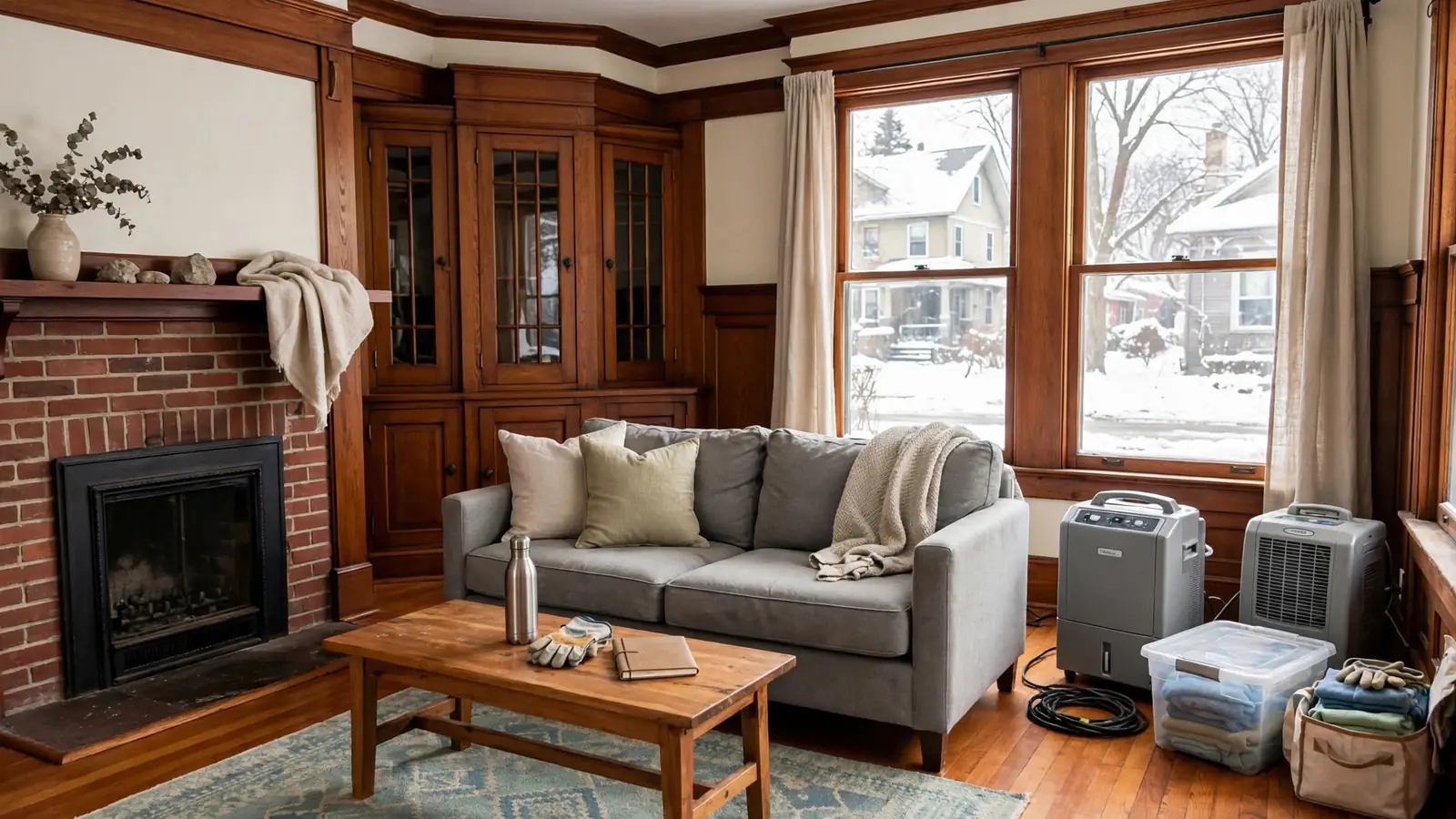
Fireplaces are common in older Minneapolis homes and well used in winter. A chimney fire, a cracked flue, a closed damper or a downdraft on a windy night can push smoke and soot into the room even without a house fire. The result is a black film on the mantel, the wall above and the ceiling, often in a fan shape.
After any fire involving the fireplace, the chimney should be inspected before it is used again. The brick or tile surround is cleaned with masonry methods, wood mantels with gentle cleaners, and the wall and ceiling with the same dry-then-wet sequence as the rest of the house.
- Inspect the chimney before reuse
- Masonry cleaning for brick and tile
- Gentle cleaning for wood mantels
- Seal the wall before repainting
Basements
Soot in Minneapolis basements
Basement fires, from a dryer, a furnace or stored materials, coat stone and block foundation walls, floor joists and everything stored below. The underside of the first floor, with its exposed joists and subfloor, holds soot that drifts up into the house through gaps around pipes and ducts.
Basement soot is removed with HEPA vacuums and brushes on rough walls, followed by cleaning suited to masonry. Joists and subfloor may be blasted and sealed. Stored items need sorting: some clean well, others hold residue in their fibers.
Even when a fire was upstairs, the basement is worth checking. Laundry chutes and return ducts carry soot down, and firefighting water that drains into the basement can carry it too.
Attics
Attic framing, blasting and sealing
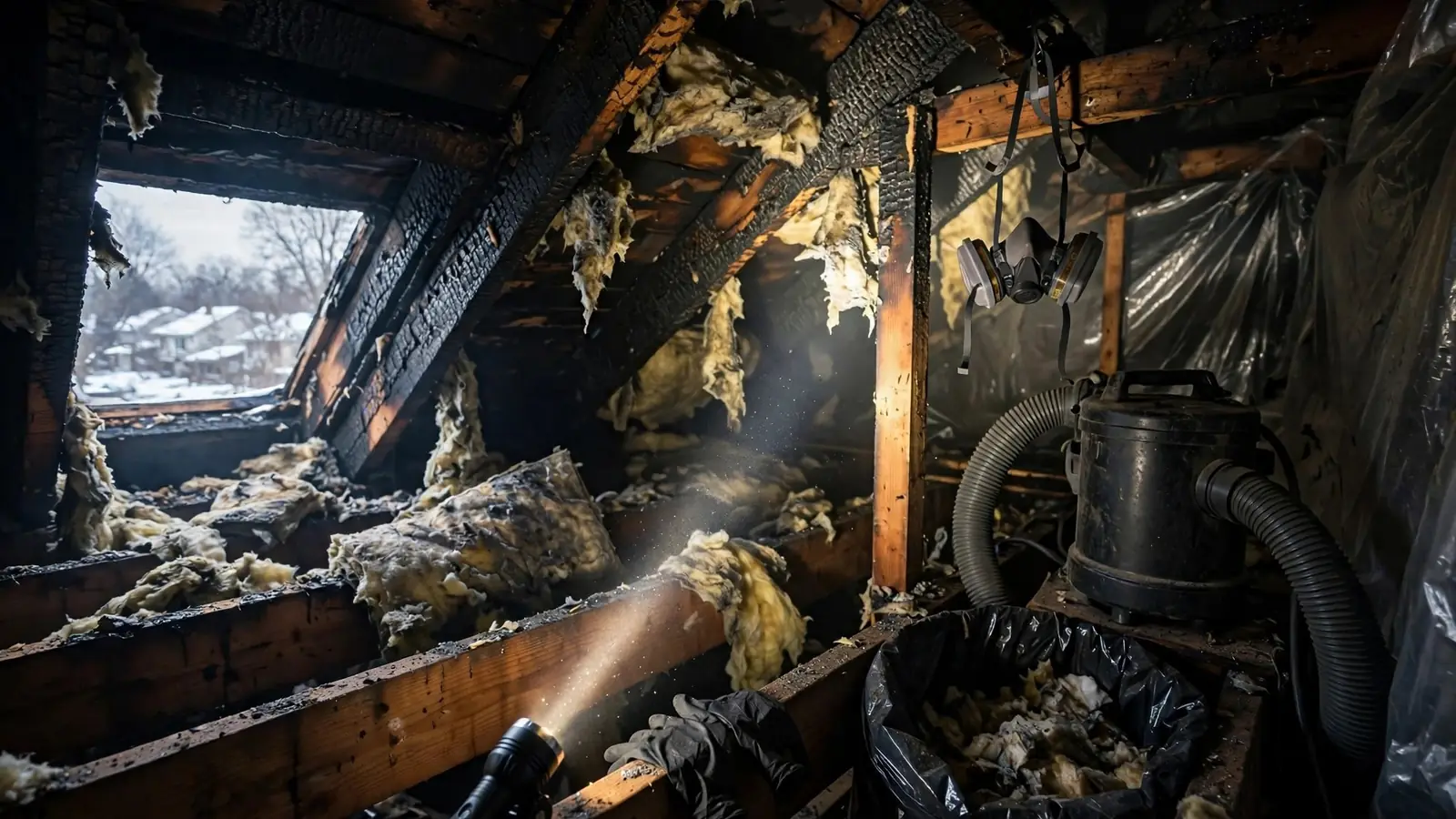
Soot that rises through ceilings coats rafters, roof boards and old insulation. Attic insulation that absorbed soot and smoke cannot be cleaned and is normally removed. Raw wood framing is cleaned by soda blasting or dry ice blasting, which removes char and soot without soaking the wood, then sealed with a stain- and odor-blocking primer.
In story-and-a-half houses the attic is split into small sections: a peak above the upstairs ceiling and knee-wall spaces on each side. Each section needs to be opened and cleaned. Leaving one closed is a common reason smoke odor lingers through the following winter.
Hazardous materials
Lead, asbestos and safe soot removal in old homes
Older homes may contain asbestos in materials such as some plaster finishes, joint compound, textured ceilings, pipe and boiler insulation, and old floor tile. The EPA advises against disturbing suspect material and recommends testing by a trained professional [3]. Boiler and pipe insulation in basements is a particular concern in Minneapolis houses with old hot water or steam systems.
Original painted woodwork and plaster in pre-1978 homes may have lead paint [4]. Soot cleanup can usually proceed with lead-safe methods, but scraping or sanding damaged paint needs containment and careful cleanup. Ask the contractor how they handle both before work begins.
When to replace
When soot means replacement instead of cleaning
Some materials are past cleaning. Plaster that is soaked, crumbling or separated from its lath is repaired or replaced. Charred trim or flooring near the fire is replaced, ideally with matching species and profiles. Insulation, carpet pad and upholstery that soaked up soot generally go.
Other surfaces may clean but keep a shadow: porous brick, matte stone and old grout. Whether that is acceptable depends on your taste and your policy. A careful contractor will tell you in advance when a surface may not come fully clean.
Metal and glass are time-sensitive. Old hardware, light fixtures and leaded glass cleaned within days usually recover; left for weeks, they may be permanently etched.
Contents
Soot on furniture, books and keepsakes
Hard furniture with a good finish usually cleans well with the same dry-first method. Upholstered pieces, rugs and curtains may need specialist cleaning. Books and papers can often be dry-cleaned page by page by specialists if they matter enough.
Ask the contractor for an itemized list of what is cleaned on site, what is sent out and what is discarded. Photograph items before they leave the house.
Insurance
Showing soot damage to your adjuster
Soot spreads into rooms that look clean at first glance. Before cleaning starts, photograph every room, including closets, the attic access, knee-wall spaces, the basement and radiators. A white tissue wiped across a surface and photographed beside it makes light residue visible.
The Minnesota Department of Commerce encourages homeowners to document damage, review their policy and work with the contractor of their choice [5]. Keep a log of visits and decisions, and keep receipts.
Windows
Storm windows, leaded glass and old window sashes
Many Minneapolis homes still have original wood double-hung windows with exterior storm windows, and some have leaded or stained glass in stair landings and front rooms. Soot settles on cold glass, gets trapped in the space between the storm and the inner sash, and works into old glazing putty.
Cleaning means taking down storm windows where possible, cleaning both faces of every pane and the tracks, and cleaning sashes gently so old paint is not disturbed. Leaded and stained glass should be cleaned by someone who knows how; harsh cleaners can damage the lead came and old paint on the glass.
Cracked panes are common after a fire because of heat and sudden cooling from firefighting water. They can be replaced in the original sash, which keeps the look of the house.
Floors
Soot on hardwood floors and area rugs
Oak and maple floors are standard in older Minneapolis homes. Soot that settles on a finished floor usually comes off with dry methods and gentle cleaning, but foot traffic during the days after a fire grinds it into the finish. If the finish is worn or the soot is heavy, a screen-and-recoat or full refinishing may be needed after the rest of the cleaning is done.
Area rugs absorb soot and odor and are best sent to a specialist cleaner. Wall-to-wall carpet laid over old hardwood is often removed after a fire, sometimes revealing a floor worth restoring.
Garages
Alley garage fires and soot on the house
Detached garages line Minneapolis alleys, and a garage fire can leave soot on the back of the house, the fence and neighboring garages without the flames reaching any of them. Soot from burned vehicles, fuel and plastics is oily and dark.
Exterior soot on siding, stucco and trim is cleaned with methods suited to each material. Inside, the rooms facing the alley, the attic near the rear eaves and any open windows are checked. If the garage itself needs rebuilding, a city permit is usually required.
Winter work
Soot removal when it is below freezing
Cleaning soot does not stop in winter, but cold affects how it is done. Wet cleaning products work poorly on cold surfaces, and ventilation is limited when outdoor air is far below freezing. Contractors often bring in temporary heat to keep work areas at a usable temperature and run HEPA air scrubbers rather than opening windows.
If the house has no working heat, protecting the plumbing comes before soot removal. Temporary heat, draining the water system, or both may be needed.
Built-ins
Buffets, bookcases and paneled rooms
Built-in buffets with leaded glass doors, colonnades between living and dining rooms, bookcases beside fireplaces and paneled dens are part of what people love about older Minneapolis houses. They are also full of ledges, shelves and carvings where soot settles.
Doors and drawers often come off so every surface can be reached. Exposed wood is cleaned with products that will not strip old varnish or shellac. Unfinished backs and interiors, which absorb odor, may be sealed. Where a piece is badly scorched, a finish carpenter can usually rebuild the damaged part to match the rest.
Tell the contractor which built-ins matter most to you so they are protected during demolition elsewhere in the house.
Upstairs
Sloped ceilings and upstairs bedrooms
In story-and-a-half homes, upstairs bedrooms sit under the roof with sloped ceilings on two sides. These rooms collect soot heavily because smoke rises to them, and the slopes are awkward to clean. Soot on a sloped plaster ceiling is lifted the same way as on a flat ceiling, but it takes longer and needs stable platforms.
Closets in these rooms often run into the eaves and connect to knee-wall storage. Clothing stored there absorbs smoke and needs sorting and cleaning along with the room.
Kitchens
Protein soot after a kitchen fire
Burned food leaves a different kind of residue from a furniture fire. It is pale yellow to brown, thin and greasy, and it carries a sharp, sour odor that can fill a house. Because it barely shows on painted walls, people often clean the stove area and miss the film on the dining room ceiling, the inside of cabinets and the hallway walls.
Protein residue needs cleaners designed to break it down; ordinary degreasers leave the smell behind. Cabinet interiors and ceilings often need sealing after cleaning. If you had a kitchen fire and the house smells sour rather than smoky, mention it on the call so the contractor plans for protein residue.
FAQ
Soot removal questions in Minneapolis
Can soot be cleaned off plaster crown molding?
Usually, with patience. Soot is vacuumed with soft brushes and lifted with dry sponges before careful cleaning. Wiping with a damp rag pushes it into the profile and should be avoided.
Why are there dark lines across my ceiling?
Soot settles more on cooler surfaces. Ceilings under cold attics show lines over the joists behind the plaster. They usually clean with the same method, then need sealing before paint.
Will my brick fireplace come clean?
It usually improves a great deal with masonry cleaning. Very porous brick may keep a faint shadow. Have the chimney inspected before using the fireplace again.
Is basement soot a health concern?
Fine soot can be inhaled and may carry harmful substances. Basements often hold old pipe or boiler insulation too, which should be tested before disturbance.
When should soot removal begin?
As soon as the house is released and your insurer is notified. Acidic residue keeps etching glass and metal and soaking into porous finishes.
Who is on the line when I call?
An independent local restoration contractor, connected on the same call. This site does not do the work or keep your contact details.
Do contractors in Minnesota need a license?
Residential building contractors in Minnesota are licensed by the Department of Labor and Industry. You can ask about licensing on the call and check it with the state.
Can leaded glass windows be cleaned after a fire?
Usually, by someone experienced with leaded glass. Harsh cleaners can damage the lead and old painted details, so gentle methods are used. Cracked panes can be replaced within the original frame.
My house smells sour, not smoky. Is that soot?
A sour, sharp smell after a kitchen fire usually means protein residue from burned food. It is hard to see but strong-smelling, and it needs cleaners made for protein residue rather than ordinary degreasers.
Should wall-to-wall carpet stay after soot damage?
Usually it comes out, along with the pad, because both absorb soot and odor. Older homes sometimes have good hardwood underneath that can be cleaned and refinished.