Key facts: Soot on walls and ceilings
- Soot after a fire can carry substances harmful to health, so heavy soot should be handled with protection [1].
- IICRC S700 guides how professionals assess and remove fire residue, starting with the type of soot present [2].
- Paint on pre-1978 plaster and woodwork may contain lead, which affects how soot-damaged surfaces are scraped [3].
- Some older plaster finishes and textured coatings may contain asbestos and should be tested before disturbance [4].
Short answer
What the black marks are telling you
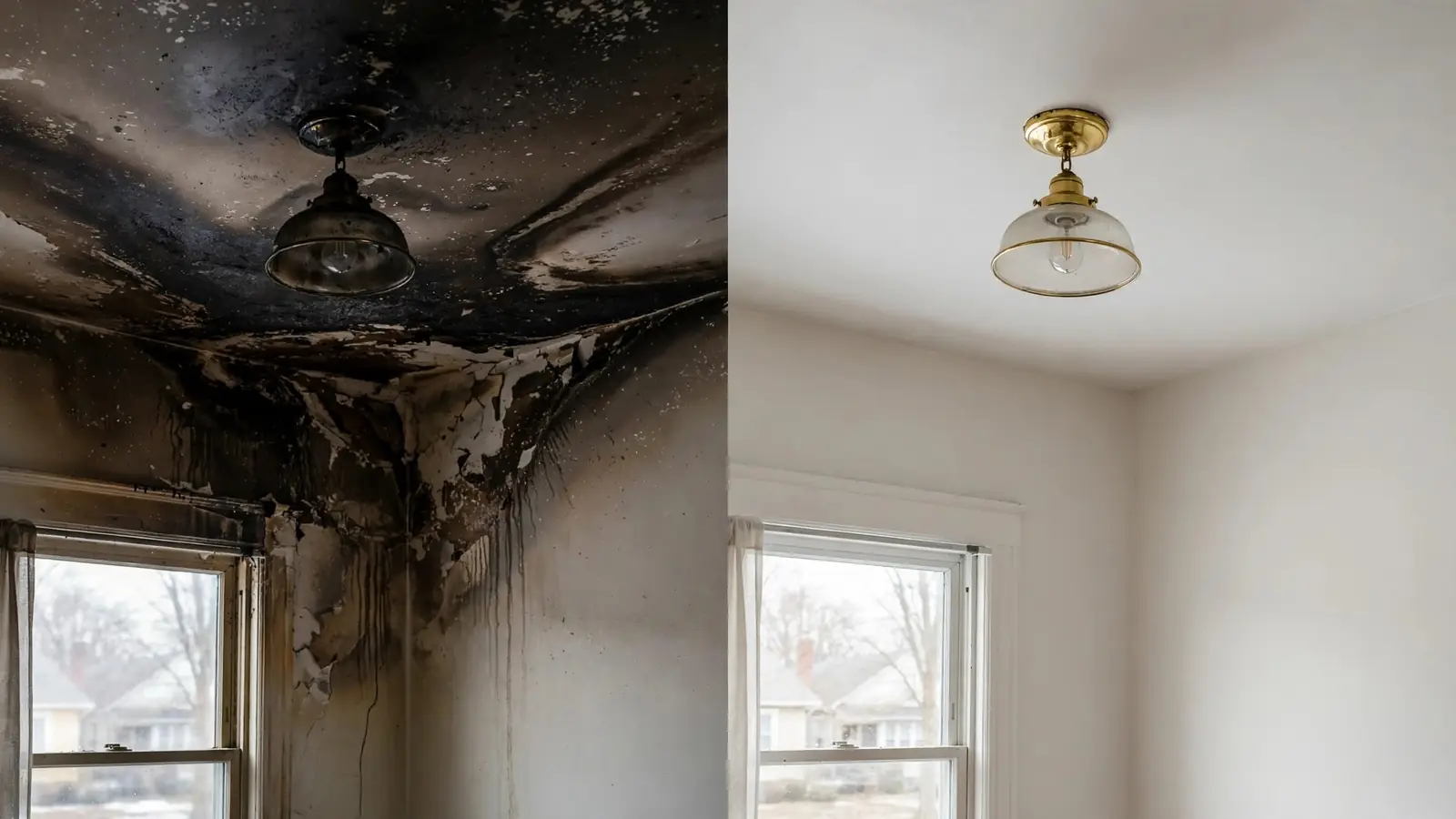
Soot is fine carbon left by incomplete burning, carried on warm air and deposited where air slows or meets a cooler surface. After a house fire, its pattern traces where smoke traveled: heavy along ceilings near the fire, lighter in far rooms, and in tell-tale lines and patches where air moved through gaps or across cold spots.
It should be lifted dry first with HEPA vacuums and dry sponges, then cleaned with products matched to the residue, then sealed before painting if marks or odor remain. Wiping with water first usually sets it.
Patterns
Common soot patterns in older homes
| What you see | What it means | Next step |
|---|---|---|
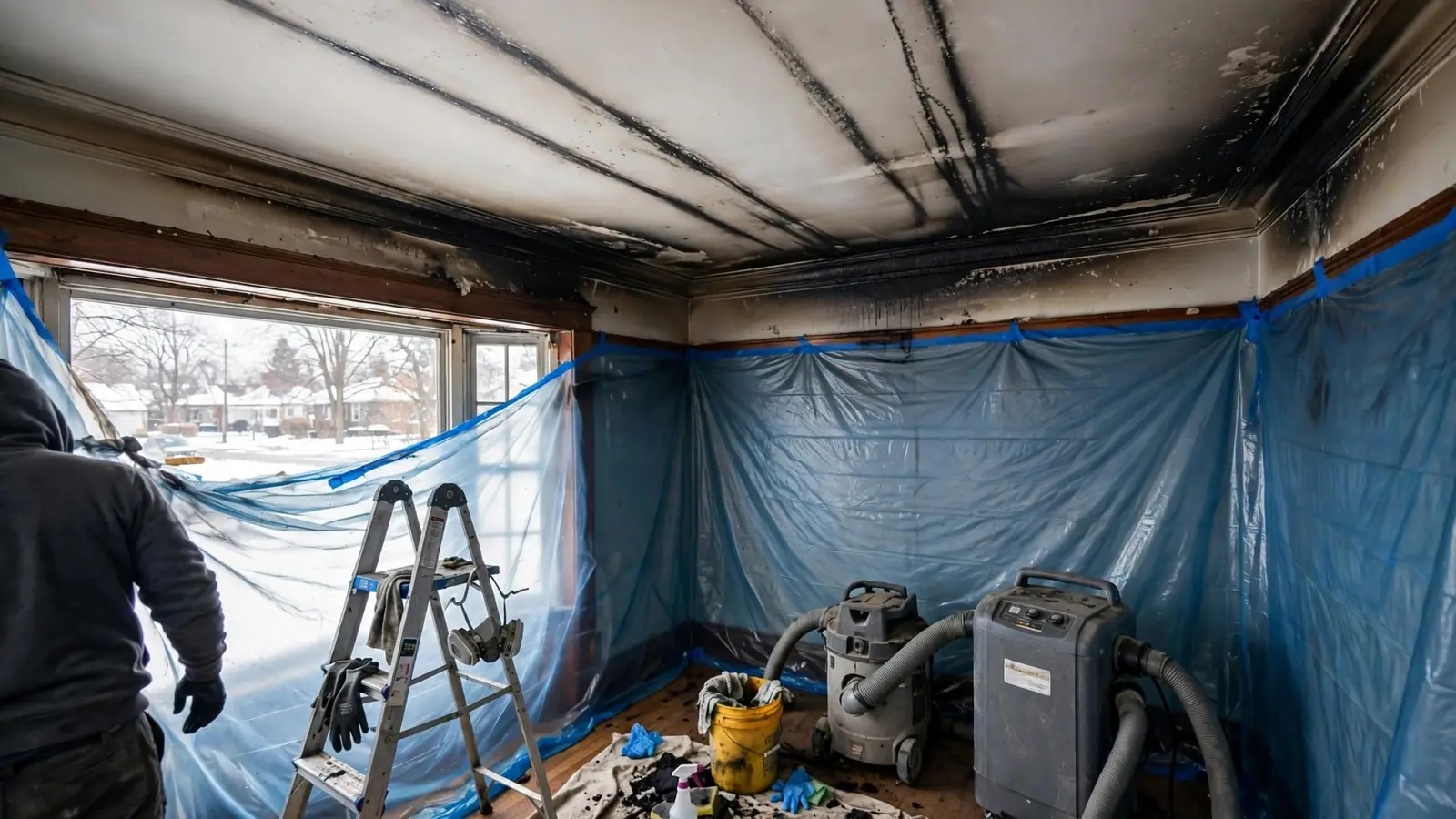
| Parallel lines across a ceiling | Cold joists behind plaster under a cold attic | Clean, then seal before paint |
| Grey patches above radiators | Warm air carrying soot upward | Clean wall and radiator; seal |
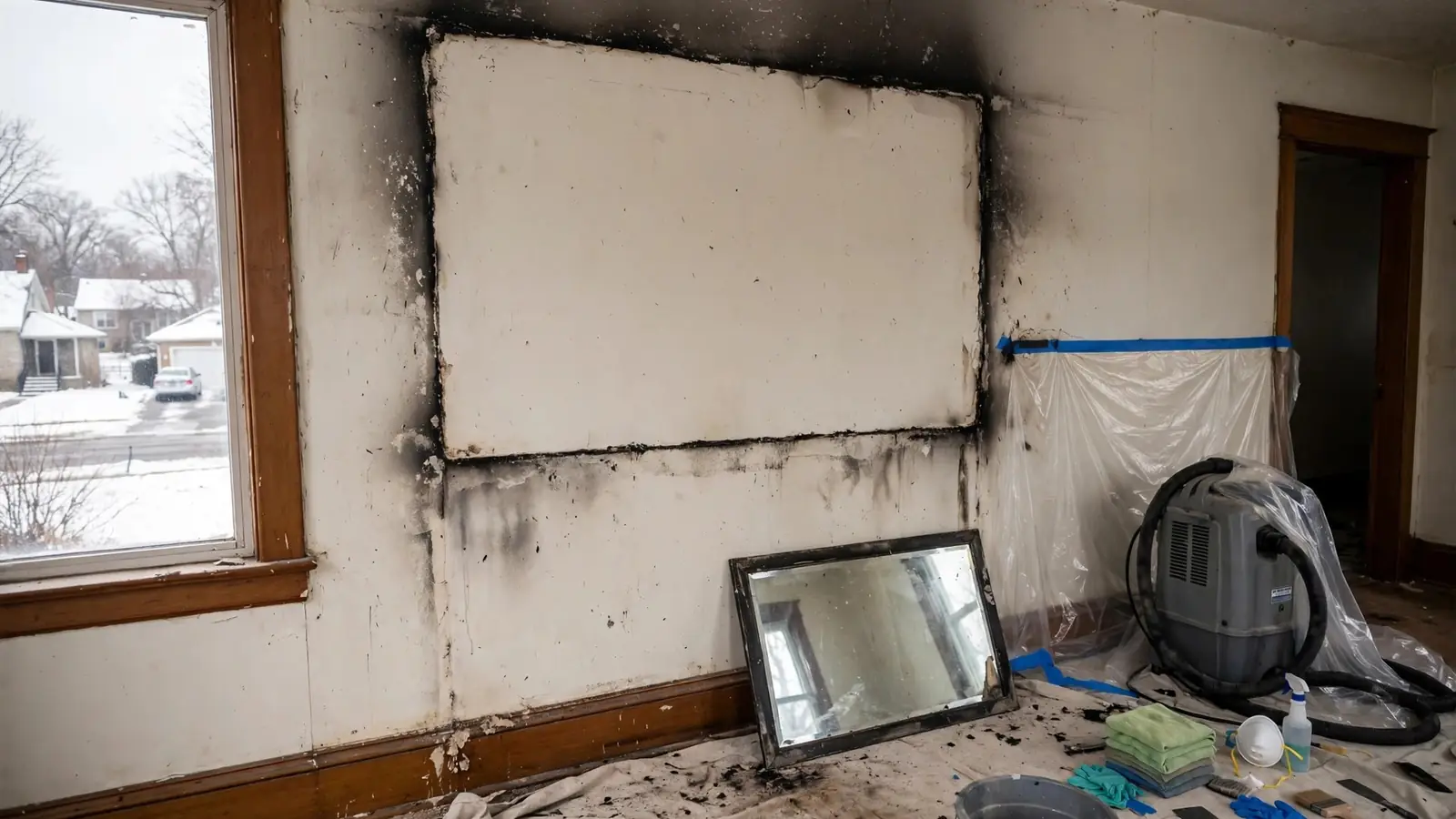
| Dark outlines around a removed mirror or frame | Even soot layer across the whole wall | Clean the entire wall |
| Grey fans above outlets | Air moving through wall cavities | Clean surface; inspect cavity |
| Dark strands hanging in ceiling corners | Soot chains formed along drafts | HEPA vacuum without brushing |
| Soot above a fireplace opening | Smoke spilling into the room | Clean; have chimney inspected |
Safe checks
Checks that will not make it worse
- Tissue testTouch a tissue lightly to the wall. Dry black powder lifts; oily soot smears.
- Look behind frames and mirrorsA clean shape shows that the whole wall is coated.
- Check above radiators and ventsPatches there show how warm air carried soot.
- Leave soot webs aloneBrushing turns them into long streaks.
Cold spots
Why soot traces the framing
Soot settles more heavily on cooler surfaces. In a Minneapolis winter, ceilings under poorly insulated attics are colder over each joist than between them, and exterior walls are colder over each stud. Soot collects along those cold lines, producing parallel stripes, sometimes called ghosting. The same effect can appear without a fire from years of candles or a fireplace that spills smoke.
Ghosting usually cleans with the same dry-then-wet method, but it often needs sealing before paint so the pattern does not reappear. Improving attic insulation can reduce it in future.
Without a fire
Soot when there was no fire
Candles, oil lamps, fireplaces with poor draft and fuel-burning appliances that are not burning cleanly can all leave soot. A furnace puff-back, when built-up fuel ignites in the combustion chamber, can coat a whole house with a fine layer through the ducts. If you see soot and there was no fire, have fuel-burning appliances checked, and make sure carbon monoxide alarms work, since incomplete burning can also produce carbon monoxide.
Old finishes
Plaster, old paint and hazardous materials
Plaster's hard face usually cleans well. But paint on plaster and woodwork in pre-1978 homes may contain lead [3], so scraping or sanding damaged paint needs containment and lead-safe cleanup. Some older plaster finishes, textured coatings and joint compounds may contain asbestos and should be tested before they are disturbed [4].
The method
How soot is removed from plaster
- 1
Protect the room
Respirators, HEPA air scrubbers and plastic to contain loosened soot.
- 2
Test the residue
Dry sponge test on each surface to see how soot behaves.
- 3
HEPA vacuum
Soot webs and loose soot removed without rubbing, with soft brushes on moldings.
- 4
Dry sponge
Single strokes in one direction, turning to a clean face often.
- 5
Clean what remains
Products matched to the residue, tested on a hidden spot first.
- 6
Seal and paint
Stain- and odor-blocking primer, then finish paint.
Prevention
Preventing soot in future
- Keep candle wicks trimmed and away from drafts
- Have the furnace or boiler serviced before each heating season
- Open fireplace dampers fully and have chimneys inspected
- Improve attic insulation to reduce cold lines on ceilings
- Keep working carbon monoxide alarms near sleeping rooms
On the call
Details about the soot worth sharing on the call
- Whether there was a fire, a furnace puff-back or no obvious cause
- Whether the marks come off dry or smear
- Which rooms and ceilings are affected and whether they are plaster
- Roughly when the house was built
- Whether anyone has already tried to clean it
Woodwork and radiators
Soot on trim, radiators and built-ins
Older Minneapolis homes pair plaster walls with stained or painted wood trim, built-in buffets and cast iron radiators. Soot settles on every ledge of the trim and in the fins of each radiator. Stained wood is cleaned with gentle products that will not strip old varnish, and refinished if the finish has darkened. Painted trim is cleaned carefully because older layers may contain lead.
Radiators are vacuumed between the fins with a narrow nozzle, then washed. The wall behind each radiator usually carries a heavier patch of soot, because warm air rising off the radiator carried particles upward. Cleaning both the radiator and the wall, then sealing before paint, keeps the patch from coming back the first time the heat runs.
Ceilings
Sloped ceilings and textured finishes
Upstairs rooms in story-and-a-half homes have sloped ceilings that catch rising smoke. They are cleaned the same way as flat ceilings but take longer and need stable platforms. Some mid-century homes have sprayed ceiling textures that trap soot and may contain asbestos; test before scraping.
FAQ
Soot on walls and ceilings: questions
How do I get soot off plaster walls?
Start dry with a HEPA vacuum and a dry chemical sponge, then clean remaining film with a product matched to the residue. Seal with a stain-blocking primer before painting.
Why are there stripes on my ceiling?
Soot settles on colder lines over the joists behind the plaster. It is common under cold attics in winter. It cleans like other soot but usually needs sealing before paint.
Can I wash soot off with water?
Not first. Water turns soot into paste and drives it into plaster texture and flat paint, often setting the stain.
There was no fire. Why is there soot?
Candles, fireplaces or a fuel-burning appliance that is not burning cleanly. A furnace puff-back can coat a whole house. Have appliances checked and test carbon monoxide alarms.
Is it safe to scrape soot-stained paint?
Not in older homes without precautions. Paint before 1978 may contain lead, so scraping needs containment and lead-safe cleanup.
Can I talk to someone about soot in my home?
Yes. Call to be connected with an independent local restoration contractor on that same call.