Key facts: Smoke Odor Removal in Longfellow
Why the upstairs of a Longfellow bungalow smells worst
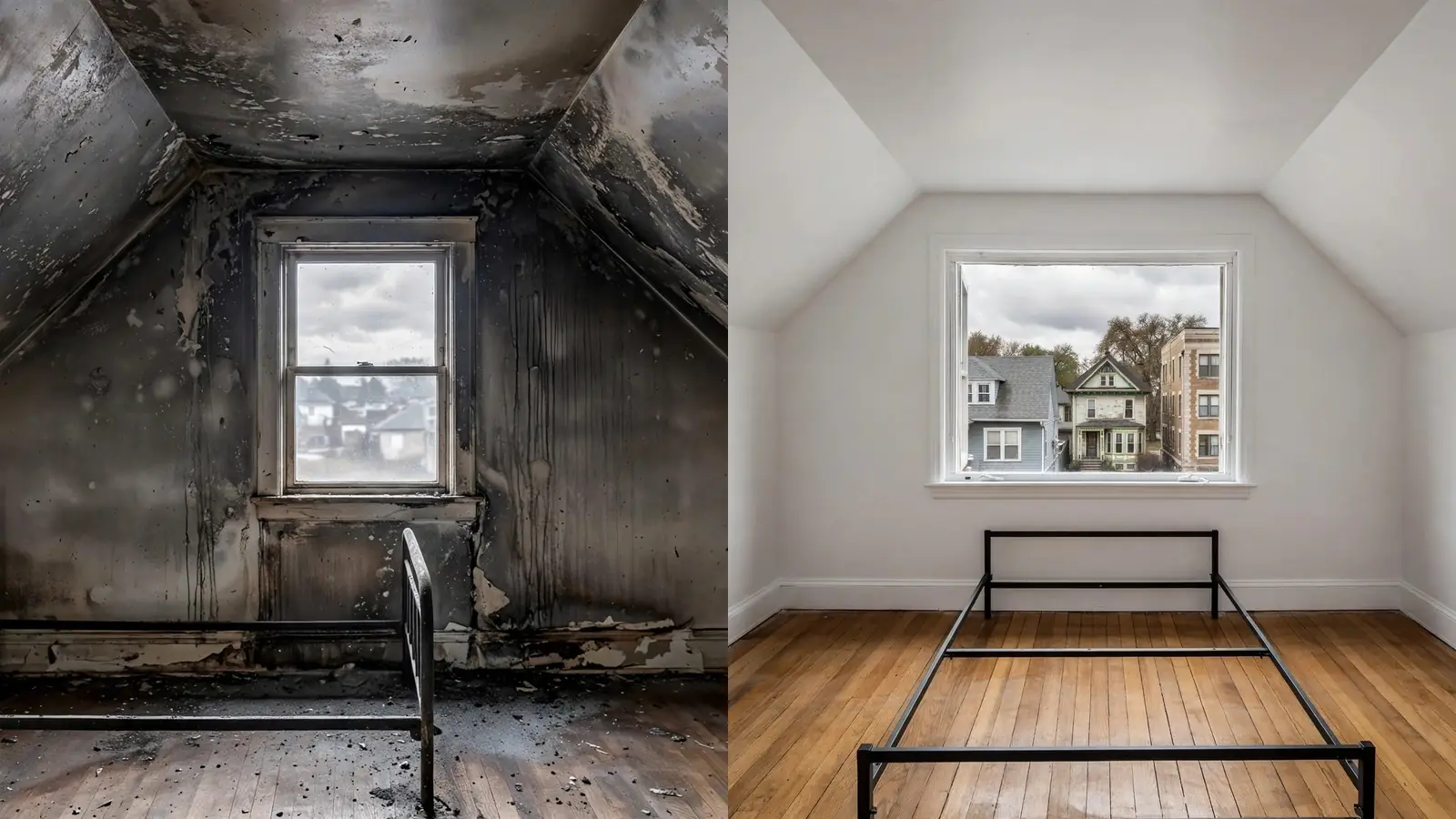
In a story-and-a-half house, the stairway is an open chimney for smoke. Hot gases rise and collect in the small upper rooms under the roof. Plaster ceilings, wood trim and anything stored up there absorb the smell.
Upper rooms are also hard to air out. Small windows and sloped ceilings trap the odor, so the upstairs usually needs the most attention.
Knee-wall storage spaces
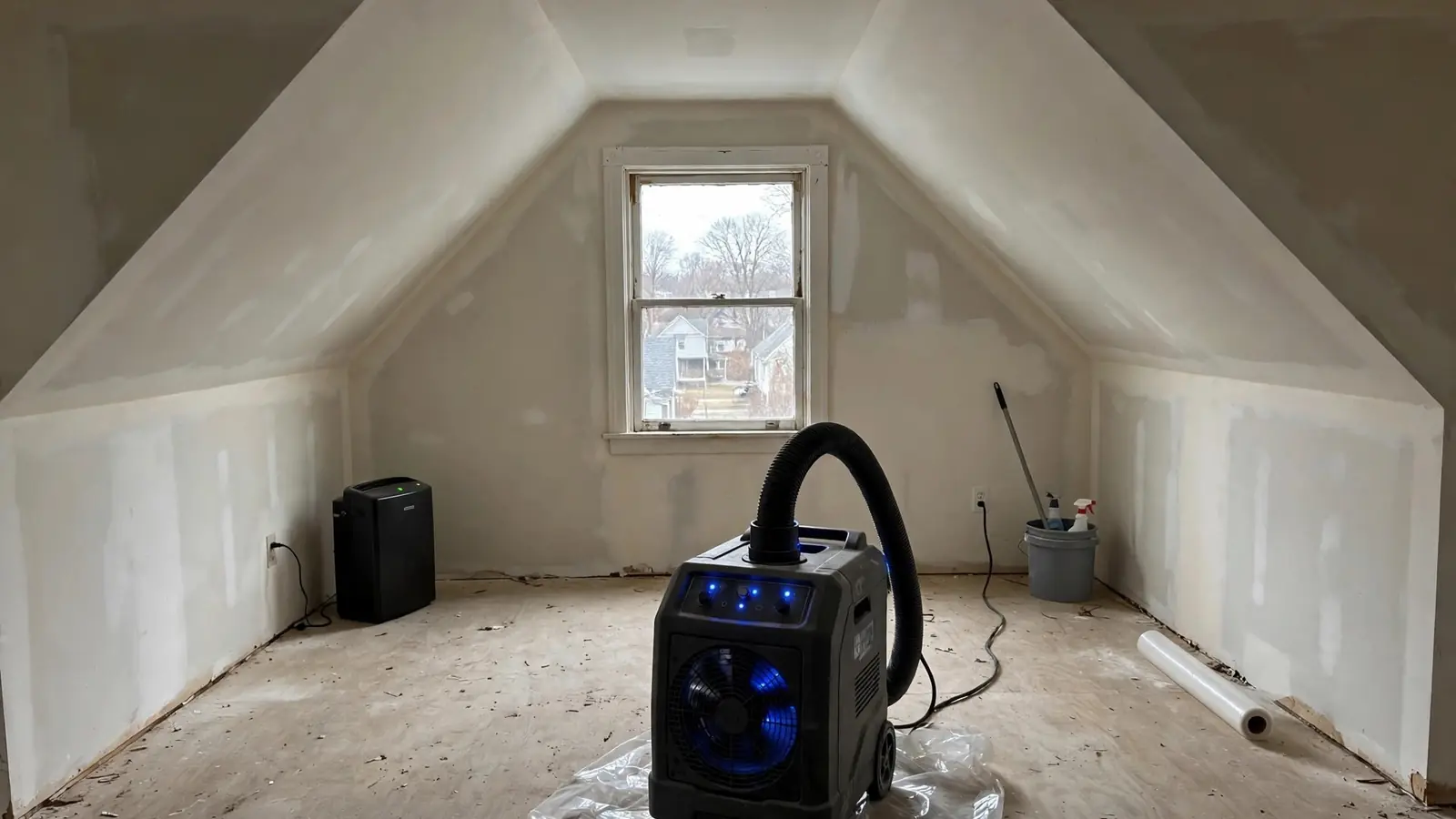
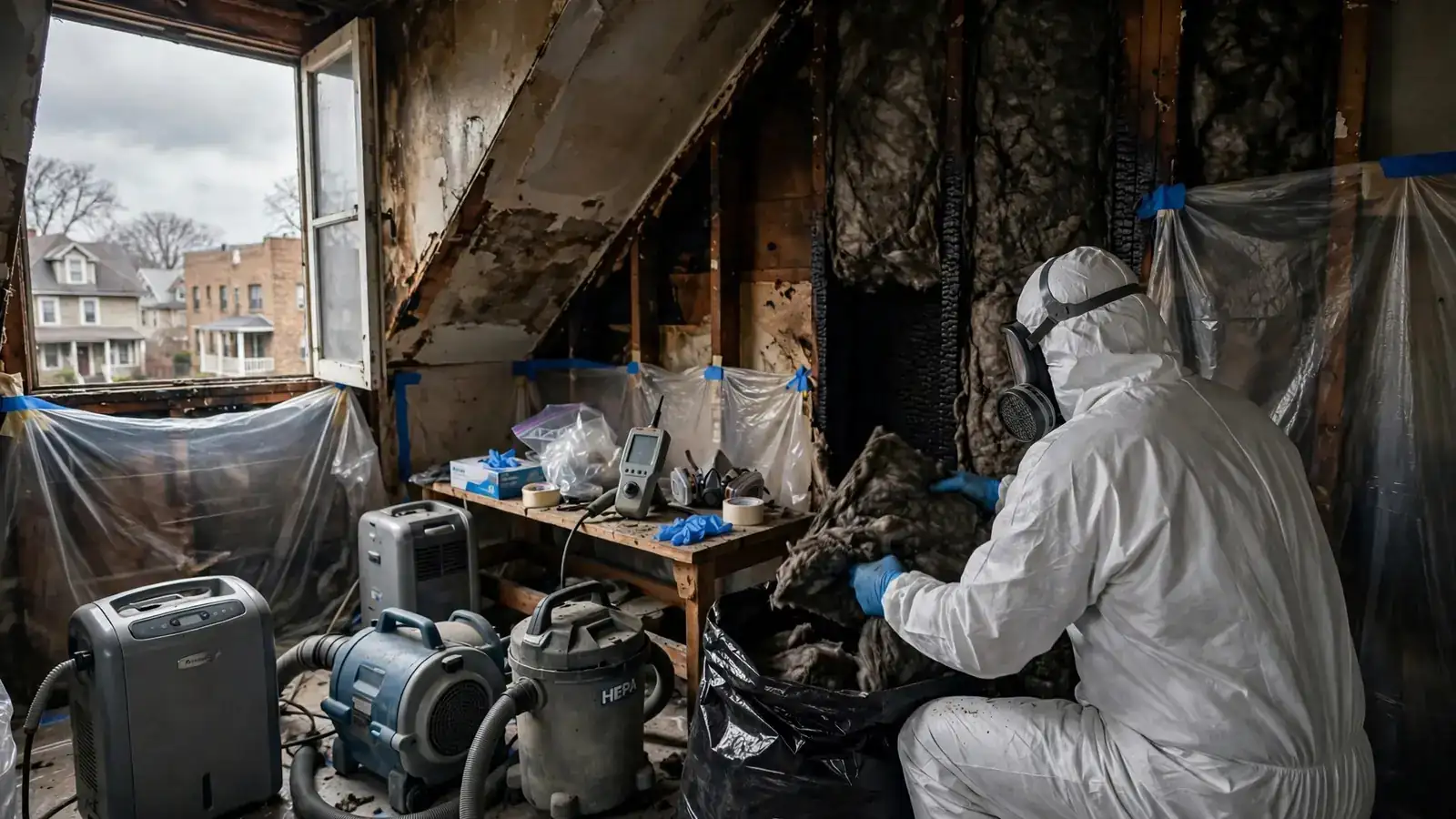
Behind the short walls on each side of the upper rooms are long, low spaces under the roof. People store boxes, clothes and holiday items there. Smoke gets in through the small doors and gaps, and those items and the insulation soak up the smell.
These spaces are emptied, the contents sorted for cleaning or disposal, and the insulation usually removed. The roof boards and framing are cleaned and may be sealed.
Plaster, fir trim and old floors
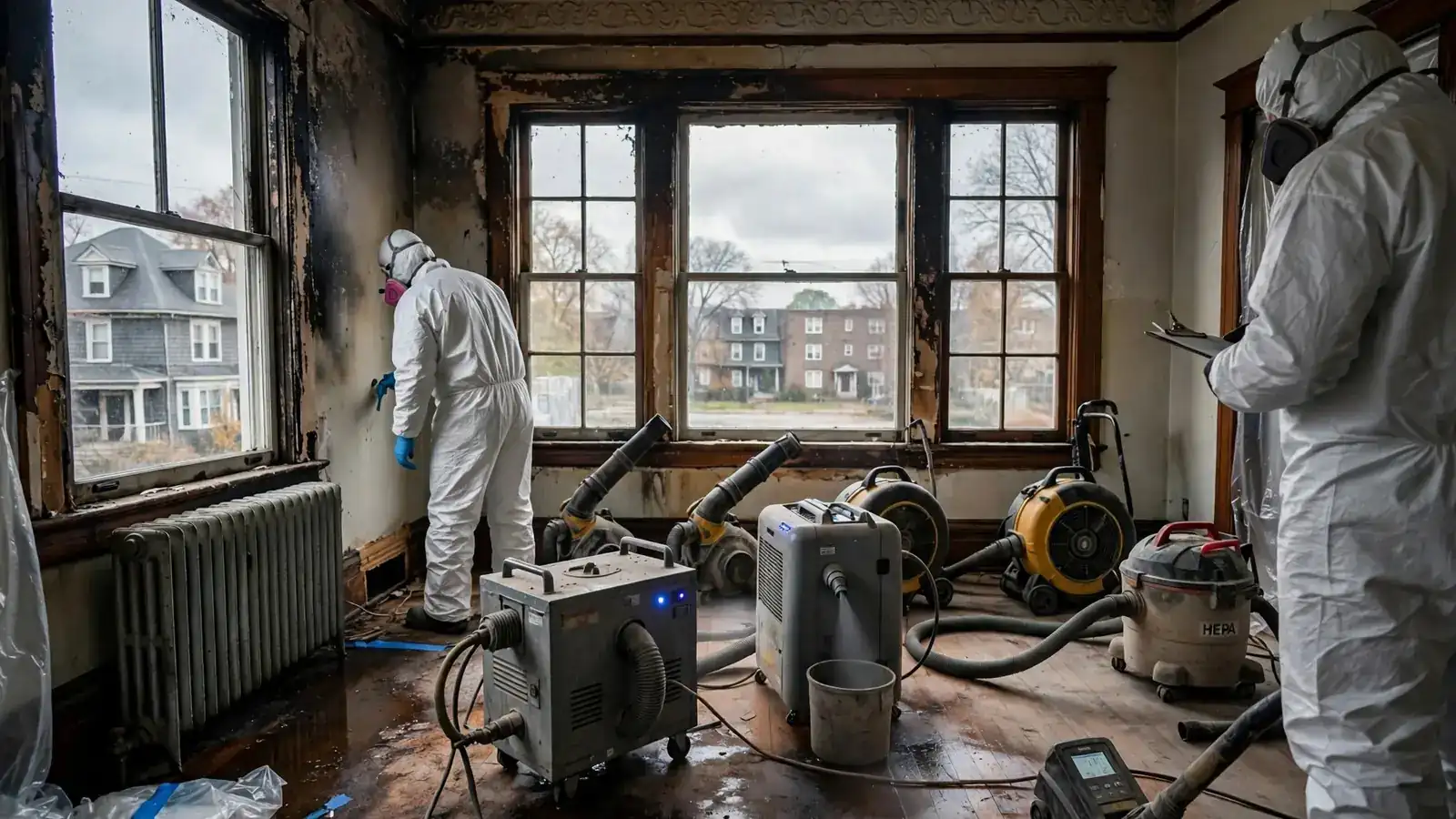
Longfellow homes from the 1910s and 1920s usually have plaster walls and fir or oak trim and floors [7]. Plaster holds less odor than drywall. Wood absorbs more, especially unfinished wood inside closets and cabinets.
Cleaning the wood, then sealing any bare surfaces, often clears the smell. Painted surfaces from before 1978 may contain lead, so any sanding should follow lead-safe practice.
Clearing smoke smell from a Longfellow home
A typical order of work.
- 1
Map the odor floor by floor
Upstairs, knee walls, main floor, basement and garage.
- 2
Empty and clean storage spaces
Knee-wall areas and closets come first upstairs.
- 3
Clean walls, trim, floors and ducts
Residue comes off before any deodorizer [2].
- 4
Treat the empty house
Air scrubbers or other treatments run without people or pets present [3].
Basements, boilers and radiators
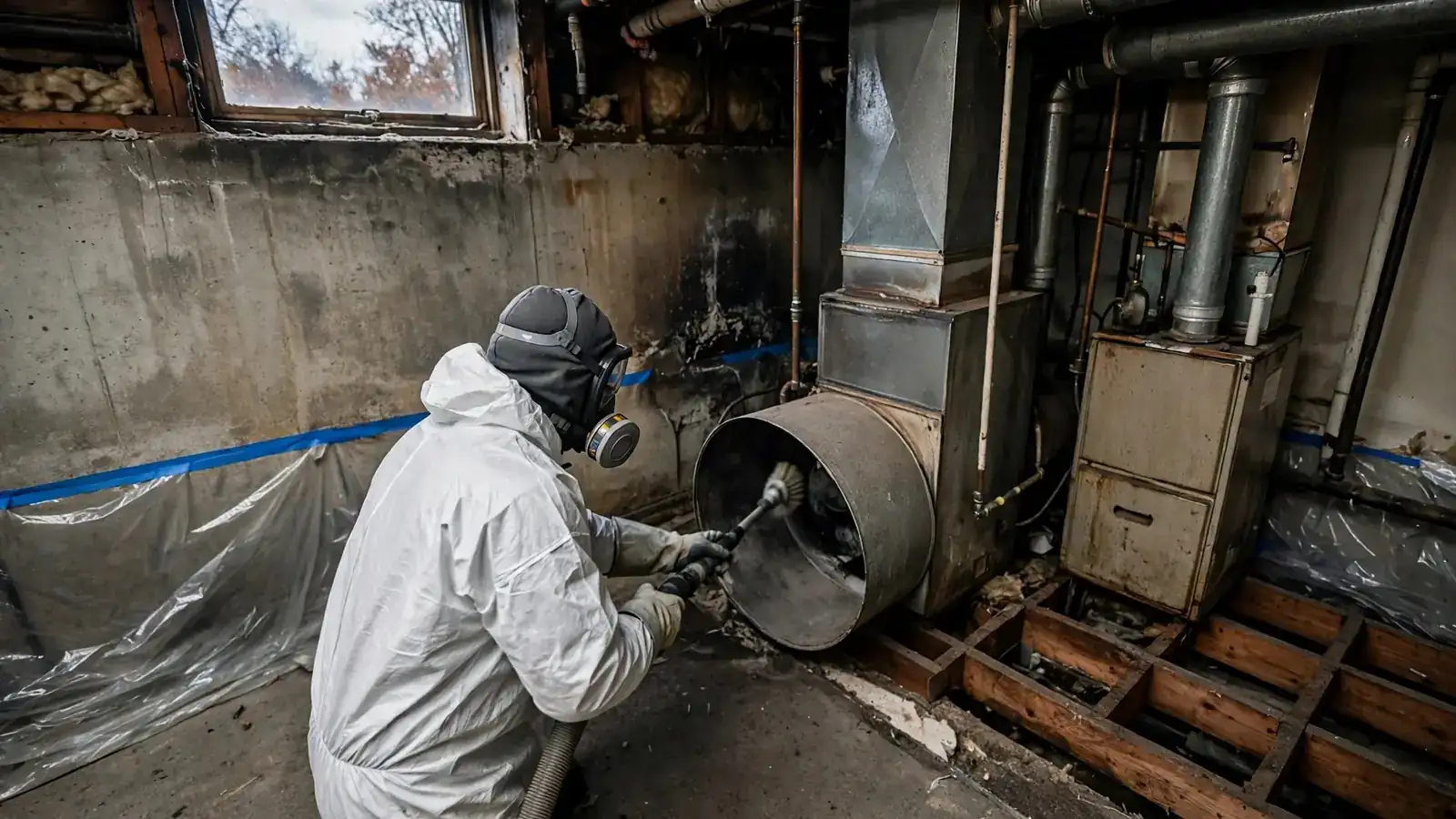
Many Longfellow homes still have boilers and radiators, while others have forced-air furnaces. Radiators collect residue on their fins and release odor every time they heat up. They need careful cleaning.
In forced-air houses, ducts carry smell through the house. They are cleaned and filters replaced. In the basement, damp from firefighting water can add a musty note [4].
Winter and the closed-up house
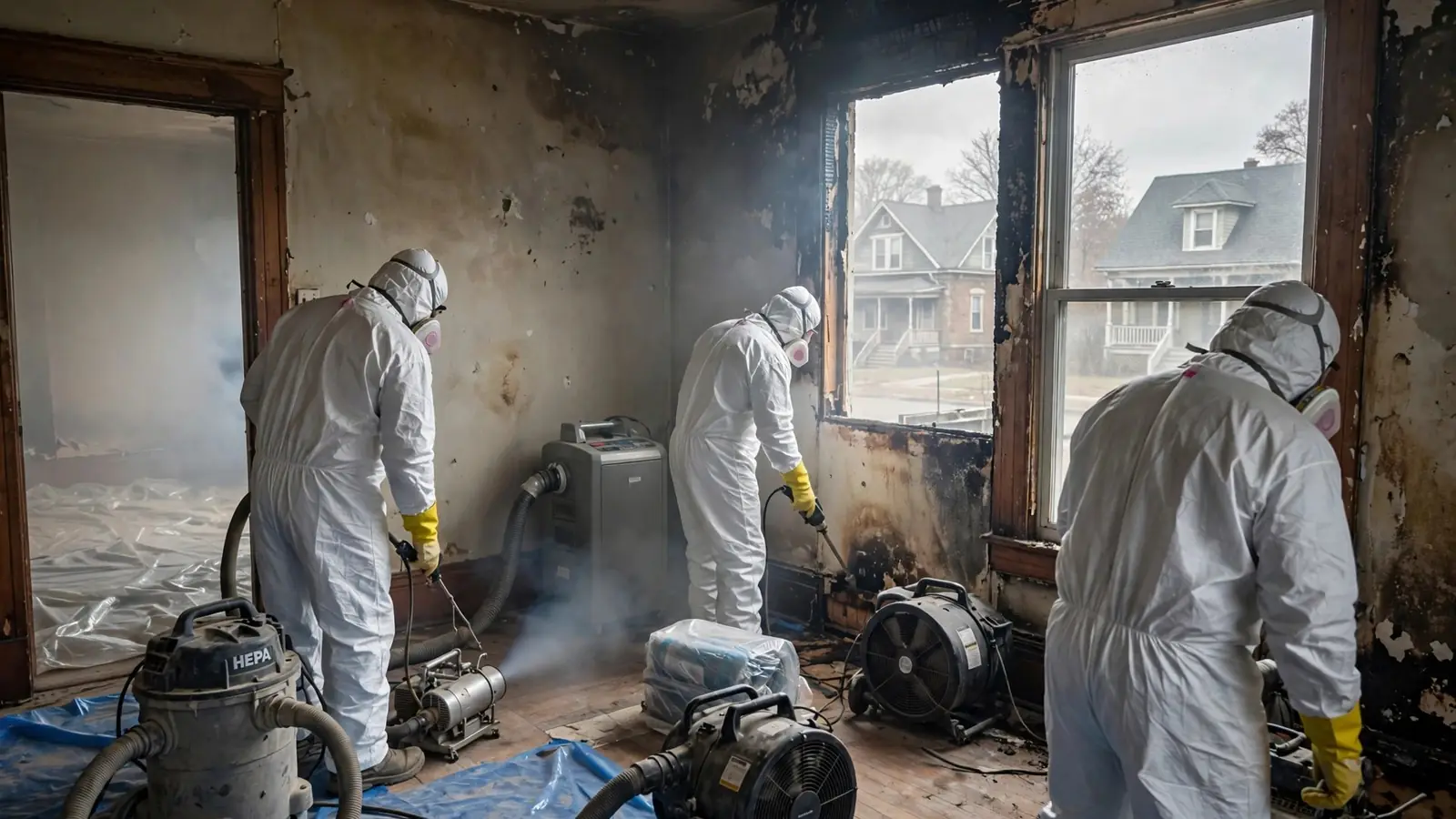
In winter, windows stay closed and the heat runs. Any odor left in the house cycles through it. Running air scrubbers during cleanup and after helps.
Plan the final deodorizing step for a time when the house can be empty. Mention to the contractor if you need to stay in part of the house.
Why ozone is not a shortcut
Ozone generators are marketed for smoke odor. The EPA warns ozone can damage the lungs and does not remove residue [3]. Any use must be in an empty house, and it should never replace cleaning.
Read our guide on smoke odor that won't go away for why smell sometimes returns after a quick fix.
Odor sources to check in a Longfellow bungalow
Mention them on your call.
- Built-in buffets and china cabinetsUnfinished interiors hold smell.
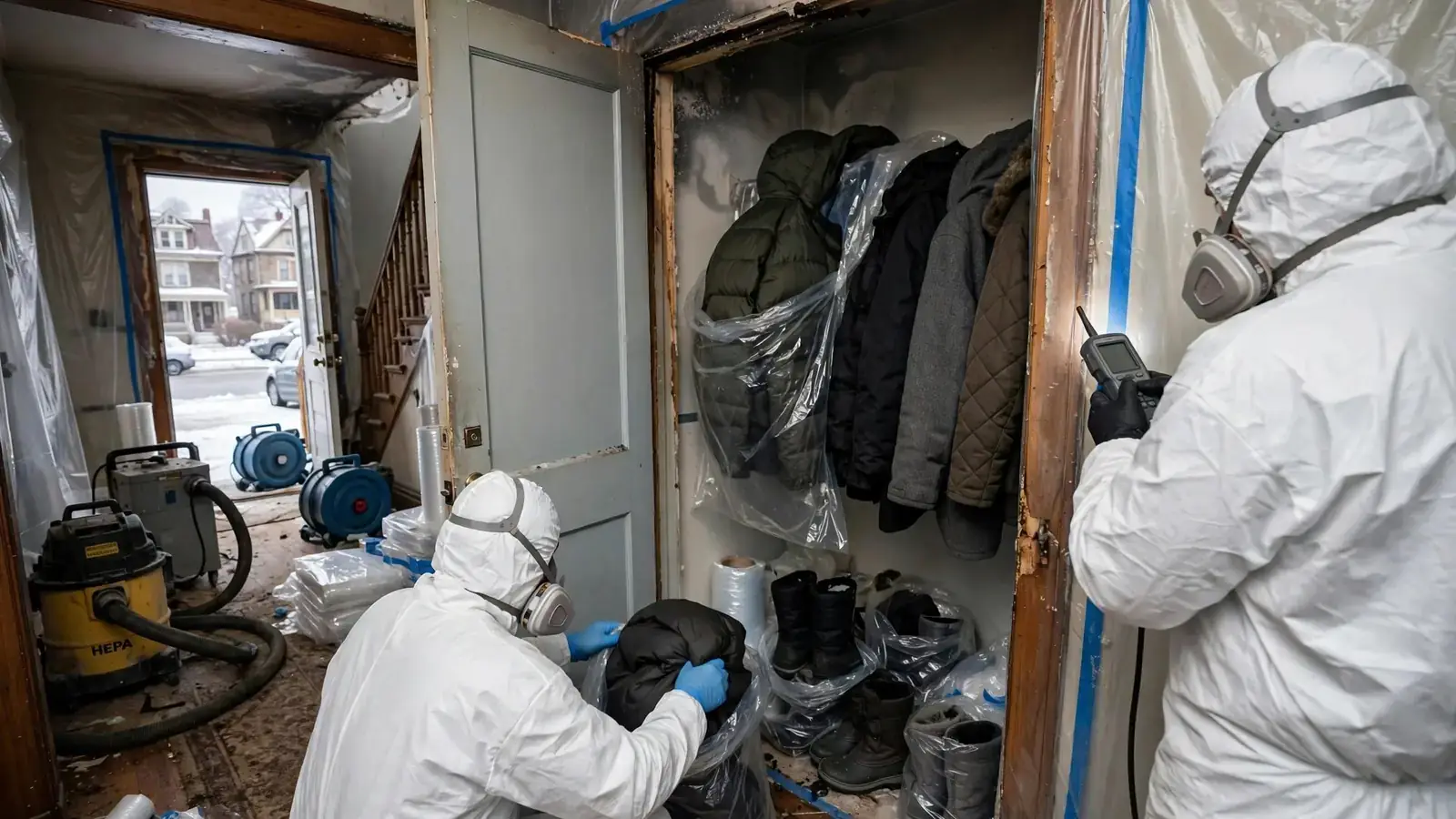
- Upstairs closets under the eavesClothes and boxes trap odor.
- Radiator fins and coversThey release smell when warm.
- Boxes on the Longfellow basement floorDamp cardboard adds mustiness.
Clothes, bedding and books
Soft goods hold smoke odor stubbornly. Many can be professionally cleaned. Items near the fire may not recover.
Photograph and list everything you discard for the claim [5].
Longfellow kitchens at the back of the house
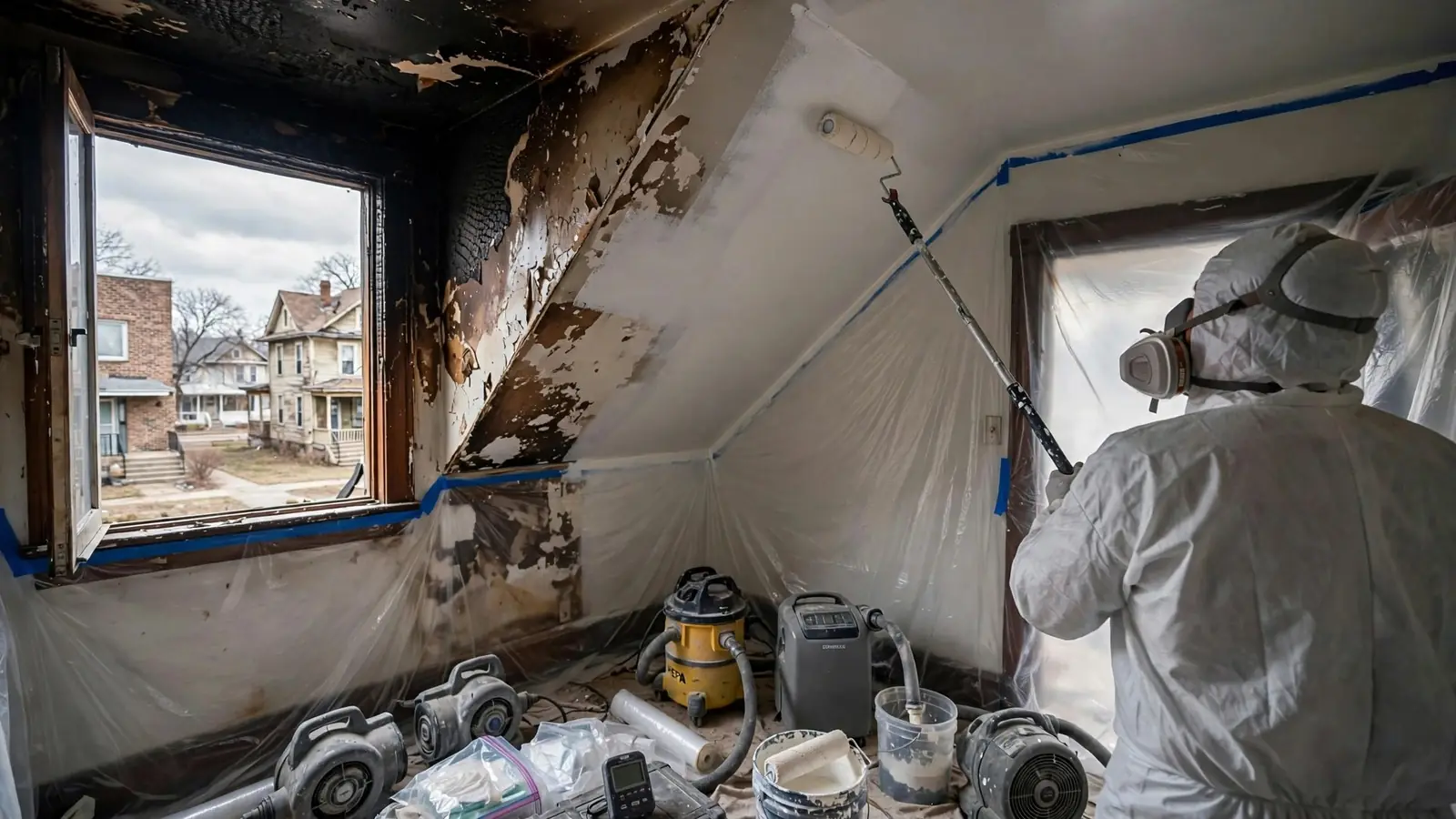
Kitchens in Longfellow bungalows usually sit at the rear, next to the back entry and the basement stair. A cooking fire there leaves a greasy protein film with a sharp smell that spreads up the stair to the half story and down into the basement. It is hard to see but easy to smell.
Degreasing cleaners are needed on cabinets, walls and the ceiling above the range. Inside cabinets and drawers, every surface is wiped, and shelf paper or liners are thrown out. Small appliances near the fire are often better replaced.
Detached garages and alley-side odor
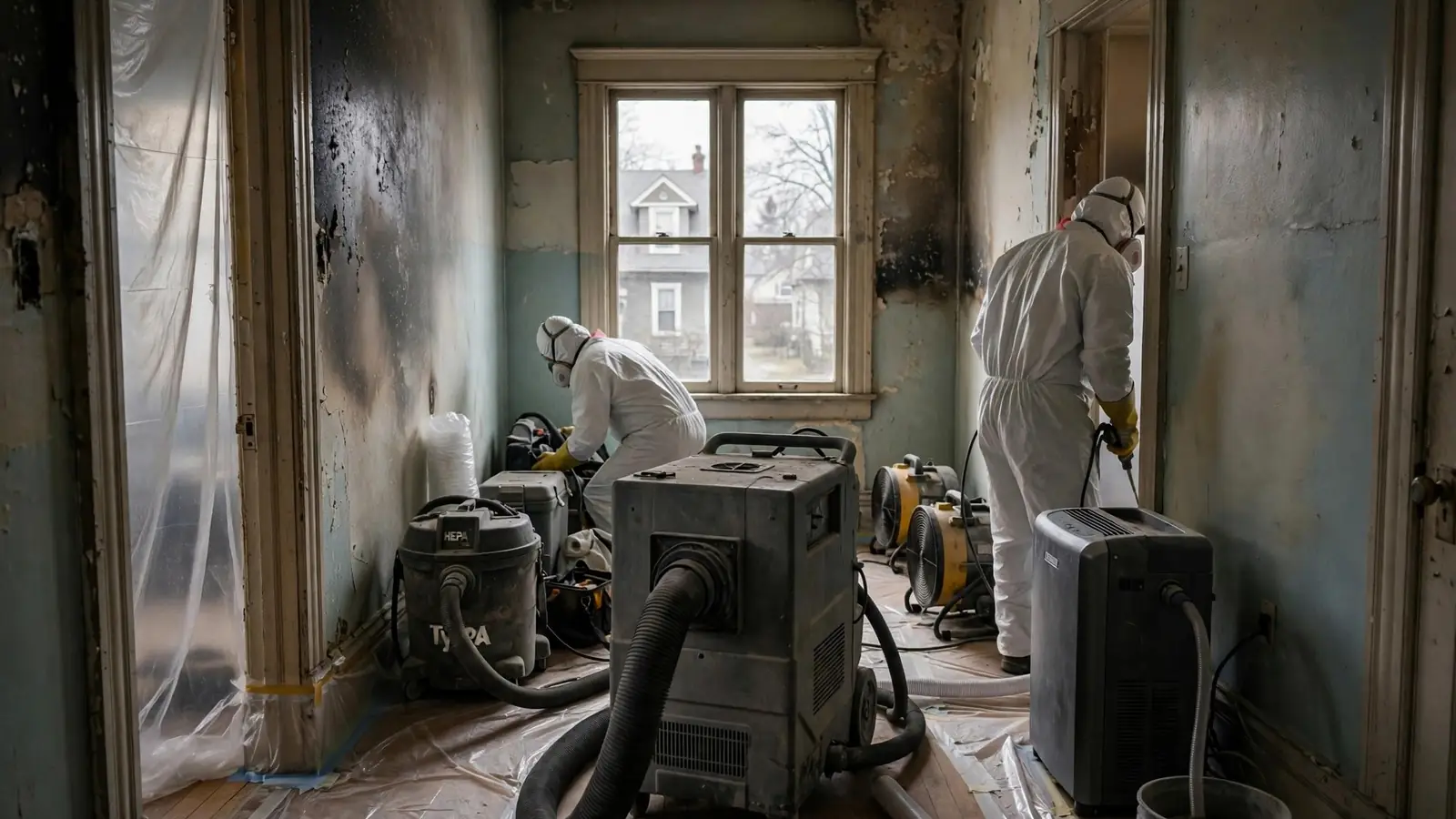
Many Longfellow lots have a detached garage on the alley. A garage fire can push smoke toward the house through open windows or the back door, and garage contents like tools, bikes and stored furniture carry the smell. These items are sorted, cleaned or listed for the claim like anything else.
If the garage and the house both smell, mention it on the call so the contractor plans for both buildings rather than discovering the second one later.
Insulation testing before removal
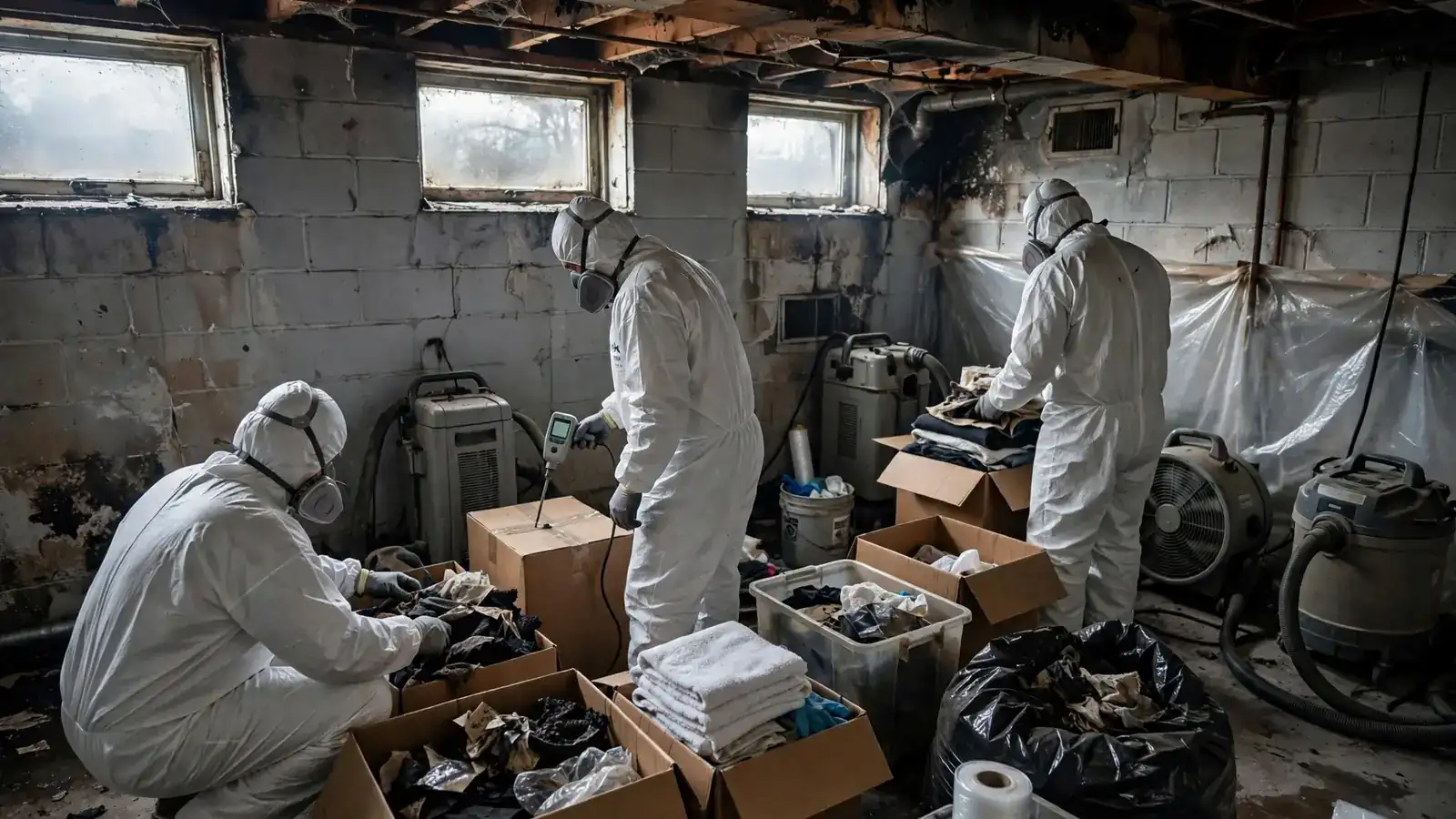
Older houses may have vermiculite or other loose-fill insulation in the attic and knee walls. Some of it may contain asbestos [6]. Test before anyone removes it.
Once cleared, new insulation goes in after the space is cleaned and clear of smell.
FAQ
Smoke Odor Removal in Longfellow: questions
Why does my upstairs still smell after cleaning downstairs?
Smoke rises in a bungalow and collects in the half story and knee walls. Those spaces need their own cleaning.
Do radiators hold smoke smell?
Yes. Residue on the fins releases odor when they heat. They need cleaning.
Can I stay in my Longfellow house during odor treatment?
Not during some treatments. Ask the contractor which steps require the house to be empty.
Sources and citations
- [1]U.S. Fire Administration: After a fire
- [2]IICRC: S700 Standard for Professional Fire and Smoke Damage Restoration
- [3]U.S. EPA: Ozone generators that are sold as air cleaners
- [4]Minnesota Department of Health: Mold and moisture in homes
- [5]Minnesota Department of Commerce: Disaster Information Center
- [6]U.S. EPA: Protect your family from exposures to asbestos
- [7]Wikipedia: Longfellow, Minneapolis