Key facts: Smoke odor that won't go away
- Smoke smell comes from tiny particles clinging to walls, furniture, floors and clothing [1].
- IICRC S700 treats odor control as a step after residue removal, not a replacement for it [2].
- Ozone generators can harm health and should not be used where people or pets are present [3].
- Damp materials can grow mold and add a musty smell, so drying comes before odor treatment [4].
Short answer
Lingering smell means lingering residue
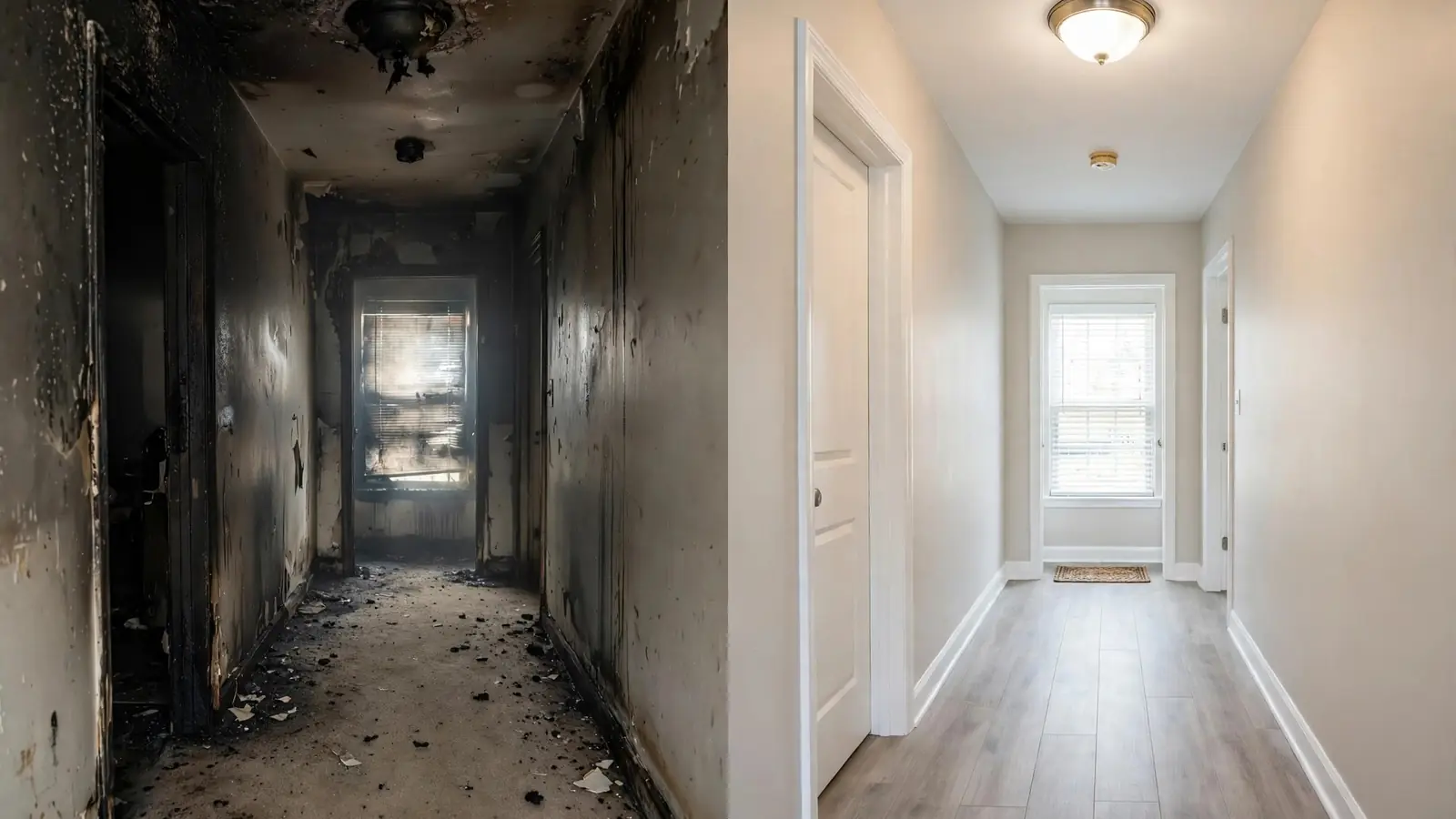
The odor after a fire comes from residue: particles and compounds stuck to and soaked into materials [1]. Warmth releases more of it. In Minneapolis, the heating season makes that obvious: radiators warm soot on and around them, forced-air systems push air through smoky ducts, and the house is closed up so the smell has nowhere to go.
The fix is to find where the residue is, clean or remove it, and seal what cannot be fully cleaned. The usual hiding places are the heating system, knee-wall and attic spaces, closets and stored belongings, the basement and anything painted over without a sealer.
Diagnose it
What the smell pattern points to
| What you notice | Likely source | What usually fixes it |
|---|---|---|
| Stronger when the heat runs | Ducts, furnace, radiators | Clean the heating system; change filters often |
| Strongest upstairs | Half-story rooms, knee walls, attic | Open, empty, clean and seal; replace insulation |
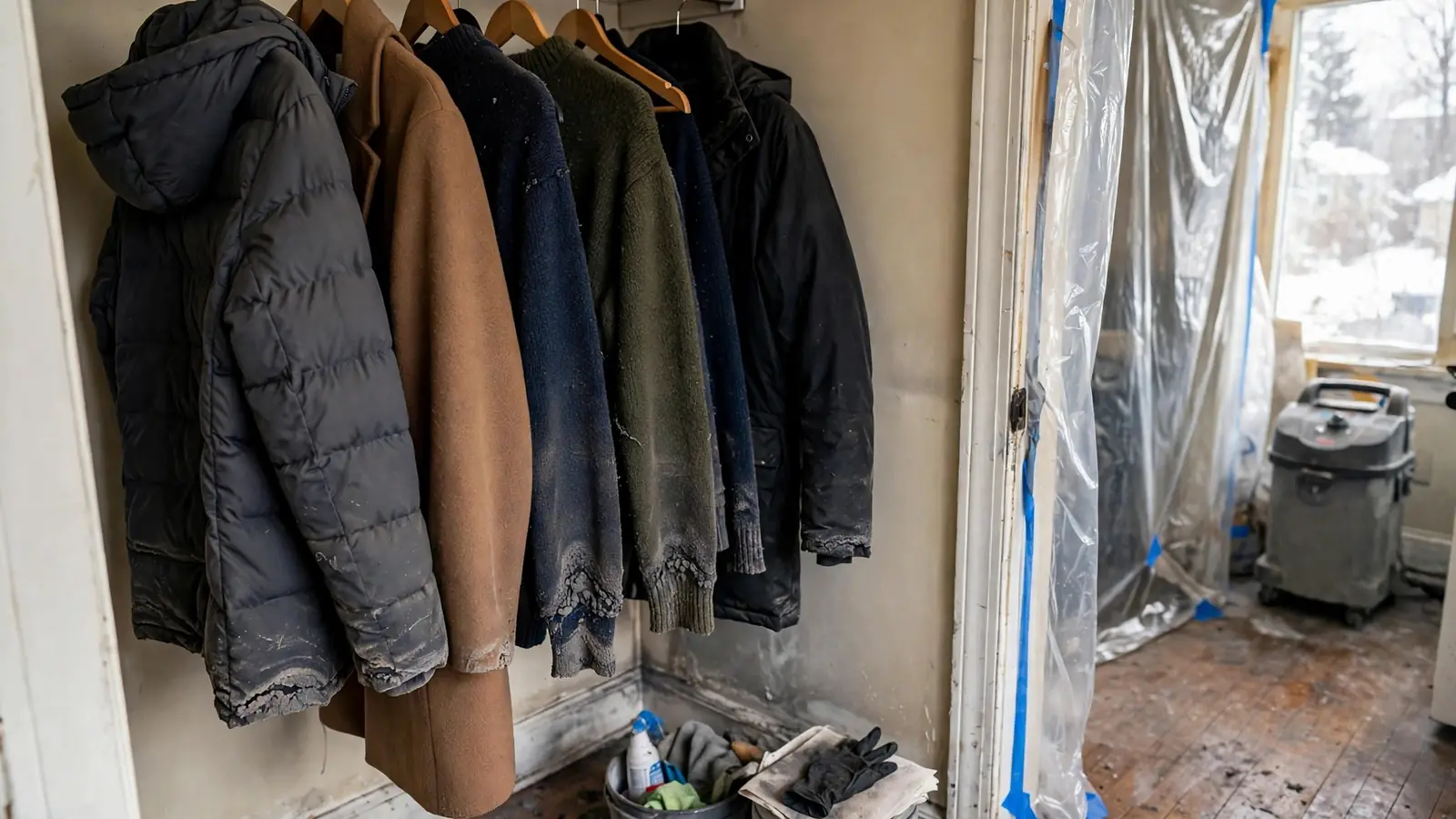
| Closets smell worst | Coats, linens, stored boxes | Send textiles for smoke cleaning; wash closet walls and shelves |
| Rising from the basement | Stored items, joists, laundry chute | Sort contents; clean and seal basement surfaces |
| Through new paint | Residue painted over | Clean, odor-blocking primer, repaint |
| Musty and smoky | Damp materials | Dry or remove; check for mold |
Check yourself
Simple checks you can do
- The heating testOn a cold day, close the house, let the heat run for a couple of hours, then walk every room and closet.
- Pull the furnace filterA grey or smoky filter shortly after a change means residue is circulating.
- Open the knee-wall doorsSmell each storage space behind the upstairs walls.
- Sniff the laundry chute and basementChutes and stored items below often hold odor.
- Wipe a radiator finA tissue that comes away grey means radiators still need cleaning.
Source 1
The heating system
If a forced-air furnace ran during or after the fire, it pulled smoke into the return and pushed residue through every supply duct. Until ducts, the blower and the furnace cabinet are cleaned, each heating cycle delivers a little odor to every room. Insulated flex duct and duct board often need replacing.
Radiators do not spread smoke through ducts, but soot sits in their fins and on the wall behind them. As they heat, odor rises into the room. Radiators need vacuuming and washing, and walls behind them cleaning and sealing.
Source 2
Half stories, knee walls and attics
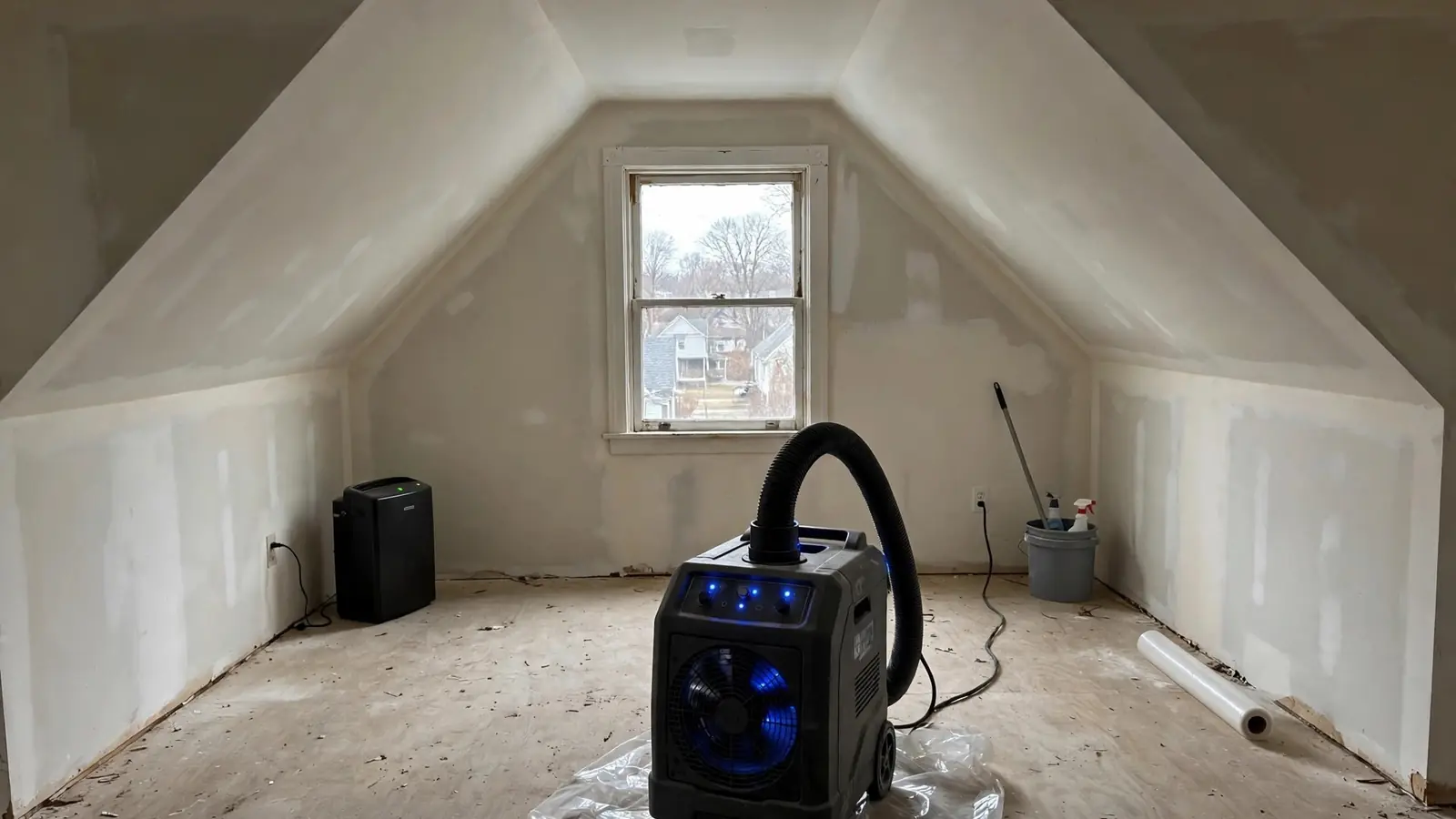
Story-and-a-half houses, common across Minneapolis, have storage spaces behind the upstairs knee walls. Smoke rising through the stairway settles there, on roof boards and old insulation and in stored items. Because these spaces are closed off, they are easy to miss during cleanup and keep the upstairs smelling.
Every knee-wall space and the attic above should be opened, emptied, cleaned and sealed, with smoky insulation removed. Older loose-fill insulation should be tested before removal.
Source 3
Closets, coats and stored belongings
Wool coats, down jackets, blankets and sweaters absorb smoke deeply and hold it for months. Boxes in closets and basements do the same. Professional cleaning designed for smoke damage works far better than home washing for textiles, and closet walls and shelves need cleaning too.
The fix
How a contractor tracks down lingering odor
- 1
Map where it smells
Every room, closet, knee wall, attic and the basement, with the heat running.
- 2
Remove sources
Smoky insulation, carpet pad and items beyond cleaning.
- 3
Clean surfaces and contents
Walls, ceilings, woodwork, radiators, floors and belongings.
- 4
Clean the heating system
Ducts and furnace, or radiators and covers.
- 5
Treat and seal
Fogging or hydroxyl treatment, ozone only in empty spaces, then odor-blocking primer.
- 6
Retest in cold weather
Heat running, house closed, every space checked again.
Avoid
What does not work
- Air fresheners and candlesThey mask the smell and make sources harder to find.
- A home ozone machineOzone can harm lungs and should not be used around people or pets [3].
- Painting without sealingOdor bleeds through ordinary paint once walls warm.
- Opening windows in JanuaryIt risks frozen pipes and does nothing about residue.
On the call
Details about the odor worth sharing
- Where the fire began and which materials burned
- Whether the smell changes when the heat runs
- Which rooms, closets and storage spaces smell strongest
- Your heating type: furnace, boiler with radiators or both
- Anything already cleaned, repainted or deodorized
Source 4
Basements, laundry chutes and the floor above
Basements hold years of stored belongings, and the underside of the first floor, with its exposed joists and subfloor, absorbs smoke that drifted down. Laundry chutes connect the upstairs to the basement and collect soot inside. Because the furnace or boiler is usually in the basement, odor there spreads quickly once the heat runs.
Clearing basement odor means sorting stored items, cleaning joists, subfloor and walls, cleaning or sealing the laundry chute, and sealing porous surfaces. If firefighting water reached the basement, everything must be dry before odor treatment, or musty smells will mix with smoke.
Basements near lakes and creeks can be damp even without a fire, which slows drying. Dehumidifiers may need to run for several days before odor work begins.
FAQ
Lingering smoke smell questions
Why does the smoke smell come back in winter?
Heat releases odor from residue. Furnaces push air through smoky ducts, radiators warm soot nearby, and the closed-up house traps it. The heating system and hidden spaces need cleaning.
Will an ozone machine fix it?
Not on its own, and it is unsafe to use around people or pets. Restorers use ozone only in empty spaces after cleaning, then ventilate.
Should knee-wall storage be cleaned?
Yes. It traps smoke against the roof and holds stored items that absorb odor. Missing it is a common reason upstairs rooms still smell.
Can smoke smell come out of winter coats?
Often, with professional cleaning made for smoke damage. Items that were near the fire may not fully recover.
How do I know the odor is gone?
Run the heat for a few hours with the house closed on a cold day, then check every room, closet and storage space. Any smell points to residue that remains.
Who answers when I call?
An independent local restoration contractor, connected on the same call. This site does not perform the work.
Does the laundry chute need cleaning?
Yes, if smoke reached the floors it connects. The inside collects soot that keeps releasing odor between floors. It should be cleaned or sealed with the rest of the house.