Key facts: Working with your insurance adjuster
- The Minnesota Department of Commerce advises contacting your insurance agent right away after a fire to start the claim [1].
- Adjusters typically provide a proof-of-loss form, and payment follows once you and the insurer agree on the amount of damage [1].
- Minnesota homeowners choose which contractor repairs their home; the insurer decides what the policy covers [1].
- For work on a Working with your insurance adjuster home, ask about the Minnesota residential contractor licence issued by the Department of Labor and Industry [2].
Short answer
What the adjuster does and how to help
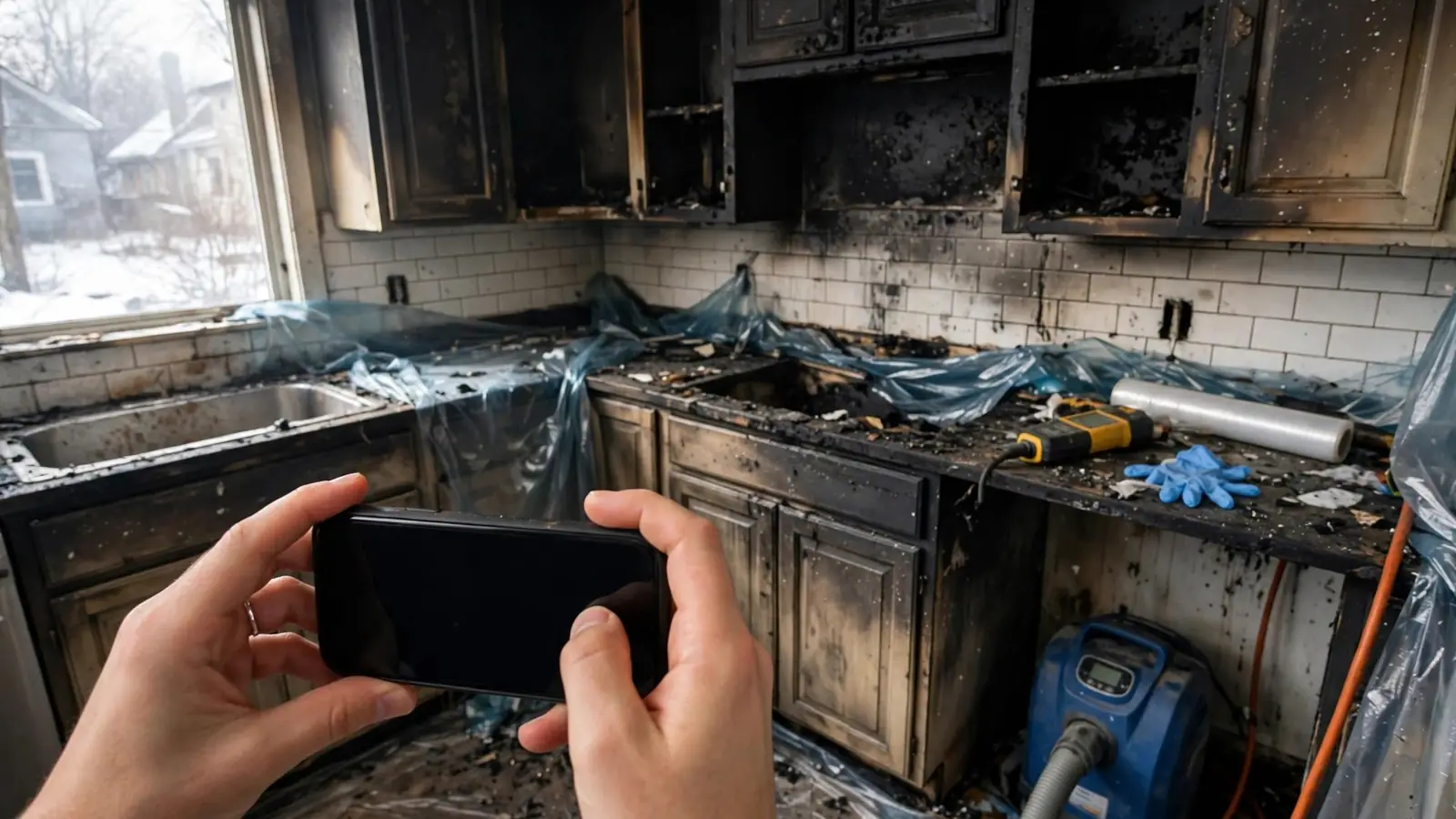
The adjuster inspects the damage, reviews your policy and determines what the insurer will pay. You help the process by documenting everything before it is cleaned or removed, showing the adjuster hidden damage in attics, knee walls, basements and the heating system, keeping a contents list and every receipt, and getting the scope in writing so you can compare it with your contractor's.
The Minnesota Department of Commerce reminds homeowners that they choose their own contractor and offers help if a claim runs into trouble [1].
Who does what
Roles in a Minnesota fire claim
| Who | Role | What to ask |
|---|---|---|
| Insurance adjuster | Inspects damage, applies the policy | When is the visit? What is covered? Is an advance possible? |
| Restoration contractor | Assesses and restores the home | Will you share photos, moisture readings and a written scope? |
| You | Document, protect the property, choose the contractor | Keep records of every call, visit and receipt |
| Minnesota Commerce Department | Regulates insurers, helps consumers | Questions or complaints about a claim |
Before the visit
Getting ready for the adjuster
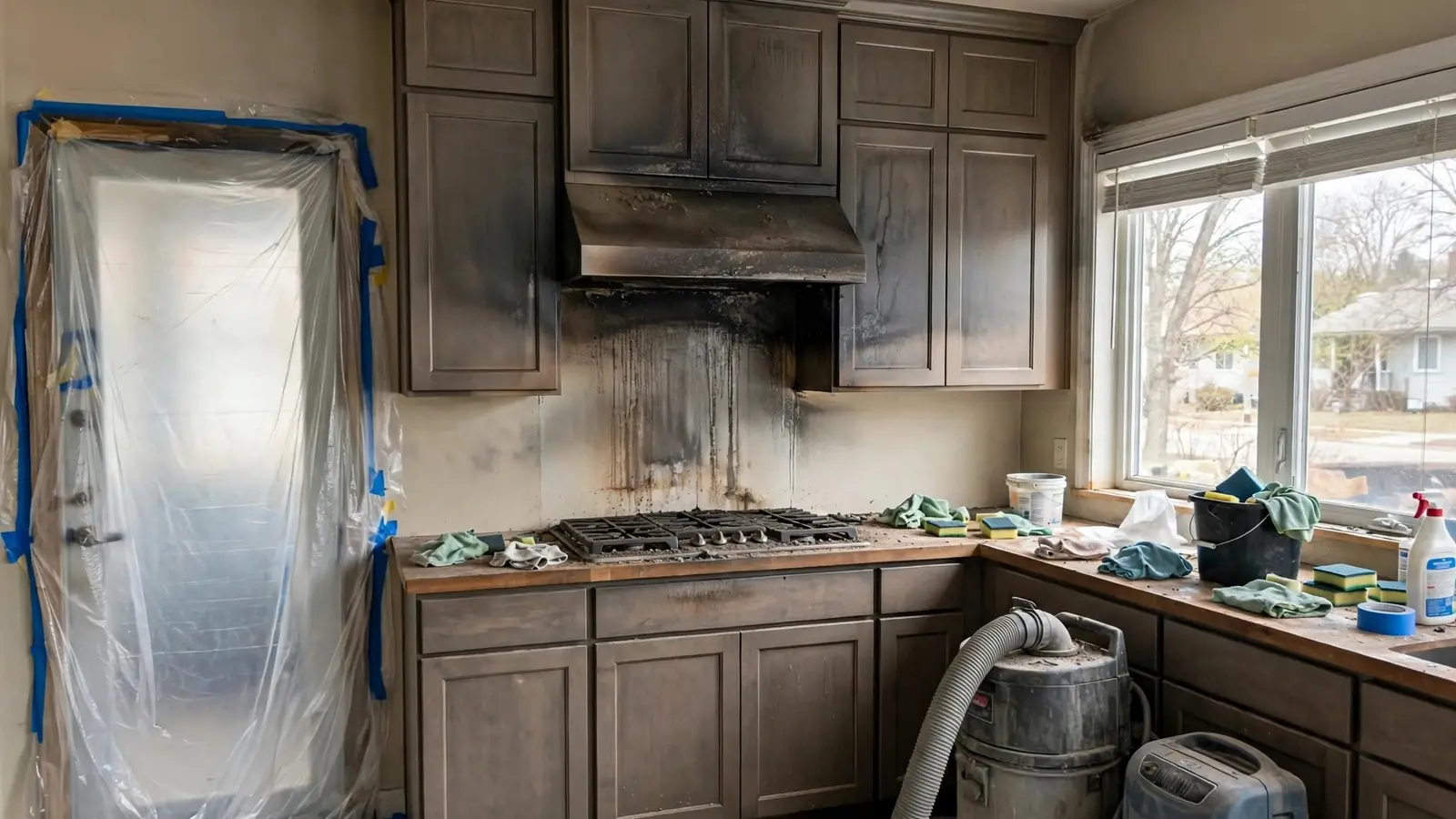
- Photograph every spaceEvery room, closet, knee-wall storage, the attic hatch, the basement, radiators or registers and the exterior.
- Keep damaged itemsHold on to items until the adjuster sees them or approves disposal, unless they are a health hazard; photograph them first.
- Start a contents listRoom by room, with a description and rough age. Old photos and order histories help.
- Gather your policyNote coverage for the dwelling, contents and additional living expenses.
- Log calls and visitsDate, name and what was said, every time.
During the visit
Showing damage that is easy to miss
Burned rooms are obvious; smoke and water damage often are not. In Minneapolis homes, point out the upstairs half story and the knee-wall storage behind it, the attic, the basement where firefighting water collected, the laundry chute, the furnace and ducts or the radiators, and closets full of winter clothing.
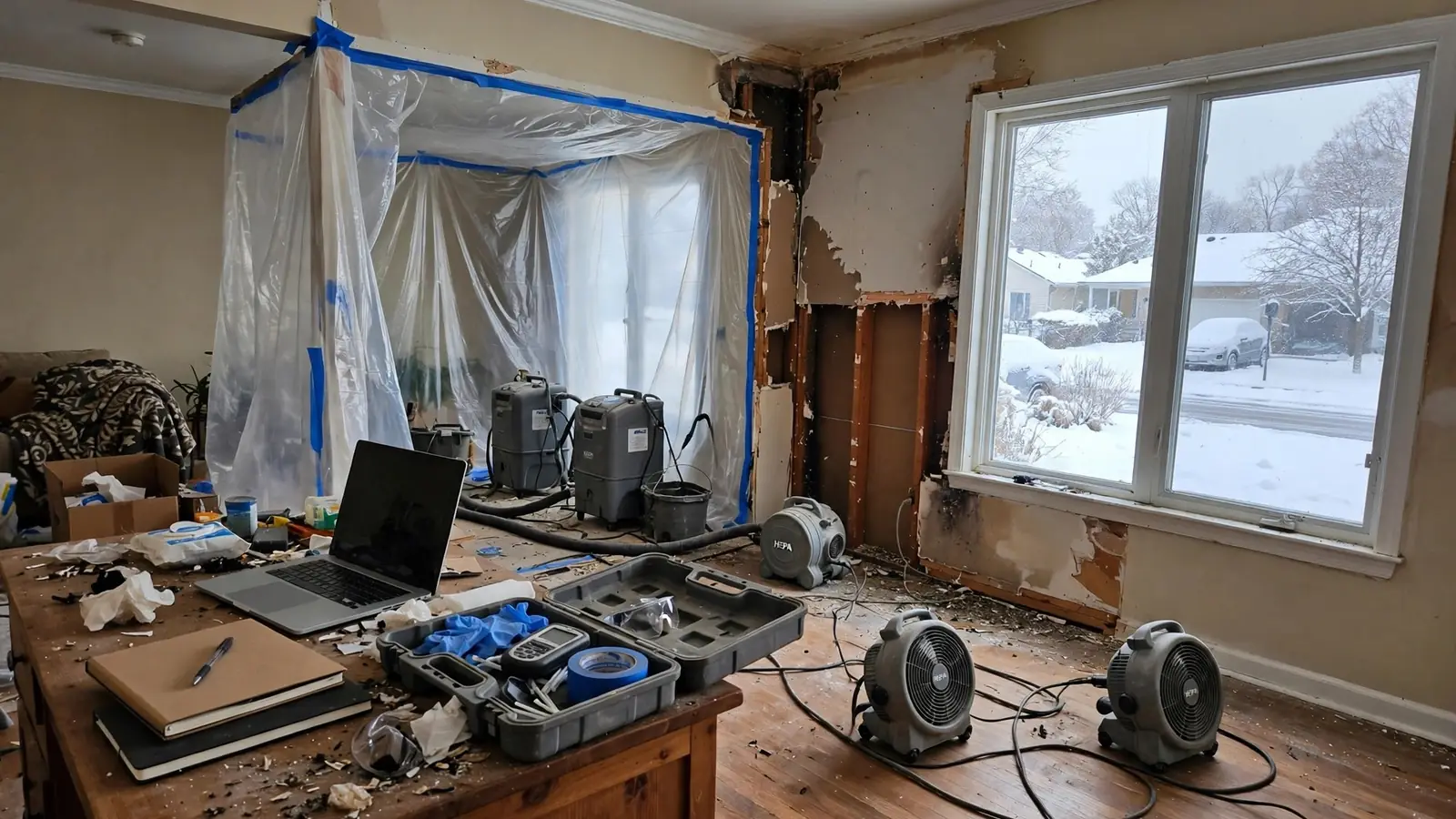
If the fire happened in winter, mention any freeze protection or temporary heat that was needed, and any pipes that froze. Ask your contractor to share photos of opened walls and moisture readings, which help explain why materials must be removed.
After the visit
From inspection to agreed scope
- 1
Get the scope in writing
Ask for the adjuster's estimate, room by room.
- 2
Compare it with your contractor's
Differences usually involve hidden damage or method choices.
- 3
Send supporting documents
Photos, moisture readings and notes that explain each difference.
- 4
Complete the proof of loss
Fill in the form the adjuster provides and return it promptly [1].
- 5
Report new damage
If opening walls or attics reveals more, document it and ask for review.
If you disagree
When you and the adjuster do not agree
- Ask for reasons in writingKnow exactly which items differ and why.
- Add evidencePhotos, readings and contractor notes often settle the difference.
- Check your policyMany policies describe an appraisal process for disputes over amounts.
- Contact CommerceThe Minnesota Department of Commerce helps consumers with questions and complaints about claims [1].
Contents
Building a contents list that holds up
Work room by room, starting with the worst-affected rooms. List each item, its rough age and where it was. Phone photos taken before the fire, order histories and bank statements help show what you owned. Separate items that were destroyed from items that were cleaned, and add the restoration company's cleaned-items list to your own.
It is normal to remember things weeks later. Keep adding to the list and tell the adjuster that you are updating it.
On the call
Claim details to mention on the call
- Your insurer and claim number
- Whether the adjuster has visited
- Items the adjuster asked you to keep
- Whether you need photos, moisture readings or a written scope for the claim
Living elsewhere
Temporary housing and additional living expenses
If your home cannot be lived in, many policies include additional living expenses coverage, sometimes called loss of use. Ask your agent early how your policy handles hotel stays, rentals, meals and other extra expenses, and whether there is a time or amount limit. Keep every receipt, and keep a simple log of where you stayed and for how long.
In winter, a family may need somewhere warm quickly while the house is protected from freezing. Tell the adjuster about any freeze protection or temporary heat that was needed, since those steps protect the property from further damage.
Renters should check their own renters policy, which may cover temporary housing and belongings. A landlord's policy usually covers only the building.
Contractors
Choosing and checking a contractor
You can choose who restores your home. Ask the contractor about their Minnesota license, which the Department of Labor and Industry issues for residential building contractors, and check it with the state if you wish. Ask how they document work for insurance: photos, moisture readings, written scopes and change orders.
Read any contract before signing, especially forms that assign insurance benefits to the contractor. Take time to understand what you are agreeing to; there is no need to sign anything on the spot.
FAQ
Questions Minnesota homeowners ask about adjusters
Do I have to use the restoration company my insurer suggests?
No. Minnesota's Commerce Department reminds homeowners that they choose their contractor. The insurer decides what the policy pays for.
Should I clean up before the adjuster arrives?
Take steps to prevent further damage, such as freeze protection, board-up and water extraction, but photograph everything first and keep damaged items until the adjuster sees them.
What is a proof-of-loss form?
A form the adjuster usually provides where you state the damage you are claiming. Complete it accurately and return it promptly, since payment follows agreement on the amount.
What if more damage shows up later?
Document it with photos and readings and ask the insurer to review it. Hidden damage often appears once walls, ceilings or attics are opened.
Where can I get help with a claim problem?
Start with your insurer. If that does not resolve it, the Minnesota Department of Commerce helps consumers with insurance questions and complaints.
Can a contractor help me understand the damage?
Yes. Call to speak with an independent local restoration contractor on the same call. Coverage decisions remain with your insurer.
Will my policy pay for somewhere to stay?
Many policies include additional living expenses coverage when the home cannot be lived in. Check your limits with your agent and keep every receipt.