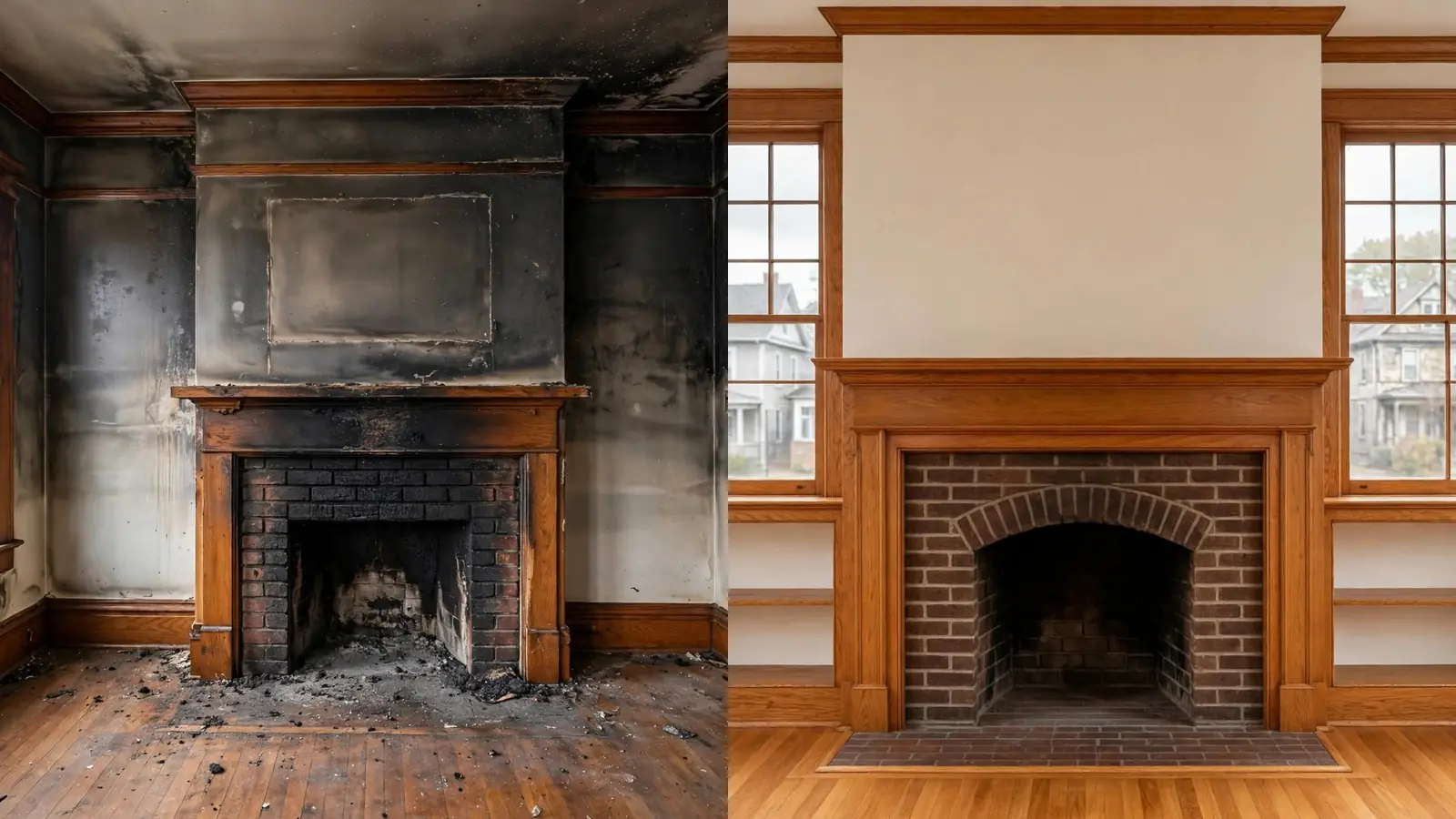
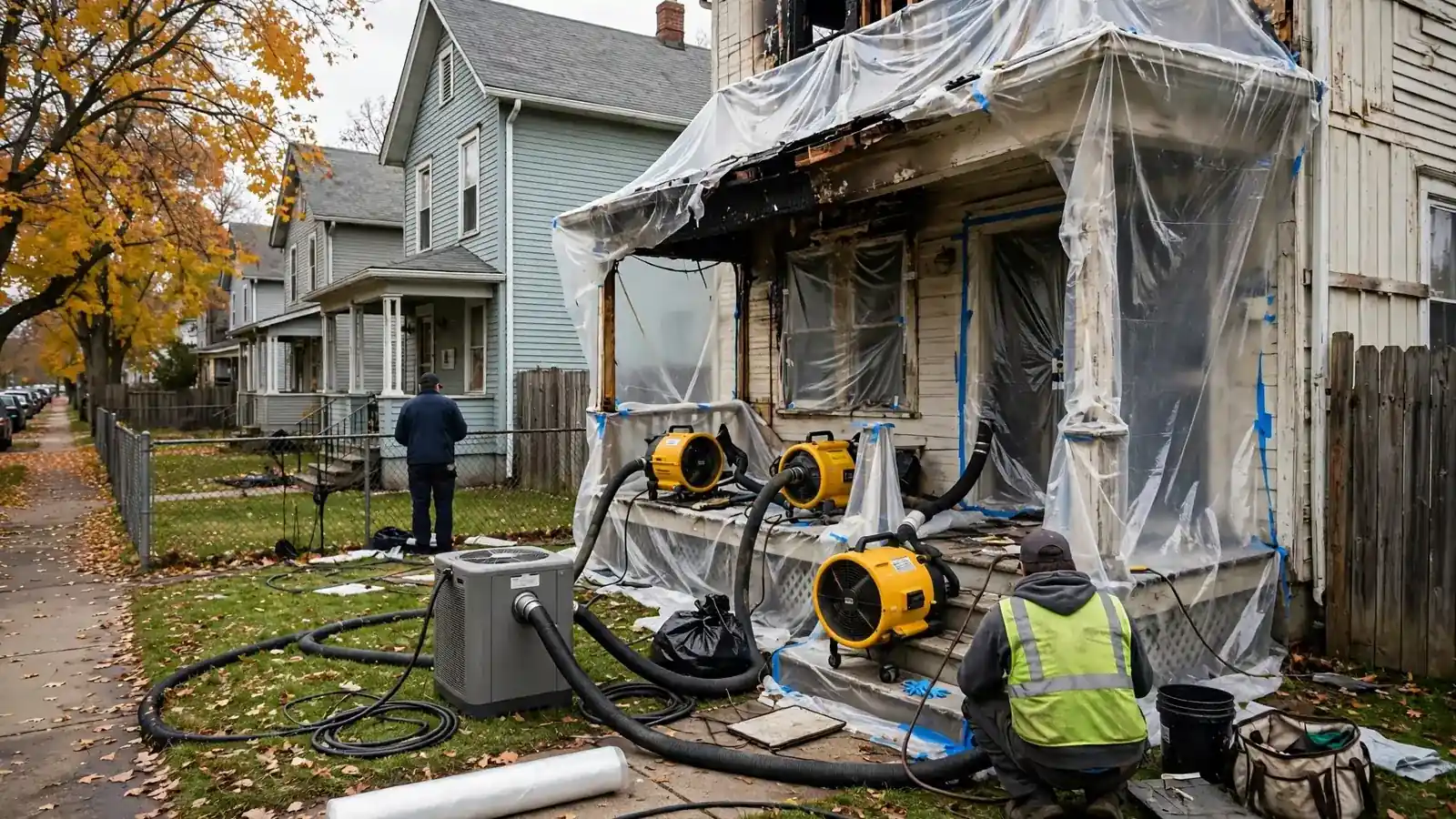
Key facts: Soot Removal in Camden
- The U.S. Fire Administration advises understanding soot's health risks before starting to clean [1].
- The IICRC S700 standard explains how professionals pick dry or wet methods for fire residue [2].
- Older building materials such as pipe wrap or floor tile may contain asbestos and should be tested before they are disturbed [3].
Where soot gathers in a Camden house
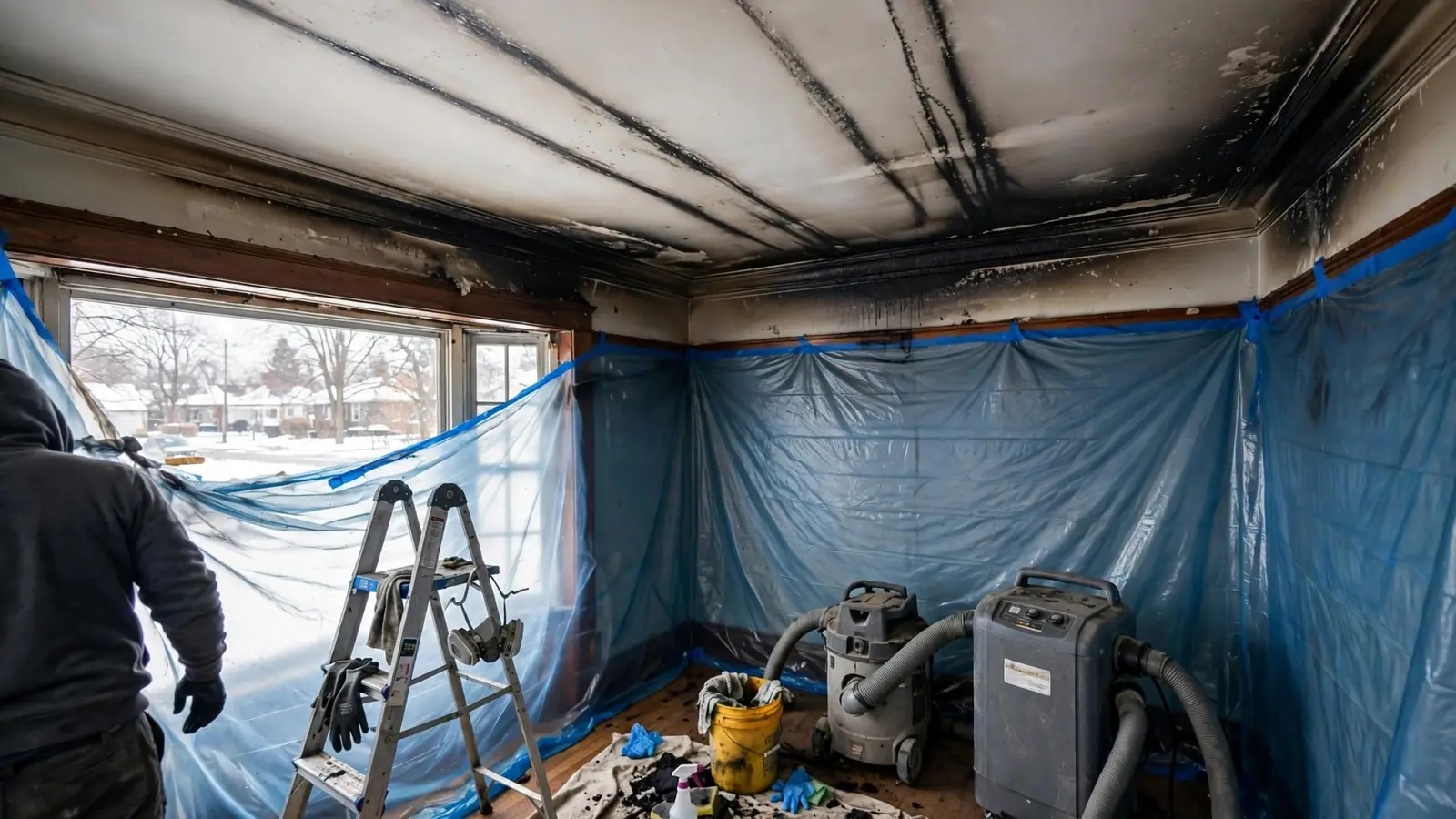
Soot follows rising air. In a story-and-a-half house it streaks up the stairway walls, darkens the ceilings of upstairs rooms and collects on the top edges of doors and trim. Gray outlines where pictures hung show how evenly it coated the walls. In the basement, a fire near the furnace or dryer leaves heavy soot on joists and ductwork.
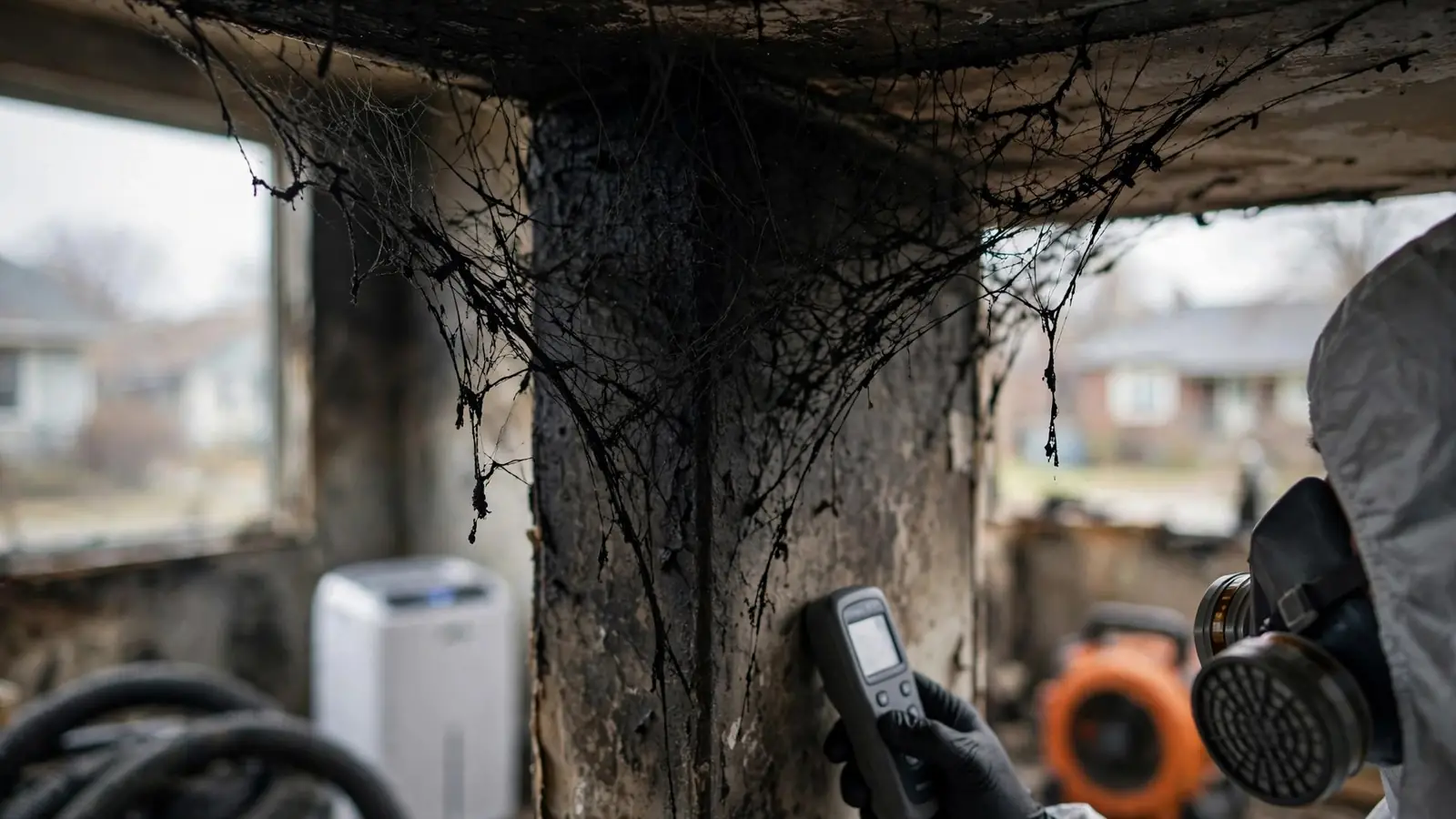
Soot webs, dark strands that hang from ceiling corners, form along air currents and smear if brushed.
Dry first, then wash
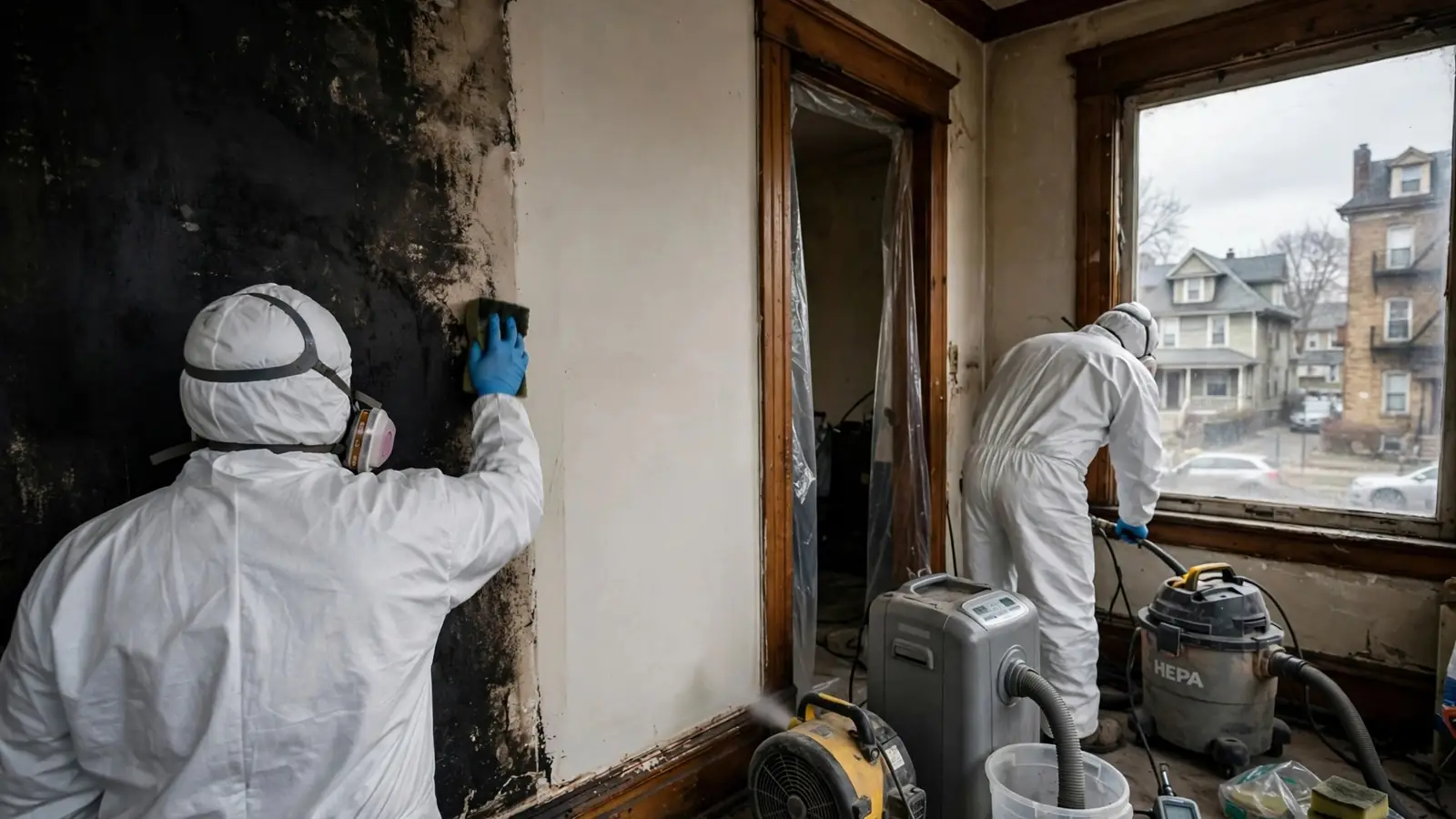
Most soot removal starts with dry methods: chemical sponges and HEPA vacuums lift loose particles without water. Washing follows with cleaners matched to the residue, whether dry, oily or protein based [2]. Using water first spreads soot and can set stains.
Stains that remain are sealed with a stain-blocking primer before painting.
Soot removal steps in a Camden home
The usual order.
- 1
Wipe-test residue in each area
Dry, oily or protein soot each needs different products.
- 2
HEPA-vacuum and dry-sponge top to bottom
Ceilings, stair walls, then lower walls and trim.
- 3
Wash with matched cleaners
Each surface gets a suitable product.
- 4
Seal stubborn stains
Primer blocks marks from bleeding through new paint.
Basement soot and older materials
Basement fires, often near the dryer or furnace, coat joists, pipes and ductwork with soot. Older pipe insulation or basement floor tile may contain asbestos [3] and should be tested before cleaning disturbs them. Painted surfaces from before 1978 may contain lead [4].
Basement soot can also be carried upstairs by the heating system, so the ducts are cleaned too.
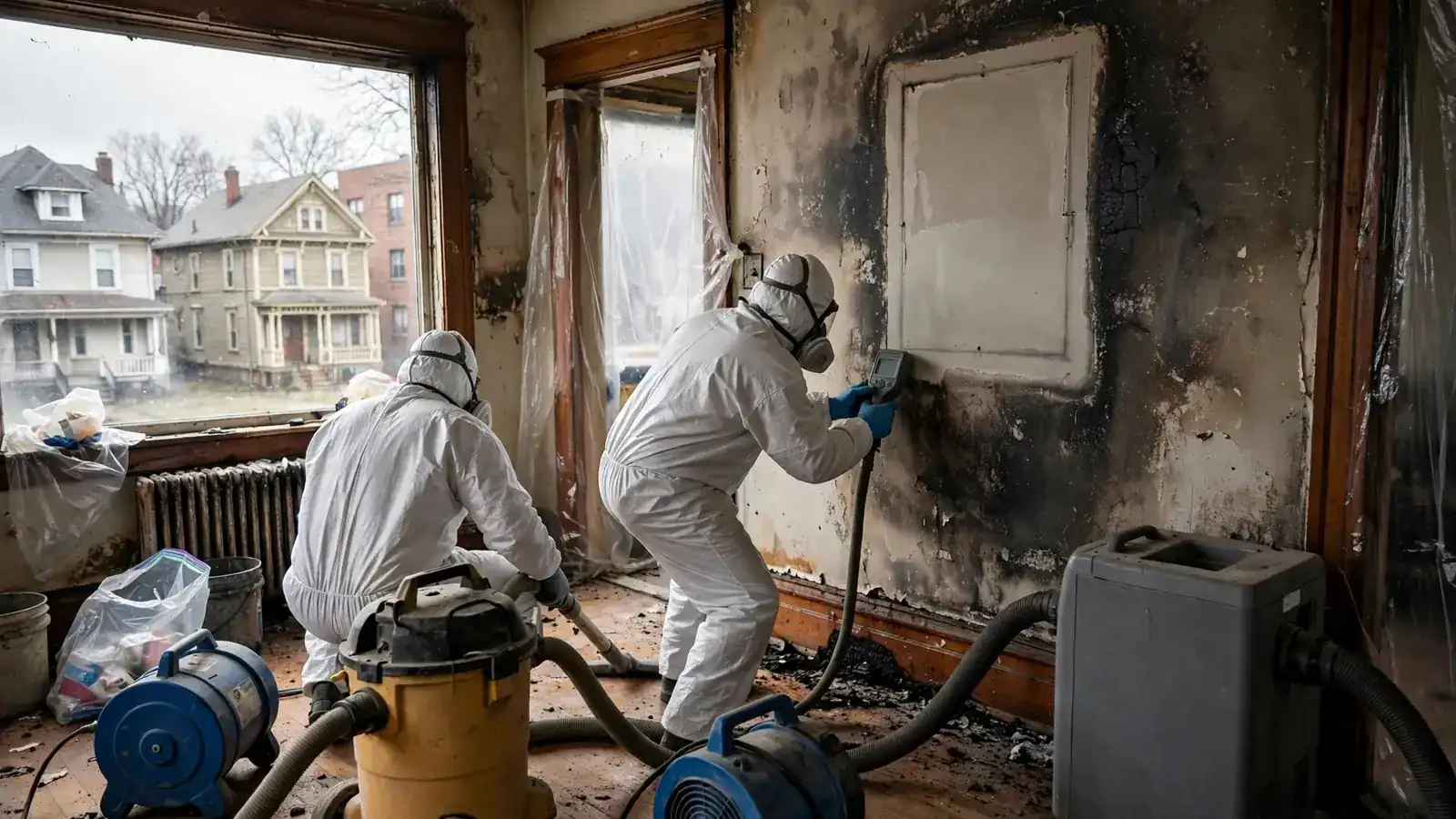
Painted woodwork and trim
Camden houses often have painted woodwork around windows and doors and along baseboards. Soot settles on every ledge. Trim is cleaned gently, and where paint is chipped or stained it is sealed and repainted using lead-safe methods if it is old paint.
Doors are cleaned on both faces and along the top edge, where soot collects heavily.
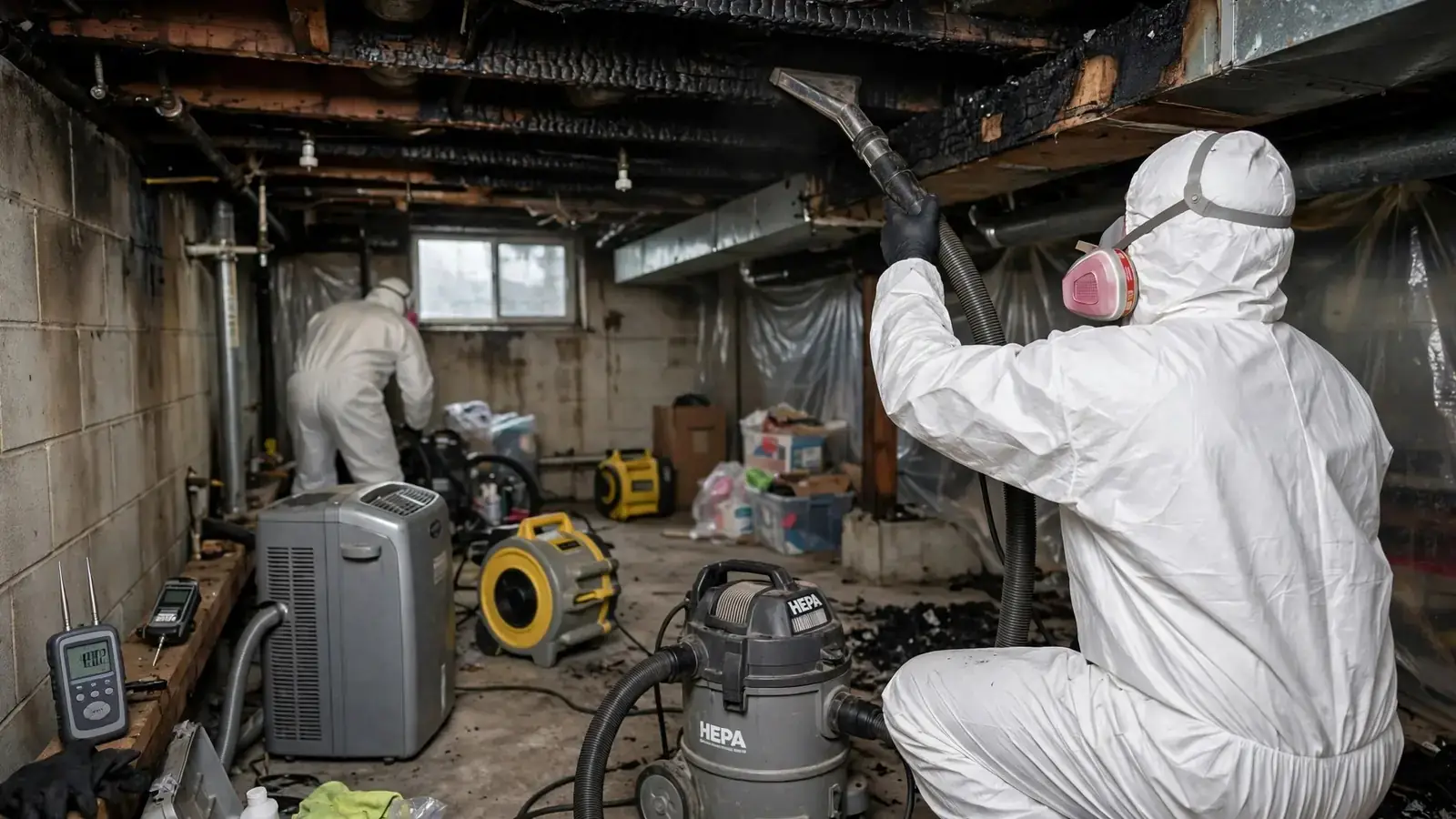
Camden surfaces and soot treatment
Common materials and approaches.
- Plaster and drywallDry cleaning, washing, sealing if stained.
- Painted trim and doorsGentle cleaning, then sealing and repainting.
- Basement joists and ductsVacuuming, cleaning and sealing.
- Windows and storm windowsGlass cleaned; tracks vacuumed.
Storm windows and winter windows
Many Minneapolis houses have storm windows over the main windows. Soot gets between them and coats both layers. Each sash is cleaned, and tracks are vacuumed so the windows close tightly again before winter.
Broken storm windows are boarded until they can be replaced.
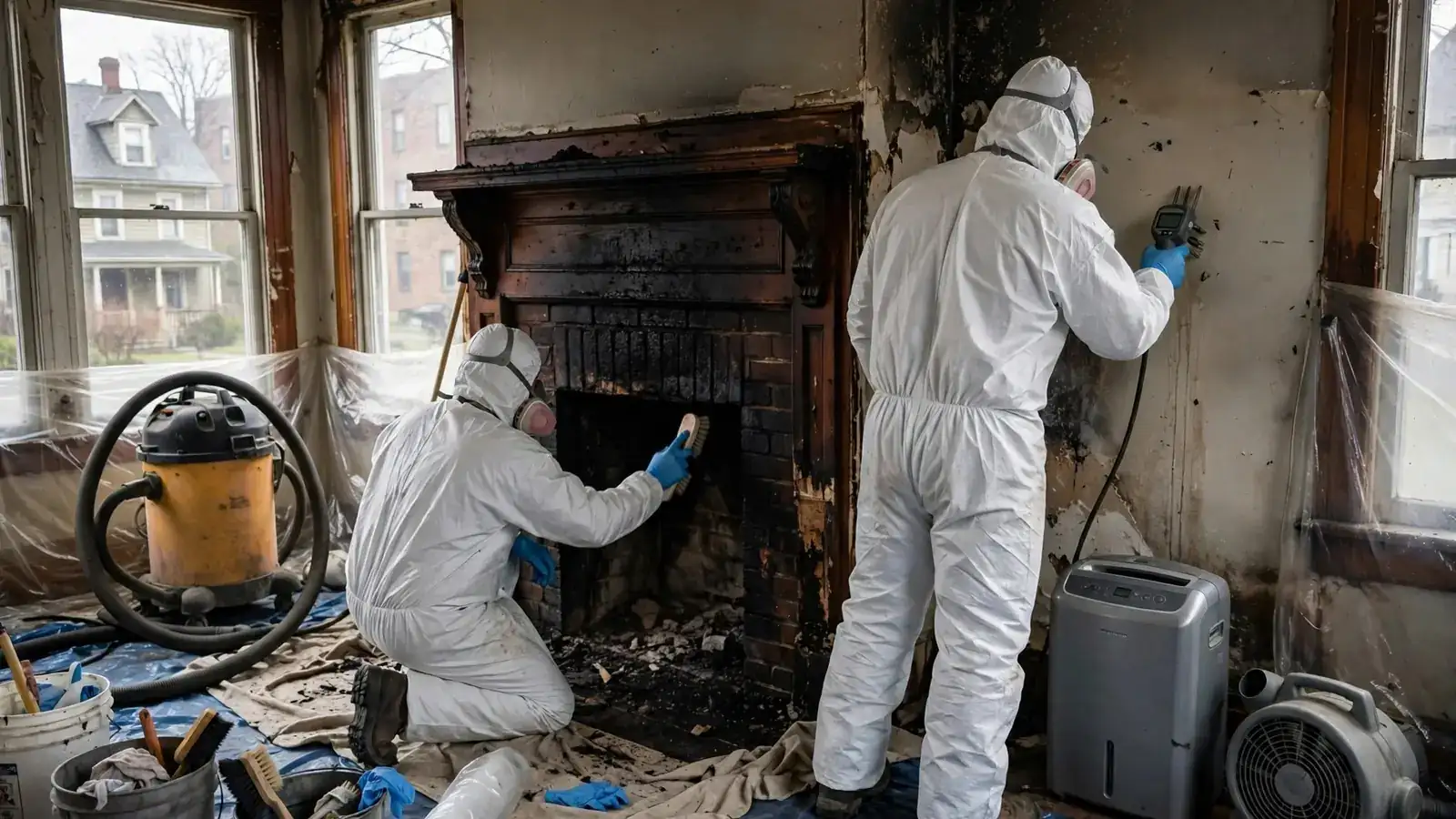
Protecting the family during cleanup
Soot particles are fine and irritating. Keep children and pets away from work areas, and do not sweep or dust soot yourself. Professionals use HEPA equipment and respirators.
The Camden page describes the houses and materials in this part of the city.
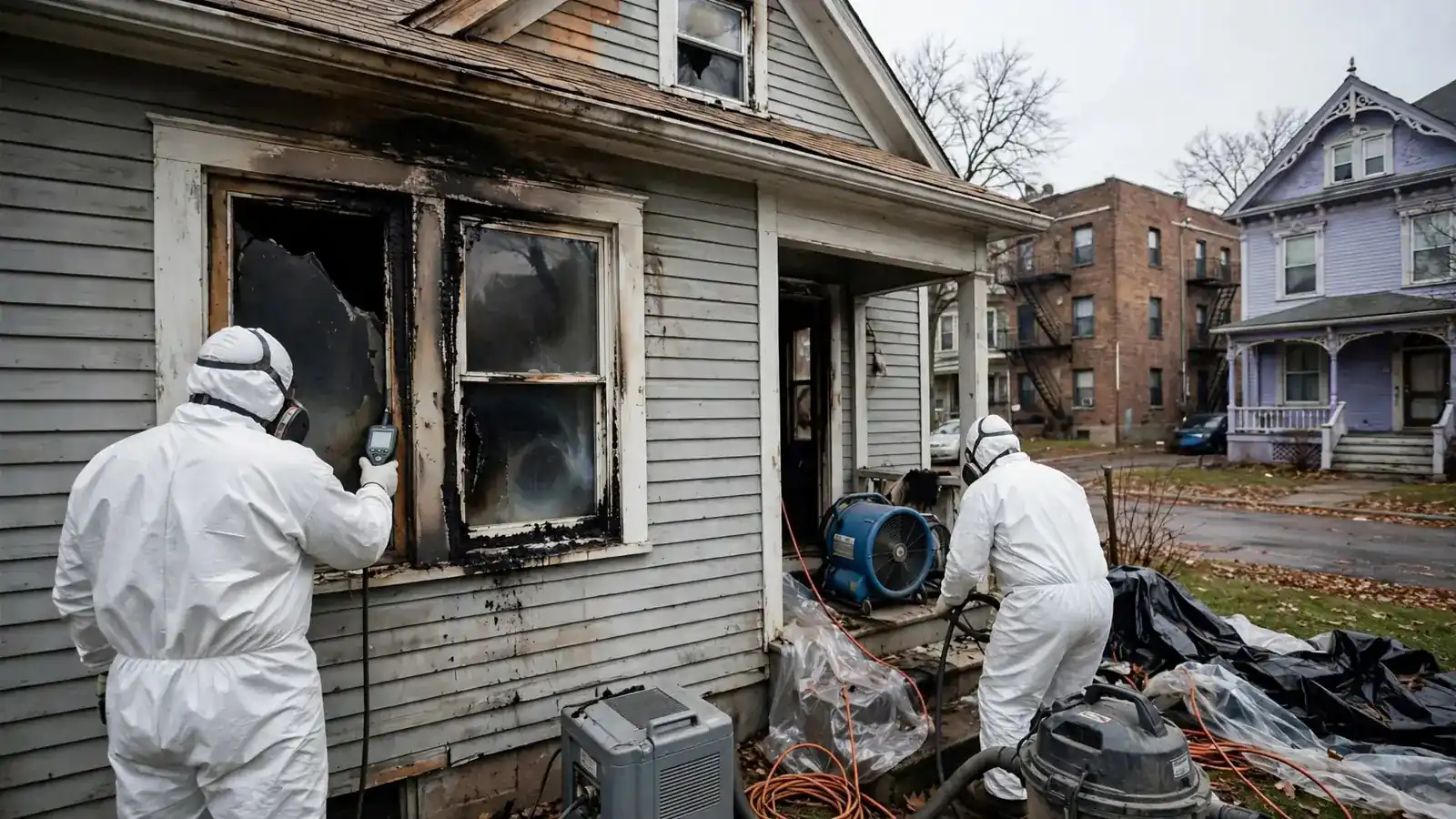
After soot removal
Remaining odor is handled with smoke odor removal. Painting follows once surfaces are clean and sealed. The Minnesota Department of Commerce Disaster Information Center has guidance on insurance claims after a fire [5].
Photos of sooty rooms before cleaning help your adjuster understand the work.
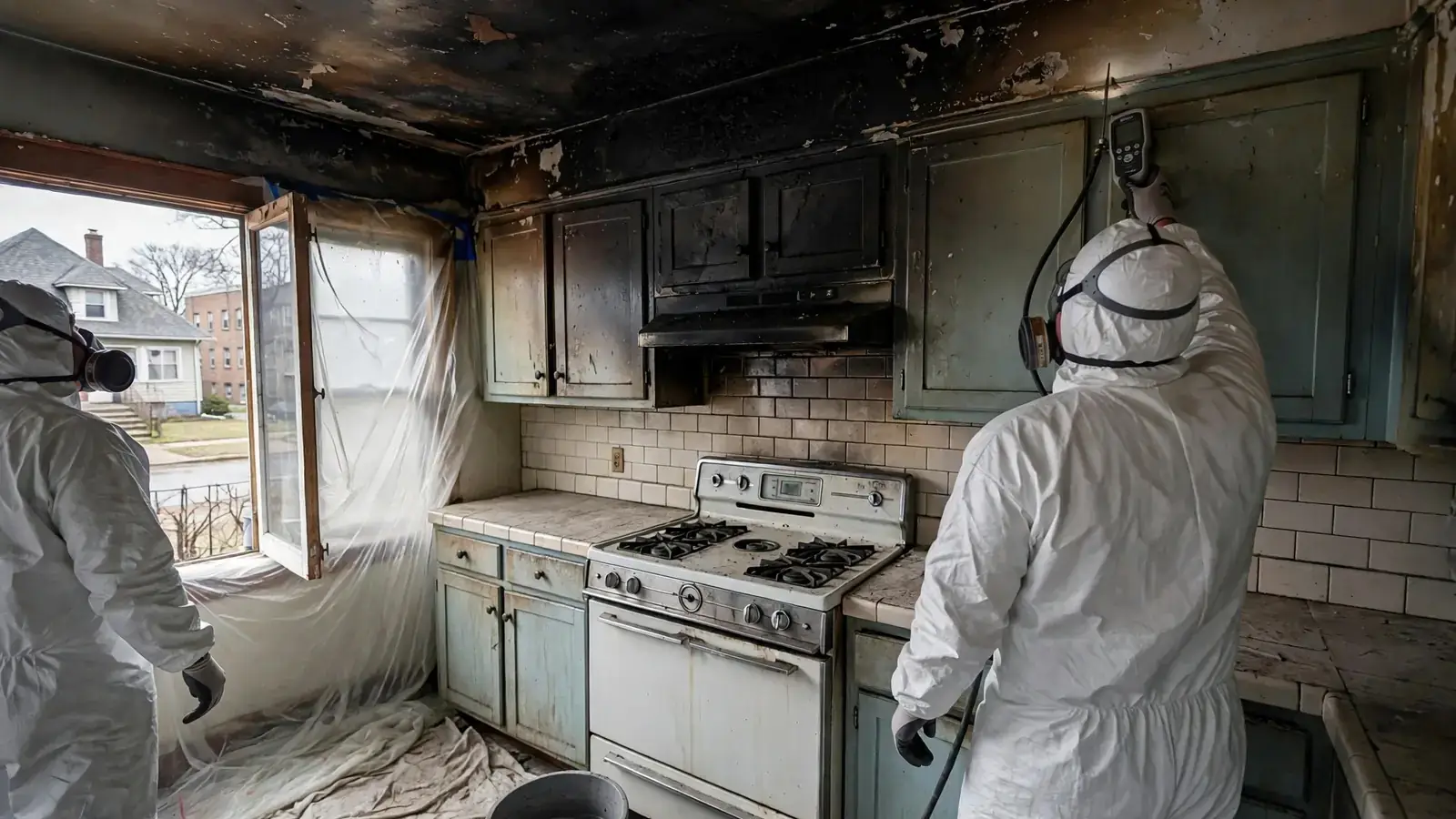
Kitchen soot and grease
A kitchen fire in a Camden house leaves soot mixed with cooking grease on cabinet faces, inside cabinets, on the ceiling above the stove and on the walls nearby. Dry sponges do little on greasy soot; degreasing cleaners are needed. Cabinets are emptied so shelves can be cleaned, and the range hood is cleaned or replaced.
Dishes and utensils are washed, and food exposed to heat or smoke is thrown away.
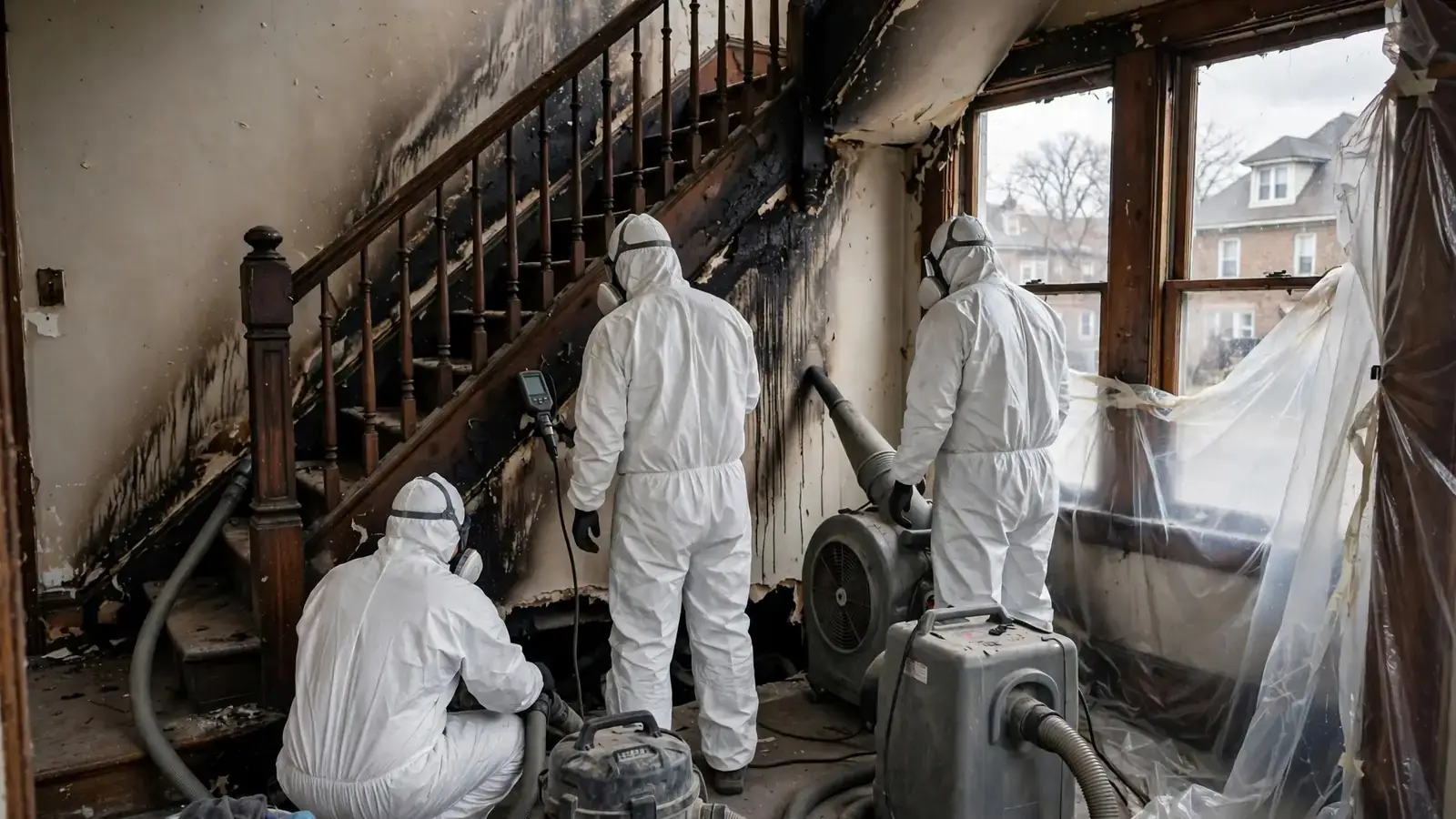
Soot on the stairway and upstairs ceilings
Smoke rising through the stairway leaves dark bands on the stair walls and the ceilings of the upstairs rooms. The angled ceilings of half-story bedrooms collect soot along their slopes and at the knee walls. These surfaces are cleaned top down with dry methods first, then washed and sealed where staining remains.
Spaces behind knee-wall doors may hold soot too and are checked during cleanup.
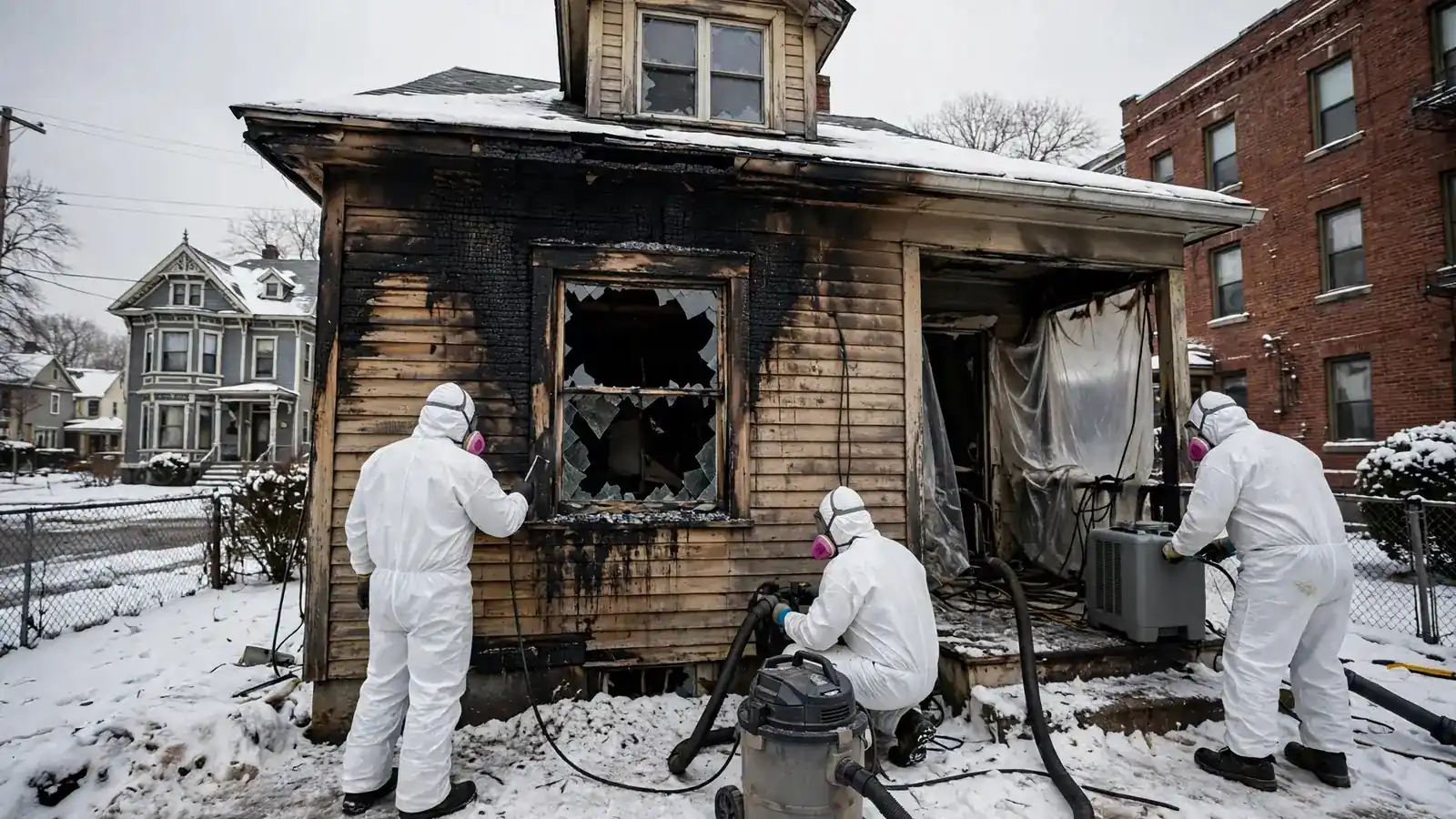
Furniture, electronics and appliances
Soot settles on furniture, televisions, computers and appliances. Wood furniture can usually be cleaned and refinished; upholstered pieces need specialist cleaning. Soot is corrosive to electronics, which should be inspected before use. Appliances with smooth surfaces wipe clean, but their interiors may need checking.
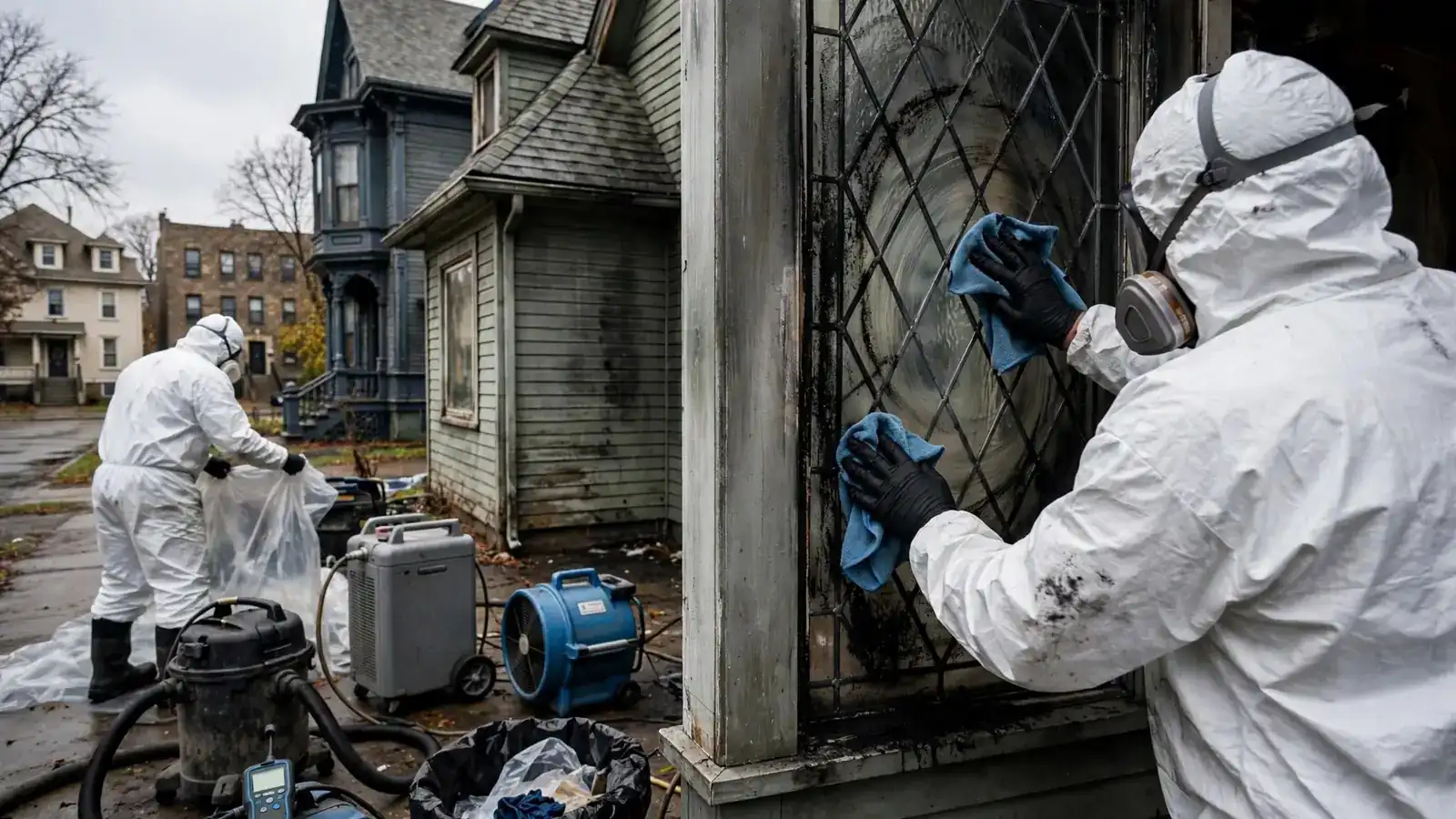
Window coverings and blinds
Blinds, shades and curtains collect soot on every slat and fold. Hard blinds are cleaned slat by slat or replaced if heat warped them, and fabric curtains go out for professional cleaning. Clean window coverings make a large difference to how a room looks and smells after soot removal.
FAQ
Soot Removal in Camden: questions
Can I wash soot off my walls?
Not first. Water spreads soot. Dry removal comes first, then washing with suitable cleaners.
Is basement pipe insulation a concern?
Older pipe wrap may contain asbestos [3]. It should be tested before cleaning disturbs it.
Why is there soot between my storm windows?
Smoke reaches every gap. Both sashes and the tracks need cleaning.