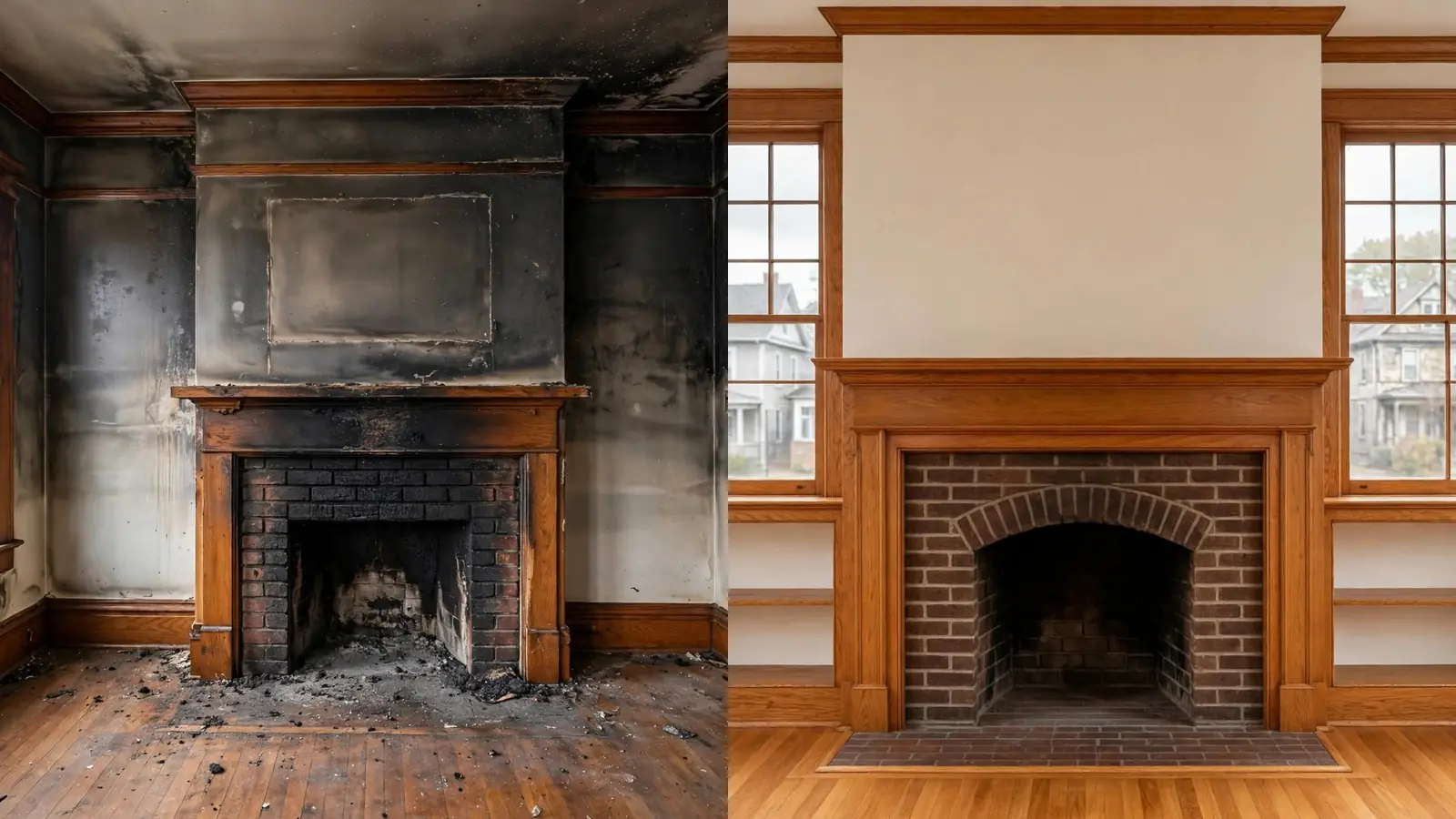
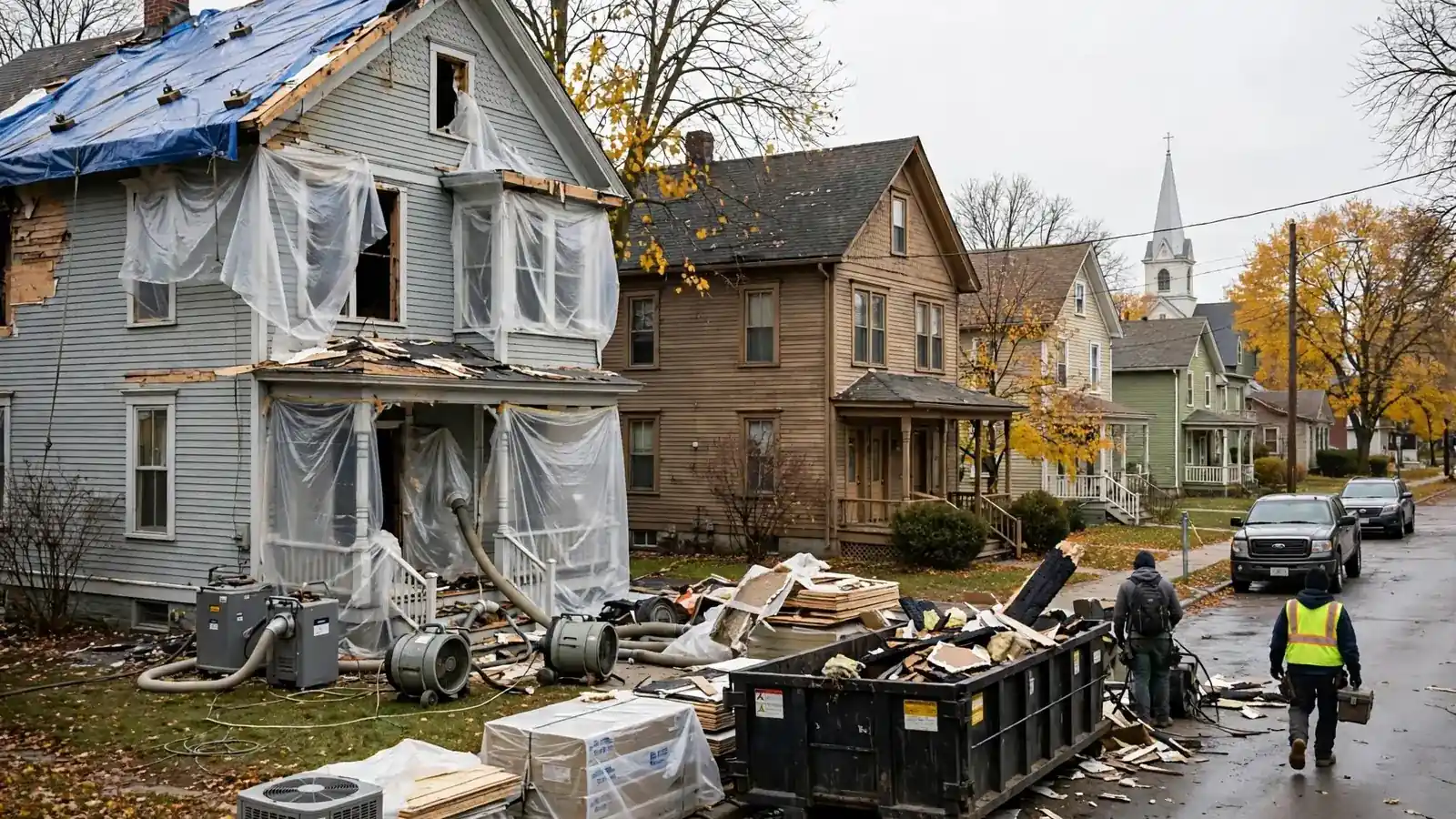
Key facts: Soot Removal in Northeast
Where soot lands in Northeast homes
In Northeast's older houses, soot collects on the highest and coldest surfaces: ceilings, the tops of walls, exterior walls and around windows. It also settles on radiators, in stairways and in the half story under the roof. In a duplex, it can reach both units through the shared stairs.
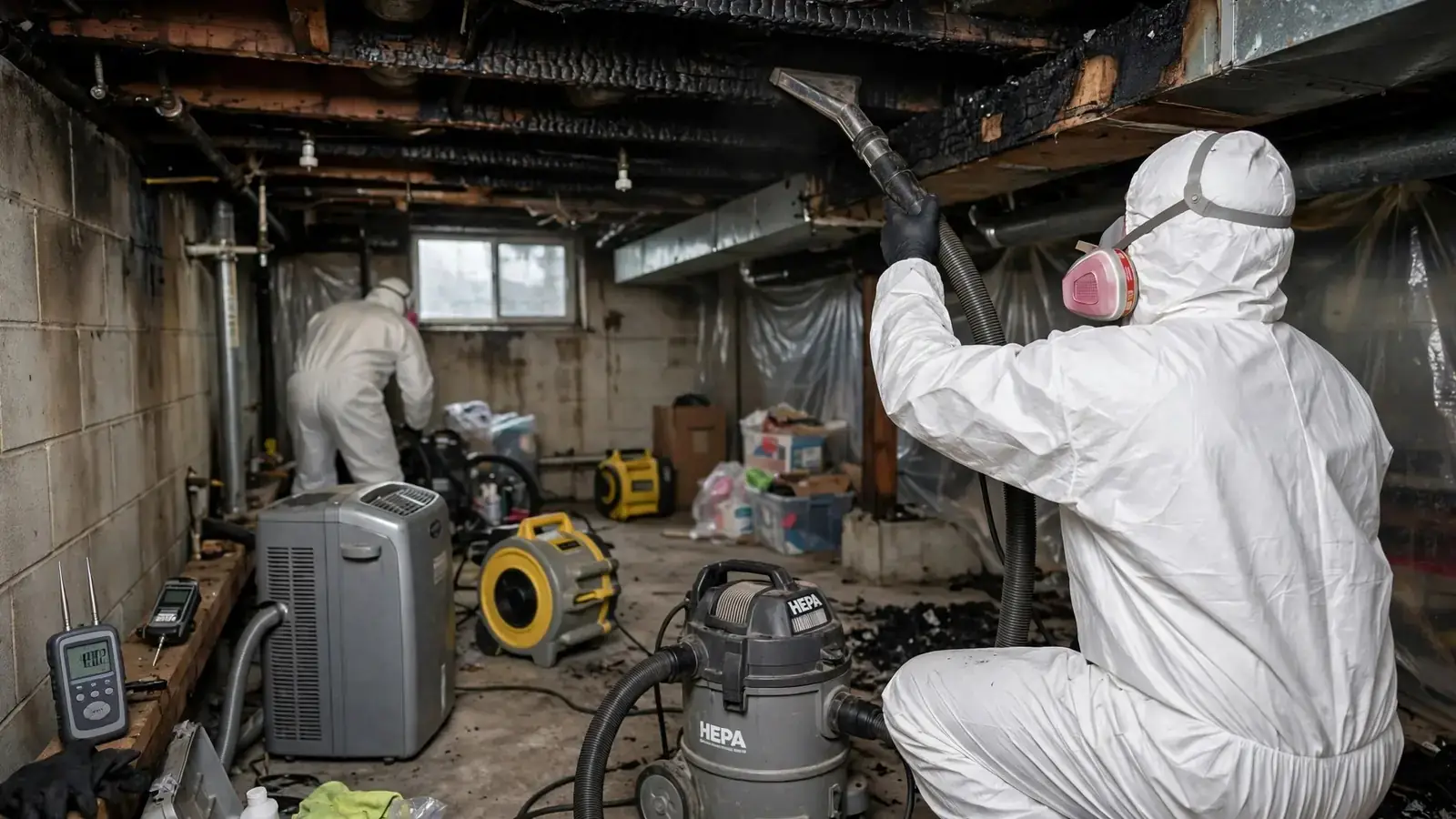
Basements take heavy soot when a fire starts there, often at a boiler, furnace or dryer. Soot coats the joists, subfloor, stone walls and stored items.
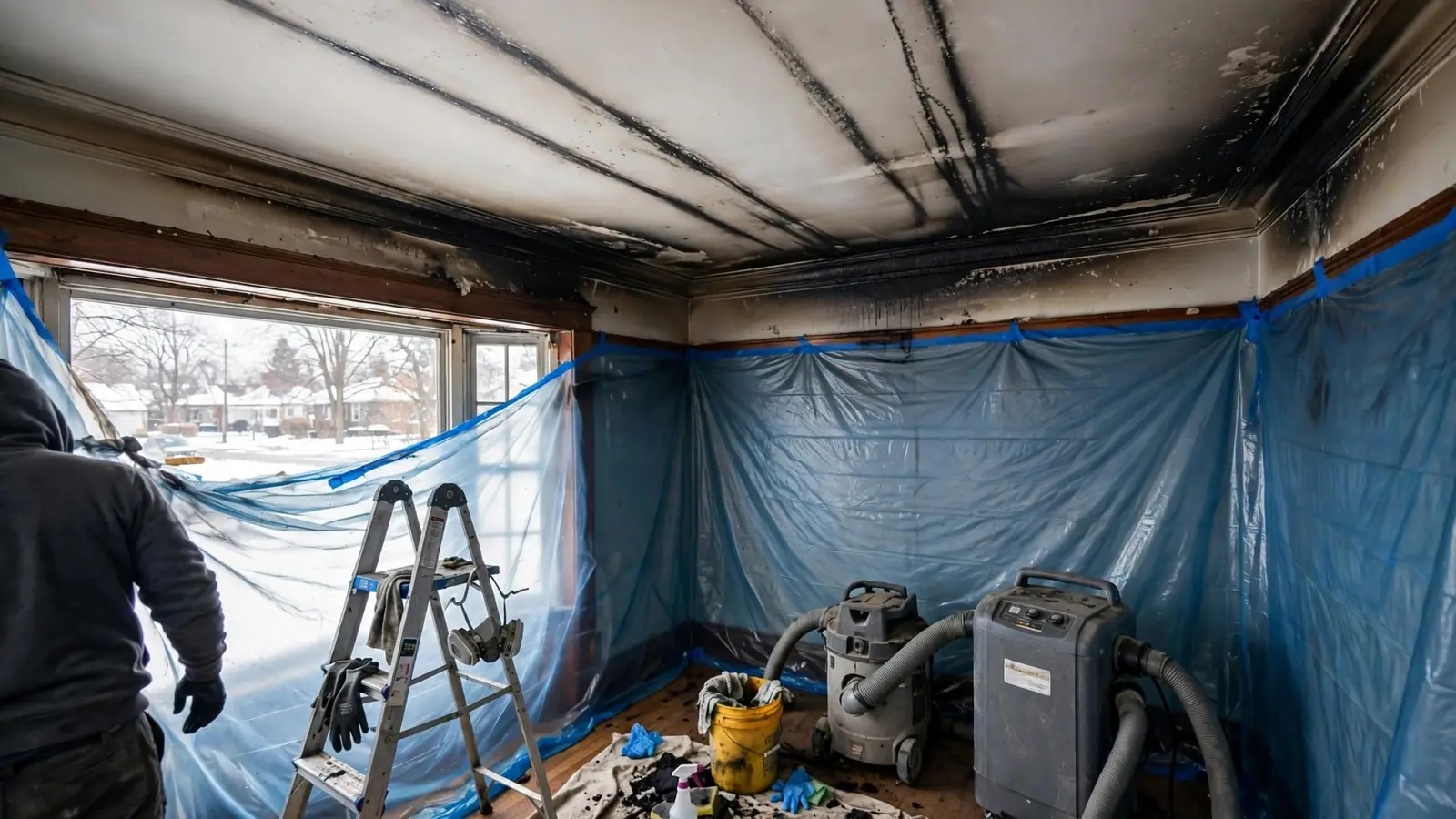
Stone basements and old boiler pipes
Northeast basements are often low, with stone or block walls and pipes running to radiators. Many pipes still wear old insulation that may contain asbestos. The EPA advises testing such materials before disturbing them [3]. Soot cleaning waits until results are back.
Stone and block walls hold soot in their rough surface. They are cleaned by brushing, vacuuming or blasting, then sealed if odor remains.
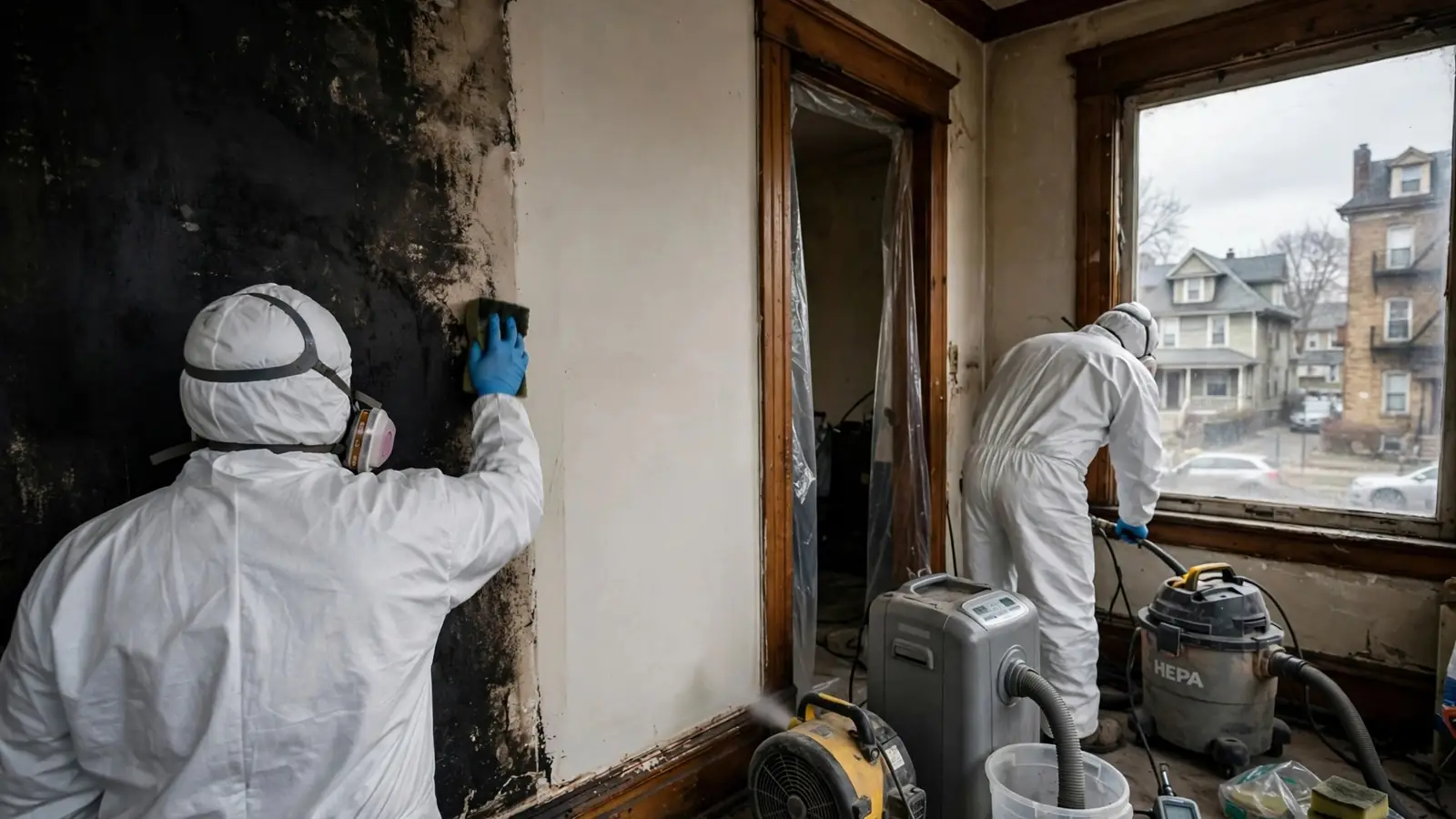
Removing soot in a Northeast house
How crews usually work.
- 1
Test suspect materials in the Northeast basement
Check pipe wrap and old textures before disturbing them.
- 2
Contain each work area
Plastic sheeting and air scrubbers keep soot from spreading.
- 3
Vacuum loose Northeast soot before washing
HEPA vacuums and dry sponges come first.
- 4
Wash, seal and refinish
Clean with suitable detergents, then seal and refinish.
Plaster on lath and fir trim
Plaster walls are common in Northeast and clean well when dry methods come first. Wiping soot wet smears it in. After dry removal, walls are washed, sealed and painted. Fir trim is cleaned gently; stained trim may need refinishing.
Painted surfaces in older houses may contain lead [4]. Scraping and sanding follow lead-safe practices. Our guide on soot on walls and ceilings explains dry cleaning in more detail.
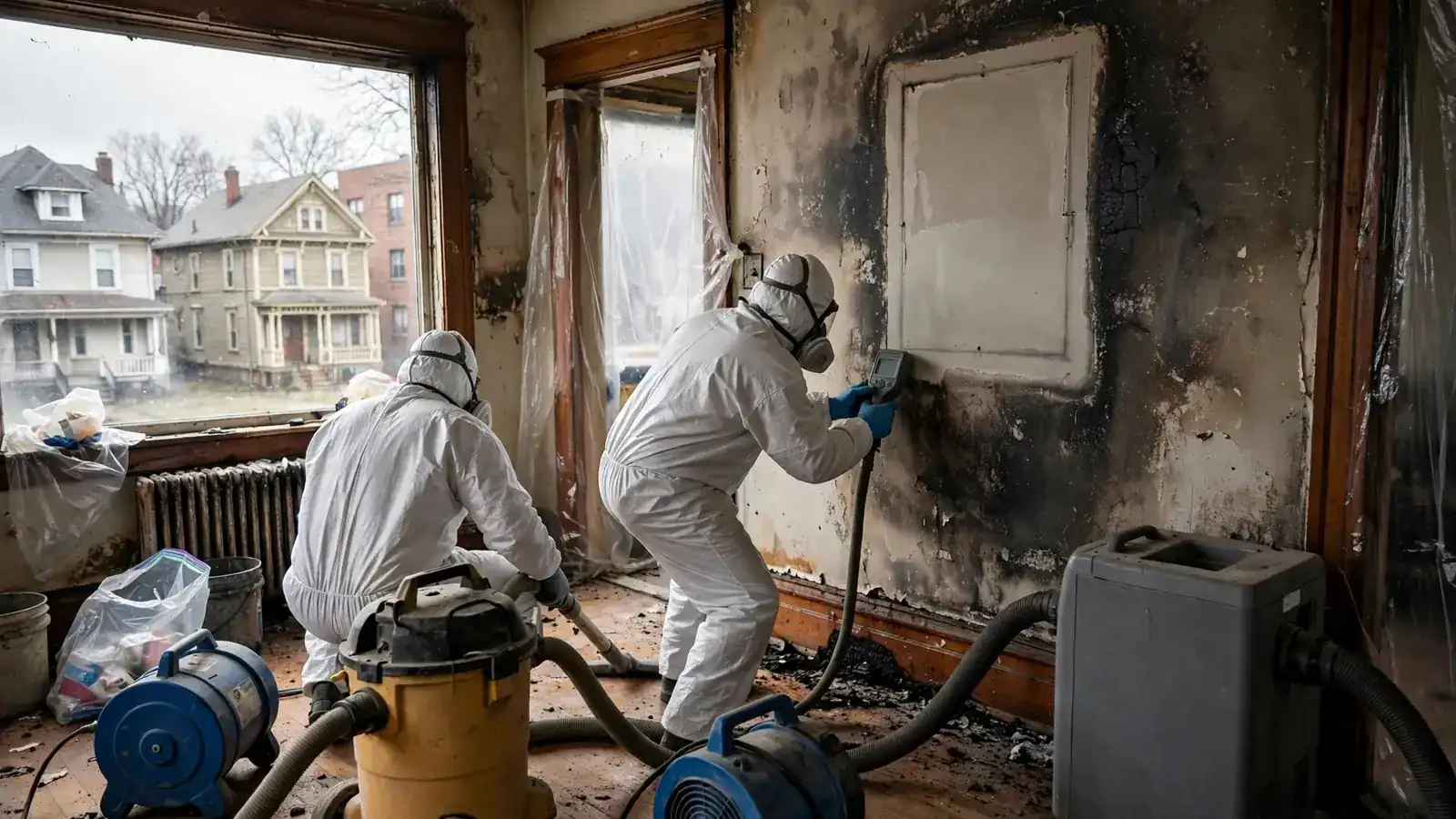
Radiators covered in soot
Radiators have fins and crevices that trap soot. Cleaning them often means removing them from the wall, cleaning them thoroughly and putting them back. If they are left dirty, they release odor every time they warm up.
Dust under and behind radiators also holds soot. Floors and walls around them are cleaned carefully.
Soot in duplexes and walk-ups
In shared buildings, soot from one unit reaches common stairways and other units. Each space is checked and cleaned. The owner handles common areas; tenants handle their belongings with their own insurance.
Clear communication about access and timing helps keep the work moving and reduces stress for everyone.
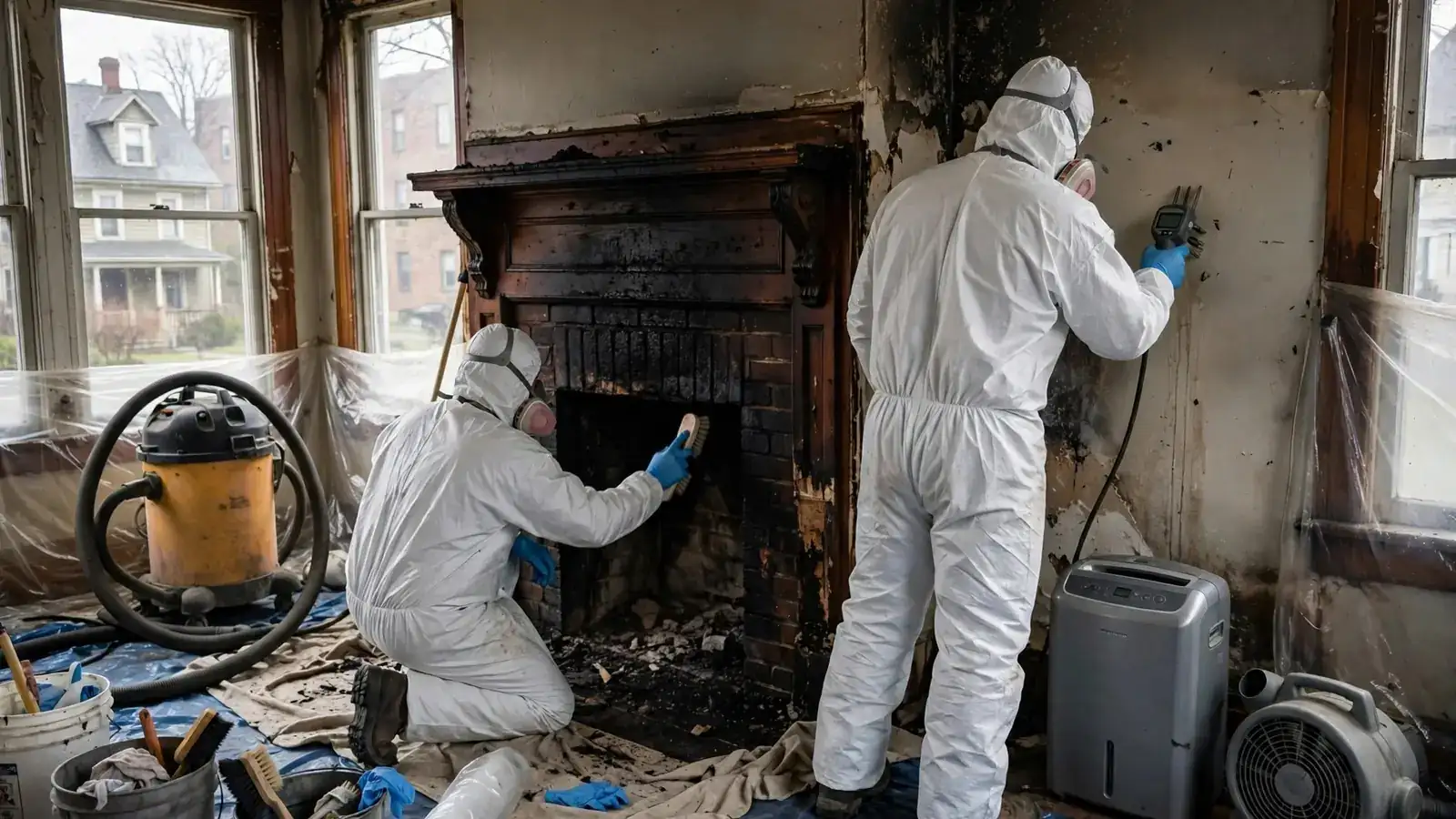
Typical Northeast soot jobs
What crews often find here.
- Northeast radiators and their finsRemoved and cleaned in many cases.
- Stone basement wallsBrushed or blasted, then sealed.
- Plaster under the roofHeavy soot in half-story rooms.
- Wood siding above vented windowsCleaned or scraped with lead-safe care.
Siding and exterior soot
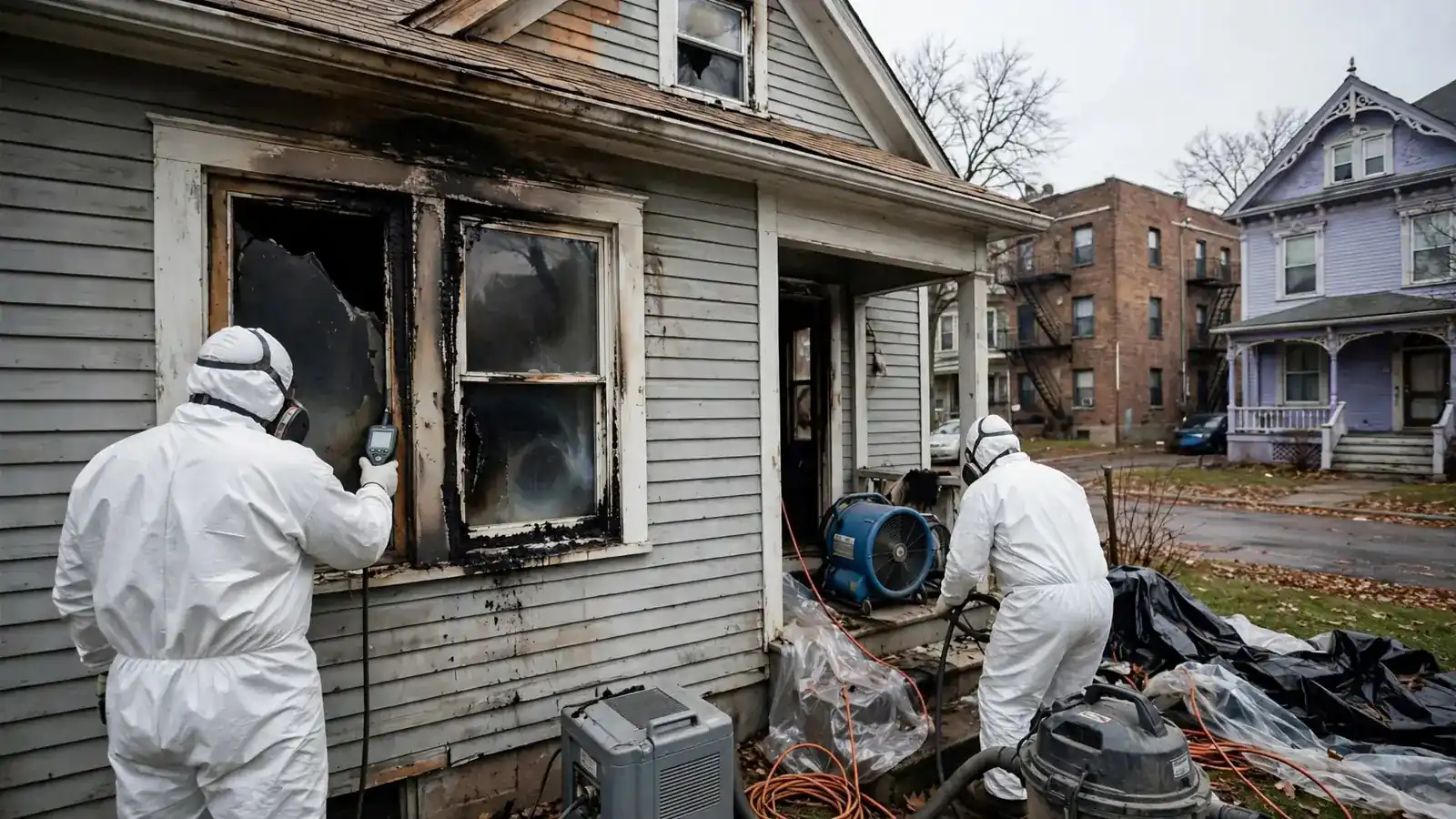
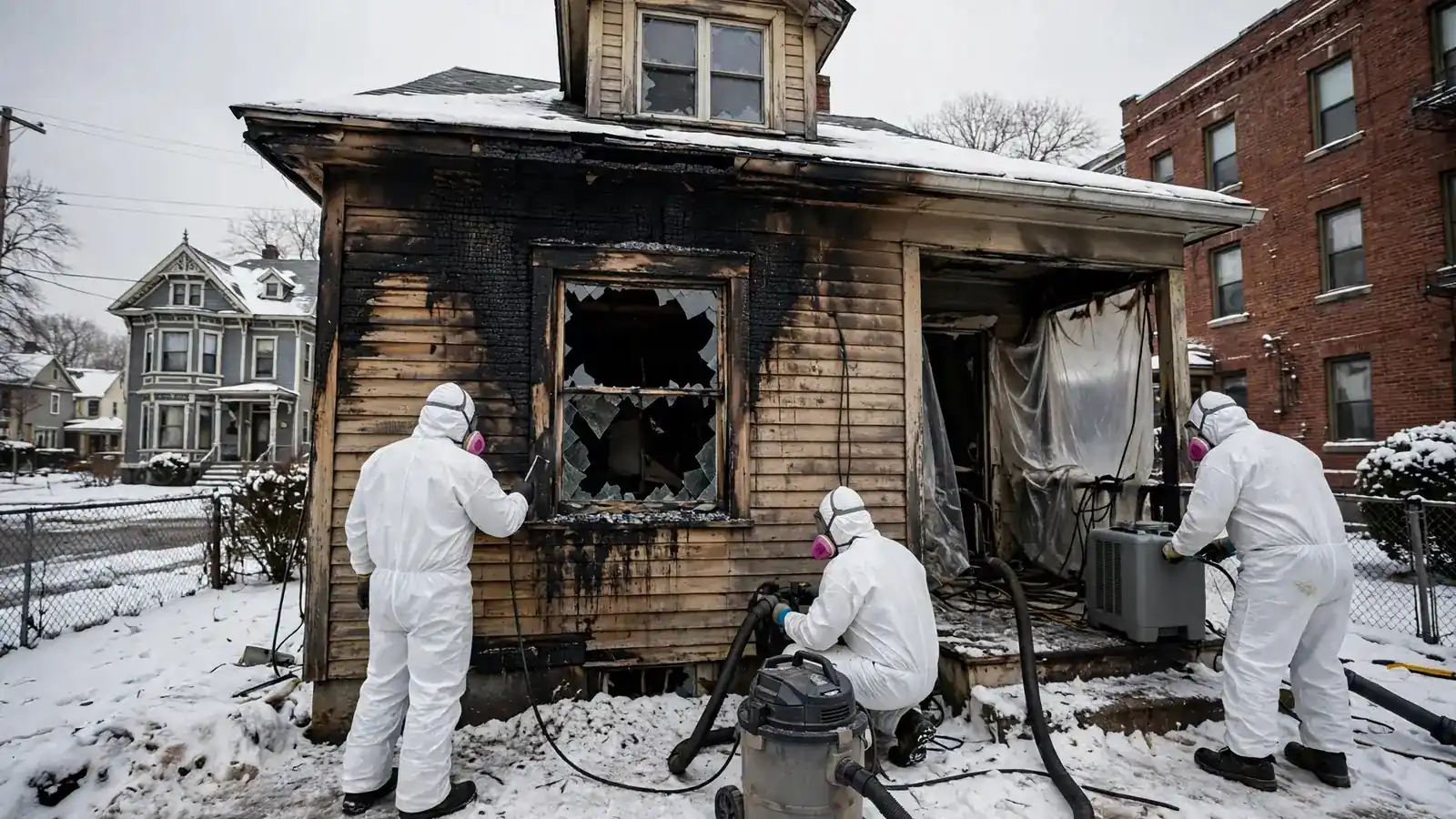
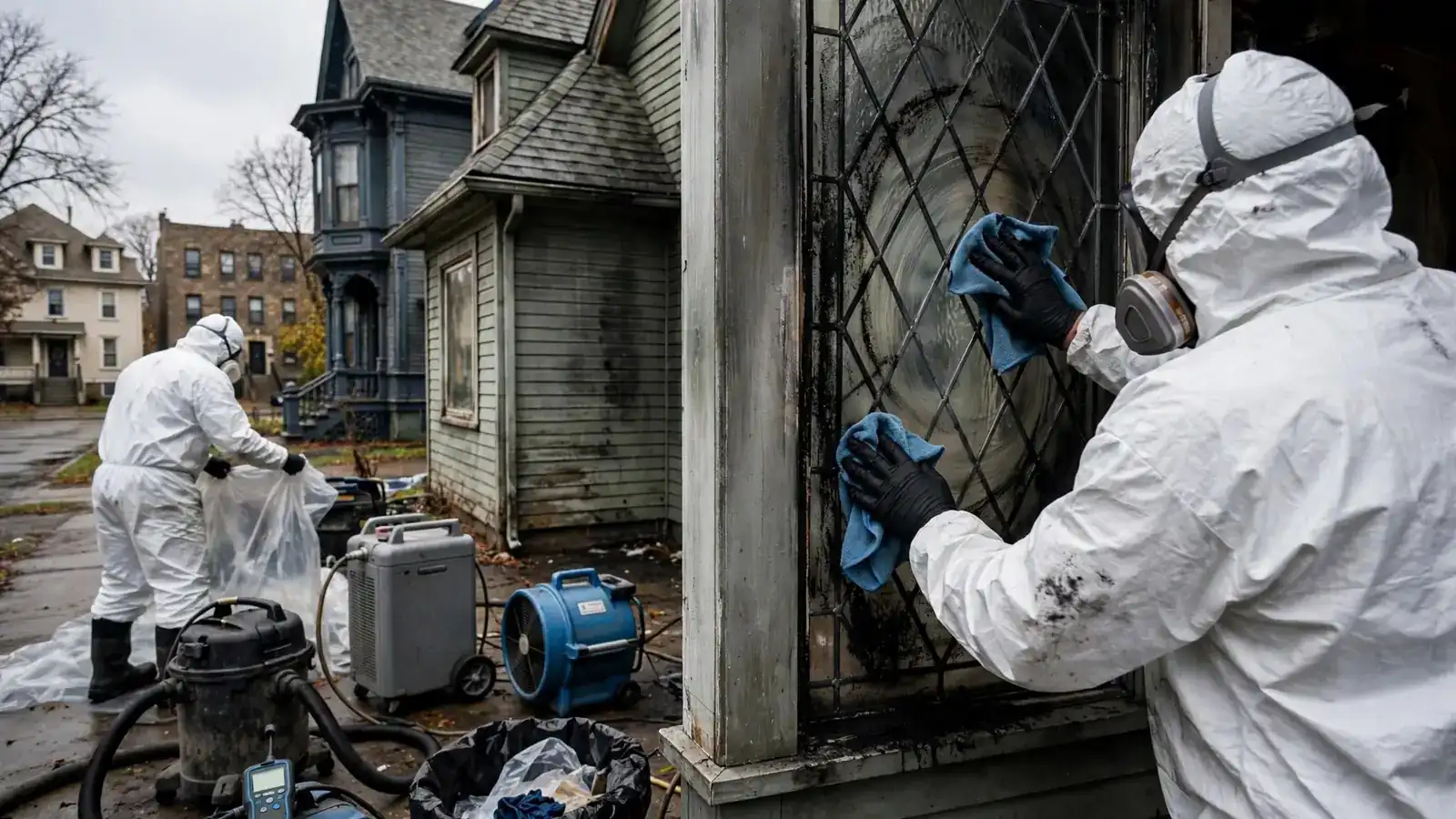
Smoke leaving a window streaks the siding above. Wood siding can be cleaned or scraped and repainted. Aluminum and steel usually clean up. Vinyl that warped is replaced.
Lead-safe methods are used when scraping old paint, with tarps on the ground to catch chips.
Winter soot removal
If heat is lost in winter, protecting pipes comes first. Air scrubbers clean the air while windows stay closed. Work proceeds once the building is warm enough.
Ask the contractor how long each part of the house will take. The Northeast area page has more about these buildings.
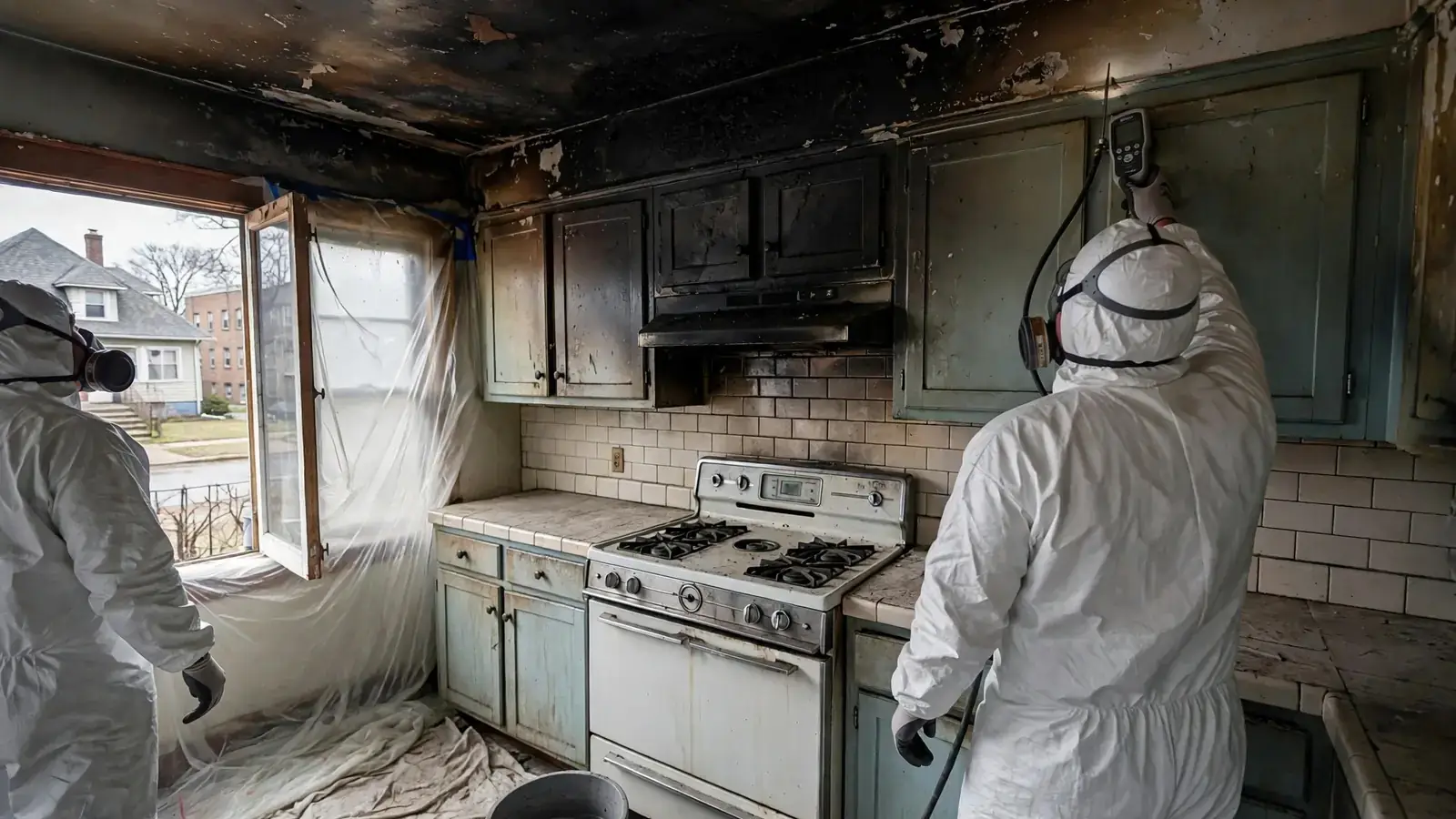
Soot records for your claim
Photograph soot in every room, the basement, the attic and outside before cleaning. Ask for a list of cleaned and removed items. The Minnesota Department of Commerce encourages policyholders to keep records [5].
Keep receipts for items bought while the home is being cleaned.
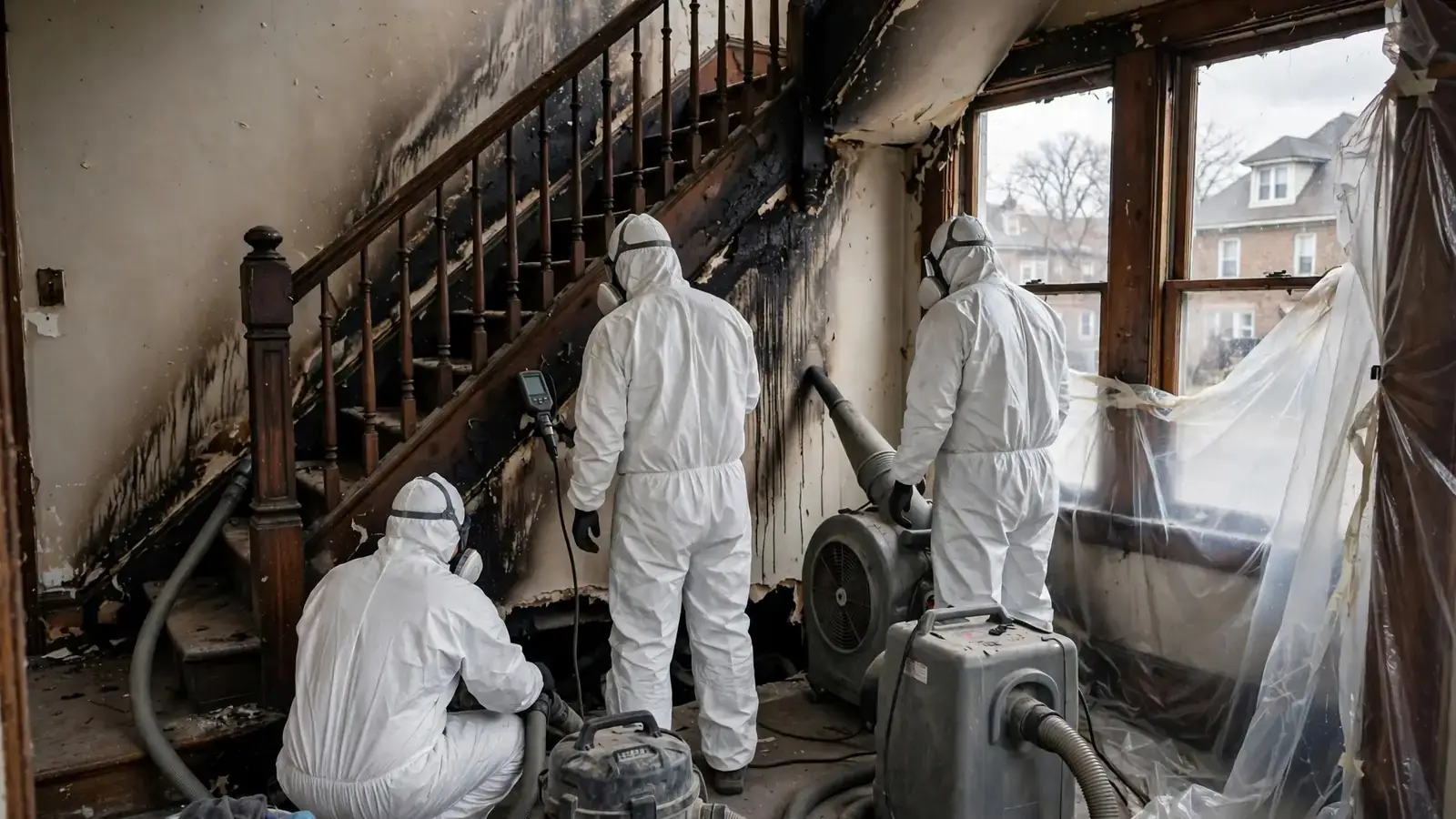
Soot on the half story under Northeast roofs
Many Northeast houses have rooms tucked under a steep roof, with sloped plaster ceilings and storage behind short knee walls. Hot smoke rising through the stairwell cools there and drops a thick layer of soot on the ceilings, the roof boards and the insulation behind the knee-wall doors. These rooms usually need more work than the floors below them.
Insulation that took on soot is bagged and removed after testing, and the roof boards are cleaned and sealed. Replacing the insulation afterward is also a chance to cut heat loss and reduce the ice dams that are common on older Minneapolis roofs.
FAQ
Soot Removal in Northeast: questions
Do Northeast radiators need to come off the wall for soot cleaning?
Often, because their fins trap soot. Cleaning them in place may not reach every surface.
Is old pipe insulation in my Northeast basement dangerous?
It may contain asbestos. It should be tested before soot cleaning disturbs it.
Can I wipe soot off plaster walls myself?
Not with a wet cloth, which smears it. Dry sponges and a HEPA vacuum are the right first step.
Sources and citations
- [1]U.S. Fire Administration: After a fire
- [2]IICRC: S700 Standard for Professional Fire and Smoke Damage Restoration
- [3]U.S. EPA: Protect your family from exposures to asbestos
- [4]U.S. EPA: Protect your family from sources of lead
- [5]Minnesota Department of Commerce: Disaster Information Center
- [6]Wikipedia: Northeast, Minneapolis