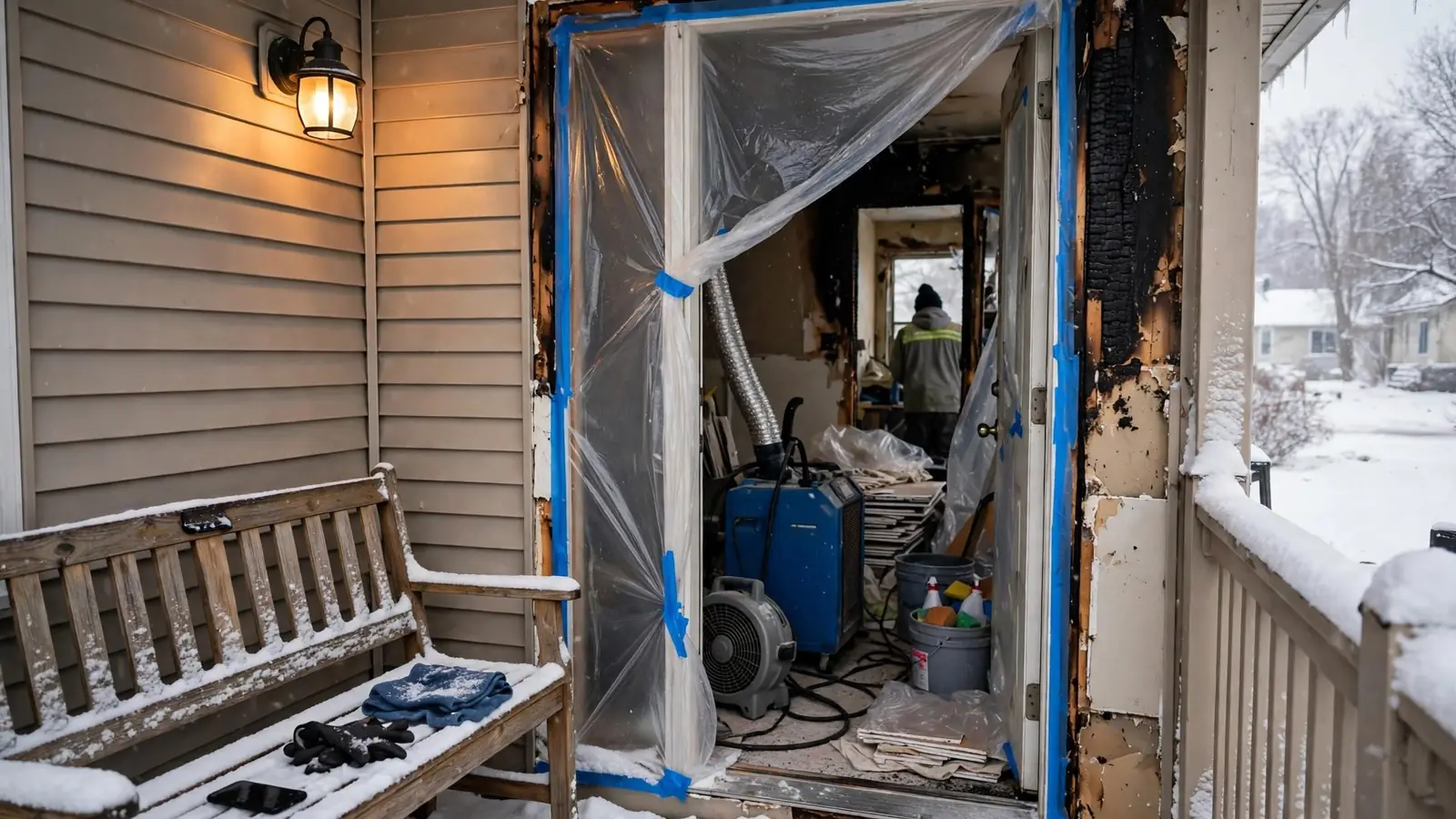
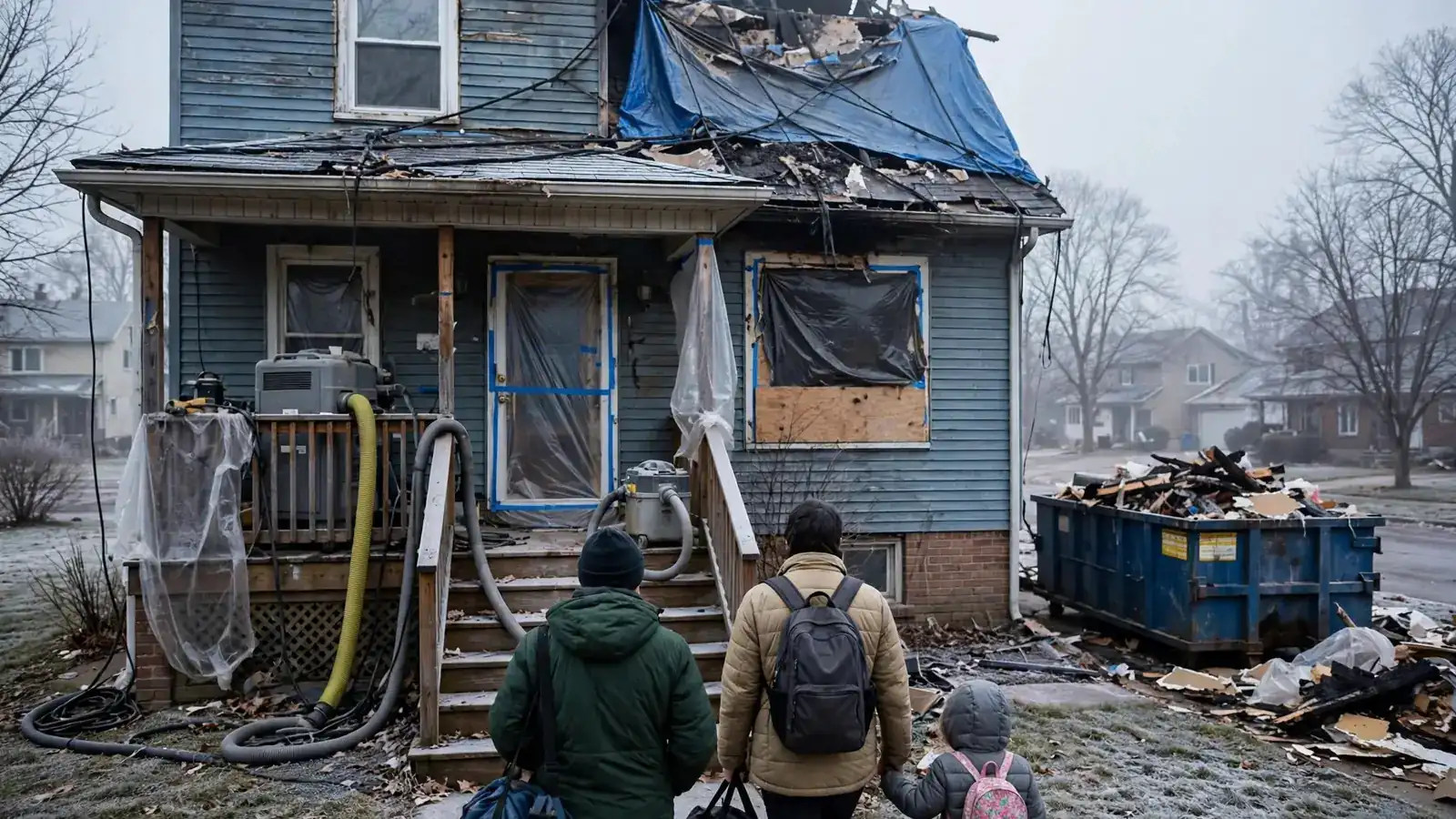
Key facts: What to do after a house fire
- Stay out of the house until the fire department says it is safe; roofs and floors may be weakened [1].
- Throw out food, drinks and medicine exposed to heat, smoke or soot [1].
- The Minnesota Department of Commerce advises contacting your insurance agent right away after a fire and reminds homeowners they choose their contractor [2].
- Wet materials should be dried within 24 to 48 hours where possible to prevent mold [3].
Short answer
First things first
Make sure everyone is out and accounted for, and get medical help for anyone who breathed smoke. Stay out until the Minneapolis Fire Department releases the house. Find a safe, warm place to stay. Call your insurer to start the claim. Then, in this order: protect the house from cold if the heat is off, secure open windows and roof holes, get water out of floors and the basement, and plan smoke and soot cleanup.
The sections below explain each step and the mistakes that make recovery harder.
At a glance
The first days after a fire
| When | Step | Why it matters |
|---|---|---|
| Immediately | Everyone out, medical help if needed | Smoke injuries can show up later |
| Before going back in | Wait for fire department release | The building and its utilities may not be safe yet |
| First night | Warm, safe place to stay | The house may be cold, wet and smoky |
| First hours in winter | Heat or drain the plumbing | Pipes and radiators can freeze and burst |
| Day one | Call your insurer, start a claim file | Starts the claim and adjuster visit |
| Day one or two | Board up and tarp openings | Keeps snow, rain, cold and intruders out |
| First days | Pump and dry the basement and floors | Mold risk and more damage if left wet |
Safety
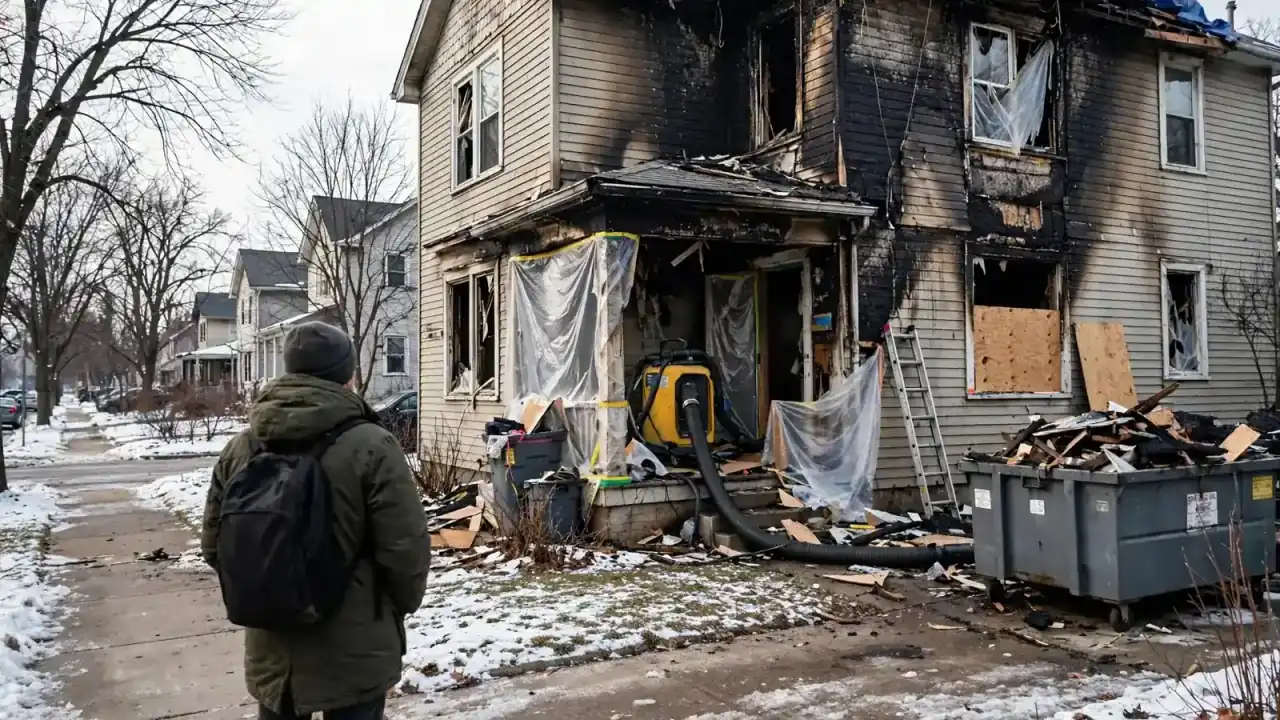
Safe checks in the first hours
- Wait for the releaseThe fire department decides when you may go in. Hidden hot spots and weak floors are real dangers [1].
- Leave utilities to professionalsDo not turn power, gas or the boiler back on yourself.
- Check people and petsGet medical advice for anyone who breathed smoke, and a vet check for pets.
- Dress for it if you go inSturdy boots, gloves, a mask and warm clothes; stay where you were told it is safe.
Cold weather
If the fire left the house without heat
In a Minnesota winter, a house without heat is at risk of a second disaster. Water in pipes, radiators, the boiler, toilets and traps can freeze and burst within hours. When it thaws, you can have a flood on top of the fire damage.
Tell the restoration contractor right away if the heat is off. Options include temporary heaters to keep the house above freezing, or having a plumber drain the water system and add antifreeze to traps. Do not use a gas oven or grill for heat, and make sure any temporary heater is used safely with working carbon monoxide alarms.
Shelter
Finding somewhere warm to stay
Most families cannot stay in a home right after a fire. If family or friends cannot help, the American Red Cross responds to home fires with emergency help. Take medications, glasses, phones, chargers, identification, insurance information and warm clothing if you can safely do so.
Ask your insurer whether your policy includes additional living expenses coverage, which can help when you must live elsewhere during repairs, and keep every receipt.
Insurance
Starting your claim
Call your insurance agent or company as soon as everyone is safe. The Minnesota Department of Commerce advises contacting your agent immediately after a fire, reviewing your policy and remembering that you choose which contractor repairs your home [2]. The adjuster will typically give you a proof-of-loss form to complete.
Start a claim file: photos of every room before anything is moved, a log of calls and visits, and every receipt. Our guide on working with your insurance adjuster explains more.
Restoration
How restoration usually begins
- 1
Protect from cold and weather
Temporary heat or draining, plus board-up and roof tarping.
- 2
Remove water
Pump the basement, extract water from floors and dry with dehumidifiers [3].
- 3
Remove what is ruined
Charred materials, soaked insulation and carpet pad come out.
- 4
Clean smoke and soot
Dry removal first, then surface cleaning, from the top of the house down.
- 5
Clean the furnace or radiators
Ducts, furnace or radiators, so heat stops spreading odor.
- 6
Treat odor, seal and rebuild
Remaining odor treated, porous surfaces sealed, then permitted repairs.
Avoid
Mistakes to avoid in the first week
- Wiping soot with waterIt smears soot into plaster and paint.
- Running the furnace before inspectionIt spreads smoke through the ducts.
- Leaving the house unheated in winterFrozen pipes add water damage.
- Throwing everything outMany items clean well; photograph before discarding.
- Signing under pressureRead contracts carefully; the choice of contractor is yours.
On the call
Details to have ready for the call
- Where the fire started and whether the fire department released the house
- Whether the heat and power are on
- Whether water reached the basement
- Whether windows or the roof are open
- What kind of heating the house has
- Your insurer and claim number, if you have one
Documents
Replacing documents and keeping records
Fires often damage identification, birth certificates, passports, titles, insurance papers and tax records. List what is missing and contact the issuing agency for each, starting with the documents you need right away. Damp papers and photos may be salvageable; do not pull stuck pages apart while wet, and ask the contractor about freezing them until a specialist can dry them.
Keep everything about the fire in one place: photos, the claim number, the adjuster's contact, the contractor's scope, moisture readings, contents lists and receipts. A simple folder or a shared online drive makes it easier to answer questions later.
FAQ
Common questions after a house fire
When can I go back into my house?
Only when the fire department says it is safe. Even then, avoid weakened floors and sagging ceilings, keep utilities off until checked, and wear protective gear.
What do I do if it is freezing and the heat is off?
Call a restoration contractor or plumber right away. Temporary heat or draining the plumbing prevents frozen and burst pipes, which would add a flood to the fire damage.
Who should I call first?
After everyone is safe, call your insurer to start the claim. If you need shelter, contact family, friends or the American Red Cross.
Can I clean up smoke myself?
Light film on hard surfaces sometimes. Most smoke and soot needs dry removal first and cleaning matched to the residue. Water and household cleaners often make it worse.
Do I have to use my insurer's contractor?
Generally no. Minnesota's Commerce Department reminds homeowners that they choose who repairs their home. The insurer decides what the policy covers.
Does calling this site connect me to someone?
Yes. Your call connects to an independent local restoration contractor who talks with you on that same call. This site does not perform the work.