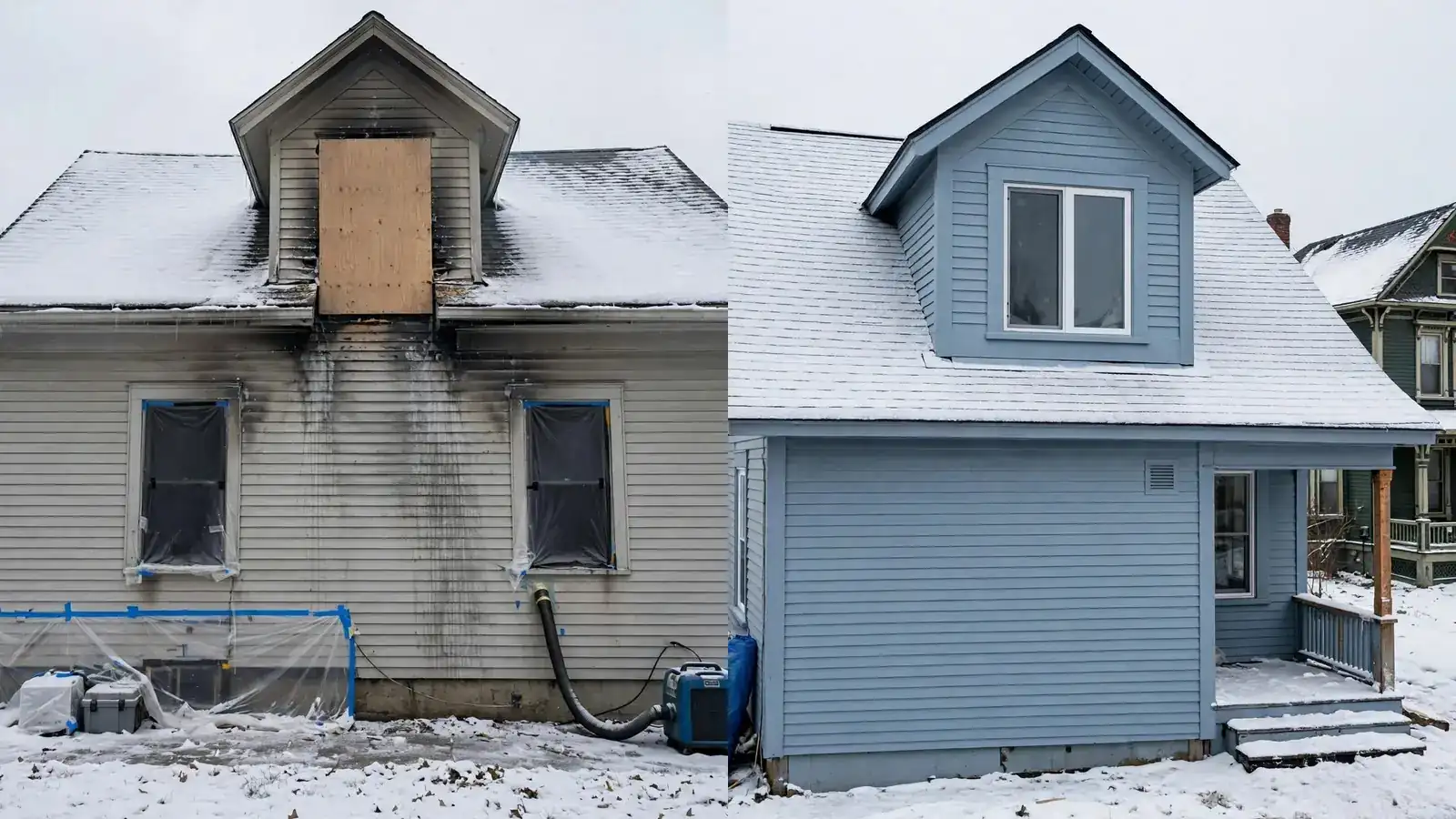
Key facts: Board-Up and Tarping in Longfellow
The roof over a Longfellow half story
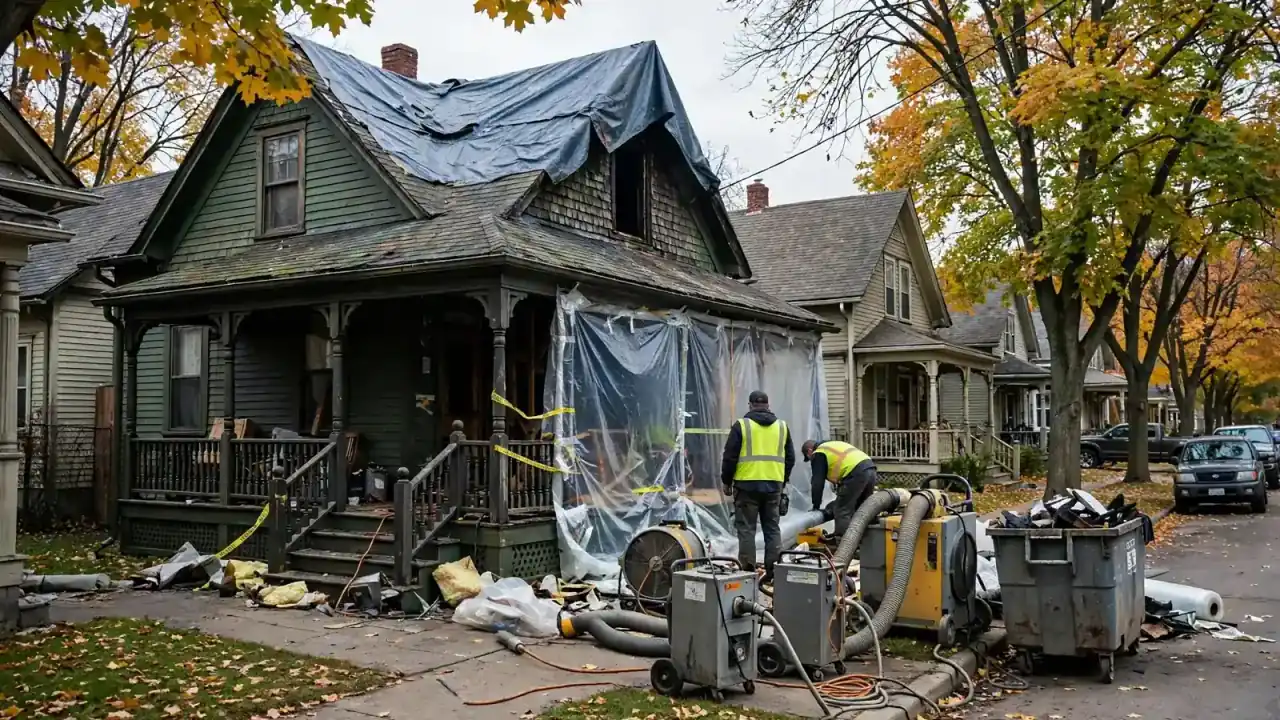
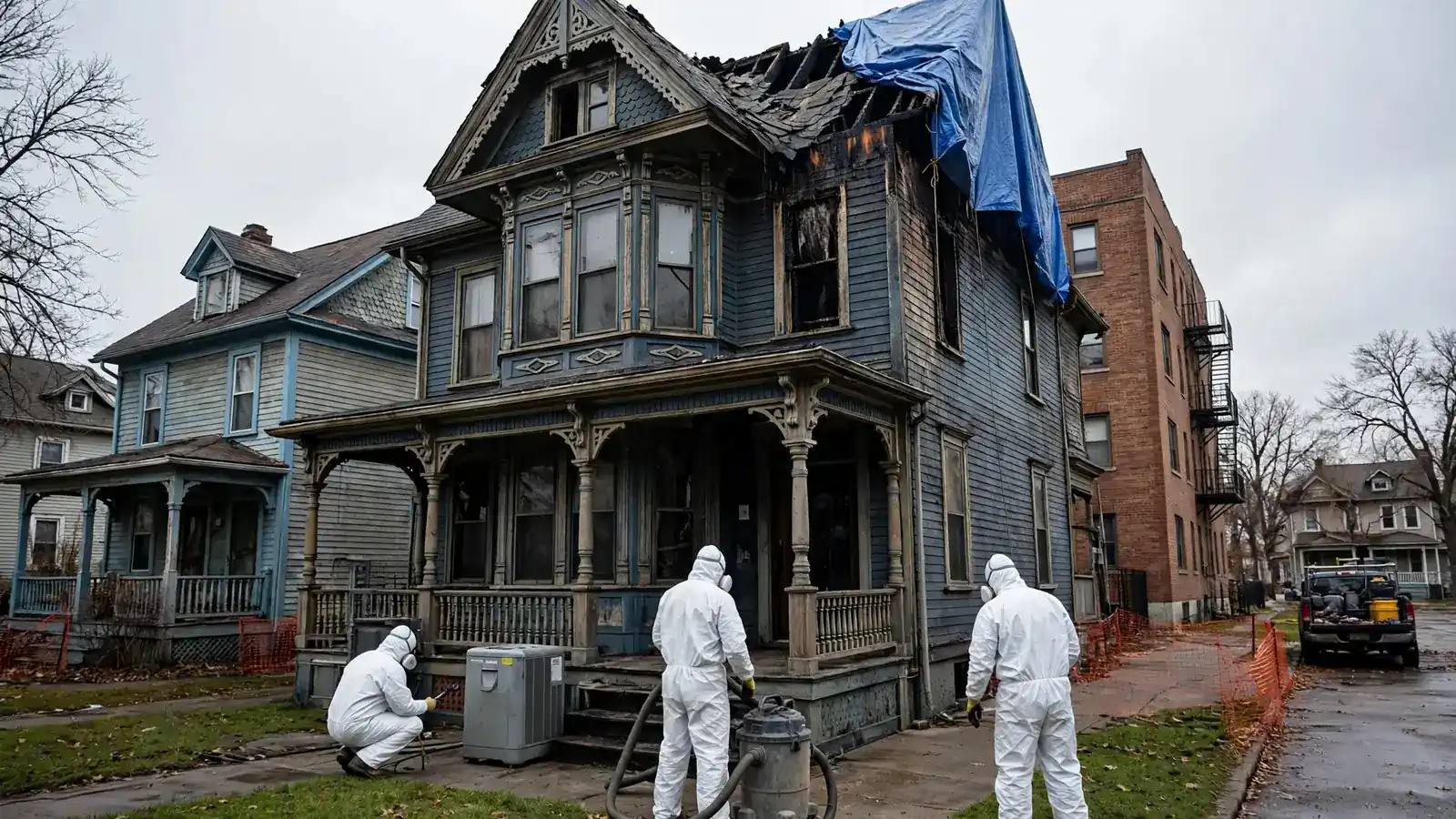
A typical Longfellow bungalow has a steep main roof with the upstairs rooms tucked under it, often with a shed or gable dormer on one or both sides [5]. Heat from a fire collects in that upper space, and firefighters commonly vent it by cutting through the roof near the ridge or opening a dormer window. Either way, the opening sits directly above bedrooms with plaster or board ceilings.
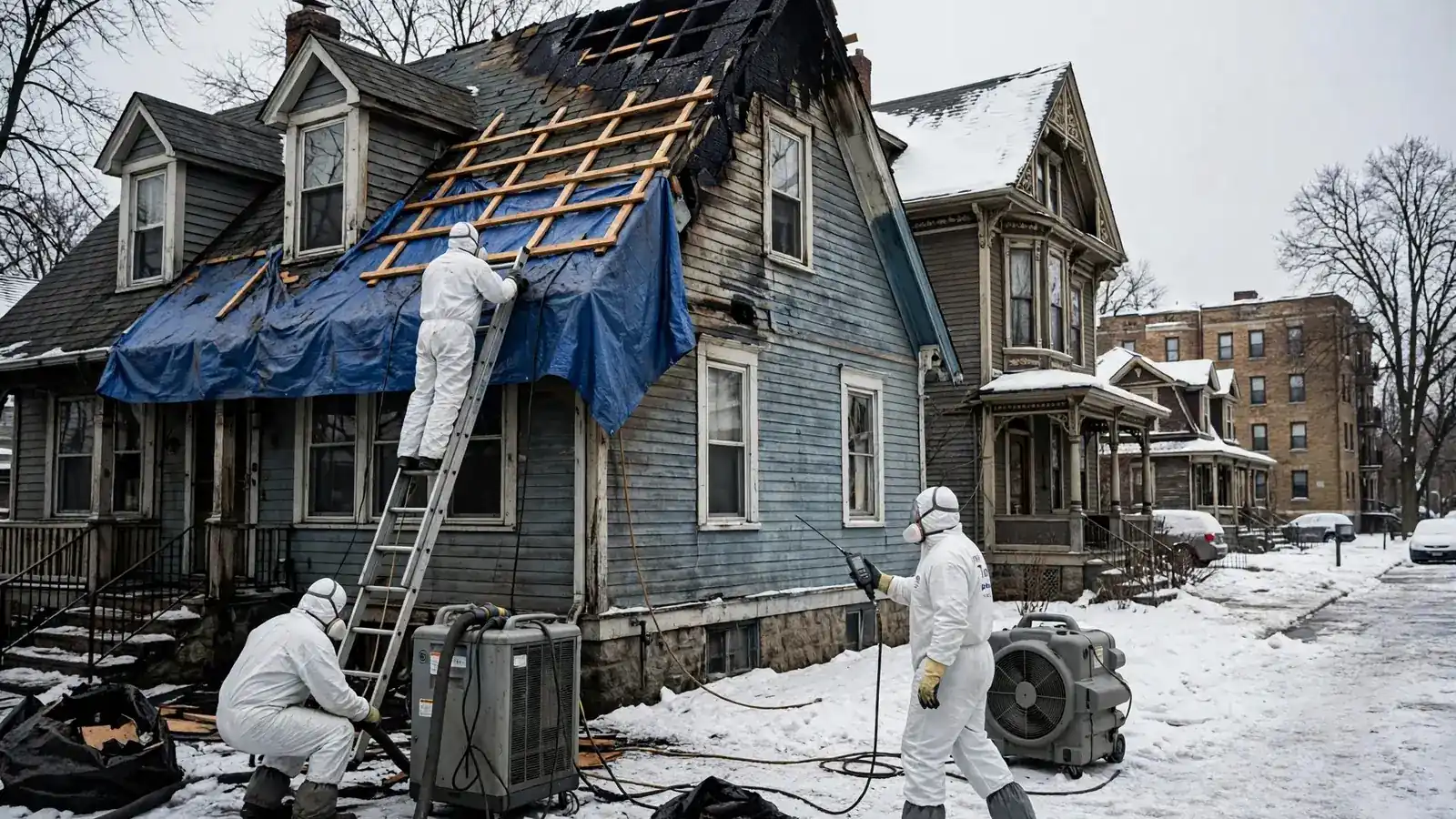
Covering it means working on a steep pitch. Crews use roof jacks or a harness and run the tarp up and over the ridge so the top edge cannot catch wind. Battens go into solid rafters, which on these houses are often full-dimension lumber that holds screws well.
Dormers and the valleys beside them
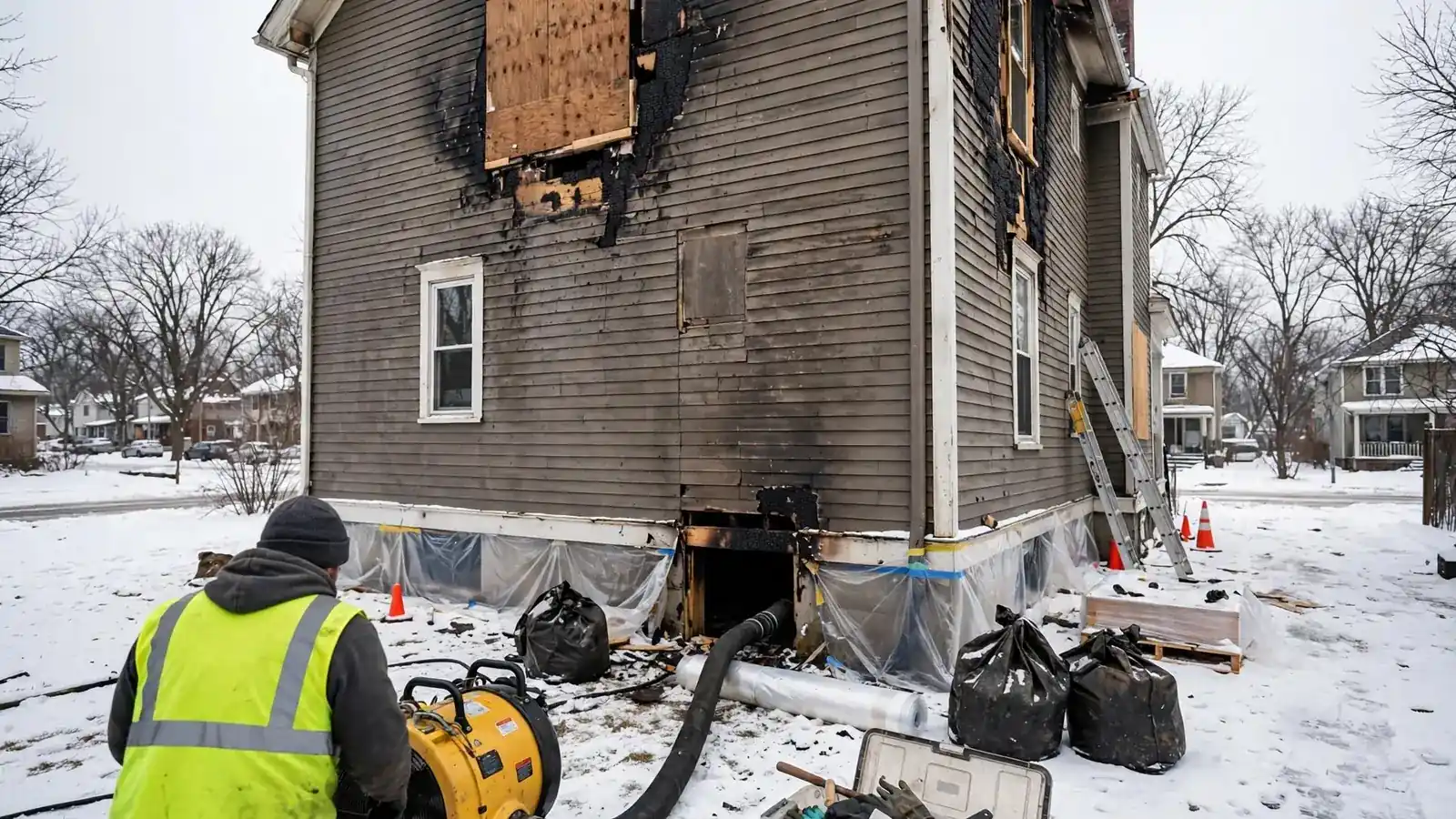
Where a dormer meets the main roof, there is a valley that carries a lot of water and snowmelt. If the fire damaged shingles or flashing near a dormer, the tarp has to lap over that valley from above, so water runs on top of it rather than under. A badly placed cover can channel melt straight into the knee-wall space below.
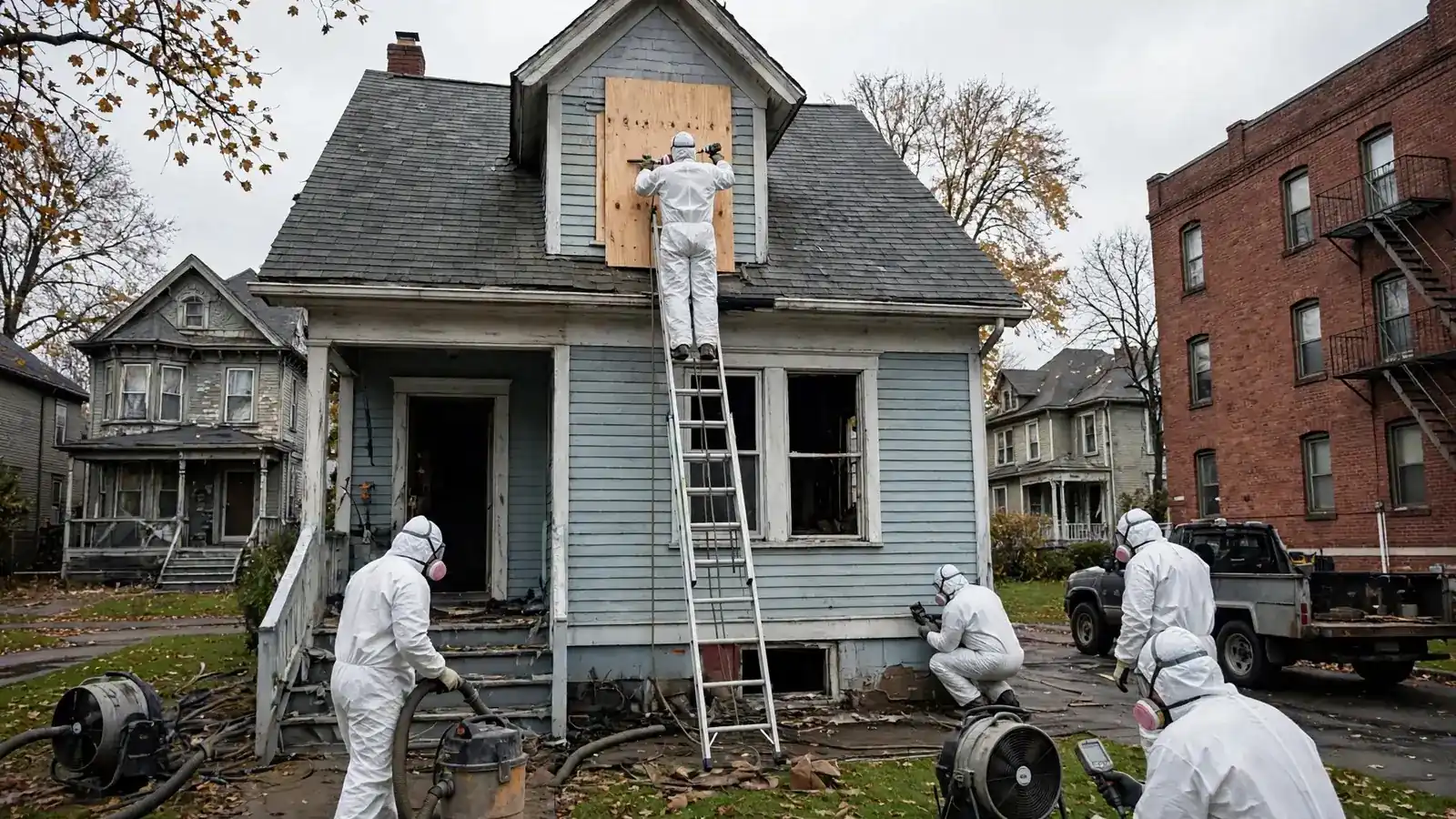
Broken dormer windows are boarded from inside or outside depending on access. Upper windows are small on most bungalows, so a single panel usually covers each one.
Snow, wind and ice on a bungalow tarp
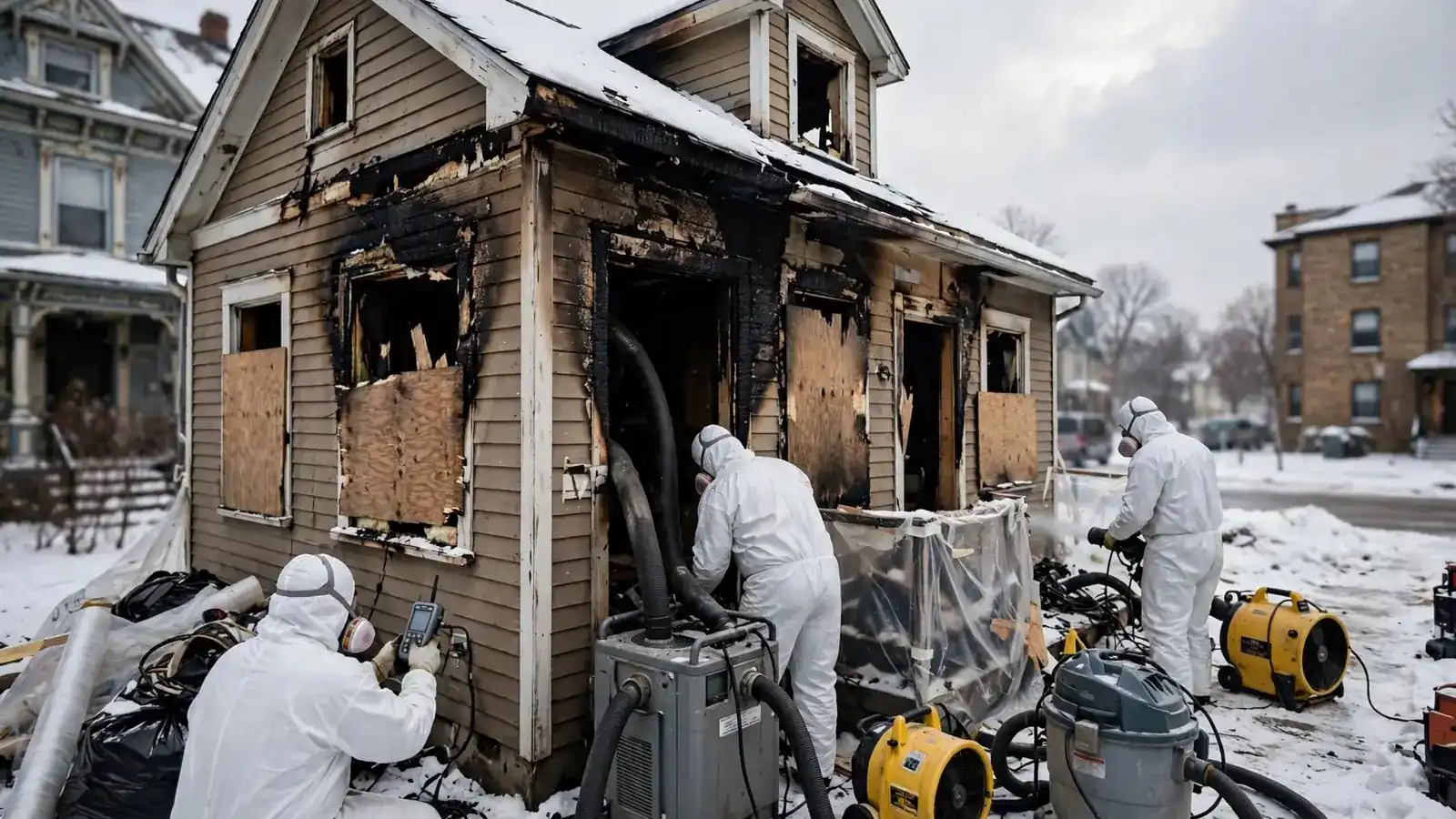
Minnesota snow is the biggest test for any temporary roof cover. A wet snowfall can put real weight on a tarp, and freeze-thaw cycles turn ponded water into ice along the battens. A tarp that sags between rafters collects meltwater and eventually leaks.
Crews often add a few extra battens across the middle of a large cover to keep it taut. After a storm, clear what you safely can with a roof rake from the ground, and call the contractor back if the cover has shifted [2].
Securing a Longfellow bungalow after a fire
A common order of work.
- 1
Get the fire department release
Confirm gas and power are safe before anyone enters.
- 2
Photograph the outside from all four sides
Include the porch, dormers and the alley side.
- 3
Close the porch, doors and main-floor windows
Panels fit the openings and fix to the framing.
- 4
Tarp the half-story roof and dormers
Over the ridge, lapped above valleys, battened to rafters.
Front porches and entry doors
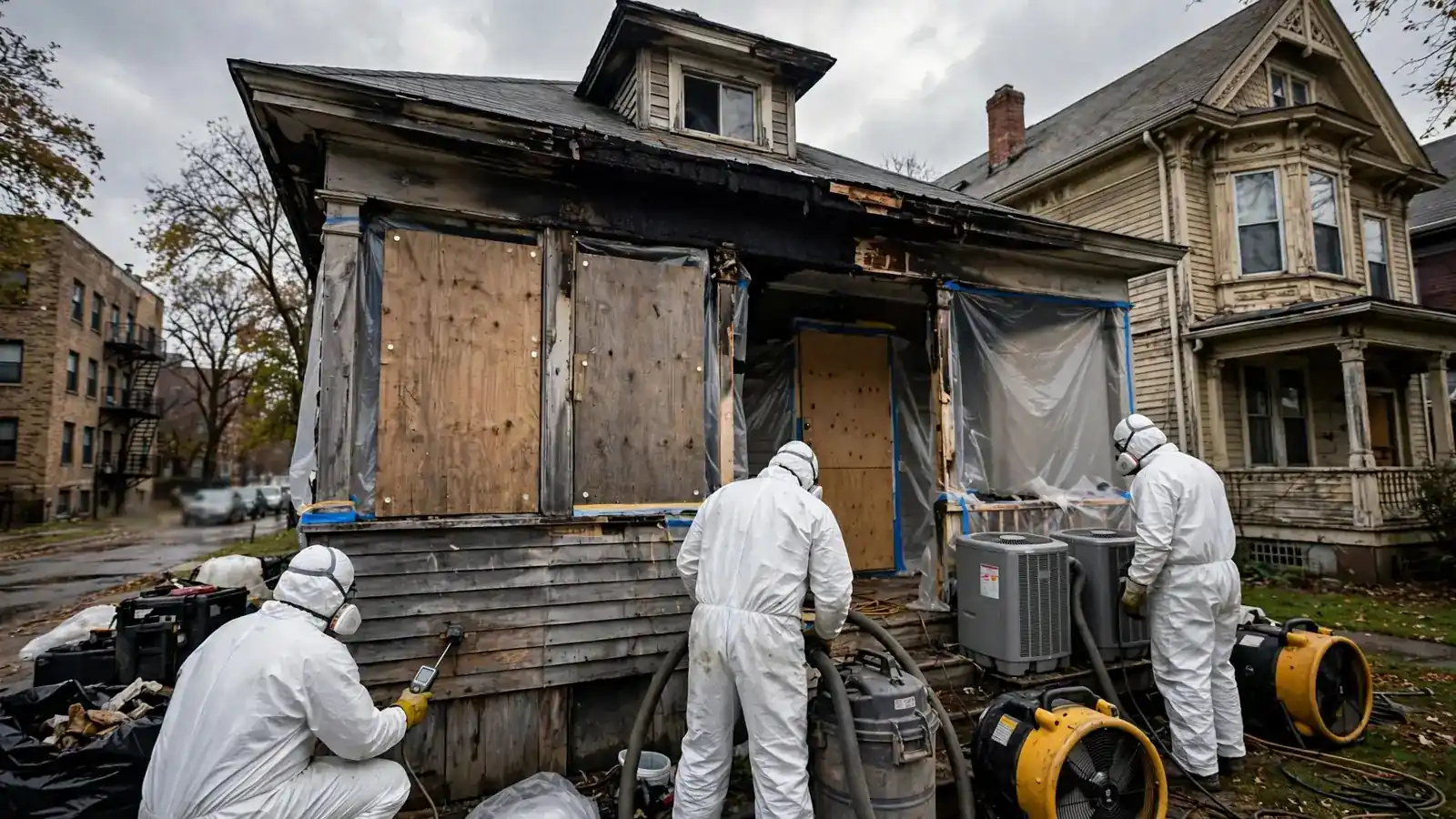
Many Longfellow homes have an open or enclosed front porch. An enclosed porch with a row of windows is a big set of openings to cover if the glass broke. Panels are cut to each opening, or a single sheet covers a run of windows if the frames are too damaged.
If firefighters forced the front door, the frame may be split. The crew can fit a secure temporary door or panel with a lock so the house is closed but still accessible to you, the adjuster and the contractor.
Catalog-house framing and what it means for fasteners
Ready-to-assemble catalog homes, including Sears kits, are part of Longfellow's history [5]. They were built from precut, numbered lumber. Original framing in these houses is often dense old-growth wood. It holds screws well, but it also splits if fasteners go in too close to an edge.
Ask the crew to fix panels and battens with care around original trim and window casings. If you know your house is a catalog home, mention it on the call so original parts can be protected.
Alleys, detached garages and the back of the lot
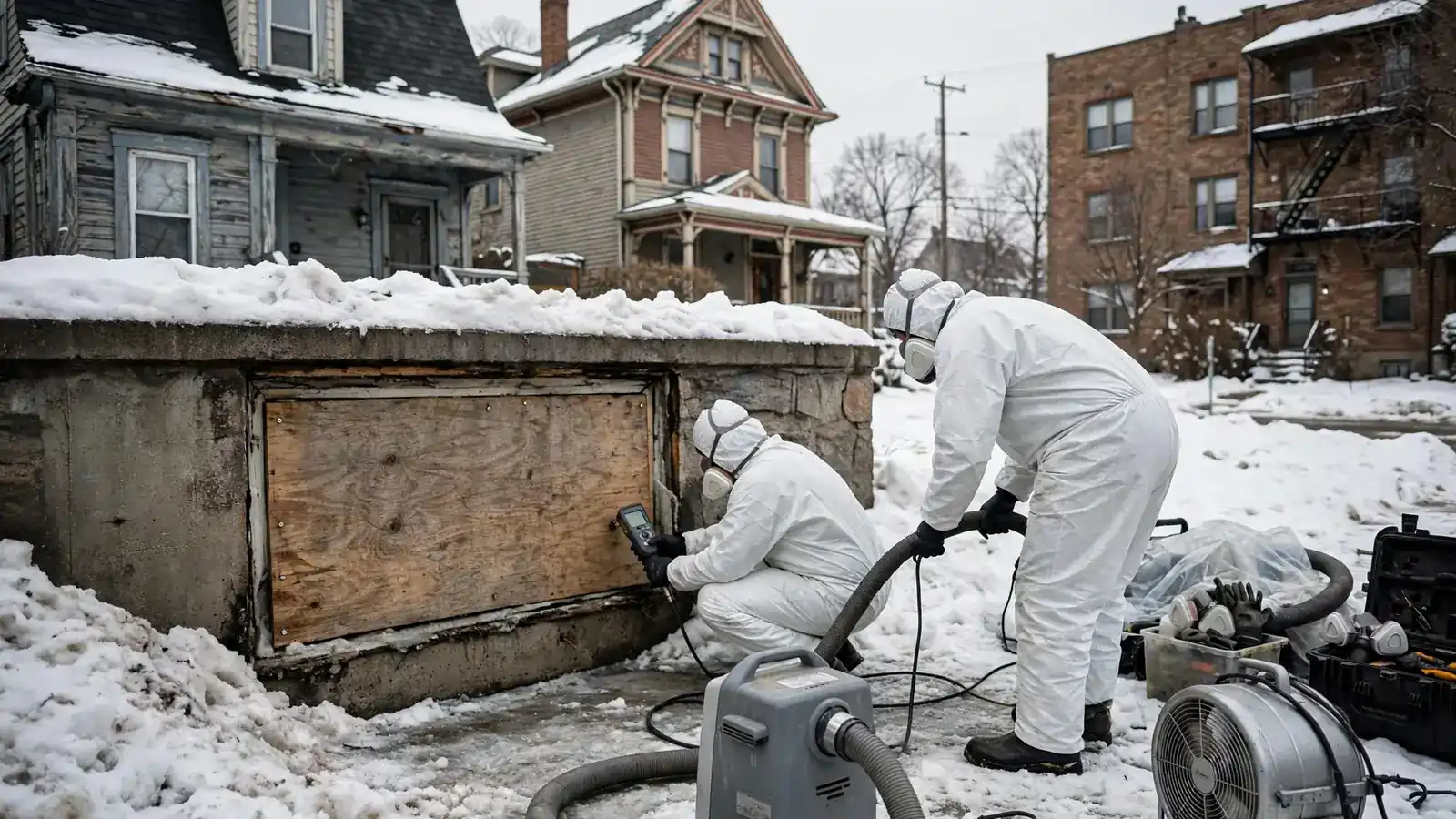
Most Longfellow blocks have alleys with detached garages at the back. Fires sometimes start in the garage and spread to the house, or the other way around. A damaged garage roof or overhead door needs covering too, especially if belongings or a car are inside.
The alley is also often the easiest way to get panels and ladders to the house. Mention whether the alley is plowed and passable if it is winter.
What to tell the crew about your Longfellow house
These details shape the plan.
- Number of dormers and where the roof is openFront, back or side of the half story.
- Enclosed or open front porchAn enclosed porch adds many windows.
- Detached garage damageA second roof or door may need covering.
- Alley access in snowSo the truck can reach the back.
Heat, frozen pipes and carbon monoxide
If the fire knocked out the furnace or boiler, a boarded-up bungalow can get cold quickly. Pipes in the basement and exterior walls can freeze. Temporary heat, or draining the plumbing, protects them.
Fuel-burning heaters and generators produce carbon monoxide. Keep generators outdoors and away from openings. Make sure carbon monoxide alarms are working near sleeping rooms, as Minnesota law requires [4].
Records for your claim
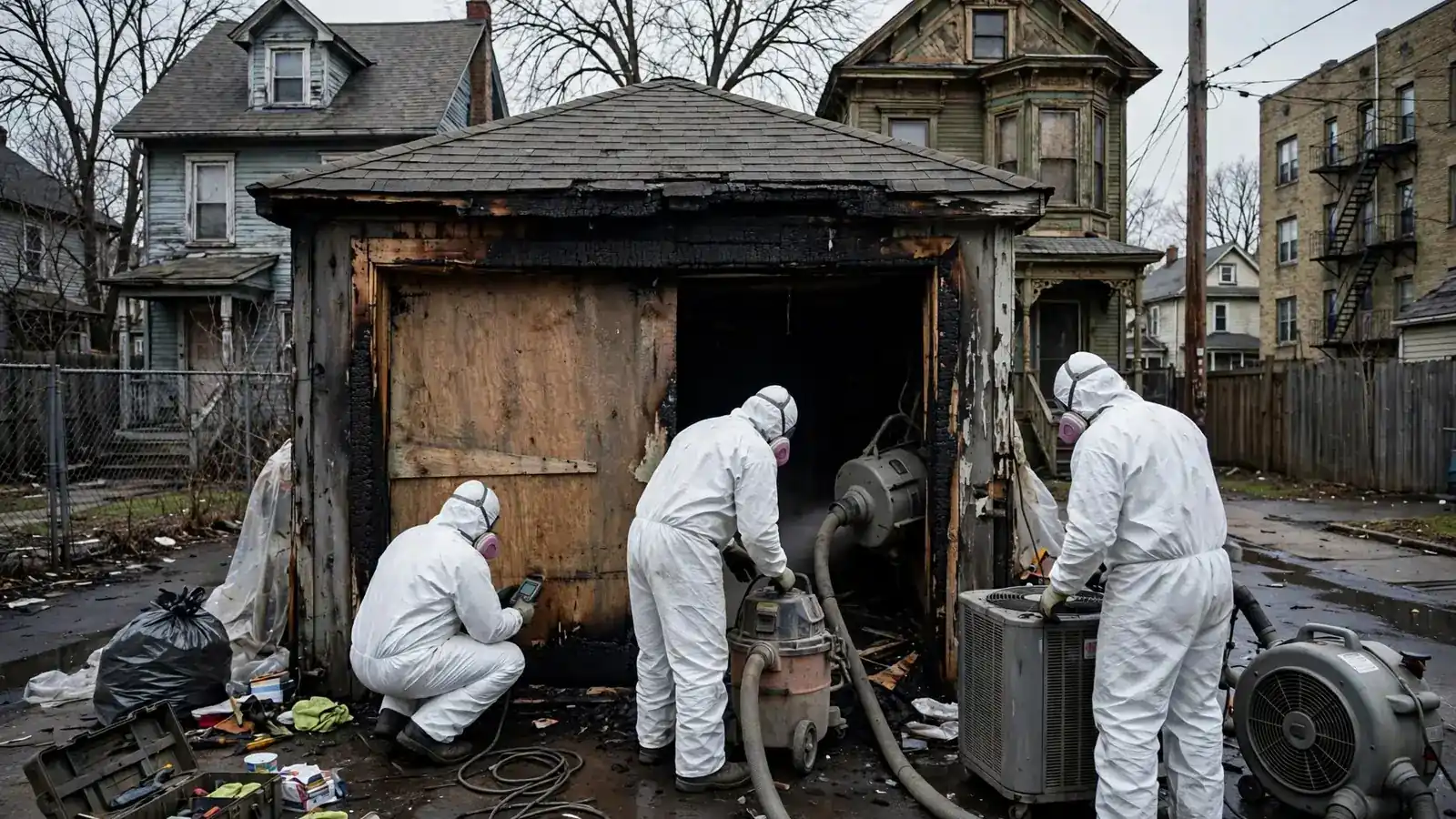
Keep photos of each opening before and after it is covered, along with the contractor's paperwork. The Minnesota Department of Commerce advises reviewing your policy and keeping records of every step [3].
Our guide on working with your insurance adjuster explains more. If you are not sure whether to stay in the house, read is it safe to stay after a fire.
FAQ
Board-Up and Tarping in Longfellow: questions
How is a tarp fixed to a steep Longfellow roof?
Usually over the ridge, with battens screwed into the rafters along every edge and across the middle to keep it tight.
Can my enclosed porch windows be boarded without ruining them?
Yes, with panels fitted to each opening and fixed to the framing rather than the sash.
Will snow damage the tarp on my bungalow?
Heavy snow can. Clear it from the ground with a roof rake and ask the contractor to check after storms.