Key facts: Marcy-Holmes
- Marcy-Holmes was established in 1849 and lies on a bluff above the Mississippi, bordering the University of Minnesota's East Bank [1].
- More than 86 percent of households in Marcy-Holmes rent [1].
- The neighborhood includes historic districts such as Fifth Street Southeast, St. Anthony Falls and the Dinkytown Commercial district [1].
- In buildings with shared stairways, smoke from one unit can reach every unit above it [2].
Coverage
Marcy-Holmes and ZIP 55414
This page covers Marcy-Holmes and nearby areas around the University of Minnesota's East Bank. Calls from this ZIP code are inside this service's coverage:
- ZIP 55414Marcy-Holmes, Dinkytown, Como, Prospect Park and the blocks around the University of Minnesota East Bank.
- On campus or nearby?University-owned buildings follow their own processes. For private homes and rentals, mention your address on the call.
The neighborhood
One of Minneapolis's earliest neighborhoods
Marcy-Holmes was established in 1849 and sits on a bluff above the Mississippi River, with the St. Anthony Main area and the St. Anthony Falls historic district along its southern edge [1]. It borders the University of Minnesota's East Bank campus and is part of the university community [1]. More than 86 percent of households rent [1].
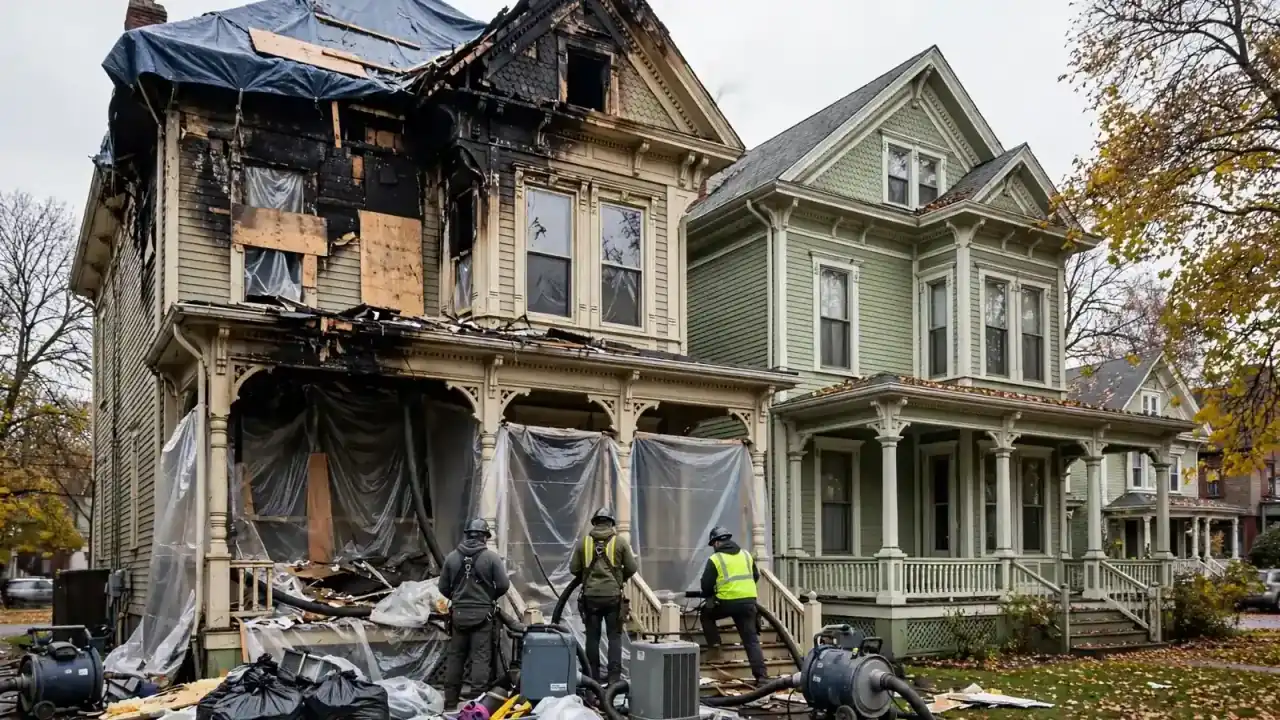
Housing includes nineteenth- and early twentieth-century houses, many converted into duplexes, rooming houses and small apartment buildings for students, alongside fraternity and sorority houses, newer apartment buildings and some owner-occupied historic homes. The neighborhood contains several historic districts, including Fifth Street Southeast, St. Anthony Falls, the University of Minnesota Greek Letter Chapter House district, Dinkytown Commercial and St. Anthony Main [1].
Converted houses often have added walls, extra kitchens and bathrooms, exterior stairs for second exits, and electrical and plumbing systems extended many times. Those layers matter after a fire.
Patterns
What Marcy-Holmes fire restorations often involve
Several households in one house
Converted houses hold multiple units, each with tenants, belongings and sometimes renters insurance.
Read moreSmoke in shared stairs and halls
Common stairways carry smoke from one unit to every floor above.
Read moreHistoric exterior features
Houses in historic districts may need review before exterior features are replaced.
Read moreElectrical systems extended over decades
Added kitchens and rooms often mean wiring extended many times, which needs inspection after a fire.
Read more
Converted houses
Old houses divided into apartments
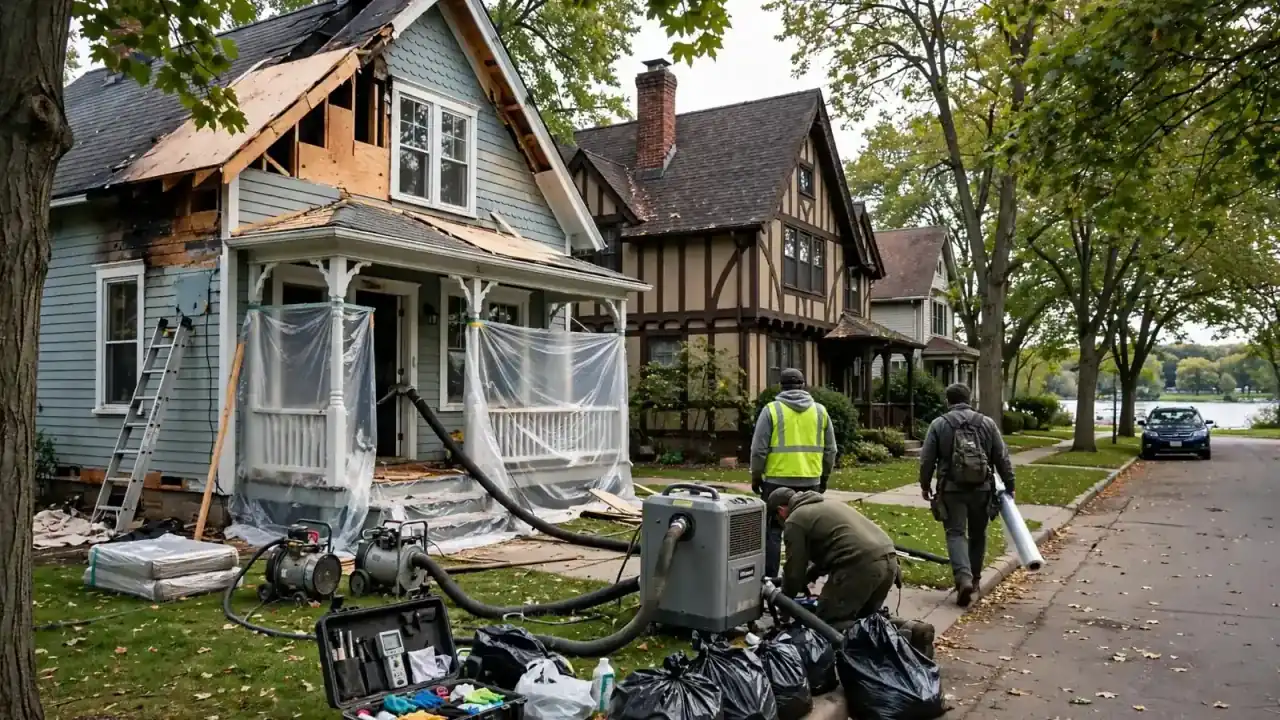
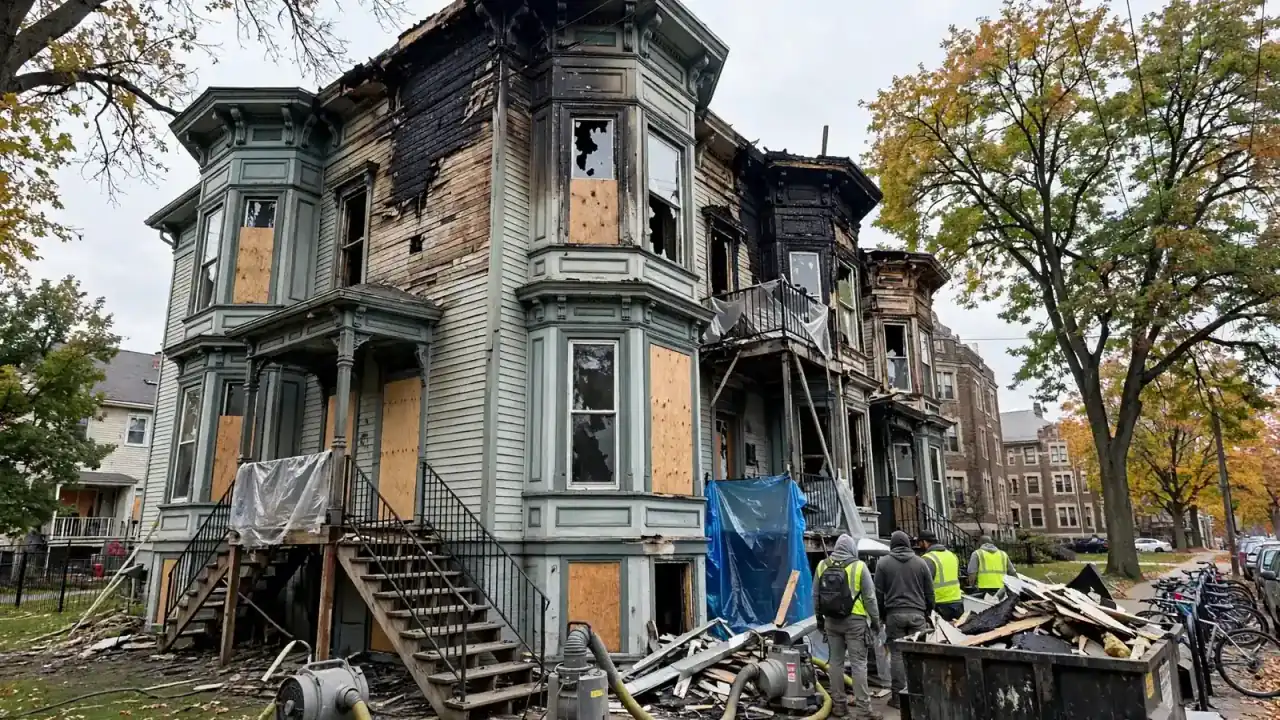
A Victorian or early twentieth-century house that once held one family may now have four or more units, each with its own kitchen and bath. Walls and doors were added, attics finished, basements turned into living space, and exterior stairs built to give upper units a second way out. Smoke moves through the original open stairway and through gaps where new walls meet old.
After a fire, every unit and common area needs inspection, not just the one where the fire started. Upper units usually take heavy smoke; lower units and the basement take water. Added walls may hide old openings that let smoke travel between units.
Electrical and plumbing systems extended many times need careful inspection. Keep power off to affected areas until an electrician checks them.
Owners and tenants
Who handles what in a rental fire
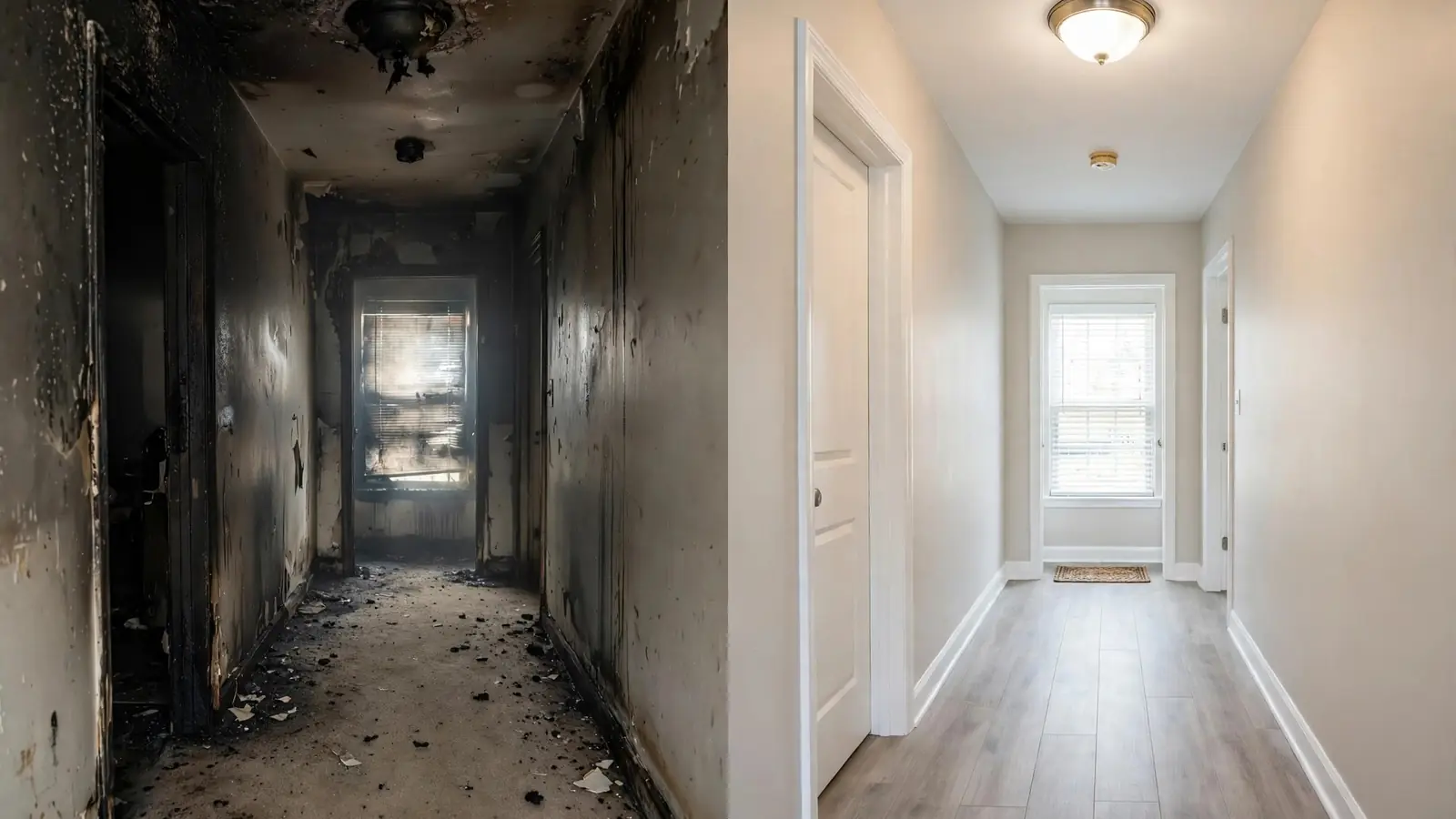
In a rental building, the owner's insurance usually covers the structure, building systems and common areas, while each tenant's renters insurance, if they have it, covers their belongings and sometimes temporary housing. Many students are not sure whether they have renters coverage; some are covered under a parent's homeowners policy, which is worth checking.
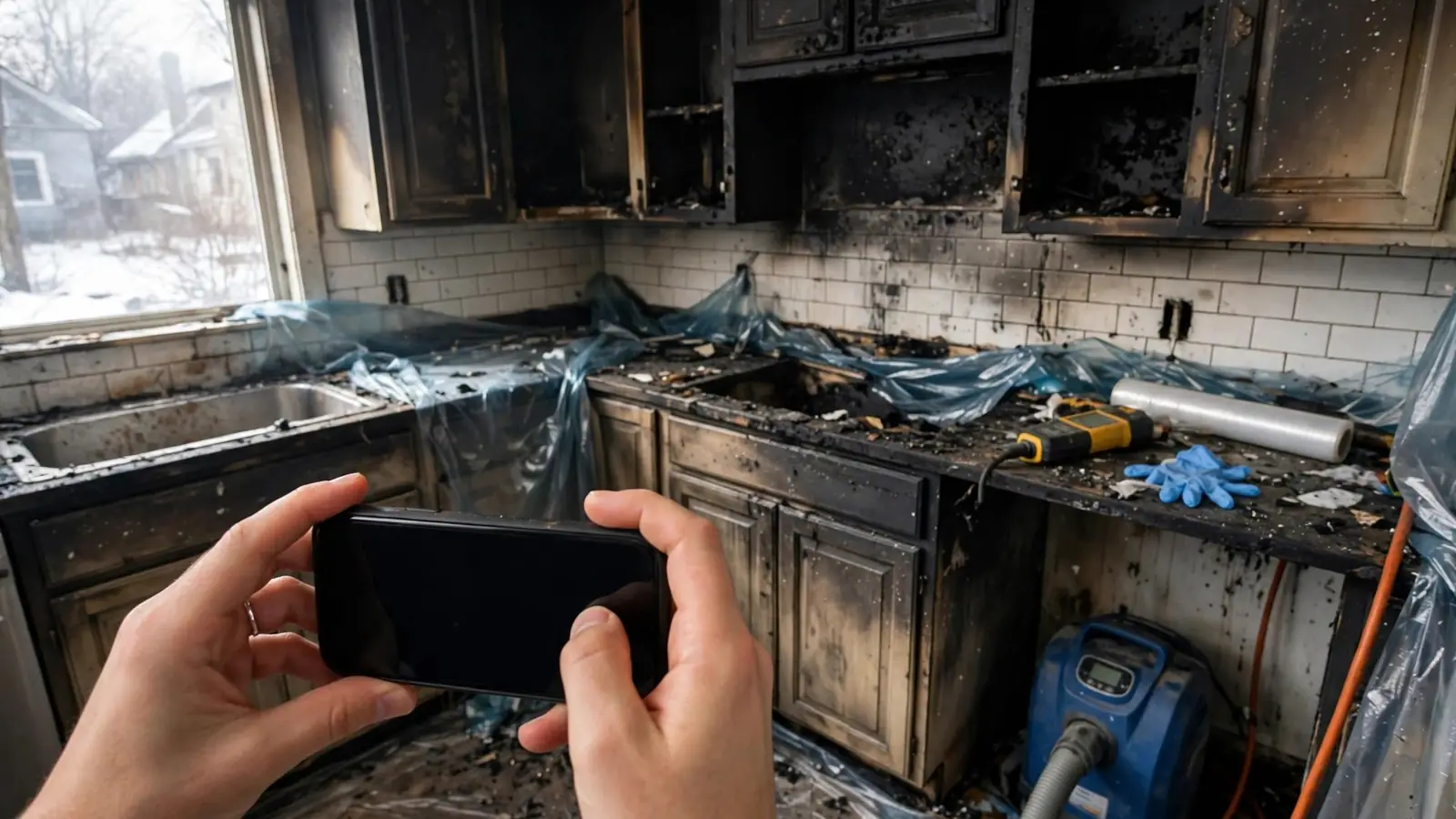
Owners and managers coordinate the restoration, access and city inspections. Tenants should photograph their belongings, contact their insurer, and ask the owner or manager for the timeline. Rental units may need inspection before anyone moves back in.
- Owner: structure, systems, common areas
- Tenants: belongings and temporary housing
- Check parents' policies for students
- Units may need re-inspection
Historic districts
Historic districts and exterior repairs
Marcy-Holmes includes several historic districts [1]. Inside a locally designated district, exterior changes such as replacing windows, doors, porches, siding or roofing materials may need review by the city's heritage preservation staff before work begins. Interior cleaning and drying usually proceed without review.
Keep damaged original pieces when possible, photograph the exterior before cleanup and ask the contractor to flag exterior items that may need review, so approval can run alongside interior work.
Basements
Basement units and water from above
Some converted houses have basement units or rooms. Firefighting water from upper floors ends up there, soaking carpet, drywall and belongings. Basement units also hold the building's heating equipment and electrical panels in many cases.
Water is pumped and dried, wet materials removed and the space dried with dehumidifiers. The EPA advises drying within 24 to 48 hours where possible to prevent mold [4]. Heating equipment is inspected before use, and basement units should not be reoccupied until drying is complete.
Winter
Winter fires and freeze protection
If a fire damages the boiler, furnace or electrical service in winter, the whole building can lose heat. Pipes in exterior walls and in the basement can freeze quickly. Temporary heat or draining the plumbing comes first, before cleanup. Tell the contractor right away if the heat is off.
Permits
Permits, rental licenses and inspections
Marcy-Holmes is inside the City of Minneapolis, so structural, electrical, plumbing and mechanical repairs need permits through the city's licenses, permits and inspections services [5]. Rental properties are also subject to the city's rental licensing, and units may need inspection before tenants return.
For work on a Marcy-Holmes home, ask about the Minnesota residential contractor licence issued by the Department of Labor and Industry [6].
Planning
Access near campus and Dinkytown
Streets near campus and Dinkytown are busy, with heavy foot traffic, bikes and limited parking, especially during the academic year and on game days. Containers and equipment may need city permission and careful placement. Alleys, where available, are often better routes.
Plan noisy or disruptive work with neighbors in mind, and keep walkways clear of debris for pedestrians.
Victorian details
Original features in Marcy-Holmes houses
Many of the neighborhood's older houses still have original features: carved stair rails, pocket doors, tall windows, decorative trim, porches and sometimes leaded glass. Conversions often left these in place, sometimes painted over or boxed in. After a fire, they collect soot like any surface, but they deserve careful cleaning rather than replacement.
Stained wood is cleaned gently and refinished where darkened. Painted surfaces in houses this old almost certainly have lead paint in older layers [7], so scraping and sanding follow lead-safe practices. Original windows can often be reglazed, and leaded glass should go to an experienced specialist.
Exterior stairs
Exterior stairs, fire escapes and second exits
Converted houses often have exterior wooden stairs or fire escapes added so upper units have a second way out. A fire can damage these structures directly or weaken them with heat. Firefighters may also use them during the response.
Damaged exterior stairs should be closed off until they are inspected and repaired, since they are part of the building's required exits. Repairs need a permit. In winter, ice and snow on damaged stairs add a slip hazard.
Attics
Finished attics and top-floor units
Top-floor units in converted houses are often in former attics, with sloped ceilings, dormers and small storage spaces behind knee walls. Smoke rising through the building collects there. Old insulation behind the walls and above the ceiling absorbs it.
Cleaning top-floor units includes opening every storage space, removing smoky insulation and cleaning and sealing roof boards. Older loose-fill insulation should be tested before removal [8].
Contents
Many residents, many belongings
In a building with several units, each resident's belongings need to be sorted, cleaned or discarded separately. Laptops, textbooks, clothing and furniture are typical. Electronics exposed to smoke should not be powered on until checked. Clothing and bedding can usually be cleaned professionally.
Each resident should photograph their own belongings and keep a list. The restoration contractor can label and track items by unit if contents are packed out.
Heating
Boilers, radiators and added systems
Older Marcy-Holmes houses were built with boilers and radiators, and many conversions kept them, sometimes adding wall units or separate furnaces for individual apartments. After a fire, radiators collect soot and release odor when warm, while ducts in any forced-air system carry residue to every room they serve.
A shared boiler serving several units is the owner's responsibility and must be inspected before it runs again. In winter, a building without heat risks frozen pipes in every unit, so temporary heat or draining comes first. Individual furnaces or wall heaters in units should be checked too.
Electrical
Wiring in converted houses
Conversions often added kitchens, bathrooms and rooms by extending existing circuits, sometimes many times. Older houses may still contain early wiring alongside newer work. Overloaded circuits and extension cords in student rooms are known fire risks.
After a fire, keep power off to affected units until an electrician inspects the whole building. Rewiring is easiest while walls are open. Each unit should have working smoke alarms, and carbon monoxide alarms near sleeping rooms as Minnesota law requires [10].
Sequence
Restoring a multi-unit building, step by step
The usual order is to secure the building and protect it from cold, then make sure exits and stairs are safe. Water is extracted from lower units and the basement next, and ruined materials removed. Soot is cleaned from the top floor down, including common stairways, and heating systems are cleaned. Odor treatment and sealing follow, then permitted repairs, inspections and finishes.
Units less affected may be ready sooner, but tenants can return only once the building's systems are safe and any required inspections are passed. The owner or manager should share the timeline with all residents.
Academic year
Fires during the school year
A fire in the middle of a semester disrupts studies and housing for many students at once. Tenants may need short-term housing quickly. The university's student services may be able to point students to resources, and renters or parents' insurance may help with temporary housing. Keep every receipt.
Owners should communicate clearly with all residents about safety, access to belongings and when units will be ready.
Students who move out temporarily should take important documents, medications, chargers and anything needed for classes, and leave a phone number with the owner so they can be reached about access to the unit.
Smoke paths
Tracing smoke between units
In a converted house, smoke follows the original structure as well as the new layout. The main stairway connects floors; old heating pipes, chimneys and chases run between units; added walls often do not reach the original ceiling or floor, leaving gaps. Smoke from one unit can surface in a closet or behind a cabinet two units away.
The contractor inspects every unit, the common areas, the attic and the basement, noting where residue is heavy and where it is light. Removing outlet covers or baseboards may be needed to look inside walls. This map guides cleaning and explains the scope to insurers for both the owner and the tenants.
Porches
Porches and entries on older houses
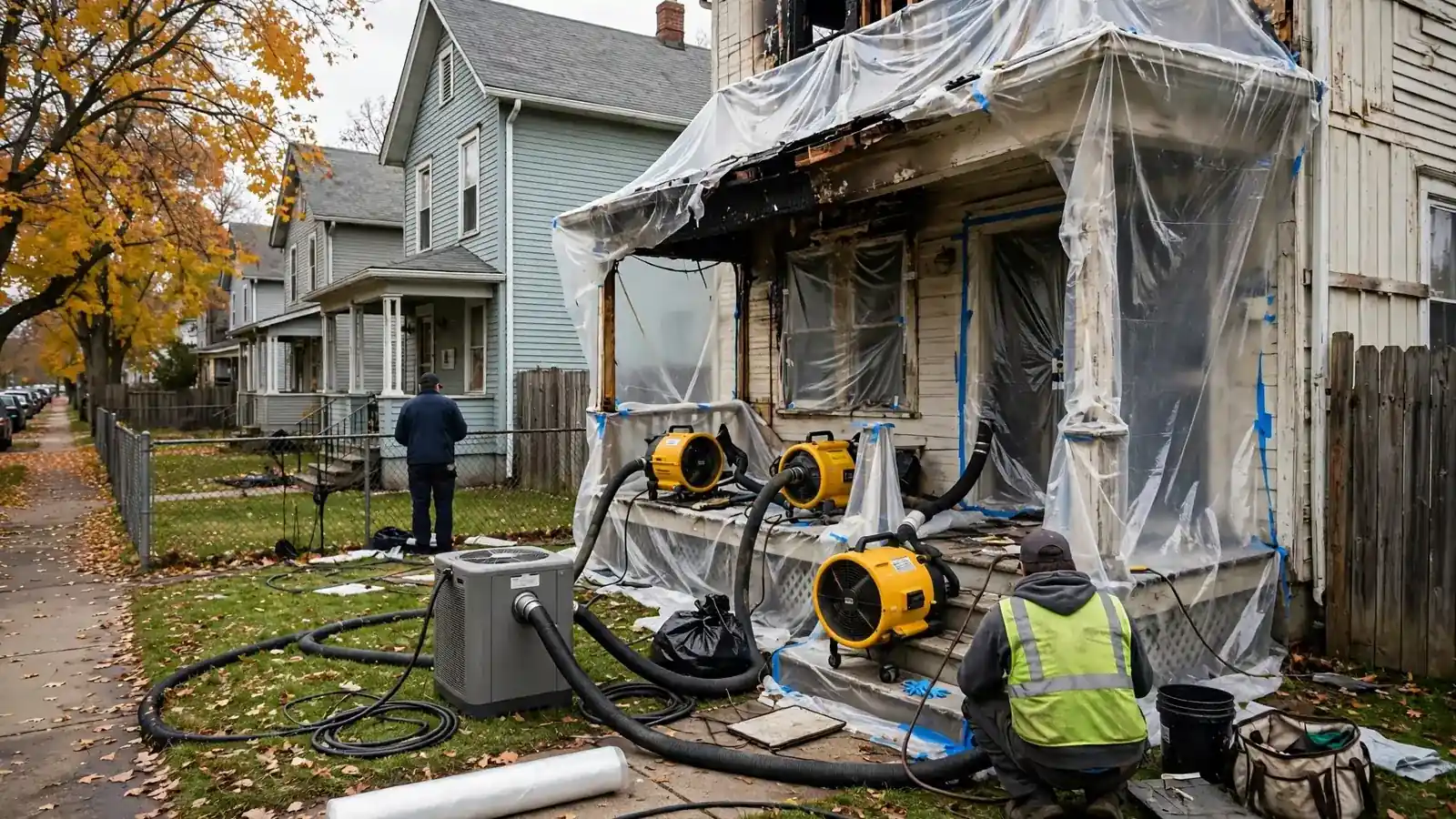
Many older Marcy-Holmes houses have front porches, some enclosed, that now serve as shared entries. Smoke venting through the front door stains porch ceilings and columns, and enclosed porches may have broken windows. Porch woodwork can usually be cleaned and repainted with lead-safe methods; broken windows are boarded early in cold weather. In a historic district, replacing porch features may need review.
Debris
Debris and containers on busy streets
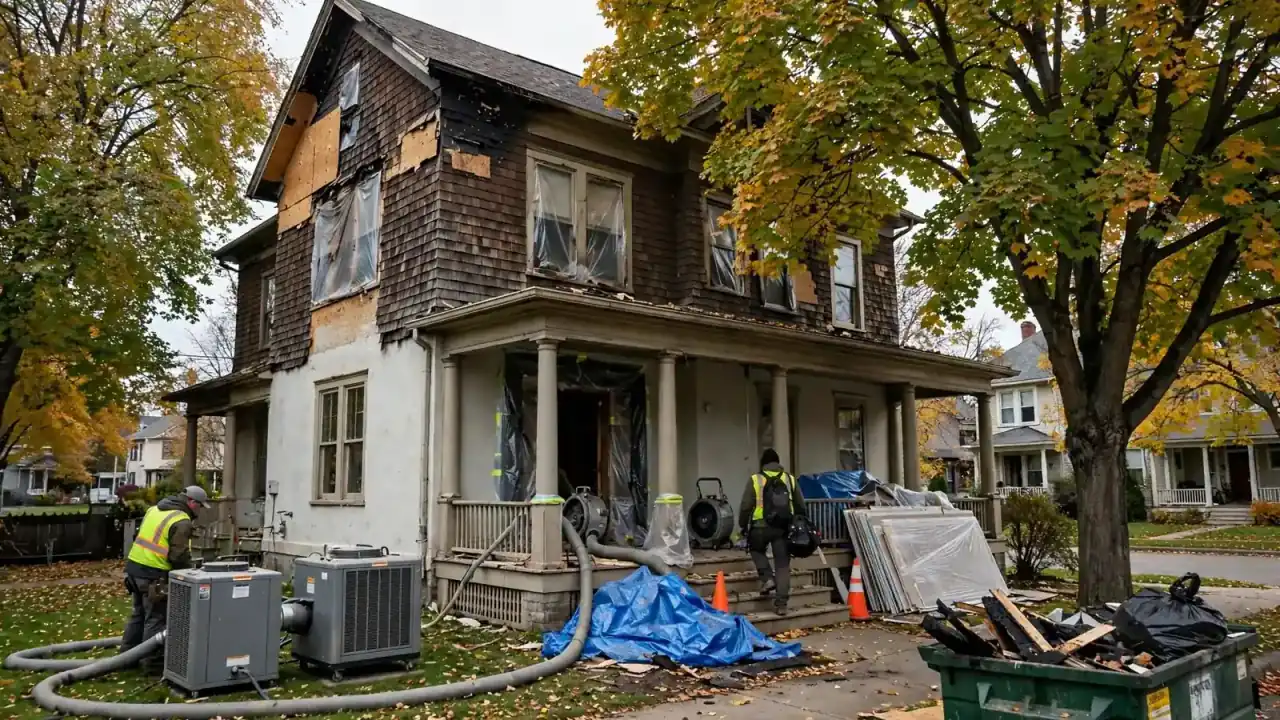
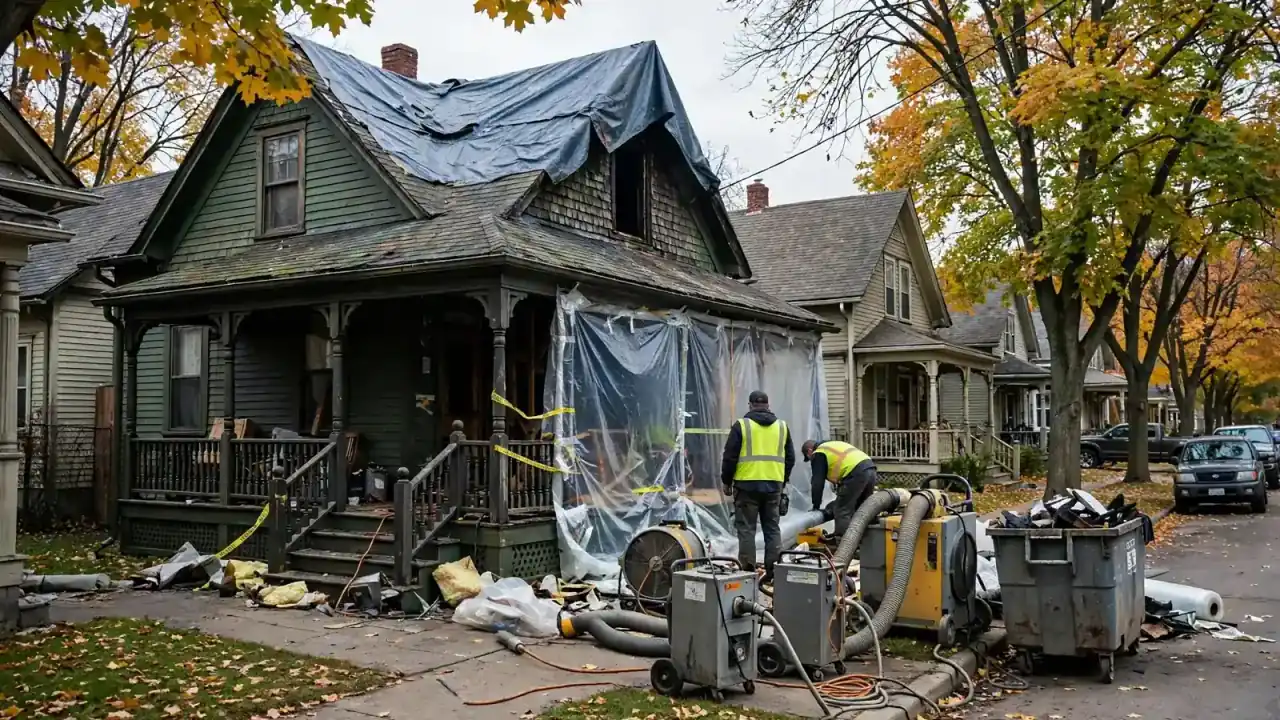
Fire debris from a multi-unit building can be substantial: burned contents from several units, drywall, insulation and roofing. Containers near campus may need city permission and careful placement to keep sidewalks and bike lanes clear. Cover debris when rain or snow is expected and remove it promptly.
Before anything is discarded, check whether the owner's or tenants' insurers want to see it.
Game days and move-in weekends are especially busy, so schedule deliveries and pickups around them.
Floors
Old floors under newer coverings
Conversions often covered original hardwood with carpet, vinyl or laminate. After a fire, wet or smoky coverings are removed, sometimes revealing old floors that can be dried, cleaned and refinished. Original floors soaked by firefighting water often flatten as they dry; boards that stay cupped or are charred are replaced to match.
Security
Securing a damaged building near campus
A boarded-up building near campus can attract curiosity and trespassing. Keep openings secured, valuables removed, and one controlled access point with keys or codes held by the owner, manager and contractor. Let residents know how to retrieve belongings safely and when.
Check the building after storms and snowfall for loose covers and drifting snow at openings. Report any signs of entry to the owner and contractor quickly.
Temporary lighting at the entry and a regular check schedule help discourage trespassing while the building is empty.
Communication
Keeping residents informed
In a building with many residents, clear communication prevents confusion. A single contact for updates, a written timeline, and notice before crews enter units help everyone. Residents should know when they can collect belongings, what has been cleaned or discarded, and when units are expected to be ready.
If anyone in the building speaks a language other than English at home, mention it on the call so information can be shared in a way that works for them.
A shared message thread or a notice posted at the entry, updated after each phase, can save dozens of individual calls and keeps everyone working from the same information.
FAQ
Marcy-Holmes fire restoration questions
I rent a unit in a converted house. Who pays to fix my belongings?
Usually your renters insurance, if you have it, or a parent's homeowners policy in some cases. The owner's policy generally covers the building, not tenants' belongings. Check your coverage.
Why did smoke reach my unit when the fire was downstairs?
Converted houses often share the original stairway and have gaps where new walls meet old. Smoke rises through those paths into every unit above.
Do exterior repairs need historic review?
If the building is in a locally designated historic district, exterior changes may need review by the city. Interior cleaning and drying usually do not.
When can tenants move back in?
After repairs are complete, utilities are safe and any required city inspections are passed. The owner or manager coordinates timing.
Do students need to document their belongings?
Yes. Photograph your items, list what was damaged and keep receipts for anything you buy while displaced. That helps with any insurance claim.
Will a contractor take my call from Marcy-Holmes?
Calls from ZIP 55414 are inside this service's coverage. You speak with an independent local restoration contractor on that same call.
Can I go back in to get my laptop and books?
Only when the owner or contractor says your unit and the route to it are safe. Wear sturdy shoes and do not power on electronics exposed to smoke until they are checked.
Are exterior stairs safe to use after a fire?
Not until they are inspected. Heat can weaken wooden stairs and fire escapes. They are part of the building's required exits, so repairs need a permit.
What should I mention when I call from Marcy-Holmes?
How many units the building has, where the fire started, whether exits and stairs are safe, whether the heat works, and whether the building is in a historic district.
Can original floors under the carpet be saved?
Often. Once wet or smoky coverings are removed, old hardwood can be dried, cleaned and refinished. Boards that stay cupped or are charred are replaced to match.
How will residents know when they can return?
The owner or manager should share a written timeline. Units can be reoccupied once repairs are done, systems are safe and any required city inspections are passed.
Is the basement unit safe to live in after firefighting?
Not until it has been dried, cleaned and checked. Water from upper floors collects in basement units, and heating equipment there needs inspection before use.
Sources and citations
- [1]Wikipedia: Marcy-Holmes, Minneapolis
- [2]U.S. Fire Administration: After a fire
- [3]NFPA: Home structure fires
- [4]U.S. EPA: A brief guide to mold, moisture and your home
- [5]City of Minneapolis: Licenses, permits and inspections
- [6]Minnesota Department of Labor and Industry
- [7]U.S. EPA: Protect your family from sources of lead
- [8]U.S. EPA: Protect your family from exposures to asbestos
- [9]Minnesota Department of Commerce: Disaster Information Center
- [10]Minnesota Statutes 299F.51: Carbon monoxide alarms