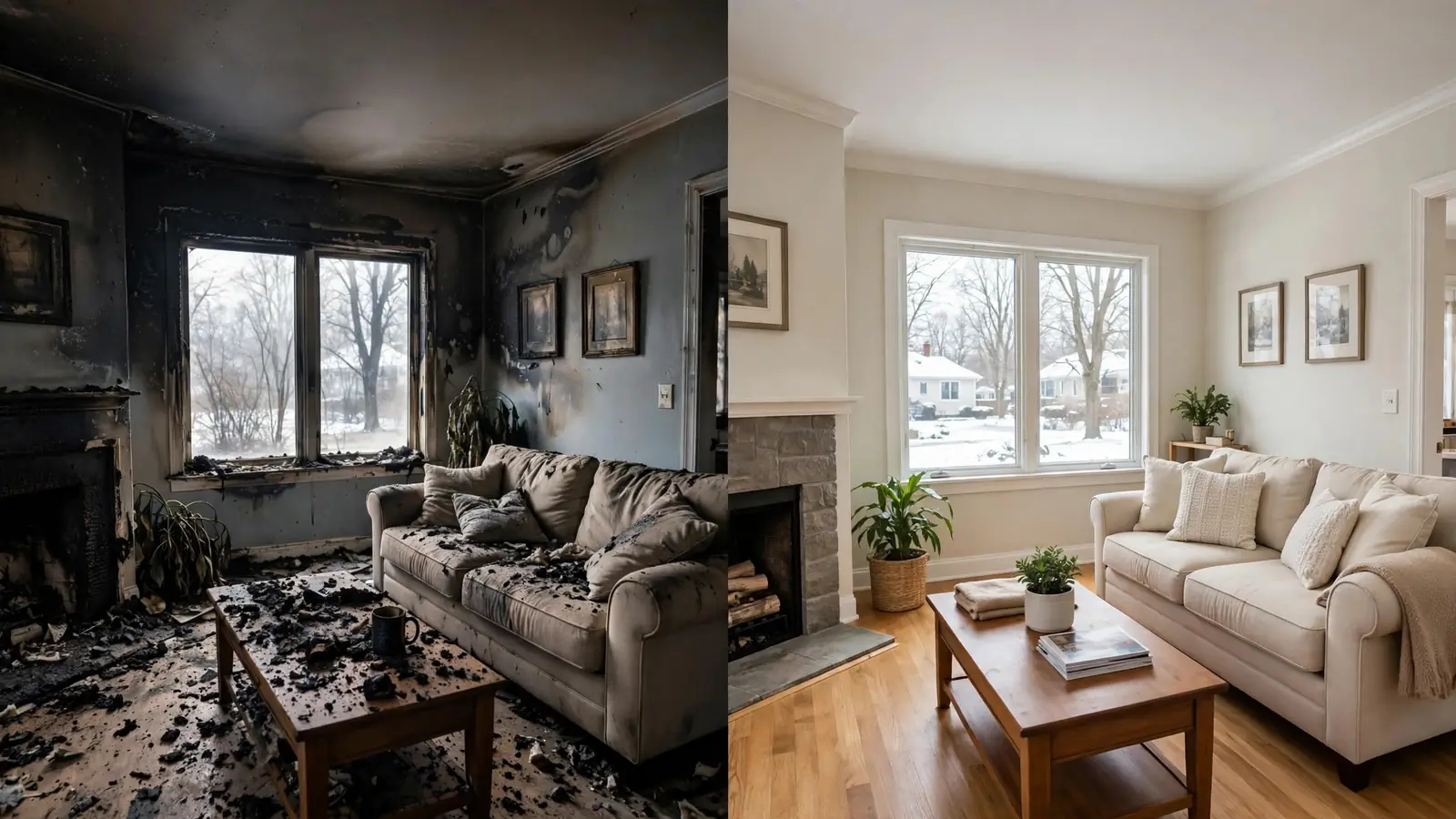
Key facts: Smoke Damage Cleanup
- The U.S. Fire Administration notes that smoke odor comes from tiny particles clinging to walls, furniture, floors and clothing [1].
- IICRC S700 sets out how professionals inspect, clean and deodorize after fire and smoke [2].
- Most Minneapolis homes were built before 1978, when lead-based paint was still sold, so old painted woodwork needs lead-safe handling [3].
- The Minnesota Department of Commerce reminds homeowners that they choose which contractor repairs their home [4].
How smoke settles
Where smoke goes in an older Minneapolis house
A fire produces hot gases loaded with carbon particles, oils and acids. Those gases rise, spread across ceilings and push into every opening they meet. In a story-and-a-half bungalow or a two-and-a-half-story foursquare, the stairwell acts as a flue, so the upstairs bedrooms and the knee-wall spaces behind them often end up darker than the room where the fire began.
Minneapolis houses also have pathways newer homes lack. Laundry chutes connect the second floor to the basement. Radiator pipes run through holes in floors and ceilings. Original plaster walls develop fine cracks over a century, and gravity heating ducts in some houses rise through interior walls. Smoke follows all of these, so the cleanup has to as well.
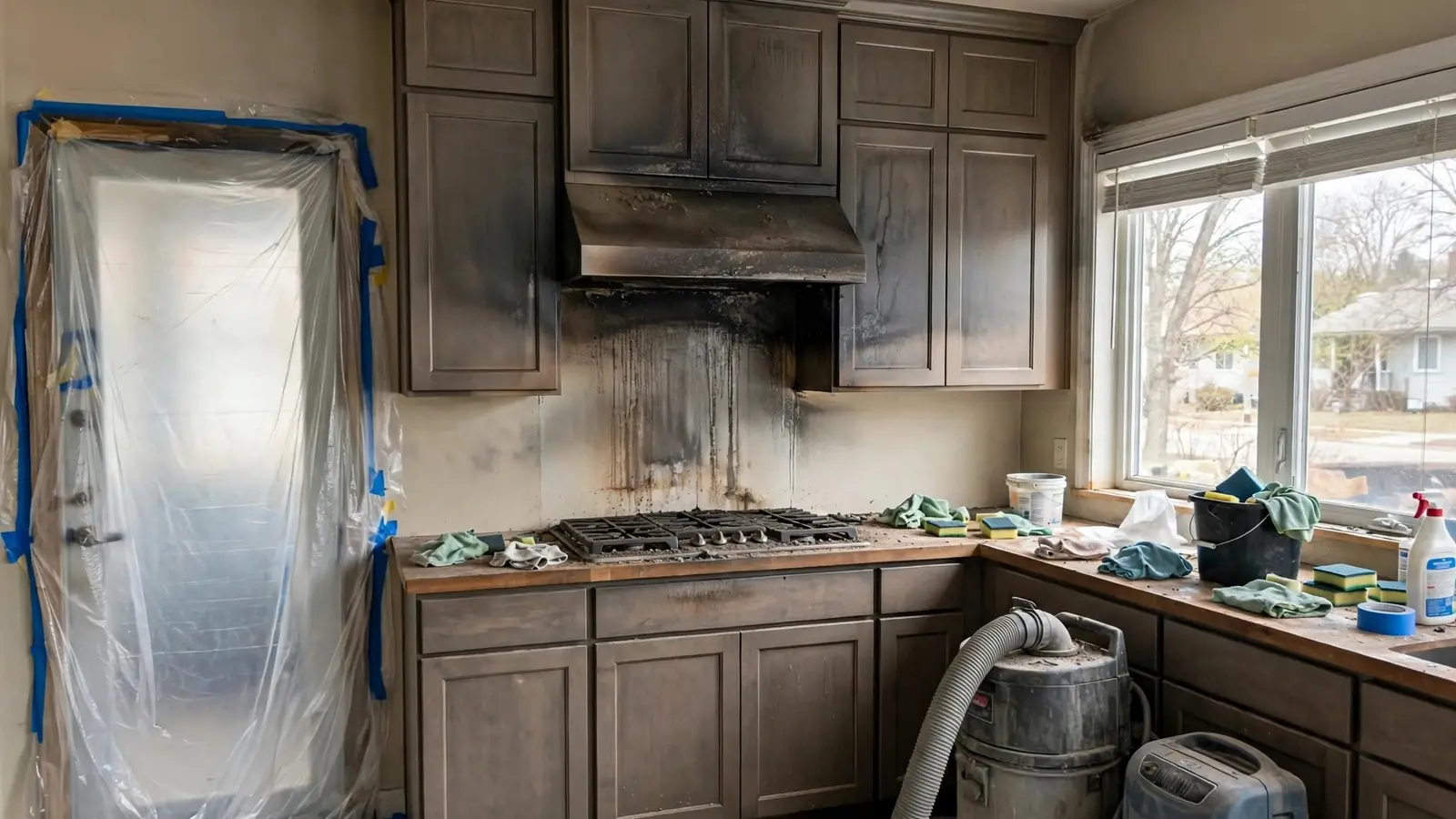
Residue changes with fuel. A grease fire on a range leaves a thin, sticky film that smells sharp and is hard to see on white walls. A couch or mattress fire leaves heavy black soot that smears. Wood and paper leave drier soot. The U.S. Fire Administration explains that the lingering smell comes from these particles clinging to surfaces [1], which is why cleaning, not air freshener, is the only lasting fix.
Restorers in the United States follow the IICRC S700 standard for this work [2]. It is a framework, not a recipe: every house gets inspected, every residue gets tested, and the cleaning plan follows from what the crew finds.
Signs
Clues that smoke spread beyond the fire room
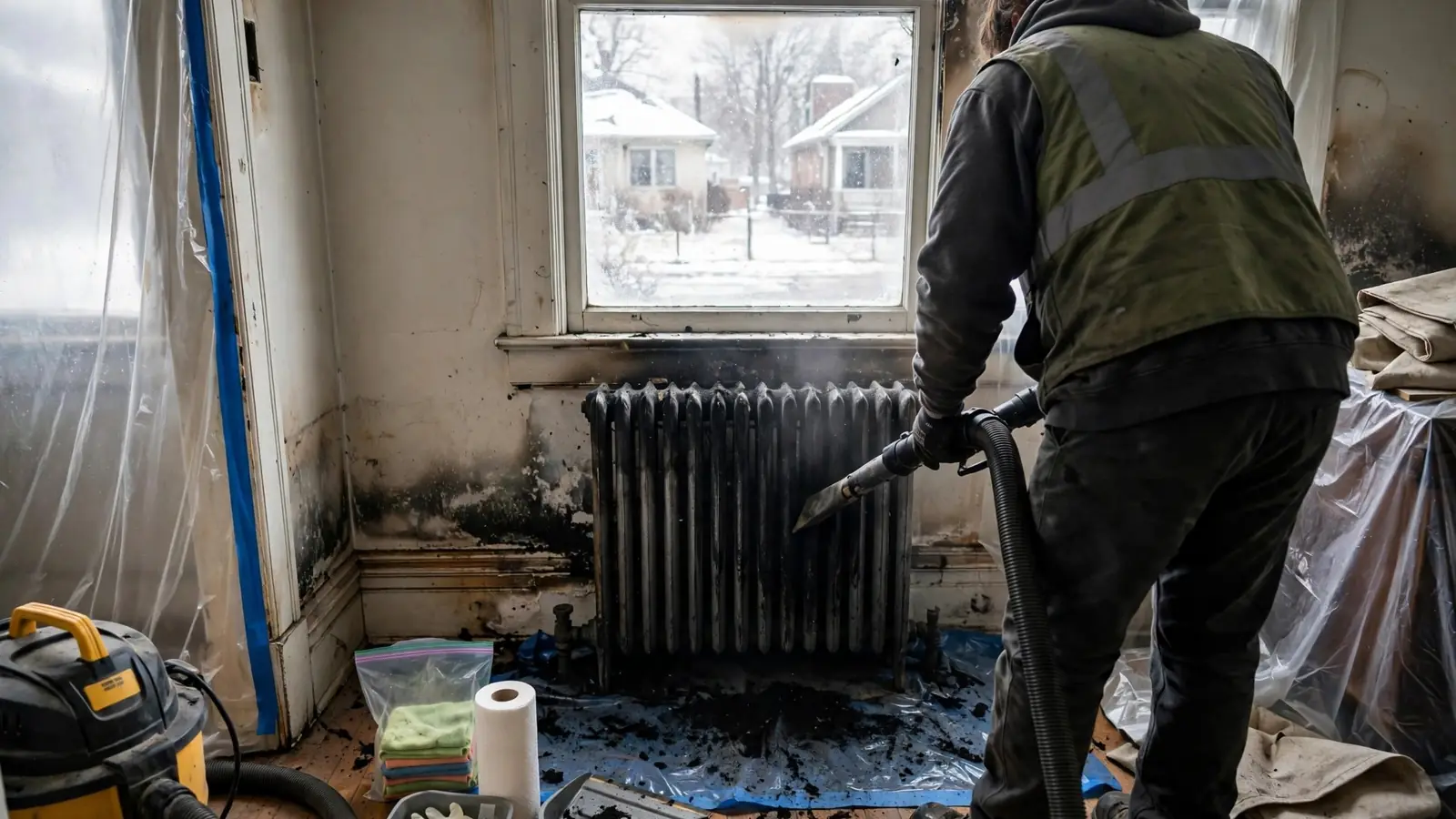
Dark film on radiator fins
Cast iron radiators collect residue in every fin and push warm, smoky-smelling air into rooms when the heat comes on.
Read moreGrey lines along plaster cracks
Air moving through hairline cracks leaves thin dark lines that trace the crack pattern across walls and ceilings.
Read moreSmell strongest upstairs
Smoke climbs the stairwell and collects under the roof, so upper bedrooms and knee-wall closets often smell worst.
Read moreOdor in the basement
Laundry chutes, floor openings and return ducts carry smoke down to basements, where it settles into stored items.
Read moreYellowed light fixtures and switch plates
Plastic and painted metal yellow quickly when smoke residue sits on them, showing how far the film traveled.
Read moreSticky feel on woodwork
A tacky surface on oak trim or built-ins usually means protein or oily residue from the fire that needs a specific cleaner.
Read more
The process
How a Minneapolis smoke cleanup is usually run
- 1
Confirm the home can be entered
The Minneapolis Fire Department decides when the building is released. Power, gas and the boiler or furnace are then checked before anyone works inside for long.
- 2
Protect the house from cold
If heat is off in winter, temporary heat or draining the plumbing comes first, so frozen pipes do not add a water loss to the fire.
- 3
Test residue room by room
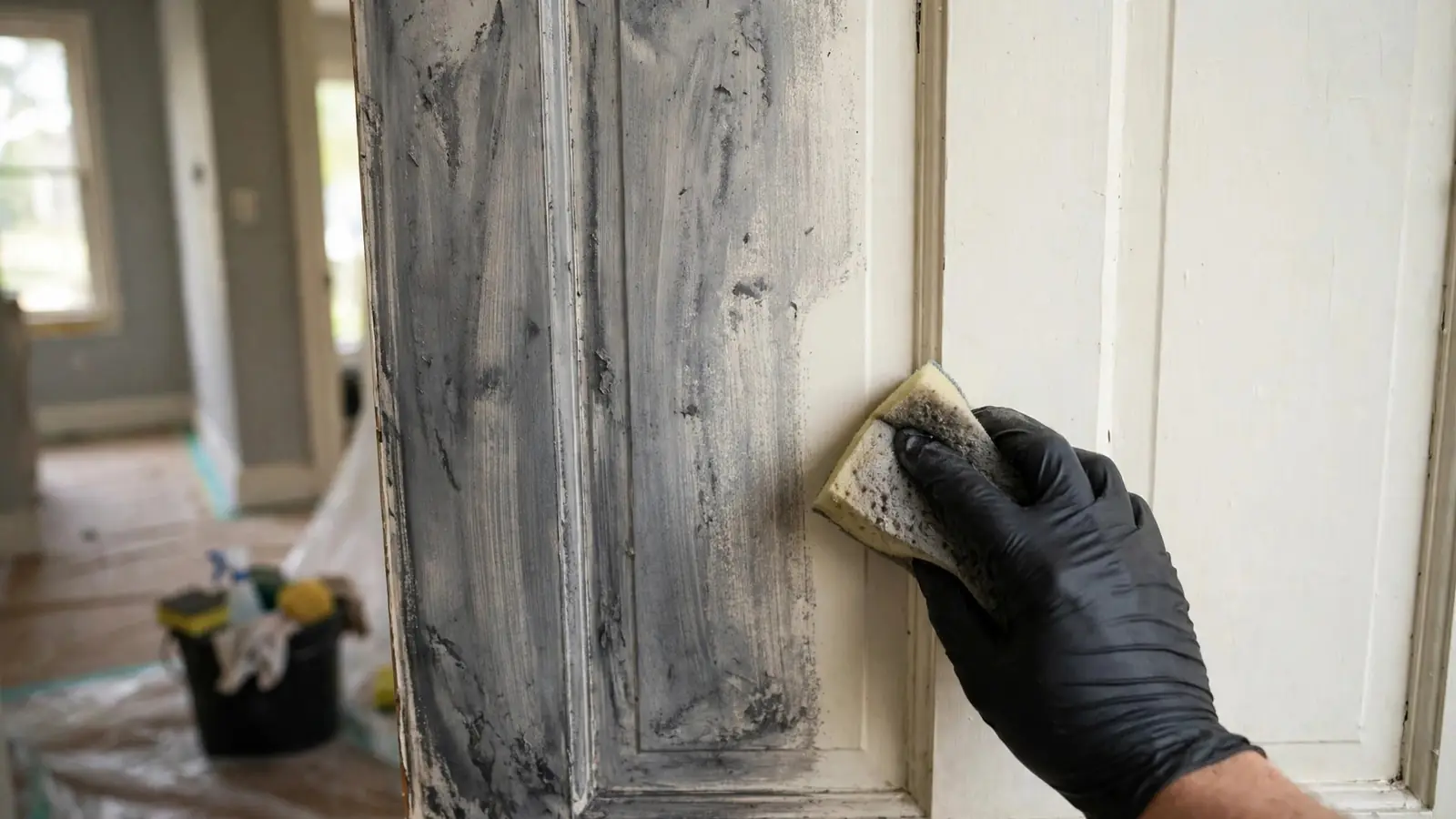
Dry sponge swipes on plaster, trim, glass and radiators show which residue is present and how it behaves on each finish.
- 4
Set up filtration and separation
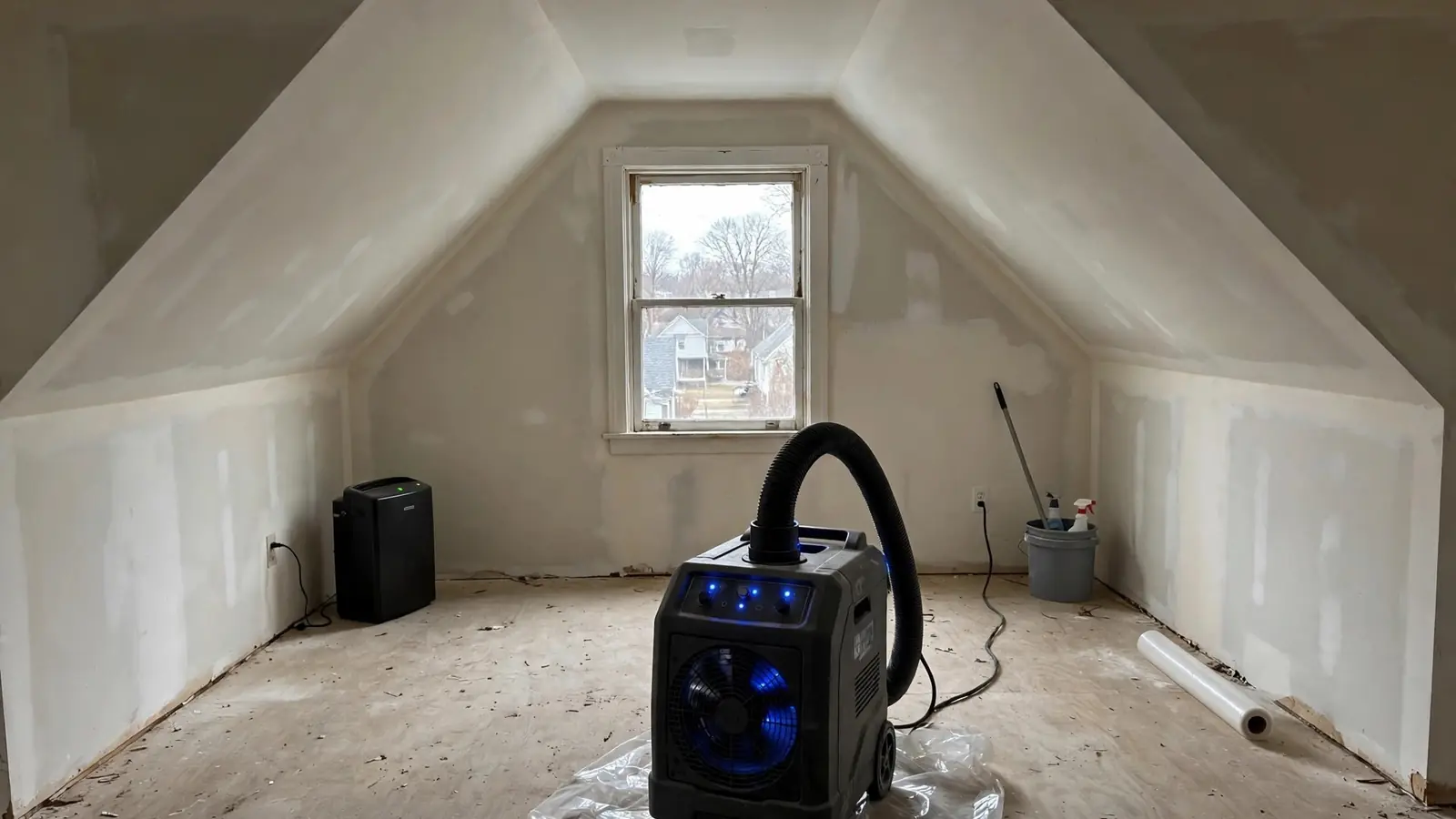
HEPA air scrubbers run while plastic barriers keep clean floors separate. Stairwells are often sealed so upstairs work does not drift down.
- 5
Remove loose soot dry
HEPA vacuums and dry sponges take off as much as possible before liquids, so soot is not pushed into plaster texture or open wood grain.
- 6
Clean each surface with its own method
Painted plaster, varnished oak, cast iron, glass and tile each get cleaners matched to the residue and the finish, tested in a hidden spot first.
- 7
Clean the furnace, ducts or radiators
Forced-air ducts, returns and the furnace cabinet are cleaned, or radiators and their covers are cleaned in boiler-heated homes.
- 8
Seal, deodorize and document
Remaining odor is treated after cleaning, porous surfaces are primed with an odor-blocking sealer, and every room is photographed for the claim.
Surfaces
How common Minneapolis finishes respond to smoke cleaning
| Surface | Common in | Usual approach | Typical result |
|---|---|---|---|
| Painted plaster | Pre-1940 homes citywide | Dry removal, cleaning, sealer, paint | Usually restorable |
| Varnished oak or fir trim | Bungalows, foursquares | Gentle cleaning; refinish if darkened | Often saved |
| Cast iron radiators | Boiler-heated homes | Vacuum fins, wash, sometimes repaint | Restorable |
| Hardwood floors | Most older homes | Clean finish; screen and recoat or refinish | Usually saved |
| Stone or block basement walls | Older foundations | Masonry cleaning | Improves; may stay shadowed |
| Unfinished attic framing | Story-and-a-half homes | Dry blasting or cleaning, then sealer | Restorable unless charred |
These are patterns, not promises. The contractor confirms what each surface needs after testing.
On your own
What helps before the crew arrives, and what makes things worse
- Do: keep the house from freezingIf the fire knocked out heat in cold weather, tell the contractor right away. Frozen and burst pipes can turn a smoke job into a flood.
- Do: photograph before touchingWide shots and close-ups of every room, the basement and the attic access help your claim and the contractor's plan.
- Do: discard food and medicine that sat in smokeFood, drinks and medicine exposed to heat, smoke or soot should not be used [1].
- Do not: wipe walls with waterWet cloths smear oily soot into plaster texture and flat paint, making stains harder to remove.
- Do not: sand or scrape old paintPaint on pre-1978 woodwork and plaster may contain lead [3]. Leave it for crews using lead-safe methods.
- Do not: restart a forced-air furnaceRunning the blower before ducts are inspected spreads residue to every room on every floor.
Minneapolis specifics
Winter, basements and old houses: what Minneapolis adds
Minneapolis winters change the order of work. A fire in January can leave a house without heat, and water left in pipes, boilers and radiators can freeze within hours. Before any cleaning, the contractor may need to set up temporary heat or have a plumber drain the system. The National Weather Service office in Chanhassen issues the cold-weather forecasts that shape those decisions [5].
Almost every older Minneapolis house has a full basement holding the furnace or boiler, the water heater, laundry and storage. Smoke settles there through chutes, returns and floor openings, and firefighting water drains there too. Basements need their own inspection even when the fire was on the second floor.
The city's housing stock leans old: neighborhoods like Northeast, Powderhorn and Marcy-Holmes are dominated by houses from before 1930, while Nokomis and Camden add many from the 1920s through the 1950s. Plaster, solid wood trim and hardwood floors are the norm, and they reward patient cleaning more than replacement.
Permits for structural, electrical, plumbing and mechanical repairs inside the city go through Minneapolis's licenses, permits and inspections services [6], while residential building contractors in Minnesota are licensed by the state Department of Labor and Industry [7].
Clean or replace
Deciding what stays and what goes
Hard, sealed surfaces generally clean well: glazed tile, glass, cast iron, varnished trim and painted plaster in good condition. Where residue soaked in, the answer may be cleaning and sealing rather than replacement, especially for plaster walls that would be slow and hard to rebuild with matching character.
Materials that hold residue internally are another matter. Attic insulation, carpet pad, upholstered furniture that sat close to the fire and particleboard cabinets that got wet usually go. A good contractor writes down the reason for each decision so you and your adjuster can follow it.
- Clean: glass, tile, cast iron, sealed wood
- Clean and seal: plaster, framing with light residue
- Replace: insulation, carpet pad, soaked particleboard
- Specialist: electronics, documents, art
Heating systems
Forced air, hot water and steam: cleaning by heating type
Many Minneapolis houses have been converted to forced-air furnaces with ducts running through the basement and up interior walls. If that furnace ran during or after the fire, it pulled smoke into the return and pushed it through every supply register. Ducts, the blower, the coil if there is central air, and the furnace cabinet all need attention, and filters need changing more than once.
Houses that still use a boiler with hot water or steam radiators do not move air the same way, so smoke does not spread through ductwork. But radiators themselves collect soot in their fins and on their surfaces, and the heat they give off bakes odor out of residue nearby. Radiators are vacuumed, washed and sometimes repainted, and decorative radiator covers come off for cleaning.
Older gravity furnaces, still found in a few homes, have large ducts that rise by convection. They hold a lot of residue and may be candidates for replacement after a fire. A heating contractor should inspect any system before it is relied on through a Minnesota winter.
Contents
Clothing, winter gear and stored belongings
Minneapolis closets hold heavy coats, boots, blankets and sports gear, and basements store years of belongings. Wool, down and fleece absorb smoke deeply. Professional textile cleaning designed for smoke is usually more effective than home washing, and some items, especially those near the fire, may not come back.
When smoke spread through the house, a pack-out may be the best approach: contents are inventoried, boxed and moved to a clean facility for cleaning while the house is restored. Ask for a room-by-room list with photos.
Set aside photographs, documents and family keepsakes early, and tell the contractor which items matter most. Food, medicine and cosmetics that sat in smoke should be thrown out [1].
Insurance
Working through a smoke claim in Minnesota
Contact your insurer as soon as everyone is safe. The Minnesota Department of Commerce advises reviewing your policy, keeping records and remembering that you choose which contractor repairs your home [4]. The adjuster will usually provide a proof-of-loss form, and payment follows once the damage amount is agreed.
Smoke damage is easy to underestimate on a quick walk-through. Show the adjuster the upstairs rooms, knee-wall spaces, the basement, the laundry chute and the heating system, not just the room that burned. Ask the contractor for photos and notes on hidden areas.
Keep receipts for anything you pay for while the house is being restored, and keep a simple log of calls, visits and decisions. If you run into trouble with a claim, Commerce's consumer services can help.
On the call
Details that help the contractor you speak with
It helps to know where the fire started, whether the fire department has released the house, whether the heat is on, what kind of heating the house has, whether the furnace ran after the fire, and whether water reached the basement. If you have a claim number, have it ready.
Your call connects directly to an independent local restoration contractor who speaks with you on that call. This site does not collect your details or pass them to anyone for later contact; anything that happens next is agreed between you and the contractor during the call.
Fire origins
Smoke patterns from common Minneapolis fire starts
Cooking fires are the leading cause of home fires in the United States, according to the National Fire Protection Association [8]. In an older Minneapolis kitchen, the stove often sits under wood cabinets near a window, so a pan fire sends sticky protein residue up the cabinets and along the ceiling into the dining room. The film is faint and the smell is strong.
Heating season brings its own pattern. Space heaters placed near bedding or curtains, overloaded cords in rooms with few outlets, and fireplaces used on cold nights are all familiar causes of winter fires. These fires often start in living areas or bedrooms and send heavy synthetic soot up the stairs.
Detached garages along Minneapolis alleys store vehicles, fuel, paint and lawn equipment. A garage fire may never reach the house, but smoke drifts into open windows and attic vents, and radiant heat can crack windows and blister siding facing the alley.
Basement fires, from a dryer, a furnace problem or stored materials, push smoke up through floor openings, the laundry chute and the basement stairs. They often leave the first floor more affected than the basement itself, apart from the area around the origin.
Living at home
Can you stay in the house during smoke cleanup?
It depends on how far the smoke went and whether the heat and power are safe. If the fire was small and the bedrooms are unaffected, the contractor may be able to seal the work area with plastic and air filtration so the family can stay. If smoke filled the house, or if the heating system needs cleaning before it can run, staying elsewhere for a while is usually the better choice, especially in winter.
If you do stay, keep children, older relatives and anyone with breathing problems away from the work area. If you leave, check your policy for additional living expenses coverage and keep every receipt.
Exterior
Stucco, wood siding and smoke on the outside of the house
Many Minneapolis homes are clad in stucco, wood lap siding or later vinyl and steel. When flames vent from a window, smoke streaks the wall above it and darkens soffits and eaves. Stucco is porous and holds soot in its texture; careful masonry-style cleaning usually improves it a great deal, and a fresh coat of masonry paint or a new finish coat can follow if staining remains.
Wood siding with blistered paint needs scraping and repainting, done with lead-safe methods on older homes. Vinyl siding that warped from heat is replaced. Snow and ice make exterior work harder in winter, so some exterior cleaning may wait for a milder stretch while the house is kept secure and weather-tight.
Timing
Why starting soon matters even when the damage looks light
Smoke residue is acidic and keeps working after the fire. Over days and weeks it can etch glass, tarnish brass hardware and old light fixtures, yellow plastics and set deeper into porous finishes. A cleanup that starts within days usually saves more than one that waits for spring.
If the claim is moving slowly, ask your insurer about starting mitigation steps such as protecting the house from cold, drying wet areas and removing loose soot while the larger scope is settled.
Write down the date of each step, from the fire department's release to the first contractor visit. A clear timeline helps explain later why some finishes could be cleaned and others had to be replaced.
FAQ
Smoke damage questions from Minneapolis homeowners
Can smoke be cleaned off old plaster walls?
Usually. Plaster's hard surface responds well when soot is removed dry first, then cleaned and sealed before painting. Plaster that is soaked, loose or cracked from heat may need repair.
Why does the smell get worse when the heat comes on?
Heat drives odor out of residue. Radiators warm nearby soot, and forced-air systems blow it from ducts. Cleaning the heating system is part of a full smoke cleanup.
Should I worry about frozen pipes after a fire?
Yes, in cold weather. If the fire left the house without heat, pipes and radiators can freeze and burst. Tell the contractor immediately so temporary heat or draining can be arranged.
Will oak woodwork survive smoke damage?
Often. Varnished oak and fir trim can usually be cleaned with gentle products. Darkened finishes may need refinishing, which still keeps the original wood.
Does the basement need cleaning if the fire was upstairs?
Usually. Laundry chutes, return ducts and floor openings carry smoke down, and firefighting water drains to the basement. It should be inspected either way.
Who do I talk to when I call?
An independent local restoration contractor, connected on that same call. This site is a referral service and does not do the work or keep your details.
Do I get to pick the restoration contractor?
Generally yes. Minnesota's Commerce Department reminds homeowners that they choose who repairs their home. Your insurer decides what the policy covers.
Do radiators need cleaning after a house fire?
Yes, if smoke reached the rooms they heat. Soot collects in the fins and on the surface, and warmth from the radiator releases odor. They are vacuumed, washed and sometimes repainted, and covers are removed for cleaning.
What about the laundry chute?
Chutes connect floors and carry smoke between them. The inside collects soot that keeps smelling, so it should be cleaned or sealed as part of the job.
Sources and citations
- [1]U.S. Fire Administration: After a fire
- [2]IICRC: S700 Standard for Professional Fire and Smoke Damage Restoration
- [3]U.S. EPA: Protect your family from sources of lead
- [4]Minnesota Department of Commerce: Disaster Information Center
- [5]National Weather Service: Twin Cities forecast office
- [6]City of Minneapolis: Licenses, permits and inspections
- [7]Minnesota Department of Labor and Industry
- [8]NFPA: Home structure fires