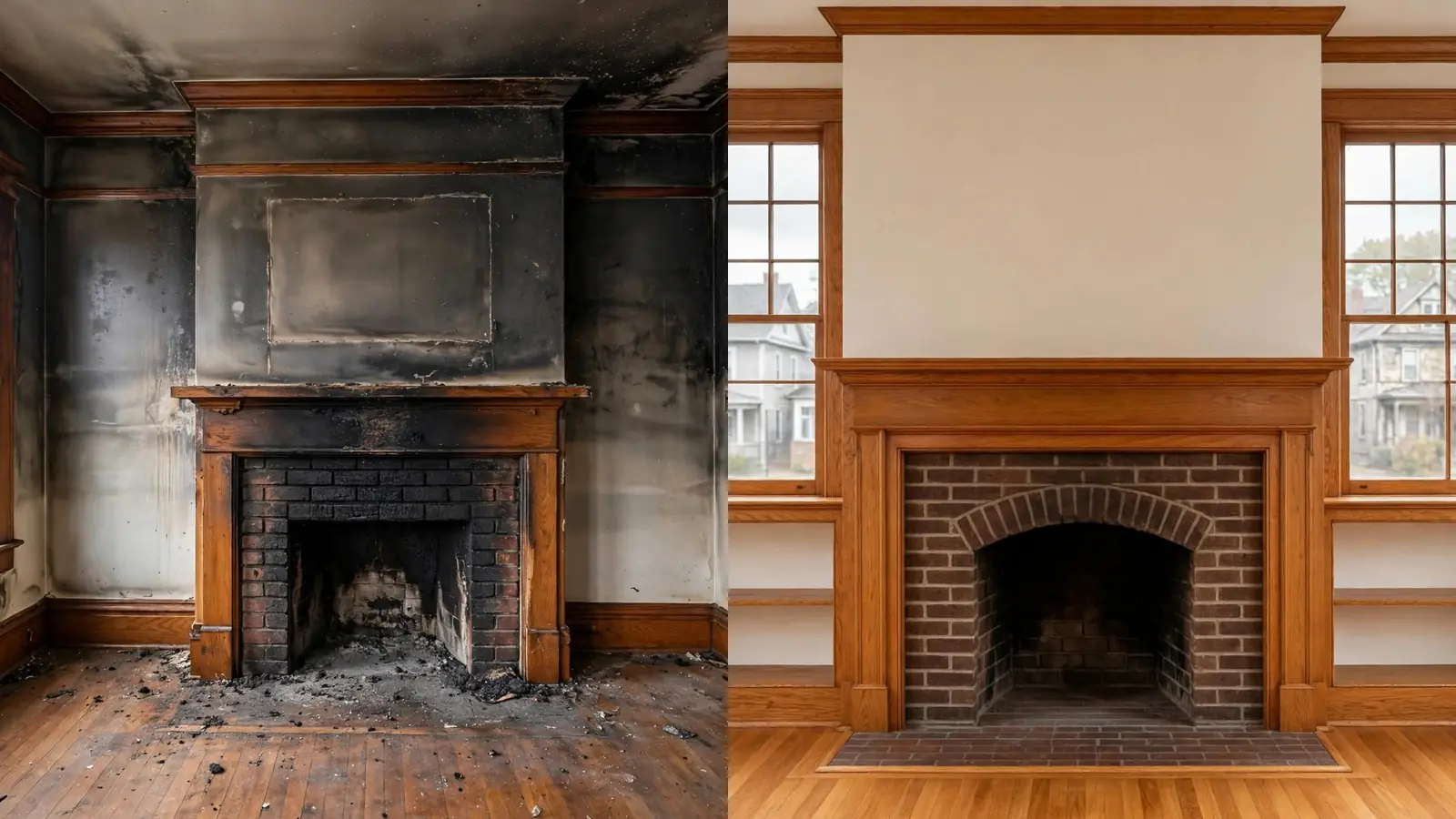

Key facts: Soot Removal in Marcy-Holmes
Which soot a Marcy-Holmes fire left behind
The residue on your walls depends on what burned. A fast fire in a room full of paper and wood leaves dry, powdery soot. A couch or mattress that smoldered leaves oily soot that smears when touched. A pan fire in one of the building's kitchens leaves a thin, sticky protein film that is hard to see but smells sharp.
Technicians test a small spot in each unit and in the shared hall before picking a method [2]. In buildings this old, they also look at the surface underneath, since a century of paint, varnish and patching responds in different ways.
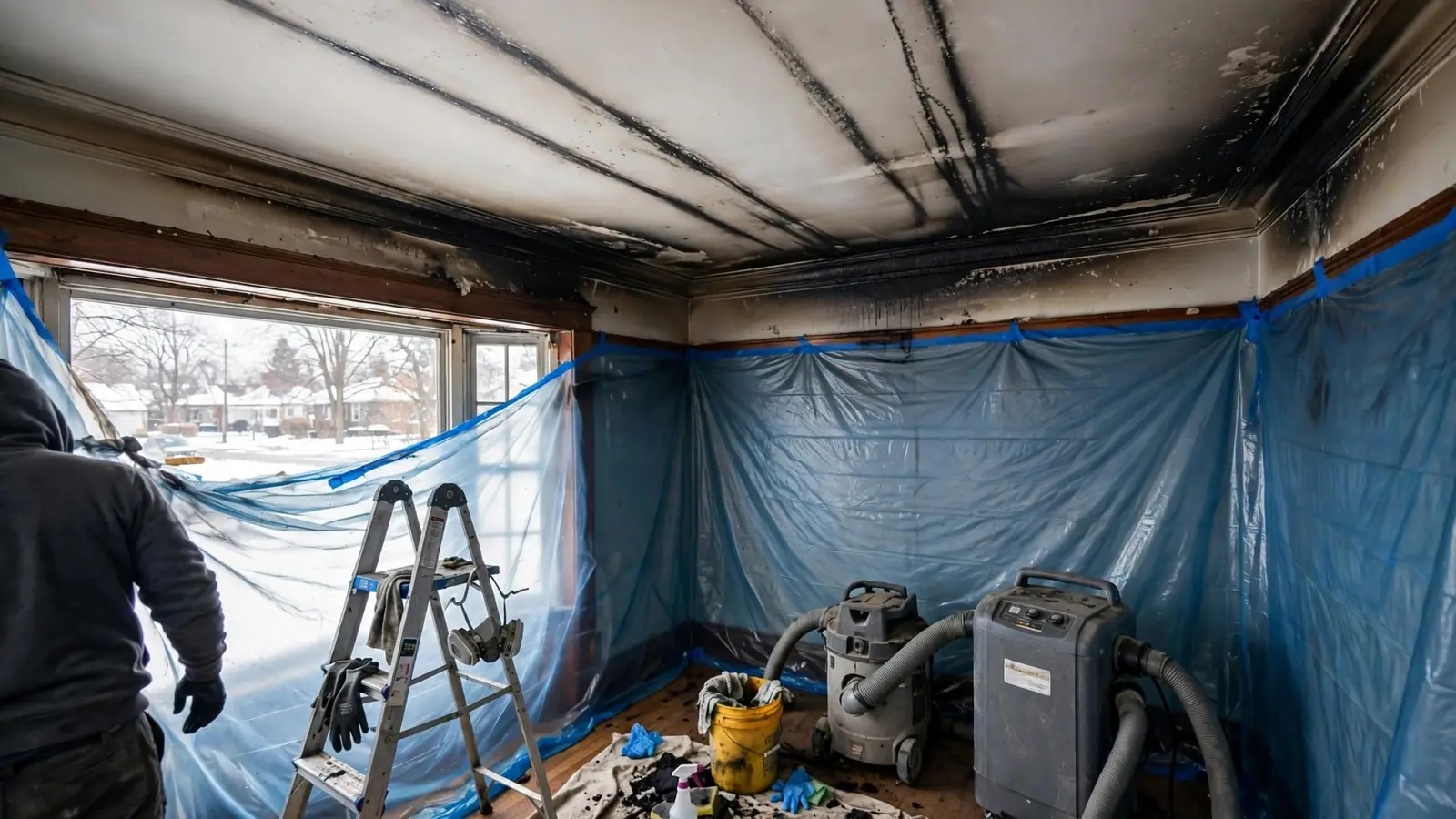
Tall plaster ceilings in the original rooms
Many Marcy-Holmes houses date from the nineteenth and early twentieth centuries [6], and their original rooms often have tall plaster ceilings with crown moldings. Soot rises and collects up there. Crews set up ladders or rolling staging so they can work evenly across the whole ceiling.
Dry chemical sponges pull the loose soot off first, in long strokes. A cleaner matched to the residue follows. Ceilings that still show a shadow after cleaning get a stain-blocking primer before paint, but cleaning first keeps that step small.
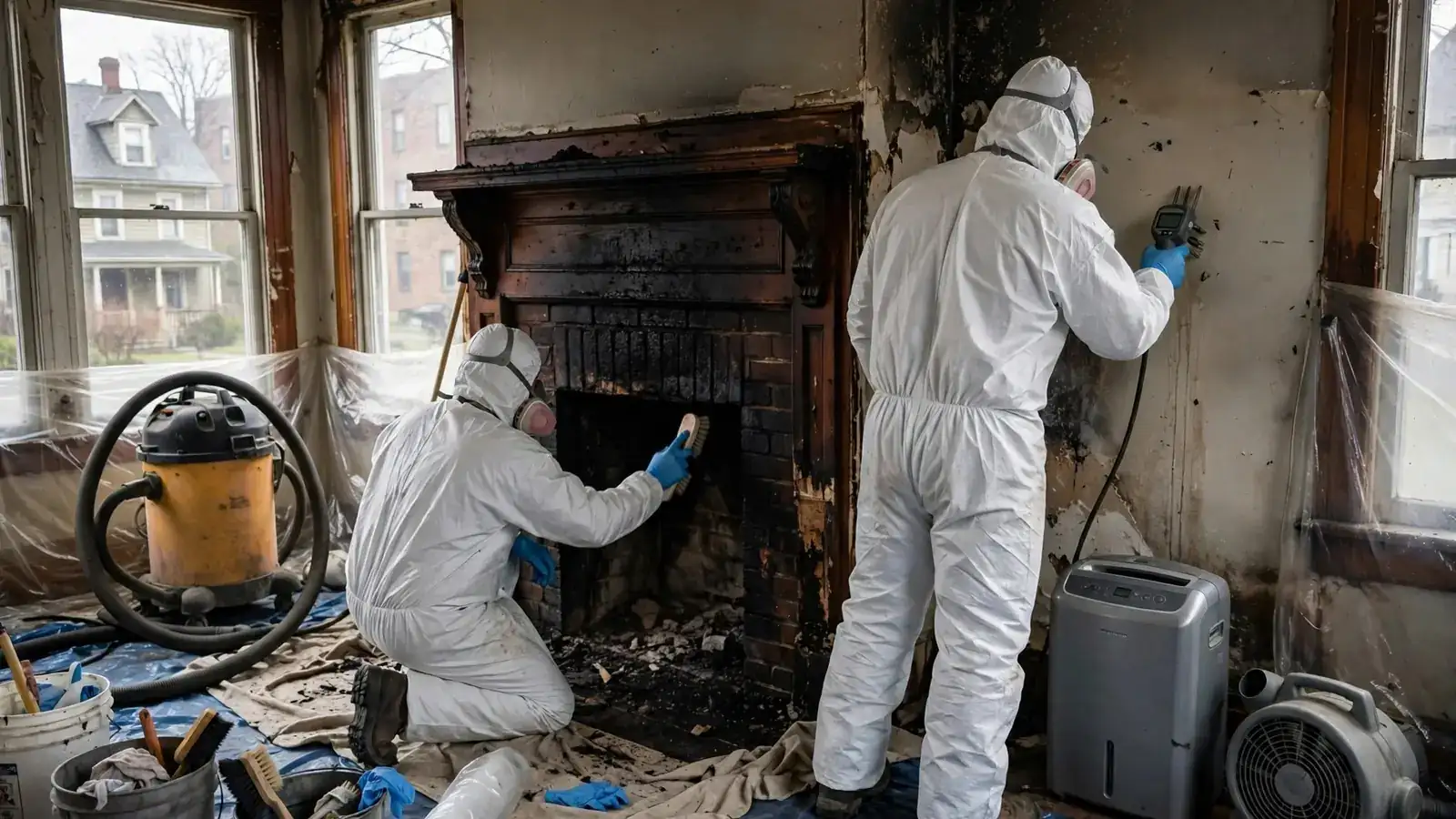
Banisters, balusters and carved trim
The old staircases in these houses often have turned balusters, carved newel posts and heavy handrails. Every groove holds soot. Soft brushes, narrow vacuum tools and mild cleaners get into the detail without wearing the wood down.
Where trim has been painted over, old layers almost certainly include lead [4]. Washing is fine; scraping, sanding or stripping should follow lead-safe practice with containment and careful cleanup.
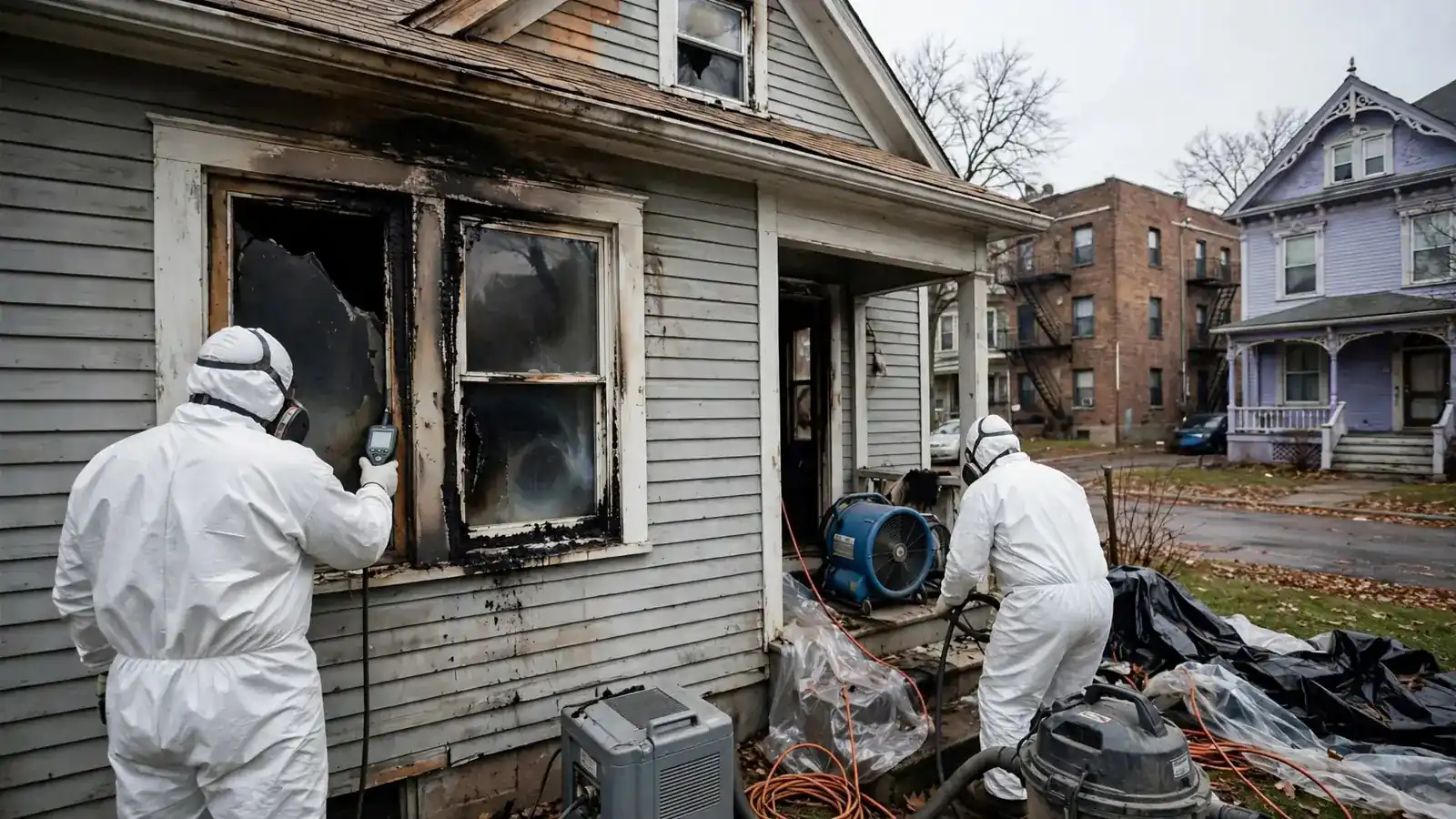
How soot comes out of a Marcy-Holmes building
The order most crews follow in multi-unit houses.
- 1
Sample the soot in each Marcy-Holmes unit
Every apartment and the stair are tested for residue type [2].
- 2
Seal off units the soot did not reach
Doors are taped and plastic barriers go up in halls.
- 3
Vacuum and dry-sponge from the top floor down
Loose soot comes off before any liquid.
- 4
Wet clean each unit and walk it with the owner
A final check in good light before the next unit.
Radiators and the shared boiler
Older houses here were built with boilers and radiators, and many conversions kept them [6]. Radiator fins trap soot in narrow gaps, and the wall behind each unit often shows a dark ghost of the radiator's shape. Each one is vacuumed and cleaned by hand, covers included.
The shared boiler is the owner's responsibility and should be checked by a heating contractor before it runs. In January, there is pressure to get heat back fast, so cleaning radiators early in the job lets the building warm up again sooner.
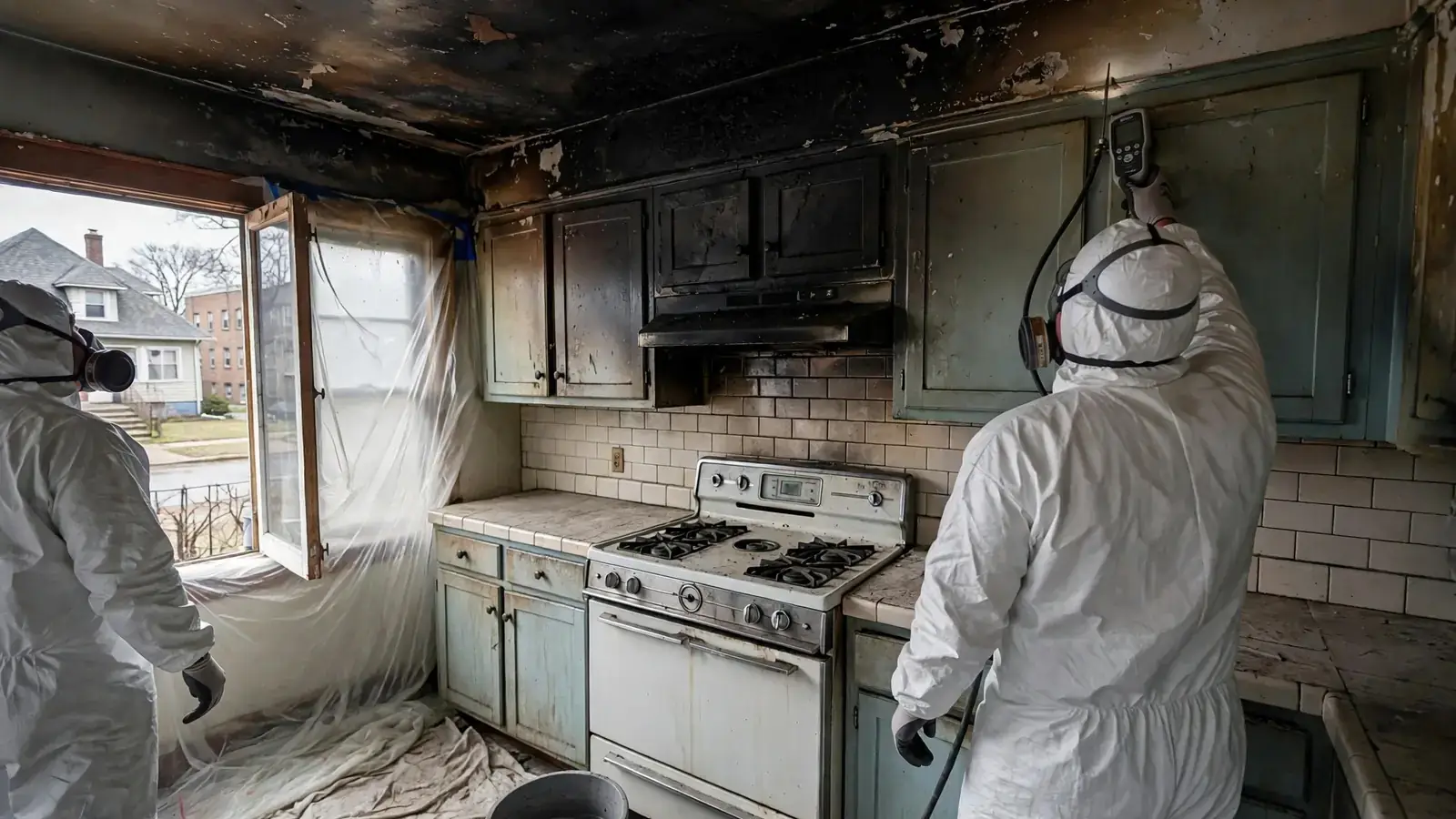
Top-floor units and old insulation
Top-floor apartments are often former attics with sloped ceilings and low storage spaces behind short walls. Soot works into those spaces through hatches and gaps, coating stored items and the insulation.
Insulation there usually has to come out. Older loose-fill and some textured ceilings can contain asbestos, so they should be tested by a qualified firm before anyone disturbs them [3]. Roof boards and rafters are cleaned once the space is clear.
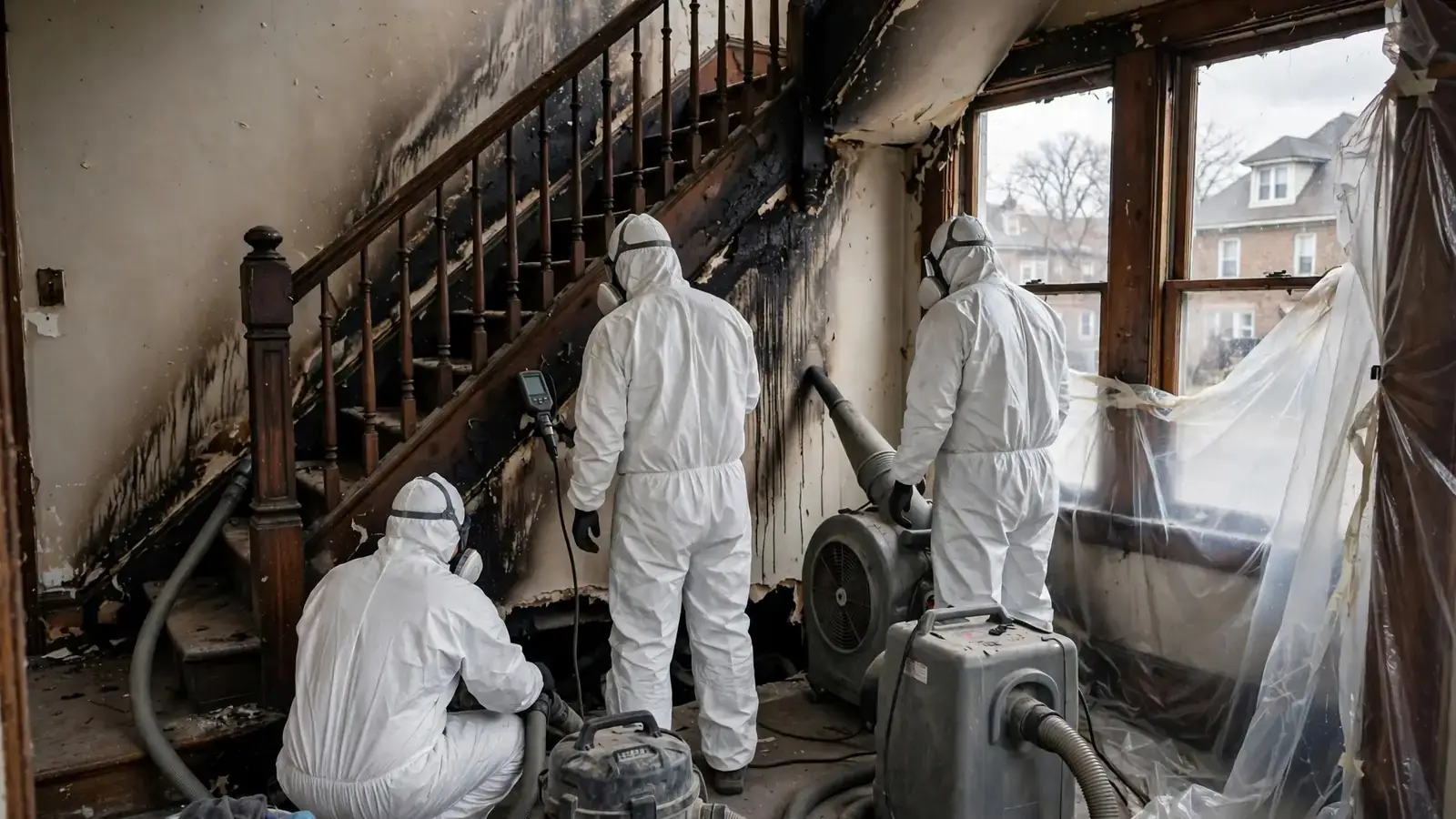
Laptops, textbooks and student belongings
Soot settles on everything in a unit: laptops, monitors, textbooks, clothes and furniture. Electronics should not be turned on until checked, because soot can be conductive and corrosive. Clothes and bedding can usually be cleaned by a specialist.
Each tenant should photograph and list their belongings, and check renters coverage or a parent's homeowners policy. The Minnesota Department of Commerce encourages complete records [5].

Spots where Marcy-Holmes soot collects
Worth pointing out when you call.
- Turned balusters on the main stairEach groove traps residue.
- Window casings and sills in tall roomsLedges catch falling soot.
- Plaster above each apartment radiatorA dark outline shows the airflow.
- Storage behind top-floor short wallsInsulation and boxes absorb it.
Soot on brick and siding outside
When flames vent out a window, they streak the brick, stone or wood siding above it. Exterior cleaning usually waits for milder weather, since washing in a Minnesota winter can leave ice on walks and stairs.
Some Marcy-Holmes buildings sit in historic districts [6]. Cleaning is usually fine, but replacing exterior materials may need review first, so ask the contractor to flag anything that might.
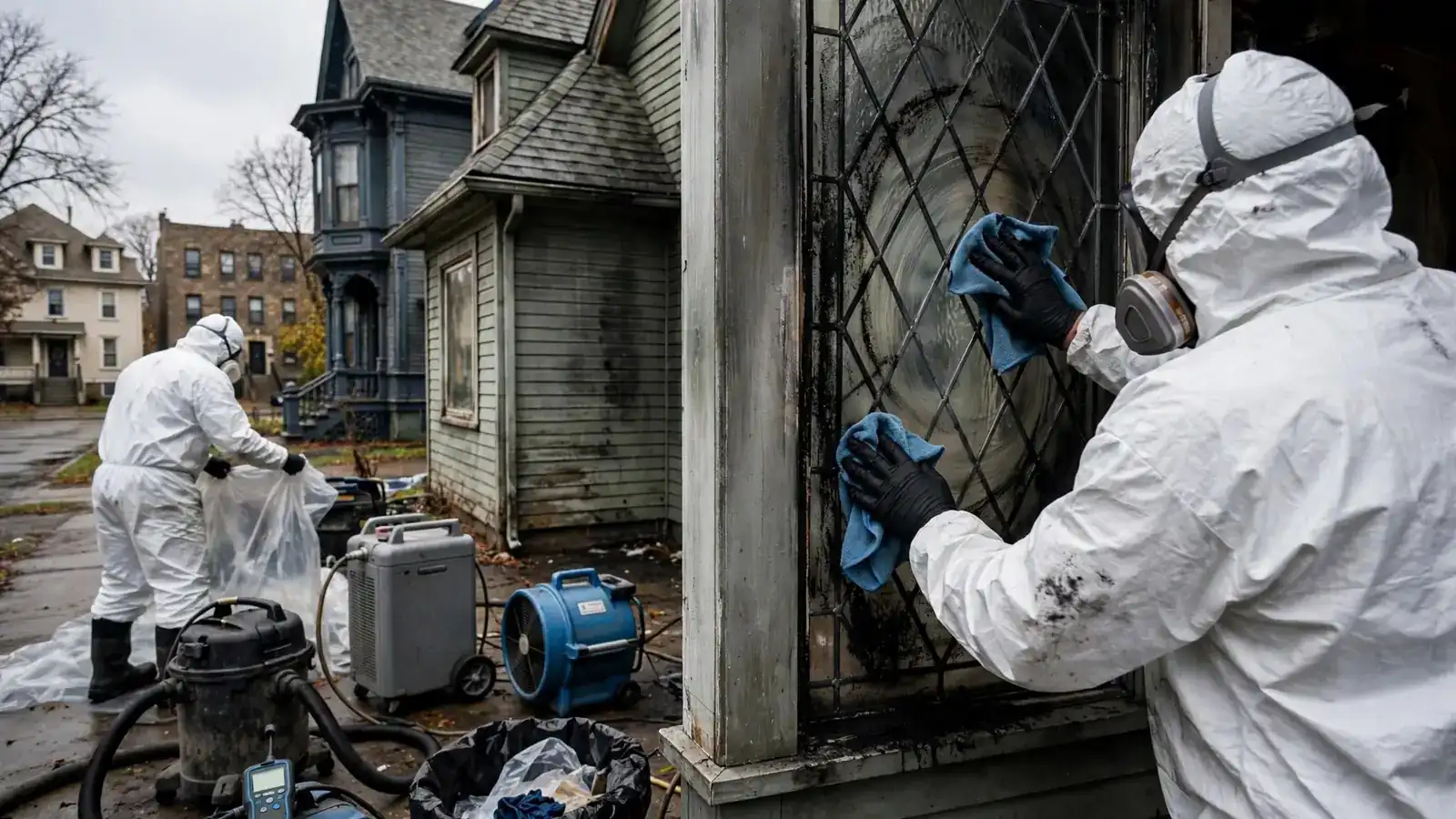
Before anyone starts scrubbing
Soot is fine, can irritate the lungs and spreads easily. The U.S. Fire Administration lists steps to take before going back into a burned home [1]. Wear gloves and a fitted mask if you must enter, and do not wipe walls.
Our guide to soot on walls and ceilings explains what professional cleaning looks like. For the wider job, see smoke damage cleanup.
FAQ
Soot Removal in Marcy-Holmes: questions
Can soot on tall Marcy-Holmes plaster ceilings be cleaned?
Usually. Crews use staging and dry sponges first, then a cleaner suited to the residue.
Should I turn on a laptop that sat in a smoky unit?
Not until it is checked. Soot can be corrosive and can damage electronics when powered.
Does insulation in a top-floor unit need testing?
Yes. Older loose-fill can contain asbestos and should be tested before removal.
Sources and citations
- [1]U.S. Fire Administration: After a fire
- [2]IICRC: S700 Standard for Professional Fire and Smoke Damage Restoration
- [3]U.S. EPA: Protect your family from exposures to asbestos
- [4]U.S. EPA: Protect your family from sources of lead
- [5]Minnesota Department of Commerce: Disaster Information Center
- [6]Wikipedia: Marcy-Holmes, Minneapolis