Key facts: Soot Removal in Linden Hills
- Soot differs by what burned; dry, powdery soot and oily soot need different cleaning methods [2].
- The EPA notes that some older building materials contain asbestos and should be tested before they are disturbed [3].
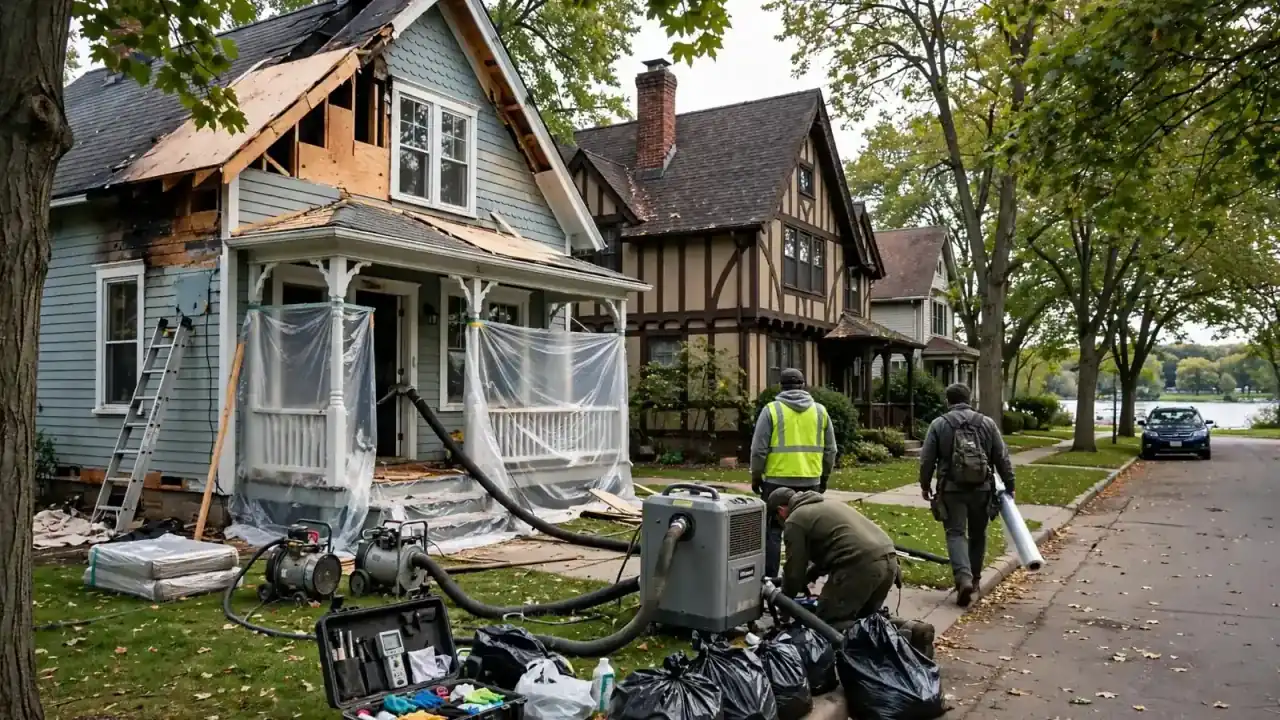
- Linden Hills housing ranges from early cottages and Tudor Revival homes to recently built larger houses [6].
Reading the soot in a Linden Hills house
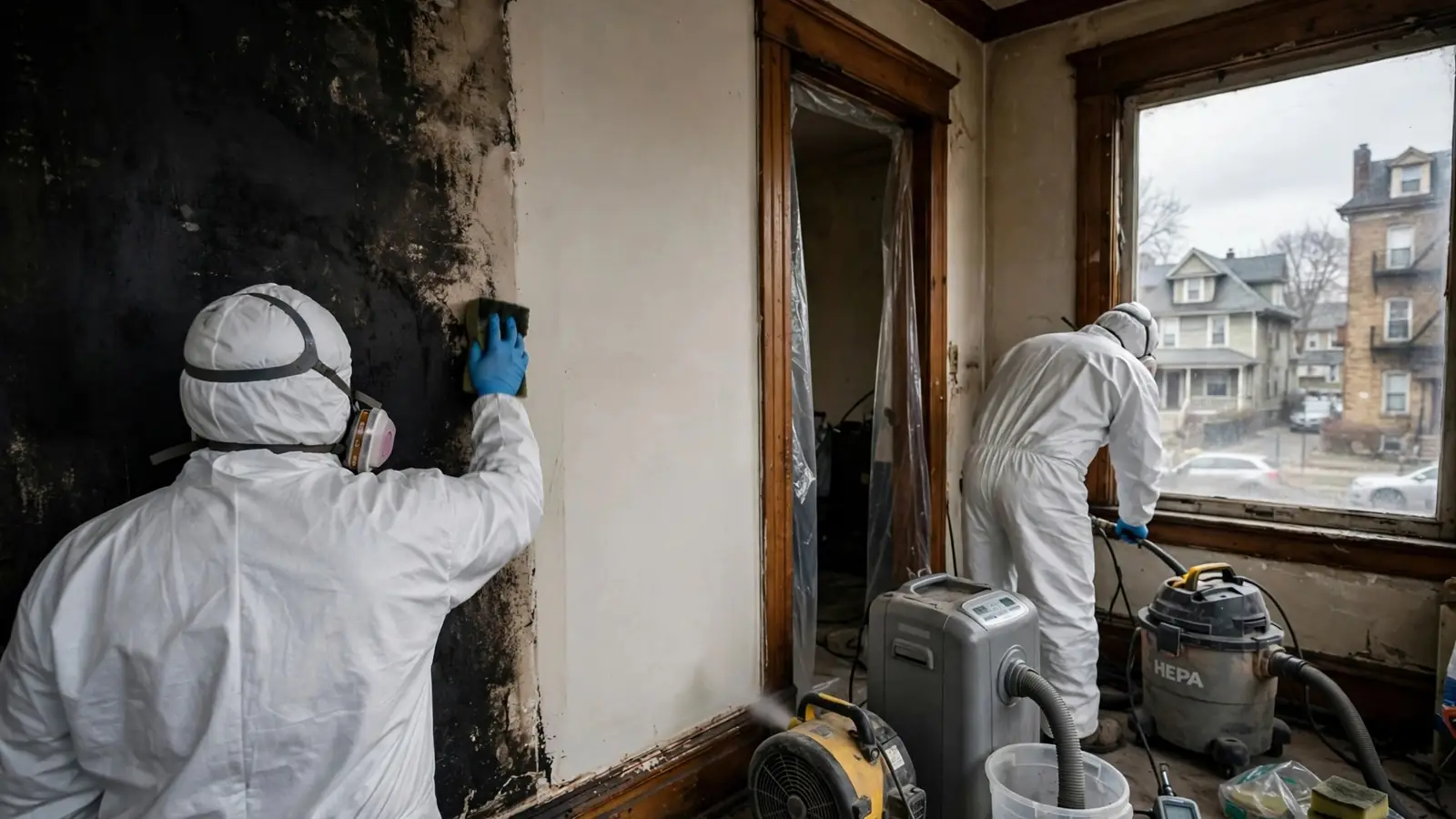
Not all soot is alike. A fast, hot fire leaves dry, powdery soot that brushes off. A smoldering fire or burning plastic leaves sticky, oily soot that smears. Kitchen fires leave a yellowish protein film that is almost invisible but smells strongly.
Technicians test the soot in each room before choosing a method [2]. In older houses, they also note the surface: plaster, stucco, old paint or stained wood each react differently.
Dry sponges before anything wet
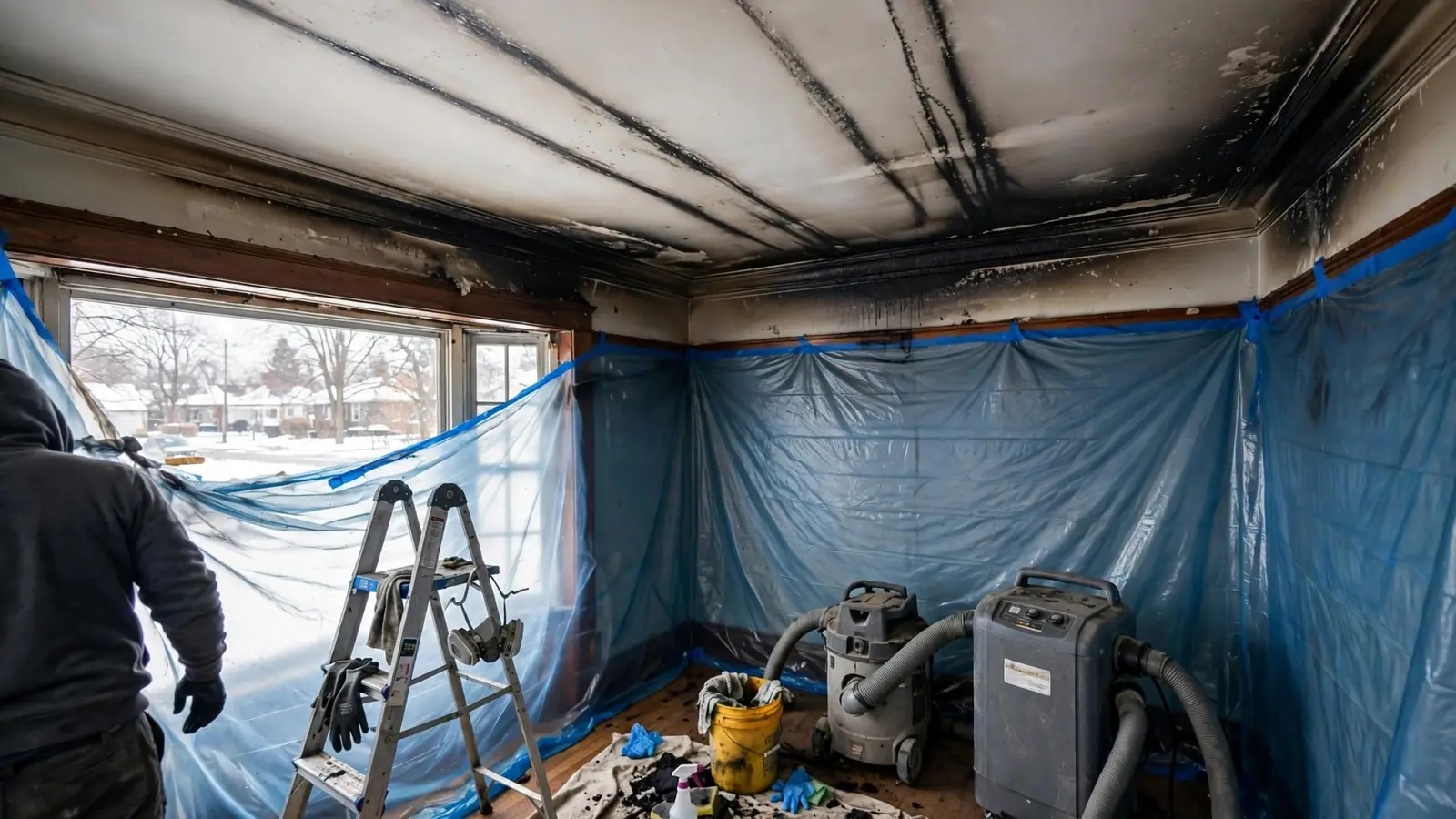
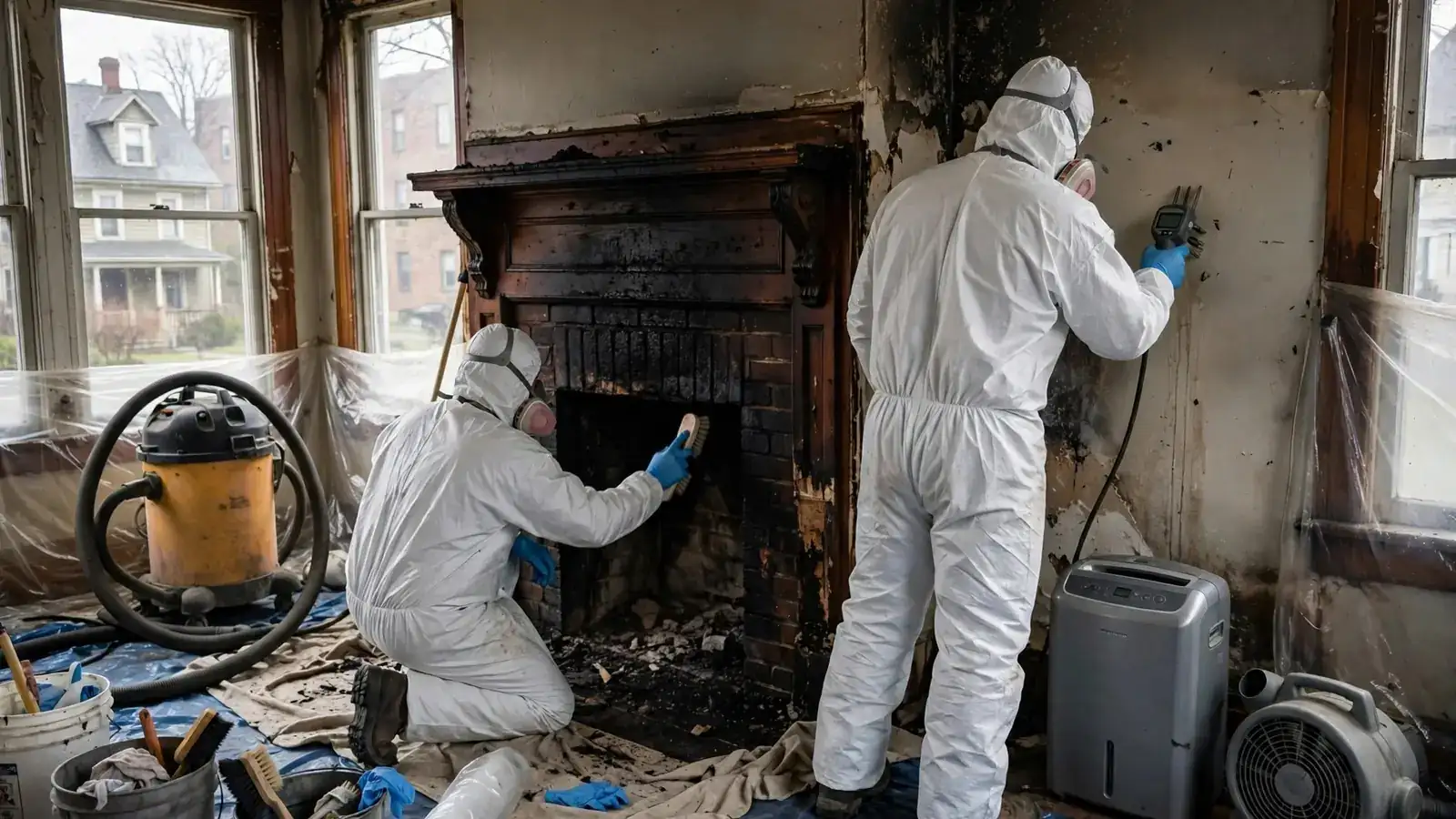
On plaster walls and ceilings, the first step is usually dry chemical sponges. They lift loose soot without water. Using a wet cloth too early pushes soot into the surface and leaves gray streaks that are hard to remove.
After dry sponging, a suitable cleaner removes what remains. Painted surfaces may still need sealing and painting, but often far less than expected.
Stained trim and hardwood floors
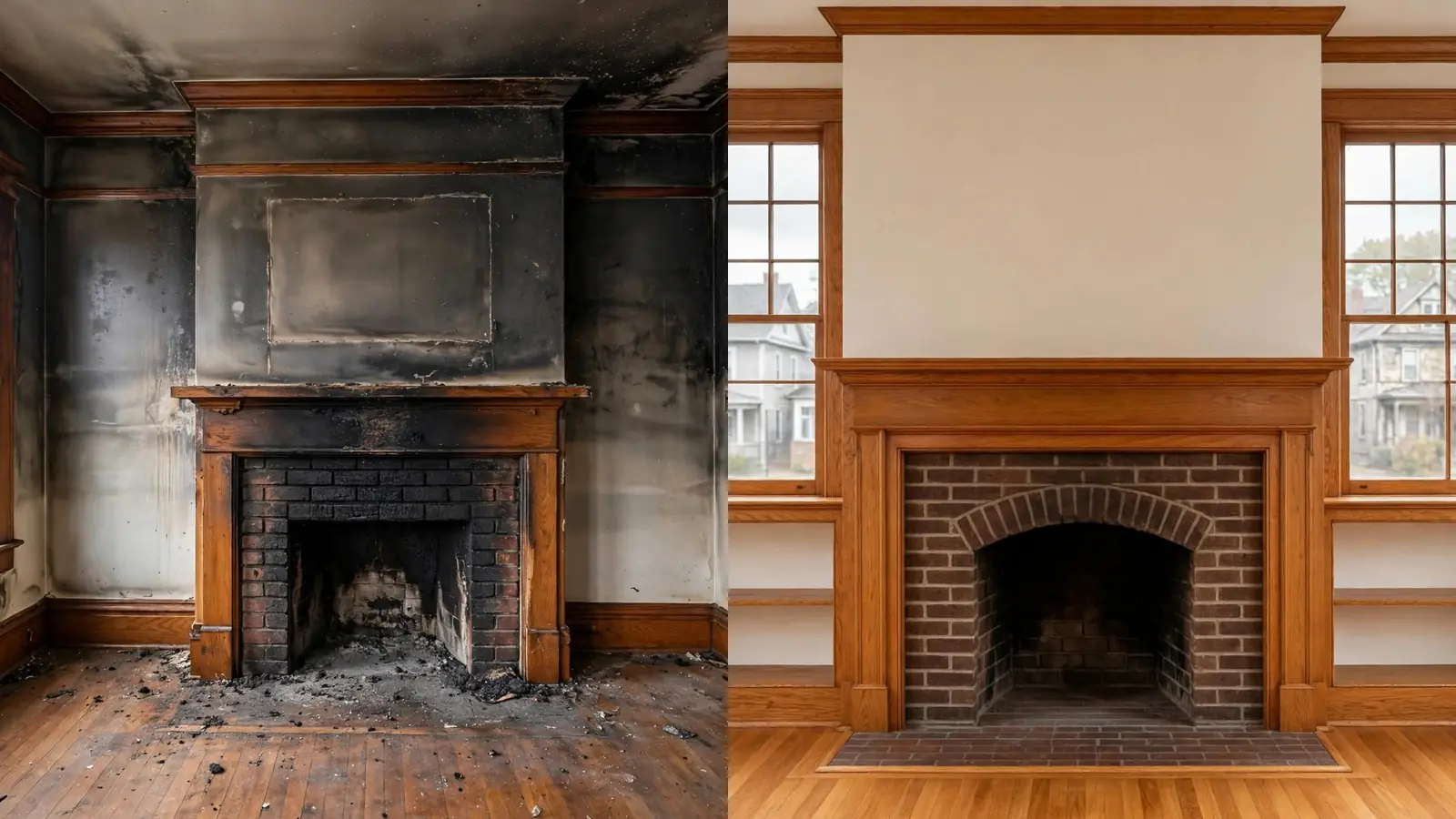
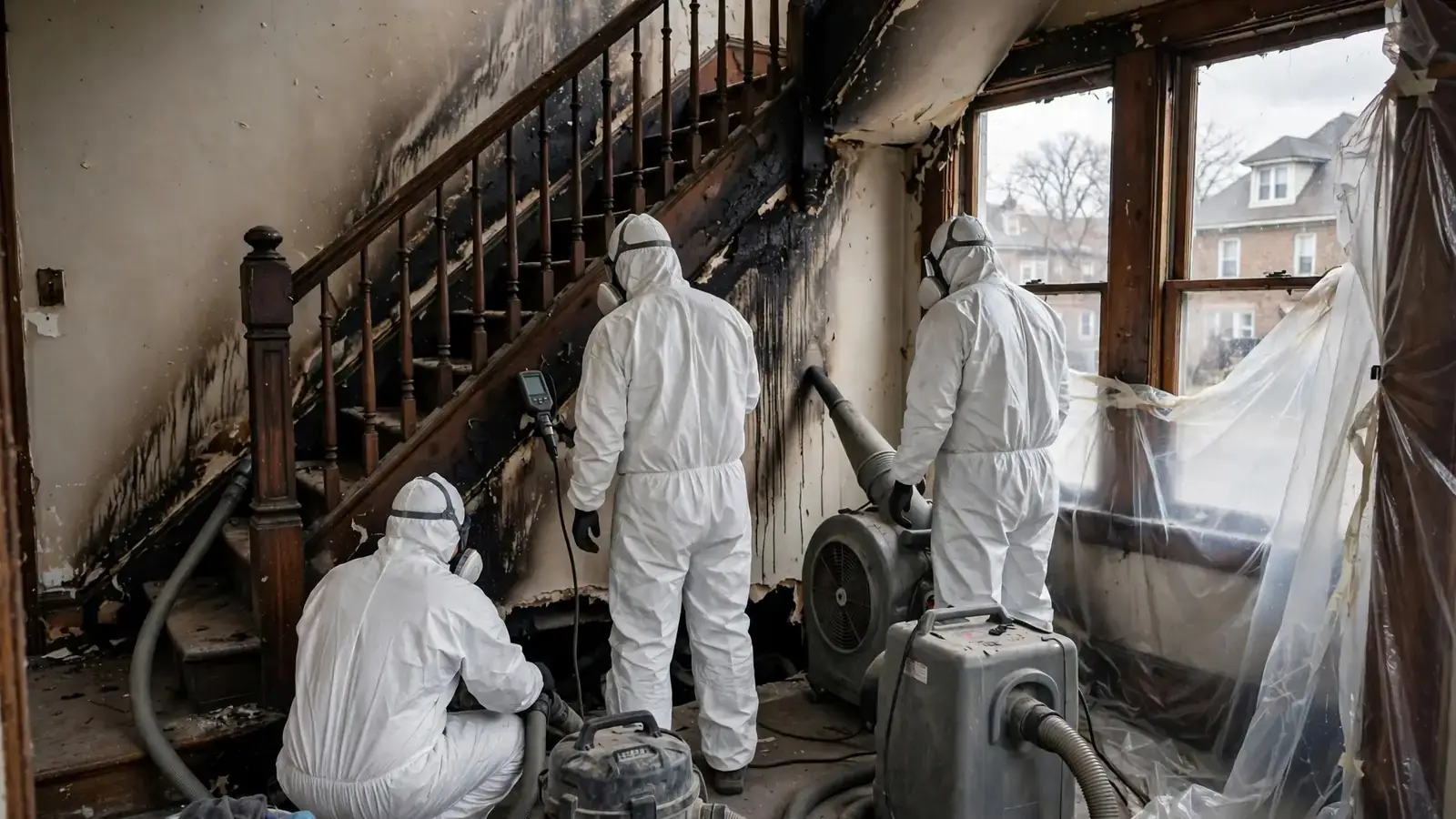
Many older Linden Hills homes have original oak or fir trim, doors and floors. Soot settles into the grain and finish. Gentle cleaning removes most of it; darkened areas may need light refinishing.
If the floor or trim was painted, old layers may contain lead [4]. Sanding should only be done with lead-safe methods. Cleaning does not usually disturb it.

Soot removal in a Linden Hills home, step by step
A common order of work.
- 1
Sample the soot in each Linden Hills room
Dry, oily or protein soot each get their own approach.
- 2
Protect what is not affected
Floors and clean rooms are covered and sealed off.
- 3
Lift loose soot dry
Vacuums with fine filters and dry sponges come first.
- 4
Wash, rinse and check
Cleaners suited to the residue, then a final look in good light.
Stucco, brick and the outside of the house
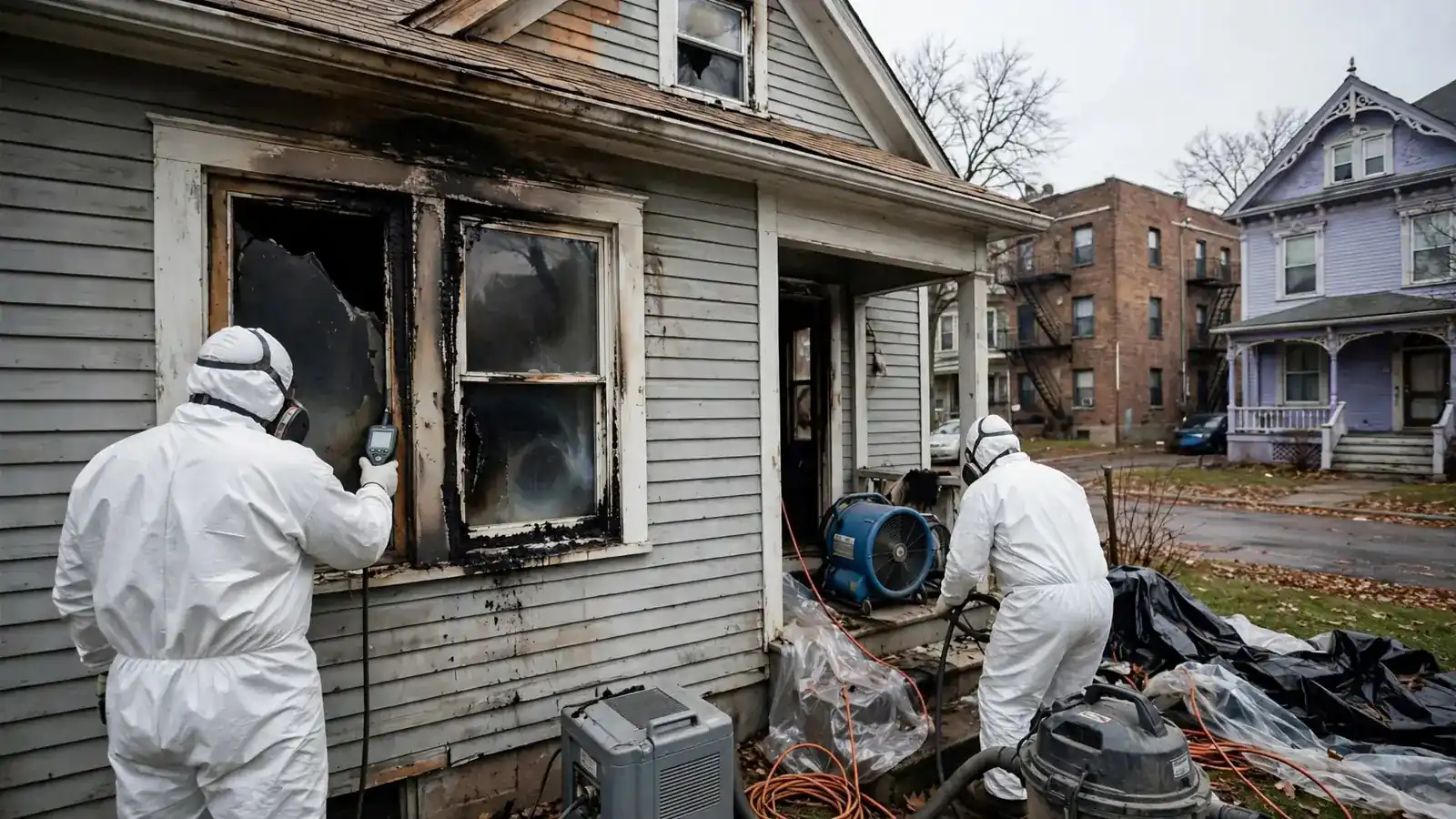
Tudor-style houses in the neighborhood often have stucco on the outside. If flames came out a window, soot can streak the stucco above it. Stucco is porous, so it needs gentle cleaning methods that do not erode the surface.
Brick and stone around entries also catch soot. Exterior cleaning is usually done in warmer weather. In a Minnesota winter, washing outside surfaces can leave ice, so it may wait until spring.
Soot on windows near the lake
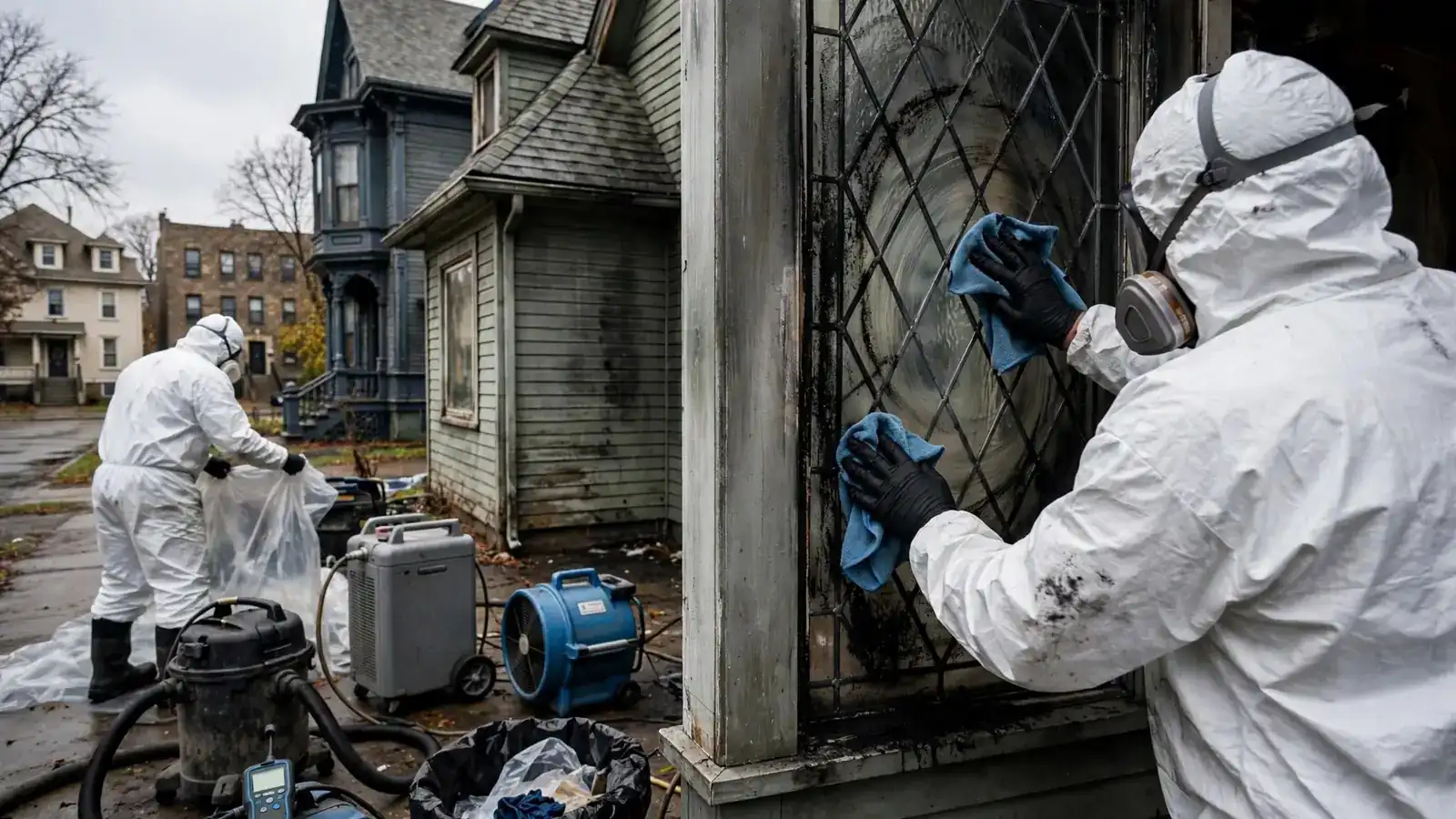
Linden Hills homes often have many windows facing the street or toward the lake. Soot coats glass, frames and screens. Glass cleans well, but heat may have cracked panes or damaged seals on newer insulated units.
Old wood sash and storm windows can be cleaned and restored. Mention any original or leaded glass so the crew handles it with care.
Signs soot reached farther than you think
Things to check before the contractor arrives.
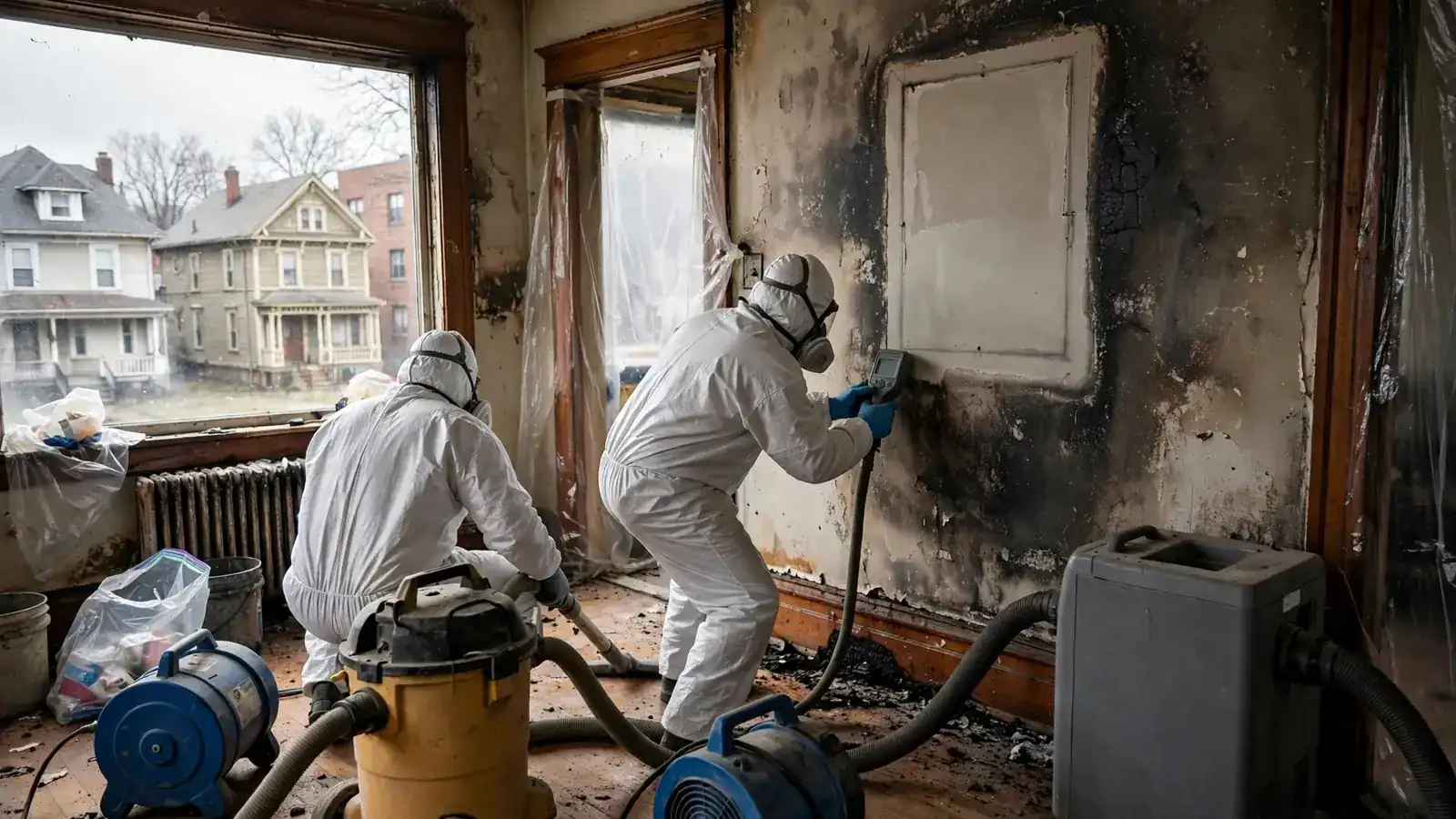
- Dark lines on carpet edgesSoot follows air drawn under doors.
- Gray outlines around outlets and ventsAir moved through those openings.
- Webs of black in cornersCharged particles cling together.
- Film on the inside of closetsSmoke reached rooms that were shut.
Contents and keepsakes
Soot on dishes, books, photos, clothing and furniture is cleaned separately from the house. A contractor may pack items out and clean them off site, then return them.
Photograph and list everything. The Minnesota Department of Commerce encourages good records for the claim [5].
Soot on furnace parts and Linden Hills ductwork
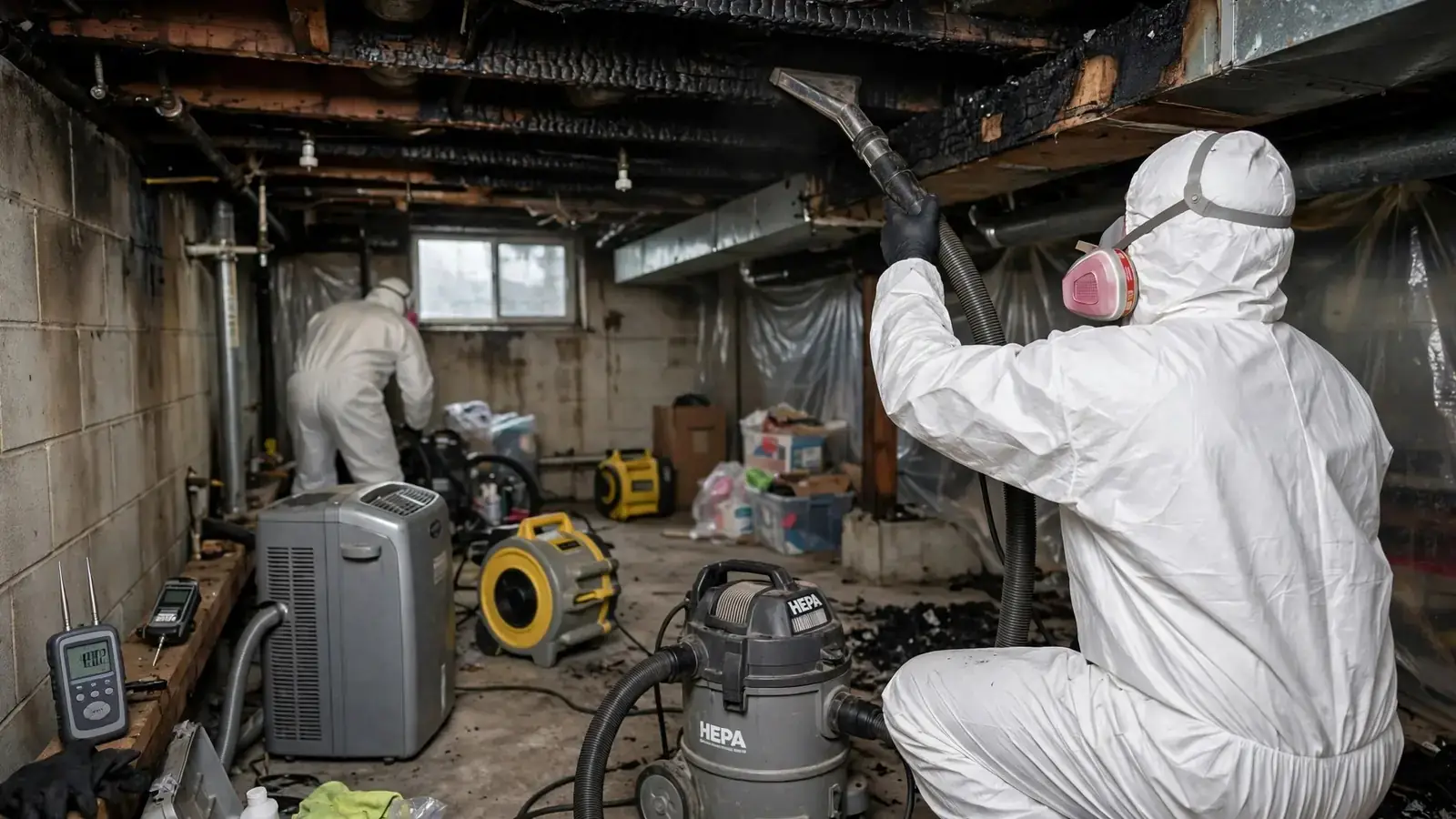
When the furnace runs during or after a fire, it draws soot into the return side and blows it through every supply register. The result is gray streaks around vents in rooms far from the fire. Ducts, the blower and the furnace cabinet are vacuumed and cleaned before the system is trusted again.
In cold months there is pressure to restart the heat quickly. A contractor can often clean the heating system early, change the filter and seal off rooms still being worked on, so the house stays warm while soot removal continues elsewhere.
Kitchens and the 43rd and Upton era cottages
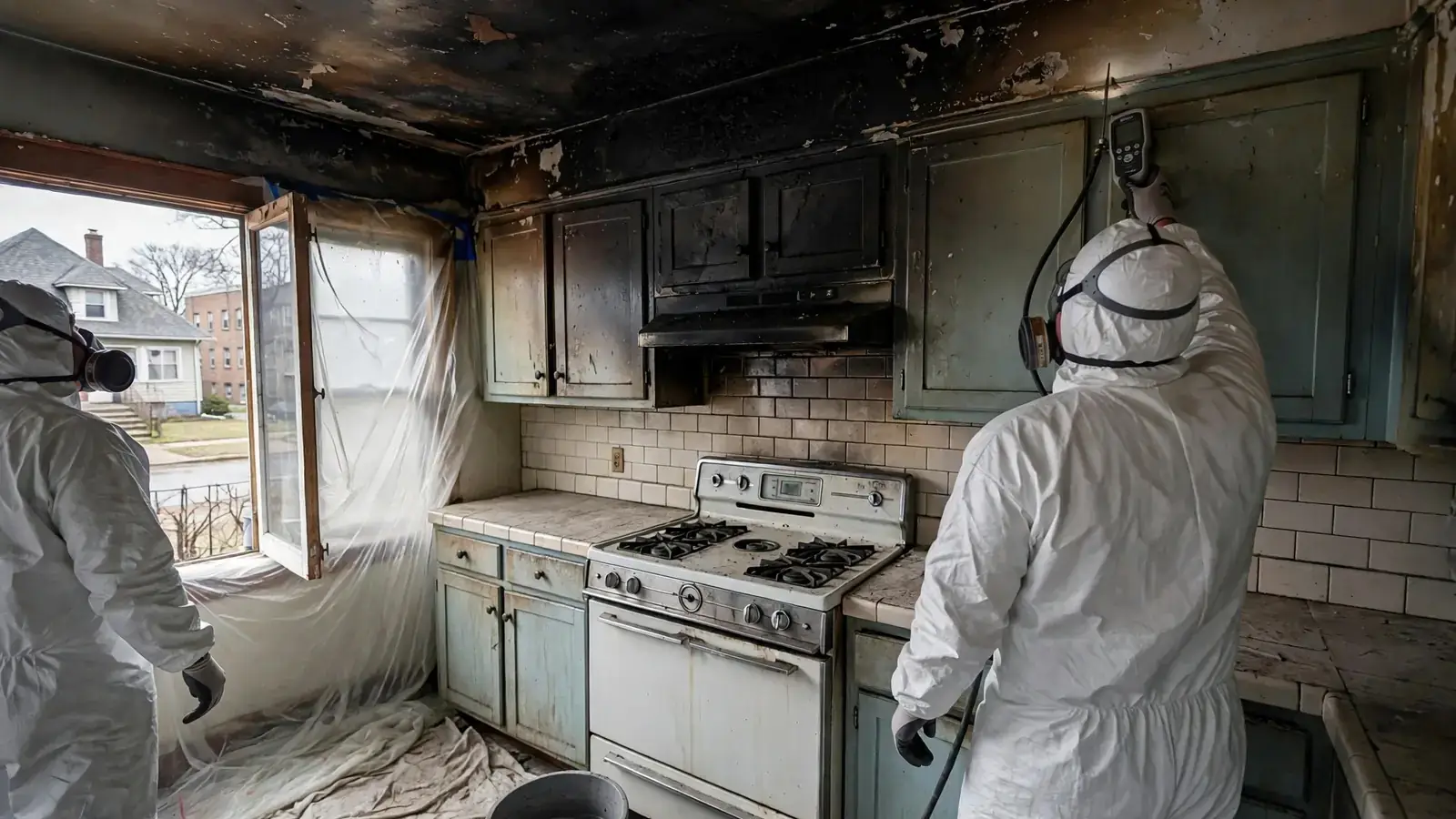
Many of the smaller houses near the old streetcar corner have compact kitchens with wood cabinets and plaster above the range [6]. A cooking fire leaves sticky protein soot on cabinet faces, inside drawers and on the ceiling. It looks faint but smells strong and needs degreasing cleaners rather than dry sponges.
Cabinet interiors, dishes and small appliances all need cleaning. Anything plastic that sat near the stove may have softened and is often better replaced than cleaned.
Why not to clean soot yourself
It is natural to want to start scrubbing. But soot is acidic, oily or fine enough to spread easily. Cleaning it wrong can make the stain worse. The U.S. Fire Administration lists safety steps to take before cleanup [1].
Wear gloves and a mask if you must enter. Our guide on what to do after a house fire explains first steps.
FAQ
Soot Removal in Linden Hills: questions
Can soot on plaster walls be cleaned without painting?
Often, if the soot is dry and light. Heavier or oily soot usually needs cleaning, sealing and paint.
Should old insulation in my Linden Hills attic be tested?
Yes. Older loose-fill and some coatings may contain asbestos and should be tested first.
Can the stucco outside my Tudor be cleaned?
Usually, with gentle methods. Exterior work may wait for warmer weather.
Sources and citations
- [1]U.S. Fire Administration: After a fire
- [2]IICRC: S700 Standard for Professional Fire and Smoke Damage Restoration
- [3]U.S. EPA: Protect your family from exposures to asbestos
- [4]U.S. EPA: Protect your family from sources of lead
- [5]Minnesota Department of Commerce: Disaster Information Center
- [6]Wikipedia: Linden Hills, Minneapolis