Key facts: Nokomis
- Nokomis is a Minneapolis community of eleven neighborhoods named for Lake Nokomis, with about 38,500 residents in 2020 [1].
- Keewaydin, Minnehaha, Morris Park and Wenonah are collectively known as Nokomis East [1].
- Clothes dryers and laundry areas are a recognized source of home fires, which often start in basements in Minnesota homes [2].
- Wet basement materials should be dried within 24 to 48 hours where possible to prevent mold [3].
Coverage
Nokomis homes in ZIP 55417
This page covers the Nokomis community in south Minneapolis. Calls from this ZIP code are inside this service's coverage:
- ZIP 55417Nokomis East (Keewaydin, Minnehaha, Morris Park, Wenonah), Ericsson, Hale, Page, Field, Northrop, Regina and Diamond Lake areas.
- Near the airport or Richfield border?Some nearby addresses are in other ZIP codes or cities. Mention your address on the call and the contractor will confirm coverage.
The homes
Bungalows and story-and-a-half houses
Nokomis takes its name from Lake Nokomis and includes eleven neighborhoods, from Ericsson and Hale near Minnehaha Creek to the Nokomis East neighborhoods of Keewaydin, Minnehaha, Morris Park and Wenonah [1]. About 38,500 people lived there in 2020 [1].
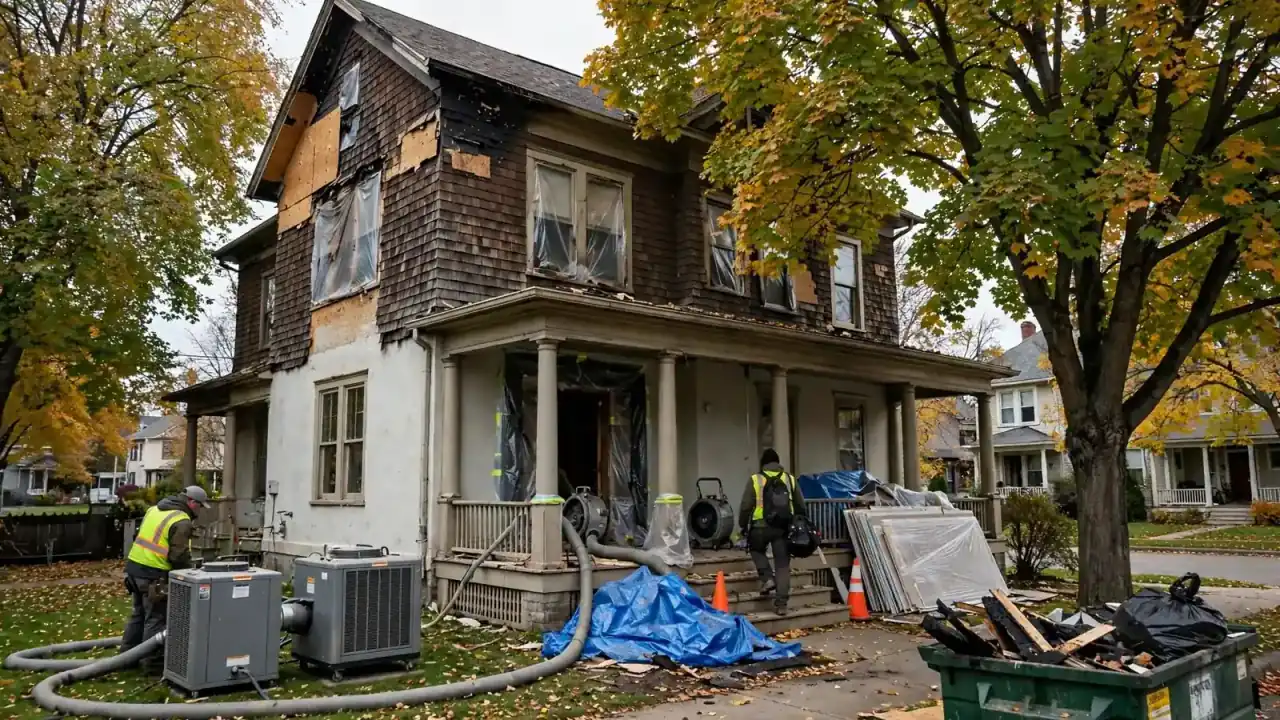
Much of Nokomis was built out with modest single-family homes: bungalows and story-and-a-half houses, many from the 1920s through the 1950s, with brick or stucco and wood trim, small front yards and detached garages on alleys. The story-and-a-half plan puts two bedrooms under a steep roof with sloped ceilings and knee walls. Full basements hold the furnace, water heater, laundry and storage, and many have been partly finished.
Over time many homes have had dormers added, kitchens opened up, and basements turned into family rooms. Each change affects how smoke and water move after a fire.
Common findings
What Nokomis fire jobs often involve
Basement laundry and furnace fires
Dryers, lint and stored items near the furnace are classic basement fire starters that send smoke up through the house.
Read moreUpstairs half stories full of smoke
Sloped-ceiling bedrooms and knee-wall storage collect smoke rising from below.
Read moreWater in finished basements
Firefighting water runs into lower levels finished with carpet and drywall.
Read moreDetached garage fires
Garages on the alley hold fuel, tools and vehicles, and can damage neighbors' garages too.
Read more
Basement fires
When the fire starts in the basement
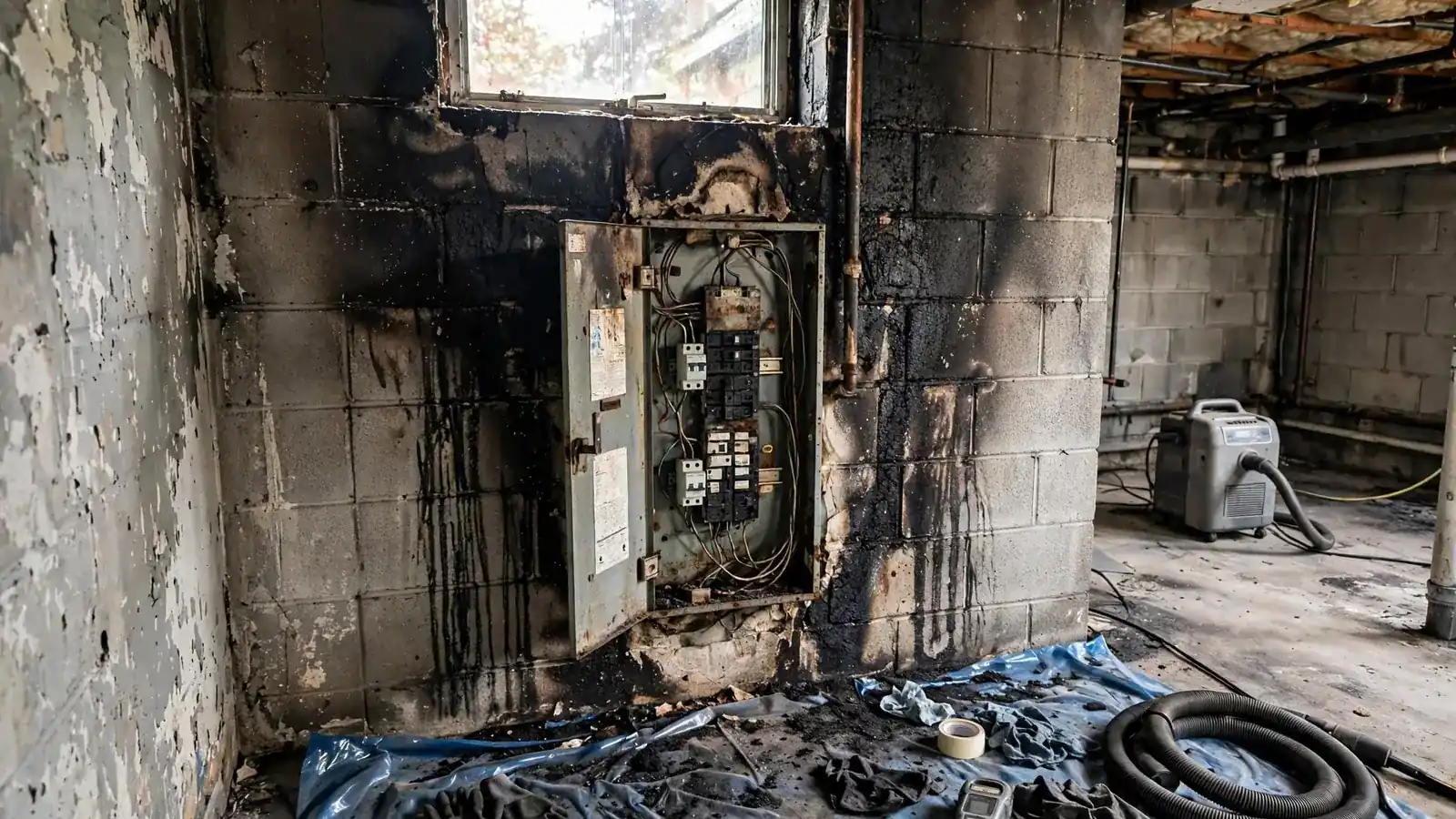
Nokomis basements hold the appliances that most often start house fires below grade: clothes dryers with lint-clogged vents, furnaces with stored items too close, water heaters and electrical panels, plus workbenches and storage. A basement fire sends smoke up the basement stairs, through floor registers and gaps around pipes, and into every room above.
The basement itself often has heavy soot on the ceiling joists and subfloor overhead, on stone or block walls, and on everything stored there. The first floor may look smoky everywhere while the upstairs half story collects more as smoke rises.
After a basement fire, the furnace, water heater, dryer and electrical panel all need inspection before use. Joists and subfloor may need cleaning and sealing, or replacement where charred. Stored belongings need sorting.
Half stories
Sloped ceilings, knee walls and dormers
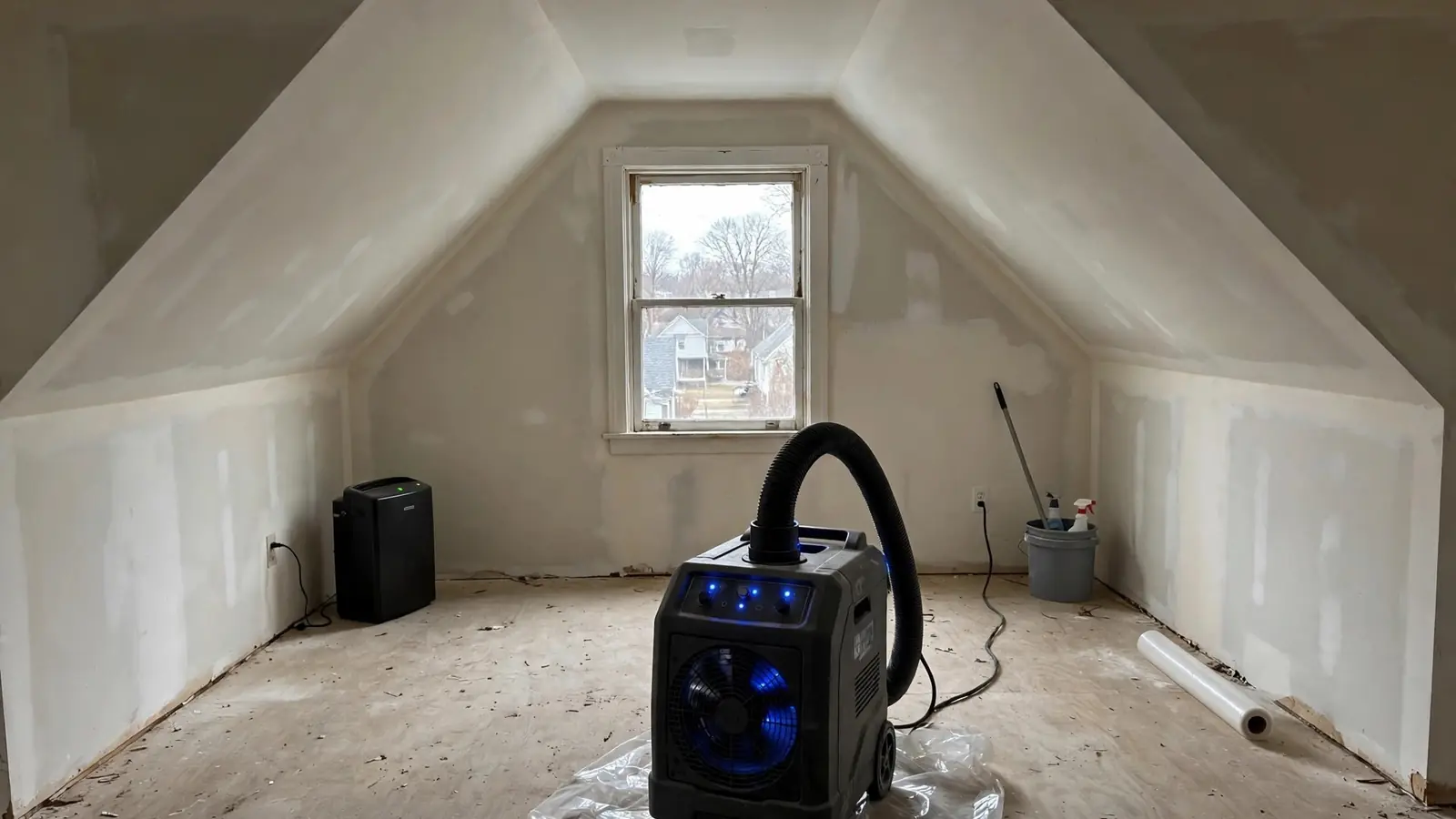
The upstairs of a story-and-a-half house is compact and close to the roof. Smoke rising through the stairway concentrates there and pushes into the knee-wall storage spaces on each side. Roof boards, old insulation and stored items absorb it.
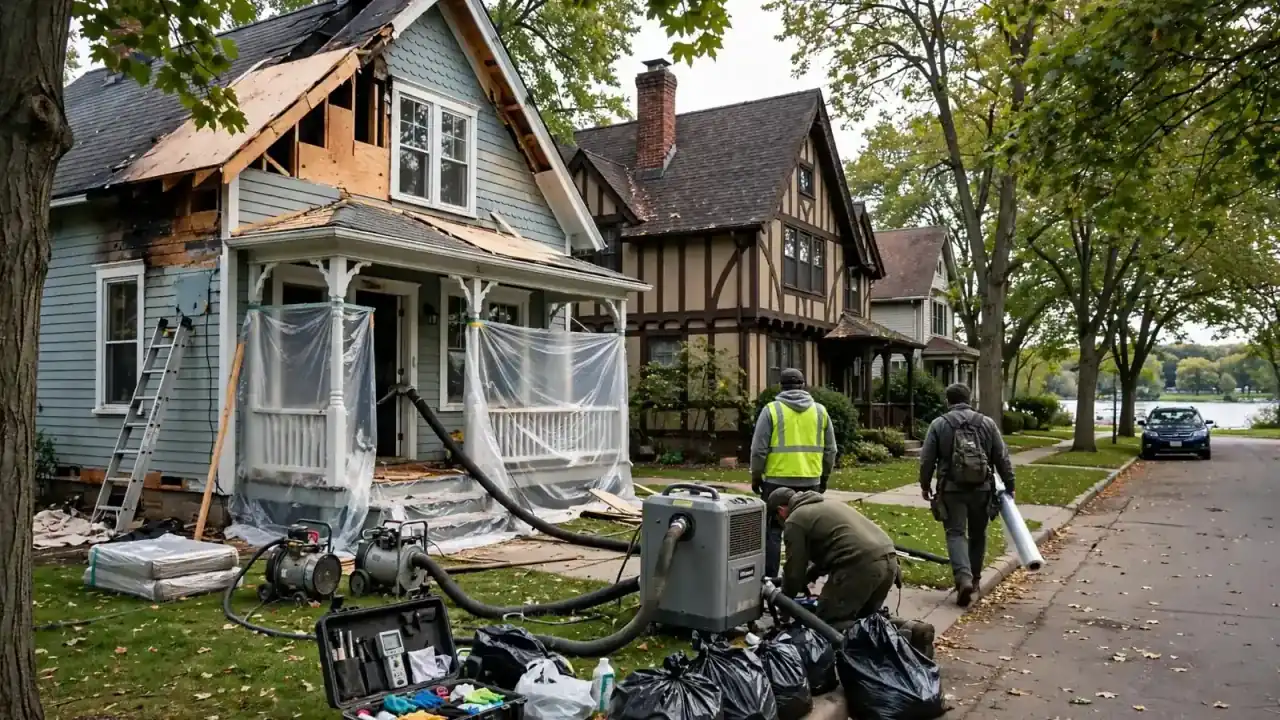
Cleanup means opening every knee-wall door, emptying the spaces, removing smoky insulation, cleaning and sealing roof boards, and cleaning the sloped plaster ceilings. Dormers add their own small roof sections and corners where smoke settles.
- Open every knee-wall door
- Remove smoky insulation
- Clean sloped plaster ceilings
- Check dormer corners
Finished basements
Finished lower levels after a fire upstairs
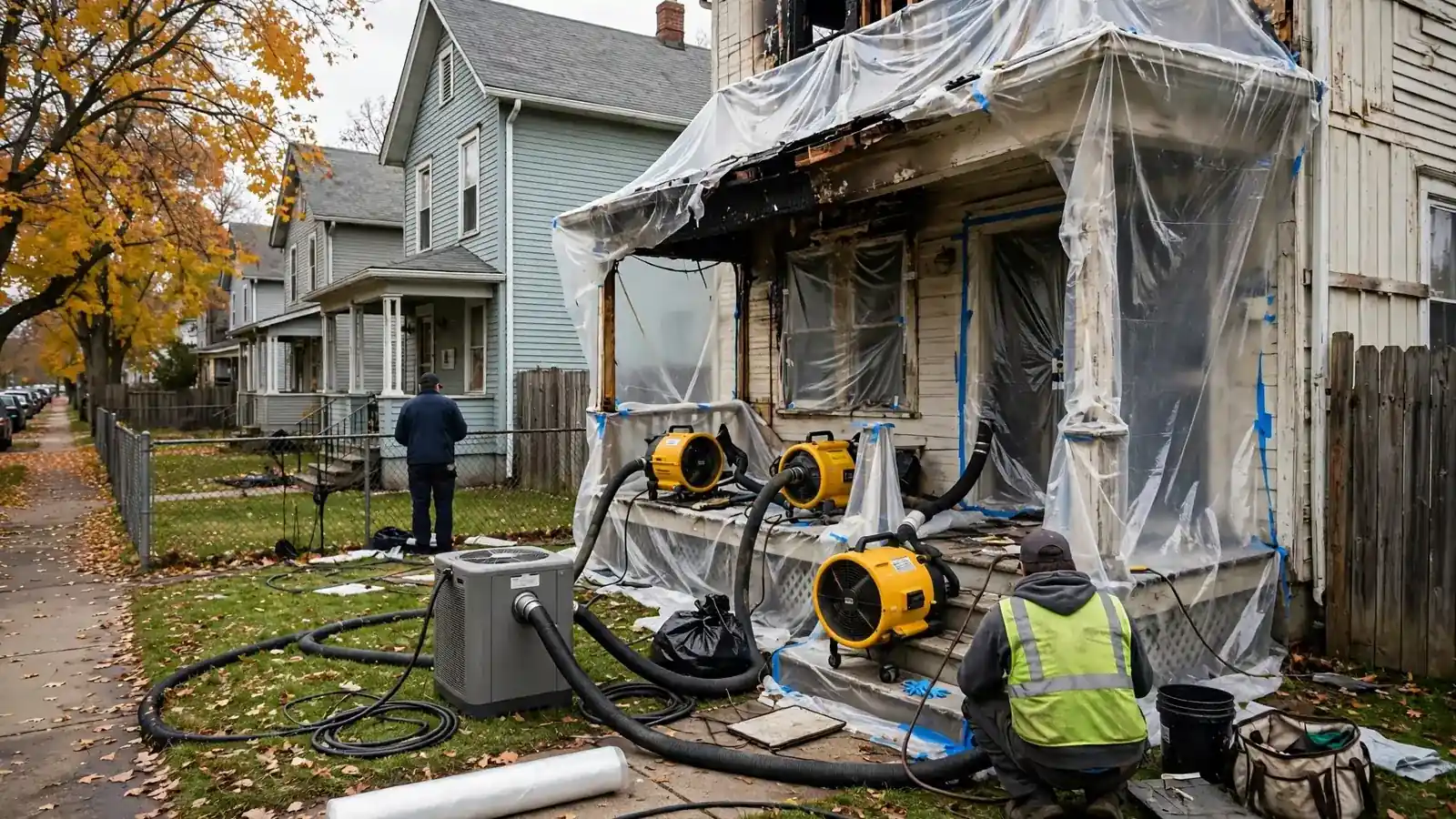
When the fire is upstairs, the basement still takes a hit. Water used by firefighters flows down through the floors and the basement stairs. Finished basements with carpet, drywall and furniture hold that water. Carpet and pad come out, drywall is cut above the waterline, and the slab and framing are dried with dehumidifiers.
The EPA advises drying wet materials within 24 to 48 hours to prevent mold [3]. Finished basements are slower to dry, so removing wet materials quickly matters.
Garages
Detached garages along Nokomis alleys
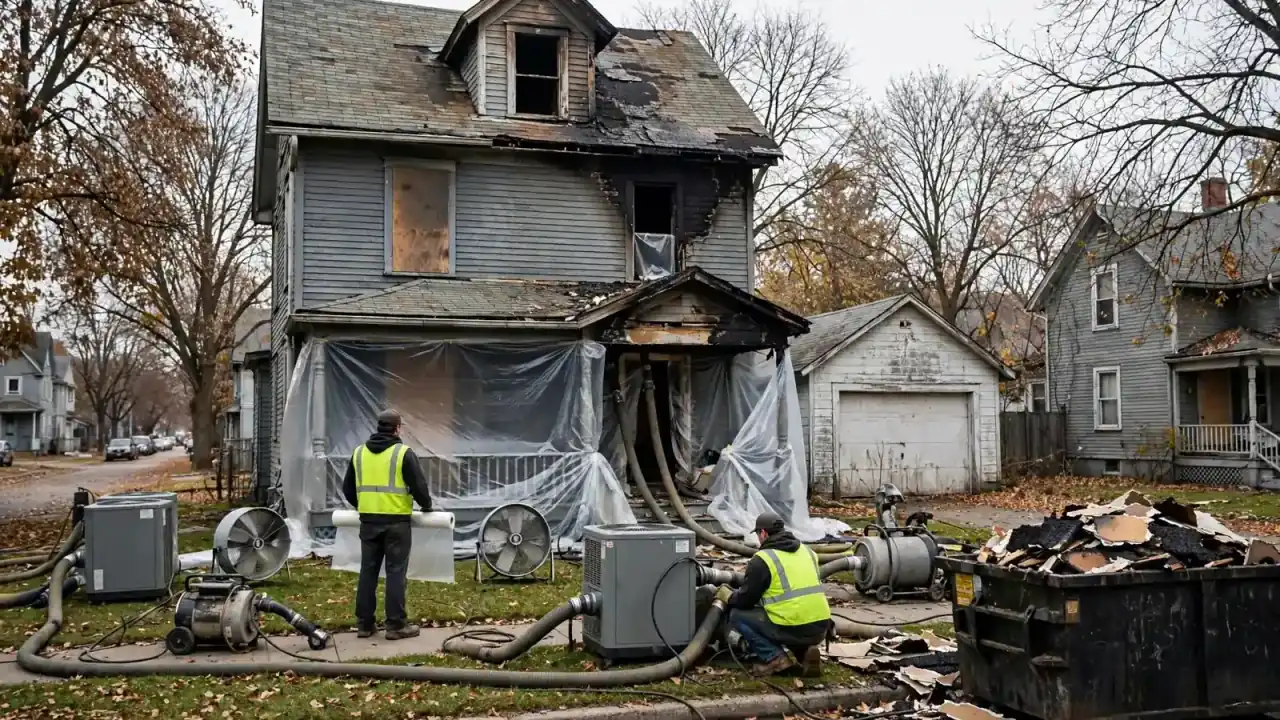
Most Nokomis lots have a detached garage on the alley. Garages hold cars, gasoline, lawn equipment and stored items, and their wiring is often older than the house's. A garage fire can spread to the neighbor's garage and fence and send smoke into the back of the house.
After an alley fire, check the rear wall, back windows, back entry and the attic near the rear eaves. Rebuilding a garage needs a City of Minneapolis permit. Debris removal through a shared alley may need coordination with neighbors.
Winter
Freeze risk after a Nokomis winter fire
Basement fires often take out the furnace or the electrical service that runs it, leaving the house without heat. In a Minnesota winter, pipes in exterior walls and near the rim joist in the basement can freeze within hours. Temporary heat or draining the plumbing comes first, before cleaning.
The National Weather Service office for the Twin Cities issues the cold-weather forecasts that set how urgent this is [4]. Tell the contractor right away if the heat is off.
Airport area
Homes near the airport and Lake Nokomis
Parts of Nokomis lie close to the airport, and some homes there have had sound insulation or window upgrades. Those upgrades affect how a house dries and ventilates after a fire; tighter windows and doors hold moisture and odor in. Dehumidification becomes more important.
Homes near Lake Nokomis and Lake Hiawatha may see more traffic on summer weekends. Plan deliveries and container placement accordingly.
Permits
Permits and inspections
Nokomis is inside the City of Minneapolis, so structural, electrical, plumbing and mechanical repairs need permits through the city's licenses, permits and inspections services [5]. Basement fires often require electrical and mechanical permits for panel, dryer venting and furnace repairs.
For work on a Nokomis home, ask about the Minnesota residential contractor licence issued by the Department of Labor and Industry [6].
Insurance
Documenting a Nokomis claim
Photograph every room, the knee-wall spaces, the basement and the garage before cleanup. Keep damaged appliances until the adjuster sees them or approves disposal, since they may matter to the cause of the fire. The Minnesota Department of Commerce encourages policyholders to review their policy and keep records [7].
Keep receipts for living expenses while displaced, and keep a log of contractor visits and decisions.
Dryers
Dryer vents, lint and basement laundries
Clothes dryers are a well-known source of home fires, usually from lint building up in the dryer or its vent. In Nokomis homes the dryer often sits in a basement laundry area with a long vent run to the outside, sometimes through a rim joist or window well. Long, crushed or plastic vents collect lint faster.
After a dryer fire, the dryer, vent, nearby wiring and gas line if it is a gas dryer all need inspection. Soot coats the laundry area and spreads through the basement. When the laundry is rebuilt, a rigid metal vent with the shortest practical run reduces future risk.
If clothes in the laundry area were exposed to smoke, set them aside for professional cleaning rather than washing them at home, which can spread residue into the machine.
Heating
Furnaces and ducts in Nokomis homes
Most Nokomis houses have forced-air furnaces in the basement with ducts running up through walls and floors, often with a single return in a hallway. If the furnace ran during or after a fire, it pulled smoke through the return and pushed residue to every room, including the upstairs half story.
Ducts, the furnace cabinet, the blower and any central air coil are cleaned or replaced. Filters need changing several times after restart. If the fire started near the furnace, a heating contractor must inspect it before it runs again; in winter, temporary heat bridges the gap.
Woodwork
Trim, floors and built-ins
Older Nokomis homes often have stained or painted wood trim, oak floors and sometimes built-in cabinets or a buffet in the dining room. Stained wood is cleaned gently and refinished if the finish darkened. Painted trim in houses built before 1978 may have lead paint under newer layers, so any scraping follows lead-safe methods.
Oak floors soaked by firefighting water often flatten as they dry and can be refinished. Carpet laid over oak is usually removed after a fire.
Kitchens
Kitchen fires in compact kitchens
Kitchens in Nokomis bungalows are usually small, at the back of the house, sometimes opened to the dining room in later remodels. A stovetop fire fills the main floor quickly and sends smoke up the stairs. Protein residue from burned food is faint but strong-smelling and settles in every room.
Cabinets near the range often need replacing; the rest are cleaned inside and out with products made for protein residue. The ceiling and walls are cleaned and sealed before repainting.
Contents
Basement storage and keepsakes
Basements hold the things families keep: holiday decorations, photos, tools, old furniture and boxes of papers. After a basement fire, or water from a fire upstairs, those items need fast sorting. Hard goods clean well; cardboard, upholstery and textiles often do not. Damp photos and papers can be frozen until a specialist dries them.
Photograph items before discarding them and list them for your insurer.
Electrical
Panels, basement wiring and space heaters
Electrical panels in Nokomis homes are almost always in the basement, often near the laundry and furnace. Older panels and circuits added over the years can be overloaded, especially when space heaters run in cold rooms during winter. A fire at or near the panel can disrupt power to the whole house and its heating.
After any fire, keep power off to affected areas until an electrician inspects. If the panel was involved, the utility may need to disconnect service until repairs are made, which affects heat and freeze protection. Panel and circuit repairs need a city permit and inspection.
When the house is rebuilt, adding outlets where extension cords were used and replacing smoke alarms throughout reduces future risk. Minnesota law requires carbon monoxide alarms near sleeping rooms [8].
Smoke paths
How smoke travels through a story-and-a-half house
In a story-and-a-half home, smoke has a short, direct route from the main floor to the upstairs: the stairway, usually open at the top. From a basement fire, it also rises up the basement stairs and through floor registers. Hot smoke collects under the sloped ceilings upstairs and pushes into the knee-wall spaces and the small attic above.
Smoke also enters wall cavities through outlets, switch boxes and gaps around pipes, leaving grey fans above outlets and lines along baseboards. The contractor maps these paths room by room before deciding what to clean, seal or remove.
Windows
Windows, storms and drafts after a fire
Many Nokomis homes have original wood windows with storm windows, while others have replacement units. Heat cracks glass, and firefighters may break windows to vent smoke. In winter, every broken window is a path for cold air onto pipes and into the house.
Broken openings are boarded quickly, sometimes with insulation behind the plywood in cold weather. Original sashes can usually be reglazed later; intact storm windows can be stored and reinstalled.
Sequence
What happens first, second and last
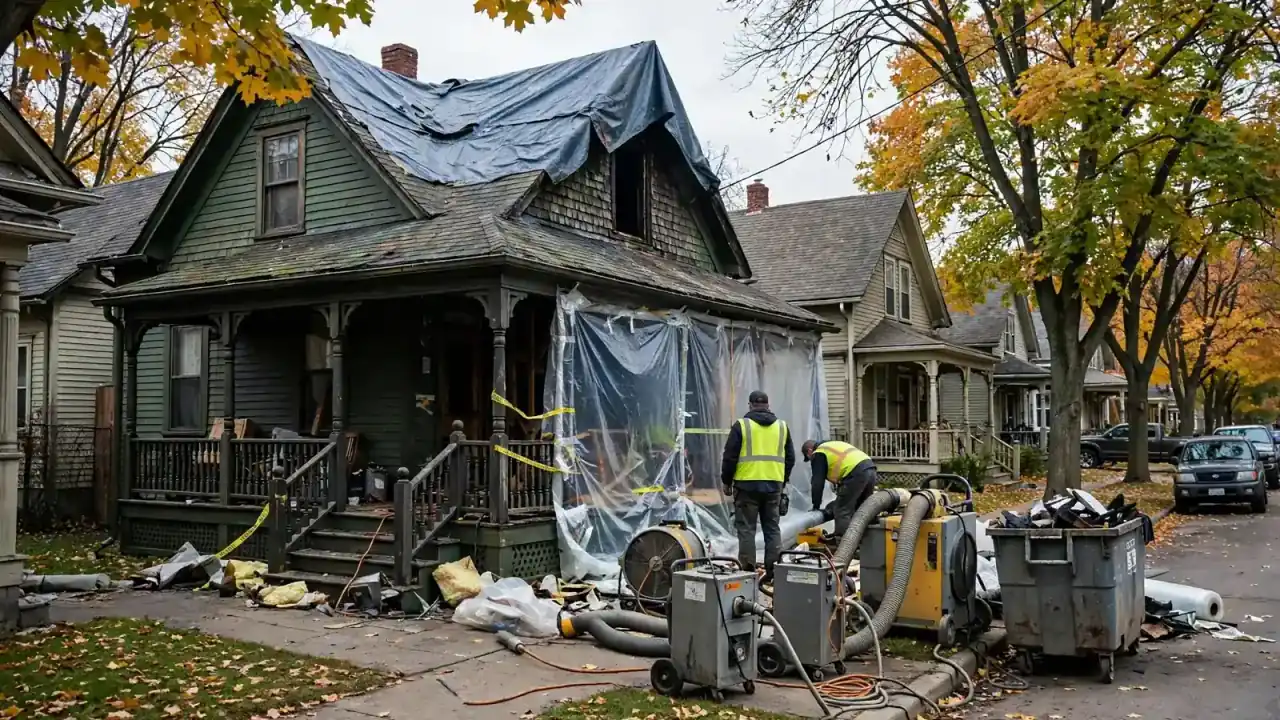
In a typical Nokomis restoration: secure openings and protect the house from cold; pump and dry the basement; remove ruined materials; clean soot from the top of the house down, including knee walls; clean the furnace and ducts; treat odor and seal; then make permitted repairs and finish floors and walls.
Ask the contractor how long each phase is likely to take for your house so you can plan temporary housing.
Exterior
Stucco, brick and siding on Nokomis houses
Nokomis houses are finished in stucco, brick, wood siding or later vinyl and steel. When flames vent from a window, smoke streaks the wall above it and darkens the eaves. Stucco and brick hold soot in their texture; careful masonry-style cleaning usually improves them a great deal. Wood siding with blistered paint is scraped with lead-safe methods and repainted. Warped vinyl is replaced.
Neighbors are close on many blocks, so a fire can also scorch the house next door. If your home was affected by a neighbor's fire, photograph the facing wall and windows and check the rooms and attic on that side for smoke.
Lakes and creek
Near Lake Nokomis, Lake Hiawatha and Minnehaha Creek
Homes near the lakes and the creek may have damper basements, particularly in spring. After firefighting water adds to that, drying can take longer and dehumidifiers may need to run for several days. If your basement already had moisture issues before the fire, mention them so the contractor can plan drying and check for existing mold.
Park and lake traffic increases on summer weekends, so plan deliveries and container placement with that in mind.
Living elsewhere
Staying elsewhere while the house is restored
After a basement fire that took out heat or power, or a fire whose smoke reached the upstairs bedrooms, most families stay elsewhere for at least the first part of the work. Check your policy for additional living expenses coverage and keep every receipt. Renters should check their renters policy.
Ask the contractor for a timeline by phase, and visit the house regularly to check temporary covers and progress.
Joists
Charred joists and subfloor over a basement fire
When a fire burns in the basement, the floor joists and subfloor overhead take the heat directly. Light scorching can usually be cleaned by soda or dry ice blasting and sealed. Deeper charring reduces the wood's strength, and those members are reinforced or replaced, which needs a structural permit.
Until the floor is assessed, avoid heavy loads on the floor above the fire area. The contractor may install temporary supports if the joists are weakened. Ask to see the damage and the repair plan before the basement ceiling is closed up again.
Records
Keeping track of appliances and the fire's cause
If the fire started at the dryer, furnace, water heater or panel, keep the damaged equipment and any parts until your insurer has seen them or says they can go. Photographs of the appliance, its connections and the area around it are useful. Note the make and model if you can read them safely.
A fire department report may also note the likely cause. Ask your insurer whether they need a copy.
Keep receipts for any appliance you replace in the meantime, such as a temporary washer or space heater.
FAQ
Nokomis fire restoration questions
Our fire started in the basement laundry. What needs checking?
The dryer and its vent, the electrical panel, the furnace and water heater, the joists and subfloor overhead, and every room above. Smoke from basement fires rises through the whole house.
Why does the upstairs smell worse than the main floor?
Smoke rises up the stairs into the small half-story rooms and knee-wall spaces under the roof. Those spaces trap it and need opening, cleaning and sealing.
Will the finished basement need to be torn out?
Usually only the wet parts: carpet and pad, and drywall cut above the waterline. The slab and framing are dried, then the basement is rebuilt.
Our garage fire spread to the neighbor's garage. What now?
Each owner contacts their own insurer for their own property. Coordinating debris removal and rebuilding along the alley helps both households.
Do basement fire repairs need permits?
Usually. Electrical, mechanical and structural repairs inside Minneapolis require city permits, which often apply to panel, dryer vent and furnace work.
Will a contractor take my call from Nokomis?
Calls from ZIP 55417 are inside this service's coverage. You speak with an independent local restoration contractor on that same call.
Can we wash smoky clothes from the laundry room at home?
It is better not to. Washing heavily smoke-exposed clothes at home can spread residue into the machine and leave grey streaks. Professional cleaning for smoke damage works better.
The panel was damaged. How do we keep the house warm?
The utility may need to disconnect service until repairs are done. Temporary heat run from a safe source, or draining the plumbing, protects the house. Ask the contractor to arrange this right away in cold weather.
What should I tell the contractor when I call from Nokomis?
Where the fire started, especially if it was in the basement, whether the heat and power work, whether the upstairs is a half story, whether the basement is finished and whether the garage was involved.
Our basement was already damp before the fire. Does that matter?
Yes. Existing moisture makes drying take longer and raises mold risk. Tell the contractor so they can plan dehumidification and check for any mold that was already there.
Are charred floor joists over the basement safe?
Lightly scorched joists can often be cleaned and sealed. Deeply charred joists lose strength and are reinforced or replaced with a structural permit. Avoid heavy loads above the fire area until it is assessed.
Should I keep the burned dryer or furnace?
Yes, until your insurer has seen it or approves disposal. The equipment and its connections may help establish the cause of the fire. Photograph it in place first.
Sources and citations
- [1]Wikipedia: Nokomis, Minneapolis
- [2]U.S. Fire Administration: After a fire
- [3]U.S. EPA: A brief guide to mold, moisture and your home
- [4]National Weather Service: Twin Cities forecast office
- [5]City of Minneapolis: Licenses, permits and inspections
- [6]Minnesota Department of Labor and Industry
- [7]Minnesota Department of Commerce: Disaster Information Center
- [8]Minnesota Statutes 299F.51: Carbon monoxide alarms