Key facts: Powderhorn
- Most of Powderhorn Park was built between about 1905 and 1920, with detached houses, duplexes and brick walk-up apartments of three floors [1].
- The neighborhood runs from Lake Street to 38th Street between Cedar and Chicago avenues, around Powderhorn Park and its lake [1].
- In tall houses, smoke rises through stairways and fills upper floors and attics first [2].
- Original paint in houses of this age may contain lead, so scraping smoke-damaged paint calls for lead-safe methods [3].
Coverage
Powderhorn addresses in ZIP 55407
This page is for homes in the Powderhorn area of south Minneapolis. Calls from this ZIP code are inside this service's coverage:
- ZIP 55407Powderhorn Park, Central, Bancroft, Bryant, Corcoran and nearby south Minneapolis blocks around Lake Street.
- On the edge of the area?Mention your address on the call and the contractor will tell you whether it is covered.
The neighborhood
Powderhorn's early-1900s housing
Powderhorn Park sits about three miles south of downtown, bounded by Lake Street, 38th Street, Cedar Avenue and Chicago Avenue [1]. Its centerpiece is Powderhorn Park and the lake that once curved like a powder horn before its northern arm was filled in the 1920s [1]. Most of the housing went up between about 1905 and 1920, a mix of detached houses, duplexes and brick walk-up apartments of three floors [1].
Many detached houses are two and a half stories tall, often foursquares or late Victorian designs with deep front porches, steep roofs, attic rooms and full basements. Duplexes stack one unit over another. Lots are narrow and houses stand close. Inside, plaster walls, wood trim, hardwood floors and radiators or converted forced-air systems are typical.
Lake Street, along the northern edge, is a lively commercial corridor with many Latino- and African American-owned businesses [1], and mixed-use buildings with apartments above shops.
Patterns
What Powderhorn fire restorations often involve
Smoke climbing three floors
Tall houses act like chimneys; upper floors and attic rooms take the heaviest residue.
Read moreWater falling three floors
Water used upstairs passes through every floor below before reaching the basement.
Read moreHeat damage to houses next door
Close spacing means a fire can crack windows and blister siding on neighboring homes.
Read moreShared buildings, several households
Duplexes and walk-ups mean several tenants, owners and insurers in one restoration.
Read more
Tall houses
Two and a half stories of smoke and water
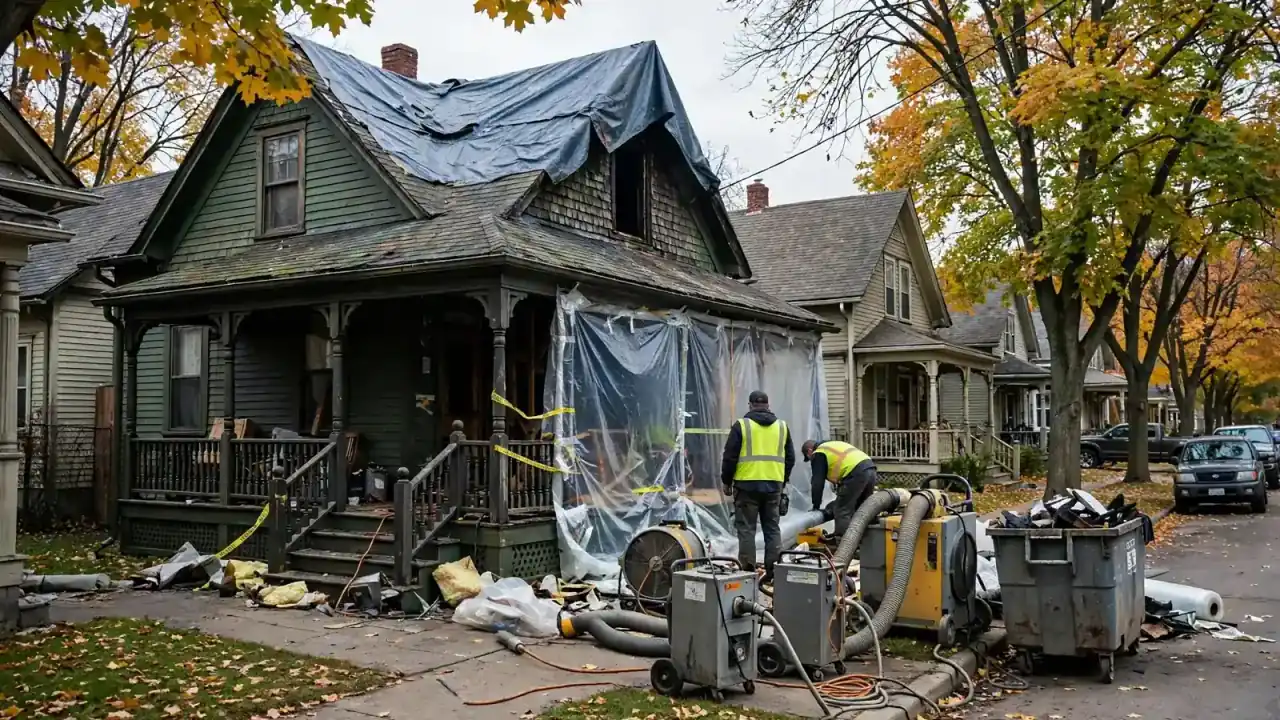
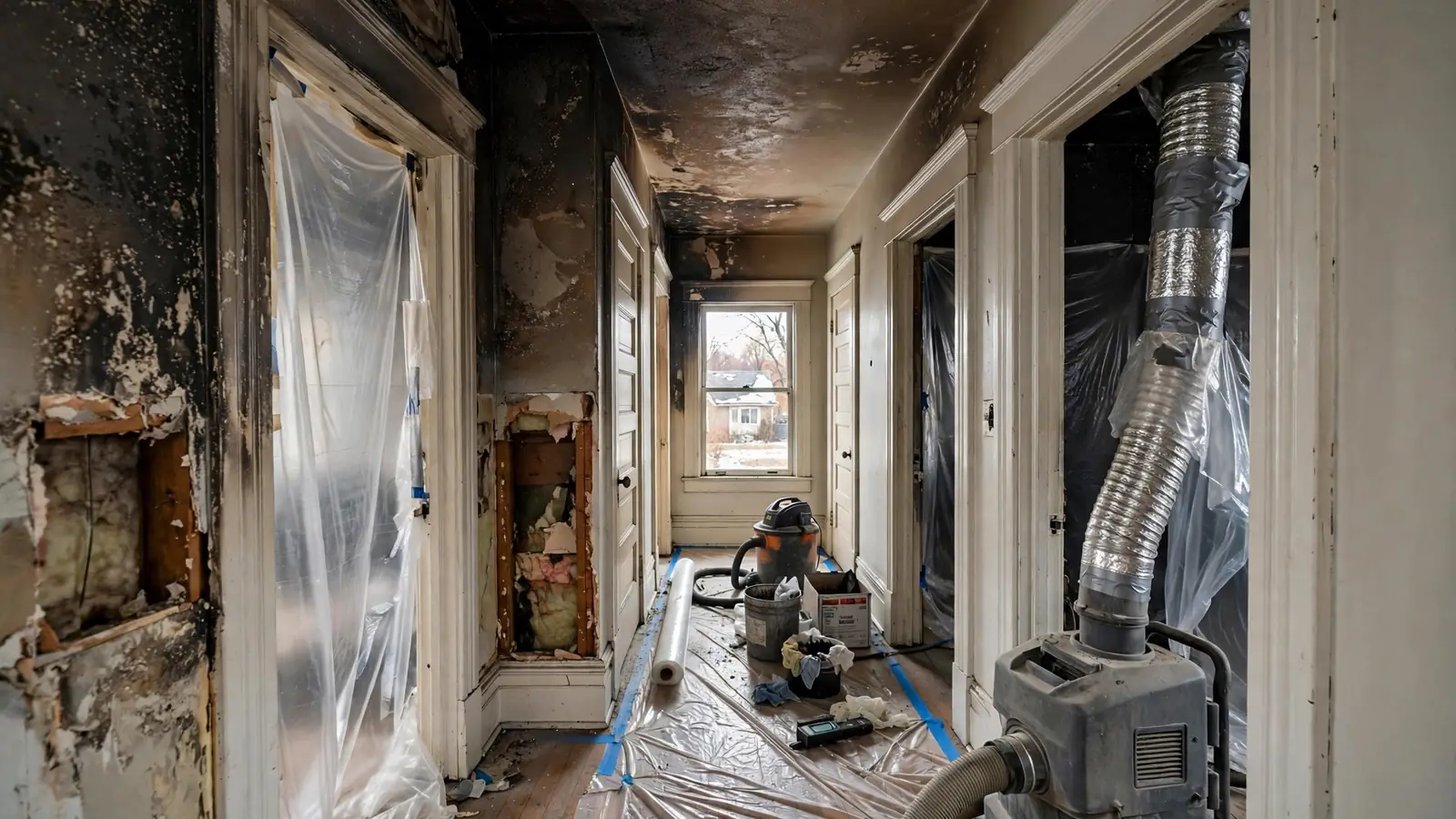
A two-and-a-half-story house has a main floor, a full second floor and an attic level that may be finished or used for storage. The main staircase connects them, often with an open landing. During a fire, hot smoke rises through that staircase, fills the second floor and pushes into the attic. Upper rooms usually end up with more residue than the room where the fire started.
Water travels the other way. A fire on the second floor or in the attic means water through two or three floors of plaster ceilings and hardwood before it reaches the basement. Each level needs moisture checks, and plaster ceilings holding water need attention before anyone works below them.
Cleaning goes from the top down, so falling soot and dust do not land on finished work. High stairwells and attic rooms may need scaffolding.
Density
Close neighbors and radiant heat
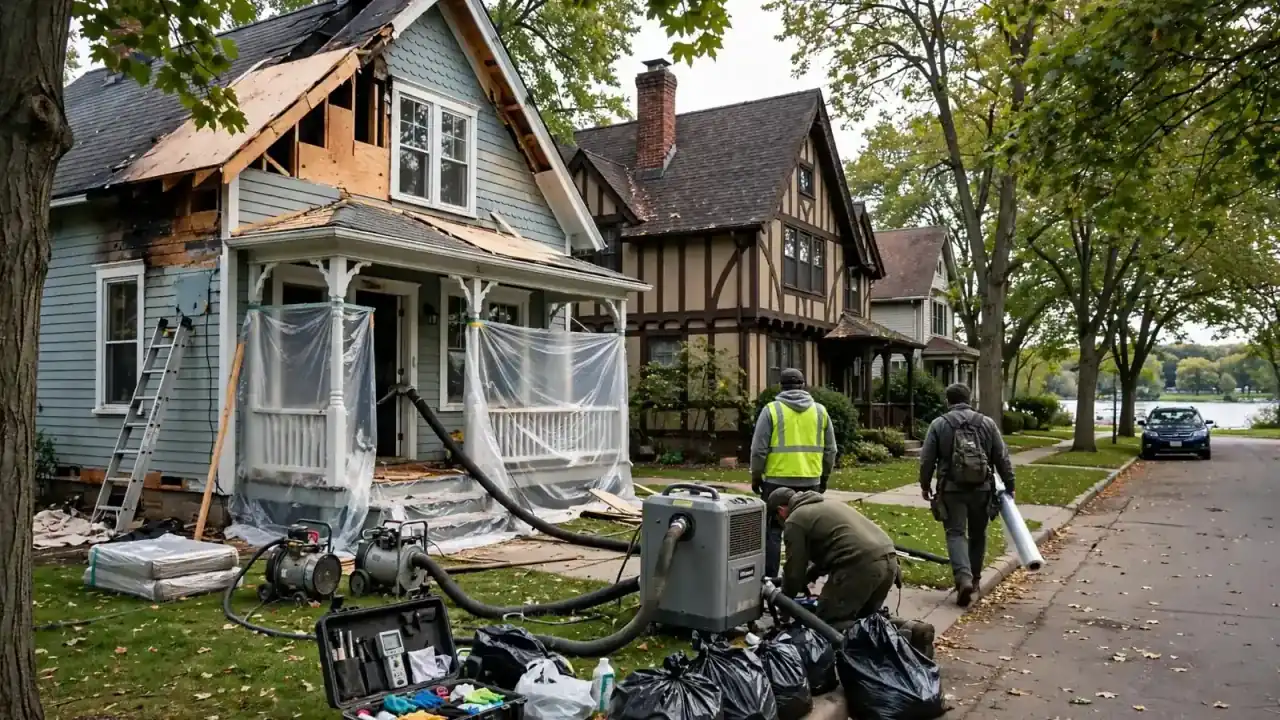
Powderhorn's narrow lots put houses only a few feet apart. A serious fire in one house throws heat at its neighbors: windows crack, vinyl siding sags, paint blisters and wood siding chars. Smoke drifts in through windows and attic vents. Embers land on roofs and in gutters.
If a neighbor's fire affected your home, photograph the facing wall, windows, roof edge and gutters, and check the rooms and attic on that side for smoke. Contact your own insurer. Repairs in the narrow gap between houses may require working from a neighbor's yard, so talk with them early.
Duplexes and walk-ups
Shared buildings: duplexes and brick apartments
Duplexes and three-story walk-ups are common in Powderhorn. A fire in one unit affects others through shared stairs, floors, roofs and basements. Smoke rises into upper units; water falls into lower ones. Common hallways need cleaning, and building systems such as the boiler, wiring and roof are the owner's responsibility.
Each household's belongings are their own, and tenants need their own renters insurance to cover them. Owners, managers and tenants should agree early on access and timelines. Rental units in Minneapolis may need inspection before tenants move back in.
- Plan across the whole building
- Owners handle structure and systems
- Tenants contact their own insurer
- Units may need re-inspection
Porches
Big front porches on Powderhorn houses
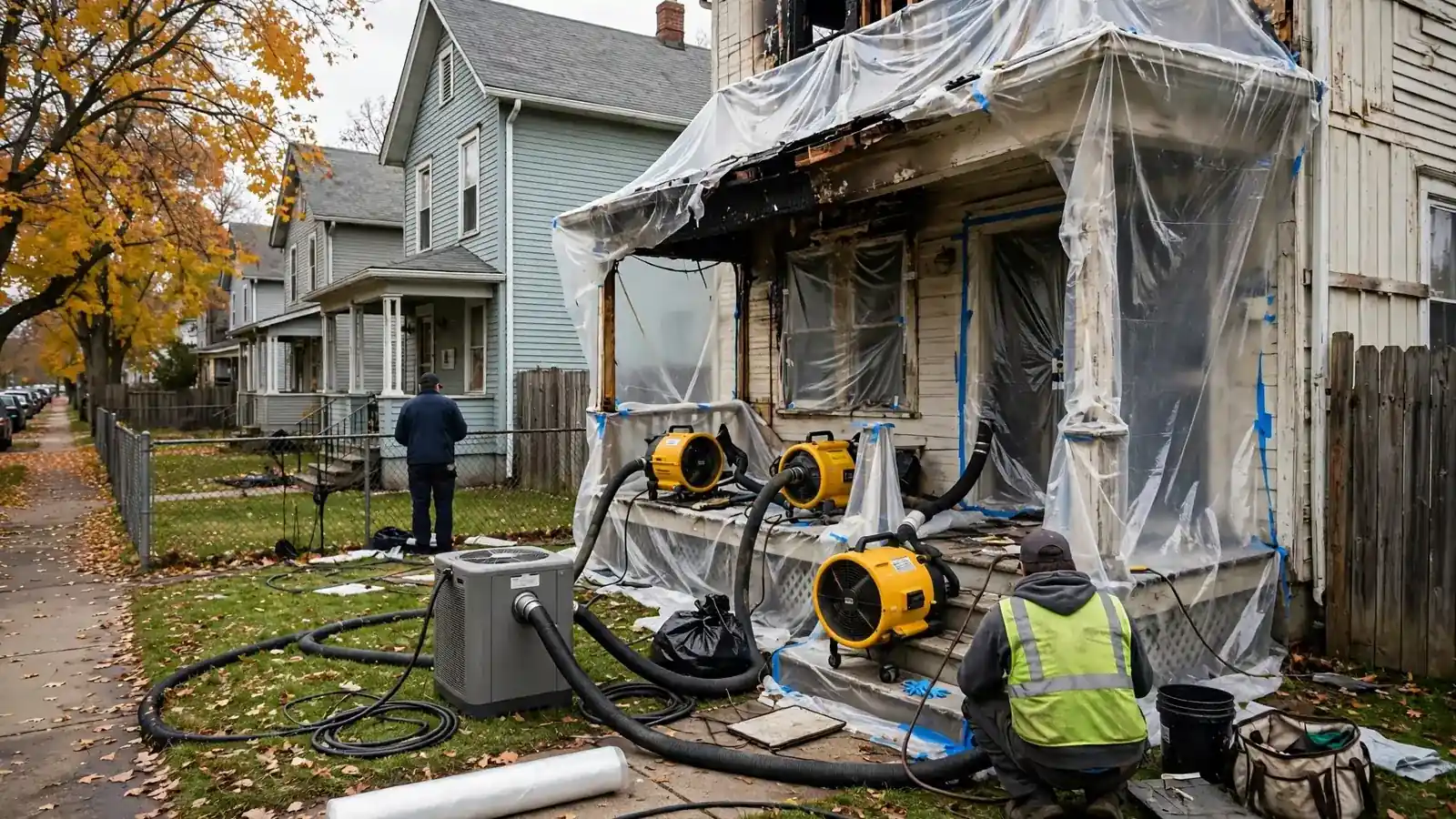
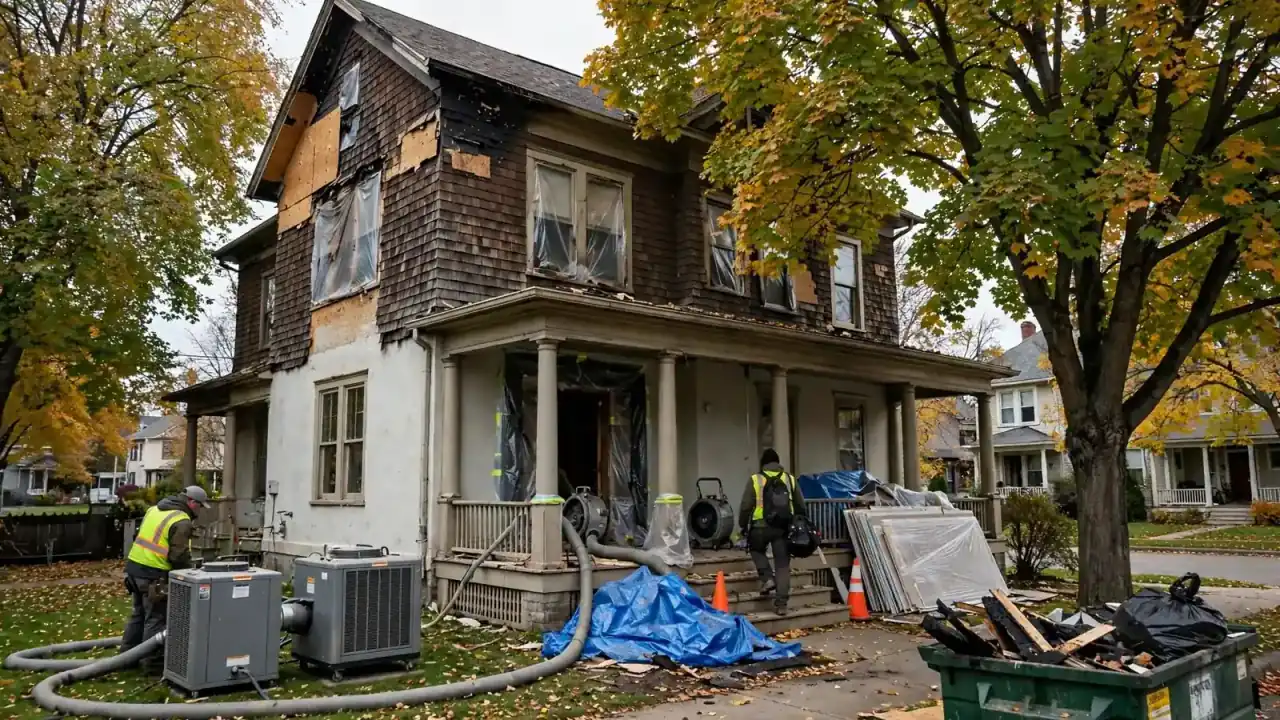
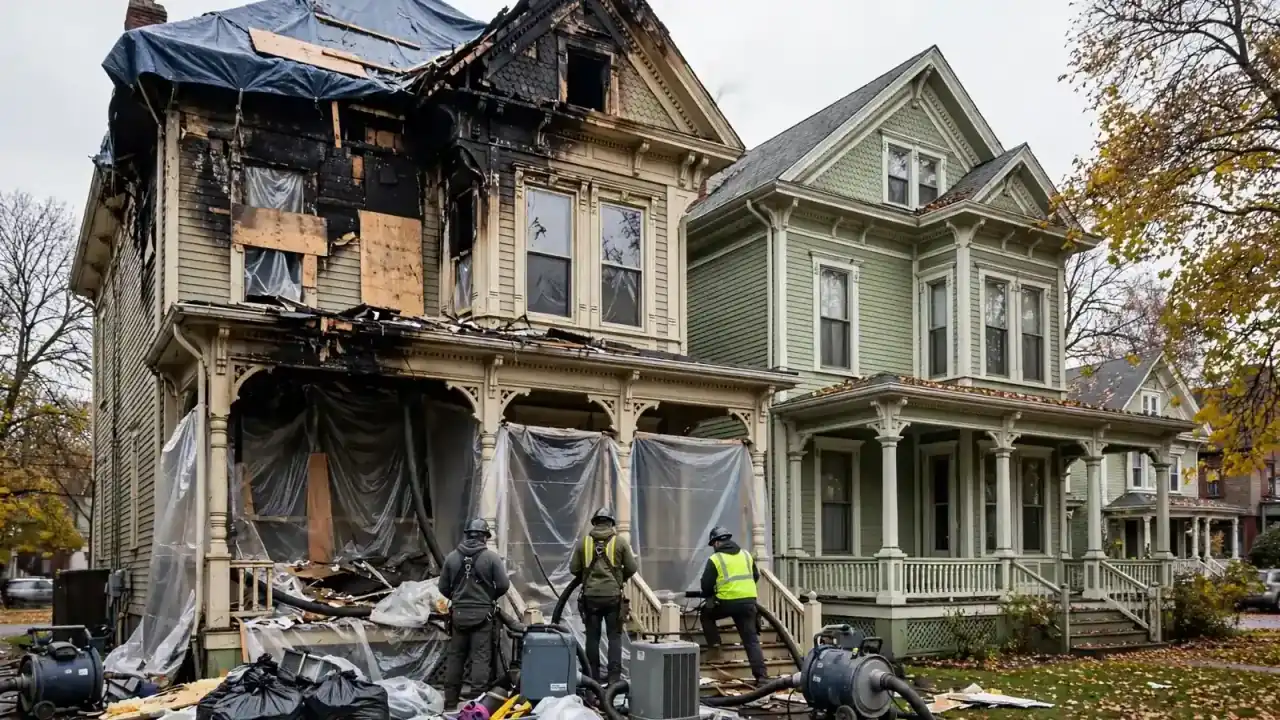
Wide front porches, open or enclosed, are a signature of Powderhorn's older houses. They are where neighbors talk and where firefighters often enter. After a fire, porch ceilings, columns and railings collect soot, and enclosed porches may have many broken windows.
Porch woodwork can usually be cleaned and repainted with lead-safe methods. Broken porch windows are boarded early in cold weather. Damaged porch floors or steps are repaired for safety, since crews use them throughout the job.
Attic rooms
Attic rooms and third-floor spaces
Many Powderhorn houses have a finished or partly finished attic level with rooms under the roof and storage in the eaves. These spaces take heavy smoke, have older insulation and sometimes old wiring. They are cleaned last in the top-down order but checked first.
Older attic insulation, including some loose-fill types, may contain asbestos and should be tested before removal [4]. Roof boards and rafters with residue are cleaned and sealed. If the roof was opened by firefighters, temporary covers must handle snow and wind.
Basements
Basements under tall houses
Basements in Powderhorn houses usually hold a boiler or furnace, water heater, laundry and storage, with stone or block walls and a floor drain. Water from a fire upstairs reaches the basement last but often in quantity.
Pumping, clearing the drain, sorting stored items and drying come first. Old pipe and boiler insulation should be tested before anything disturbs it. The heating system is inspected before it runs, and in winter temporary heat protects the plumbing.
Lake Street
Mixed-use buildings along Lake Street
Apartments above shops on Lake Street share their building with businesses. A fire in a shop below sends smoke into the apartments above; a fire upstairs sends water into the business. Restoration involves the building owner, business owners and residents, each with different insurance.
Residents should photograph their belongings, contact their renters insurer and ask the owner or manager who is coordinating the restoration.
Permits
Permits and inspections around Powderhorn Park
Powderhorn is within the City of Minneapolis, so structural, electrical, plumbing and mechanical repairs need permits through the city's licenses, permits and inspections services [5]. Rental properties may need inspection before units are occupied again.
For work on a Powderhorn home, ask about the Minnesota residential contractor licence issued by the Department of Labor and Industry [6]. You can ask about licensing on the call.
Planning
Access and parking around Powderhorn Park
Streets are residential and parking is often tight. Alleys behind most lots are the best route for containers and deliveries. Events in Powderhorn Park, including the city's May Day festival, bring crowds on certain days [1]; plan deliveries around them.
Snow emergencies limit parking in winter, so equipment and containers need to be placed where plows can pass.
Language
Households that speak more than one language
Powderhorn is one of Minneapolis's most diverse neighborhoods, and many residents use a language besides English at home [1]. If language is a consideration for anyone in the household, mention it on the call so the conversation works for everyone involved, and ask that written scopes and lists be explained clearly.
Heating
Steam, hot water and forced air in Powderhorn houses
Houses of Powderhorn's age were built with boilers, and many still use steam or hot water radiators. Steam systems in particular have large pipes, vents on each radiator and a boiler that must be watched closely. After a fire, radiators hold soot in their fins and on the walls behind, and the heat they give off keeps releasing odor until they are cleaned.
Houses converted to forced air have ducts cut through floors and closets, often snaking up to the second and third floors. If the furnace ran after the fire, every duct carries residue. Long vertical runs in tall houses are hard to clean and are sometimes replaced.
In winter, a boiler or furnace that cannot run safely after a fire leaves a tall, drafty house without heat. Temporary heat or draining the system is the first job, before cleaning.
Woodwork
Staircases, pocket doors and original trim
Many Powderhorn houses have a prominent staircase with a turned newel post and balusters, pocket doors between front rooms, and wide painted or stained trim. Smoke rising up the stairway coats every baluster and the underside of the stairs. Pocket doors collect soot inside their wall pockets.
Stained wood is cleaned with gentle products and refinished where the finish darkened. Painted woodwork in houses of this age likely has lead paint under newer layers, so cleaning stays gentle and any scraping follows lead-safe methods. [3] Pocket doors may need to come out so the pockets can be cleaned.
Windows
Tall windows, transoms and storm windows
Tall double-hung windows, transoms over doors and leaded or stained glass on stair landings are common. Heat and firefighting can break several at once. Soot settles on cold glass and between storms and sashes.
Intact storm windows can be taken down and stored before boarding. Original sashes and decorative glass are usually worth repairing. Stained and leaded glass should go to someone experienced with it.
Electrical
Old wiring in tall frame houses
Houses built between 1905 and 1920 may still contain sections of early wiring in walls, attics and between floors, alongside newer circuits. In tall houses, wiring runs through the same vertical cavities that carry smoke. Keep power off to affected areas until an electrician inspects, and plan rewiring while walls are open. Replace smoke and carbon monoxide alarms as part of the rebuild.
Contents
Large households and belongings on several floors
Bigger houses and duplexes often hold large or extended families and plenty of belongings across three floors and a basement. After a fire with widespread smoke, a pack-out may be the most practical approach: contents inventoried room by room, moved to a clean facility and cleaned while the house is restored. Ask for an itemized list with photos and keep your own list of the items that matter most.
Kitchens
Kitchen fires in older Powderhorn kitchens
Kitchens in Powderhorn's older houses are usually at the back of the main floor, often remodeled several times, sometimes with a back stair to the second floor. A stovetop fire sends smoke into the dining room and up that back stair as well as the main one, so both stairways and the upstairs hall need cleaning.
Cooking is the leading cause of home fires nationally, according to the National Fire Protection Association [8]. Protein residue from burned food is light in color and sharp in smell, and it needs cleaners designed for it. Cabinets near the range often need replacing; the rest are cleaned inside and out.
Winter
Cold weather in a tall, drafty house
Tall houses with little wall insulation lose heat quickly, and broken windows on upper floors let cold air pour in. Pipes on exterior walls, radiators near windows and plumbing in the basement are at risk if the heat is off. The National Weather Service office for the Twin Cities posts the cold-weather forecasts that decide how urgent freeze protection is [9].
Board-up and temporary heat usually come together on winter fire jobs. Snow on a damaged roof can melt into upper floors once heat runs, so roof covers need to handle snow.
Exterior
Siding, trim and porch details
Original wood siding, shingles in the gables and decorative trim are common on Powderhorn houses, sometimes covered by later siding. Heat blisters paint and chars wood; smoke streaks the walls above windows. Lead-safe scraping, priming and painting restore lightly damaged wood. Charred boards and trim are replaced to match, sometimes milled to the original profile.
Timeline
Top-down sequence for a tall house
Work in a tall house moves from the top down and from wet to dry. Securing the roof and openings comes first, then water extraction on each floor and in the basement. Ruined materials come out next, then soot removal from the attic level down. The heating system is cleaned before it runs full-time, then odor treatment and sealing, then permitted repairs and finishes.
Ask the contractor how they will protect finished floors and stairs from foot traffic and debris as work moves down through the house.
In shared buildings the same order applies, but each unit may move through it at a different pace depending on how much smoke and water reached it. Tenants in less affected units may be able to return sooner, once the building's common areas and systems are safe and the city has signed off on any required inspections.
Living elsewhere
Where families stay during a Powderhorn restoration
In a tall house where smoke reached every floor, most families stay elsewhere during the main cleanup. In a duplex, the unaffected unit may be usable if utilities are safe and the damaged unit can be sealed off. Check your policy for additional living expenses coverage and keep every receipt. Renters should check their renters policy, which may cover temporary housing.
Staying close to school, work and community matters to many Powderhorn families. Ask the contractor for a realistic timeline by phase so you can choose the right length of temporary housing.
Visit the house when you can during the work. Seeing progress helps you ask questions early and spot any problem with temporary covers after storms.
Garages
Alley garages and backyard structures
Detached garages and sheds line Powderhorn's alleys. A fire in one can spread to neighbors' garages and fences, and smoke drifts into the backs of houses. Check rear windows, back entries and attic vents near the alley after any alley fire. Rebuilding a garage needs a city permit, and debris removal through a shared alley may need coordination with neighbors.
If the garage held a vehicle, fuel or paint, the residue on nearby surfaces will be oily and hard to clean, and the smell may be strong in rooms facing the alley.
Burned vehicles and fuel containers should be removed by people equipped to handle them, and any fluid spills on the ground cleaned up before snow or rain spreads them.
FAQ
Powderhorn fire restoration questions
Why is the third floor so smoky when the fire was on the first floor?
Smoke rises through the stairway and fills the upper floors and attic rooms of tall houses first. Upper levels often need more cleaning than the room where the fire started.
A fire next door cracked my windows. What should I do?
Photograph the damage, board broken windows, check the rooms and attic on that side for smoke, and contact your own insurer about the damage to your home.
Who handles repairs in a Powderhorn duplex?
The owner's policy usually covers the building and systems. Tenants' renters policies cover their belongings. Plan the restoration across the whole building.
Is attic insulation in older Powderhorn houses a concern?
Some older loose-fill insulation may contain asbestos. It should be tested before removal, which is usually needed after smoke soaks into it.
Do rental units need inspection after a fire?
Repairs need city permits and inspections, and rental units in Minneapolis may need inspection before tenants return. The owner or manager coordinates this.
Will a contractor take my call from Powderhorn?
Calls from ZIP 55407 are inside this service's coverage. You speak with an independent local restoration contractor on that call.
Can the old staircase be restored after smoke damage?
Usually. Balusters, rails and newel posts are cleaned gently and refinished where the finish darkened. Painted parts may have lead paint underneath, so any scraping uses lead-safe methods.
Do steam radiators need special handling after a fire?
They need cleaning like any radiator, and the steam system should be checked by a heating contractor before use, especially if water or heat reached the boiler or piping.
What should I mention when I call from Powderhorn?
How many floors the house has, whether it is a duplex or apartment building, where the fire started, whether the heat works and whether a neighbor's fire caused the damage.
Can pocket doors be cleaned after a fire?
Usually. The doors may need to come out of the wall so the pocket can be cleaned, since soot collects inside. Stained doors are cleaned gently and refinished if the finish darkened.
Should I board up a neighbor-damaged window myself?
Only from the ground and only if it is safe. Upper-floor windows should be left to a contractor with ladders and the right materials. Photograph the damage first for your insurer.
Sources and citations
- [1]Wikipedia: Powderhorn Park, Minneapolis
- [2]U.S. Fire Administration: After a fire
- [3]U.S. EPA: Protect your family from sources of lead
- [4]U.S. EPA: Protect your family from exposures to asbestos
- [5]City of Minneapolis: Licenses, permits and inspections
- [6]Minnesota Department of Labor and Industry
- [7]Minnesota Department of Commerce: Disaster Information Center
- [8]NFPA: Home structure fires
- [9]National Weather Service: Twin Cities forecast office