Key facts: Odor Removal
- Smoke odor comes from tiny particles that cling to surfaces and fabrics throughout a home, not from the air alone [1].
- Under IICRC S700, odor control follows residue removal rather than replacing it [2].
- The EPA warns that ozone generators can harm health and should not be used where people are present [3].
- The Minnesota Department of Health notes that moisture problems indoors can lead to mold growth and musty odors [4].
The source
Smoke smell is residue, and heat releases it
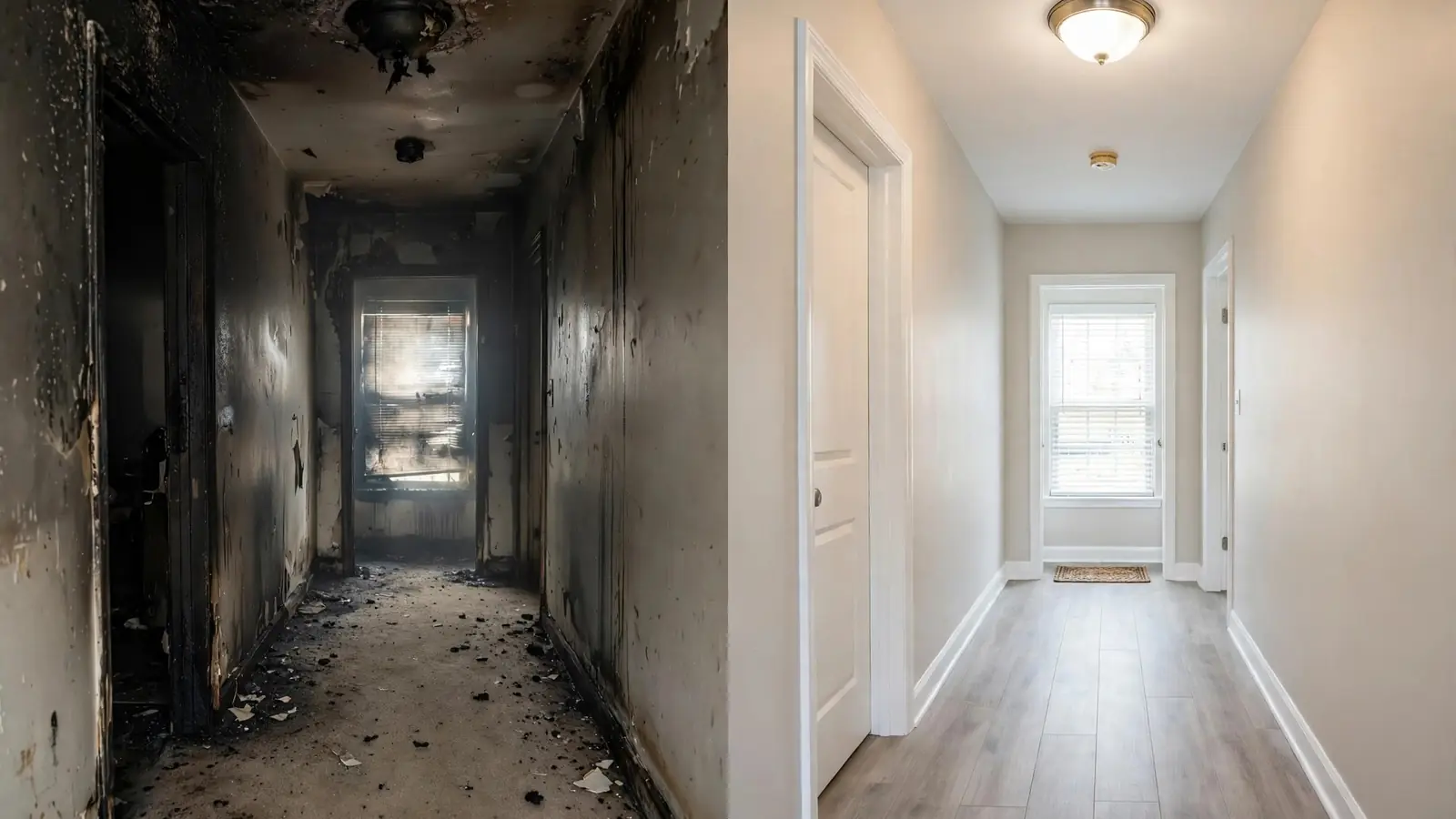
The smell left after a fire is produced by residue: carbon particles, oils and chemical compounds that settled on and into materials. The U.S. Fire Administration describes smoke odor as coming from tiny particles that cling to walls, furniture, floors and clothing [1]. Air fresheners and open windows can dull the smell briefly, but the residue keeps releasing odor until it is cleaned out or sealed in.
Warmth makes residue give off more odor. In Minneapolis that pattern follows the heating season. Radiators heat soot on their fins and on nearby walls, forced-air systems push warm air through smoky ducts, and the whole house is closed up against the cold so the smell has nowhere to go. A house that seemed fine in September can smell strongly by Thanksgiving.
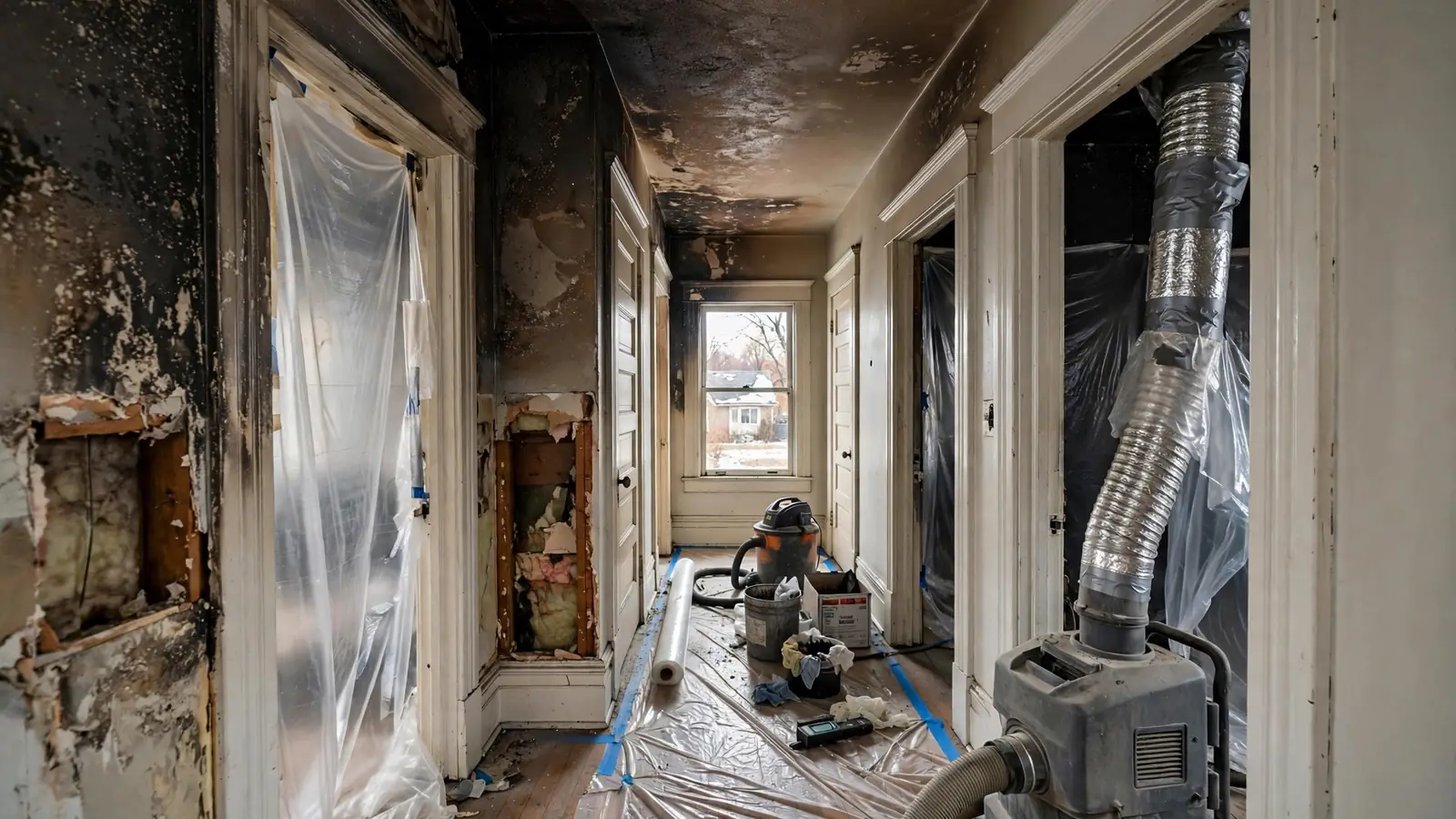
Professional restorers handle odor as the last stage of a sequence described in the IICRC S700 standard: remove what cannot be cleaned, clean what can, treat what remains, and seal porous surfaces [2]. Treating the air before cleaning is the most common reason odor comes back.
Reading the smell
What an odor pattern points to
Stronger when the heat comes on
Residue in ducts, the furnace, on radiators or in nearby plaster is being warmed. The heating system needs cleaning.
Read moreStrongest in upstairs closets
Smoke rose and soaked into stored clothing and the knee-wall spaces behind closets.
Read moreMusty as well as smoky
Firefighting water left the basement or walls damp, and mold may be starting.
Read moreRising from the basement
Stored items, the underside of the floor, or the laundry chute hold residue.
Read moreBack after painting
Paint went over residue without an odor-blocking primer.
Read moreSour, sharp smell
Protein residue from a kitchen fire, faint to see but strong to smell.
Read more
The process
How odor removal is carried out
- 1
Walk and smell every space
Every room, closet, knee-wall space, the attic, the basement and the heating system are checked and the strongest areas noted.
- 2
Take out what cannot be cleaned
Smoky insulation, carpet pad, ruined upholstery and contents too far gone are removed and documented.
- 3
Clean surfaces and belongings
Walls, ceilings, woodwork, floors, radiators and salvageable contents are cleaned with methods matched to the residue.
- 4
Clean the heating system
Ducts, the furnace and any central air coil, or radiators and their covers, are cleaned so heat stops spreading odor.
- 5
Treat the remaining odor
Methods such as thermal fogging, hydroxyl generators or, in empty spaces only, ozone break down what is left.
- 6
Seal porous materials
Framing, plaster and subfloors are primed with an odor-blocking sealer before insulation, finishes or paint go back.
- 7
Test with the heat running
The house is closed up with the heat on for a few hours, then checked room by room, since that is when lingering odor shows.
Methods
Odor treatments compared
| Method | What it does | Best use | Watch out for |
|---|---|---|---|
| Source removal and cleaning | Takes residue out | Every job | Takes the most time; nothing replaces it |
| HEPA air filtration | Captures airborne particles | During and after cleaning | Does not clean surfaces |
| Thermal fogging | Deodorizer reaches cavities like smoke did | Walls, contents, hidden areas | House must be empty during treatment |
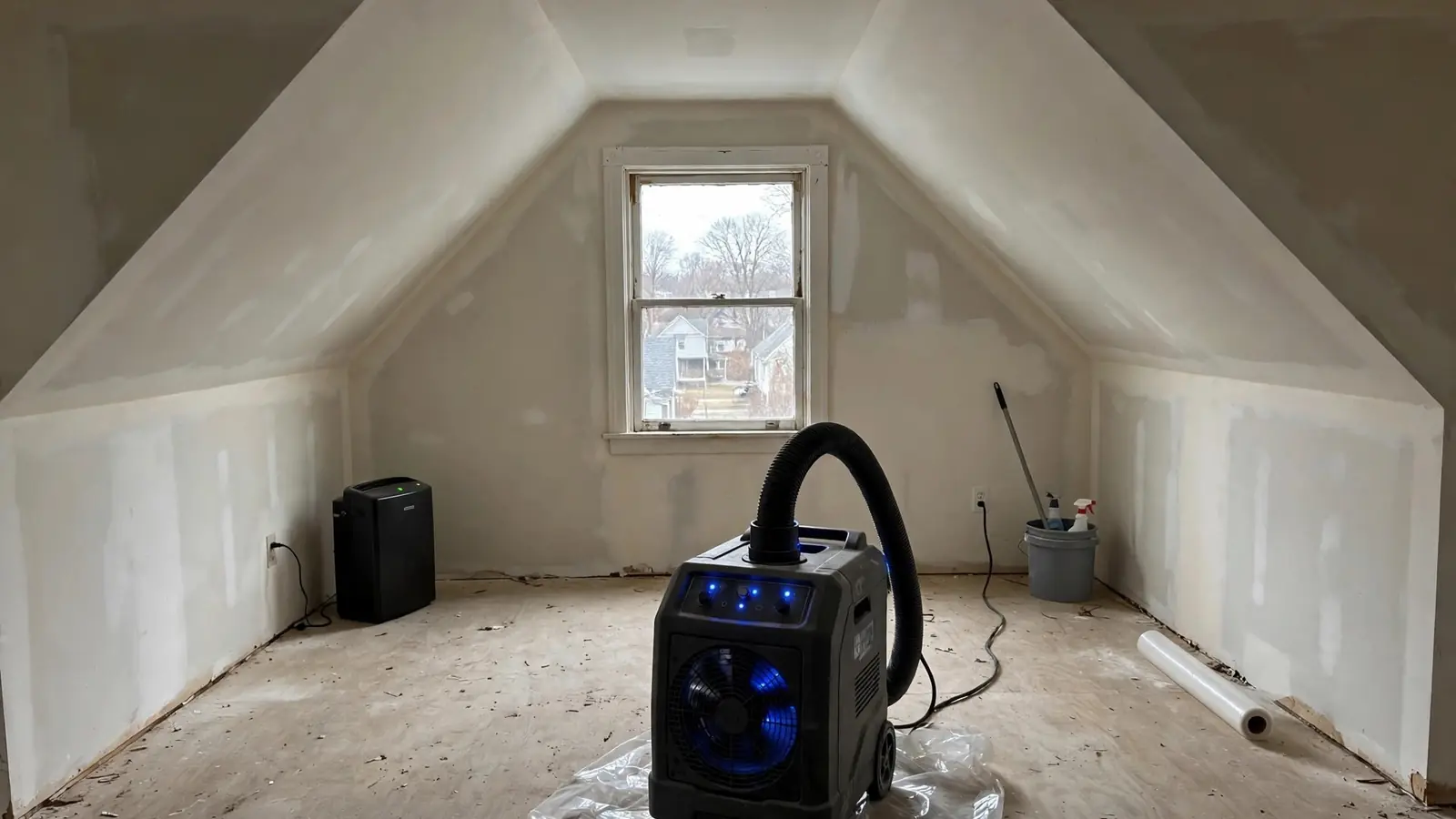
| Hydroxyl generators | Break down odor compounds gradually | Longer treatment, sometimes near occupants | Slower acting |
| Ozone | Strong oxidizer | Severe odor in sealed, empty spaces | Unsafe for people and pets; ventilate after [3] |
| Odor-blocking primer | Locks residue under a barrier | Framing, plaster, subfloor after cleaning | Not a substitute for cleaning |
The contractor chooses methods for your house and should explain why.
Do and avoid
What helps with smoke smell and what does not
- Do: bag smoky clothes and beddingMove them out of living areas for proper cleaning. Textiles are one of the biggest odor sources.
- Do: change furnace filters oftenOnce the system is cleared to run, replace filters frequently in the first weeks.
- Do: air out on mild daysOpen windows when weather allows to move air through, but keep the house warm enough to protect plumbing.
- Avoid: candles and plug-in scentsThey mix with smoke odor and make it harder to find the source.
- Avoid: running an ozone machine yourselfOzone can damage lungs and should never be used with people or pets present [3].
- Avoid: painting too soonPaint over residue lets odor bleed back through, especially when the heat is on.
Minneapolis specifics
Heating season, sealed-up houses and odor
Minneapolis houses spend half the year closed against the cold. Windows stay shut, storm windows go up and the heat runs constantly. That traps any remaining smoke odor inside and keeps warming the residue that causes it. It is why a smoke cleanup that looks finished in summer can be tested properly only once the heating season starts.
Older houses also have more places for odor to hide: plaster with hairline cracks, knee-wall storage, laundry chutes, basements full of stored belongings and attics with decades of insulation. Each needs to be checked, cleaned or sealed.
Ventilating a house in a Minnesota winter is hard. Restorers rely more on air filtration and controlled treatment than on open windows, and they keep enough heat in the house to protect pipes and radiators while they work.
Heating systems
Getting odor out of furnaces, ducts and radiators
Forced-air systems are the fastest way for odor to spread through a house. If the furnace ran during or after the fire, residue coats the blower, the heat exchanger cabinet, the central air coil if there is one, and the ducts. Sheet metal ducts can usually be cleaned. Flex duct and duct board are often replaced. Return and supply grilles are removed and washed.
Hot water and steam radiators do not move air through ducts, but they heat the residue sitting on and around them. Radiators need vacuuming between the fins and washing, and the walls behind them need cleaning and often sealing. Decorative radiator covers come off for cleaning or replacement.
Have a heating contractor inspect the system before relying on it for the winter. Smoke and water can damage controls, and a boiler or furnace that was near the fire may need servicing.
Ozone
Ozone, used carefully or not at all
Ozone breaks down many odor compounds, which is why some restorers use it. It is also harmful to breathe. The EPA warns that ozone generators sold as air cleaners can damage health [3]. When used in restoration, the space must be empty of people, pets and plants and ventilated before anyone returns.
Ozone does not remove residue. Used before cleaning, it fades the smell for a while and then the odor returns as residue keeps releasing it. Repeated ozone treatment can also degrade rubber, some plastics and fabrics. Many contractors prefer hydroxyl generators, which work more slowly but can sometimes run with people nearby.
Water and mold
Musty smells after firefighting water
Firefighting water soaks floors, walls and basements, and basements in Minneapolis can stay damp, particularly in spring and summer. The Minnesota Department of Health explains that indoor moisture problems can lead to mold growth [4], which adds a musty smell to the smoke.
Drying has to be finished before odor treatment works. The contractor measures moisture, removes materials that cannot be dried and runs dehumidifiers until readings are normal. If you smell mustiness alongside smoke, say so on the call.
Contents
Coats, blankets and belongings that hold smoke
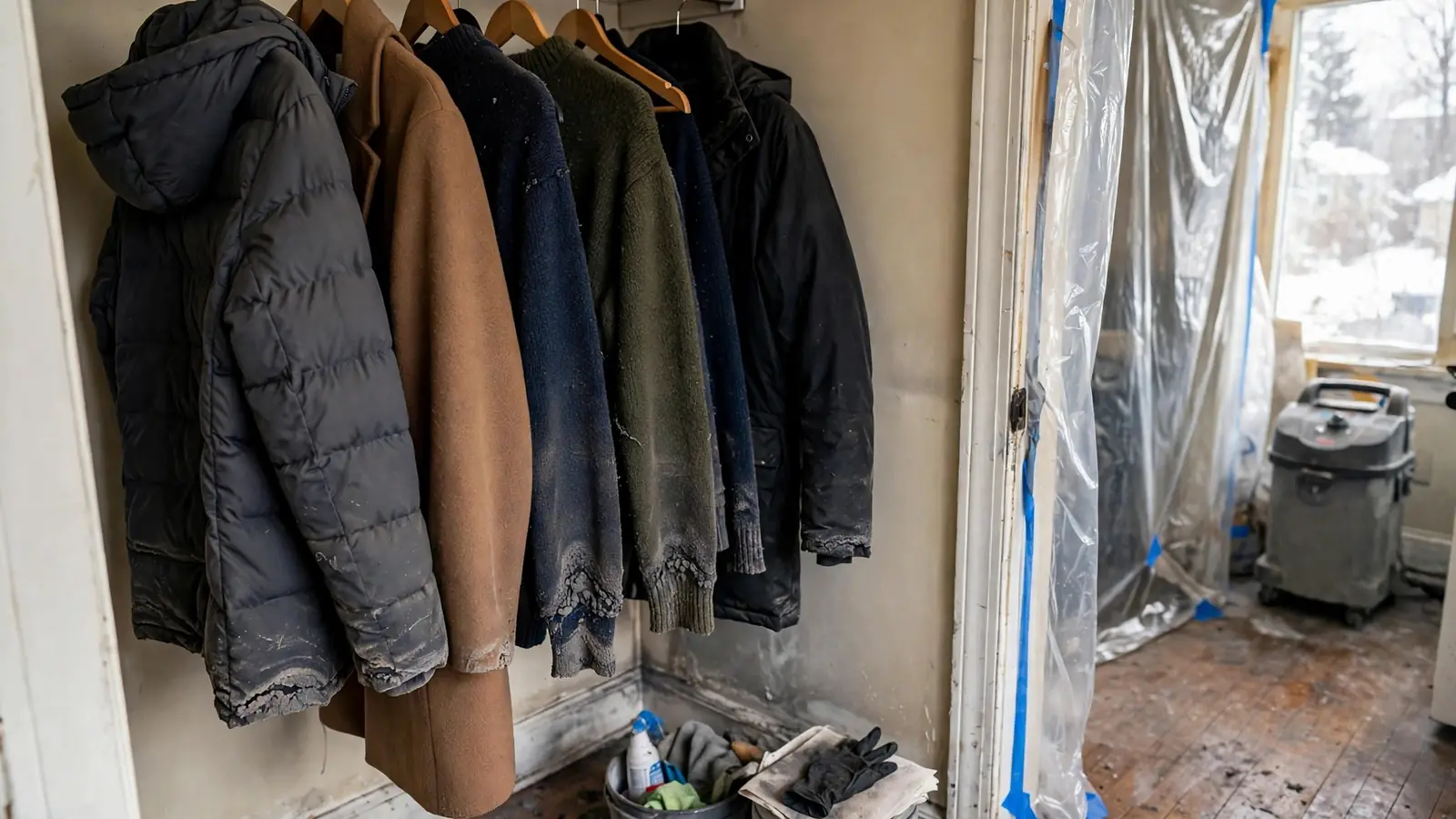
Winter coats, wool sweaters, down comforters and heavy blankets absorb smoke and hold it for a long time. Restoration cleaners use processes for smoke-damaged textiles that home machines cannot match, including deodorizing washes and treatment chambers for items that cannot be washed.
Books, papers, stuffed toys and upholstered furniture also hold odor. Some clean well; others are not worth the effort after heavy exposure. Ask for an itemized list of what is cleaned, what is replaced and why.
Sealing
When and where sealing makes sense
Once surfaces are cleaned as far as practical, a stain- and odor-blocking primer creates a barrier over any residue left in the material. Restorers commonly seal attic framing and roof boards, the inside of opened walls, subfloors before new flooring, and plaster before repainting.
Sealing does not fix residue that was never cleaned; heavy soot under a sealer can still bleed through or keep the primer from bonding. Ask the contractor which surfaces they will seal and with what product.
Claims
Odor and your Minnesota insurance claim
Odor is hard to photograph, so keep written notes: which rooms and closets smell, how strong, and whether it changes when the heat runs. Keep items set aside because of odor until the adjuster has seen them or approved disposal.
The Minnesota Department of Commerce encourages policyholders to document damage and keep records throughout a claim [5]. Ask the contractor to describe each odor treatment in writing: the method, where it was used and for how long.
Basements
Basement odor after a Minneapolis fire
Minneapolis basements collect smoke and water from above and often hold decades of stored belongings. The underside of the first floor, with exposed joists and subfloor, absorbs smoke that drifted down through gaps around pipes, ducts and the laundry chute. Stone and block foundation walls hold residue in their rough surfaces.
Basement odor work usually starts with sorting and removing stored items, then cleaning joists, subfloor and walls, then sealing where needed. If firefighting water reached the basement, the floor and walls are dried before any odor treatment. Dehumidifiers often keep running for a while after, since basements tend to stay damp.
Because the furnace or boiler usually sits in the basement, odor there spreads quickly through the house once the heat runs. Cleaning the basement before the heating season is worth prioritizing.
Attics
Attic insulation and roof boards
Attics in older Minneapolis homes may hold several generations of insulation: loose fill, batts and blown-in material layered over each other. Smoke rising through the house soaks into all of it. Insulation cannot be cleaned; it is vacuumed out and replaced once the framing above is cleaned and sealed.
Some older attic insulation, particularly loose vermiculite, may contain asbestos and should be tested before removal [6]. If your attic has granular, grey-brown loose fill, mention it on the call.
Replacing attic insulation after a fire is also a chance to improve it, which matters for ice dams and comfort in a Minnesota winter. Whether an upgrade is part of the claim is a question for your adjuster.
Fire types
Different fires, different smells
A kitchen fire that burned food leaves protein residue with a sour, sharp smell that clings to cabinets and ceilings throughout the house. A fire involving furniture, electronics or stored plastics leaves a heavy chemical odor in fabrics and walls. Wood fires smell like a campfire and leave odor in framing and masonry.
Matching cleaners and treatments to the residue matters. Protein residue needs enzyme or protein-specific cleaners; synthetic soot needs degreasing; wood smoke in framing often calls for blasting and sealing. Tell the contractor what burned if you know.
Garages
Odor from an alley garage fire
Detached garages behind Minneapolis homes can burn without the house catching fire, but smoke still drifts in through windows, doors and attic vents on the alley side. Burned fuel, tires and plastics leave a heavy, oily smell.
In these cases, the rooms facing the alley, the attic near the rear eaves and any open windows are the priority. The rest of the house may need only light cleaning. A walk-through with the contractor shows how far the odor actually went.
Timeline
How long until the house smells normal
A small kitchen fire with light residue may clear within days of thorough cleaning. A house where heavy smoke reached every floor, the attic and the heating system may need weeks of removal, cleaning, sealing and treatment.
The test that matters is the cold-weather test: the house closed up, the heat running, and no smell in any room or closet. If odor returns, the contractor should go back to the source rather than repeating the same treatment.
Plaster
Plaster walls, cracks and trapped odor
Plaster is denser than drywall and holds surface residue well, but older plaster has hairline cracks, nail pops and gaps where it meets trim. Smoke works into those openings and into the wood lath behind. After cleaning, a shellac-based or specialty sealer over the plaster helps block any odor still coming from the cracks.
If walls are opened for wiring or plumbing repairs, the lath and cavity can be cleaned and sealed at the same time. Patching with matching plaster or a veneer plaster system keeps the wall consistent with the rest of the house.
Living at home
Staying home during odor treatment in winter
Treatments like thermal fogging and ozone require an empty house, and many families plan a few nights away for those phases. Hydroxyl treatment can sometimes run with people in another part of the home. In winter, the house must stay heated during treatment to protect pipes, so plan with the contractor how heat will be managed while you are away.
Check your policy's additional living expenses coverage before booking somewhere to stay, and keep every receipt.
Woodwork
Odor in oak trim, floors and built-ins
Varnished woodwork holds most residue on its surface, which is good news: careful cleaning removes much of the odor. Raw wood is different. The unfinished backs of trim, the inside of built-in cabinets and the underside of floorboards absorb smoke and keep releasing it.
Where trim is removed during repairs, its back can be cleaned and sealed before it goes back up. Cabinet interiors are cleaned and may be sealed or lined. Floors that smell after cleaning may need a screen and fresh coat of finish, or full refinishing, which seals residue below the new surface.
Records
Keeping track of what was treated
A simple room-by-room list with dates helps everyone: which rooms were cleaned, which were treated, which were sealed, and how they smelled afterward. If odor returns in one room, the list shows what was done there and what might have been missed. Share it with your adjuster as the work progresses.
Note the weather too. A room that smells fine in October may behave differently in January, once the heat has been running for weeks and the house has been closed up.
FAQ
Smoke odor questions from Minneapolis homeowners
Why does my house smell like smoke again now that the heat is on?
Heat releases odor from residue left on radiators, in ducts, in plaster and in insulation. The heating system and nearby surfaces need cleaning, and smoky insulation needs replacing.
Can I use an ozone machine to get rid of the smell?
Not yourself. The EPA warns ozone can harm health. Restorers use it only in empty spaces after cleaning, with ventilation before anyone returns, and it never replaces cleaning.
Do knee-wall closets need to be cleaned?
Yes. They trap smoke against the roof boards and hold stored items that absorb odor. Every knee-wall space should be opened, emptied, cleaned and sealed.
Can winter coats lose the smoke smell?
Often, with professional textile cleaning made for smoke damage. Items that were close to the fire may not fully recover.
How do I test whether the odor is really gone?
Close up the house on a cold day with the heat running for a few hours, then check every room, closet and the basement. Any remaining smell points to residue in that area.
Does my call go to a contractor?
Yes. Your call connects to an independent local restoration contractor who talks with you on that call. This site does not perform work or keep your details.
Is old attic insulation a concern when removing smoky insulation?
It can be. Some older loose-fill insulation, especially vermiculite, may contain asbestos. It should be tested before removal, and the contractor will plan around the result.
Should the basement be cleaned even if the fire was upstairs?
Usually yes. Smoke drifts down through chutes and gaps, and the furnace or boiler there spreads any remaining odor once the heat runs.
Will refinishing the floors help with smoke smell?
Often. If cleaning leaves a faint odor in hardwood, a fresh coat of finish or full refinishing seals residue below the new surface. Floors that are badly charred are replaced instead.
Sources and citations
- [1]U.S. Fire Administration: After a fire
- [2]IICRC: S700 Standard for Professional Fire and Smoke Damage Restoration
- [3]U.S. EPA: Ozone generators that are sold as air cleaners
- [4]Minnesota Department of Health: Mold and moisture in homes
- [5]Minnesota Department of Commerce: Disaster Information Center
- [6]U.S. EPA: Protect your family from exposures to asbestos