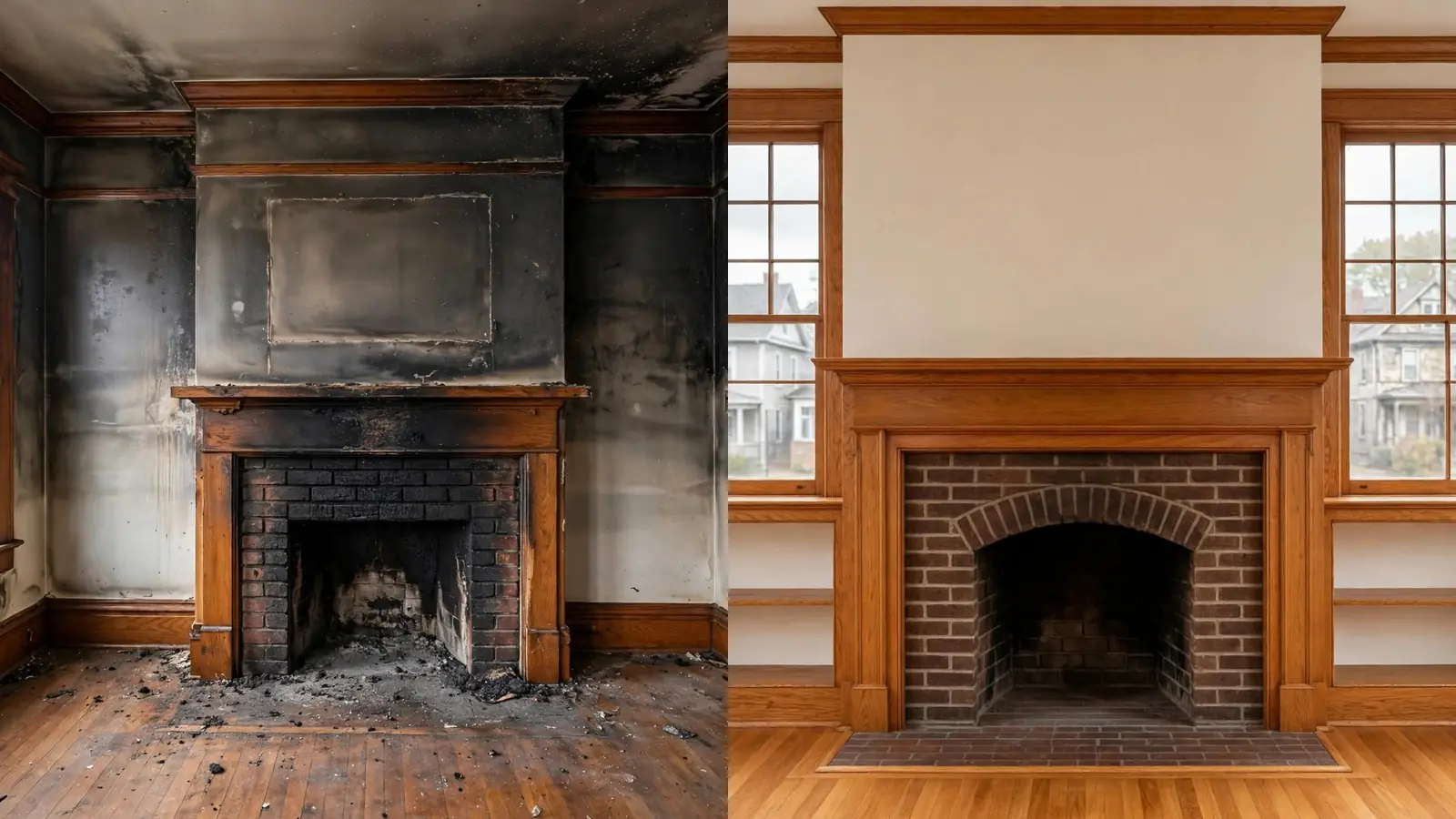

Key facts: Soot Removal in Kenwood
- Soot can carry substances that make people sick, so the U.S. Fire Administration advises understanding the risk before cleaning [1].
- The IICRC S700 standard sets out how dry and wet methods are chosen for fire residue [2].
- Paint applied before 1978 may contain lead, so soot cleanup on old finishes needs lead-safe methods [4].
Soot on plaster detail
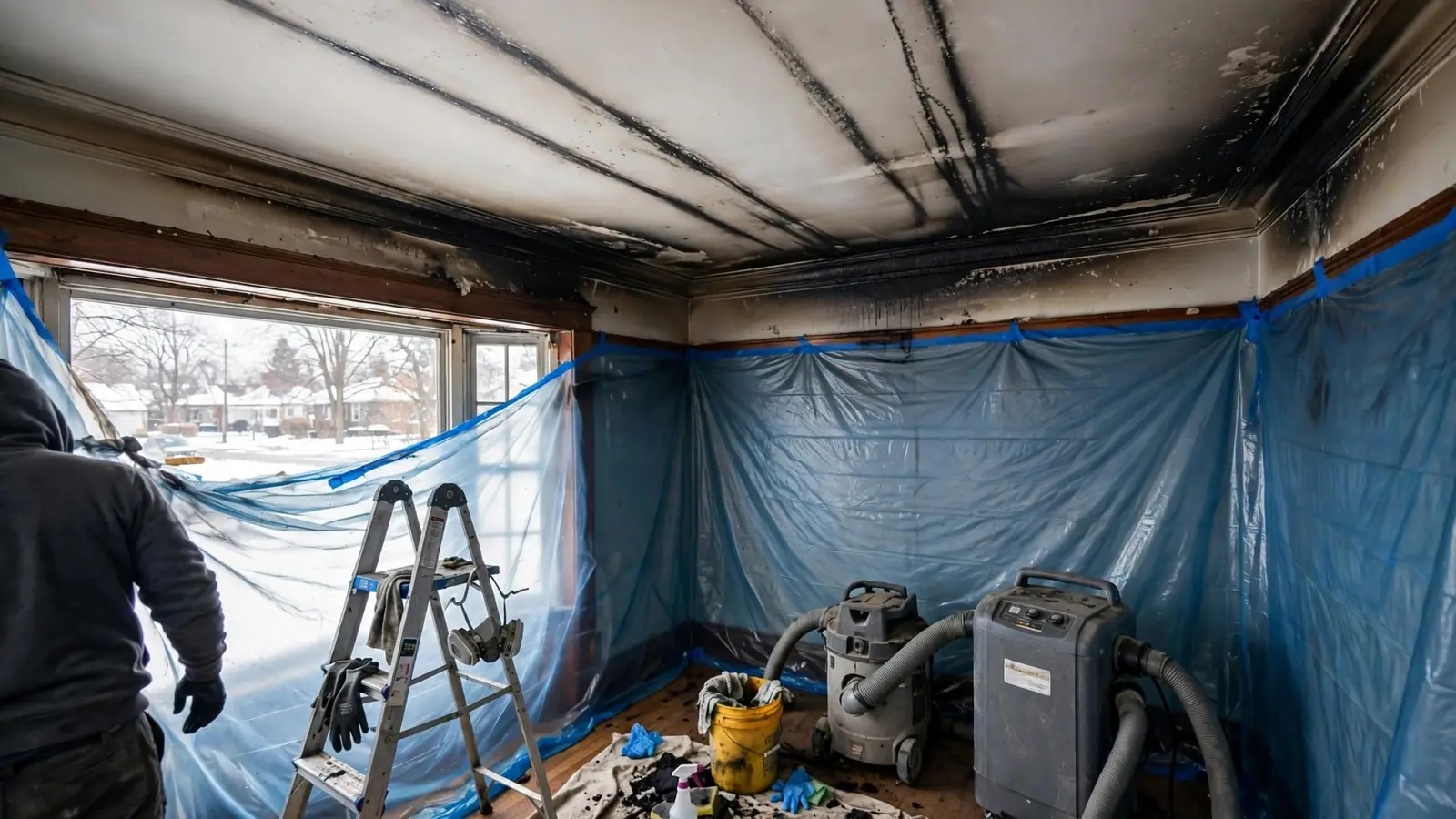
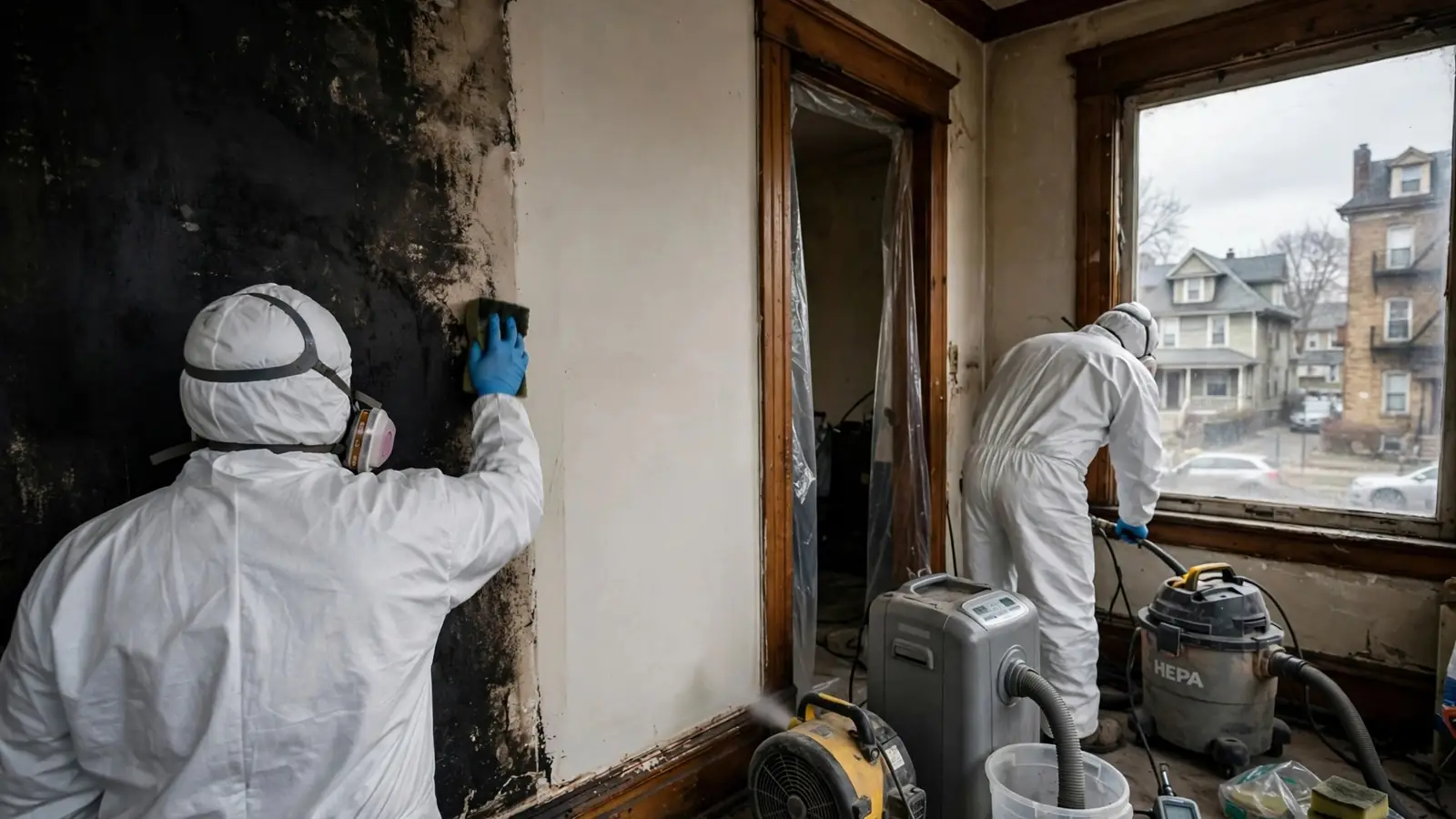
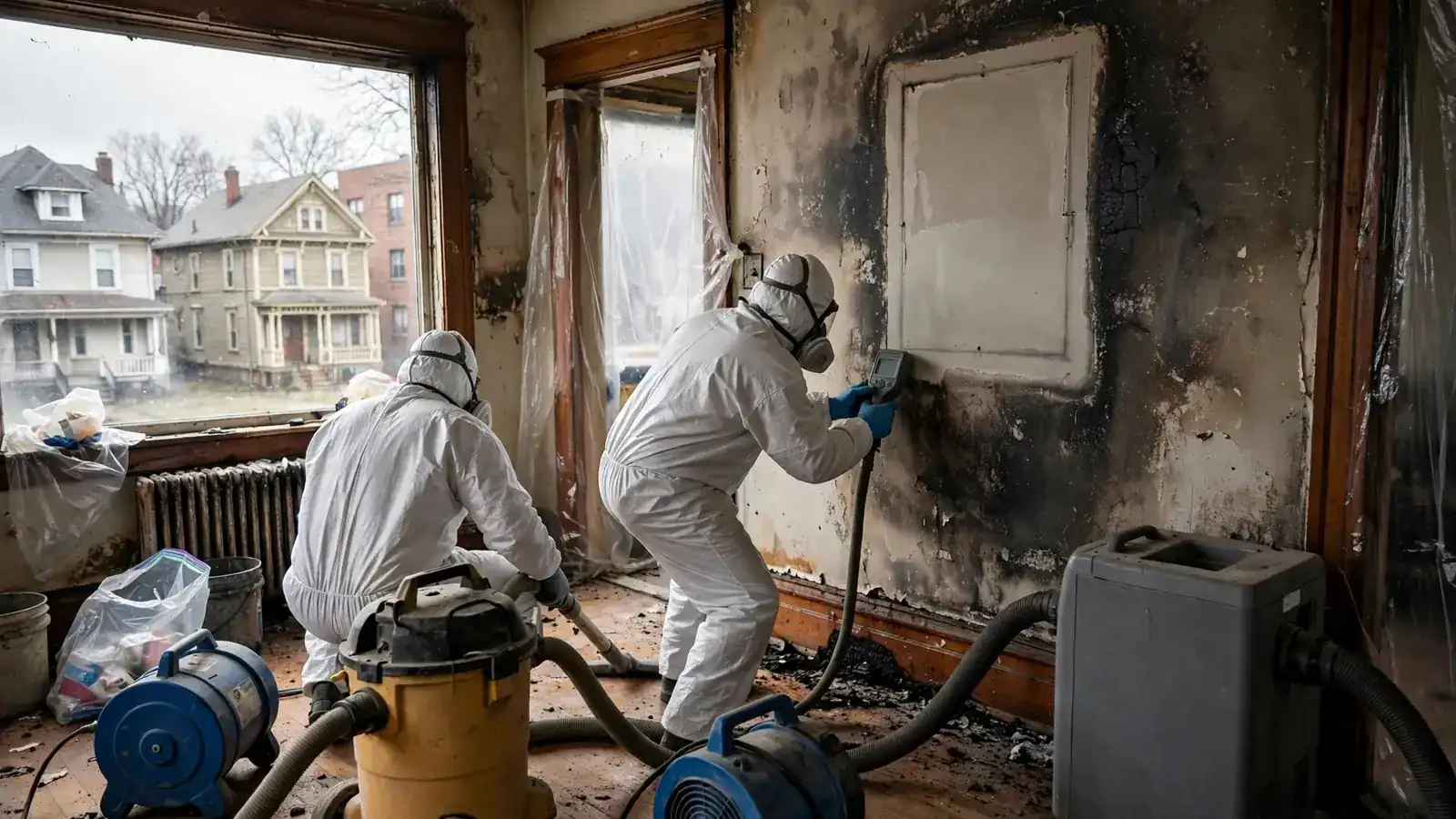
Cornices, ceiling medallions and moldings collect soot in every recess. Soft brushes and HEPA vacuums remove the loose layer, followed by gentle washing with minimal water. Stains that remain may be sealed and repainted, or repaired by plaster specialists.
Dark lines across ceilings often follow lath or joists behind the plaster.
Carved woodwork and staircases
Carved balusters, newel posts, paneling and mantels are cleaned by hand with finish-safe products. Soot in carved detail needs soft brushes. Some wood may need a fresh finish coat.
Stripping original finishes is avoided wherever cleaning can restore them.
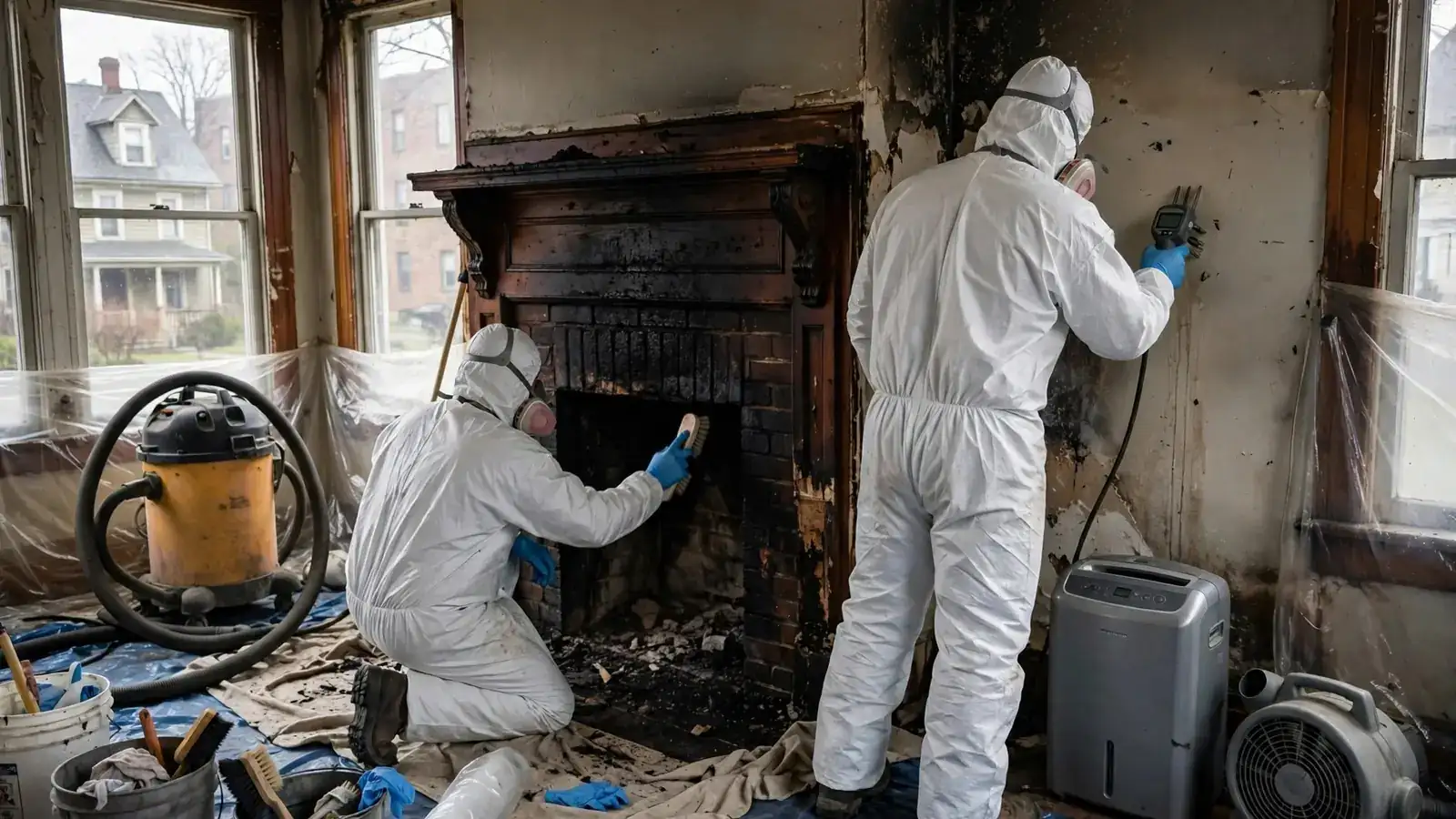
Soot removal in a historic Kenwood home
The usual sequence.
- 1
Test residue and finishes
Wipe tests and finish checks guide the method.
- 2
Remove loose soot with brushes and HEPA vacuums
Top down, gently.
- 3
Hand-clean woodwork and plaster detail
Finish-safe products, minimal water.
- 4
Seal or refinish where stains remain
Primers or fresh finish coats.
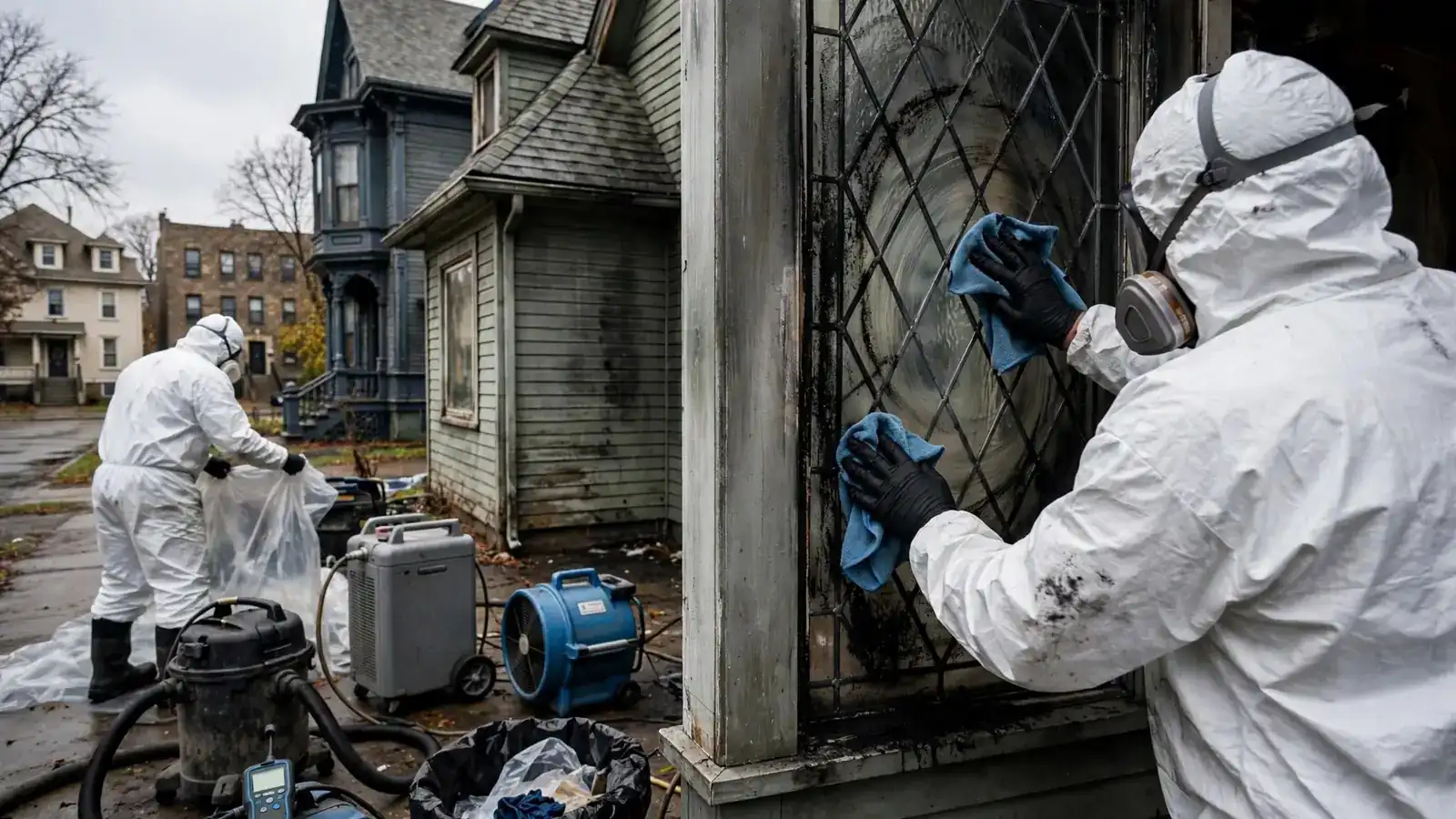
Leaded glass and windows
Soot settles along the lead cames in leaded windows and on stained glass. Gentle hand cleaning, sometimes by a glass specialist, removes it without loosening the glass. Wood sashes are cleaned like other trim.
Storm windows over leaded glass need cleaning on both sides.

Fireplaces and mantels
Many Kenwood houses have several fireplaces with tile, marble or carved wood surrounds. Tile and marble clean with suitable products; porous brick and stone need masonry cleaners tested first.
Marble is sensitive to acidic cleaners and needs gentle products.
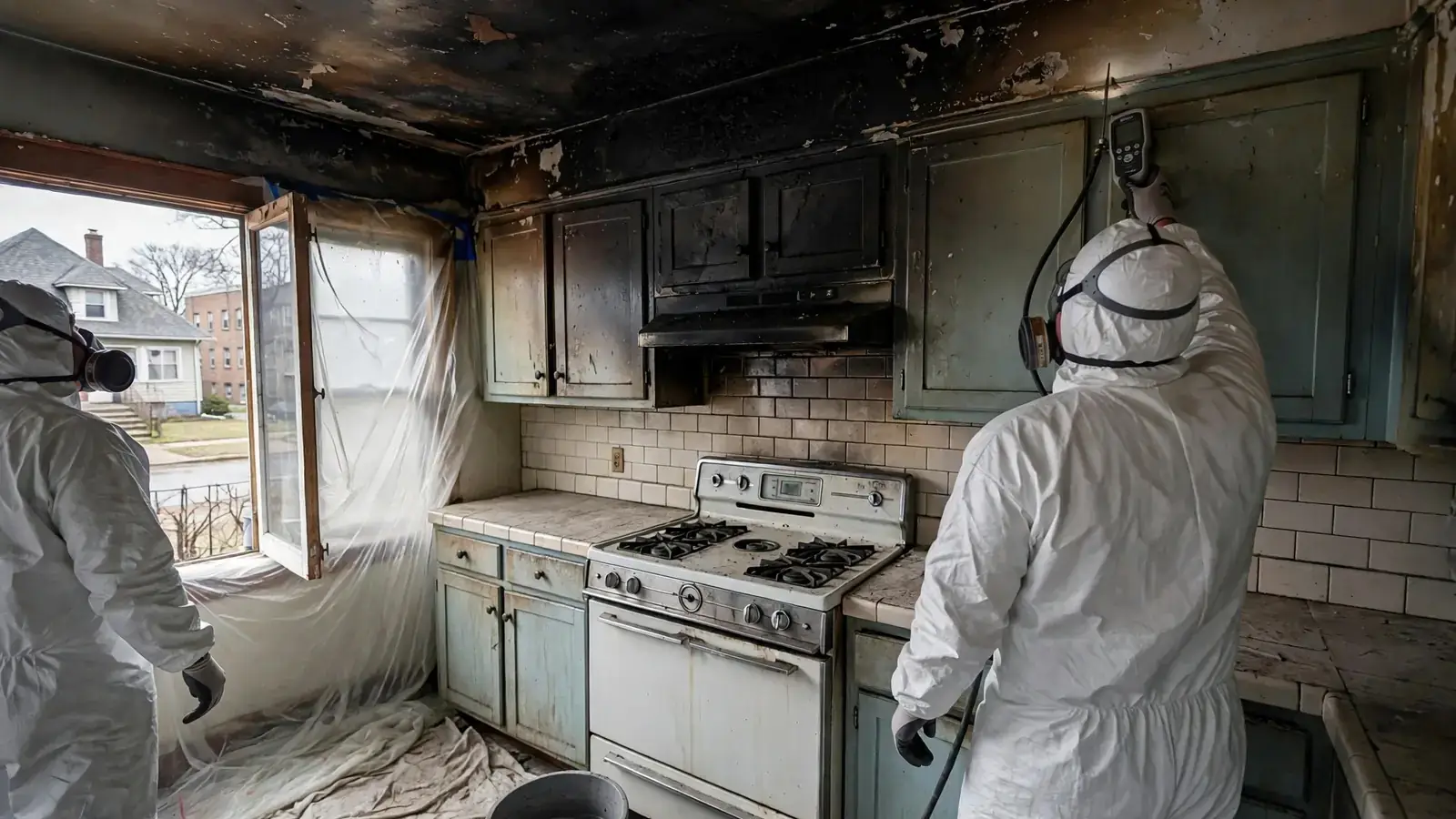
Kenwood surfaces and soot treatment
Typical historic materials.
- Plaster moldingsBrushes, HEPA vacuums, gentle washing.
- Marble surroundsNon-acidic cleaners only.
- Parquet floorsCleaning and recoating.
- Brass hardware and fixturesRemoved and cleaned separately.

Attic and upper-floor soot
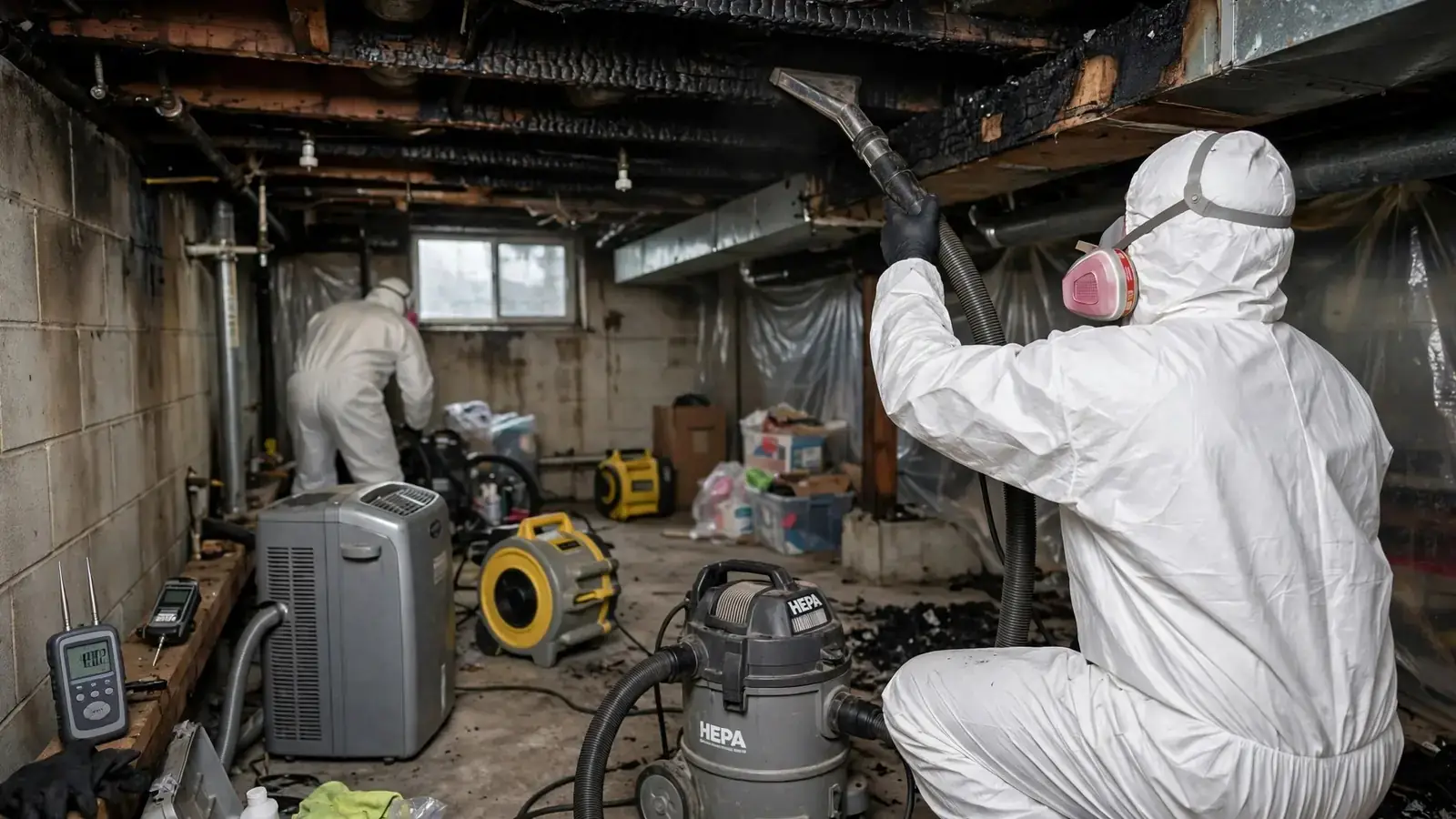
Soot rises to upper floors and the attic. Insulation holding soot is usually replaced, and framing is cleaned or sealed.
Upper-floor rooms are cleaned before the lower floors.

When the Kenwood soot is gone
Odor that remains is handled by smoke odor removal. The Minnesota Department of Commerce Disaster Information Center explains claims guidance [5].
Photos before cleaning document the condition of historic features.
Chandeliers, sconces and light fixtures
Crystal chandeliers, brass sconces and glass fixtures collect soot on every surface. Fixtures are taken down where possible and cleaned on a table, piece by piece. Crystals are washed individually; metal finishes are cleaned gently to avoid pitting from acidic soot.
Fixtures that cannot be removed are cleaned in place with ladders or scaffolding.
Radiators and heating grilles
Many older houses have cast-iron radiators and decorative grilles. Soot settles between radiator fins and inside grilles and will bake on when the heat comes on. Radiators are cleaned with brushes and vacuums made for their fins; grilles are removed and washed.
This should be done before the heat is used for the season.
Hardwood, parquet and stone floors
Soot settles on floors and is ground in by foot traffic. Floors are vacuumed with HEPA equipment and cleaned with products safe for their finish. Parquet and hardwood may need recoating; marble and stone floors need non-acidic cleaners.
Rugs are lifted and sent to specialists rather than cleaned in place.
Closets, built-ins and pantries
Built-in cabinets, closets and butler's pantries collect a thin film of soot inside, even with doors closed. Each one is emptied and its shelves cleaned. China, silver and glassware are washed by hand; silver may need polishing as soot tarnishes it.
Linen and clothing go out for professional cleaning.
Exterior soot on historic facades
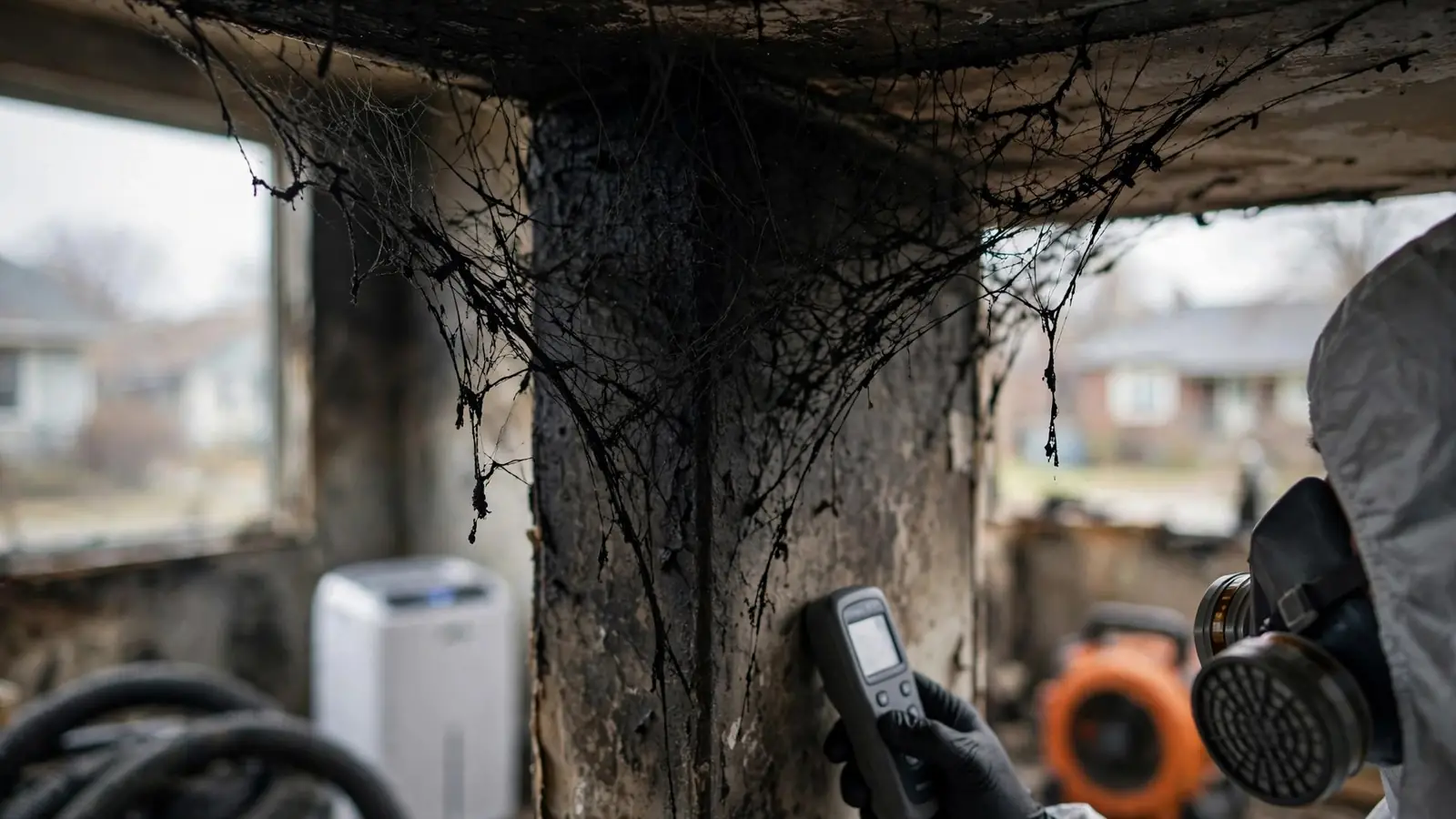
Soot from windows streaks the brick, stone or stucco above them. Exterior masonry is cleaned gently with low-pressure rinsing so historic surfaces are not worn away. Painted trim and eaves are washed and repainted where staining remains.
Books, papers and the library
Libraries in large homes hold many books, and soot settles on their tops and spines. Books are cleaned with soft brushes and dry sponges, page edges first, by document specialists when they are rare or valuable. Shelves are emptied and cleaned before the books return.
Papers and photographs in desks and files are checked and cleaned by hand.
Keeping cleaned rooms clean
Plastic barriers, sealed doors and air scrubbers keep loosened soot from drifting into rooms that are already finished. In a large house, work often moves floor by floor, and finished floors are closed off until the whole job is done.
FAQ
Soot Removal in Kenwood: questions
Can carved woodwork be cleaned without stripping?
Usually. Hand cleaning with finish-safe products and soft brushes restores most of it.
Is marble damaged by cleaning?
Acidic cleaners can etch it. Gentle, non-acidic products are used.
Who cleans leaded glass?
Experienced crews or glass specialists clean it by hand.