Key facts: Kenwood
- Kenwood was established in the late 1880s after a rail line along Cedar Lake improved access [1].
- The neighborhood is known for historic mansions along the parkways overlooking the lakes and the downtown skyline [1].
- In multi-story houses, smoke rises through stairways and fills upper floors and attics first [2].
- Older homes may contain lead paint and asbestos-containing materials that should be tested before demolition [3][4].
Coverage
Kenwood and ZIP 55405
This page is for homes in Kenwood and nearby neighborhoods west of downtown. Calls from this ZIP code are inside this service's coverage:
- ZIP 55405Kenwood, Lowry Hill, Cedar-Isles-Dean, Bryn Mawr and nearby blocks between downtown and the lakes.
- Unsure of your boundary?Mention your address on the call and the contractor will confirm coverage.
The neighborhood
Kenwood's houses and setting
Kenwood lies between Cedar Lake Parkway to the west and Lake of the Isles to the east [1]. It was established in the late 1880s, after a rail line along Cedar Lake made it easier to reach [1], and it is known for historic mansions along the parkways that overlook the lakes and the downtown skyline [1]. It is a small, affluent neighborhood of about two-thirds of a square mile [1].
Houses range from very large early-twentieth-century homes in Shingle, Prairie, Tudor, Colonial Revival and other period styles to later and contemporary homes. Many have three full floors plus an attic and basement, several staircases, multiple fireplaces, paneled rooms, decorative plaster, leaded glass and original hardware.
Lots are generous by city standards, with mature trees, and many homes have detached carriage houses or garages. Interiors often hold art, antiques, rugs and libraries that need specialist care after a fire. Ask about these details on the call.
Patterns
What Kenwood fire restorations often involve
Smoke through several floors
Grand staircases and back stairs carry smoke to every level and into the attic.
Read moreDecorative plaster and paneling
Cornices, ceiling medallions and paneled rooms need slow, careful soot removal.
Read moreArt, antiques and libraries
Valuable contents need inventory, protection and specialist conservators.
Read moreSteep, complex roofs
Multiple gables and dormers make temporary protection more demanding.
Read more
Smoke paths
How smoke spreads in a large historic house
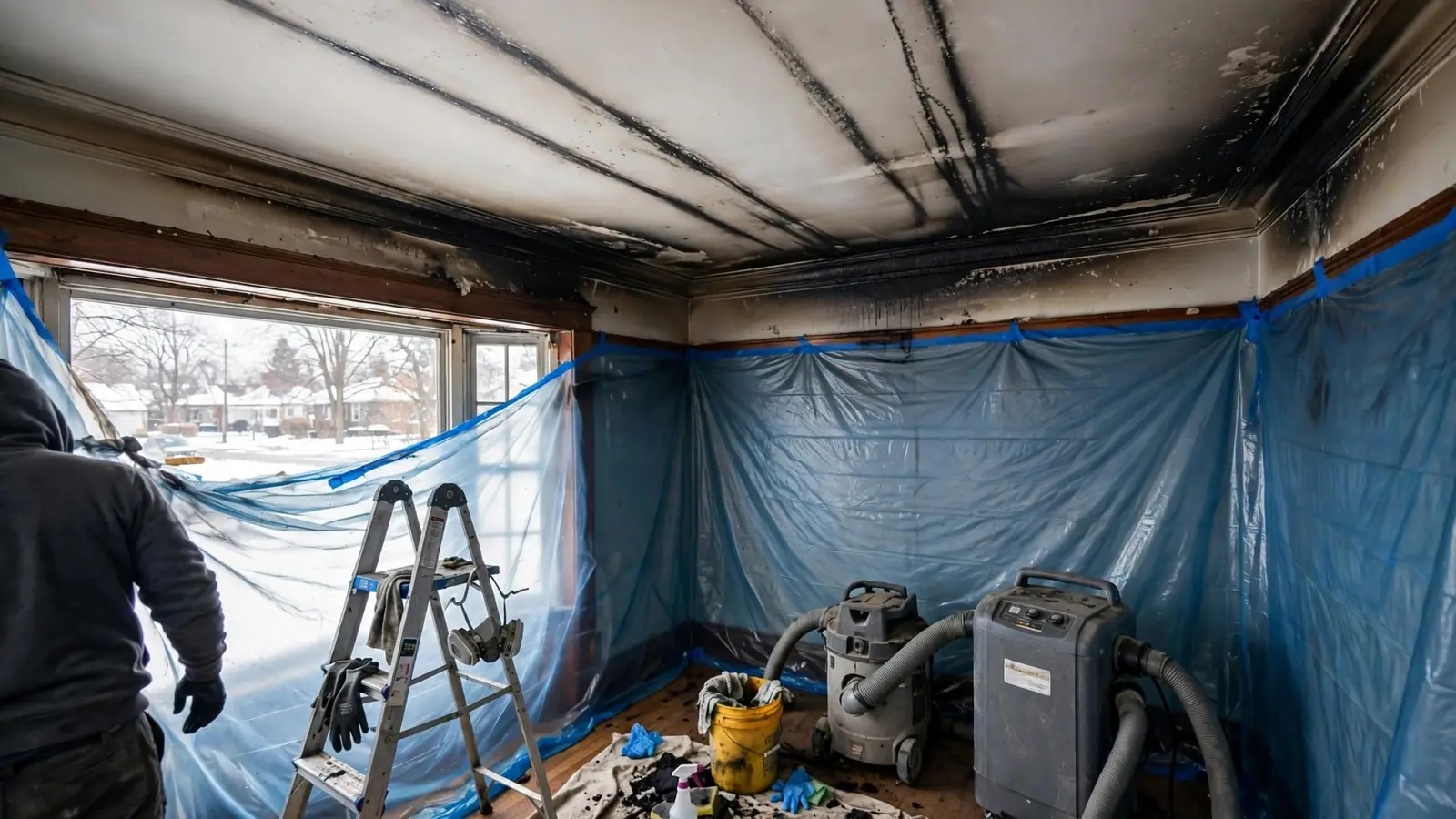
Large houses have more routes for smoke. A main staircase rises through two or three floors; a back stair connects the kitchen to upper floors; laundry chutes, dumbwaiters and open pipe chases join floors in hidden ways. Hot smoke climbs all of them, so upper floors and the attic often collect more residue than the room where the fire started.
The U.S. Fire Administration notes that smoke odor comes from tiny particles that cling to surfaces throughout a house [2]. In a large home with many rooms, closets and storage spaces, finding all of them takes a methodical inspection, floor by floor, including every closet, the attic and the basement.
Fine interiors
Paneling, plaster detail and leaded glass
Kenwood interiors often include oak or mahogany paneling, coffered or beamed ceilings, plaster cornices and medallions, carved stair rails, built-in cabinets and leaded or stained glass. These finishes are irreplaceable in practice and need conservation-minded cleaning.
Soot is removed dry from carvings and moldings with soft brushes and HEPA vacuums. Finishes are cleaned with products that will not strip old varnish or shellac. Darkened finishes may be refinished by specialists. Leaded glass goes to someone experienced with it. Nothing original should be removed before it is photographed and the options are discussed.
- Dry removal from carvings
- Finish-safe cleaning
- Specialist refinishing
- Leaded glass to experts
Contents
Art, antiques, rugs and libraries
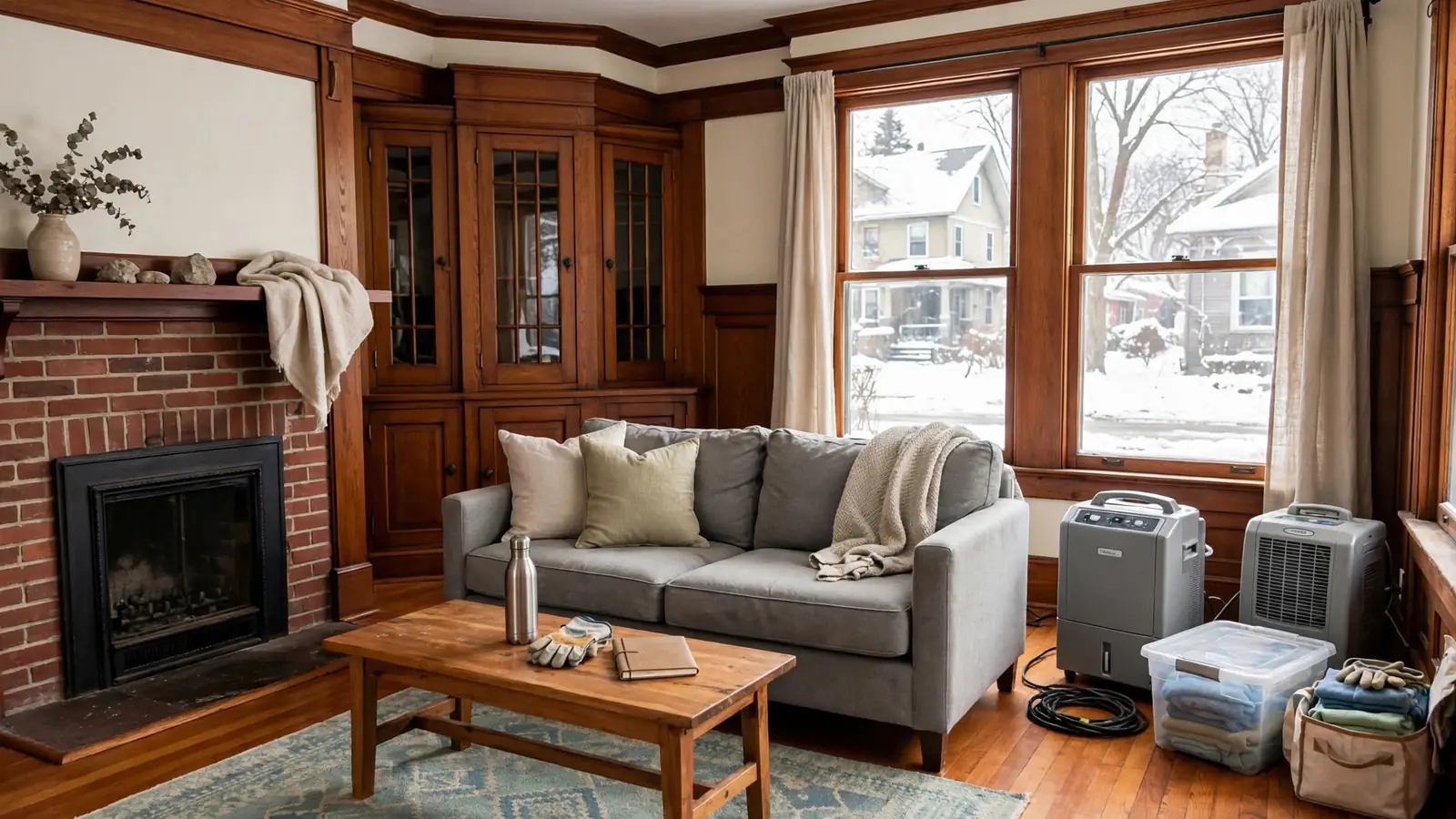
Valuable contents need their own plan. Paintings, works on paper, sculpture, antique furniture, rugs, textiles and rare books each respond differently to smoke and water. Conservators and specialist cleaners handle them. A pack-out with a detailed inventory, photos and handling notes protects them while the house is restored.
Do not try to clean art or antiques yourself; soot smears easily into delicate surfaces, and some cleaners damage old finishes. Keep valuable items where they are, protected from further damage, until a specialist can assess them. Tell your insurer about high-value items early; some may be scheduled separately on your policy.
Water
Water through several floors
Water used on an upper-floor fire passes through every floor below, soaking plaster ceilings, hardwood floors and paneling on its way to the basement. Plaster ceilings holding water can come down in heavy sections, and paneling can swell or delaminate.
Moisture mapping on every floor guides drying. Ceilings holding water are opened in a controlled way. Paneling is dried slowly to avoid cracking. The EPA advises drying within 24 to 48 hours where possible to prevent mold [5]; in a large house that takes a lot of equipment and careful monitoring.
Roofs
Steep, complex roofs and temporary protection
Large historic houses often have steep roofs with many gables, dormers, valleys and chimneys, sometimes with slate or tile. If the fire opened the roof, covering it safely needs roof anchors, scaffolding or lifts. Tarps must be fastened against wind and supported against snow, often over plywood.
Mature trees around Kenwood houses can drop limbs on temporary covers. Ask about trimming branches over the damaged area. Slate and tile roofs need roofers familiar with those materials for permanent repairs.
Hazardous materials
Lead, asbestos and older building systems
Houses of Kenwood's age may have lead paint on original woodwork and plaster [3], and asbestos in materials such as boiler and pipe insulation, some plaster finishes and old floor tile [4]. Testing before demolition protects your family and the crew. Boiler rooms in older large houses are a common place to find old insulation.
These findings do not stop a restoration, but they add steps and specialists. A responsible contractor plans for them from the start.
Heating
Boilers, radiators and mixed systems
Many large Kenwood houses still use boilers with radiators, sometimes alongside newer forced-air systems or zones added for cooling. Radiators collect soot and release odor when warm; ducts carry residue to every room. Each system needs inspection and cleaning after a fire.
In winter, keeping a large house heated while systems are inspected matters. Temporary heat may be needed to protect the plumbing and heating pipes.
Permits
Permits and heritage review
Kenwood is inside the City of Minneapolis, so permits for structural, electrical, plumbing and mechanical repairs go through the city's licenses, permits and inspections services [6]. Minneapolis also has local heritage preservation designations; if your home is designated or in a historic district, exterior changes may need review. Ask the city before replacing windows, roofing materials or exterior features.
Residential building contractors in Minnesota are licensed by the Department of Labor and Industry [7].
Insurance
Documenting a large home and its contents
Larger homes produce larger claims with many rooms and items. Photograph every room on every floor, closets, the attic, the basement and the carriage house or garage before cleanup. Document original features and valuable contents in detail.
The Minnesota Department of Commerce encourages policyholders to review their policy, document damage and keep records [8]. Ask your insurer early about scheduled valuables and how matching original materials will be handled.
Fireplaces
Multiple fireplaces and chimneys
Large Kenwood houses often have several fireplaces with tile, marble or carved wood surrounds. Each chimney should be inspected before reuse after any fire, since heat can crack flue liners and smoke can coat the smoke chamber. Surrounds are cleaned with methods suited to their material: masonry methods for brick, gentle cleaners for marble and glazed tile, finish-safe products for wood.
A fireplace not involved in the fire can still have soot drawn into it through an open damper. Inspect them all.
Gas logs or inserts added to old fireplaces should be checked by a qualified technician before they are lit again.
Carriage houses
Carriage houses and detached garages
Some Kenwood properties have carriage houses or large detached garages, sometimes with living space above. A fire there is treated as a separate building with its own restoration plan, while the main house is checked for smoke drifting through windows and vents.
Living space above a garage gets the same smoke, soot and odor work as the main house. Rebuilding needs city permits, and exterior changes may need heritage review if the property is designated.
Pack-outs
Pack-outs for large households
In a large house with widespread smoke, a full pack-out is often the practical choice. Contents are inventoried room by room with photos, packed according to their needs, and moved to a secure facility where they are cleaned and stored. Fragile and valuable items get handling notes and may go directly to specialists.
Ask for the inventory in a format you can share with your insurer, and keep your own list of the items that matter most. When contents come back, check them against the inventory.
Living elsewhere
Living elsewhere during a long restoration
Restoring a large historic house can take a while, especially if specialist trades and heritage review are involved. Families often rent nearby to stay close to schools and work. Check your policy's additional living expenses coverage, ask about limits early and keep receipts.
Ask the contractor for a phase-by-phase timeline and how specialist work, such as plaster, woodwork and glass, fits into it.
Timeline
Sequencing work in a large house
Work typically moves from the top down and from wet to dry: secure the roof and openings, extract water floor by floor, remove ruined materials, clean soot from the attic downward, clean heating systems, treat odor and seal, then carry out permitted repairs and specialist restoration of woodwork, plaster and glass.
Protecting finished surfaces on lower floors while upper floors are worked on is important. Floor protection, stair covers and plastic barriers keep dust and debris off cleaned rooms.
Floors
Parquet, inlaid and wide-plank floors
Historic Kenwood houses often have parquet, inlaid borders or wide-plank floors in oak, maple or other species. Soot on the finish usually lifts with dry methods and gentle cleaning, though foot traffic in the days after a fire grinds it in. Firefighting water can lift parquet tiles and cup wide planks.
Drying slowly and evenly helps old floors recover. Once dry, they can usually be refinished by a floor specialist who knows historic patterns. Damaged sections of parquet or inlay can be rebuilt to match.
Protect floors during the restoration with breathable coverings, since crews will be moving through the house for weeks.
Windows
Large windows, transoms and storm windows
Big historic houses have many windows, often tall double-hungs with storm windows, transoms over doors, bay windows and leaded or stained glass in stair halls. Heat and firefighting can break several. Cold glass attracts soot, and soot settles between storms and sashes.
Broken openings are boarded promptly, especially in winter. Intact storm windows can be taken down and stored. Original sashes and decorative glass are usually worth restoring, and specialists can reglaze or repair them.
Electrical
Wiring in large historic houses
Large older homes may contain early wiring in walls, ceilings and attics alongside many generations of updates. Heat from a fire can damage wiring in the vertical cavities that carry smoke between floors. Keep power off to affected areas until an electrician inspects, and plan rewiring while walls and ceilings are open.
Replace smoke alarms exposed to the fire, and make sure carbon monoxide alarms are near all sleeping areas as Minnesota law requires.
Basements
Basements, boiler rooms and storage
Basements in large Kenwood homes may hold boiler rooms, wine storage, laundry, workshops and finished living space. Water from firefighting reaches them last but often in quantity. Pumping, drying and sorting stored items come first.
Old boiler and pipe insulation should be tested before it is disturbed. The boiler and any forced-air equipment are inspected before use, and temporary heat protects the house in winter.
Kitchens
Service kitchens and back stairs
Older large houses were often built with a kitchen, pantry and back stair at the rear, sometimes with a butler's pantry between kitchen and dining room. Many have been remodeled into large open kitchens. A kitchen fire sends smoke up the back stair as well as through the main floor, reaching upper bedrooms and the attic by a second route.
Protein residue from burned food is light in color but strong in smell and coats cabinets, pantry shelving and ceilings well beyond the stove. Cleaning uses products made for protein residue, and cabinet interiors and ceilings are often sealed afterward. Cooking fires are the leading cause of home fires nationally [9].
Exterior
Shingle, stucco and brick exteriors
Kenwood homes are clad in wood shingles, clapboard, stucco, brick or stone. Heat and smoke from a fire that vents through windows stain the walls above. Wood shingles that are scorched are replaced to match; stucco and masonry are cleaned with methods suited to their age and texture. Old paint on wood trim may contain lead, so scraping follows lead-safe practices.
If exterior features need replacing on a designated property, ask the city about review before ordering materials.
Records
Keeping a large claim organized
A large house with many rooms, specialist trades and valuable contents produces a lot of paperwork. Keep one folder, physical or digital, for photos by floor and room, the contractor's scope, moisture logs, pack-out inventories, specialist reports and every receipt.
Ask for updates in writing as phases are completed. A clear record makes supplements and questions from the adjuster easier to handle.
If you work with a public adjuster, an attorney or a family member who manages paperwork, share the folder with them so everyone works from the same records and photos.
Security
Securing a large empty house
A large, visibly damaged house standing empty can attract attention. Keep openings boarded, valuables removed or secured, and one controlled access point. Let trusted neighbors know how to reach you, and visit regularly to check covers after storms and snow.
Consider asking the contractor about temporary lighting and a simple check schedule, so someone looks at the house regularly while it stands empty. Record each visit in your claim log, along with anything that changed since the last check, such as a loose panel or new water staining.
Attics
Third floors, ballrooms and attic storage
Some Kenwood houses have a full third floor with former servants' rooms, a ballroom or playroom, and attic storage beyond. Smoke rising through two floors of stairway reaches these spaces with force. Old trunks, furniture and papers stored there absorb it.
Third-floor rooms are cleaned like the rest of the house, while attic storage is emptied, sorted and its contents cleaned or discarded. Old insulation should be tested before removal, and roof framing is cleaned and sealed.
Lakes
Parkway traffic and lakeside access
Homes along the parkways see heavy foot, bike and car traffic, especially on summer weekends. Equipment, containers and lifts need careful placement and sometimes city permission. Alleys and rear driveways are often better routes. Mention access details on the call so the contractor can plan around them.
Snow emergencies in winter also limit where trucks can park, so plan ahead with the contractor.
FAQ
Kenwood fire restoration questions
Can decorative plaster be cleaned after a fire?
Usually, with patience. Soot is removed dry from cornices and medallions with soft brushes and HEPA vacuums, then finishes are cleaned gently. Damaged sections can be repaired by plaster specialists.
How should art and antiques be handled?
Leave them in place and protected until specialists assess them. A pack-out with an itemized inventory and handling notes protects them, and conservators clean them.
Why is there more smoke on the third floor?
Smoke rises through the main and back staircases and other openings into upper floors and the attic. Large houses need floor-by-floor inspection.
Do exterior repairs need heritage review?
If your home is locally designated or in a historic district, exterior changes may need review by the city. Interior cleaning usually does not.
Can a steep slate roof be covered after a fire?
Yes, by crews with roof anchors, scaffolding or lifts. Permanent repairs need roofers experienced with slate. Never try to cover a steep, damaged roof yourself.
Will a contractor take my call from Kenwood?
Calls from ZIP 55405 are inside this service's coverage. You speak with an independent local restoration contractor on that same call.
Can parquet floors survive firefighting water?
Often, if dried slowly and evenly. Lifted tiles can be reset and damaged sections rebuilt to match. Once dry, a floor specialist can refinish the surface.
Should every fireplace be inspected?
Yes. Heat can crack flue liners, and smoke can be drawn into any fireplace with an open damper. Each chimney should be checked before it is used again.
What should I mention when I call from Kenwood?
How many floors the house has, where the fire started, whether there is valuable art or antiques, whether the roof was opened, whether the home is historically designated and whether the heat works.
Does the third floor need cleaning if the fire was on the main floor?
Usually. Smoke rises through the stairways to the top of the house and into attic storage. Third-floor rooms and stored items often need as much attention as the floors below.
Can we stay in a carriage house while the main house is restored?
Possibly, if smoke did not reach it and its utilities are safe. The contractor can check it. Keep receipts if you stay elsewhere, and check your additional living expenses coverage.
Sources and citations
- [1]Wikipedia: Kenwood, Minneapolis
- [2]U.S. Fire Administration: After a fire
- [3]U.S. EPA: Protect your family from sources of lead
- [4]U.S. EPA: Protect your family from exposures to asbestos
- [5]U.S. EPA: A brief guide to mold, moisture and your home
- [6]City of Minneapolis: Licenses, permits and inspections
- [7]Minnesota Department of Labor and Industry
- [8]Minnesota Department of Commerce: Disaster Information Center
- [9]NFPA: Home structure fires