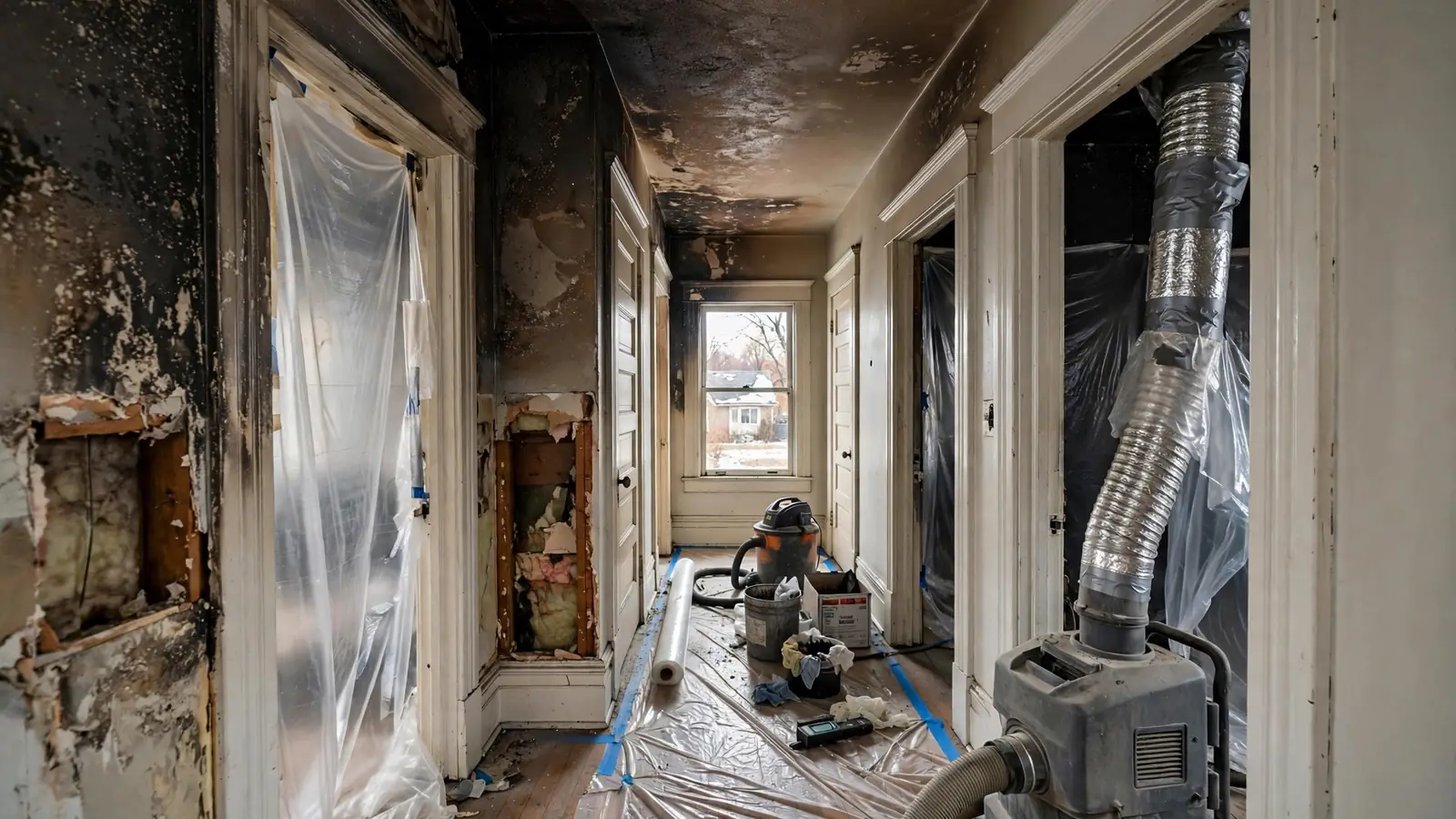
Key facts: Is it safe to stay after a fire
- Do not re-enter until the fire department says it is safe; fire can weaken roofs and floors [1].
- The U.S. Fire Administration cautions that the soot and dirty water a fire leaves behind may hold substances harmful to health [1].
- Minnesota law requires carbon monoxide alarms near sleeping rooms, which matters when temporary heaters are used [2].
- Indoor moisture problems can lead to mold, so wet areas should be dried before anyone lives in them [3].
Short answer
When staying is reasonable and when it is not
Stay only if the fire department has released the house, an electrician and a qualified gas or heating professional have cleared the utilities and heating, the house can be kept warm safely, smoke and water did not reach the part of the house you would use, and no one in the household is especially sensitive to smoke particles. If any of that is uncertain, staying elsewhere for the first days is safer.
Many families return to part of the house once the damaged area is sealed off and the heating system is cleaned.
Checklist
What decides whether you can stay
| Factor | Reassuring | A reason to leave |
|---|---|---|
| Structure | Released by the fire department; no sagging | Bulging plaster, soft floors, open roof |
| Heat | Heating system inspected and running | No heat, or only unsafe heat sources |
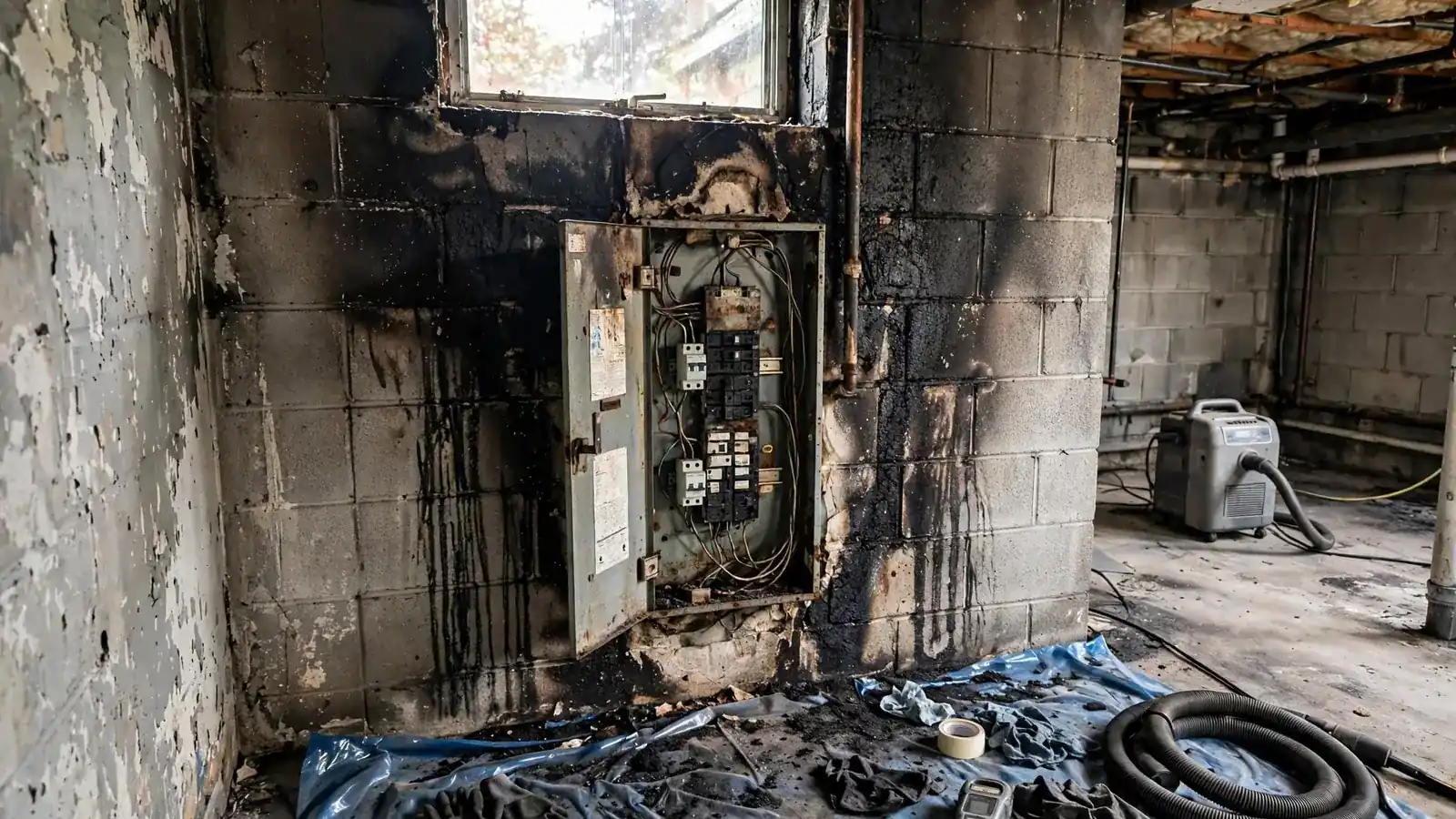
| Electricity and gas | Checked by professionals | Scorched outlets, gas smell, damaged panel |
| Air | No soot or strong smell where you sleep | Grey film, smoky furnace air |
| Water | Living areas and basement dry | Wet floors, standing water, musty smell |
| Household | Healthy adults | Infants, older adults, asthma, pregnancy |
Quick checks
Checks to make before deciding
- Ask the fire departmentThey decide whether the building can be entered and may mark unsafe areas.
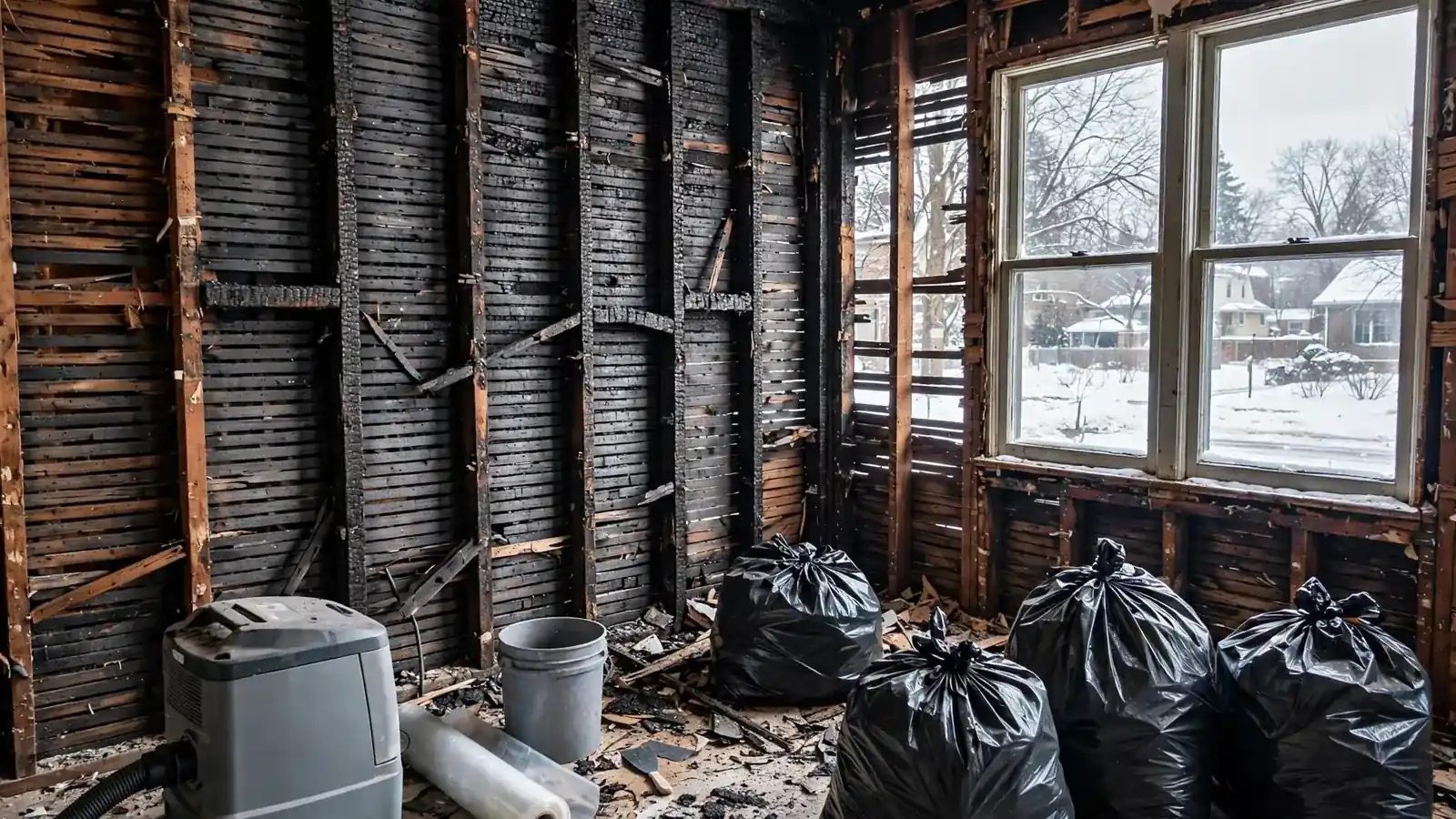
- Look at the ceilingsPlaster that bulges or cracks may be holding water and can fall.
- Confirm the heatIs the furnace or boiler running and inspected? If not, how will the house be kept warm?
- Smell the sleeping roomsStrong smoke odor where you would sleep means residue is there.
- Check the basementStanding water near the panel or furnace is a hazard.
Heat
Heat is a safety issue in Minnesota
In winter, a house without working heat is not safe to live in, and it risks frozen pipes. If the furnace or boiler was near the fire or exposed to water, a heating professional must inspect it before it runs. Until then, temporary heat may keep the house above freezing, but living in a house heated by temporary heaters calls for care.
Fuel-burning heaters can produce carbon monoxide. Minnesota requires carbon monoxide alarms near sleeping rooms [2], and alarms damaged in the fire should be replaced before anyone sleeps there. Never use a gas oven, grill or generator indoors for heat.
Air
Smoke particles and sensitive family members
Soot and smoke residue are made of fine particles and chemical compounds that settle on surfaces and get stirred up as people move around. The U.S. Fire Administration notes that soot and dirty water can contain substances that make people sick [1]. Infants, children, older adults, pregnant women and anyone with asthma or heart or lung conditions are more vulnerable.
If smoke spread through the house, and especially if the furnace carried it through the ducts, staying elsewhere until cleaning is complete is the safer choice for them.
Water
Wet basements and mold
Water from firefighting usually ends up in the basement, where the furnace, panel and laundry are. A wet basement is an electrical hazard until checked, and damp materials can grow mold. The Minnesota Department of Health advises dealing with indoor moisture promptly to prevent mold [3]. Let drying equipment run, and avoid living in damp areas.
Partial occupancy
If you stay in part of the house
- 1
Get clearances
Fire department release, electrical and heating checks for the area you will use.
- 2
Seal off the work area
Plastic barriers and air filtration so air flows from clean to dirty.
- 3
Control the heating
Keep smoky ducts closed off or use safe temporary heat in the clean area.
- 4
Install working alarms
Smoke and carbon monoxide alarms near where people sleep.
- 5
Expect to move out for some phases
Demolition, odor treatment and heavy cleaning may require leaving.
On the call
What to tell the contractor
- Who lives in the house, including children, older relatives and anyone with breathing problems
- Whether the heat works and what kind of system you have
- Whether power and gas are on and checked
- Which rooms you hope to use
- Whether the basement took water
Pets
Pets after a house fire
Pets that were inside during a fire can suffer smoke inhalation that is not obvious at first, so a veterinary check is wise. Keep them away from damaged areas, debris, soot and wet basements during restoration.
FAQ
Staying home after a fire: questions
Can we sleep at home the night of the fire?
Usually not. Most homes are not released for occupancy that night, utilities and heat are often off, and smoke is still heavy. Stay with family or friends, or ask the Red Cross for help.
Is it safe to use space heaters in a fire-damaged house?
Only with care: electric heaters on safe circuits, away from debris, with working smoke and carbon monoxide alarms. Never use gas ovens, grills or generators indoors for heat.
The fire was small. Can we stay?
Possibly, if smoke did not spread, utilities and heat are checked, and the damaged area is sealed off. In small houses smoke usually spreads widely, so many families still leave until cleaning is done.
Is smoke residue dangerous for kids?
Children and people with asthma are more sensitive to smoke particles. If smoke spread through the house, staying elsewhere until it is cleaned is safer.
How long until we can move back?
It varies with the damage. Small contained fires may need days of cleaning; larger fires need drying, demolition and rebuilding. The contractor can estimate after inspecting.
Who can I ask whether the house is safe?
Call to speak with an independent local restoration contractor on that same call. The fire department and licensed professionals make the formal safety calls.