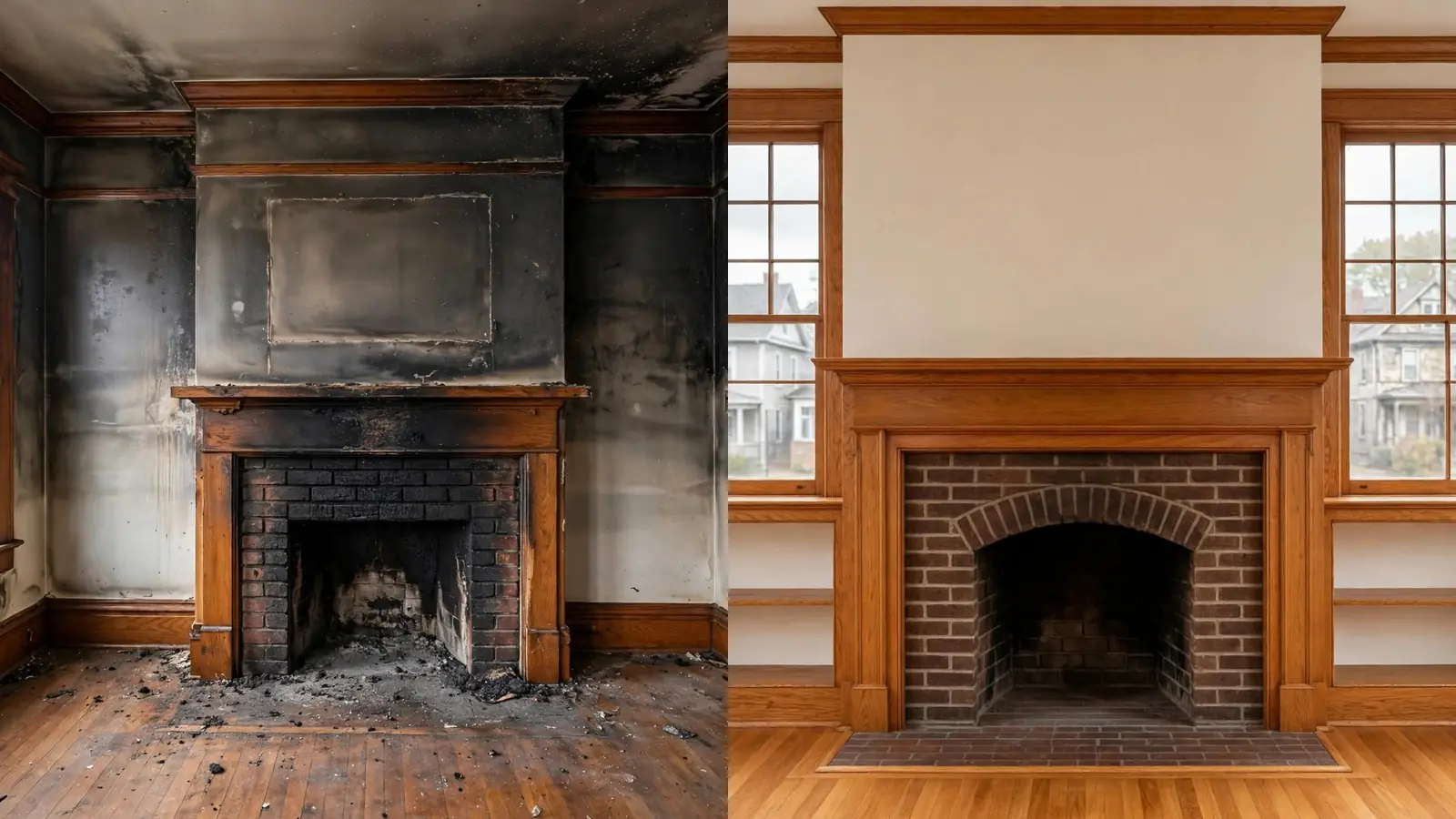
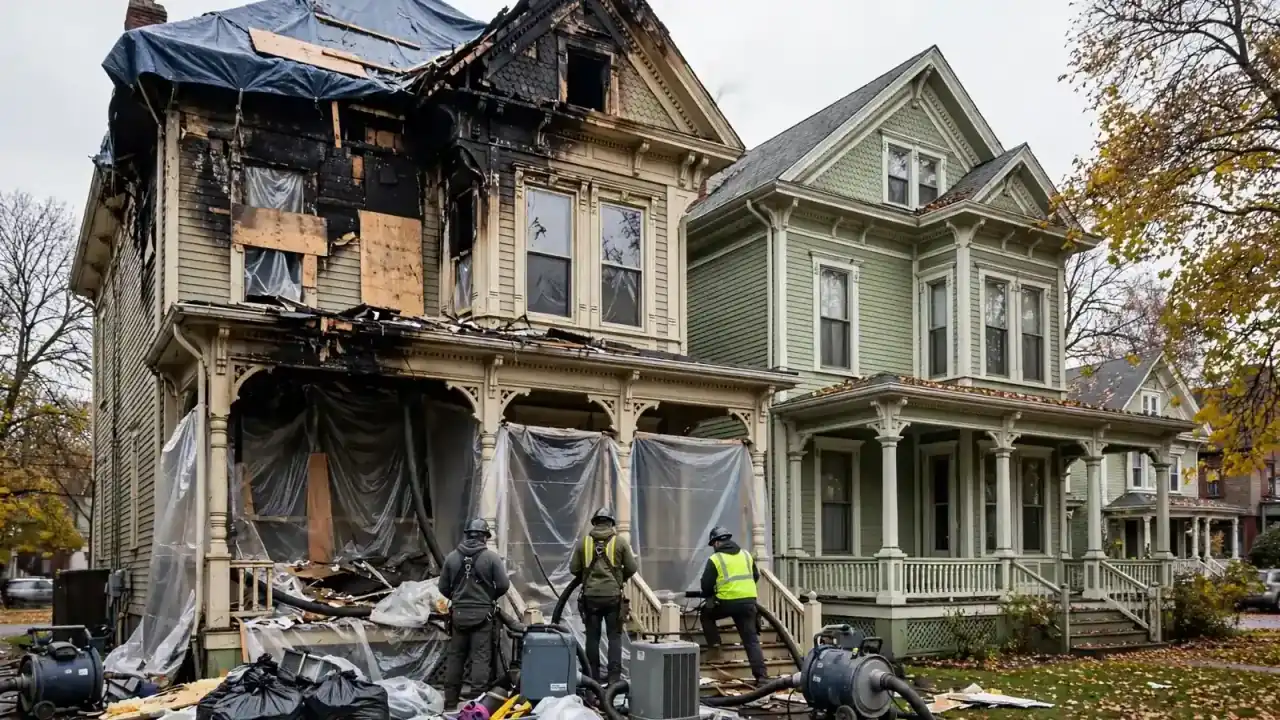
Key facts: Soot Removal in Powderhorn
- Powderhorn's housing is a mix of detached houses, duplexes and three-floor brick walk-ups built mostly from about 1905 to 1920 [6].
- The IICRC S700 standard covers how soot is assessed and removed in fire restoration [2].
- The EPA advises testing older insulation and pipe wrap for asbestos before disturbing it [3].
Where soot builds up in Powderhorn houses
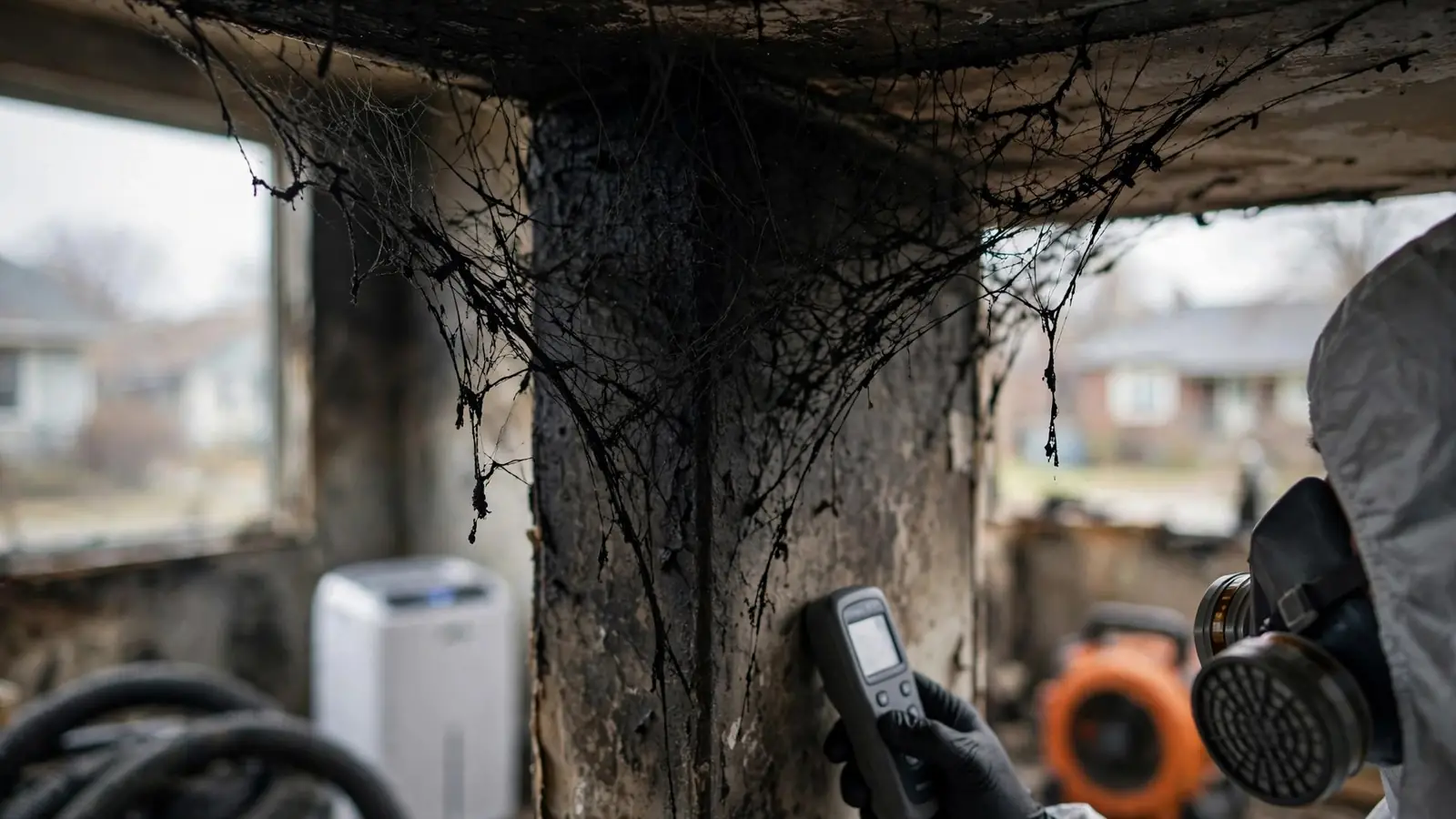
Hot smoke rises, so the attic and second floor of a Powderhorn house usually carry the heaviest soot. It settles on ceilings, the tops of walls, the stairway and the rafters in the attic. Cold exterior walls and windows also collect soot, leaving dark shadows.
Soot reaches the basement through the stairway and ducts, and coats the joists and walls if a fire started there.
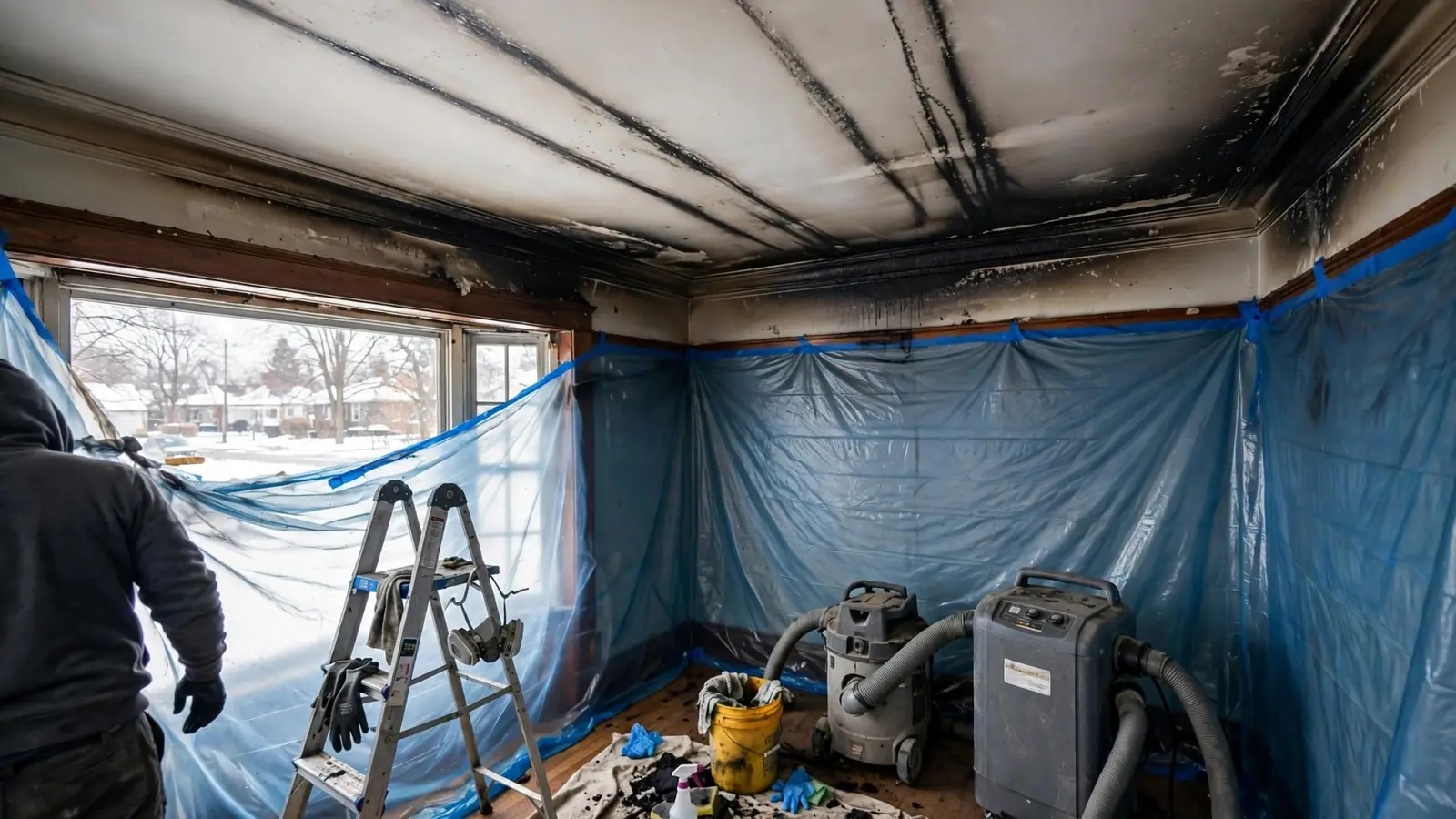
Soot on Powderhorn attic rafters and roof boards
Many Powderhorn attics have rooms or storage under the roof. Soot coats rafters, roof boards and old insulation. Insulation is removed after asbestos testing [3], and wood is cleaned by blasting or scrubbing, then sealed.
If firefighters opened the roof, temporary covers must stay secure against snow and wind while the attic is cleaned.
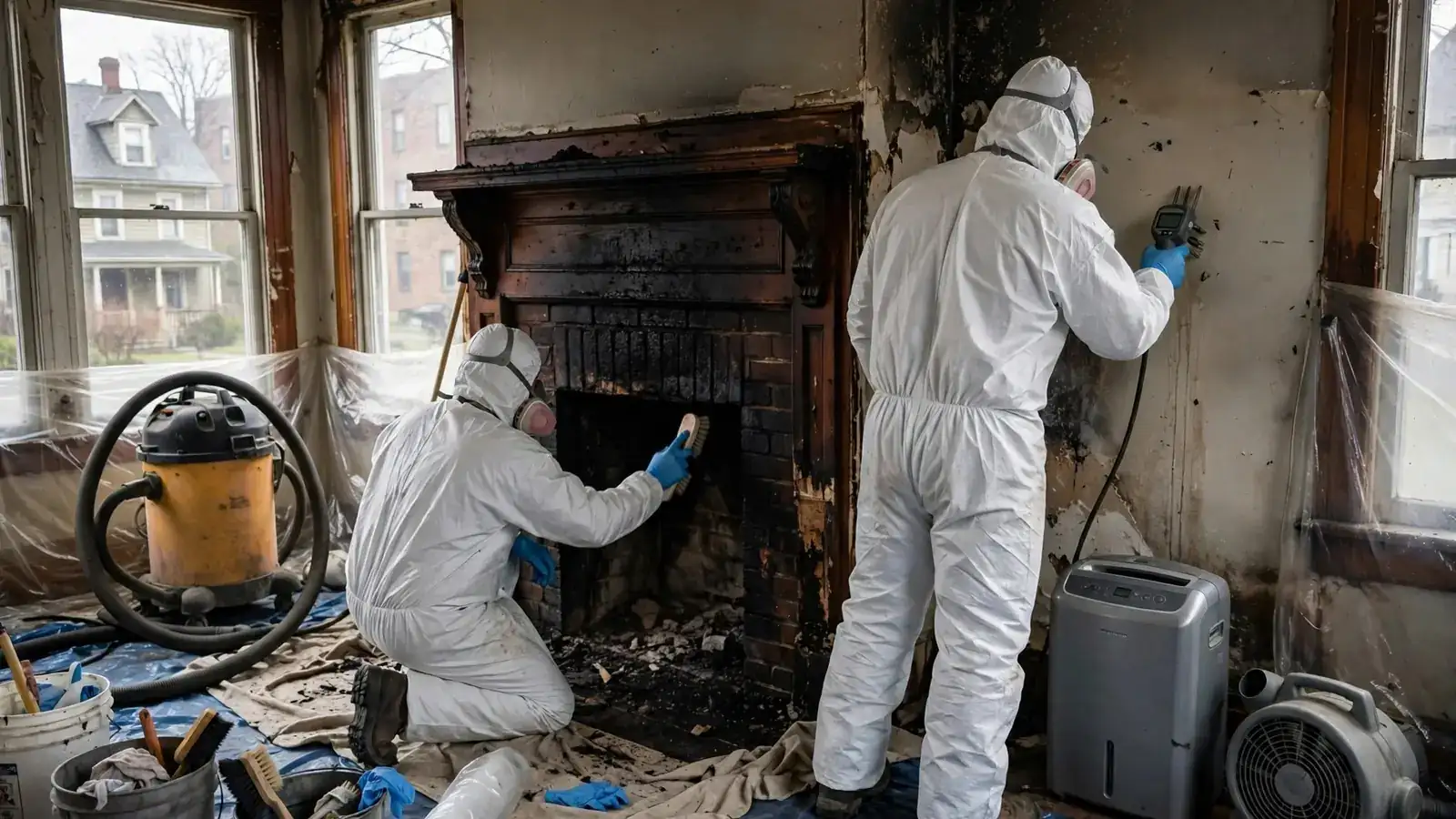
Removing soot from a Powderhorn house
How crews usually work.
- 1
Test suspect materials in the Powderhorn house
Check insulation, pipe wrap and old paint.
- 2
Contain the work area
Plastic sheeting and air scrubbers control soot.
- 3
Remove soot dry first
HEPA vacuums and dry sponges before washing.
- 4
Wash, seal and refinish surfaces
Clean with suitable products, then seal.
Plaster on three floors
Plaster walls and ceilings run through most Powderhorn houses. Dry methods come first, then washing, sealing and painting. Wet wiping smears soot. Our guide on soot on walls and ceilings explains this.
Painted surfaces may contain lead in houses of this age [4]. Lead-safe practices are used when scraping or sanding.
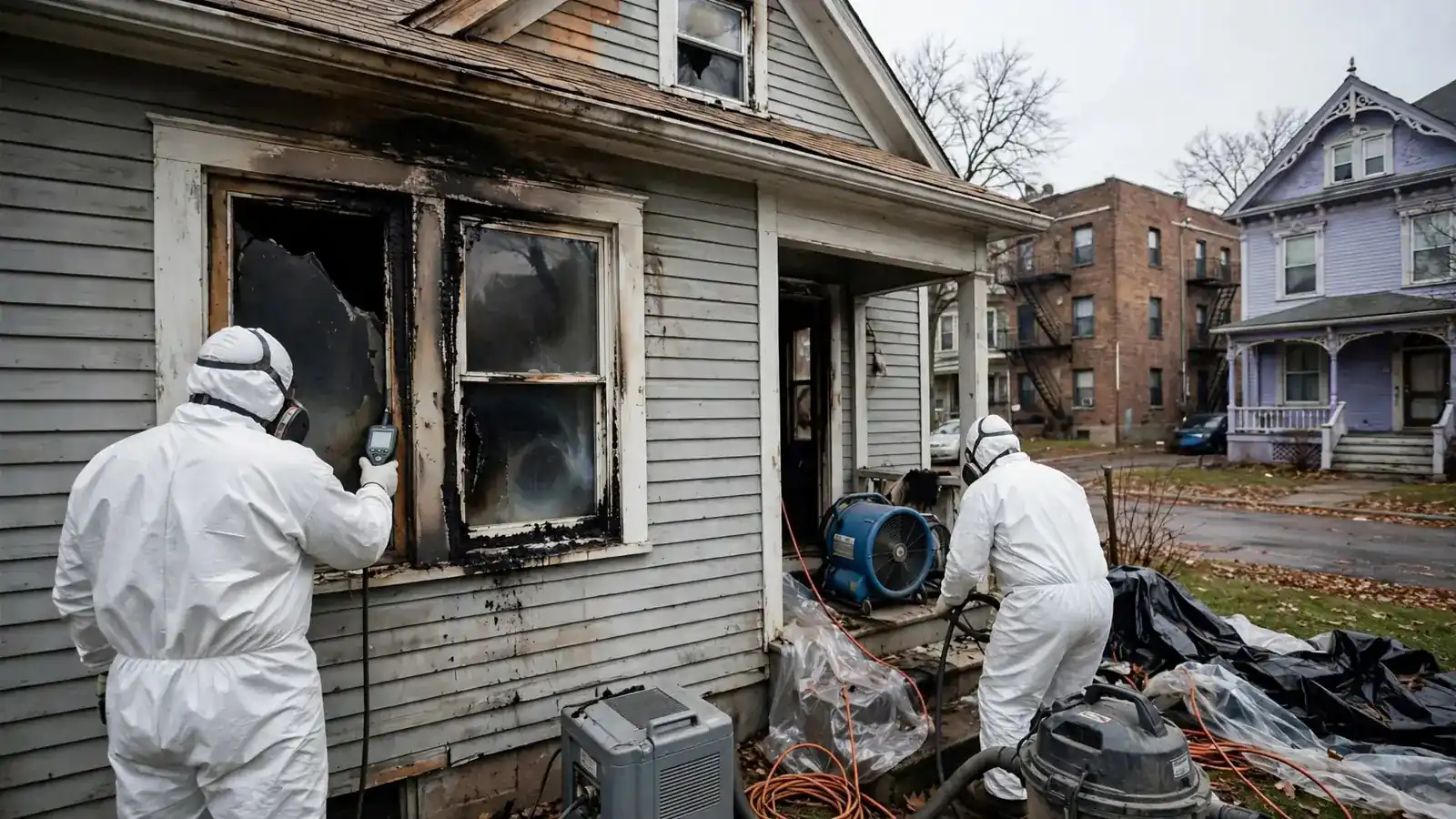
Radiators and soot
Radiators trap soot in their fins. They are often removed from the wall for cleaning. If left dirty, they release smell when they heat up.
Floors and walls behind radiators also hold soot and are cleaned carefully.
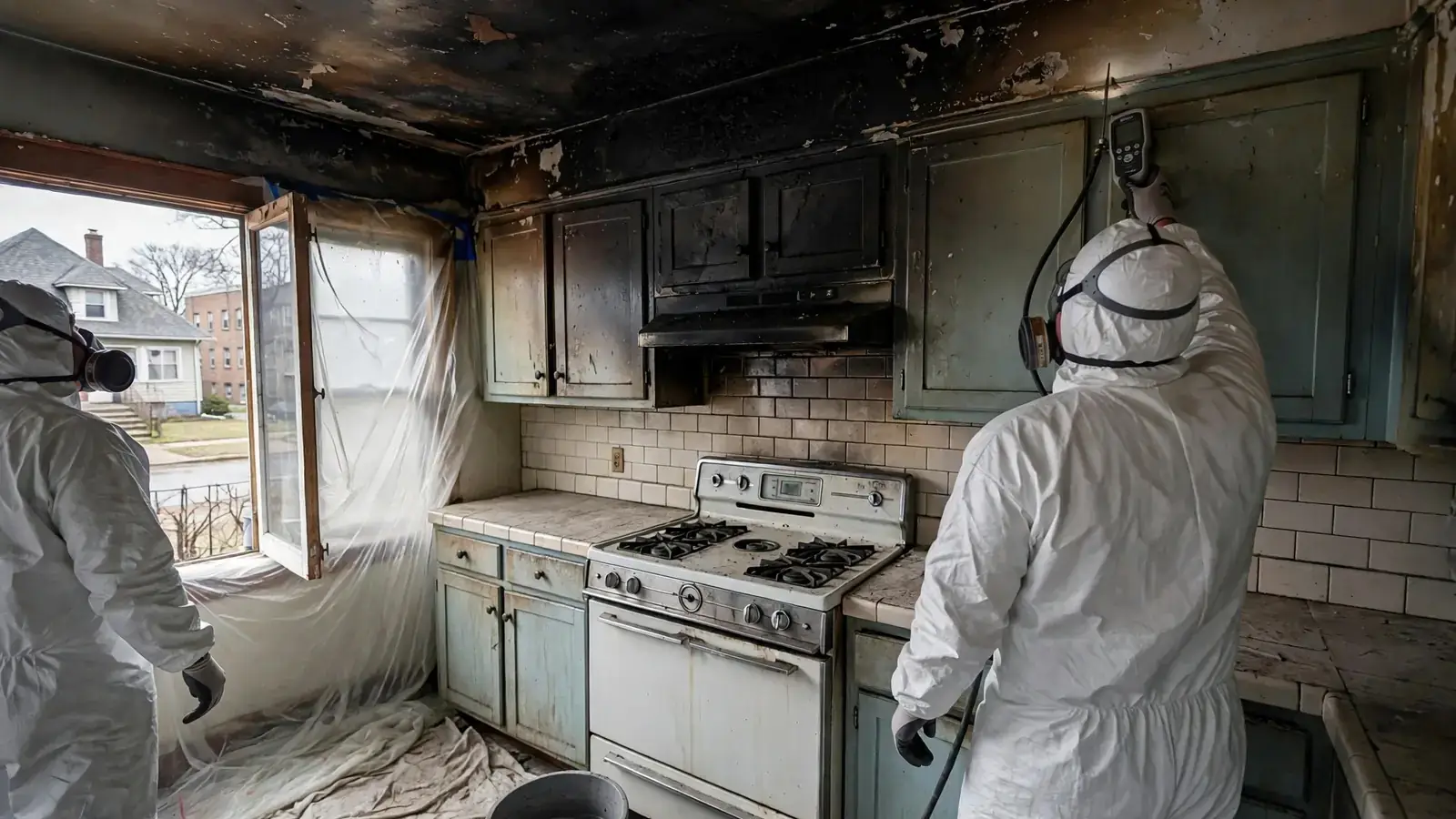
Porch soot
Enclosed porches take soot on ceilings, walls and windows. Porch woodwork is cleaned and repainted with lead-safe methods. Broken windows are boarded first.
Porch floors and steps are checked for safety, since crews use them throughout the job.
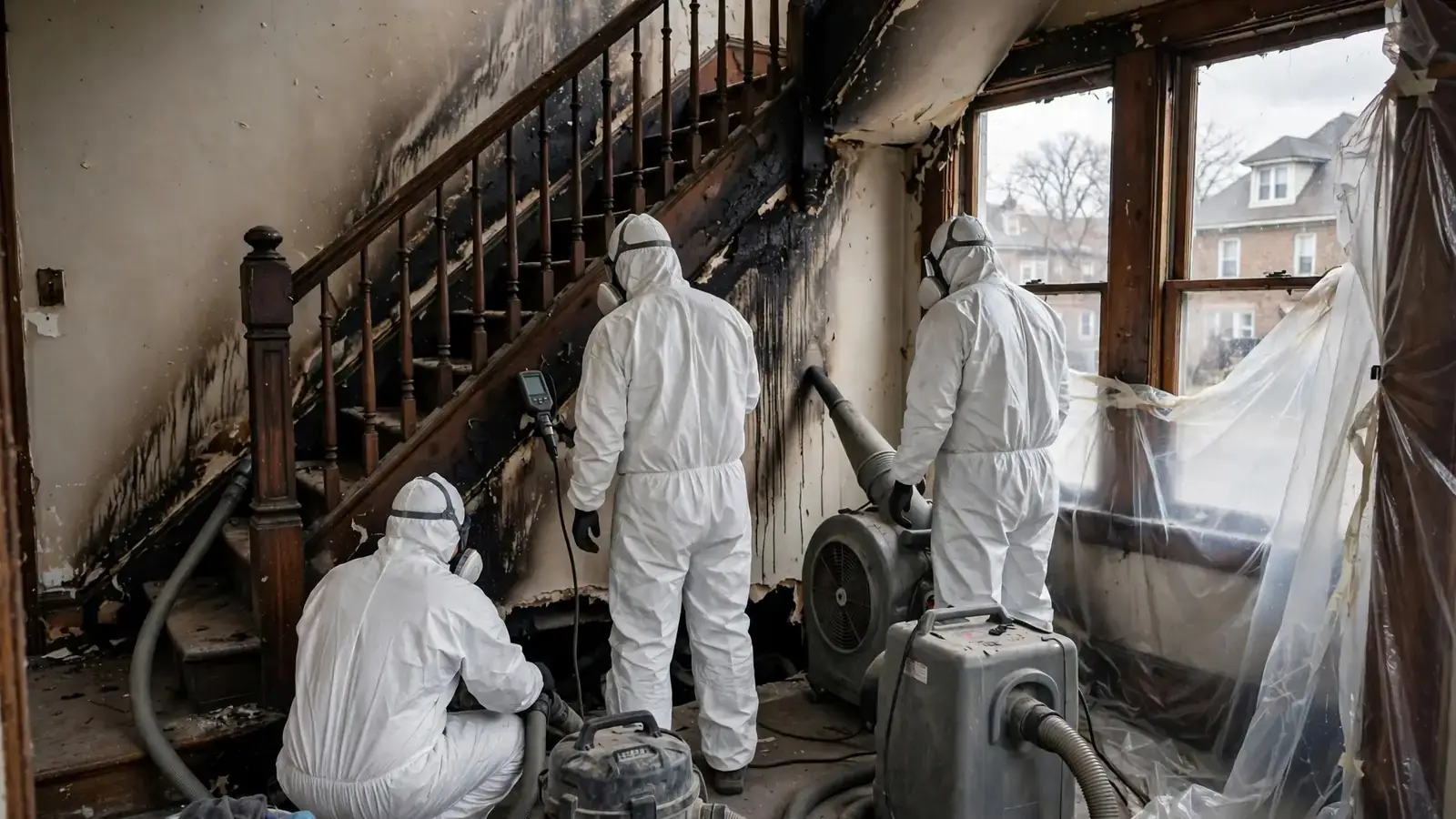
Common Powderhorn soot jobs
What crews often find here.
- Powderhorn attic raftersHeavy soot at the top of the house.
- Radiators on every floorFins trap residue.
- Porch ceilings and woodworkSoot where smoke left the house.
- Basement joists and pipesSoot and old insulation below.
Soot in shared buildings
Duplexes and walk-ups share stairways and walls, so soot reaches common areas and other units. The owner handles common spaces; residents handle their own belongings.
Each unit is checked and cleaned as needed.
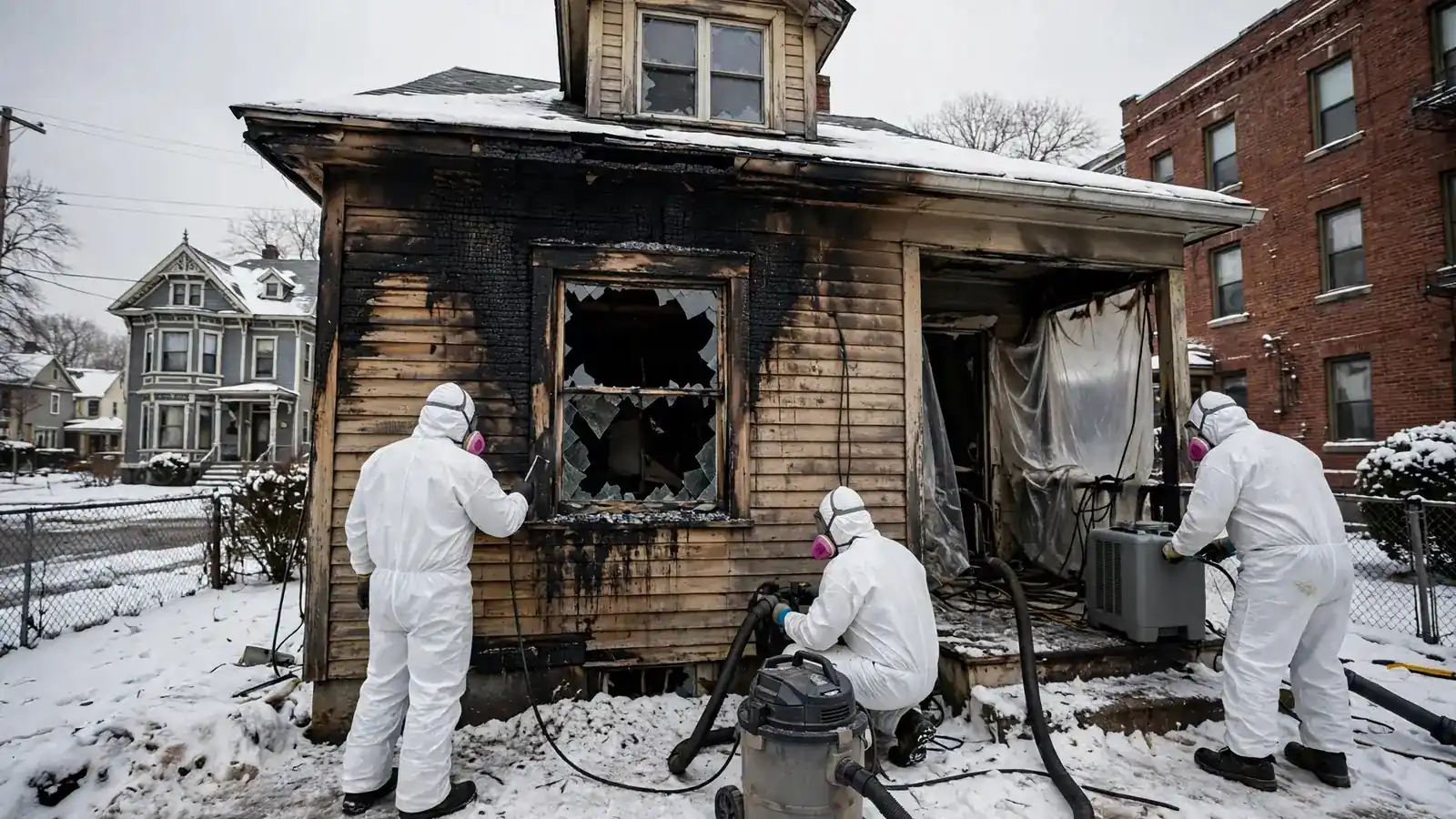
Winter soot work
If heat is out, pipes are protected first. Air scrubbers clean the air while windows stay closed. The Powderhorn area page has more about these houses.
Ask the contractor for a timeline by floor.
Records for soot damage
Photograph soot on every floor, the attic, the basement and the porch before cleaning. Ask for a list of cleaned and removed items. The Minnesota Department of Commerce encourages policyholders to keep records [5].
Keep receipts for items you buy during cleaning.
Basement soot under a Powderhorn house
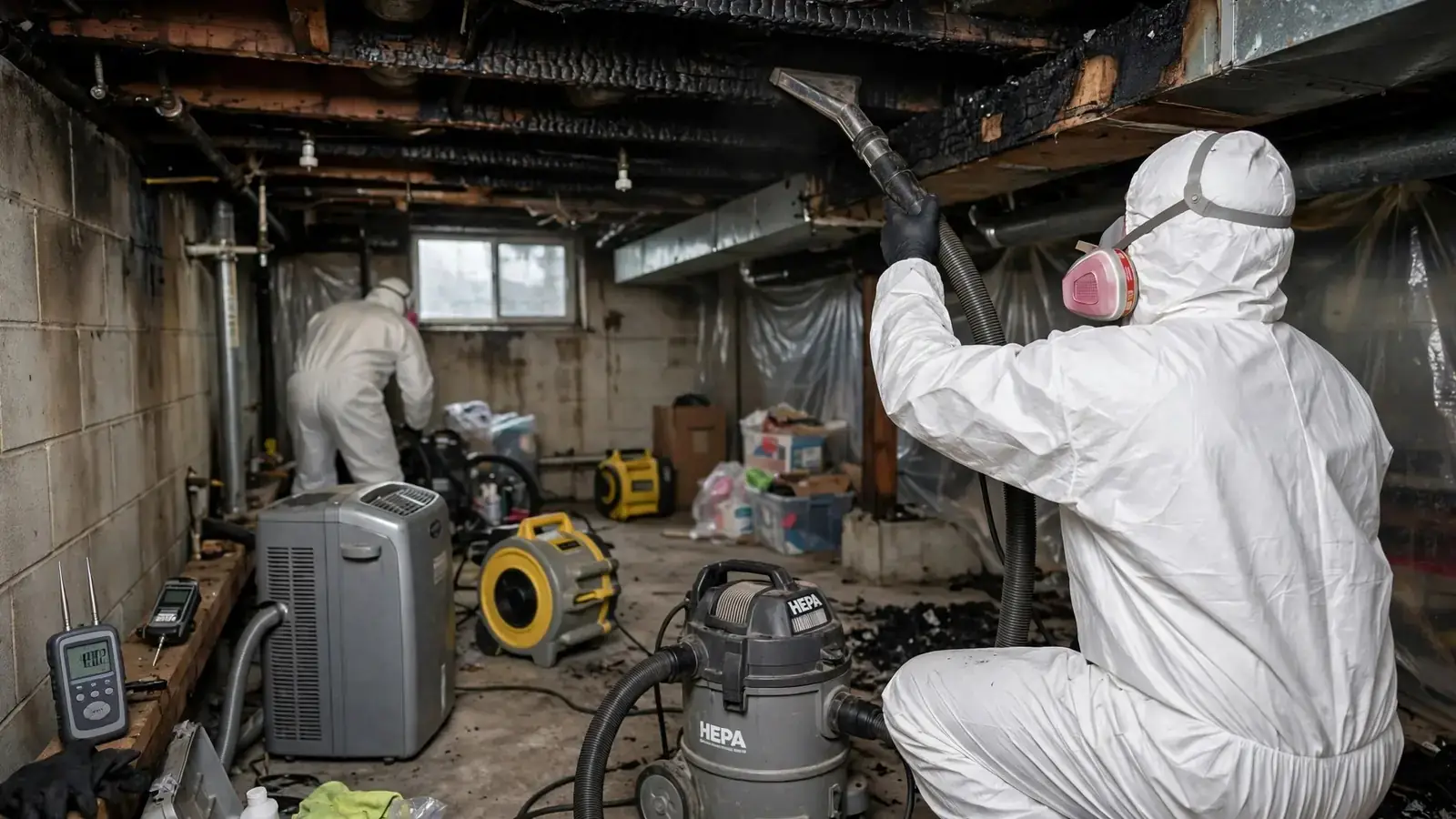
Powderhorn basements usually hold a boiler or furnace, a water heater, laundry and storage, with stone or block walls and a floor drain. A fire that starts there leaves thick soot on the joists, the subfloor, pipes and every stored box. Even a fire upstairs sends lighter soot down the stairway.
Joists and subfloor are cleaned by soda or dry ice blasting and sealed. Stone and block walls are brushed and vacuumed. Pipe wrap near the boiler is tested before cleaning goes near it, because some older insulation contains asbestos [3].
Wet soot after the hoses
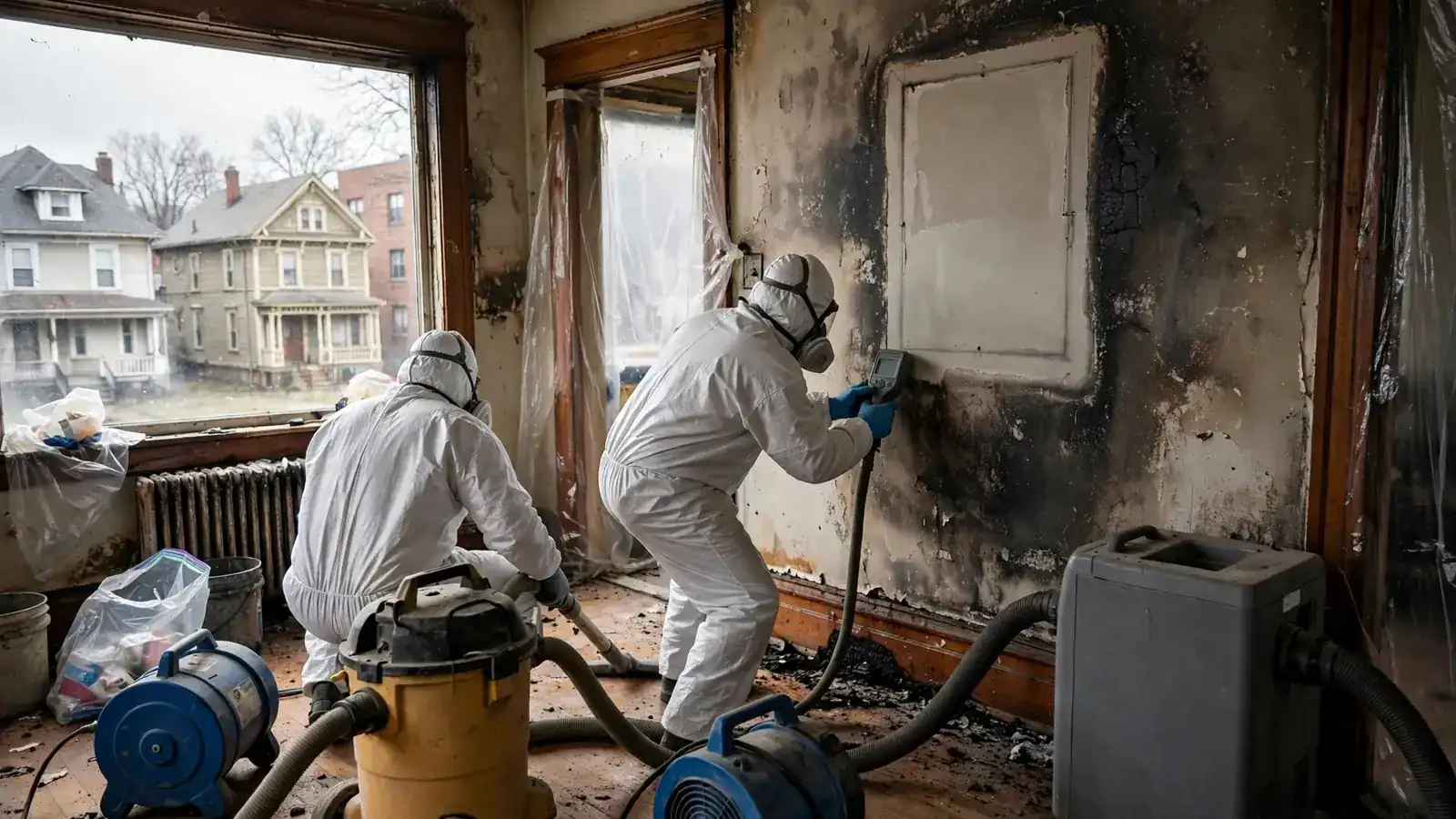
Firefighting water mixes with soot and runs down walls and ceilings in dark streaks. Once soot is wet, it is harder to lift and can stain plaster and wood. The contractor dries the affected rooms first, then removes what dry methods can reach before washing.
Stains that remain after cleaning are sealed with a stain-blocking primer before paint. On hardwood, darkened finish is usually sanded out when the floor is refinished.
Soot shadows on Powderhorn exterior walls
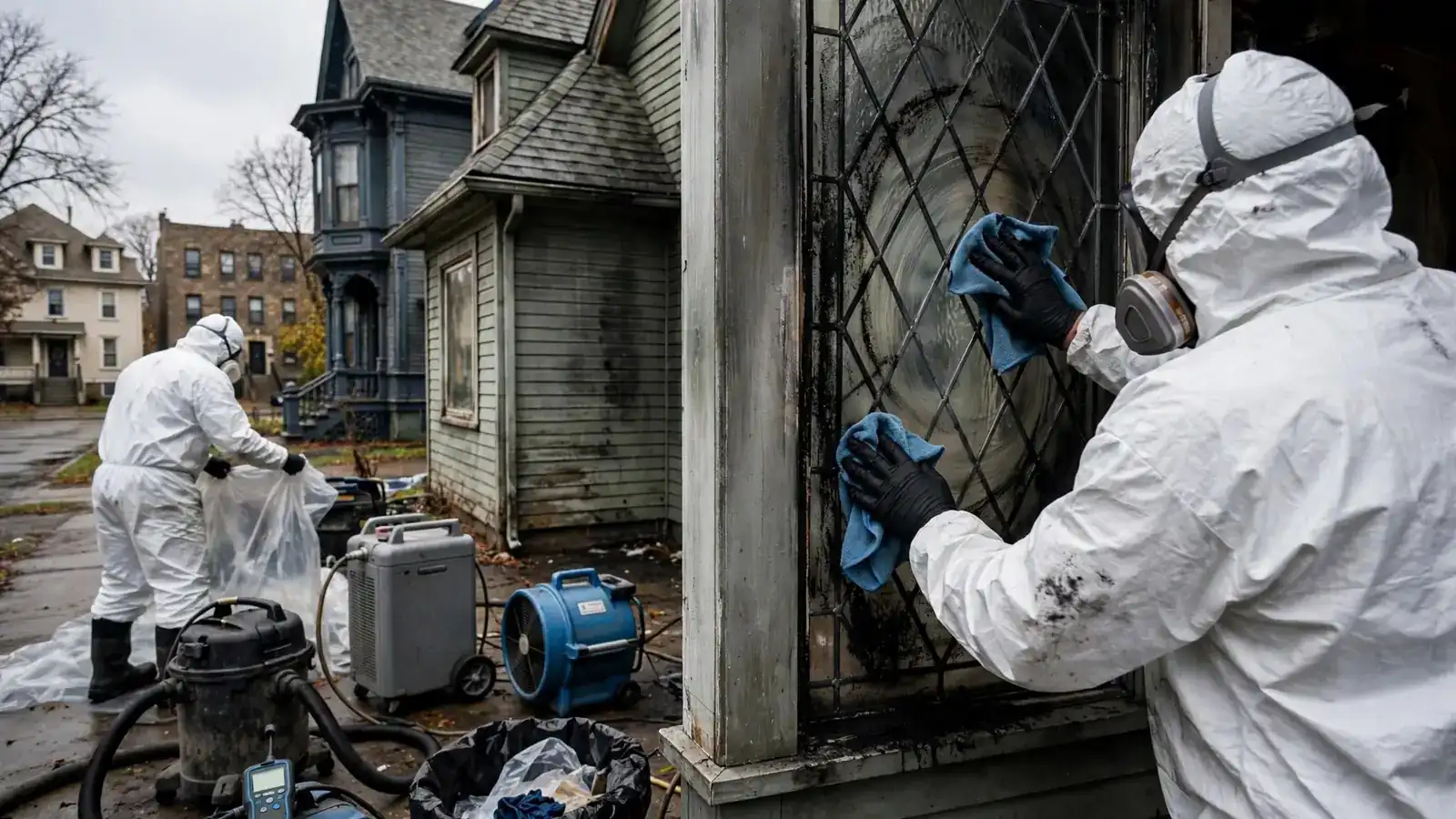
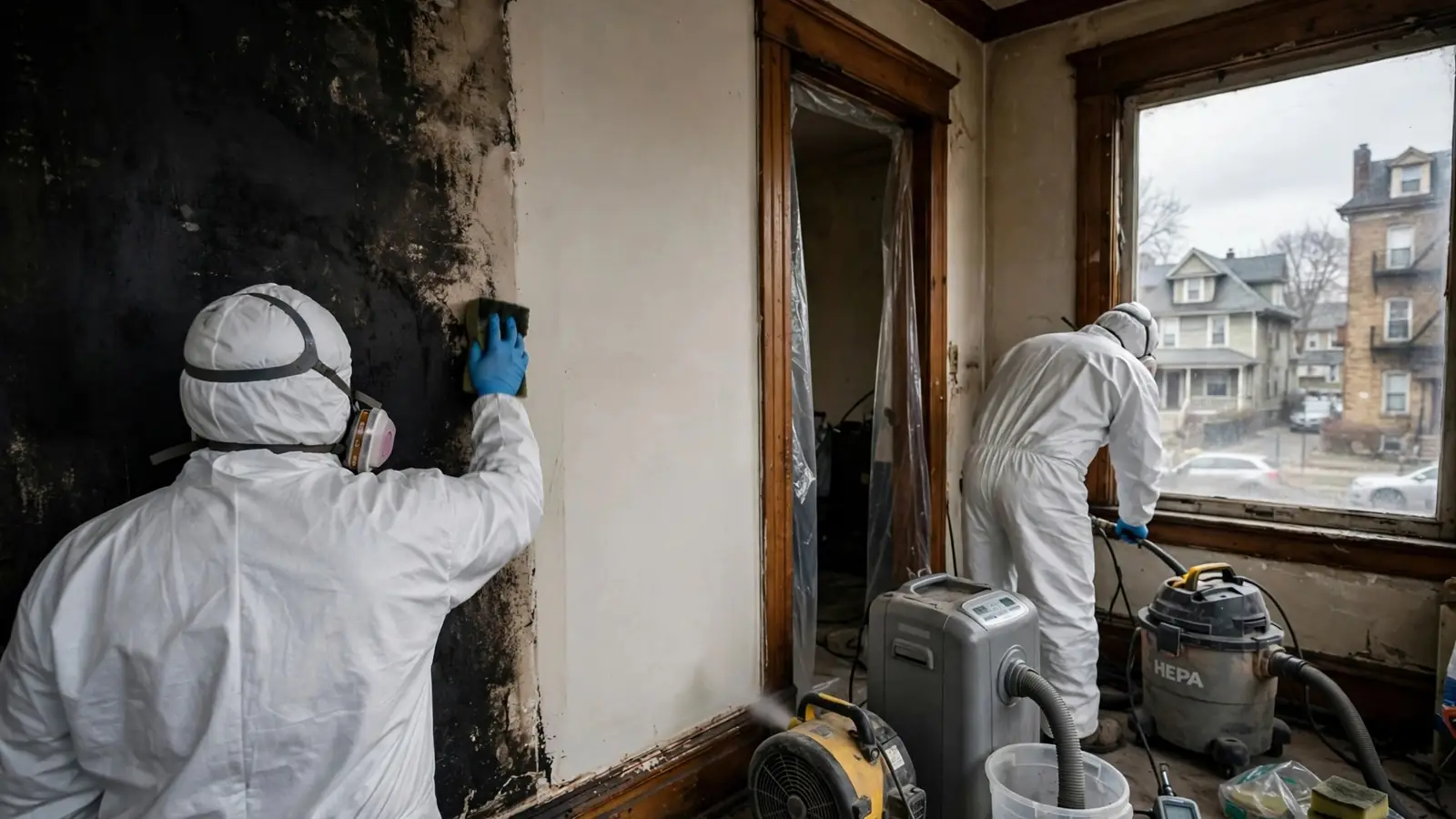
Soot settles first on the coldest surfaces in a house, which in Powderhorn's older homes are often the outside walls, window frames and the plaster around them. In winter, these dark shadows can appear even in rooms far from the fire. They clean up with dry methods followed by washing and sealing.
If shadows return after cleaning, the soot may be coming from inside the wall cavity. The contractor can check behind trim or outlets and clean or seal the cavity.
FAQ
Soot Removal in Powderhorn: questions
Why is soot heaviest in my Powderhorn attic?
Smoke rises to the top of tall houses, so the attic takes the most soot.
Do radiators in a Powderhorn house need to come off for soot cleaning?
Often, because their fins trap soot that is hard to reach in place.
Is the old pipe insulation in my basement safe?
It may contain asbestos and should be tested before it is disturbed.
Sources and citations
- [1]U.S. Fire Administration: After a fire
- [2]IICRC: S700 Standard for Professional Fire and Smoke Damage Restoration
- [3]U.S. EPA: Protect your family from exposures to asbestos
- [4]U.S. EPA: Protect your family from sources of lead
- [5]Minnesota Department of Commerce: Disaster Information Center
- [6]Wikipedia: Powderhorn Park, Minneapolis