Key facts: Smoke Odor Removal in Kenwood
- The U.S. Fire Administration explains that smoke smell comes from particles that cling to surfaces and fabric [1].
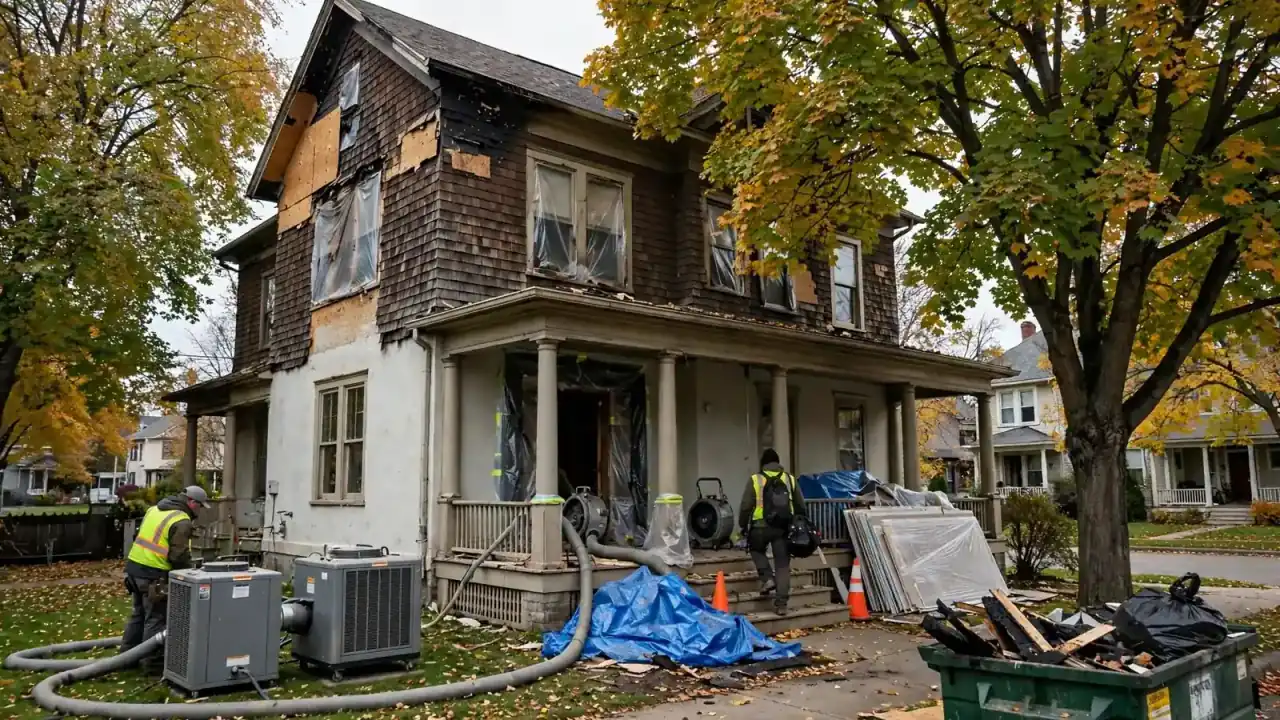
- Kenwood houses often rise three floors, and smoke climbing the staircase leaves the strongest smell near the top [7].
- The EPA advises against running ozone generators where people are present because ozone can harm health [3].
Upper floors and attics
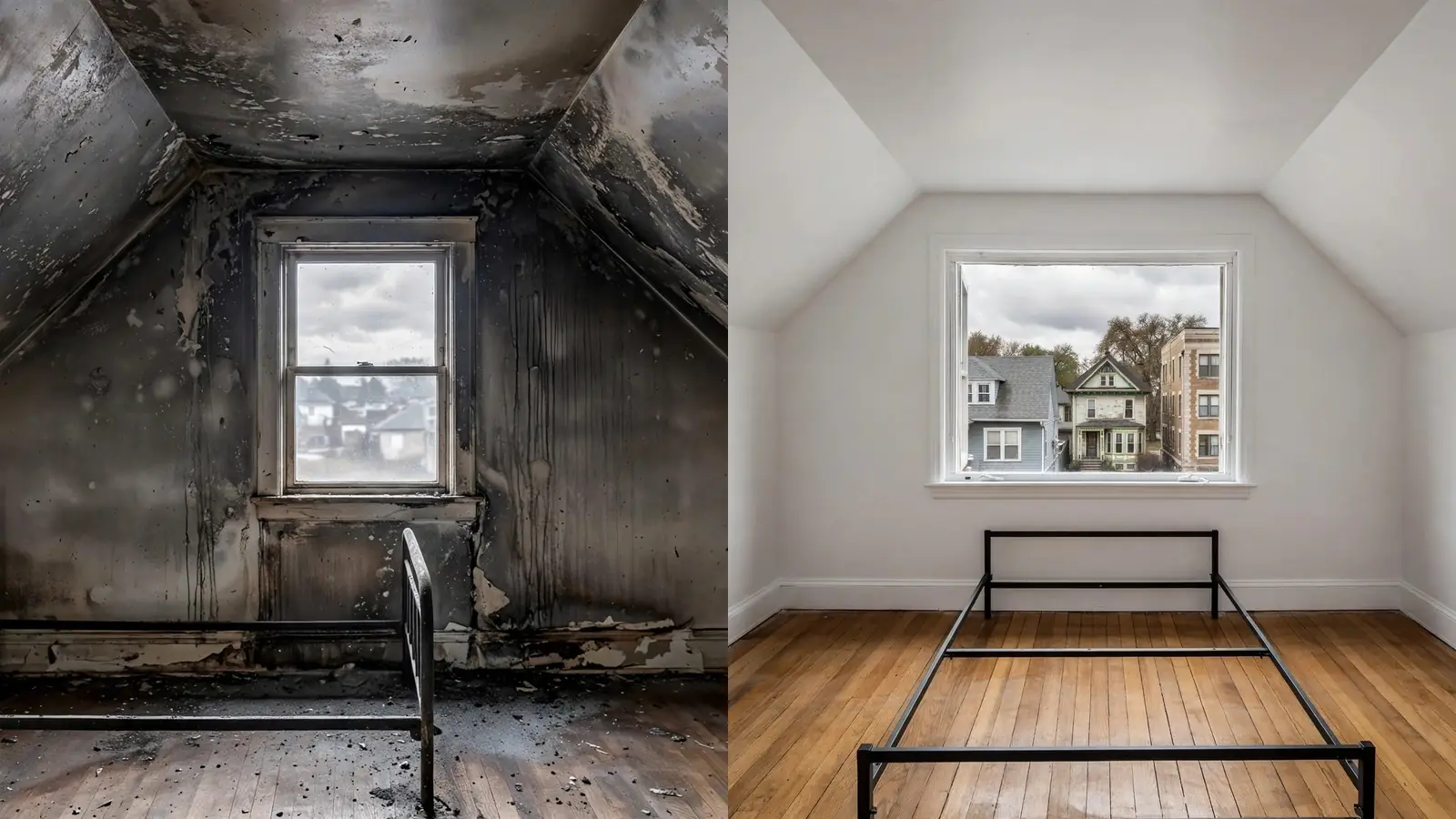
Kenwood's multi-story houses have grand staircases that carry smoke upward. Upper bedrooms, servants' quarters and finished attics often hold the heaviest odor, even when the fire was on the main floor. Odor work starts at the top and moves down.
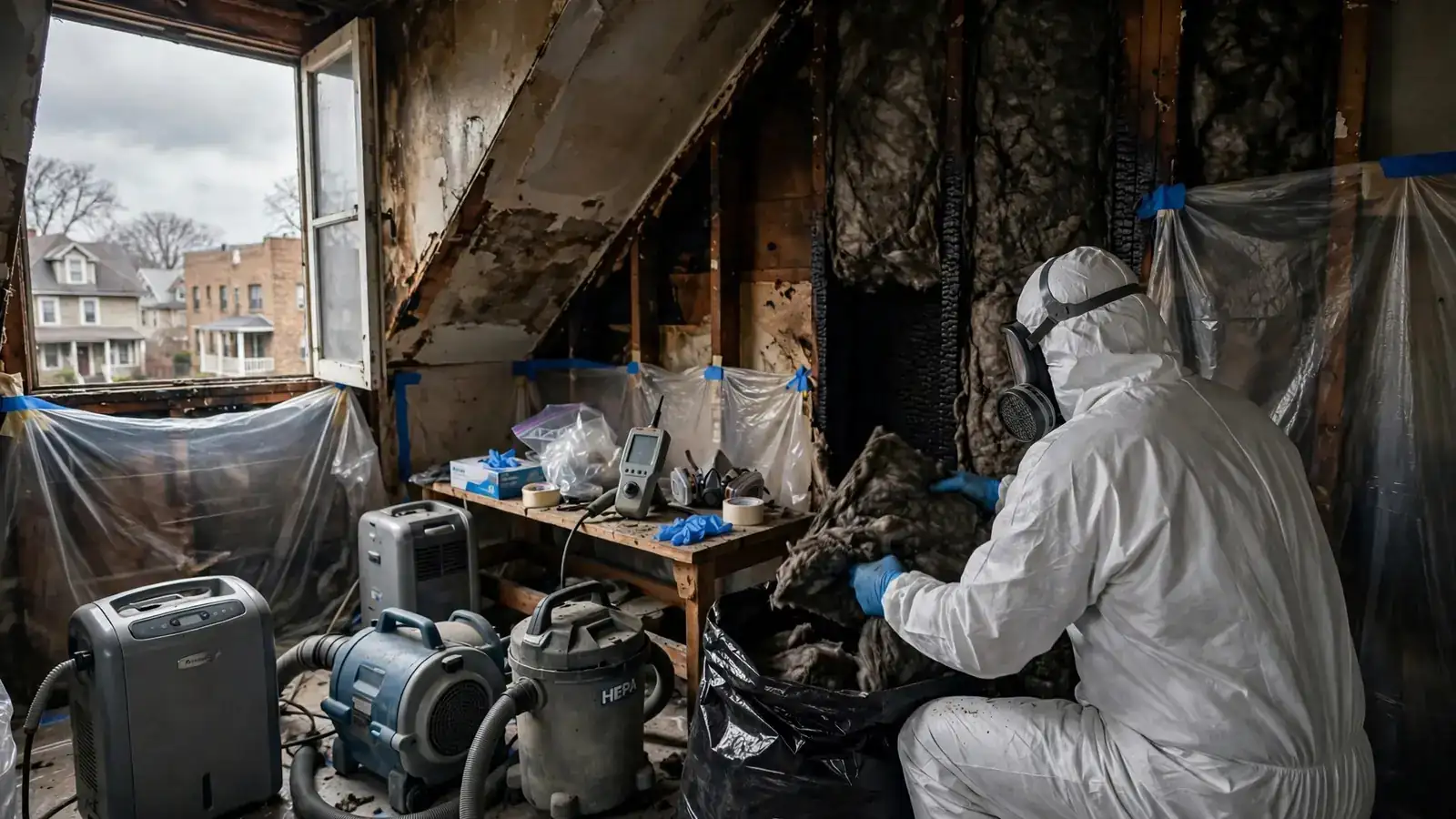
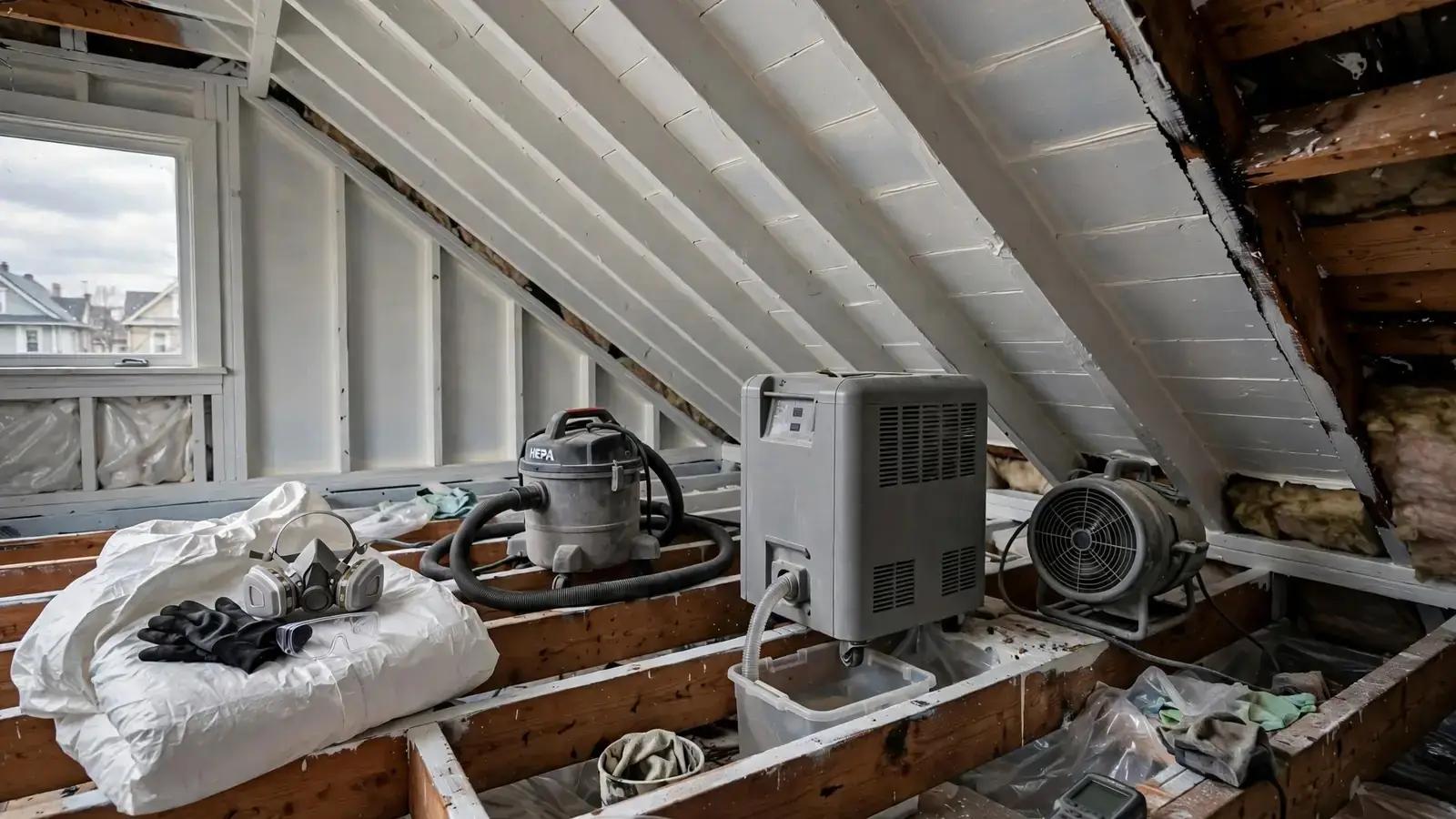
Attic insulation that absorbed smoke is usually removed, and framing is cleaned or sealed before reinsulating.
Fine woodwork and paneling
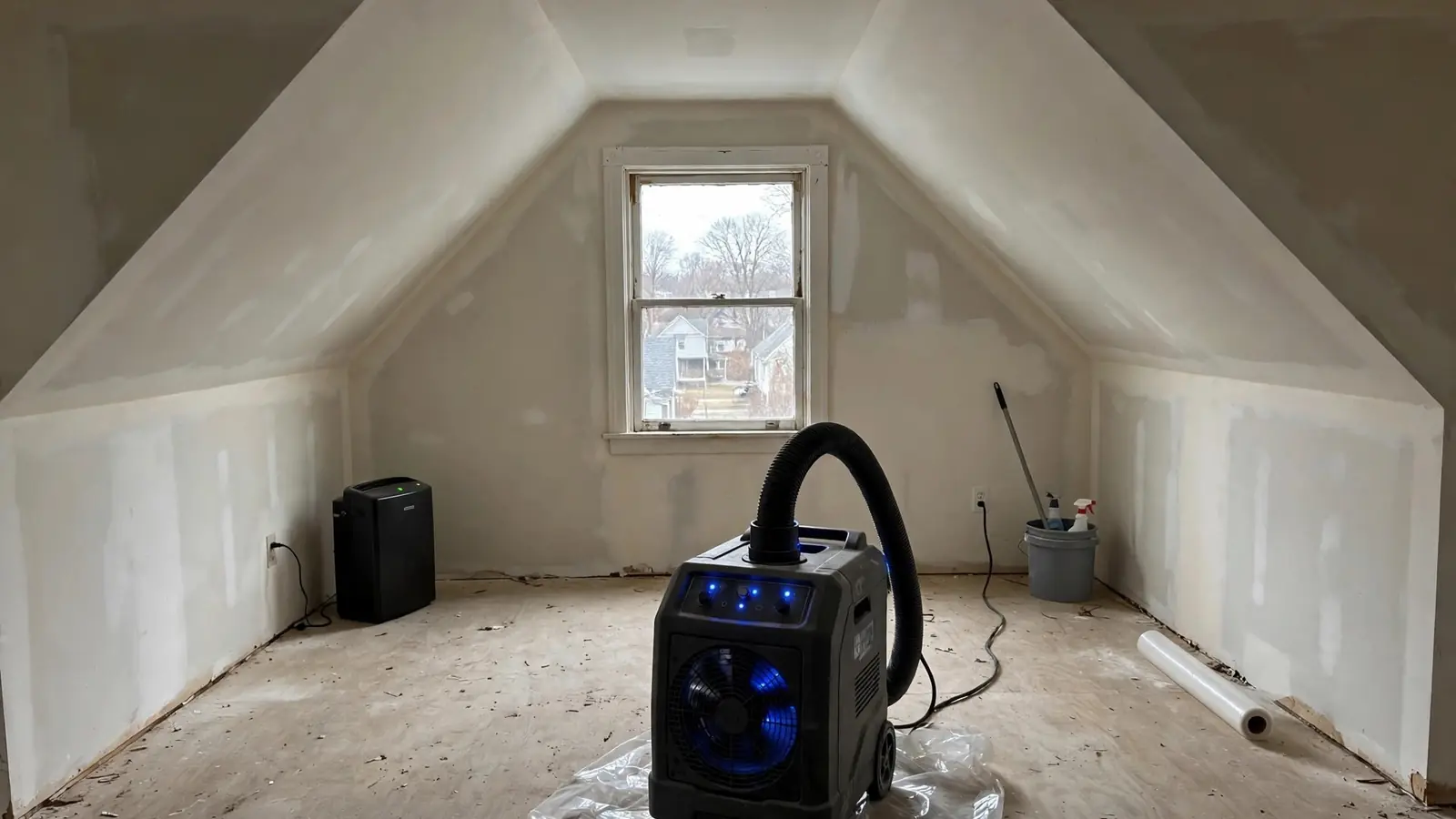
Paneled libraries, carved staircases, built-in cabinetry and wood floors are common. Wood finishes absorb smoke odor. Careful cleaning with finish-safe products, followed by a fresh coat where needed, removes most of it. Unfinished wood inside cabinets may need sealing.
Woodwork should be cleaned by crews experienced with historic finishes.
Odor removal in a large Kenwood home
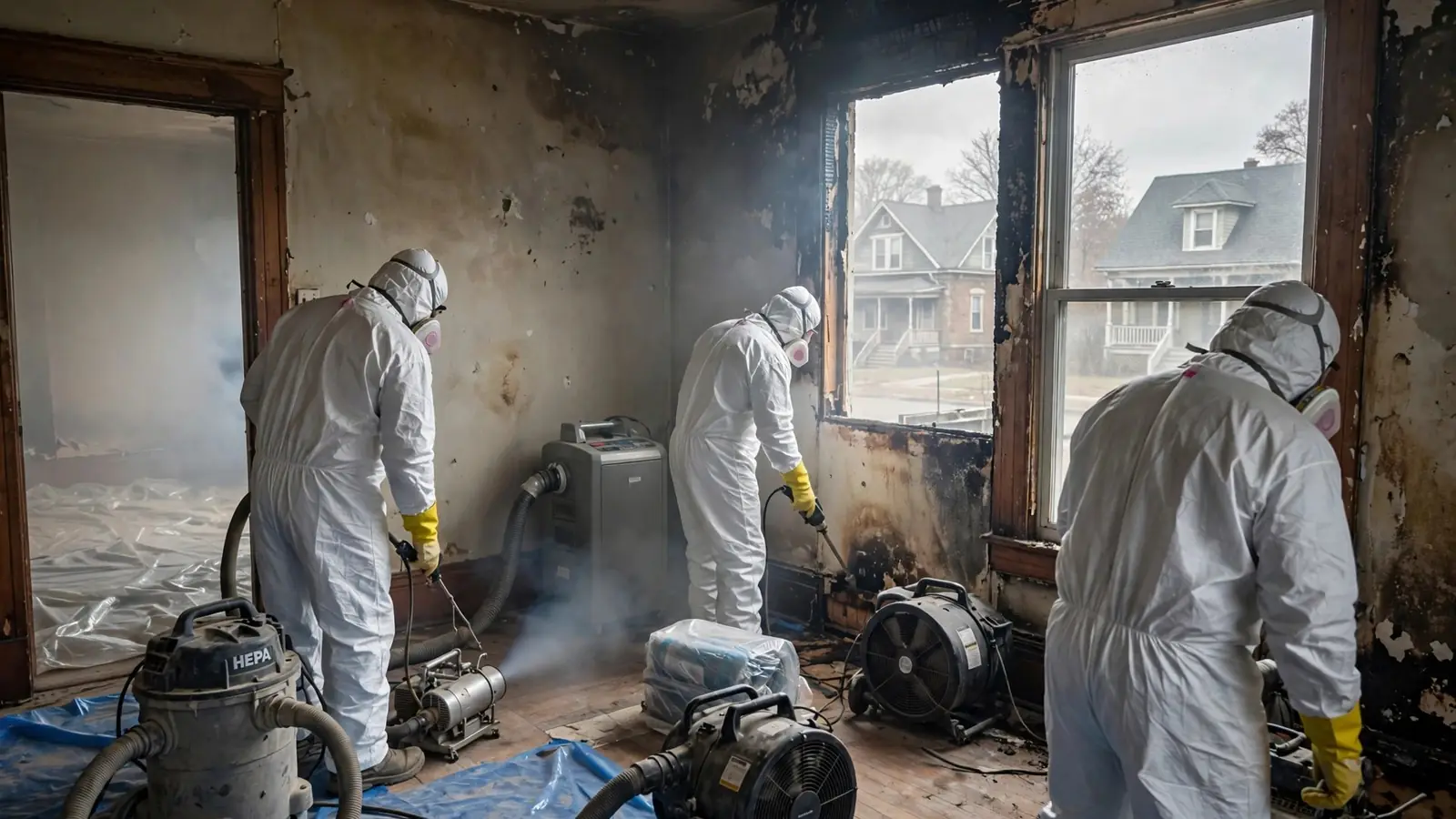
A top-down, room-by-room plan.
- 1
Move valuables and textiles out
Art, rugs, drapes and upholstery go to specialists.
- 2
Clean the attic and top floor
Remove affected insulation and clean upper rooms first.
- 3
Clean woodwork, plaster and floors
Room by room, working down the house [2].
- 4
Deodorize and seal by floor
Treat and seal each floor before moving on.
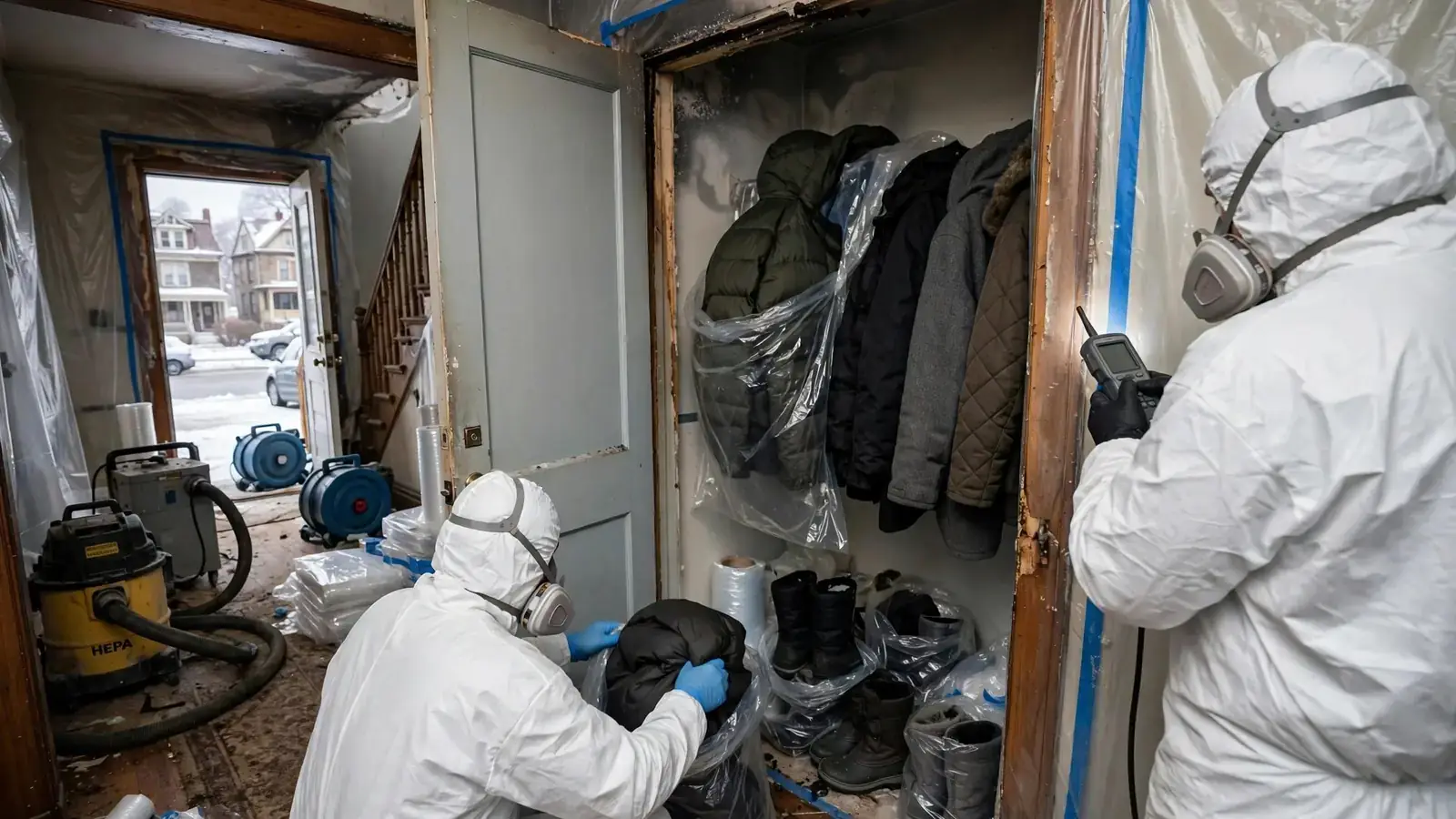
Textiles, rugs and upholstery
Large homes often have heavy drapes, wool rugs and upholstered furniture. These hold smoke odor deeply and need specialist cleaning. Leaving them in the house during odor treatment can make clean rooms smell again.
Antique textiles and rugs should go to conservators who know how to clean them safely.
Art, books and collections
Paintings, books and collections absorb smoke odor. Art conservators and document specialists can clean them. Moving them out before treatment protects them and lets the house be treated thoroughly.
The Kenwood page discusses pack-outs for valuable contents.
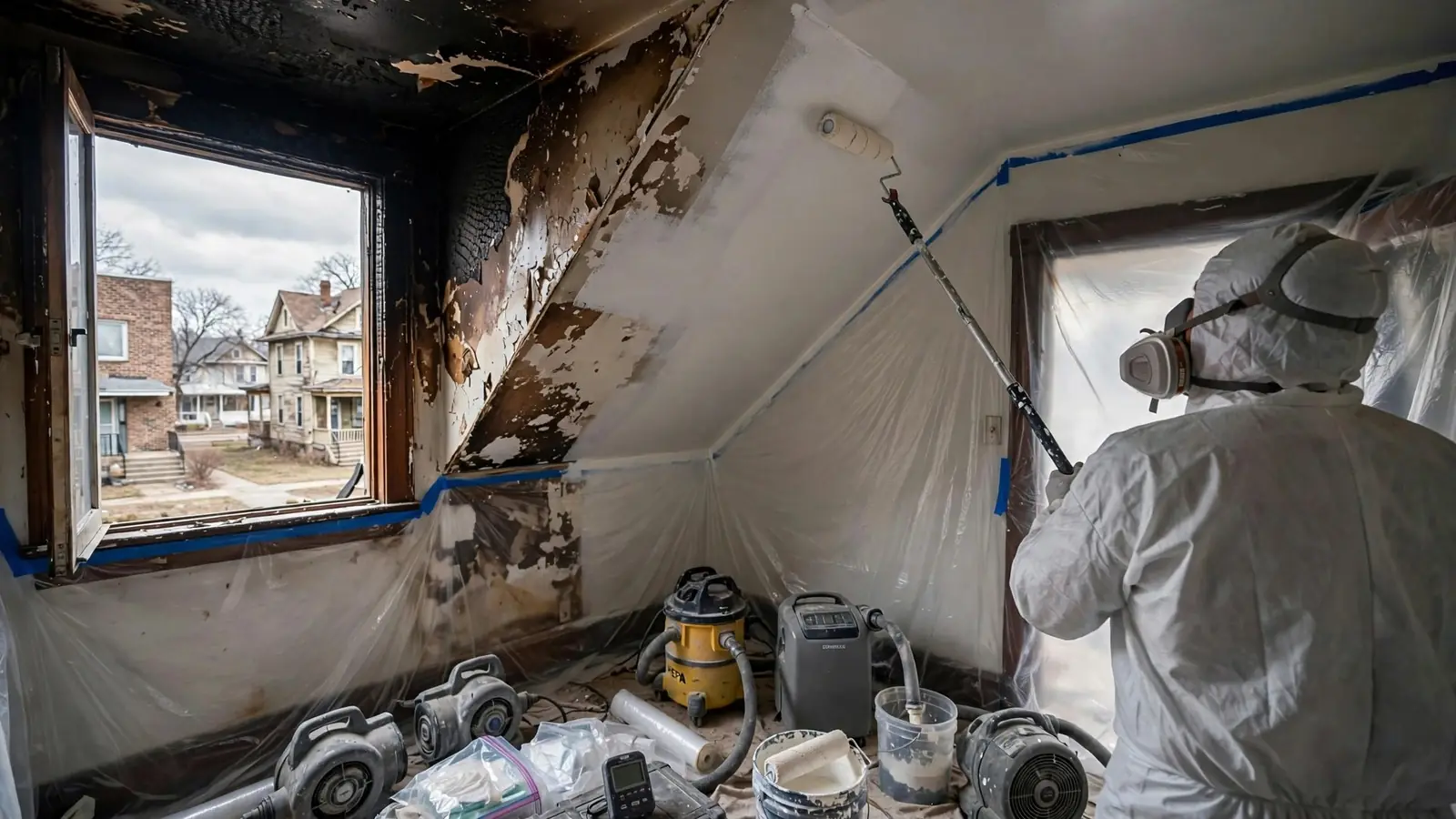
Odor sources in historic Kenwood houses
Check these places.
- Back stairs and service areasSecondary stairways carry smoke.
- Window seats and built-insClosed wood spaces hold odor.
- Radiators and grillesOlder heating elements collect residue.
- Third-floor roomsSmoke collects at the top.
Heating systems and winter
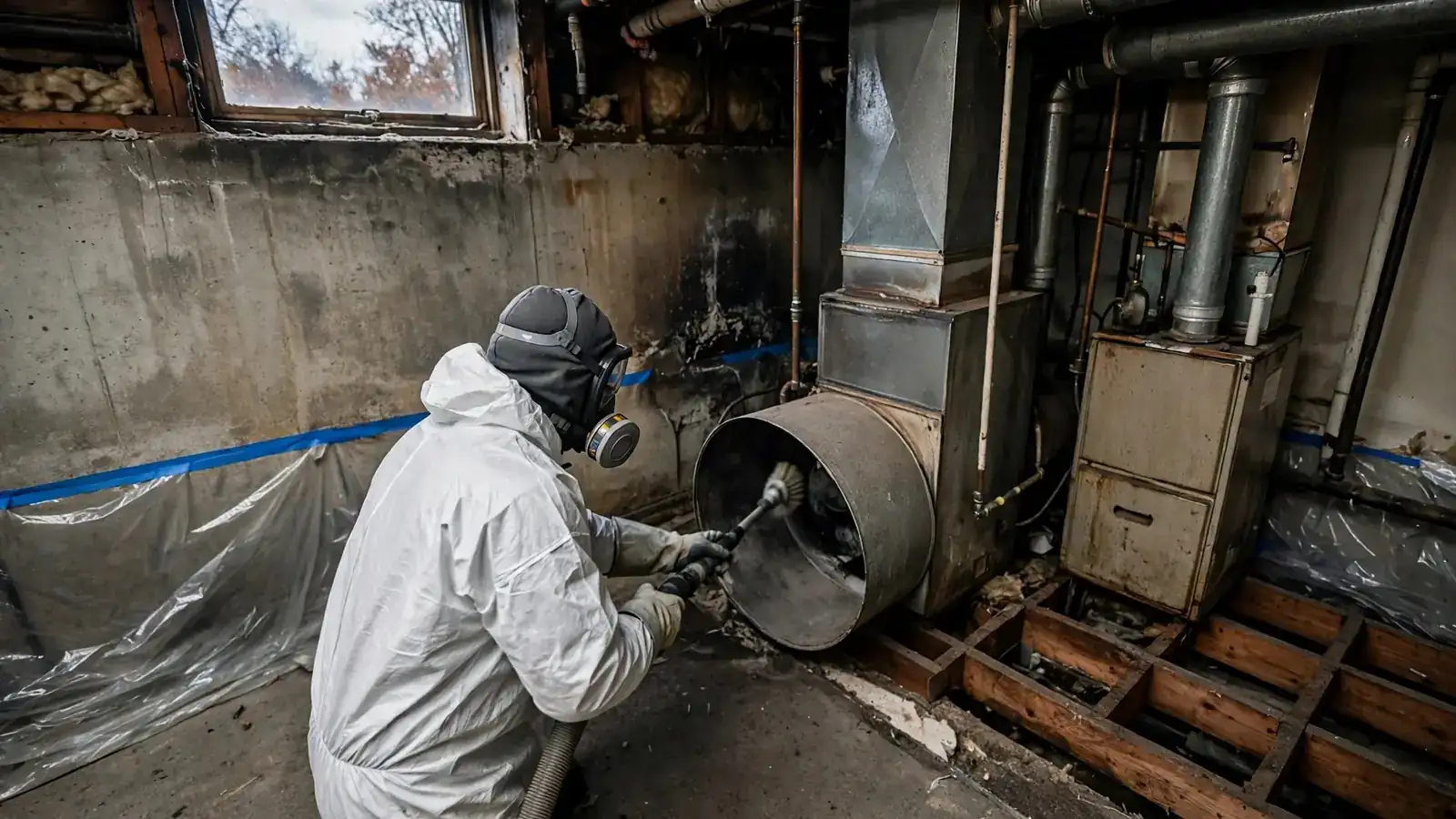
Many older houses have boilers and radiators, others forced air added later. Radiators hold residue in their fins and release odor when heated. Forced-air systems spread odor through the ducts. Both need cleaning before the heat is used for the winter.
The Minnesota Department of Health notes that moisture can lead to mold [4], so any firefighting water must be dried first.
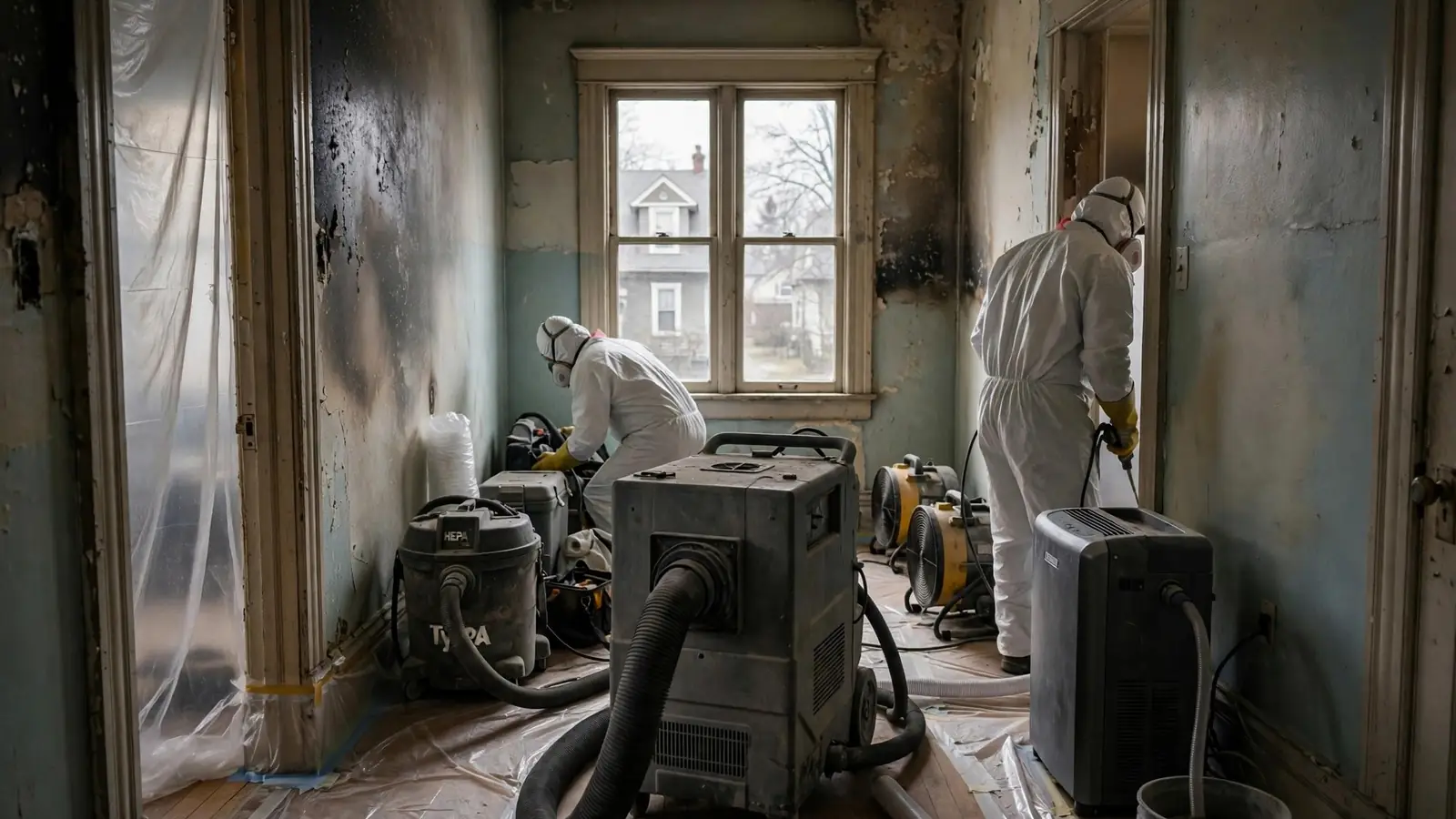
Choosing safe treatments
Thermal fogging and hydroxyl generators are common. Ozone should only be used in an empty house because the EPA warns of health risks [3]. In a large house, treatment may be phased by floor.
Ask how each floor will be aired afterwards, especially in cold weather.
Knowing when it's done
Check each floor with windows closed and the heat running. Odor that remains points to a source still present. Our guide to smoke odor that won't go away explains more.
The Minnesota Department of Commerce Disaster Information Center offers guidance on claims and living expenses while the work goes on [5].
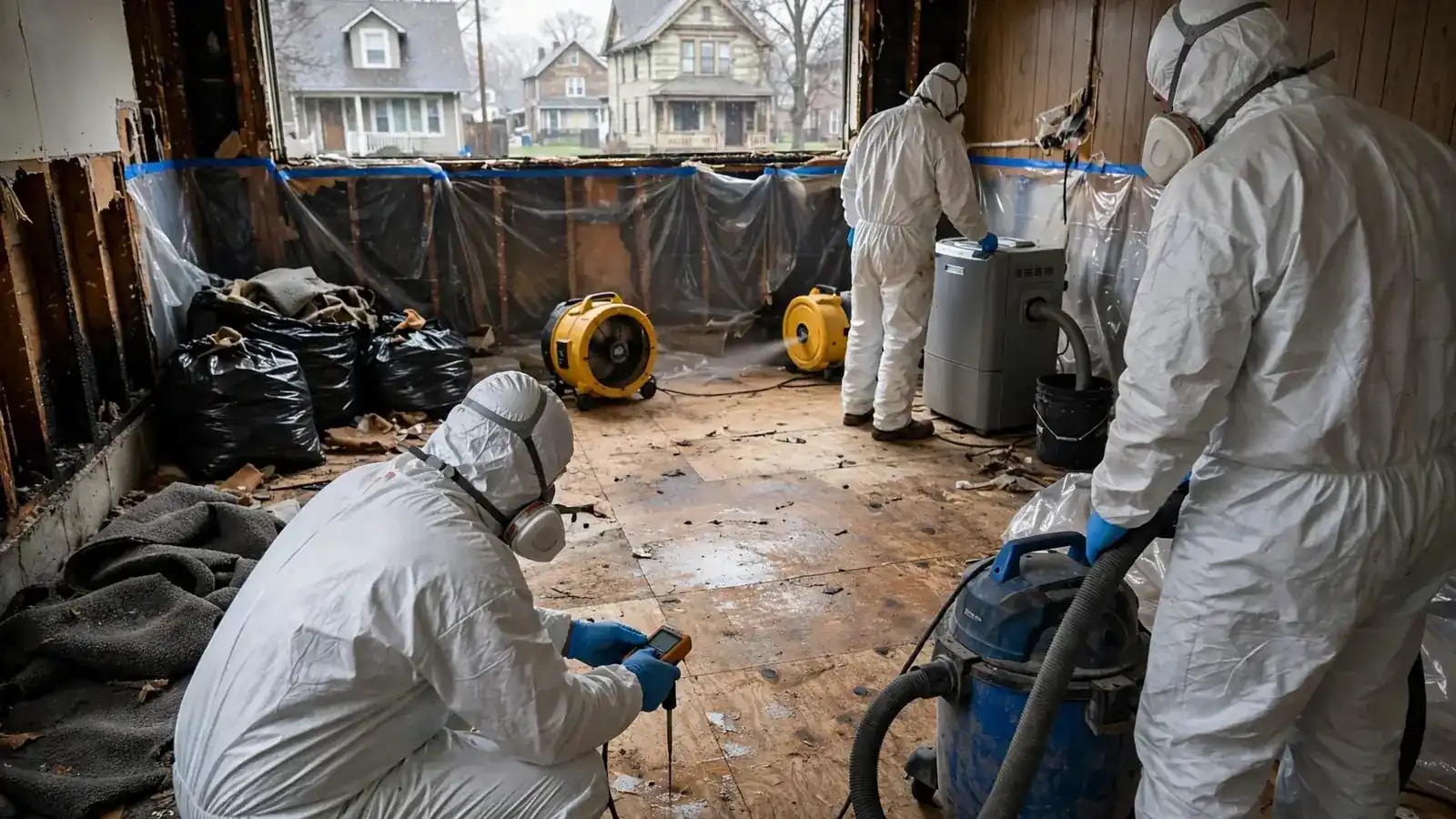
Grand staircases as smoke chimneys
The central staircase in a Kenwood house acts like a chimney during a fire. Hot smoke rises up it, spreads across each landing and pours into the rooms off the upper halls. The stair walls, the underside of each flight and the railings carry heavy residue, and the smell can be strongest at the top of the house even when the fire was in the kitchen.
Cleaning the stairway thoroughly, from the top landing down, removes one of the biggest sources of odor in these homes.
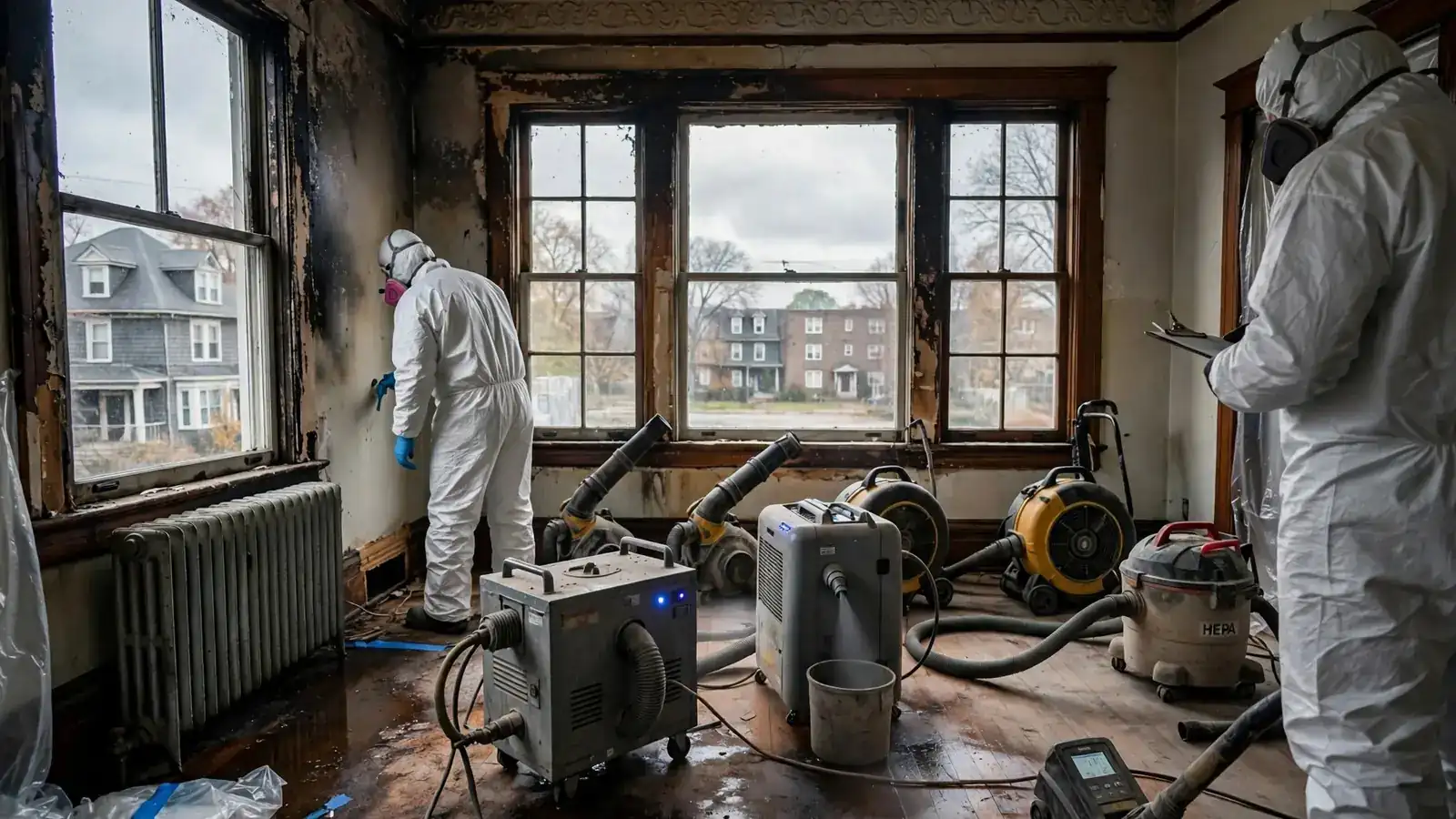
Closets, wardrobes and linen rooms
Large houses have many closets, built-in wardrobes and linen rooms. Each holds textiles that absorb smoke. Every closet should be emptied, its contents cleaned, and its shelves and walls cleaned or sealed before anything goes back.
Cedar-lined closets may need special care; cedar's own scent can mask smoke at first, but residue still needs removal.
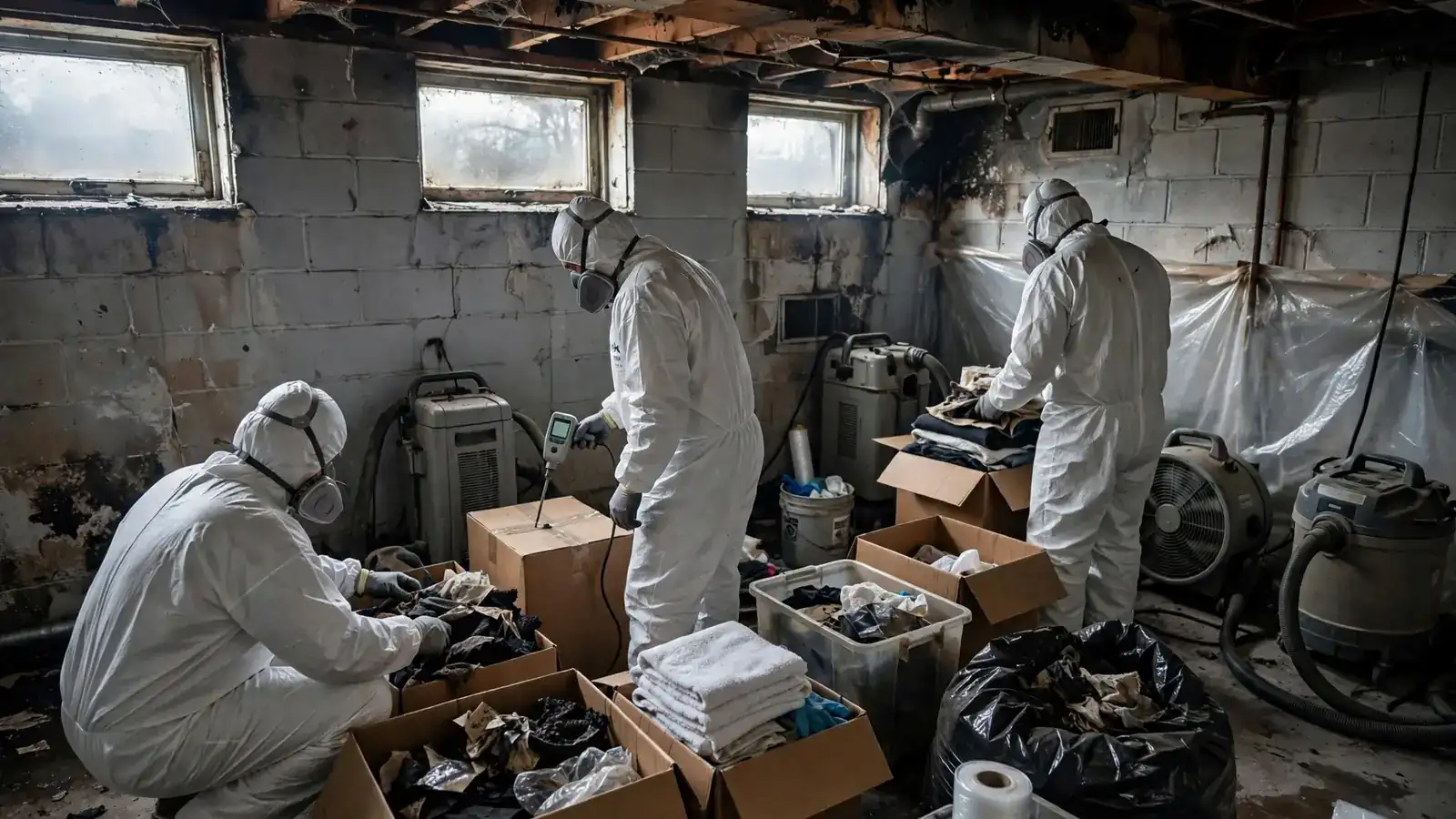
Basements and wine cellars
Some larger Kenwood homes have finished basements, wine cellars or storage rooms below grade. Smoke and firefighting water reach these spaces, and closed rooms hold odor. Stored items are sorted and cleaned, and the room is cleaned and sealed if needed. Dampness from firefighting water must be dried, since a musty smell can join the smoke.
Coordinating with your adjuster
Odor work across a large house is easier to explain with records. Ask the contractor for notes and photos of each source found, such as residue inside ducts, insulation removed from the attic and closets that held smoke, and a list of treatments by floor. These make it clear why rooms that look clean still needed work.
FAQ
Smoke Odor Removal in Kenwood: questions
Why do the upper floors smell worse?
Smoke rises through the staircase and collects upstairs and in the attic.
Can paneled libraries lose the smoke smell?
Usually, with careful cleaning and a fresh finish where needed.
Should rugs and art stay in the house during treatment?
No. They should be moved out and cleaned by specialists.
Sources and citations
- [1]U.S. Fire Administration: After a fire
- [2]IICRC: S700 Standard for Professional Fire and Smoke Damage Restoration
- [3]U.S. EPA: Ozone generators that are sold as air cleaners
- [4]Minnesota Department of Health: Mold and moisture in homes
- [5]Minnesota Department of Commerce: Disaster Information Center
- [6]U.S. EPA: Protect your family from exposures to asbestos
- [7]U.S. Fire Administration: After a fire