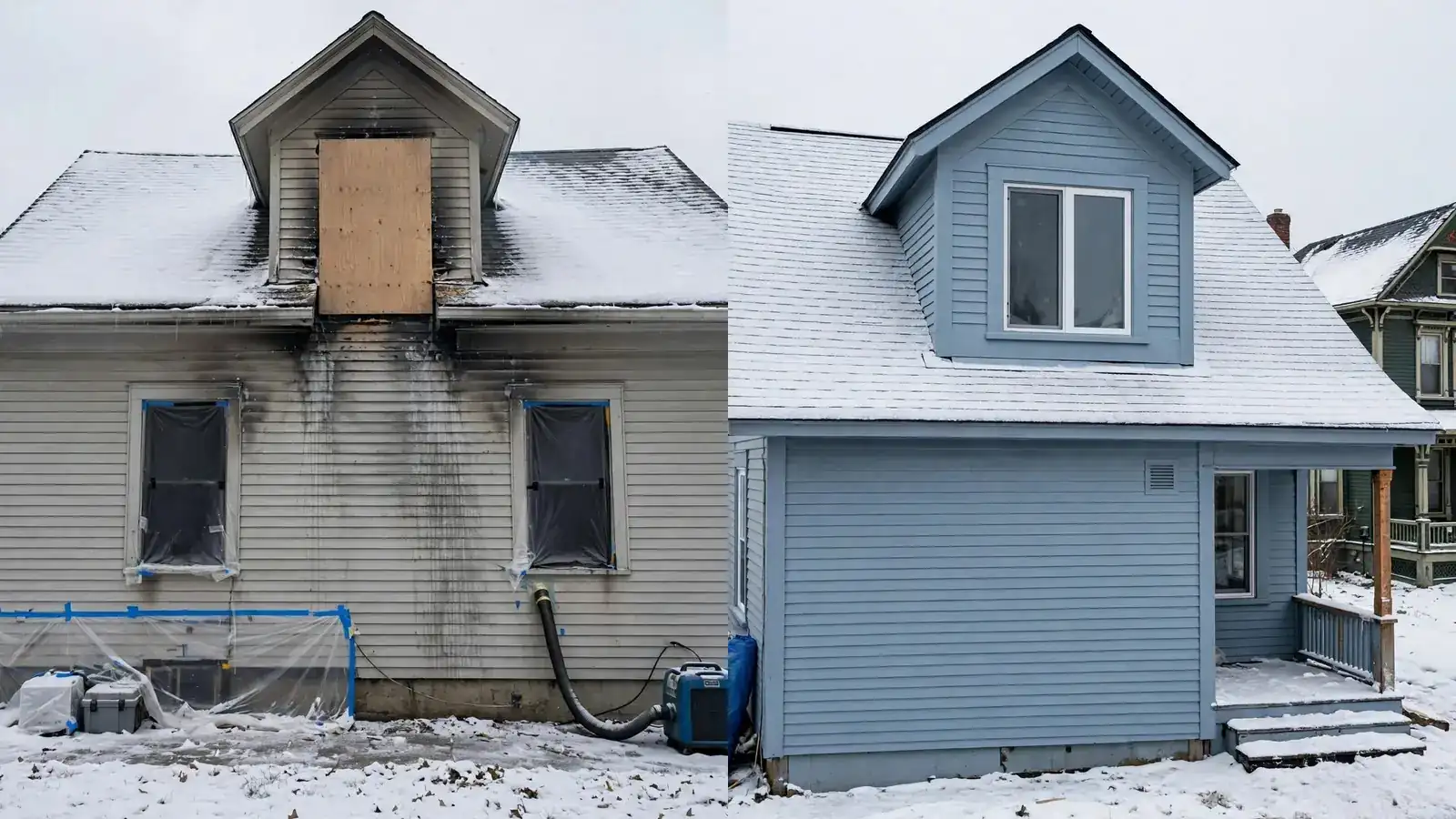
Key facts: Board-Up and Tarping in Kenwood
- Kenwood was established in the late 1880s after a rail line along Cedar Lake made the area easier to reach [5].
- Fire can leave roofs and floors unsafe to walk on, the U.S. Fire Administration cautions [1].
- The National Weather Service Twin Cities office issues the local winter storm and wind forecasts used to plan roof covers [2].
Securing a large historic house
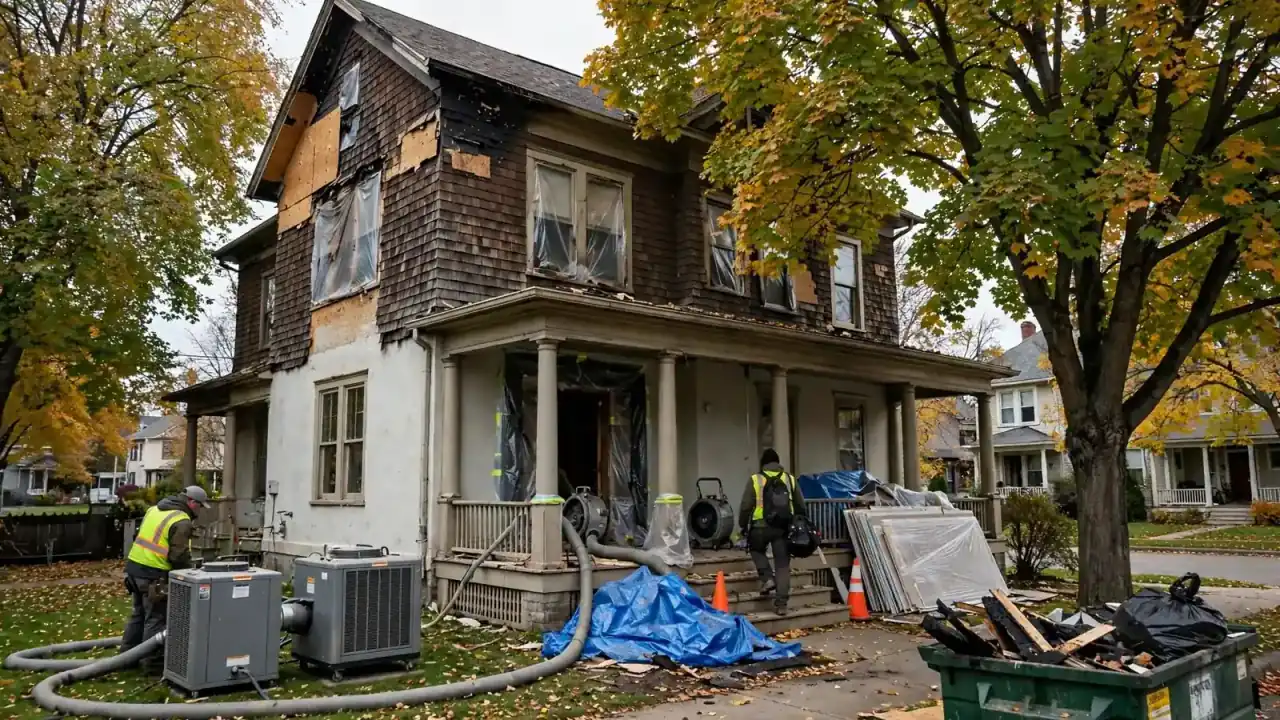
Kenwood is known for mansions and large homes along the parkways overlooking the lakes [5]. Many have two or three stories, large window bays, leaded or stained glass, heavy entry doors and porches. When fire breaks these openings, they are big and often high off the ground, so covering them safely takes lifts or tall ladders and custom-cut panels.
Panels fixed to the opening frames rather than through decorative trim keep the woodwork repairable for restoration.
Leaded glass and decorative windows
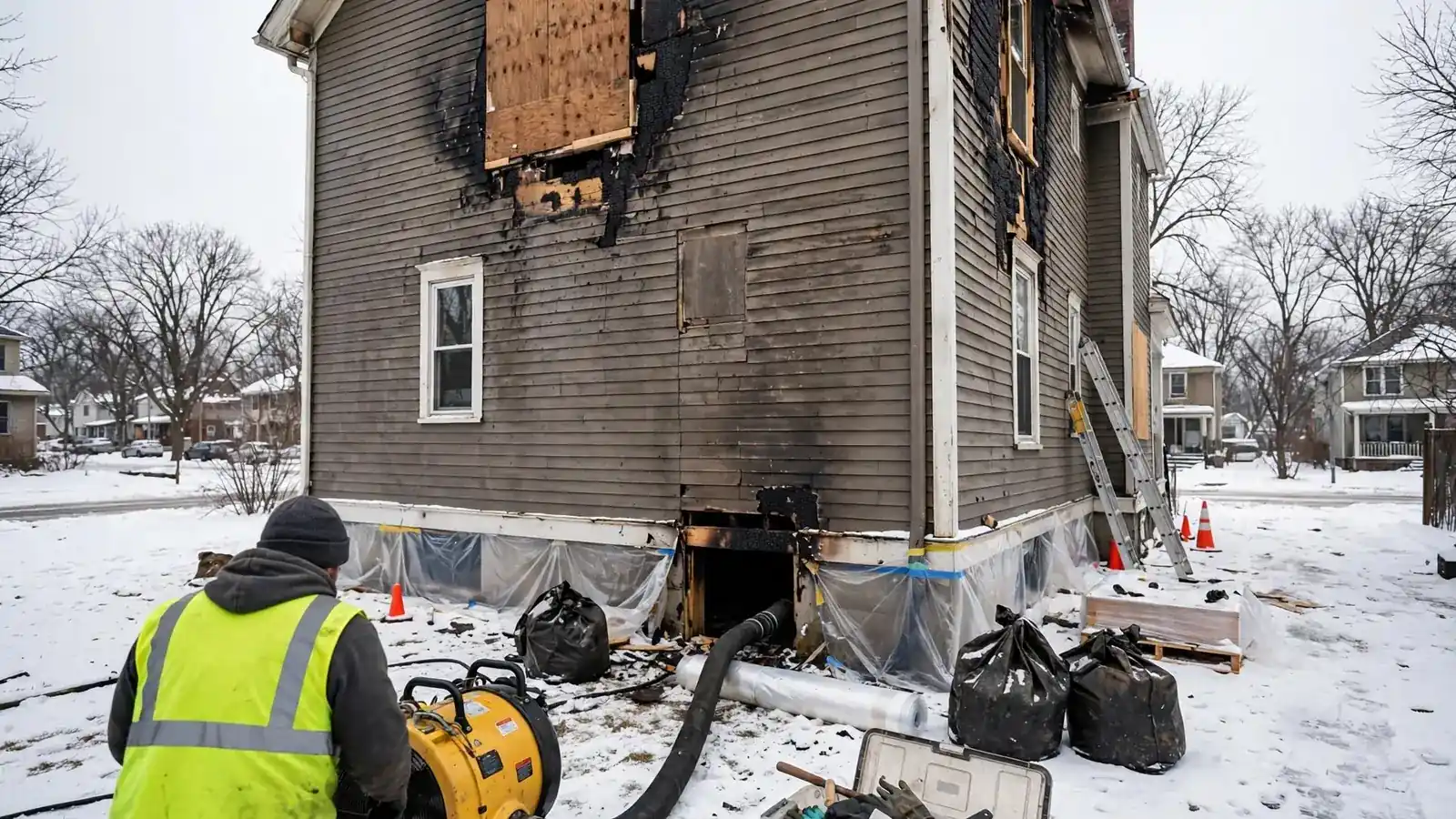
Leaded and stained glass windows are irreplaceable in many of these homes. Heat can crack them and firefighting can break them. Keeping every broken piece lets a glass specialist repair or match them. Ask the crew to bag broken decorative glass and label which window it came from.
Intact decorative windows near the damage can be protected with padded covers so they are not broken during cleanup.
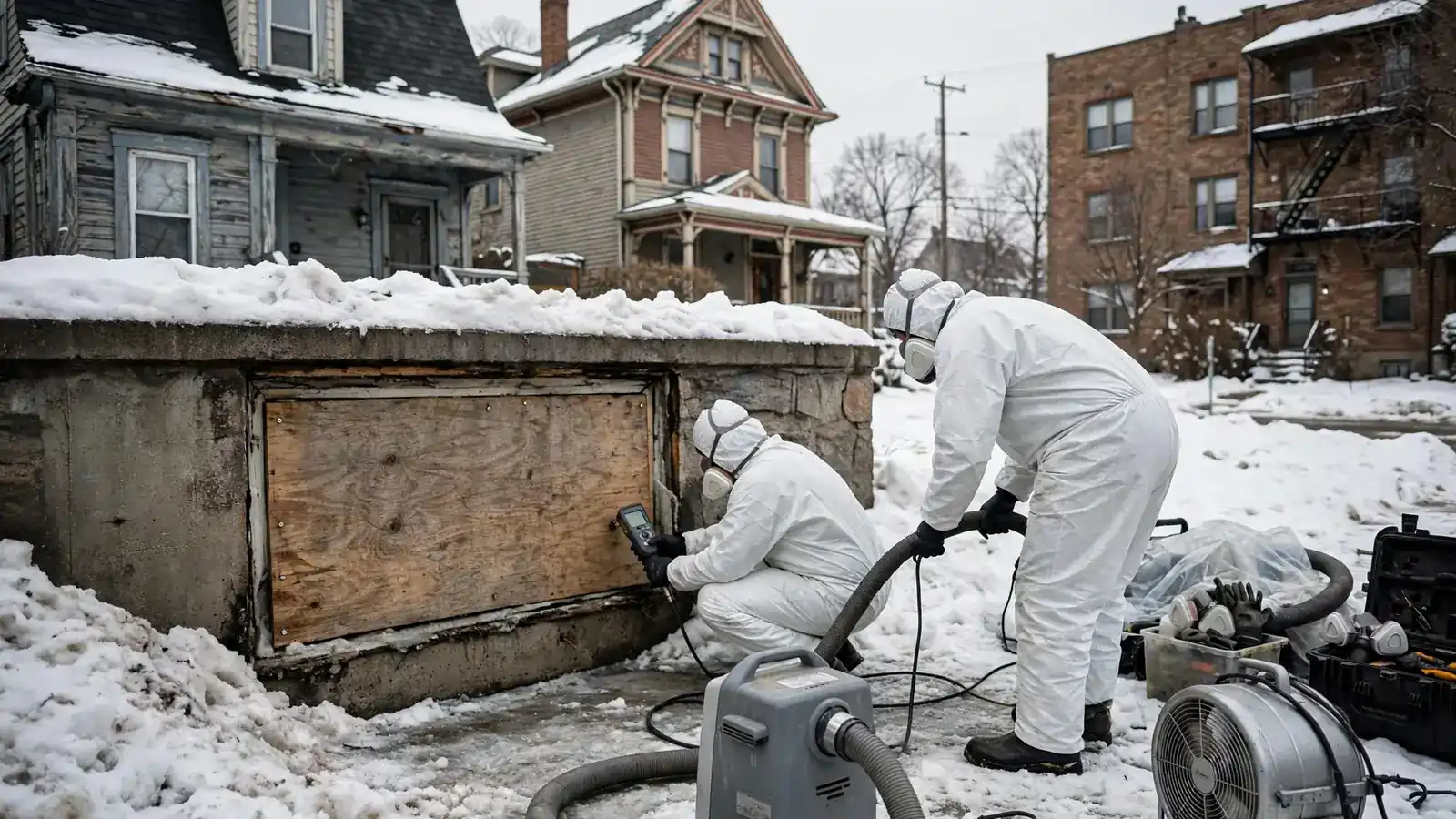
Securing a Kenwood home
A typical sequence.
- 1
Wait for the fire department to release the house
No entry or roof work until released.
- 2
Photograph each elevation and decorative opening
Record glass, doors and roof damage.
- 3
Cover openings with panels fitted to frames
Protect trim; save broken leaded glass.
- 4
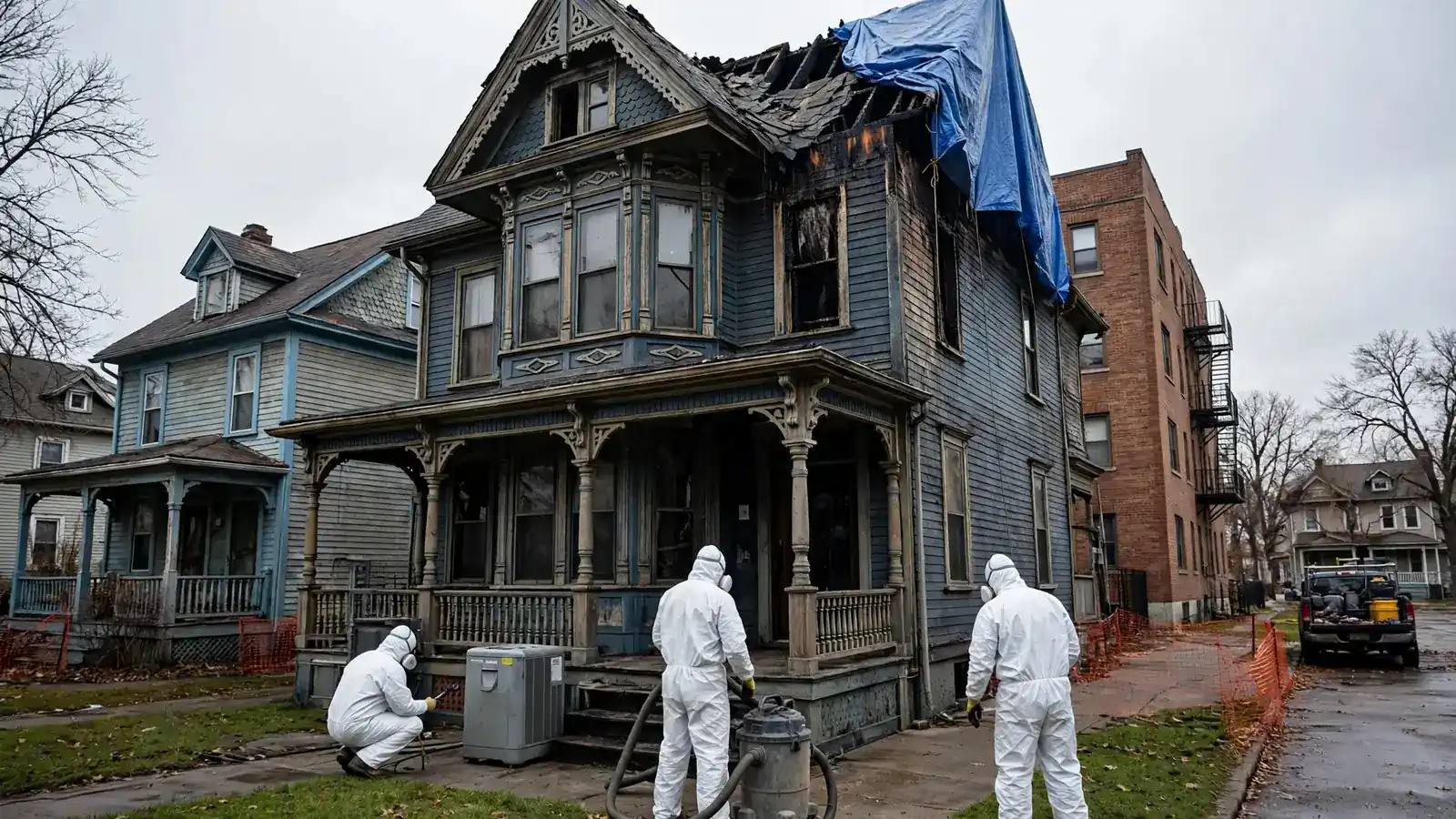
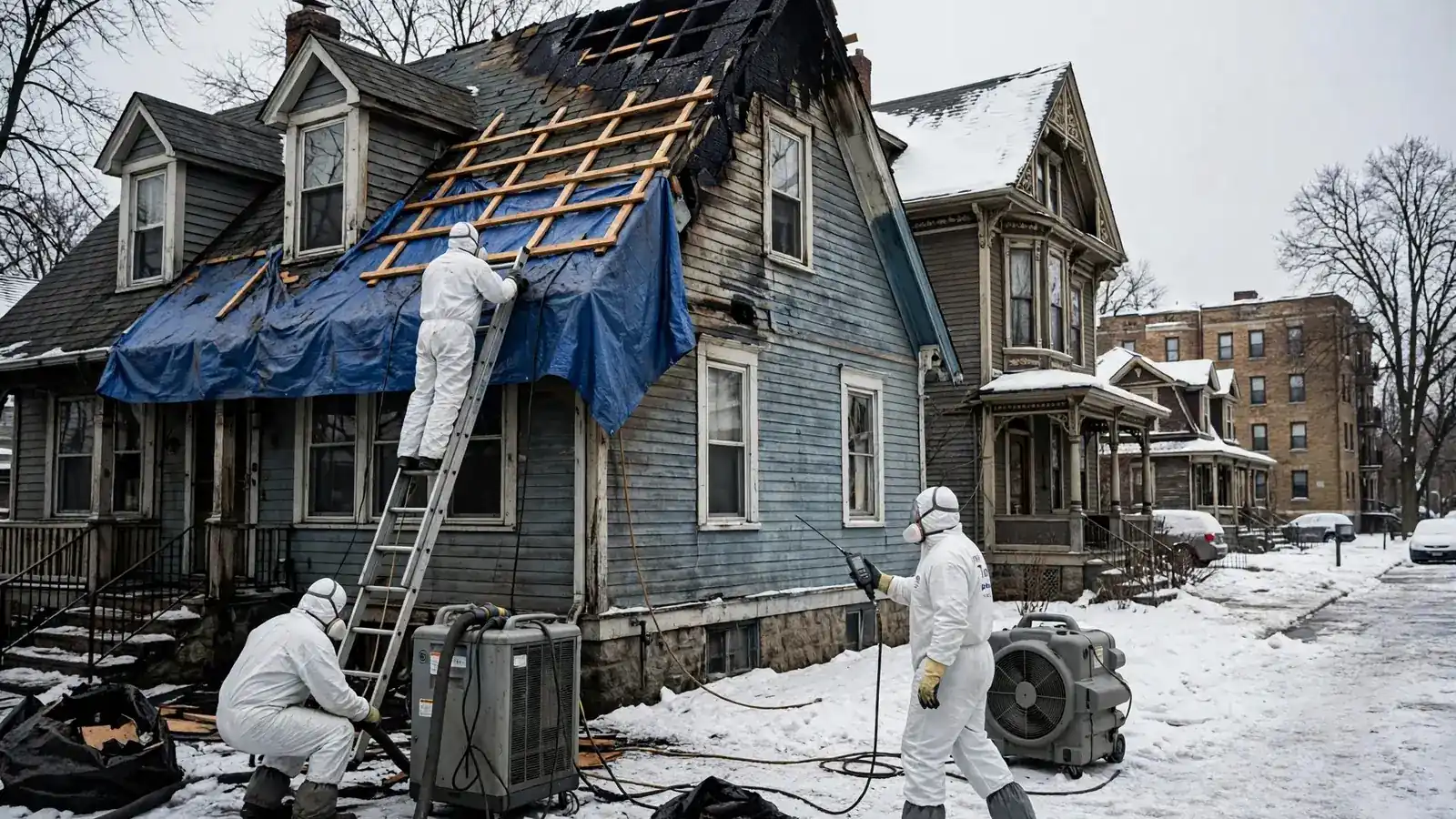
Tarp steep roof sections from lifts
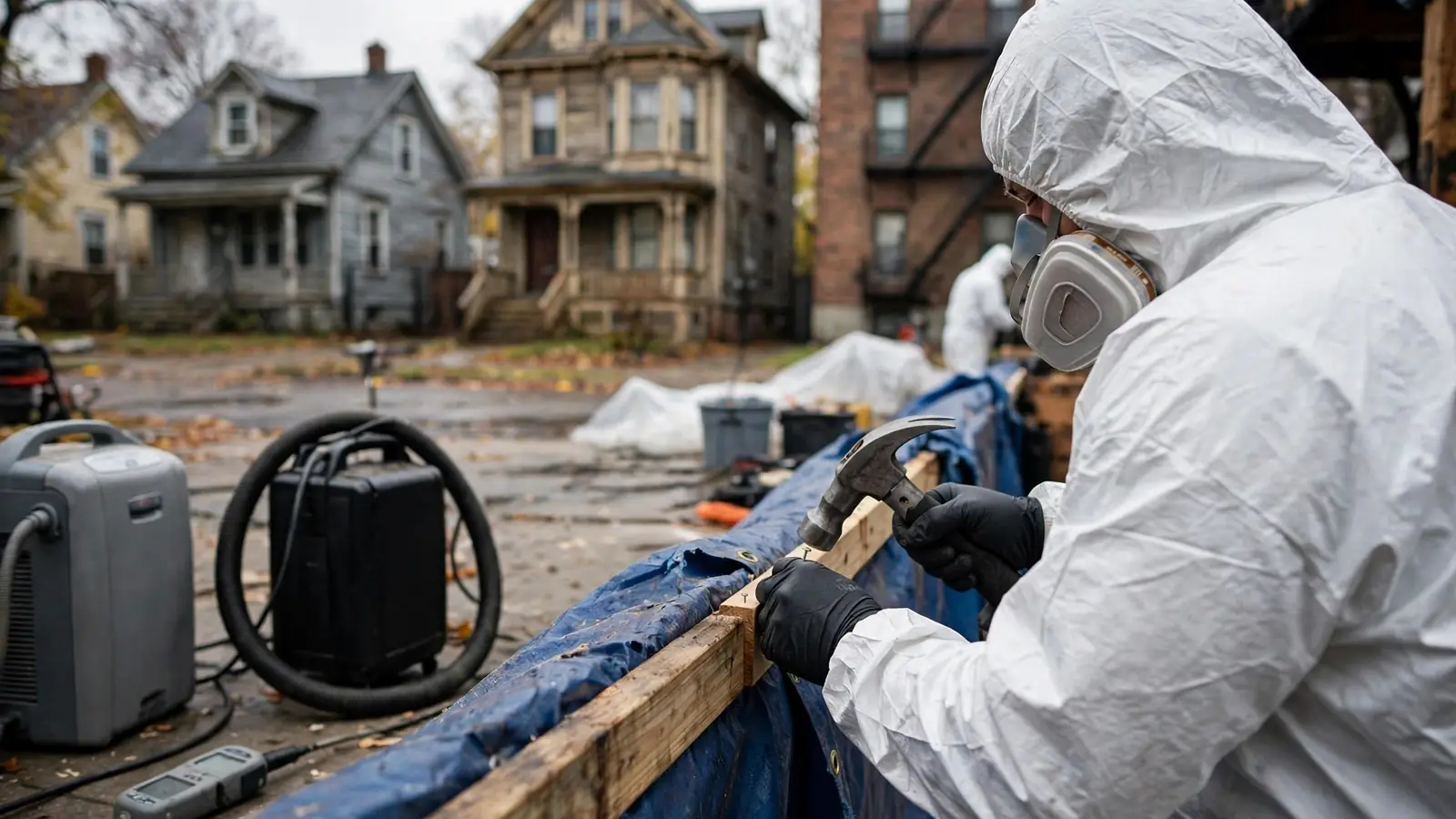
Anchor tarps with battens against wind and snow.
Steep roofs, slate and tile
Some Kenwood houses have slate or clay tile roofs on steep pitches. These materials break underfoot and are slippery, and a fire-damaged roof may be weak. Crews usually work from lifts and avoid walking on slate or tile. Tarps run past the damage and over the ridge where possible, anchored with battens.
Keeping undamaged slate or tile removed during temporary work helps the permanent repair match.
Winter wind and snow near the lakes
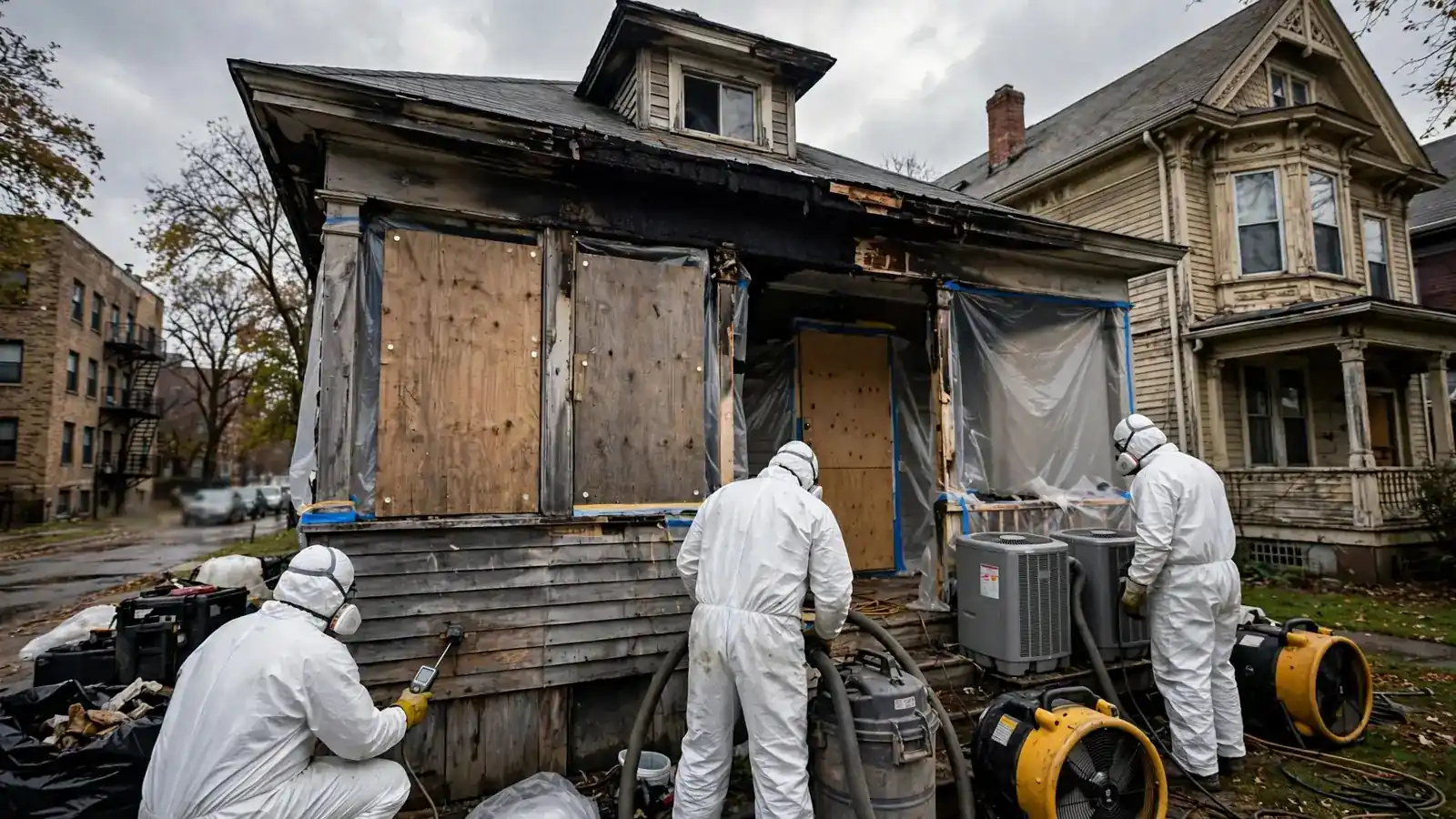
Open areas around Lake of the Isles and Cedar Lake can bring strong wind, and Minneapolis winters bring heavy snow. A tarp must be anchored well, and heavy snow on a damaged roof should be watched from the ground. Forecasts from the National Weather Service Twin Cities office help in planning [2].
In winter, protecting plumbing from freezing is also part of securing the house.
Carriage houses and garages
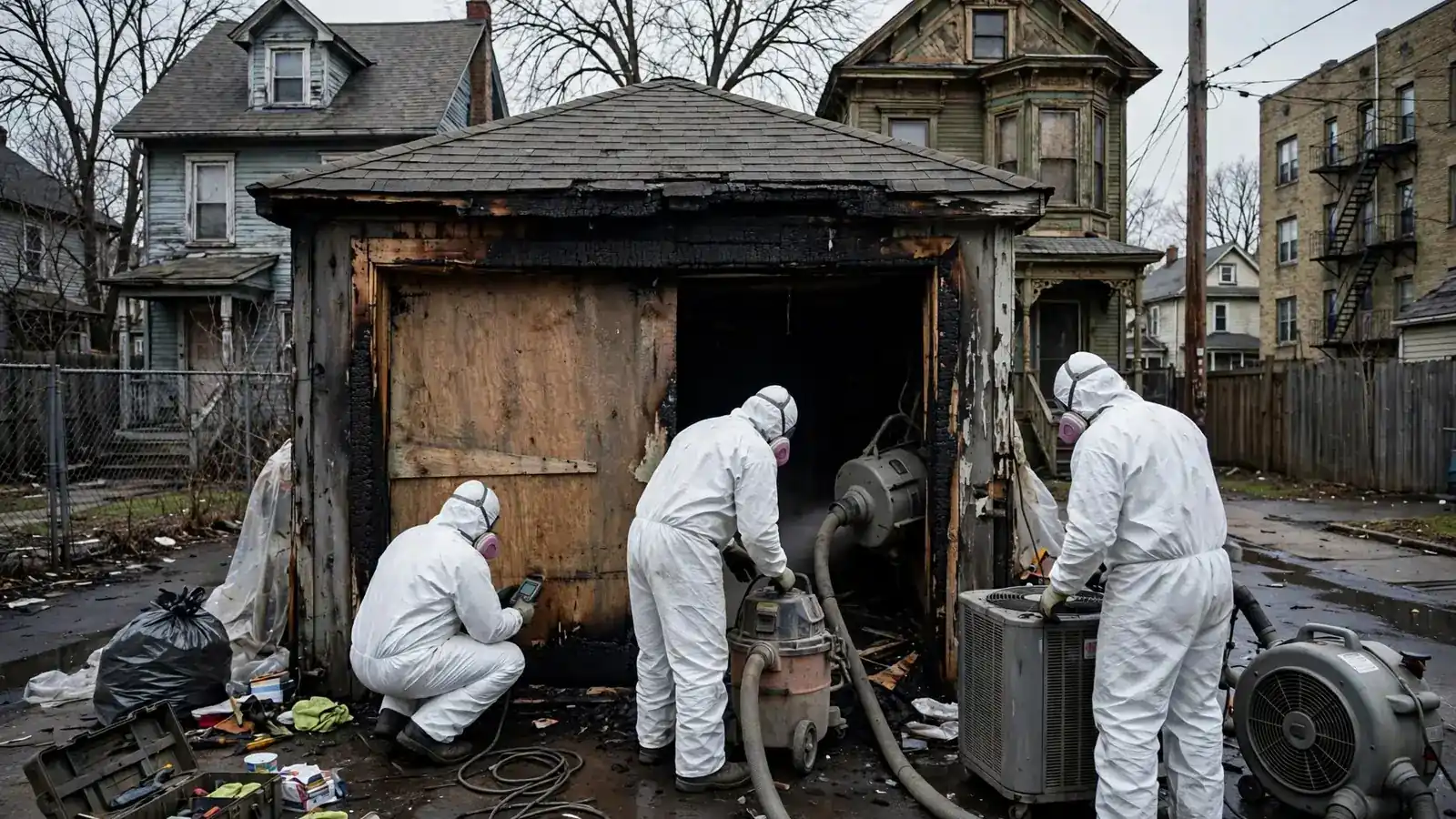
Some larger Kenwood properties have carriage houses or detached garages, sometimes with living space above. If they were damaged, they need their own board-up. Vehicles and valuables stored in them should be photographed before being moved.
The Kenwood page describes these properties in more detail.
Carbon monoxide and temporary heat
If temporary heat is used to keep the house from freezing, it must be set up safely. Fuel-burning heaters can produce carbon monoxide, and Minnesota requires carbon monoxide alarms in homes [4].
Ask the contractor how the heat will be monitored while the house is empty.
After securing
Once closed in, the house can be assessed floor by floor. In tall houses, smoke rises to the upper floors and water used upstairs runs down. Our page on smoke damage cleanup explains what usually follows. The Minnesota Department of Commerce Disaster Information Center has guidance on claims and living expenses [3].
Valuables such as art and jewelry should be removed once the fire department allows entry.
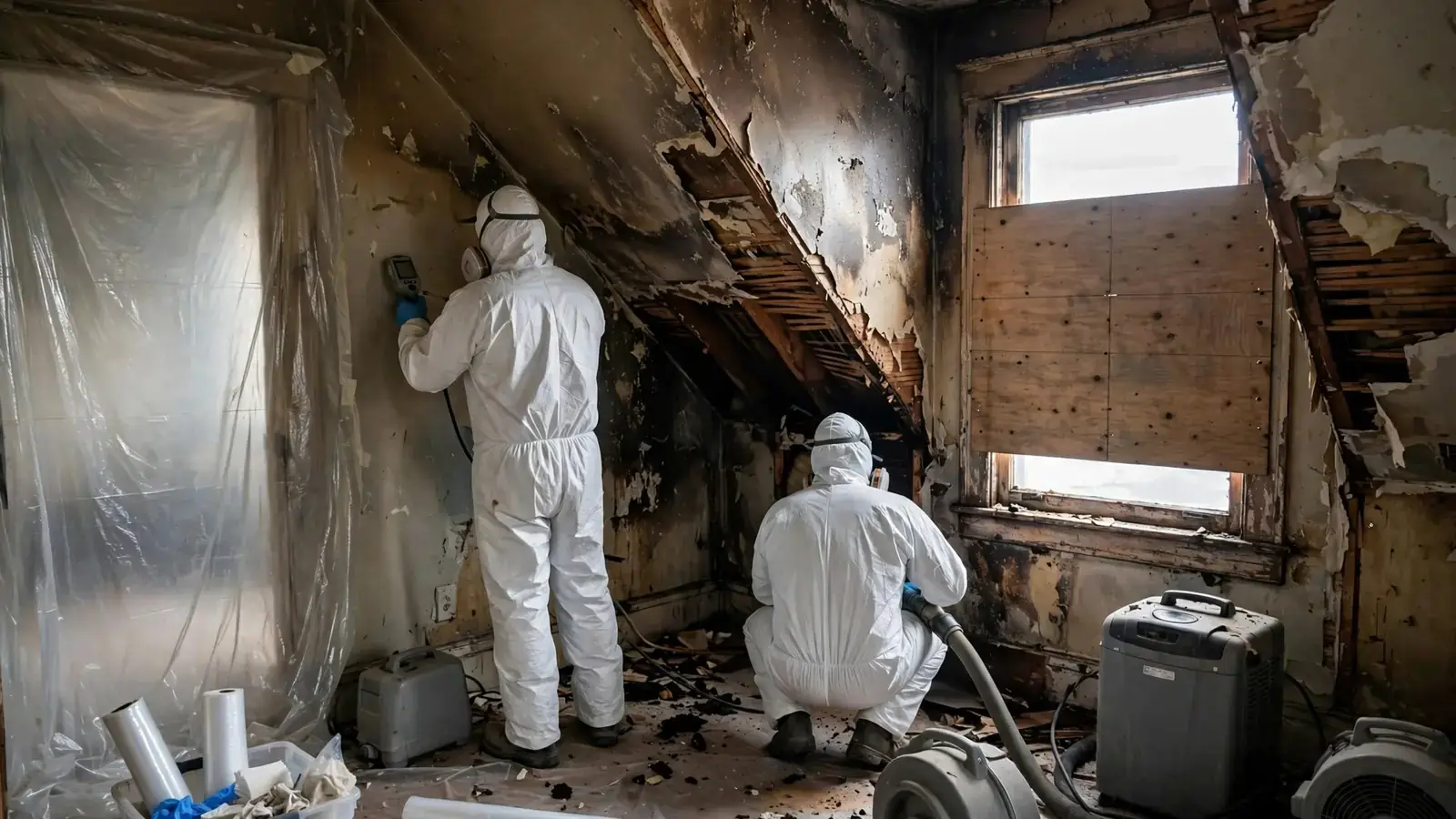
Keeping a large empty house secure
An empty, damaged mansion on a quiet parkway can attract attention. Solid panels on every ground-floor opening, locked gates and a clear sign help. Some owners arrange for a neighbor or service to check the property regularly. Valuables such as jewelry, art and documents should be removed as soon as the fire department allows.
Keep a list of what you removed and where it is stored.
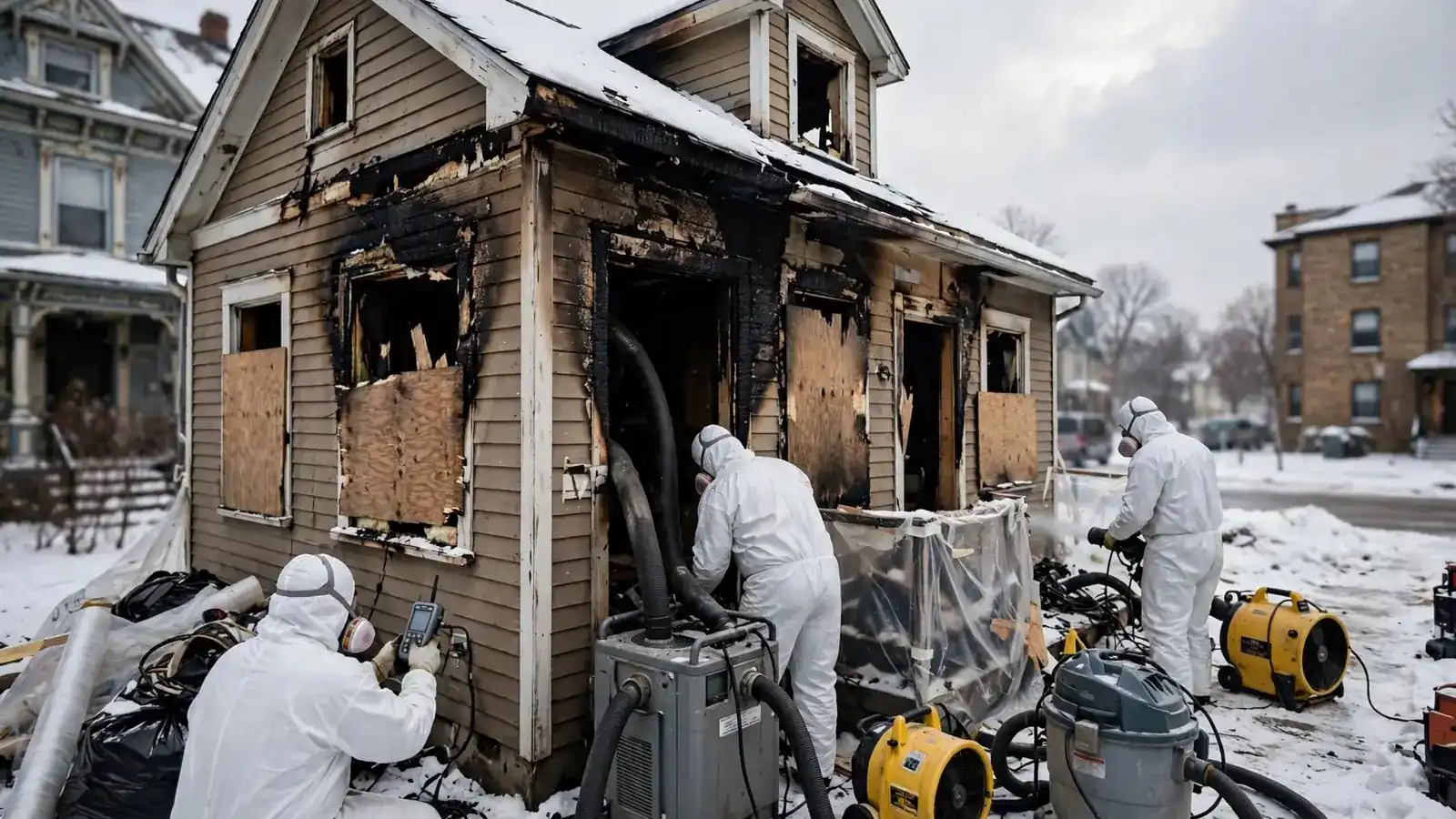
Porches, terraces and entries
Kenwood houses often have wide porches, stone terraces and formal entries. Heat can scorch porch ceilings and columns, and broken glass and debris collect on terraces. Clearing debris and covering damaged porch roofs keep visitors safe and stop water from reaching the house through the porch structure.
FAQ
Board-Up and Tarping in Kenwood: questions
Can leaded glass windows be saved?
Often, if the pieces are kept. A glass specialist can repair or match damaged panels.
Can slate roofs be tarped without more damage?
Yes, when crews work from lifts and avoid walking on the slate.
What about pipes freezing in winter?
The plumbing may need draining or safe temporary heat while the house is open or unheated.