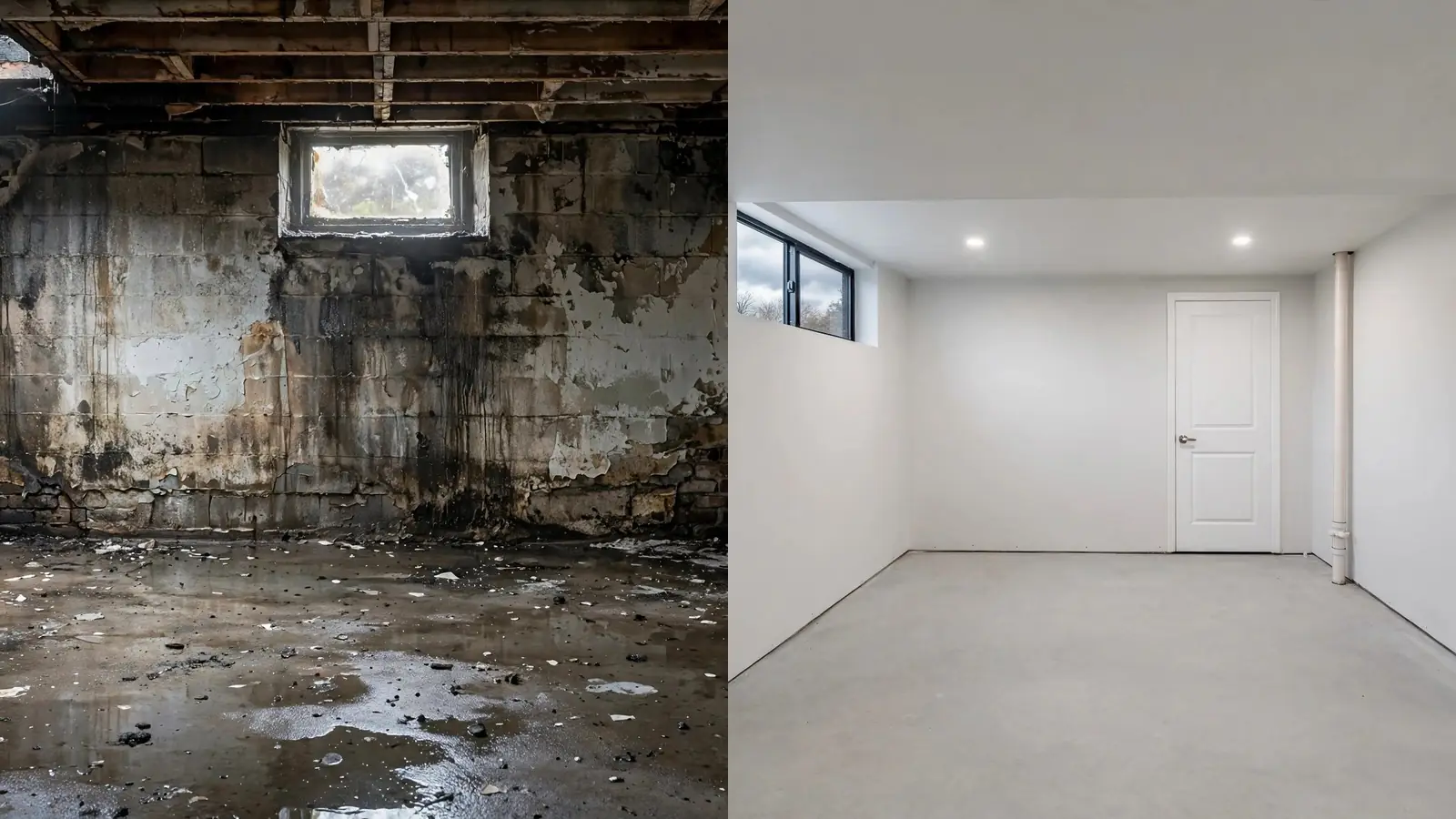
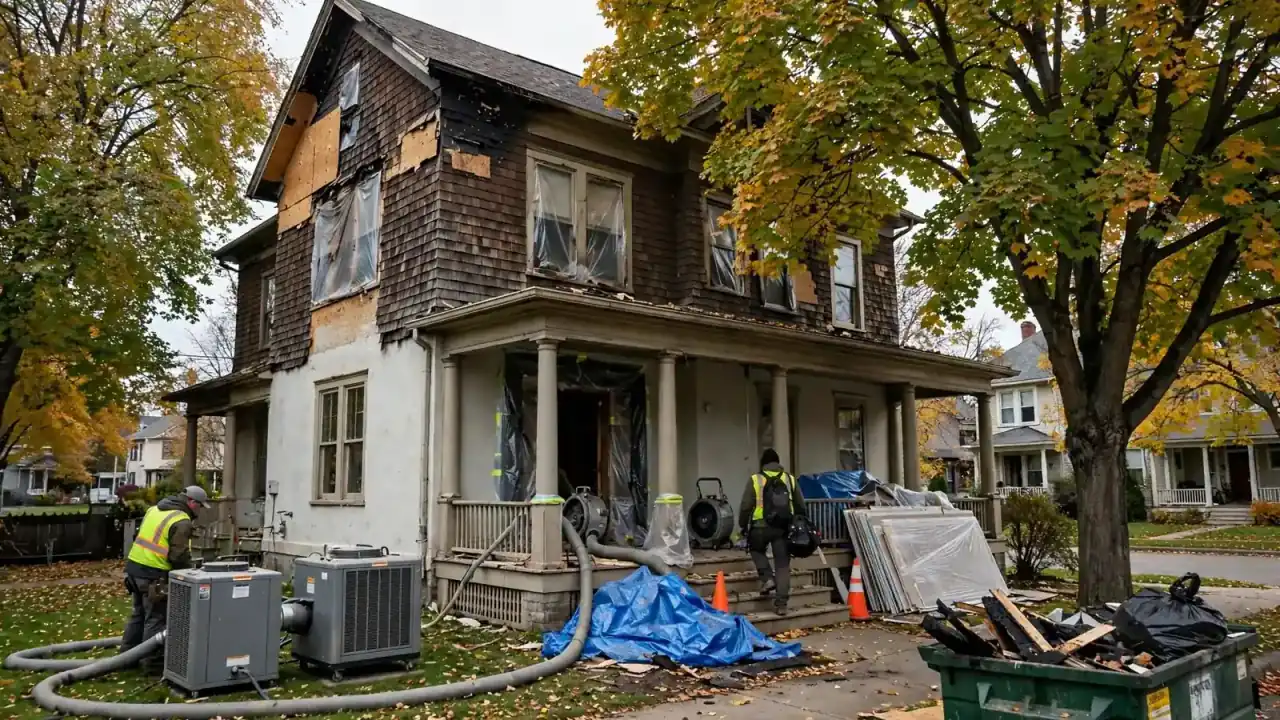
Key facts: Firefighting Water Damage in Kenwood
- For a soaked Kenwood house, EPA guidance is to have wet materials drying within a day or two so mold cannot get established [1].
- Professional drying follows the IICRC S500 water damage standard [2].
- The U.S. Fire Administration notes that belongings not touched by fire can still be ruined by firefighting water [3].
How water moves down a Kenwood house
Water used on an upper floor soaks through floors and ceilings and runs down wall cavities to every level below. In a large house, that can mean wet materials on three floors and in the basement. Mapping moisture floor by floor shows where to focus drying.
Grand staircases can also channel water downward.
Plaster ceilings
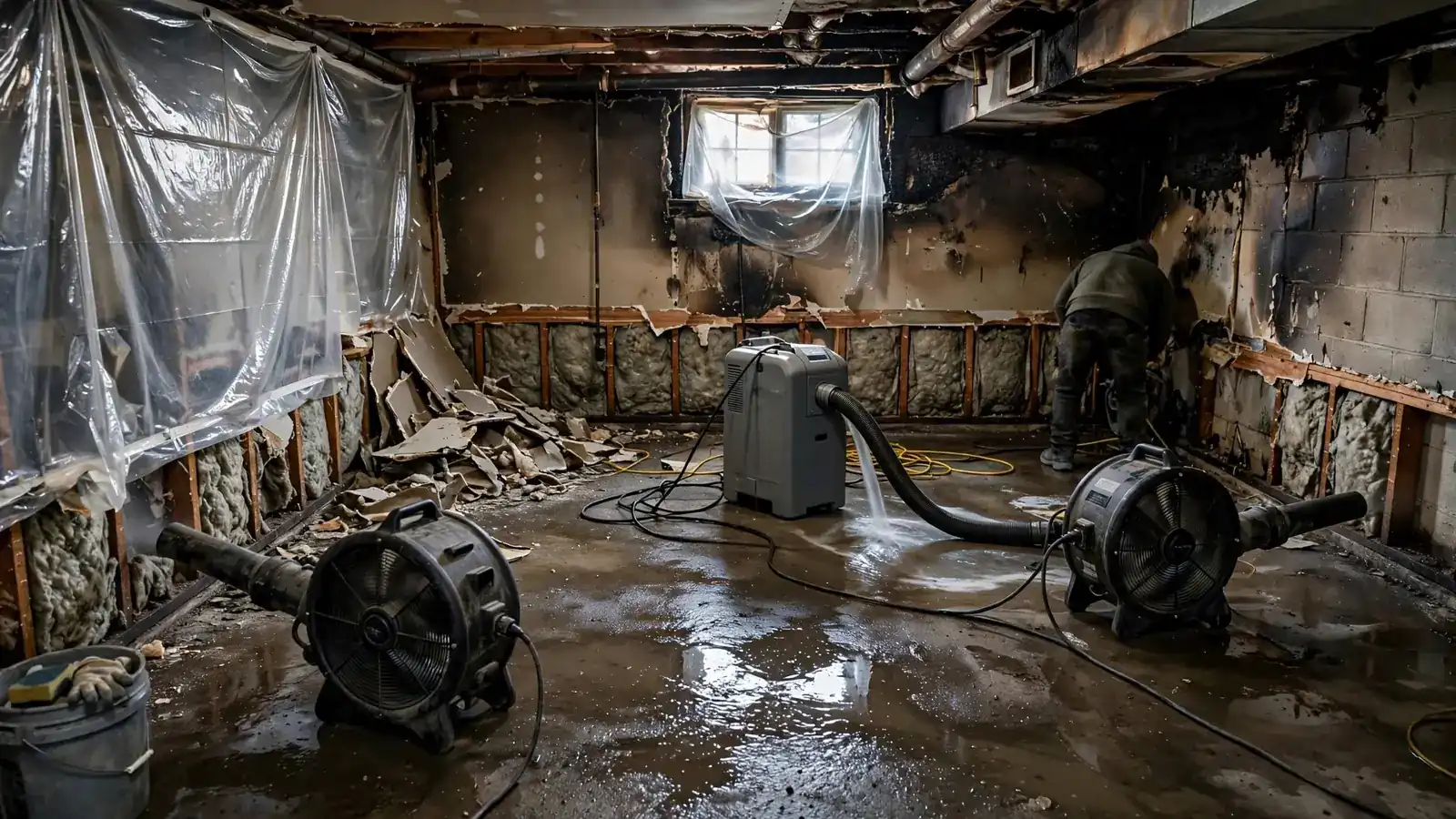
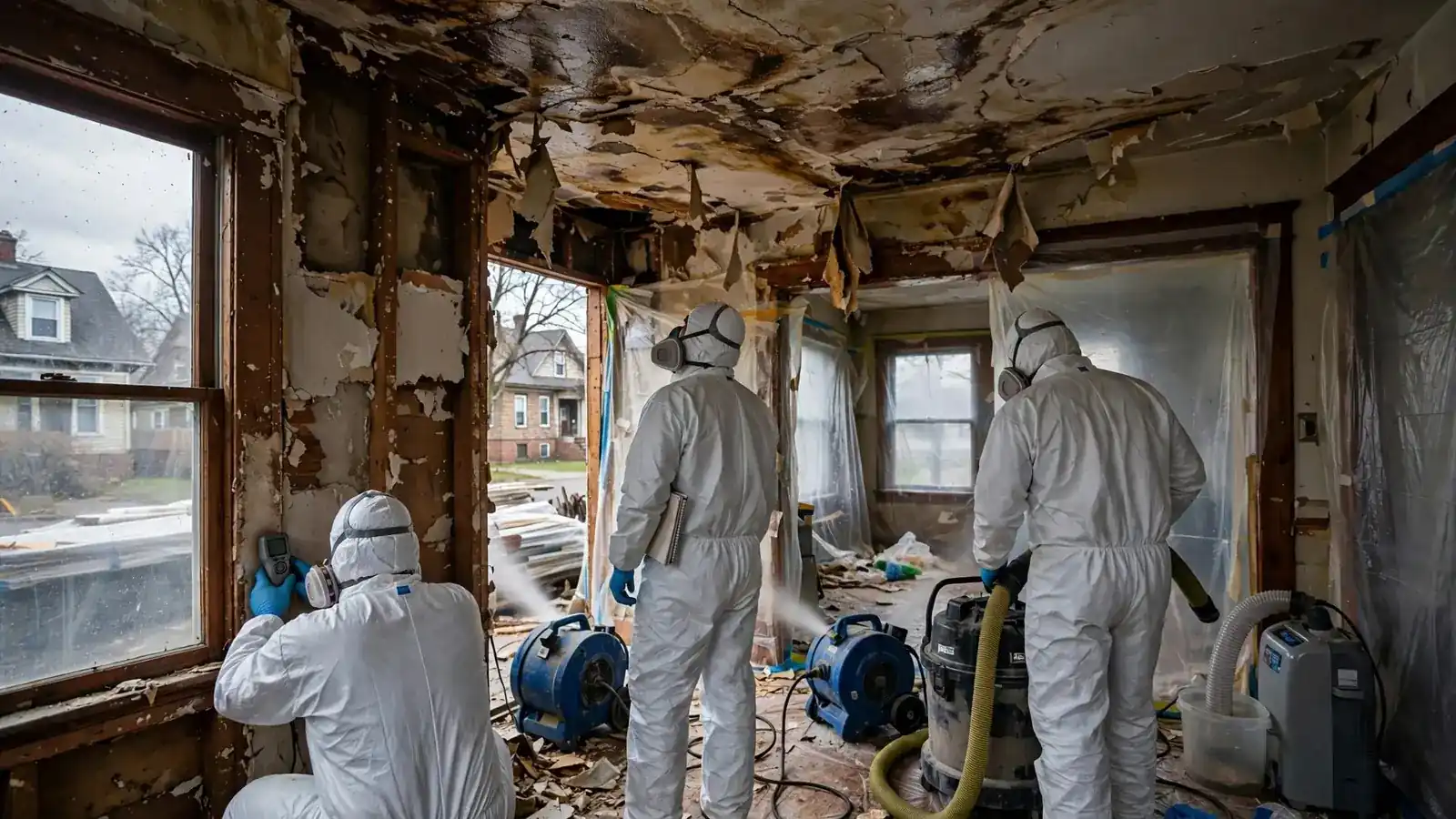
Plaster ceilings, often with moldings, hold water and can sag. A bulging ceiling may fall; keep people out and tell the contractor. Plaster that stays bonded can often be dried in place; separated plaster may need to come down.
Ornate plaster can be repaired by specialists after drying.
Drying a large Kenwood house
A floor-by-floor approach.
- 1
Extract water on every level
Floors, rugs and the basement.
- 2
Map moisture from attic to basement
Find wet ceilings, walls and floors.
- 3
Release trapped water and set equipment
Open ceilings where needed; place dryers on each floor.
- 4
Monitor until dry
Daily readings to normal levels.
Hardwood and parquet floors
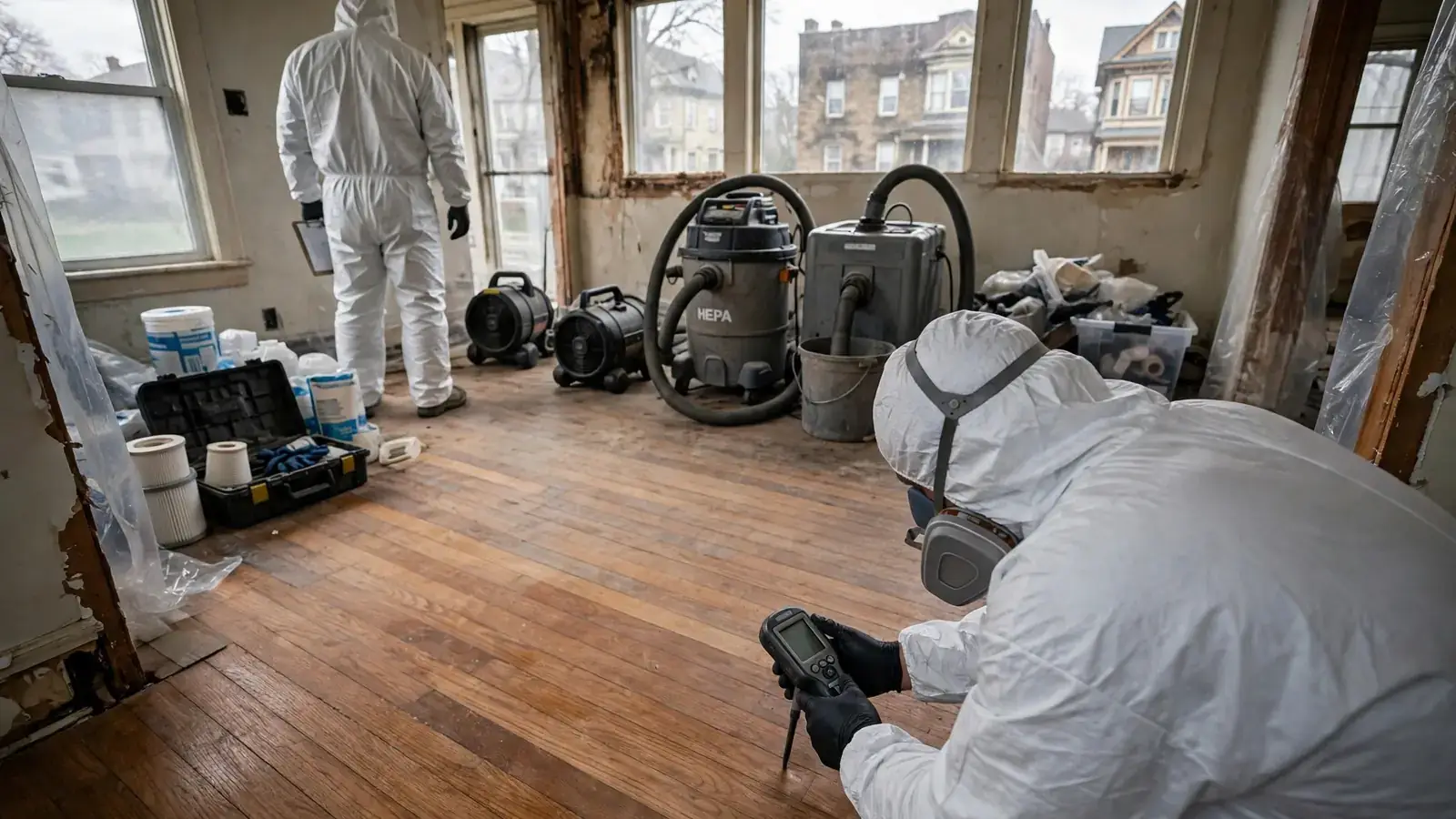
Fine wood floors swell and cup when wet. Dried slowly and evenly, many return close to flat and can be refinished. Parquet may loosen and need regluing.
Rugs should be lifted so floors can dry and rugs can be cleaned by specialists.
Basements and mechanical rooms
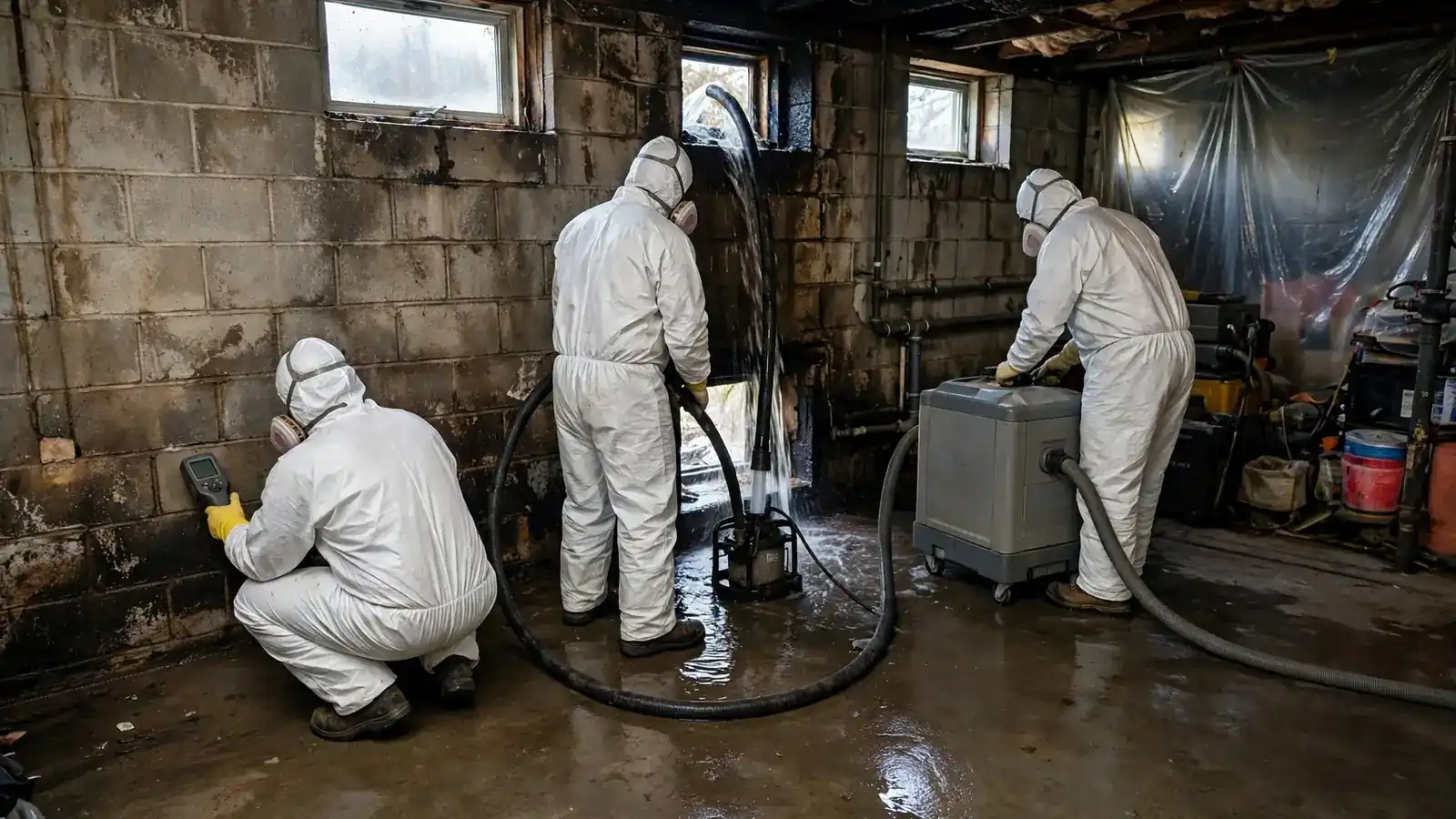
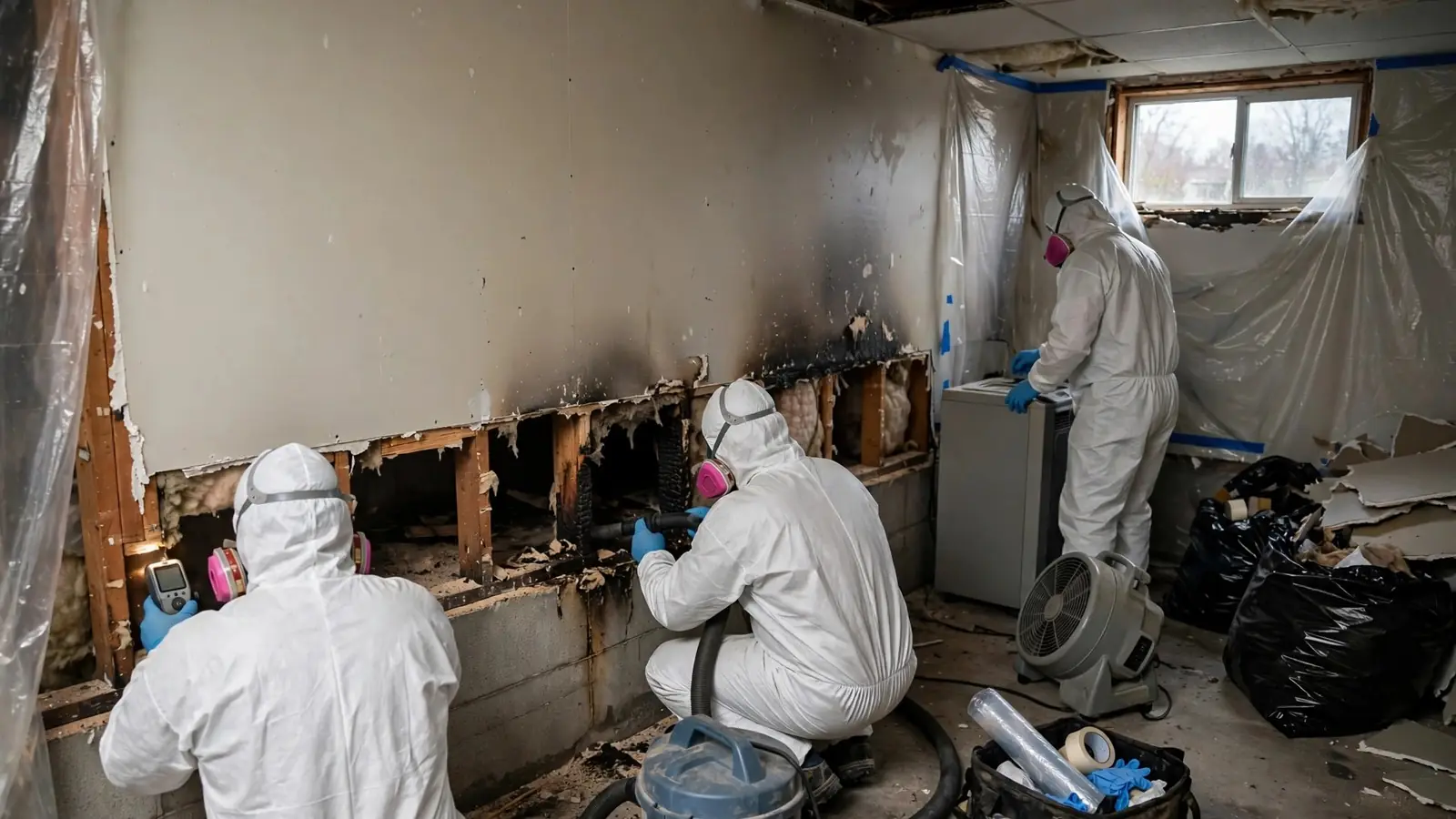
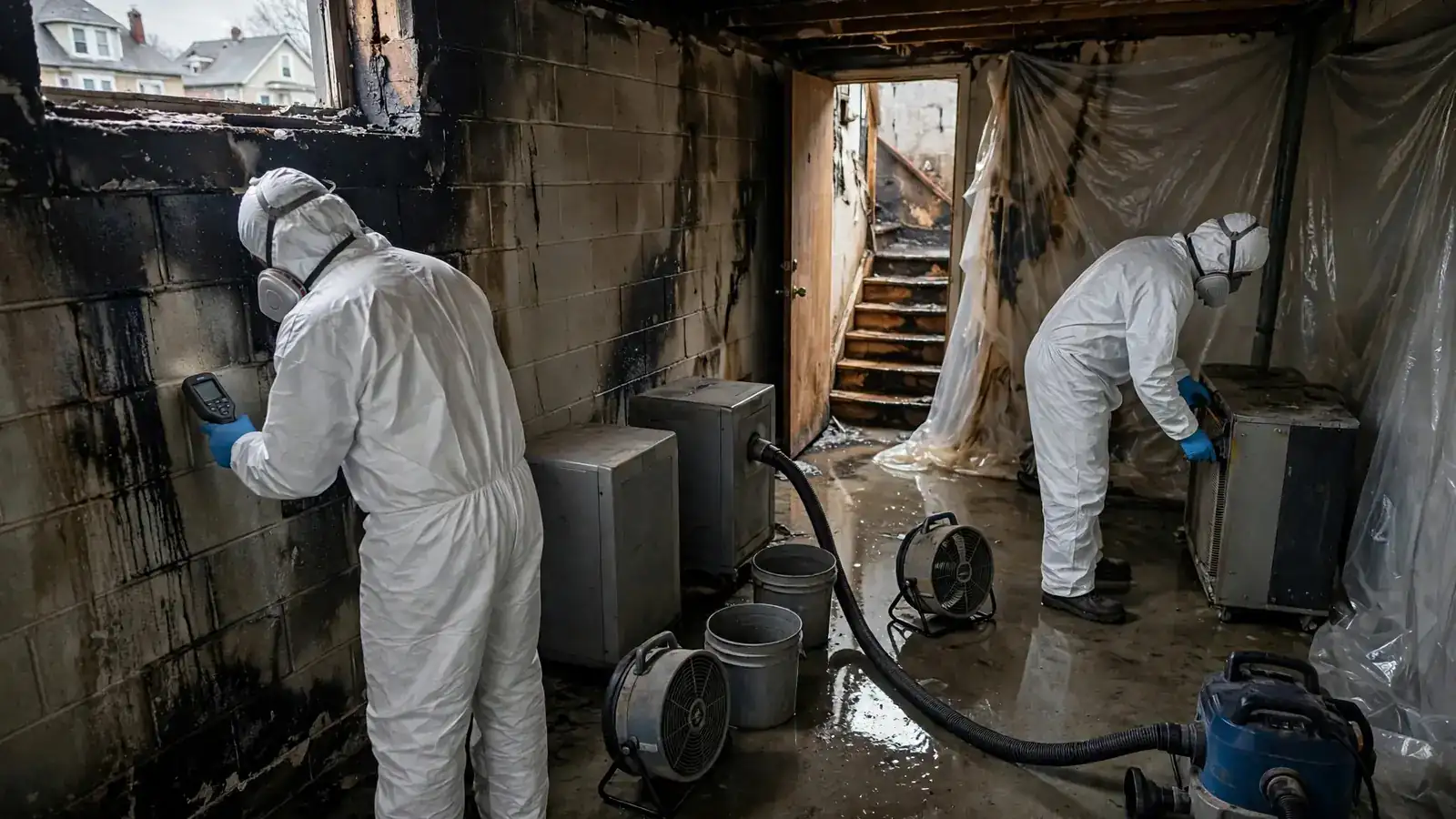
Water collects in the basement, where boilers, furnaces and storage are often located. Standing water is pumped out, and equipment is checked before use. The Minnesota Department of Health notes that moisture can lead to mold [4].
Stored items are sorted and dried or discarded.
Signs of trapped water
Watch for these.
- Bulging plasterWater above the ceiling.
- Cupping floorsWater in the wood.
- Damp basement wallsWater still below.
- Peeling paintWater inside walls.
Contents and valuables
Rugs, art, books and furniture soaked by firefighting need quick attention. Specialists can dry and restore many items. Photograph everything before moving it.
Freezing wet books and papers stops mold until they can be dried.
From drying to restoration
Once dry, smoke damage cleanup and repairs can begin. The Minnesota Department of Commerce Disaster Information Center explains claims guidance [6].
Painting over damp plaster leads to peeling and mold.
Wall cavities and insulation
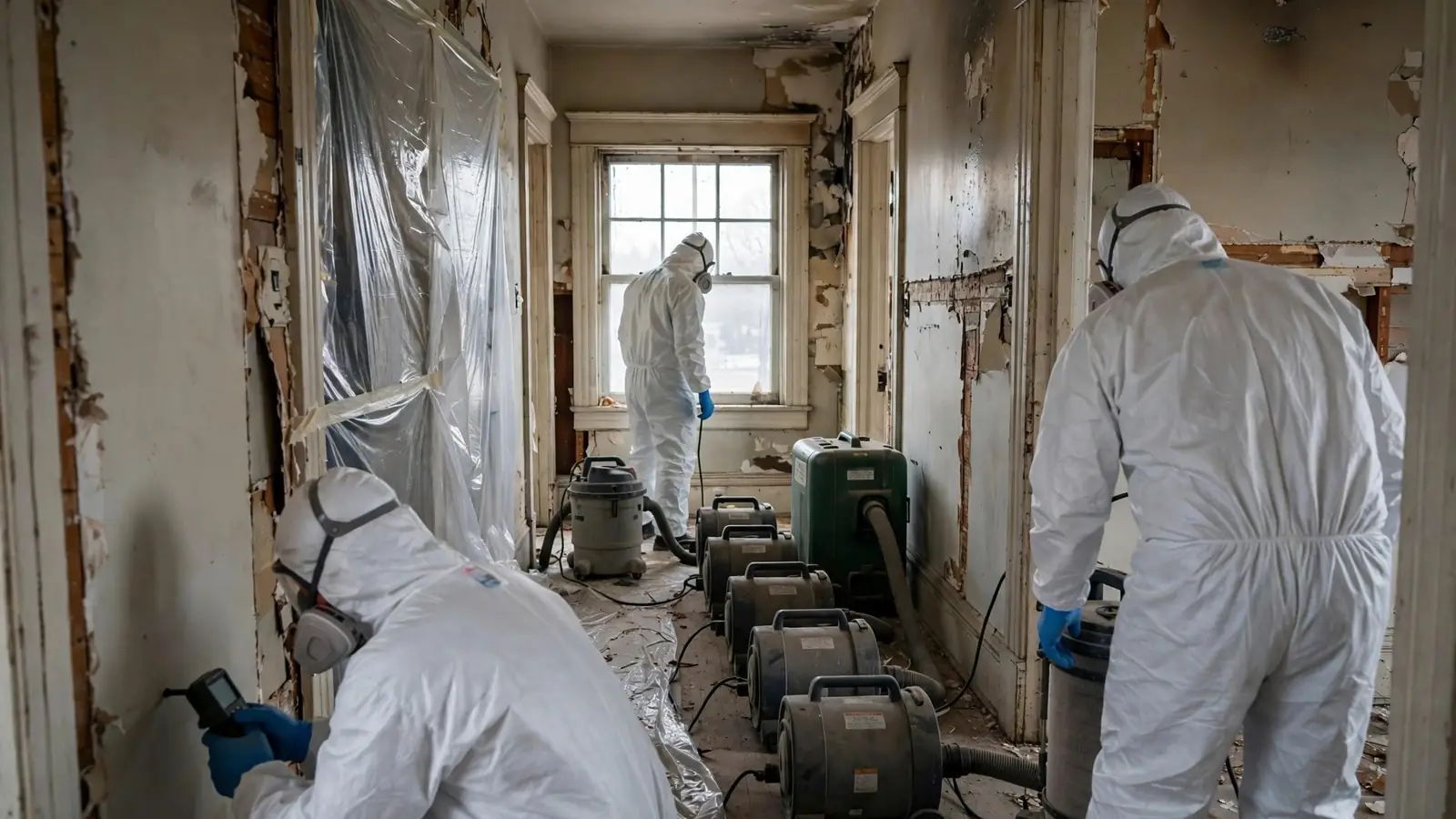
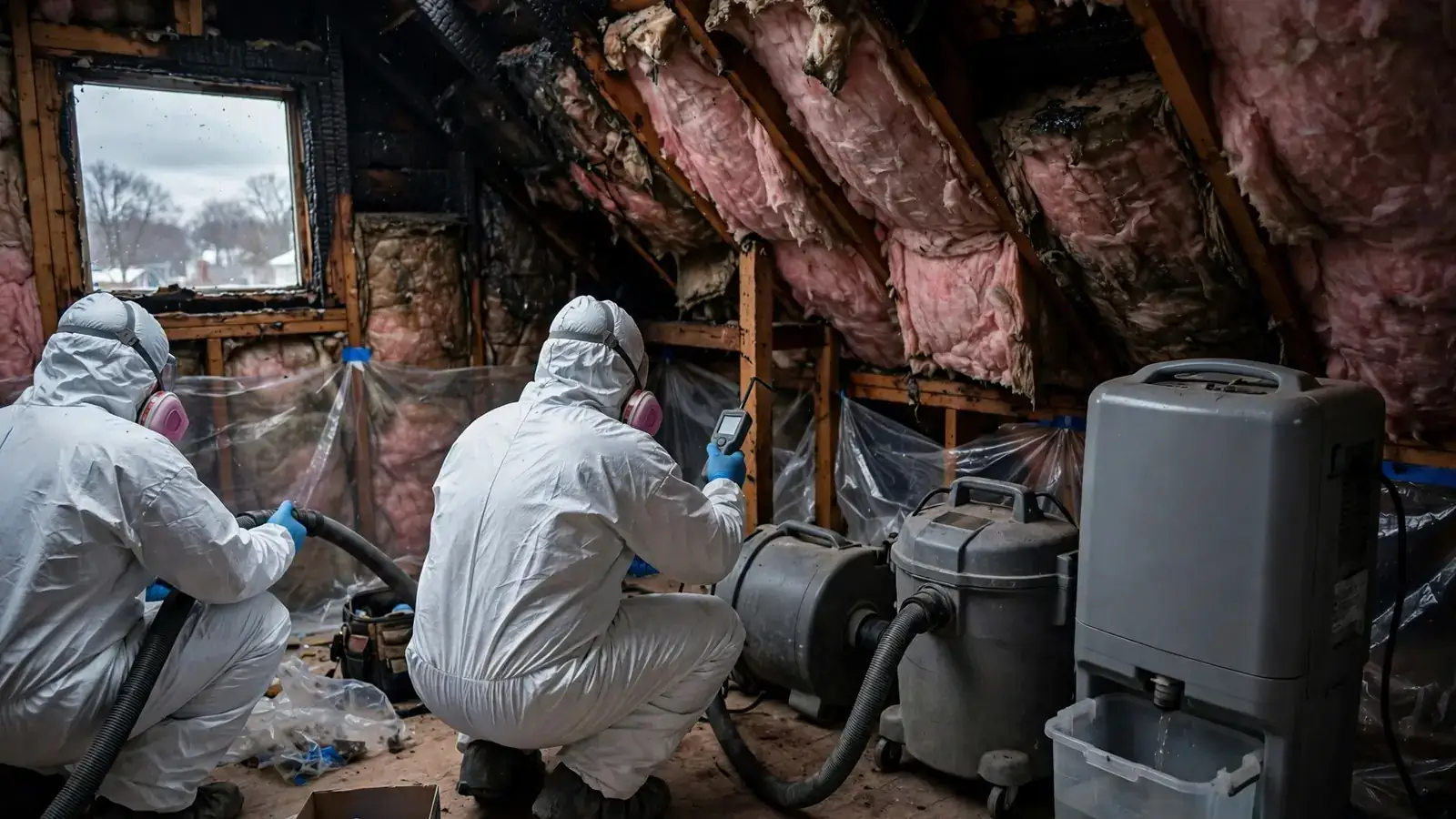
Water runs down inside walls from upper floors to the basement. Older houses may have little insulation, but any that is present becomes soaked. Plaster walls dry slowly. Opening baseboards or small sections lets air reach the cavities without removing large areas of original plaster.
Moisture readings guide how much needs to be opened.
Electrical systems and fixtures
Water coming through ceilings often runs along wiring and into light fixtures. Power to affected circuits should stay off until an electrician has checked them. Older houses may have wiring from several eras, and some may need replacement after water exposure.
Drying equipment can run from safe circuits or temporary power.
Stairways and woodwork
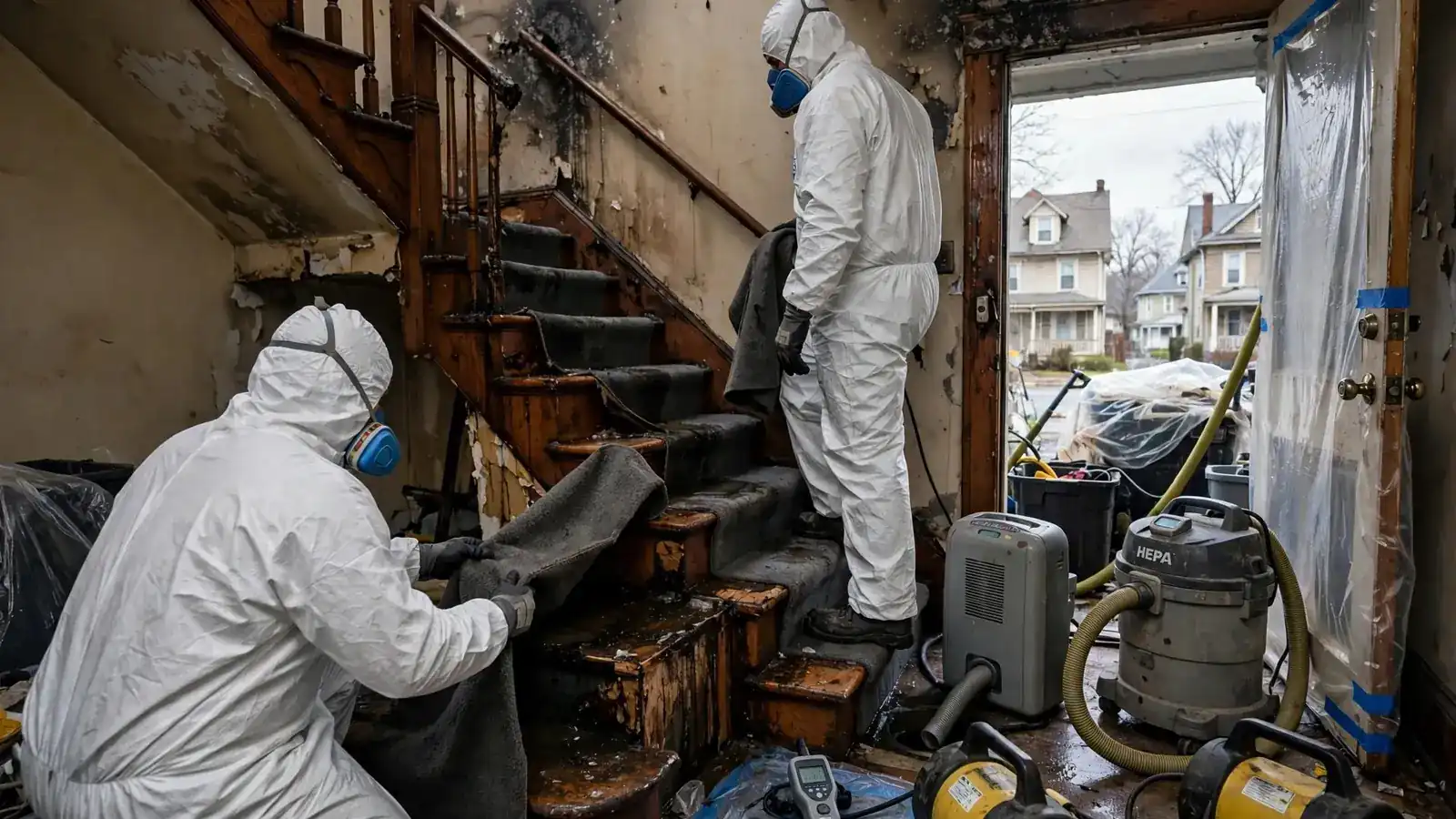
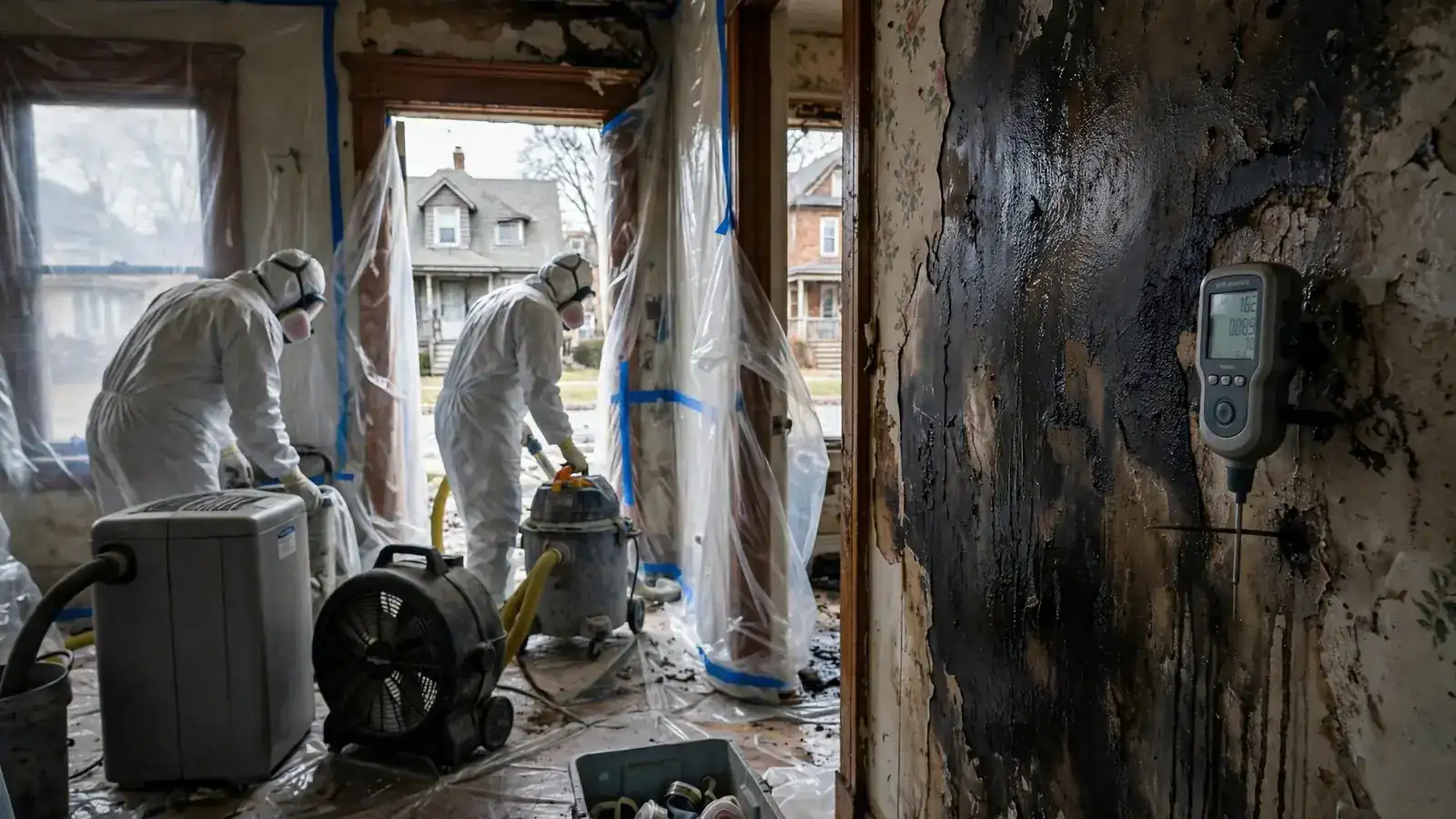
Water running down a grand staircase soaks treads, risers and stringers. Wood can swell and creak once dry. Carpet runners are removed so stairs can dry evenly. Paneling and woodwork that got wet are dried slowly to avoid cracking.
Refinishing waits until the wood has returned to normal moisture.
Rugs, furniture and art
Oriental rugs, upholstered furniture and paintings soaked by firefighting water need quick action. Rugs should be lifted and sent to specialist cleaners, who can dry them without color bleeding. Furniture is moved to dry areas. Paintings that got wet should go to a conservator promptly.
Photograph every item before it is moved.
Radiators, boilers and heating
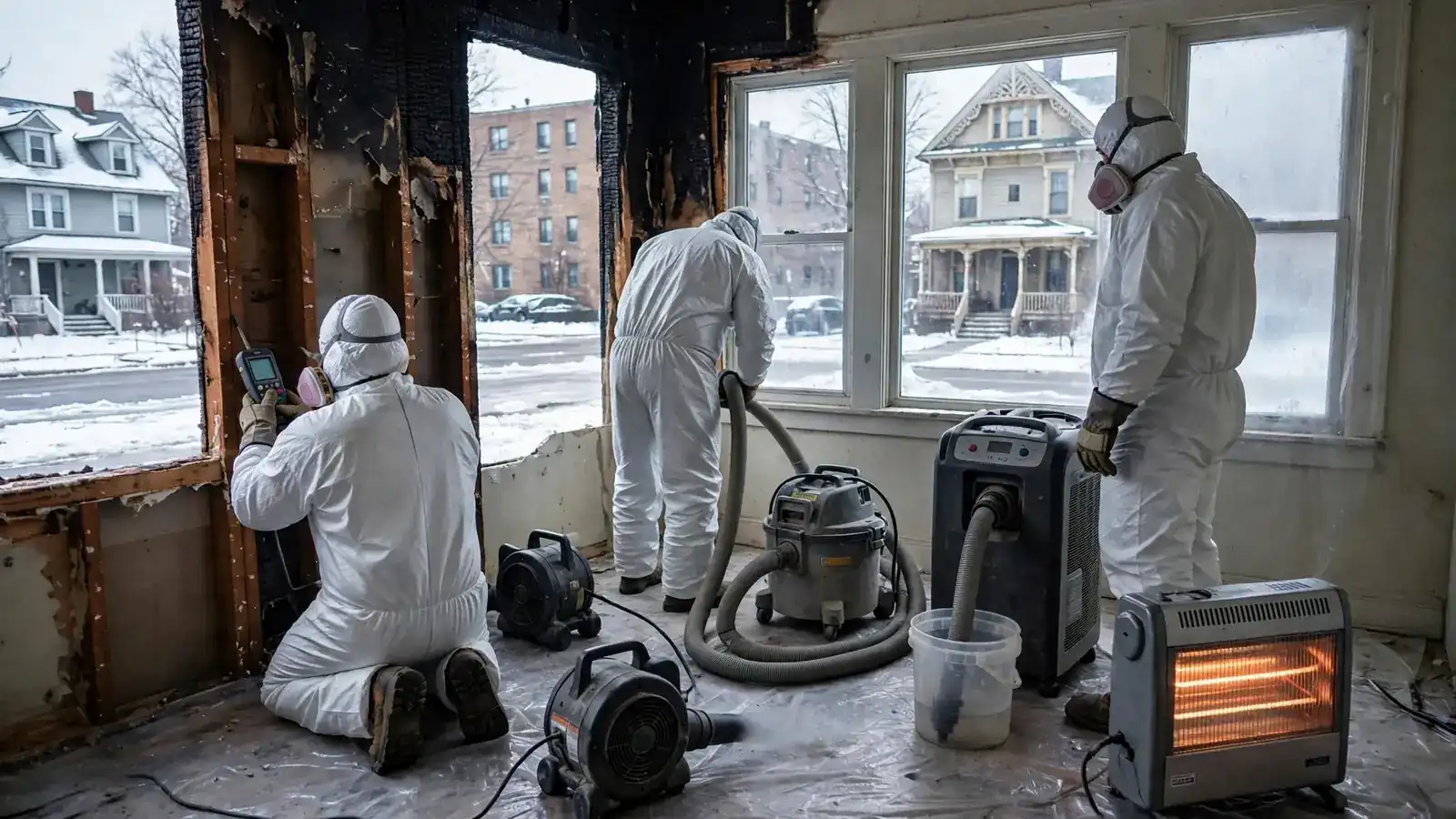
Water reaching a boiler room or soaking radiator connections can affect the heating system. A qualified technician should check the boiler before it is restarted. In winter, safe temporary heat may be needed while the system is checked.
Tracking drying progress floor by floor
The contractor takes moisture readings every day on each floor and moves equipment as areas dry. Upper floors often dry first while basements take longer. Keeping a simple log of readings and photos helps you see progress and gives your insurer a clear record of how long drying took and why.
Rebuilding should wait until every floor reads dry.
Ceilings with plaster detail
Ceilings with medallions and cornices are checked carefully after water exposure. Plaster detail can loosen as it gets wet and fall later as it dries. Specialists can reattach or recast damaged detail once the ceiling is dry.
FAQ
Firefighting Water Damage in Kenwood: questions
Why is water in my basement after an upstairs fire?
Water runs down through every floor to the lowest level.
Can parquet floors be saved?
Often. Some pieces may need regluing after drying.
Is a sagging plaster ceiling dangerous?
Yes, it may fall. Keep people out and tell the contractor.
Sources and citations
- [1]U.S. EPA: A brief guide to mold, moisture and your home
- [2]IICRC: S500 Standard for Professional Water Damage Restoration
- [3]U.S. Fire Administration: After a fire
- [4]Minnesota Department of Health: Mold and moisture in homes
- [5]National Weather Service: Twin Cities forecast office
- [6]Minnesota Department of Commerce: Disaster Information Center