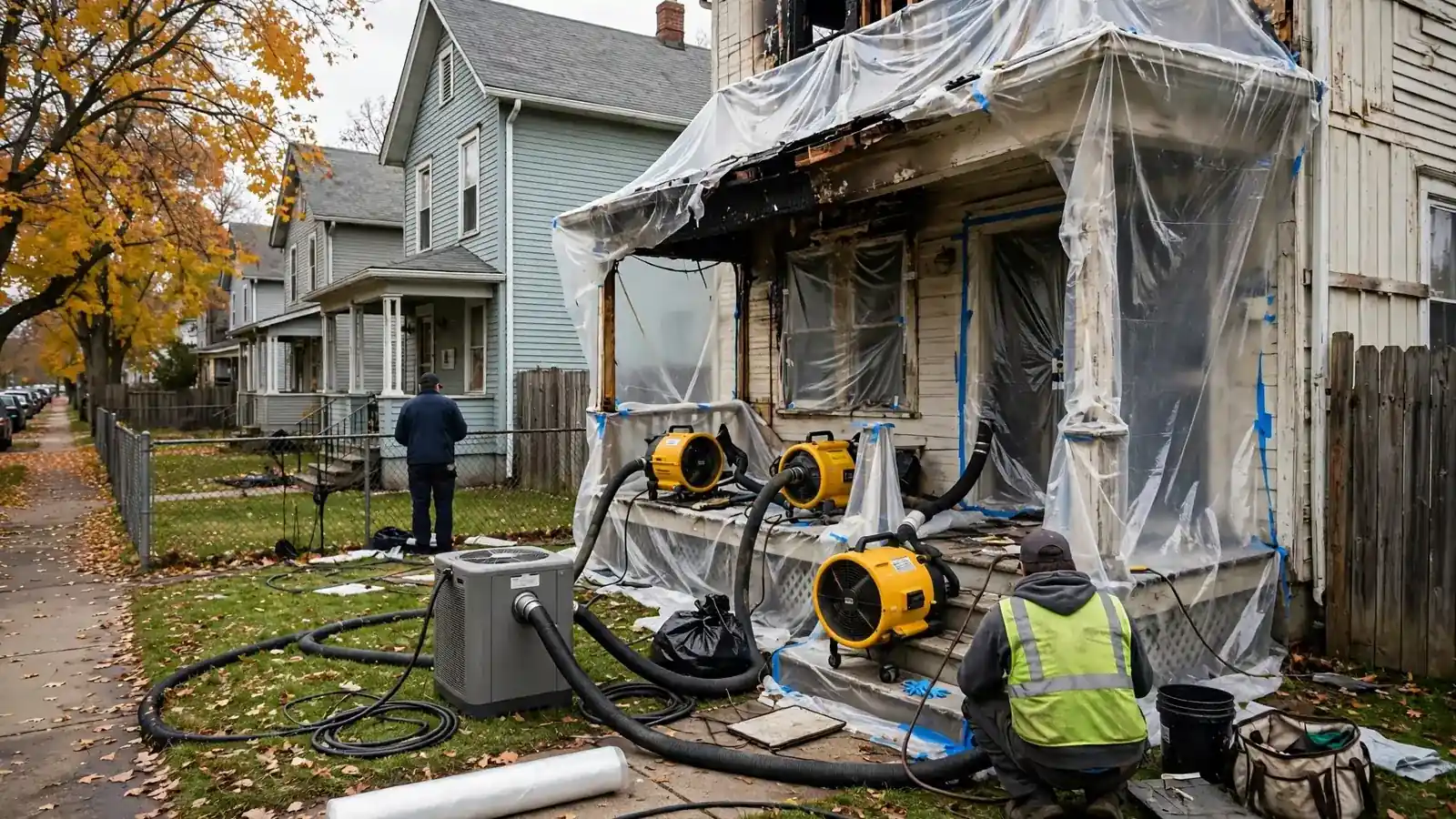
Key facts: Smoke Odor Removal in Camden
- Smoke odor is caused by fine particles that settle on walls, furnishings and clothing, the U.S. Fire Administration explains [1].
- IICRC S700 treats deodorizing as a step after residue has been cleaned, not a replacement for cleaning [2].
- The Minnesota Department of Health notes that moisture in homes can lead to mold, which adds its own musty odor [4].
Why winter makes smoke smell worse
In Minneapolis, houses spend months closed up with the furnace running. After a fire, that means smoky air is recirculated through the ducts again and again, and there is little fresh air to dilute it. Warm air also releases odor from materials faster. A smell that seemed faint in the fall can be strong by January if the sources were not removed.
The fix is the same as anywhere, removing residue at the source, but the furnace and ducts become even more important in a heating climate.
Basements, furnaces and ductwork
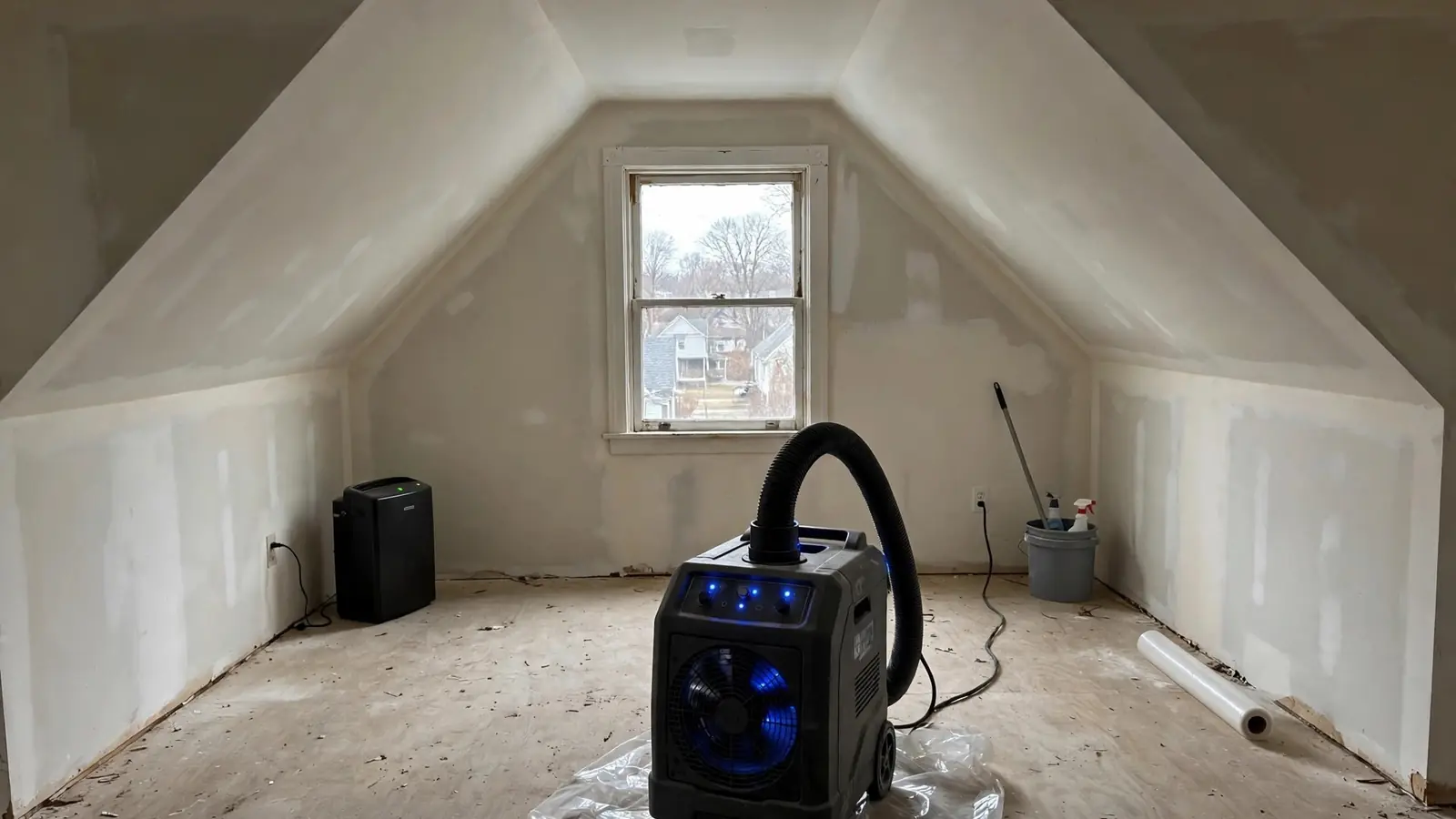
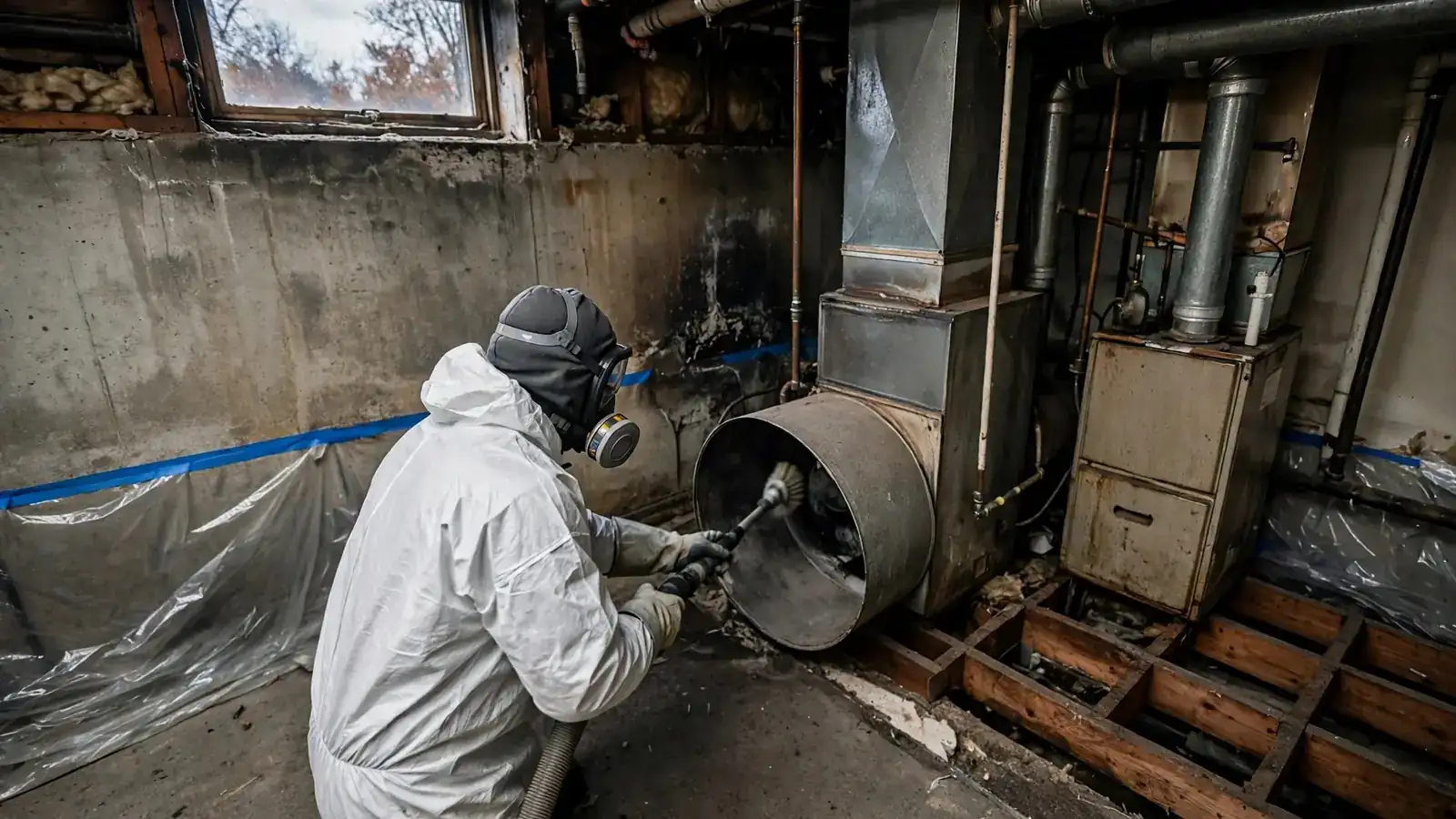
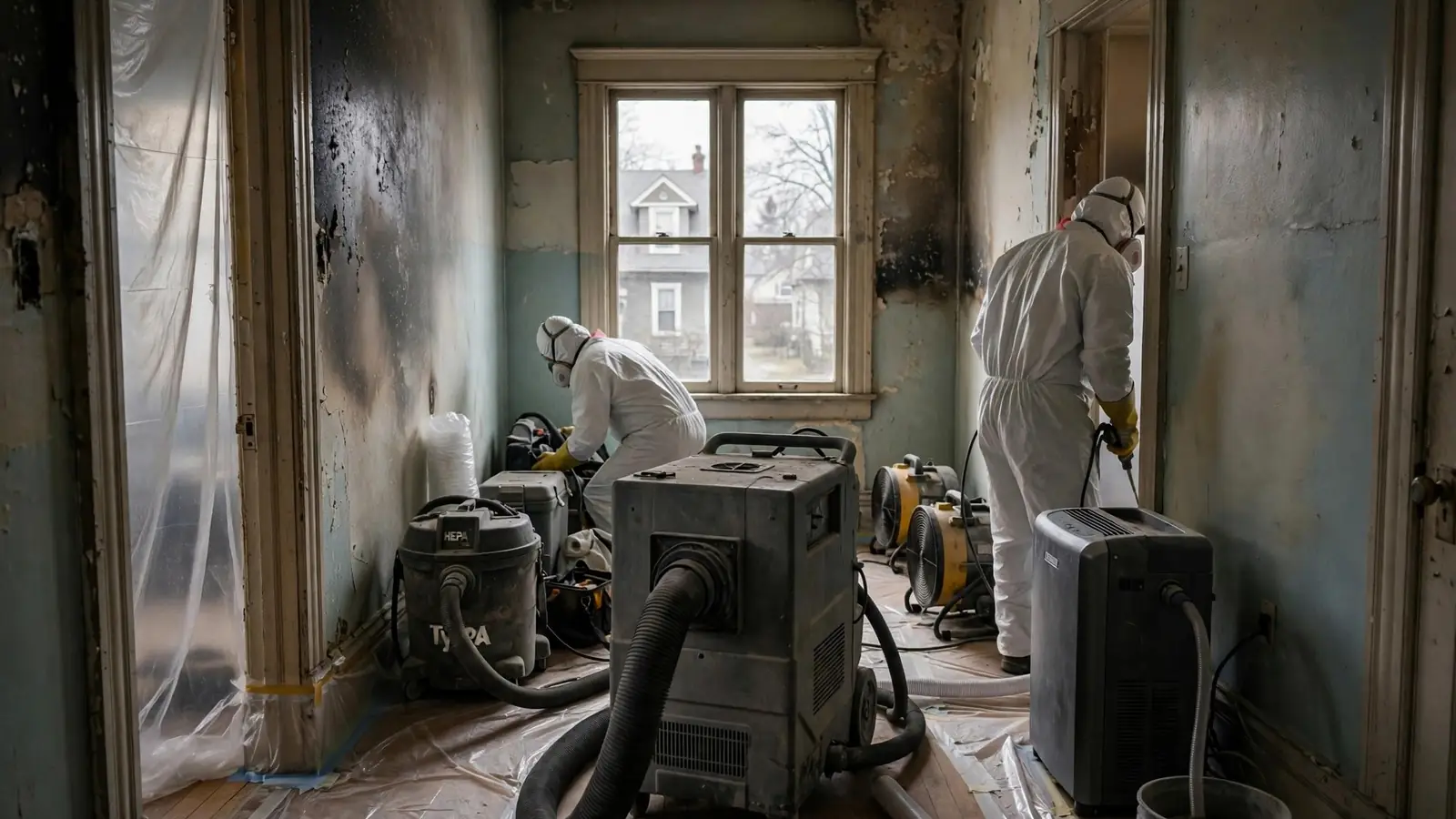
Camden basements usually hold the furnace, water heater, laundry and storage. Smoke from a fire upstairs is drawn down the stairs and into the furnace return, and a basement fire coats everything there directly. Ducts then carry odor to every room. Cleaning the furnace, replacing the filter and cleaning or sealing the ducts are often what finally clear the smell.
Stored boxes, holiday decorations and clothing in the basement absorb smoke and need sorting and cleaning.
Odor removal in a Camden house
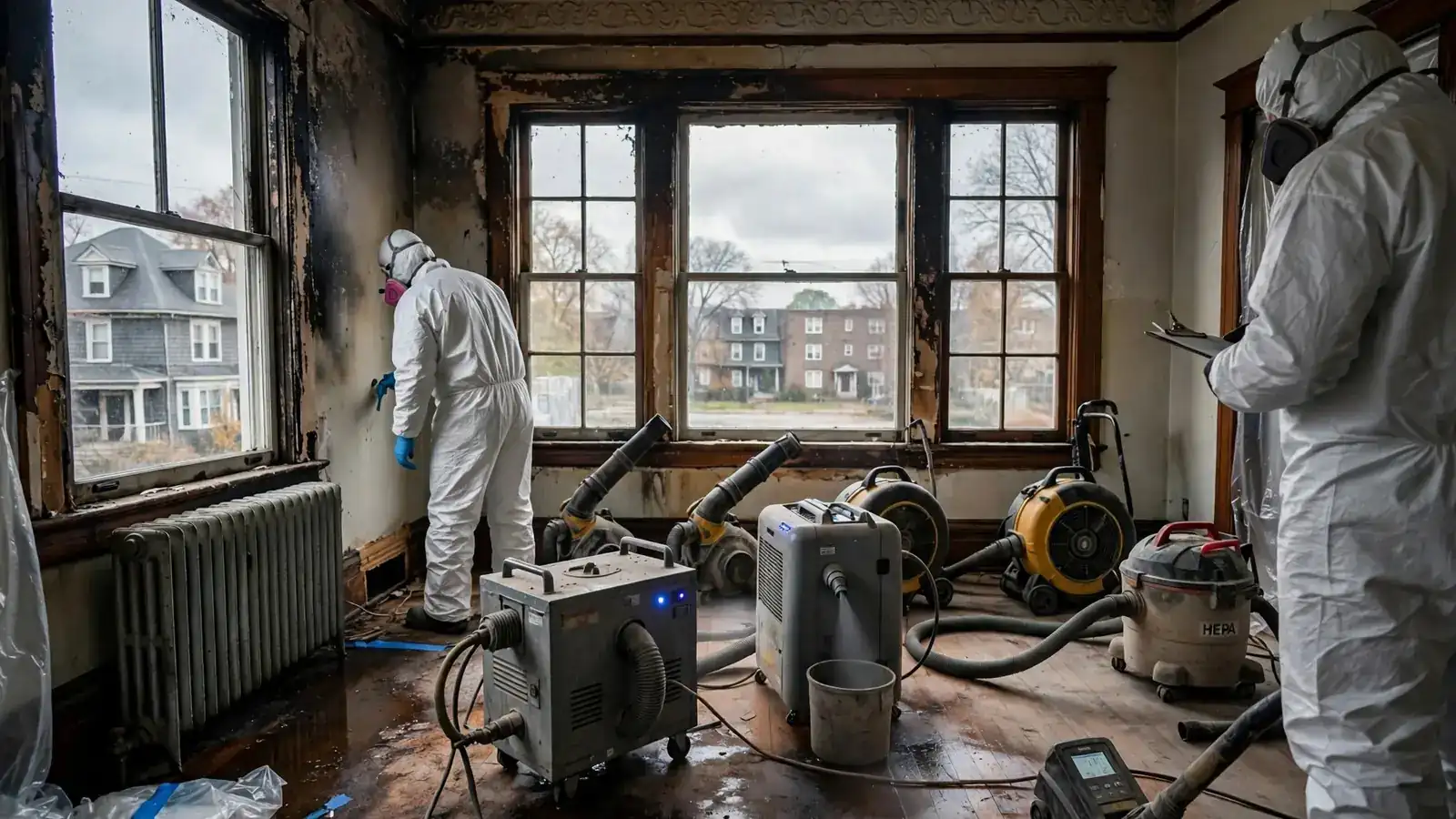
Each step removes a source of smell.
- 1
Clear out saturated soft goods
Carpet, pad, mattresses and stored textiles that hold smoke.
- 2
Clean every room and the basement
Walls, ceilings, floors and basement surfaces following S700 practice [2].
- 3
Clean the furnace and ducts
Return, supply ducts, blower and filter are treated before heat is used again.
- 4
Deodorize and seal
Treatments reach what remains; sealing primers lock it in before painting.
Half-story bedrooms under the roof
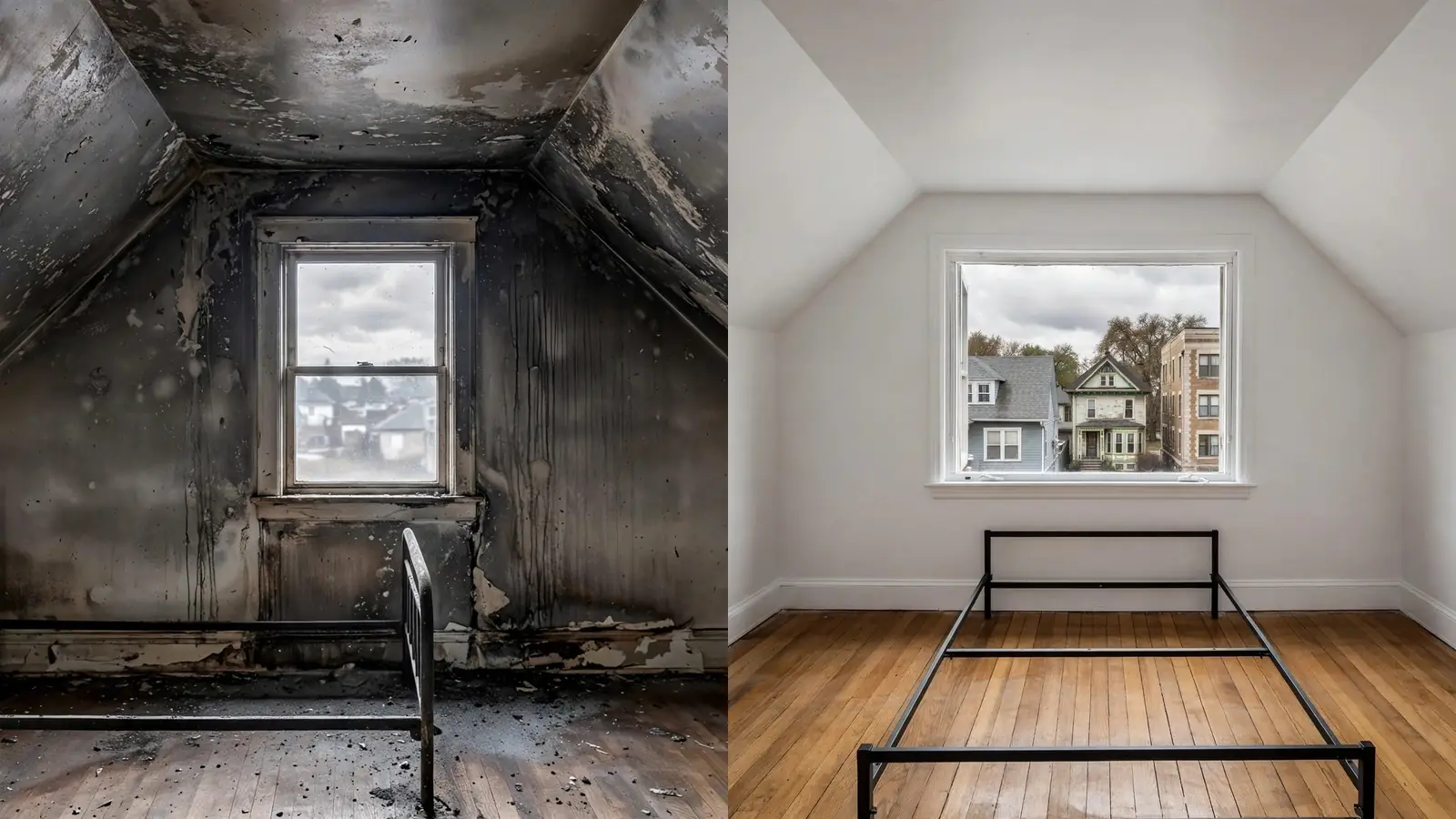
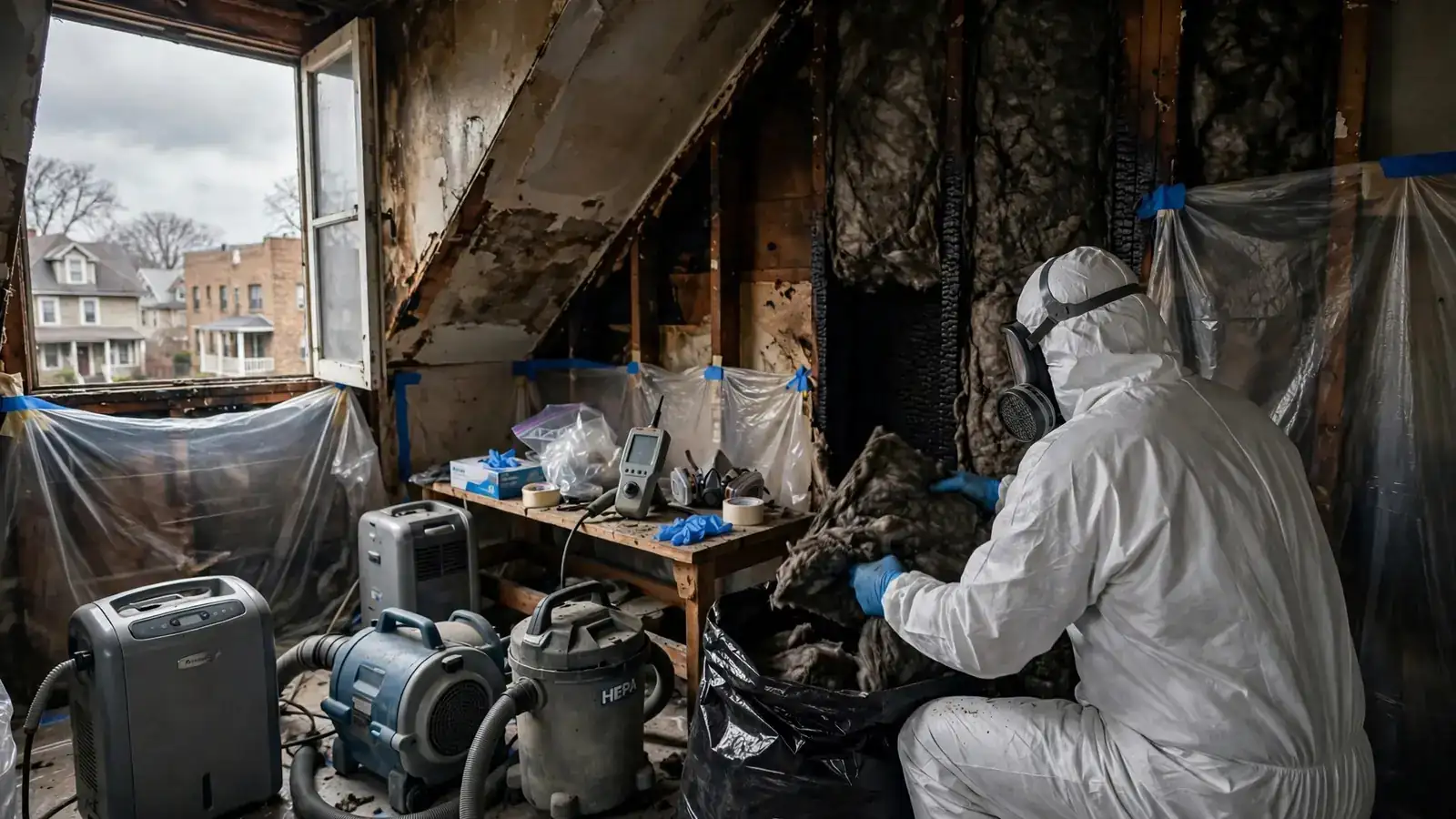
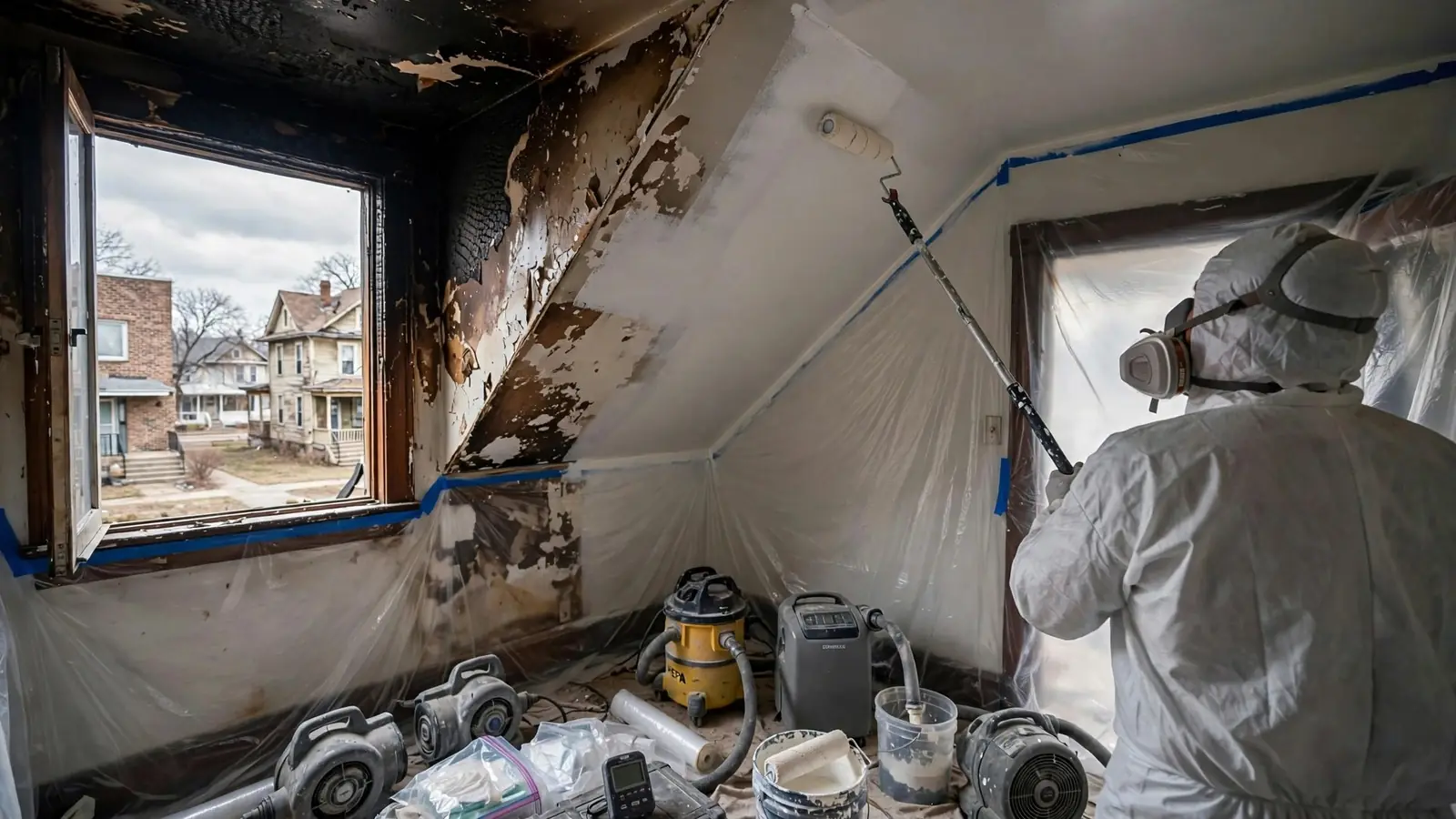
Many Camden houses have bedrooms tucked under a steep roof, with knee walls and small attic spaces behind them. Smoke rising through the stairway collects in these rooms and in the spaces behind the knee walls. Odor can keep seeping out of those hidden spaces until they are opened, cleaned and sealed.
Ask the contractor to check behind knee-wall doors and in the small attic over the upstairs rooms.
Space heaters and heating equipment
Heating equipment, including space heaters, is a recognized cause of home fires in cold months [7]. If the fire started that way, the smell may include burned wiring or plastic. That smell near outlets or the panel needs an electrician first, not deodorizer.
Keep any heater involved in the fire for your insurer to inspect.
Where odor hides in Camden homes
Check these if the smell returns.
- Furnace and return ductsThey circulate smoky air all winter.
- Spaces behind knee wallsHidden areas off upstairs rooms.
- Basement storageBoxes and textiles hold smoke.
- The detached garageStored items near a garage fire.
Using ozone safely, especially in winter
Ozone can be effective in an empty house, but the EPA warns that it can harm health [3], and in winter it is harder to air the house out afterward. Hydroxyl generators are slower but can be used more safely. Ask how the contractor will ventilate the house in cold weather after any treatment.
People and pets should be out of the house during ozone treatment.
Damp basements and musty smells
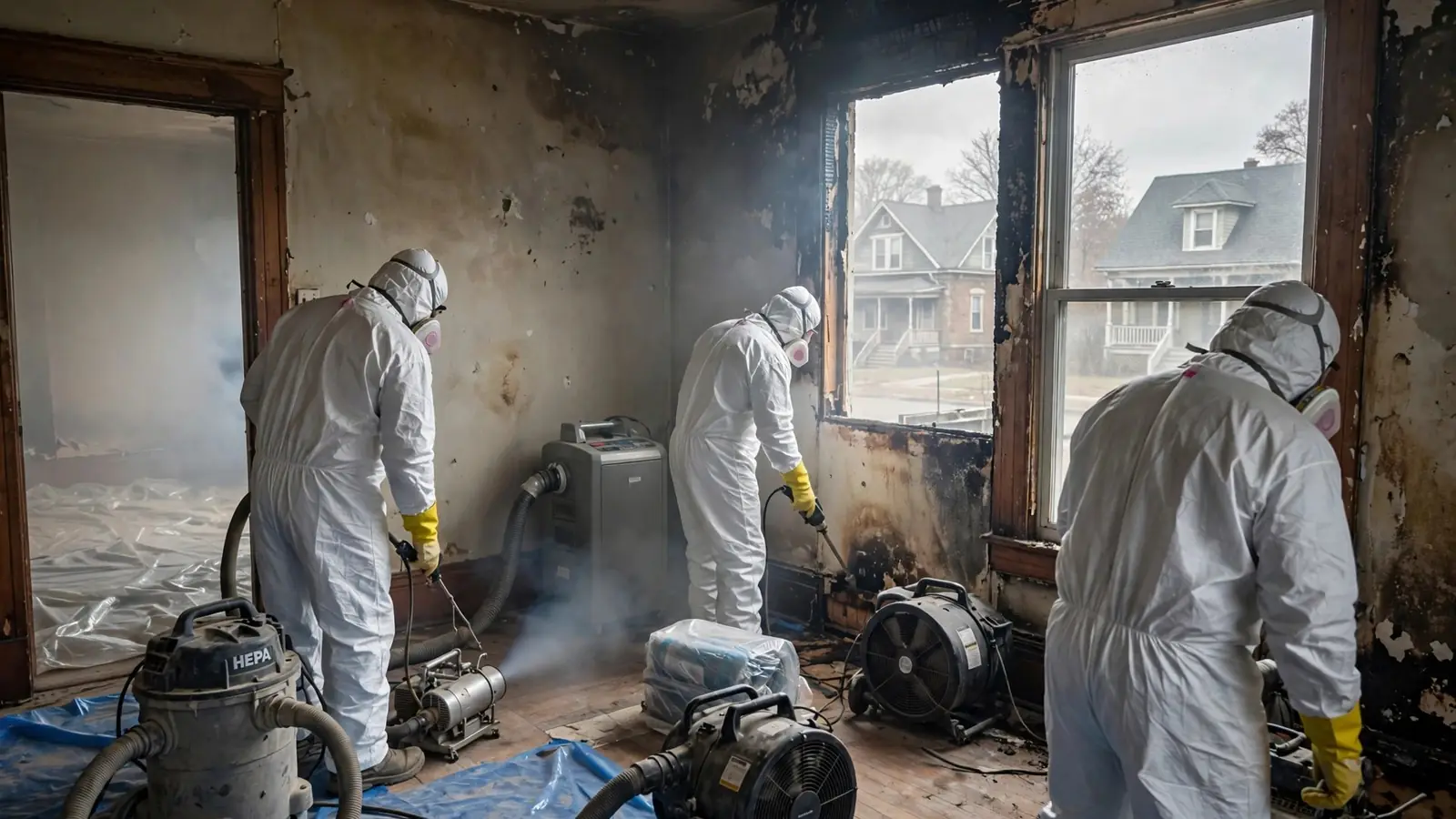
Firefighting water often runs into the basement. If it is not dried, the Minnesota Department of Health notes moisture can lead to mold [4], and the musty smell mixes with smoke. Drying the basement completely is part of odor removal.
The Camden page explains more about basements and heating in these homes.
Confirming the smell is gone
Check the house with windows closed and the furnace running. If odor returns when the heat comes on, the ducts or furnace still hold residue. Our guide to smoke odor that won't go away lists other common causes.
The Minnesota Department of Commerce Disaster Information Center has guidance on claims and additional living expenses while your home is being treated [5].
Clothes, coats and the front closet
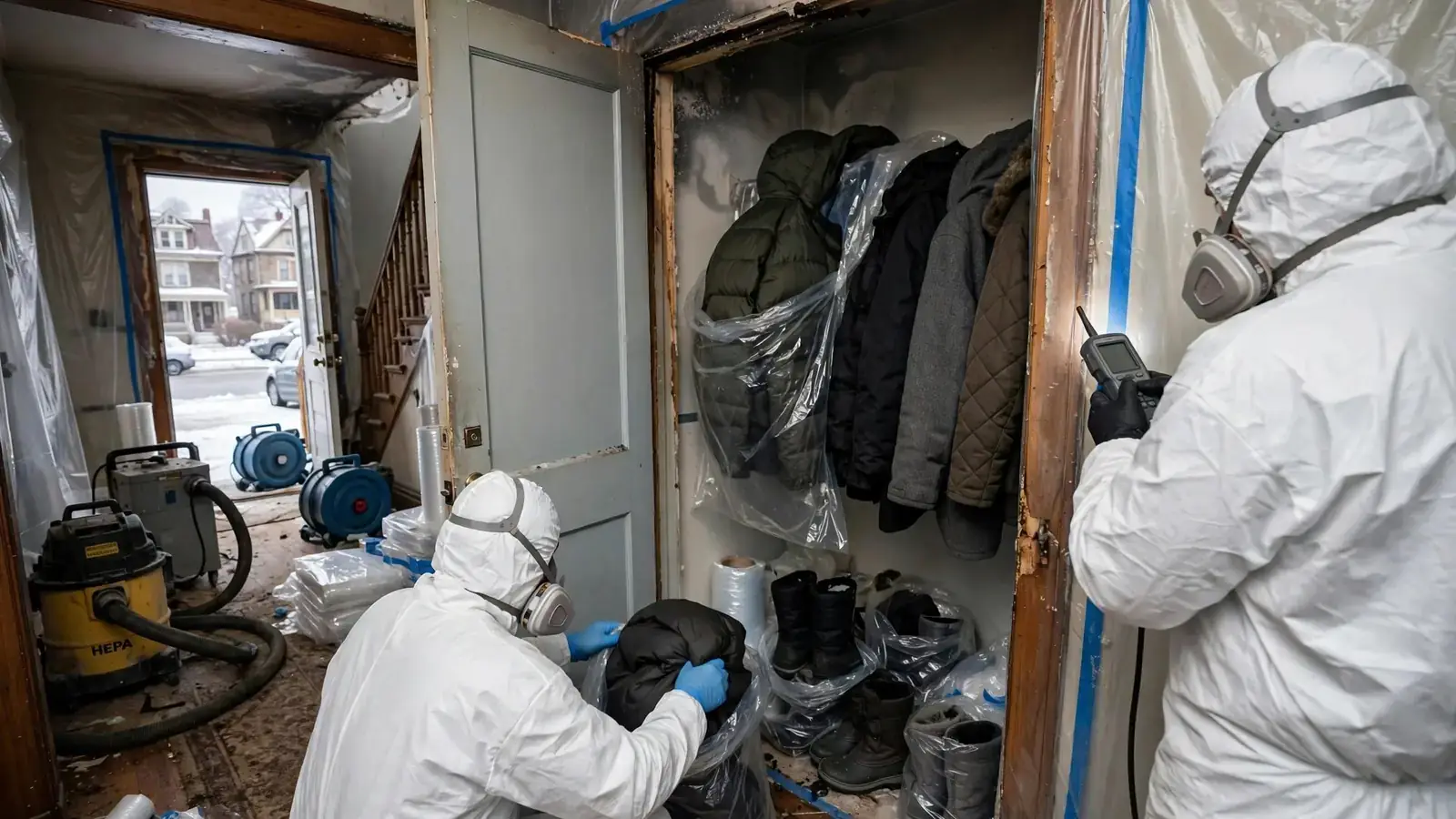
Minneapolis households keep a lot of heavy winter clothing: parkas, wool coats, boots, hats and blankets. Wool and down soak up smoke and keep smelling long after the house is clean. These items usually go out for professional cleaning, and the front closet and mudroom shelves are cleaned and sealed if needed before anything goes back.
If you need warm clothing right away, ask the contractor which items can be cleaned first.
FAQ
Smoke Odor Removal in Camden: questions
Why does my house smell worse when the furnace runs?
Residue in the furnace and ducts is blown into every room. They need cleaning before the smell will clear.
Is it safe to air the house out in winter?
Short airing is fine, but plan it with the contractor so pipes do not freeze while windows are open.
Can knee-wall spaces really hold odor?
Yes. Smoke rises into them and stays. They usually need opening, cleaning and sealing.
Sources and citations
- [1]U.S. Fire Administration: After a fire
- [2]IICRC: S700 Standard for Professional Fire and Smoke Damage Restoration
- [3]U.S. EPA: Ozone generators that are sold as air cleaners
- [4]Minnesota Department of Health: Mold and moisture in homes
- [5]Minnesota Department of Commerce: Disaster Information Center
- [6]U.S. EPA: Protect your family from exposures to asbestos
- [7]NFPA: Home structure fires