Key facts: Smoke Odor Removal in Linden Hills
- Odor after a fire comes from fine residue left on surfaces and in fabric, not just from the air in the room [1].
- The IICRC S700 standard puts cleaning the residue ahead of any deodorizing step [2].
- The EPA cautions that ozone machines can irritate the lungs and should not run where people or pets are present [3].
Why the smell lingers in Linden Hills houses
Smoke works its way into anything porous: wood trim, plaster, insulation, upholstery and the stacks of clothes and books in a closet. Even after the visible soot is gone, those materials keep giving off odor, especially when the house warms up. That is why spraying a fragrance or opening windows rarely solves it.
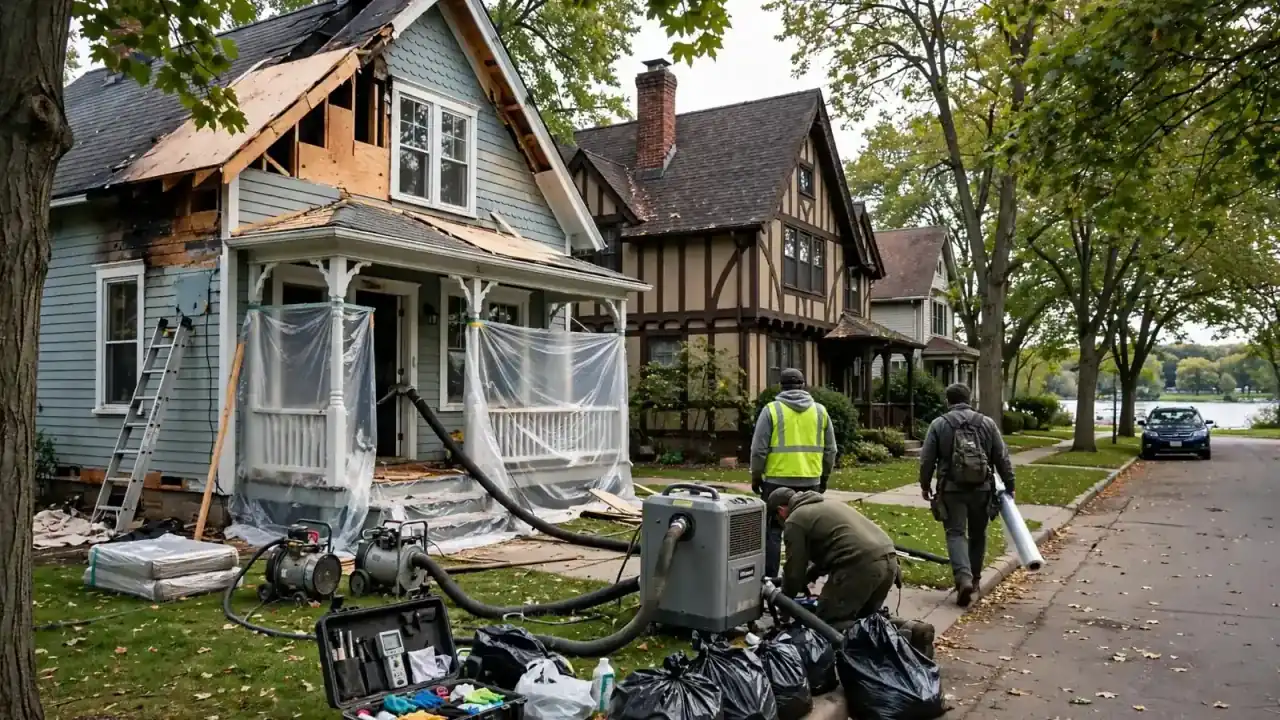
The neighborhood has a wide range of houses, from early cottages and Tudors to large modern rebuilds [7]. Each type has its own places where odor hides, so the plan for a small stucco house and a three-level new build will look different.
Plaster walls and old wood trim
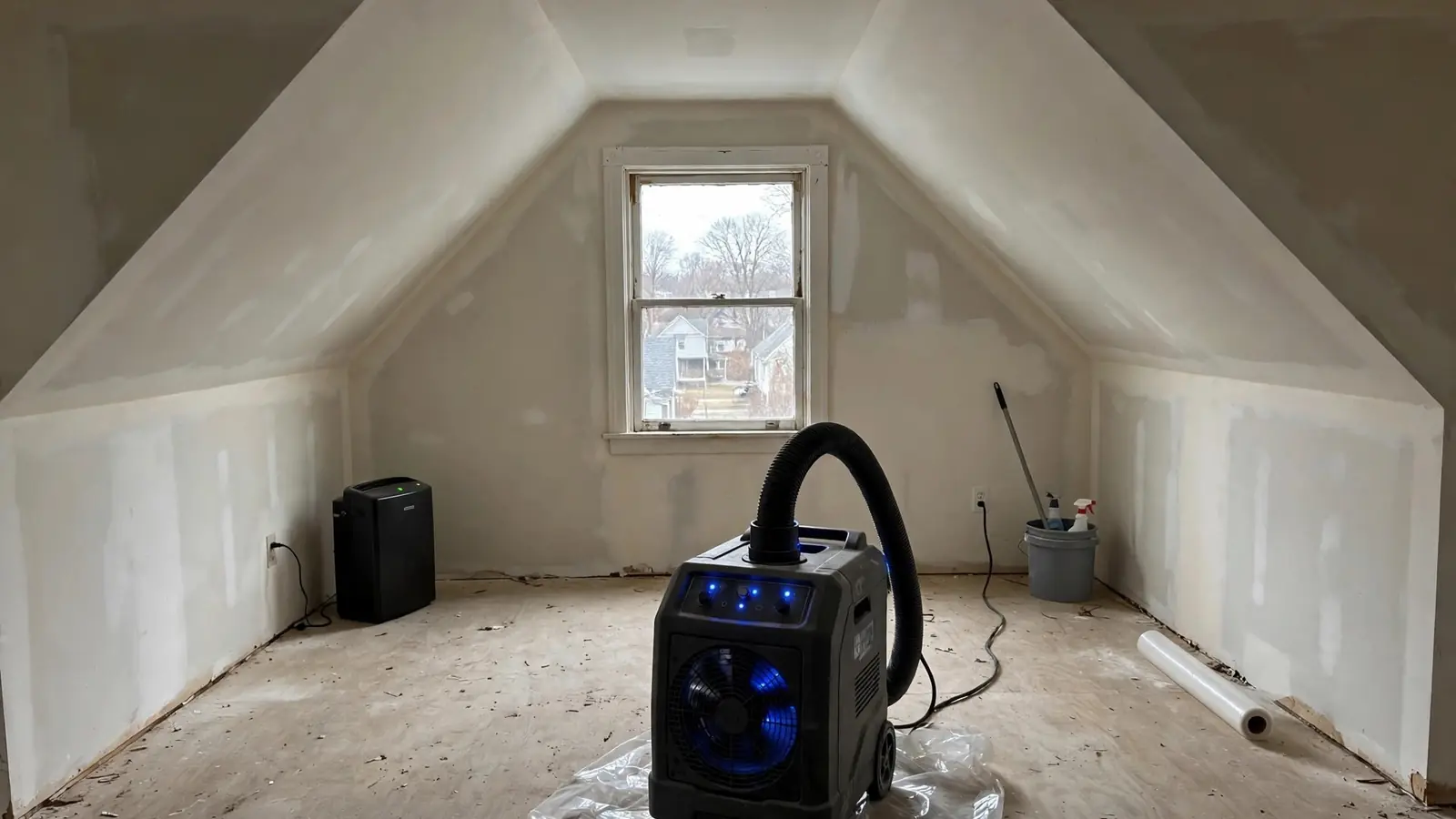
Older Linden Hills homes usually have plaster walls and stained or painted wood trim. Plaster is dense and holds less odor than drywall paper, which helps. The trim, window stools and old wood floors absorb more, and their finish may need cleaning, sealing or refinishing to stop the smell.
Many of these houses were painted before 1978, so if old layers have to be sanded, the work should follow lead-safe practice. Cleaning alone does not usually disturb the paint.
Open plans and high ceilings in rebuilt homes
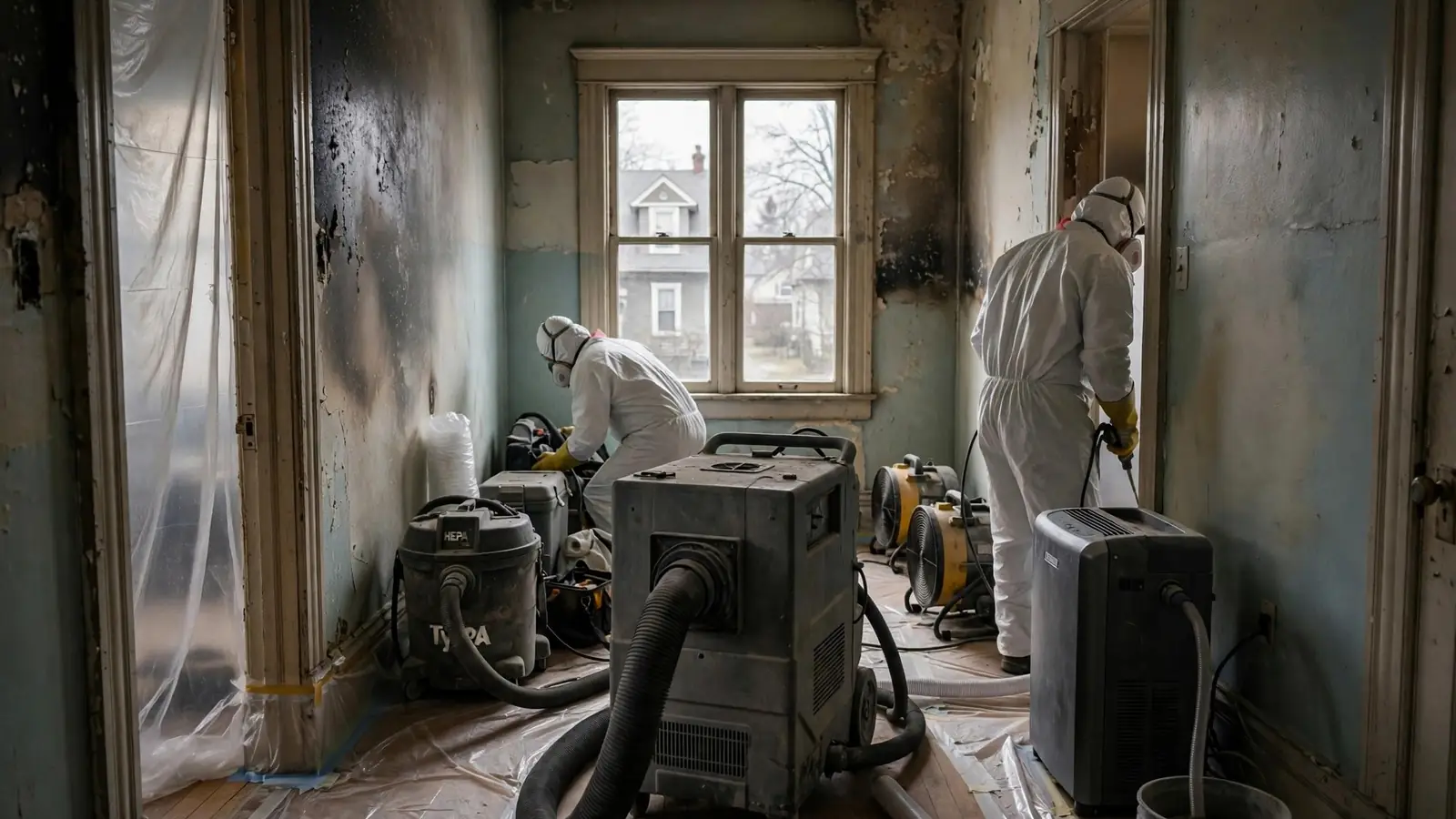
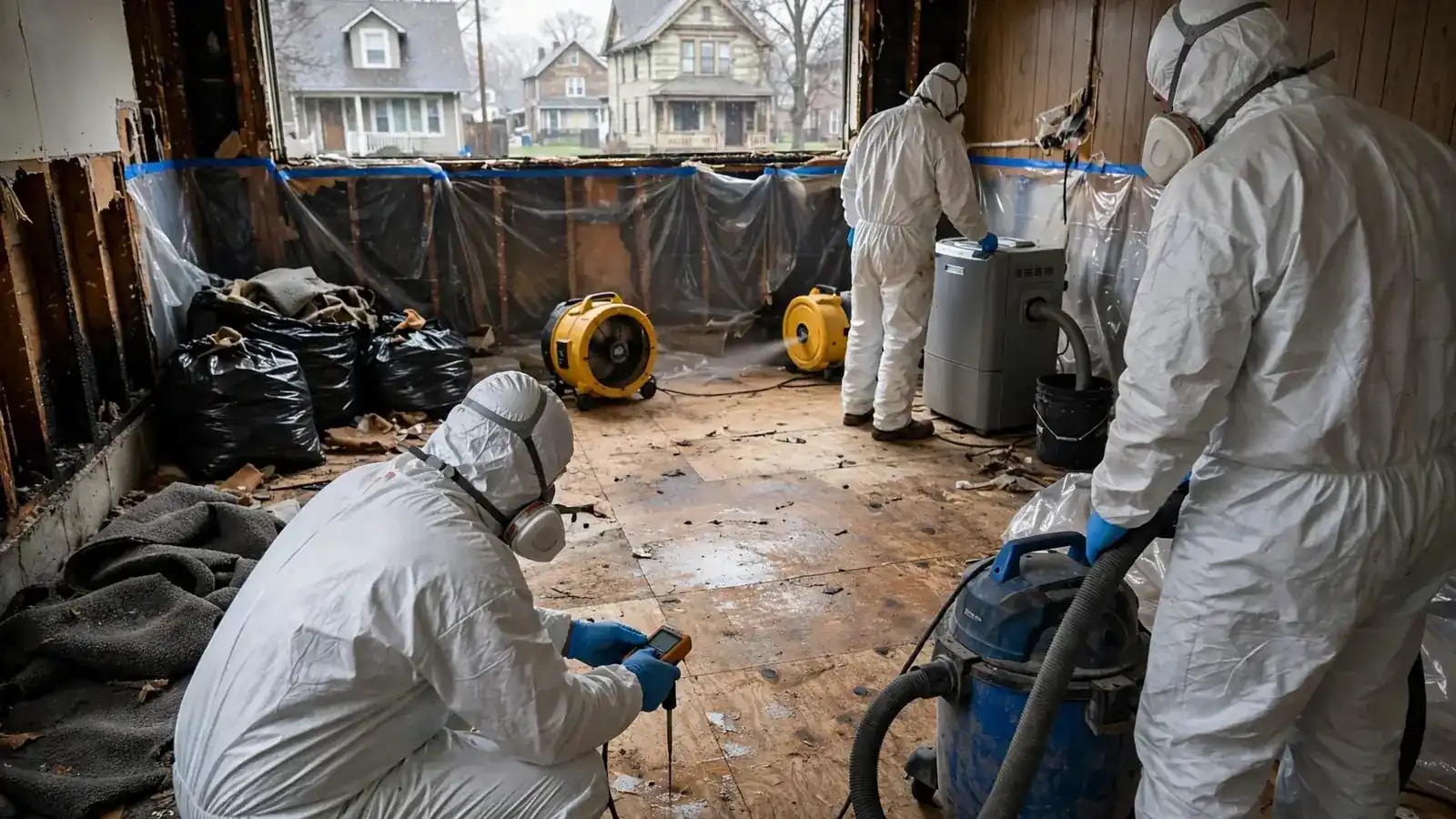
Newer homes in the neighborhood often have open kitchens and living areas with tall or vaulted ceilings. Smoke from a kitchen fire spreads across the whole floor quickly and collects up high. Odor removal covers every surface in that open space, including beams, light fixtures and the tops of cabinets.
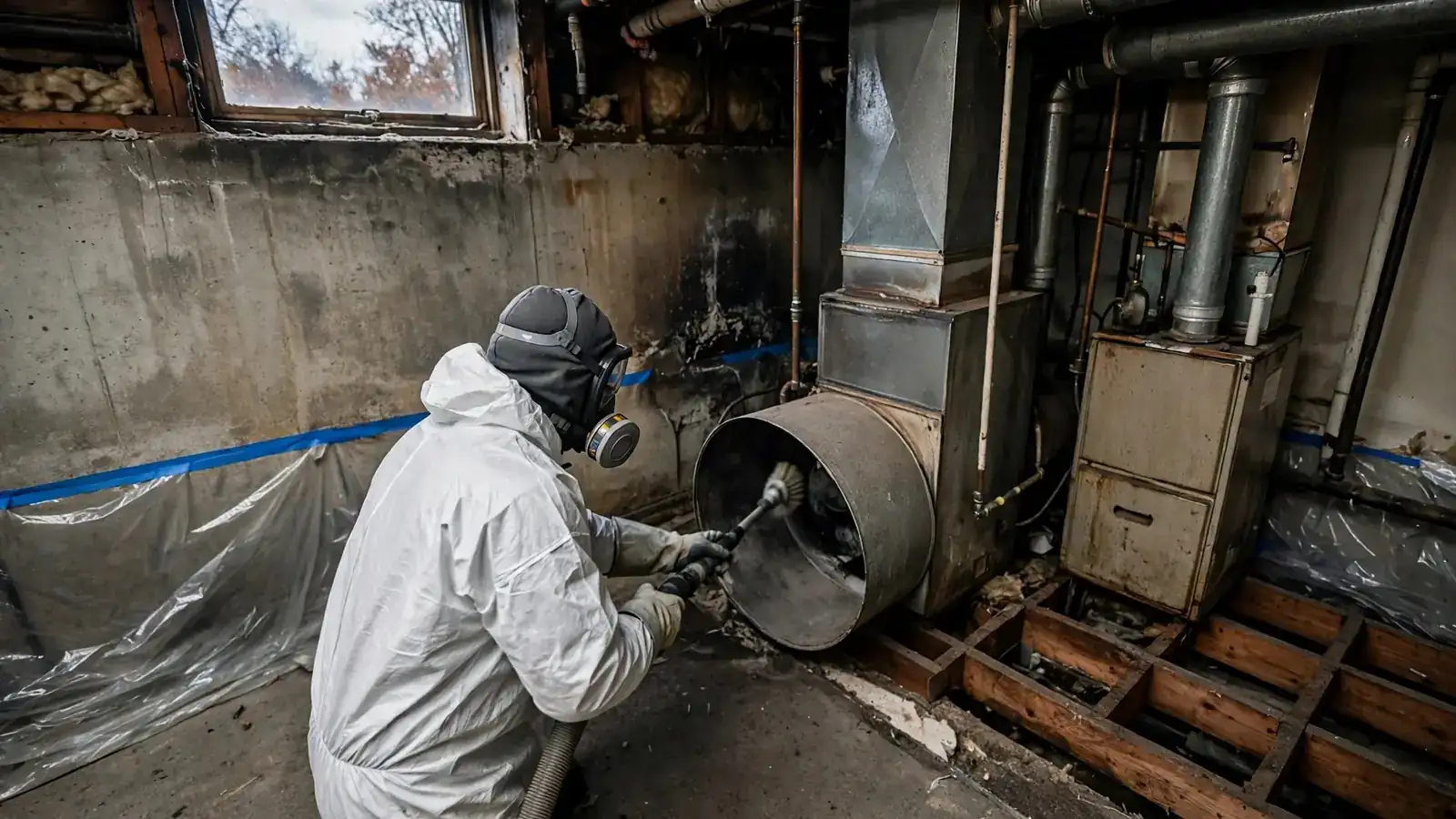
These houses usually have forced-air systems with long duct runs and more than one zone. Ducts carry smell to rooms the fire never touched, so they are cleaned and the filters changed before the system runs for long.
How odor work usually runs in a Linden Hills home
Each step builds on the one before it.
- 1
Find where the smell is coming from
Walk every room, closet, the attic and the basement and note where odor is strongest.
- 2
Clean residue off every surface
Walls, ceilings, trim, floors and contents get cleaned first [2].
- 3
Seal or remove what will not clean
Badly affected insulation or carpet comes out; some wood is sealed.
- 4
Deodorize the empty house
Air scrubbers or other treatment run once people and pets are out [3].
Finished basements that hold the smell
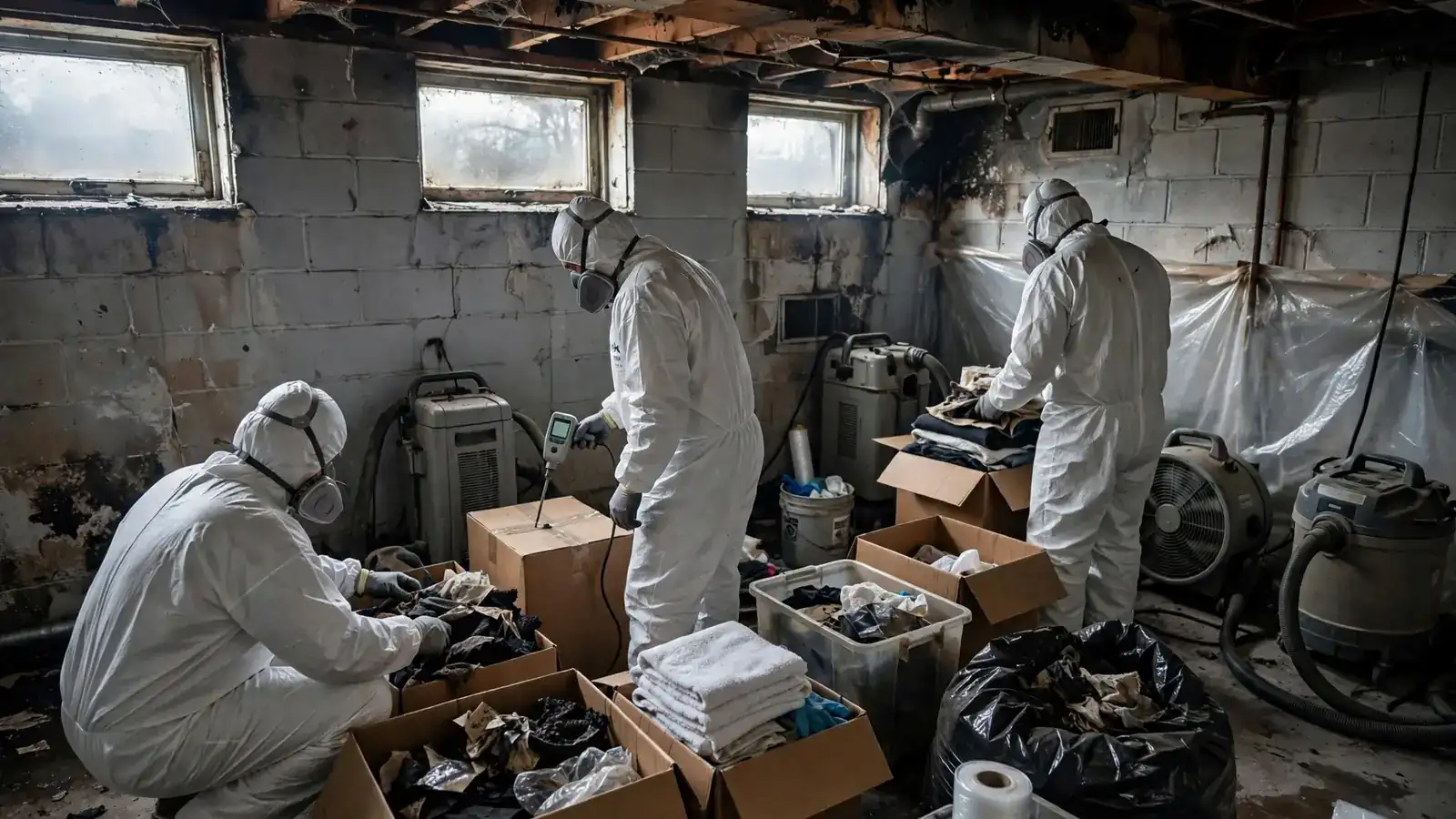
Many Linden Hills houses have finished lower levels with carpet, drywall and built-in storage. Smoke drifts down the stairs and settles there, and if firefighting water also soaked the carpet, the odor can turn musty as well as smoky. The Minnesota Department of Health links lasting dampness indoors with mold and stale smells [4].
Drying the basement fully, removing pad that stayed wet and cleaning the walls usually comes before deodorizing. Otherwise the smell returns as soon as humidity rises in summer.
Attics, insulation and the upper floor
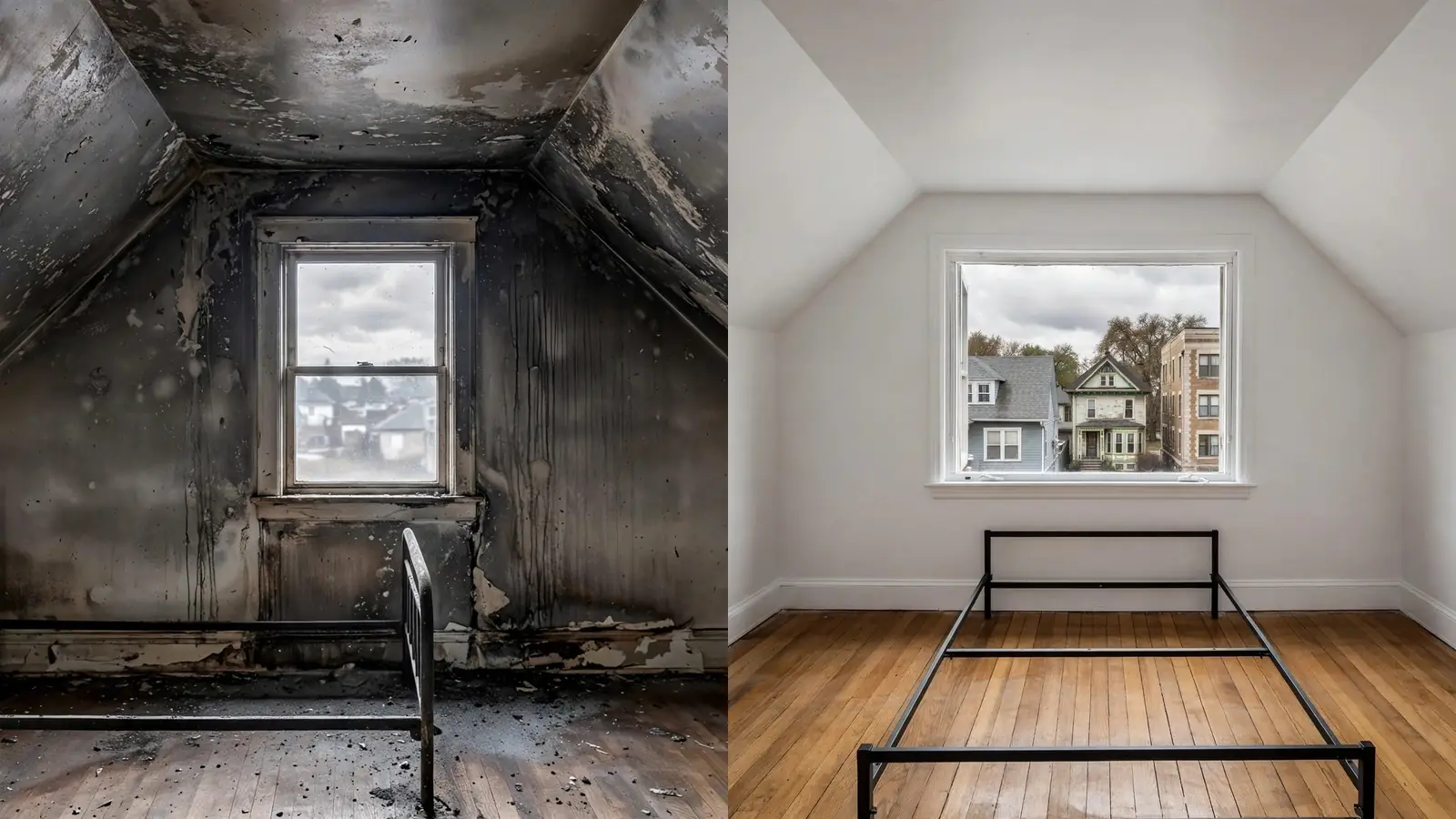
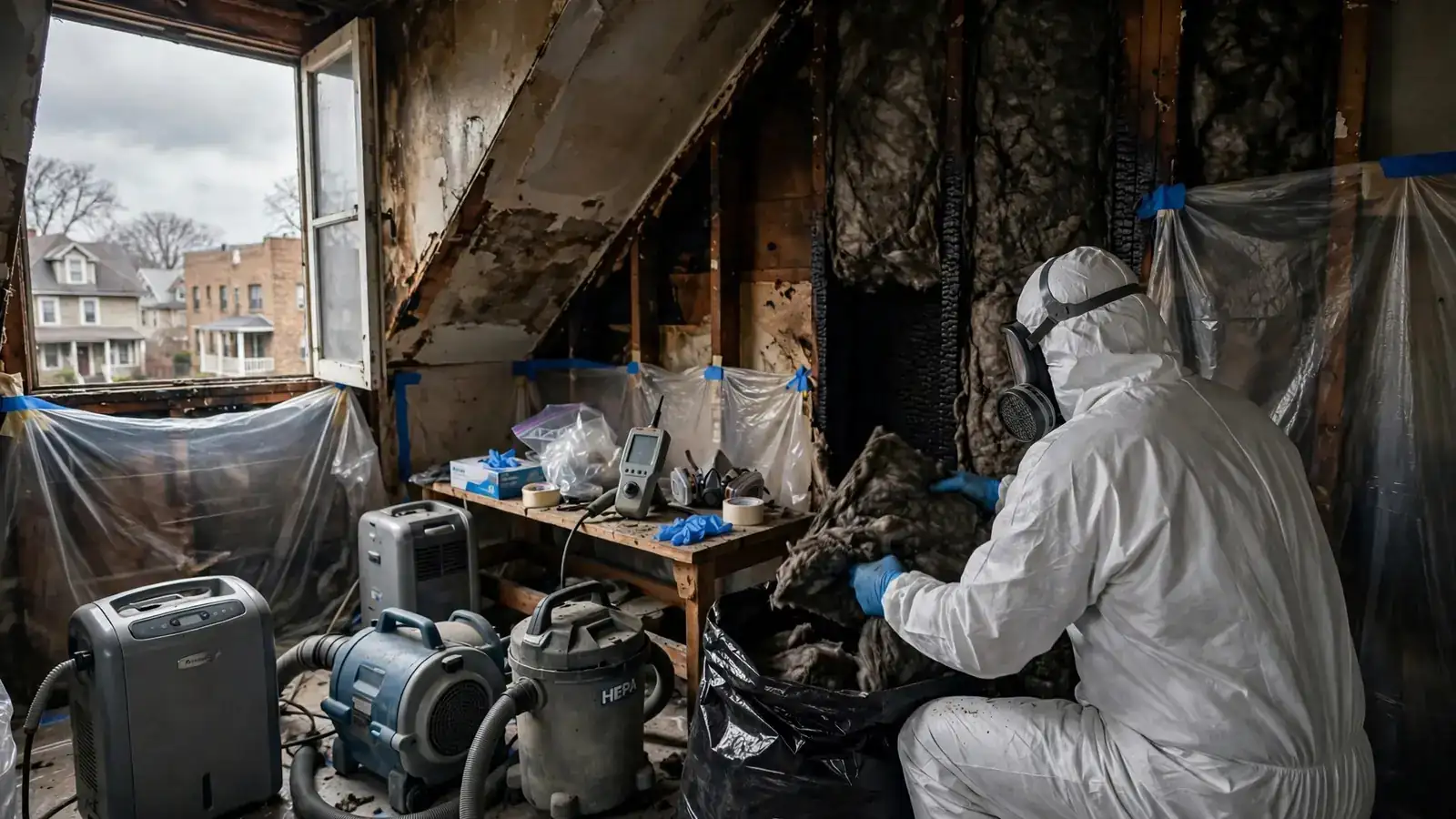
Smoke rises, so the upper bedrooms and the attic often smell worst. In older cottages and Tudors, the attic may be small with loose insulation over the ceiling. That insulation soaks up odor and usually has to be removed and replaced.
Older loose-fill can contain asbestos, so it should be tested before anyone disturbs it [6]. Once it is out, the roof boards and framing are cleaned and sometimes sealed before new insulation goes in.
Closed-up houses in a Minnesota winter
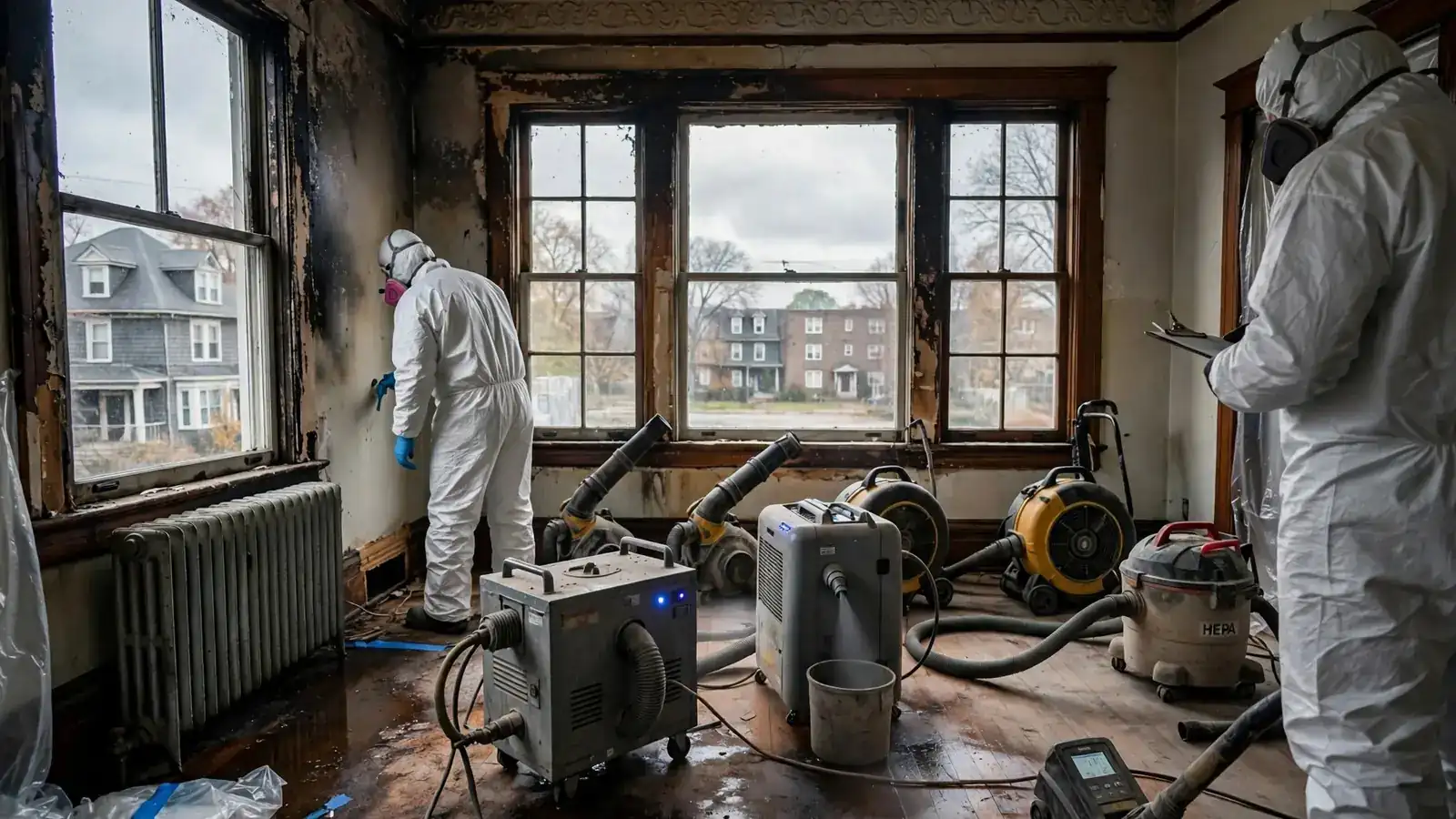
In January, a house is shut tight and the furnace runs most of the day. That pushes any leftover odor around the rooms over and over. If the furnace was off after the fire and is turned back on, a burst of smell from the ducts is common.
Running air scrubbers through the cold months and cleaning ducts before the heat returns makes a big difference. Your contractor will usually plan the deodorizing step for a time when the house can be empty for a day or two.
Places smoke odor often hides in Linden Hills homes
Worth pointing out on your call.
- Closets and built-in cabinetsClothes and stored items keep the smell close.
- The space behind knee walls or attic hatchesInsulation there absorbs smoke.
- Upholstery and rugsThey may need cleaning off site.
- Ductwork and return grillesThey spread odor to rooms the fire never reached.
Belongings and soft goods
Clothing, bedding, curtains and cushions hold smoke smell longer than hard surfaces. Many can be cleaned by specialists, but some will not come clean if they sat close to the fire. Keep a list of what you discard and photograph it first for the claim [5].
Books, papers and photographs need gentle handling. Some restoration firms offer deodorizing for documents; ask on the call if that matters to you.
Why ozone should be used with care
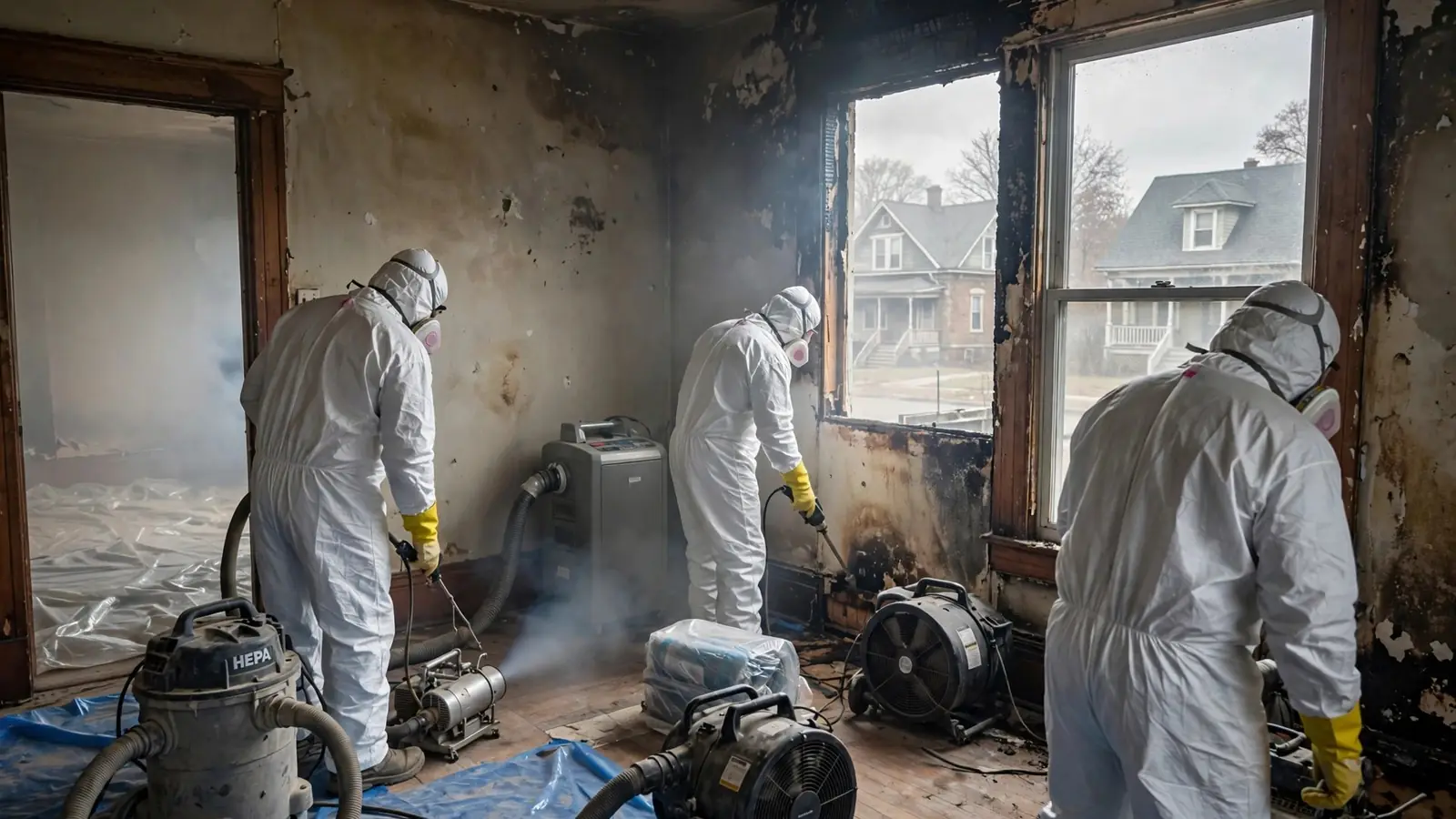
Ozone machines are often sold as a quick fix for smoke smell. The EPA warns that ozone can harm the lungs at levels needed to affect odor, and it does not remove the residue causing the smell [3]. If a contractor uses any oxidizing treatment, the house must be empty during it and aired out after.
Most good results come from thorough cleaning. Read our guide on smoke odor that won't go away for more on why the smell sometimes comes back.
FAQ
Smoke Odor Removal in Linden Hills: questions
How long until my Linden Hills house stops smelling of smoke?
It depends on how much residue there is and where it went. Once surfaces, contents and ducts are cleaned, most of the smell is gone, though treatment may continue for a few days.
Can I just paint over the smoke smell?
Not without cleaning first. A sealing primer helps on cleaned surfaces, but paint over soot lets the smell bleed through.
Is my finished basement part of the odor work?
Usually, yes. Smoke and water often reach the lower level, and damp materials there keep the smell alive.
Sources and citations
- [1]U.S. Fire Administration: After a fire
- [2]IICRC: S700 Standard for Professional Fire and Smoke Damage Restoration
- [3]U.S. EPA: Ozone generators that are sold as air cleaners
- [4]Minnesota Department of Health: Mold and moisture in homes
- [5]Minnesota Department of Commerce: Disaster Information Center
- [6]U.S. EPA: Protect your family from exposures to asbestos
- [7]Wikipedia: Linden Hills, Minneapolis