Key facts: Smoke Odor Removal in Northeast
Smoke smell in Northeast's older houses
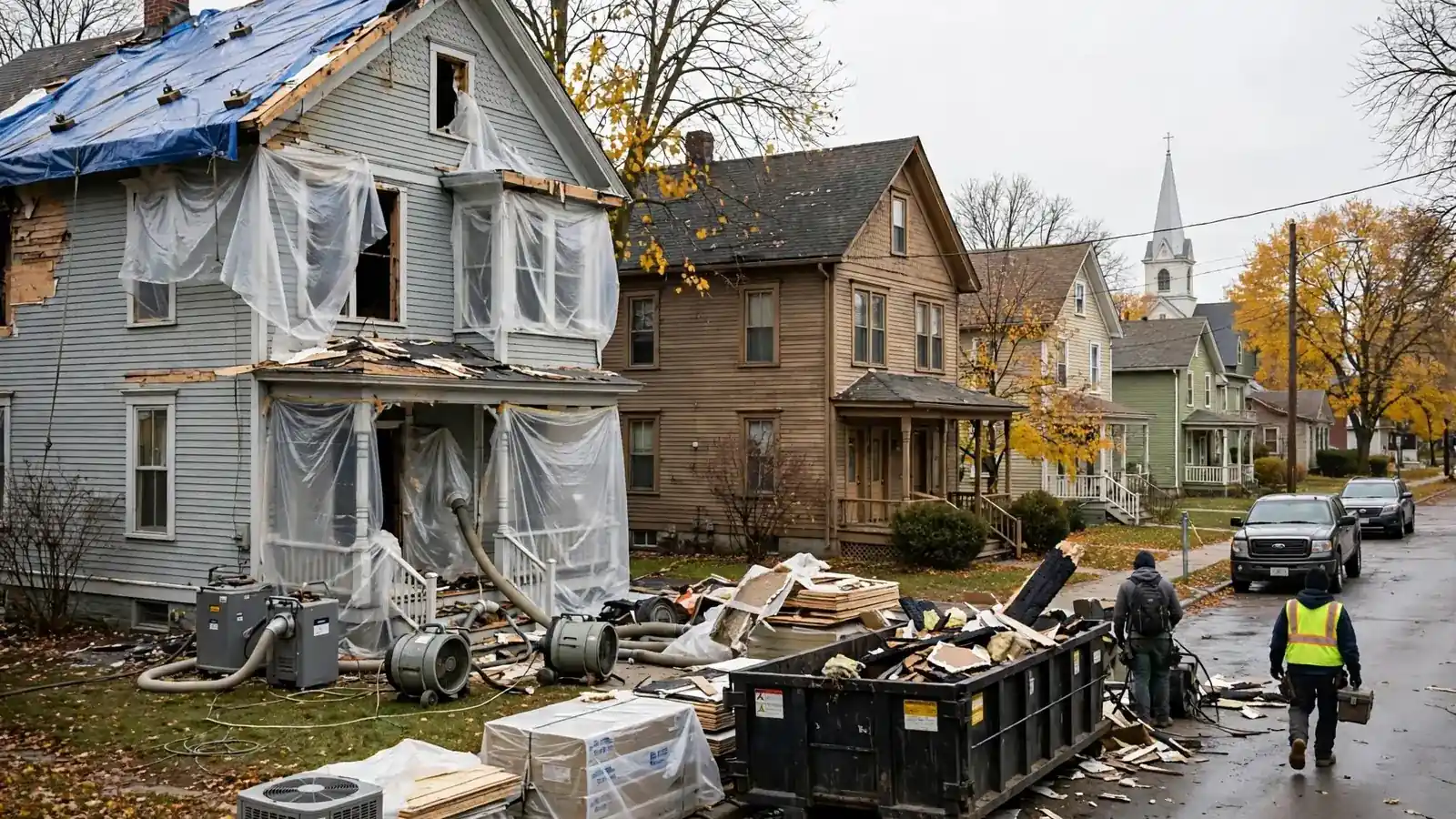
Most homes in Northeast are more than a century old [7]. Their plaster walls, fir trim, maple floors and old insulation all hold smoke. Many wall cavities were built without fire blocking, so smoke can rise from the basement to the attic inside the walls. Grey streaks around outlets and baseboards are a sign of this.
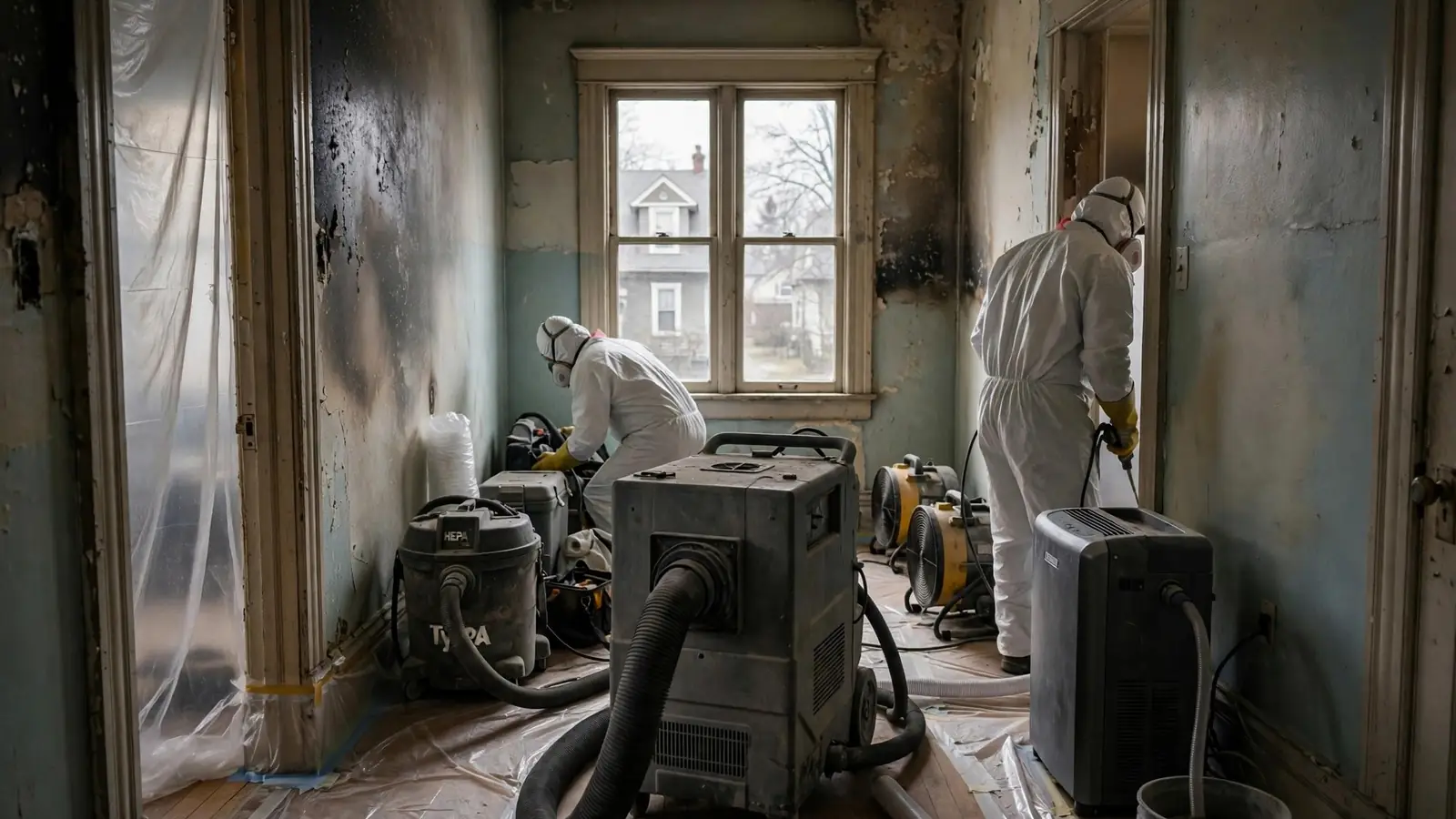
Because the smell is coming from inside the walls, surface cleaning alone may not stop it. The contractor may remove baseboards or open small inspection holes to see how far smoke traveled, then clean or seal what they find.
Radiators and boilers
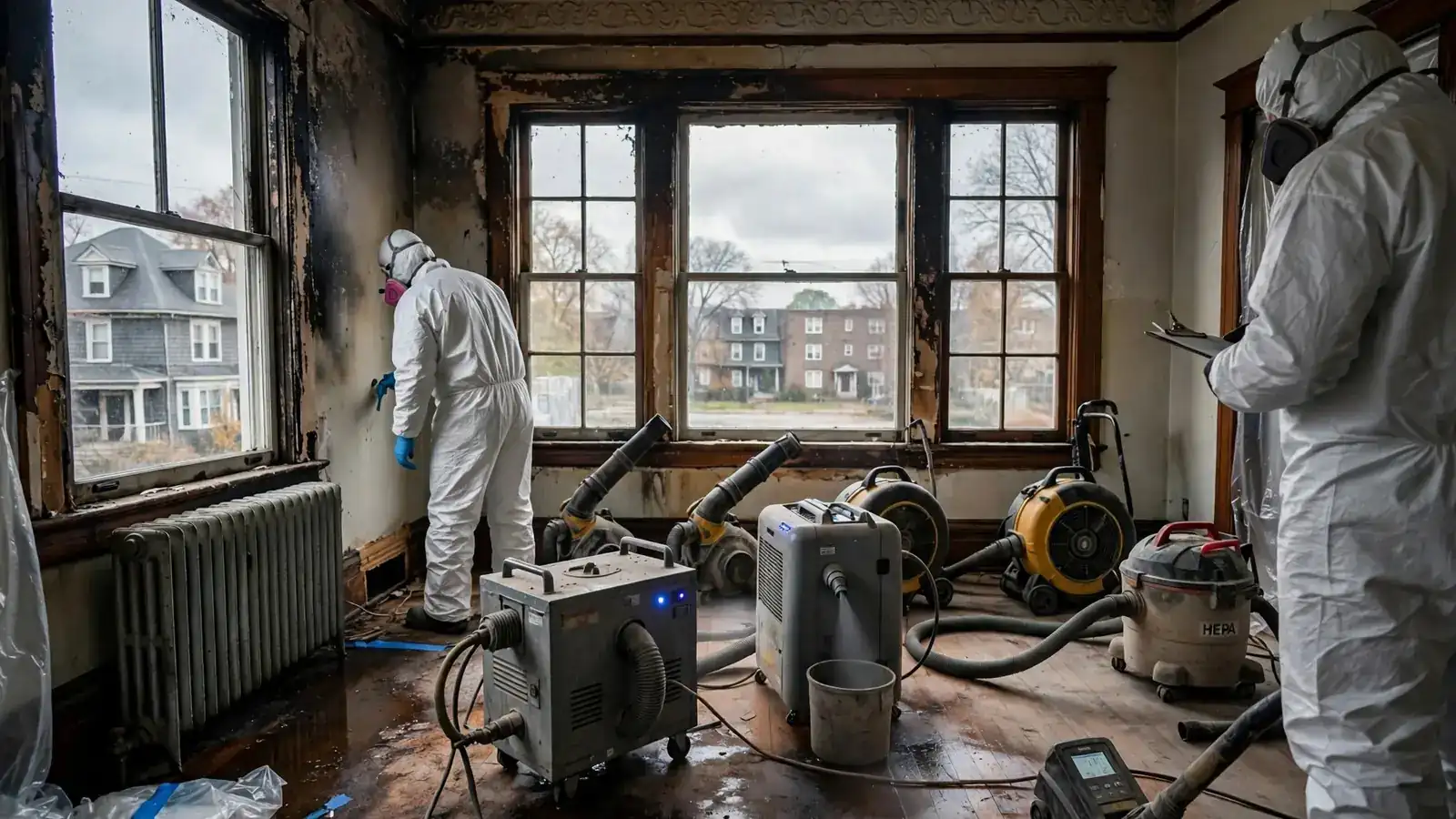
Many Northeast houses heat with a boiler and radiators, sometimes converted from coal years ago. Radiators collect soot on their fins and in the dust underneath them. When the heat comes on, they warm the residue and release the smell again. Each radiator needs cleaning, sometimes by removing it from the wall.
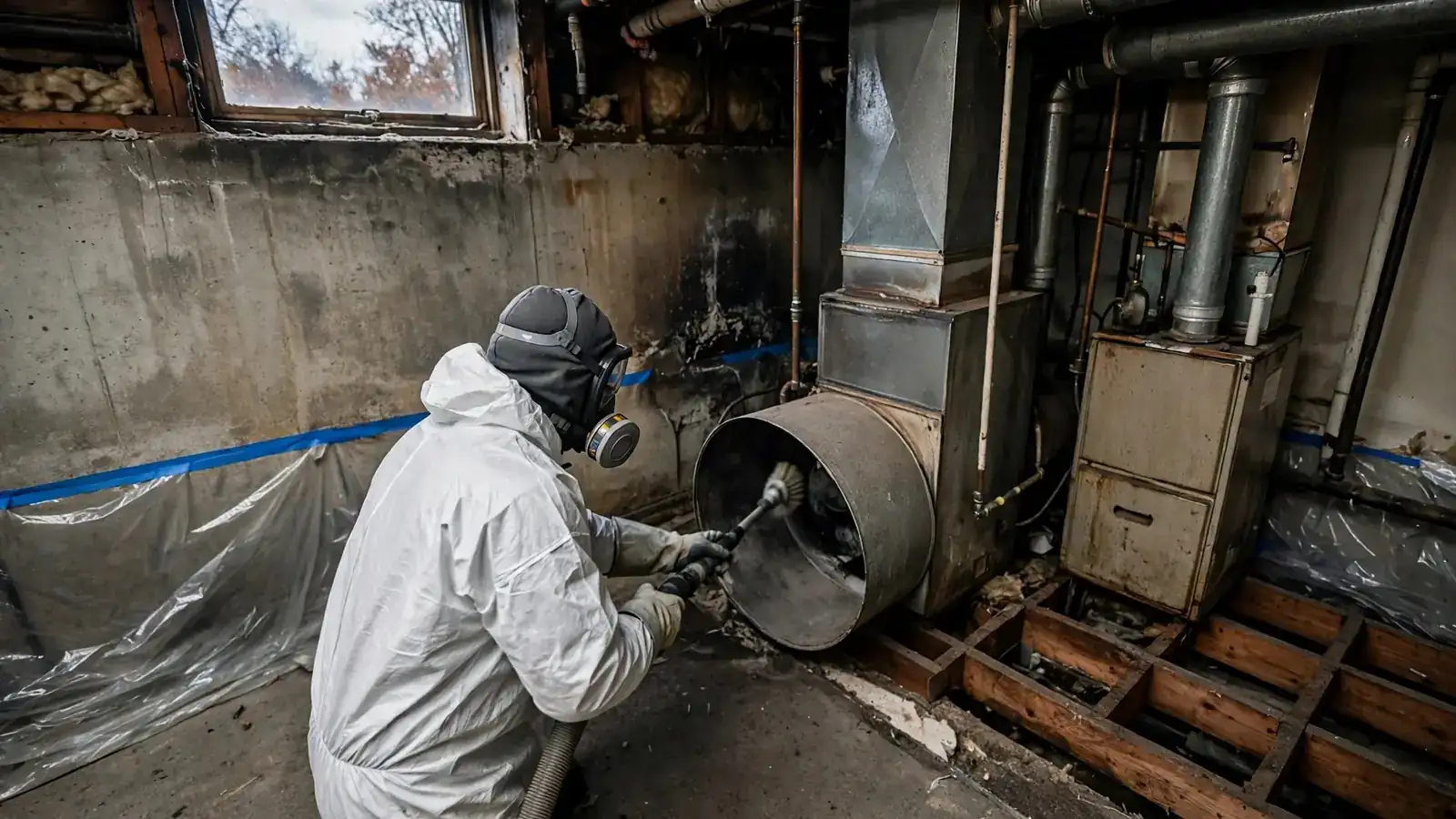
Houses that were converted to forced air have ducts that run through closets and walls. If the blower ran after the fire, every duct holds residue. The ducts and furnace are cleaned, and filters are changed several times after restart.
Clearing smoke smell from a Northeast home
The order a contractor usually follows.
- 1
Trace smoke paths in the Northeast house
Check walls, outlets, stairways, attic and basement for residue.
- 2
Remove what holds the smell
Bag smoky insulation and soft goods that will not clean.
- 3
Clean every surface and heat source
Walls, trim, floors, radiators and ducts are cleaned.
- 4
Seal and treat the remaining odor
Seal wood and plaster, then deodorize the empty house.
Shared stairways in duplexes and walk-ups
In a Northeast duplex or small walk-up, a fire in one unit sends smoke into the common stairway and up to the units above. The stairway walls, railings and carpet absorb it, and every time a door opens, the smell moves into another home. The common areas need cleaning along with the damaged unit.
Each unit may need its own cleaning and deodorizing, depending on how far smoke traveled. The owner handles common areas; tenants should talk with their renters insurer about their belongings. Agreeing on access early keeps the work moving.
Half-story rooms and knee walls
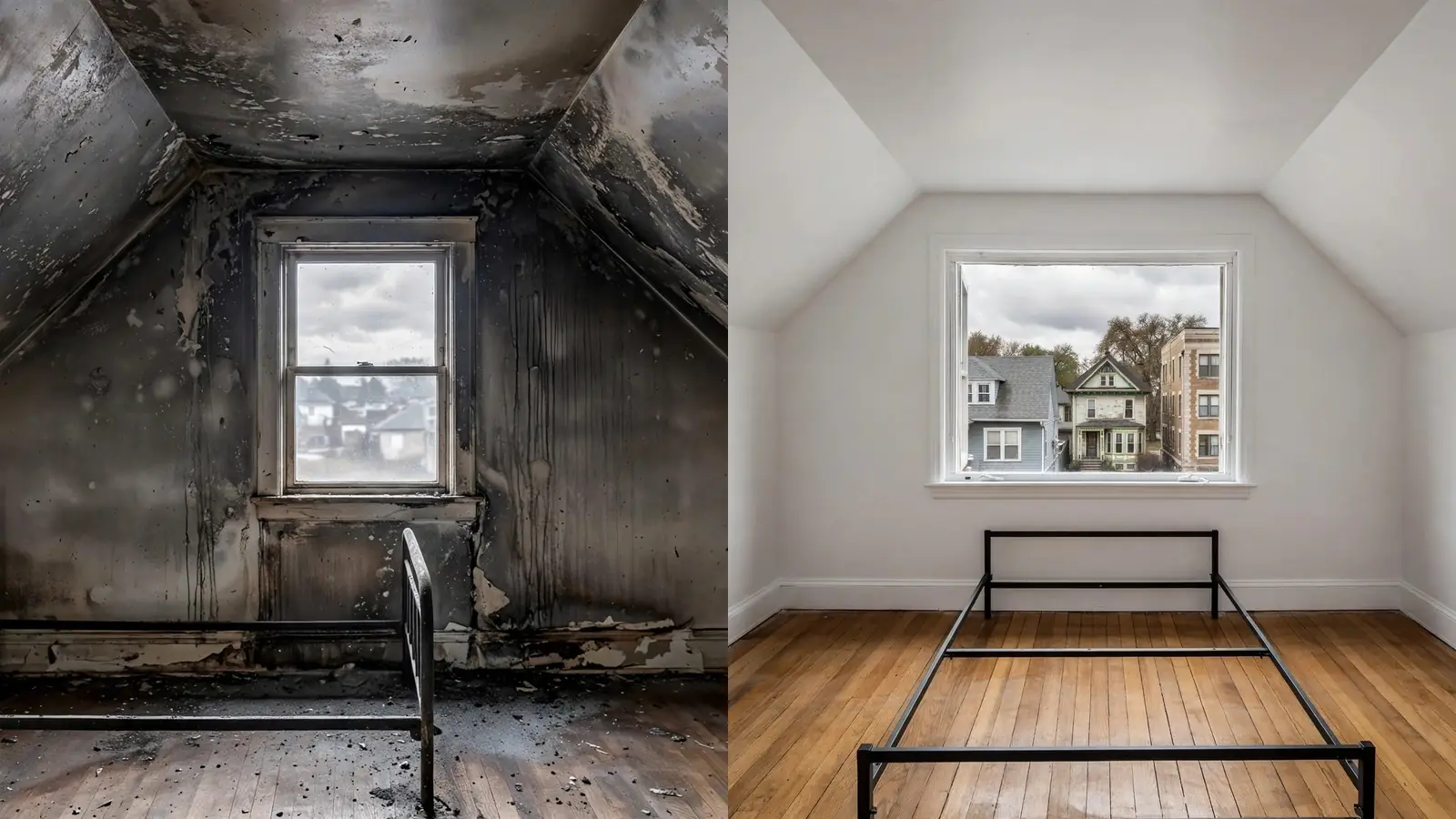
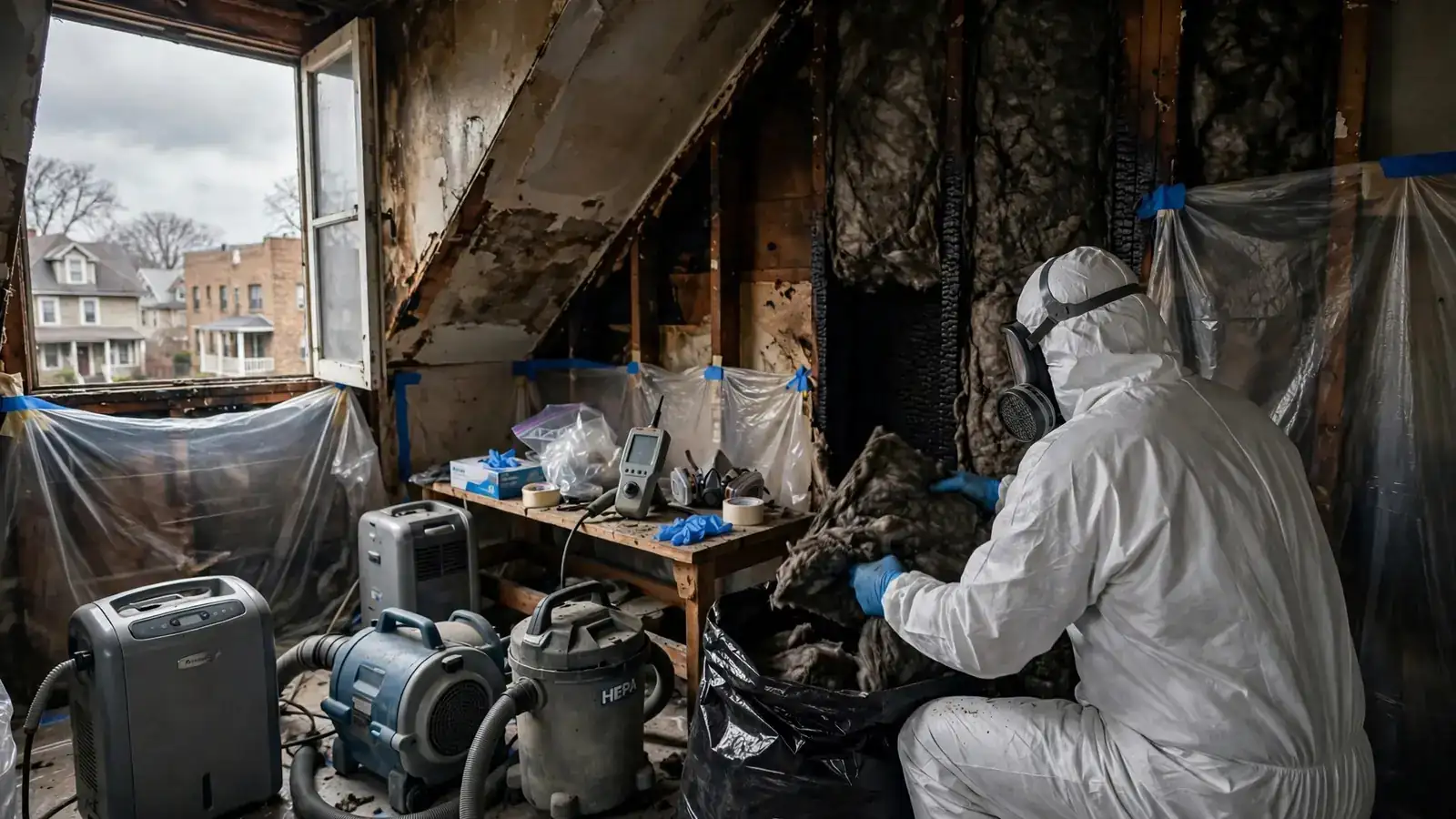
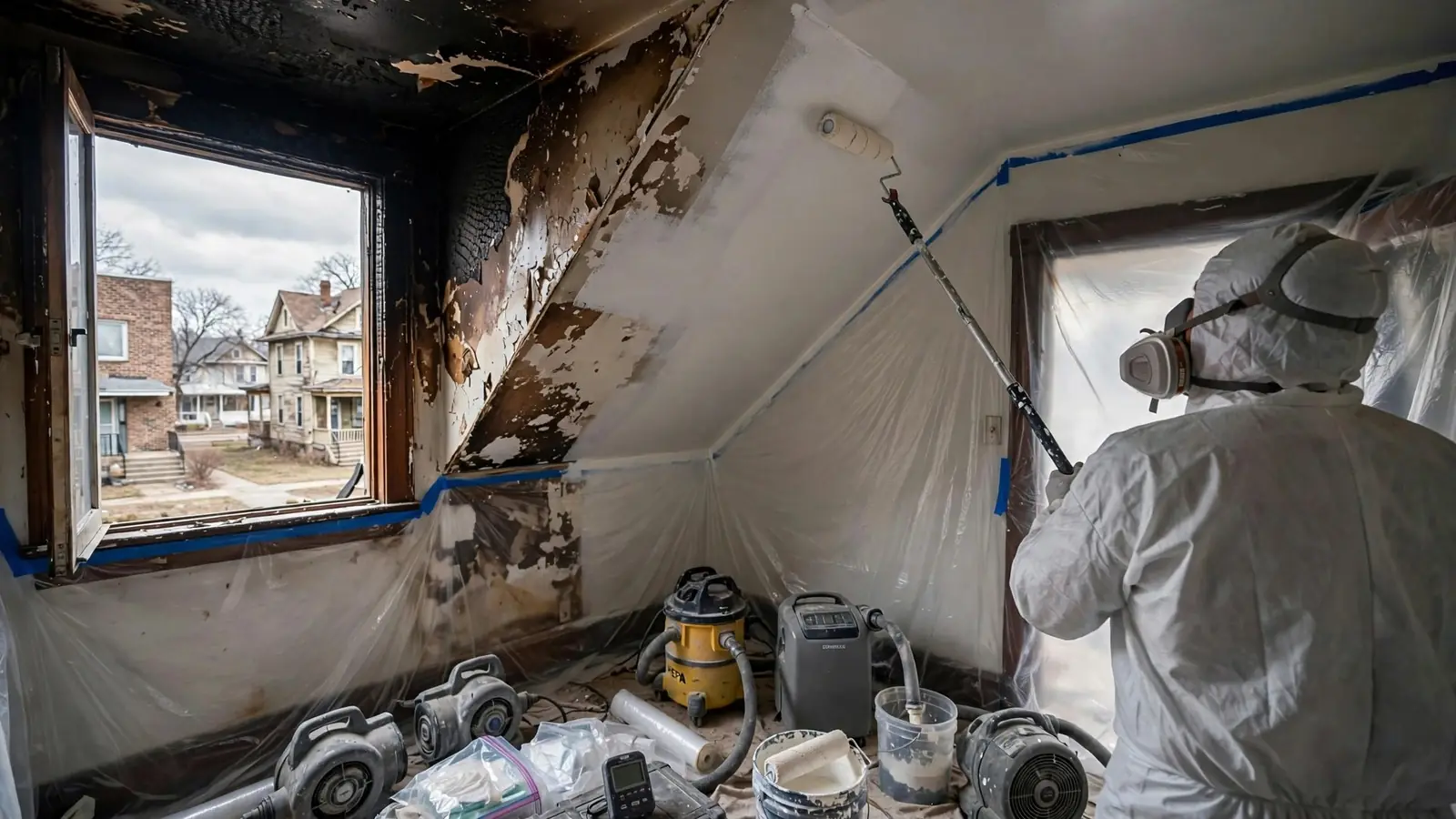
Many Northeast houses have rooms under the roof with sloped ceilings and storage behind knee walls. Smoke rising through the stairwell collects there. Roof boards and old insulation absorb it, and the smell lingers long after the rooms are cleaned.
Every knee-wall space should be opened and emptied, insulation removed and the wood cleaned and sealed. Older loose-fill insulation should be tested for asbestos before removal [6]. Our guide to smoke odor that won't go away explains why these spaces matter.
Studios and live-work spaces
Northeast's arts district includes homes and converted buildings where people live and work with paints, solvents, resins and kilns. A fire involving those materials can leave sharp chemical odors along with smoke. Tell the contractor what was stored so they can choose the right cleaning and handle disposal properly.
Artwork and supplies exposed to smoke may need a conservator. Keep them separate from household contents and photograph them for your claim.
Fresh air in a cold climate
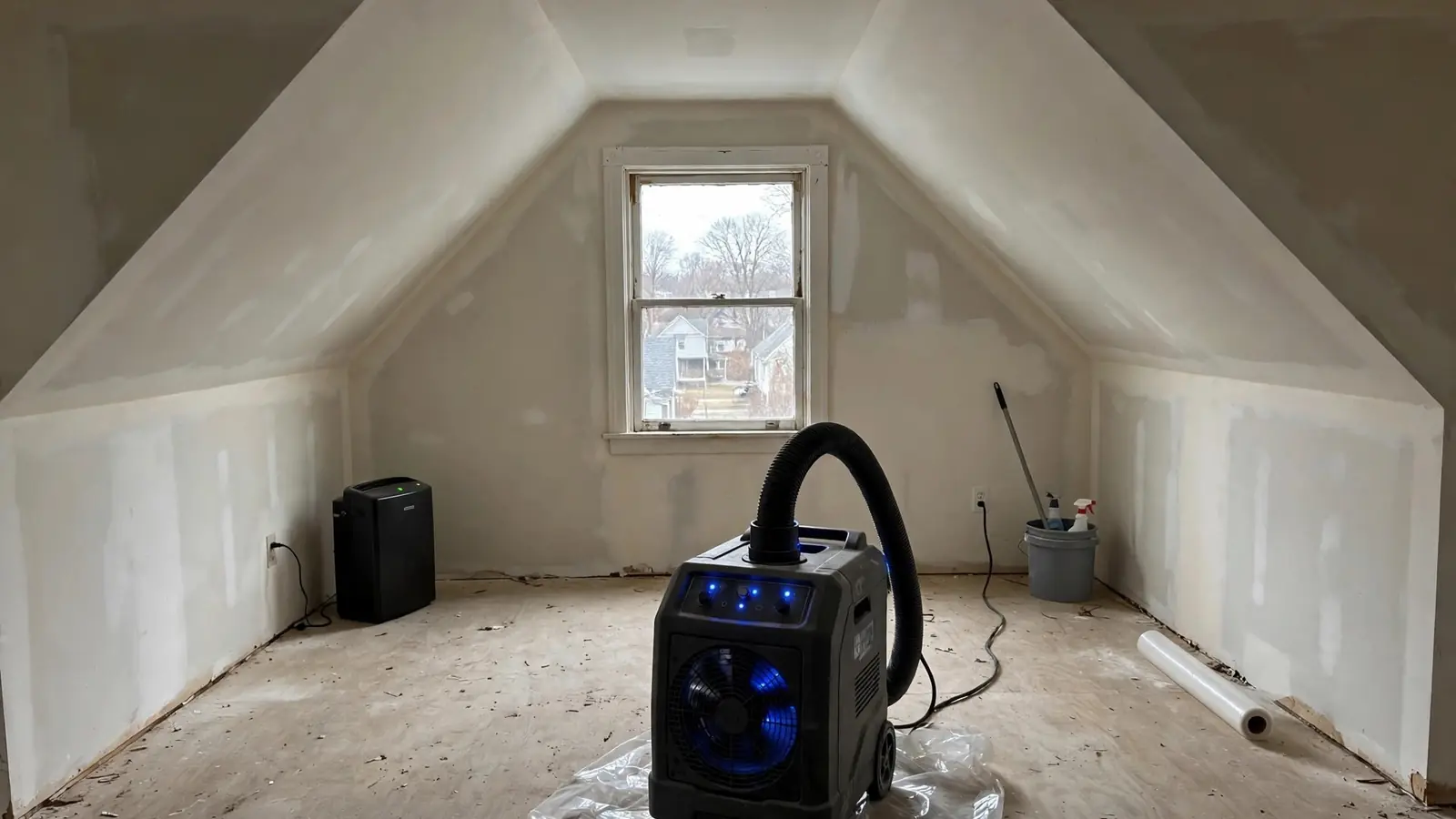
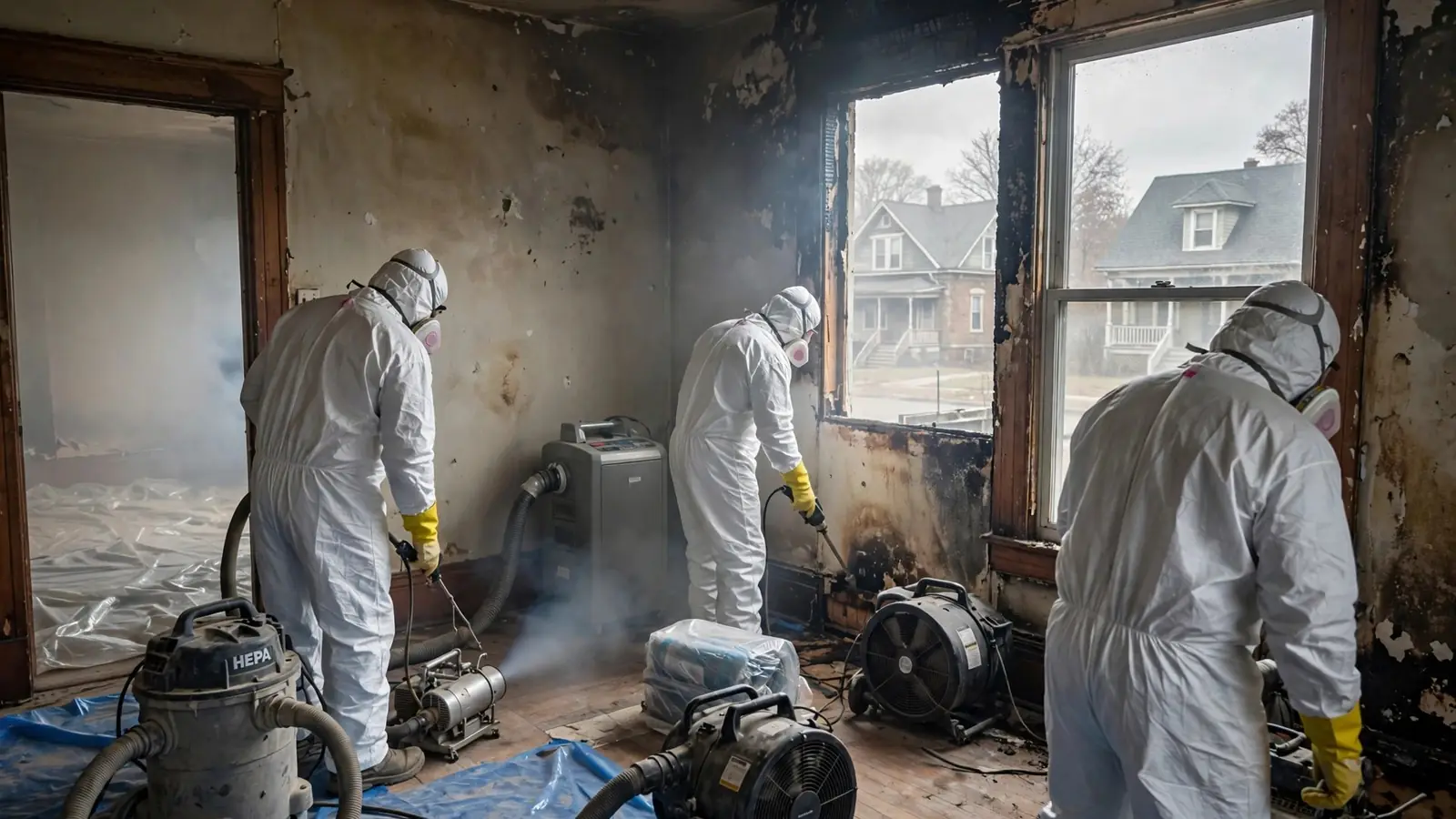
Airing out a house is one of the best ways to reduce odor, but Minnesota winters make that hard. Contractors use air scrubbers with HEPA and carbon filters to clean indoor air while windows stay closed. On milder days, short periods of ventilation can help.
Ozone and similar treatments are used only in empty buildings. The EPA notes that ozone can harm the lungs [3], so people and pets stay out until the treatment ends and the space has been aired.
Moisture, mold and musty odors
Old Northeast basements are often low and damp, with stone walls and a floor drain. After firefighting water reaches them, a musty smell can join the smoke smell. The Minnesota Department of Health says moisture problems should be fixed quickly to keep mold from growing [4].
The basement is dried with dehumidifiers before it is sealed. If it smelled musty before the fire, tell the contractor, since that odor needs a different fix.
Records for the odor work
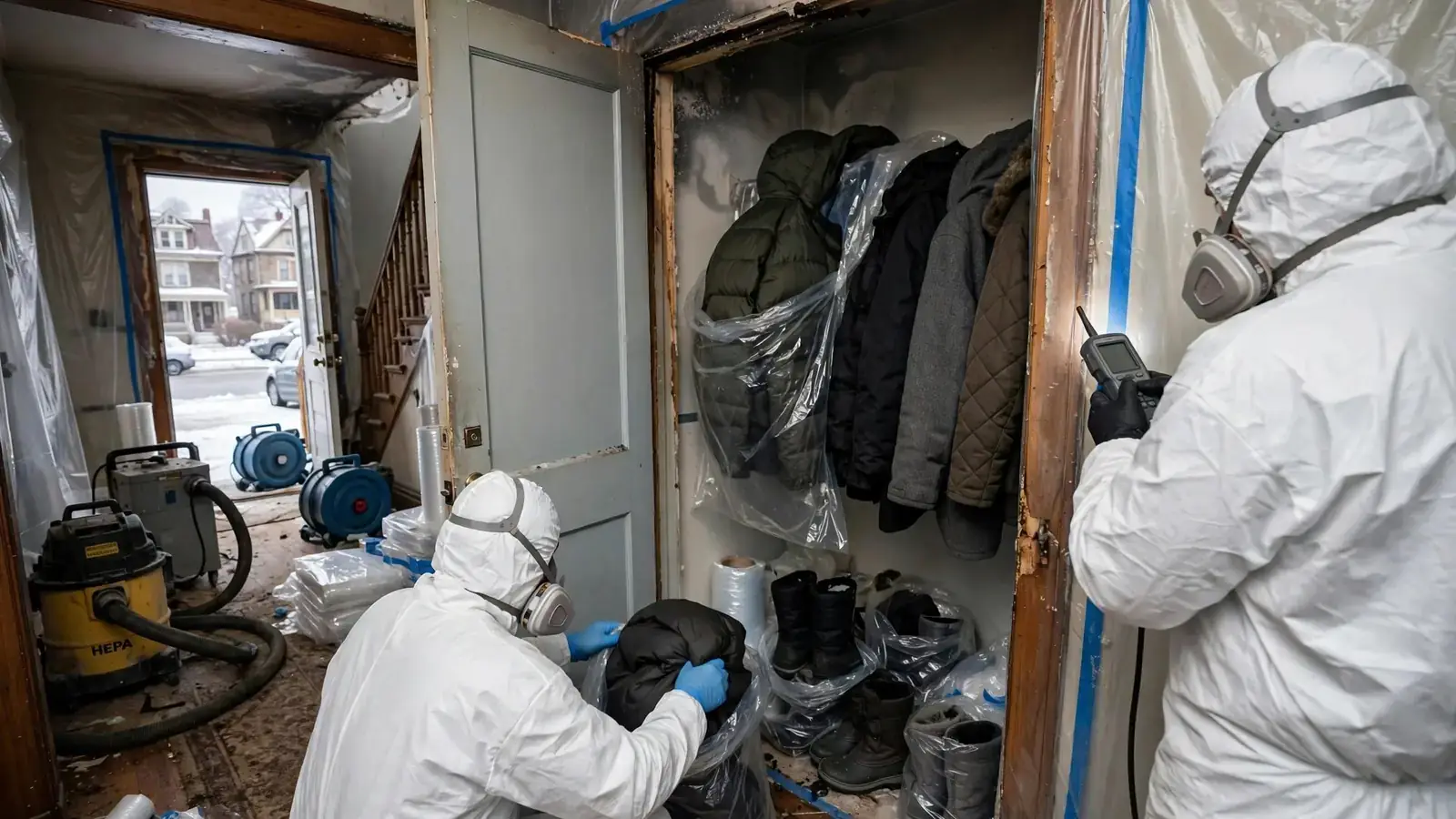
Ask the contractor for a written list of what was removed, cleaned, sealed and treated in each unit or room. Photos of open walls, radiators and knee-wall spaces help explain the work to an adjuster. The Minnesota Department of Commerce encourages policyholders to keep records [5].
The Northeast area page describes how these houses are built. If the smell comes back after the work, ask the contractor to return.
FAQ
Smoke Odor Removal in Northeast: questions
Why does my Northeast house smell worse when the heat comes on?
Radiators and ducts hold soot, and warmth releases the smell. Cleaning the heating system is part of the job.
Can smoke smell move from my neighbor's unit into mine?
Yes, through shared stairways, walls and floors. Common areas and nearby units may need cleaning too.
Will opening the walls be necessary?
Sometimes. If smoke traveled inside wall cavities, small openings may be needed to clean or seal them.
Sources and citations
- [1]U.S. Fire Administration: After a fire
- [2]IICRC: S700 Standard for Professional Fire and Smoke Damage Restoration
- [3]U.S. EPA: Ozone generators that are sold as air cleaners
- [4]Minnesota Department of Health: Mold and moisture in homes
- [5]Minnesota Department of Commerce: Disaster Information Center
- [6]U.S. EPA: Protect your family from exposures to asbestos
- [7]Wikipedia: Northeast, Minneapolis