Key facts: Smoke Odor Removal in Nokomis
- The IICRC S700 standard treats smoke odor as something removed at its source rather than covered up [2].
- The U.S. EPA says ozone generators sold as air cleaners can irritate the lungs and should not run while people are present [3].
- Nokomis takes its name from Lake Nokomis and had about 38,500 residents in 2020 [7].
Why smoke smell lingers in Nokomis houses
Odor comes from tiny particles and gases that stick to surfaces and soak into porous materials. In a Nokomis bungalow or story-and-a-half, that means plaster ceilings, wood trim, oak floors under rugs, upholstered furniture and the insulation in the attic and knee walls. Each one holds the smell and gives it back slowly, especially on warm days.
Many of these houses have also been tightened up over the years with new windows, added insulation and, near the airport, sound-reduction upgrades. That keeps heat in, but it also keeps the smell in. Without steady fresh air, odor that might fade in a drafty house can hang on for months in a tight one.
Knee walls and the upstairs bedrooms
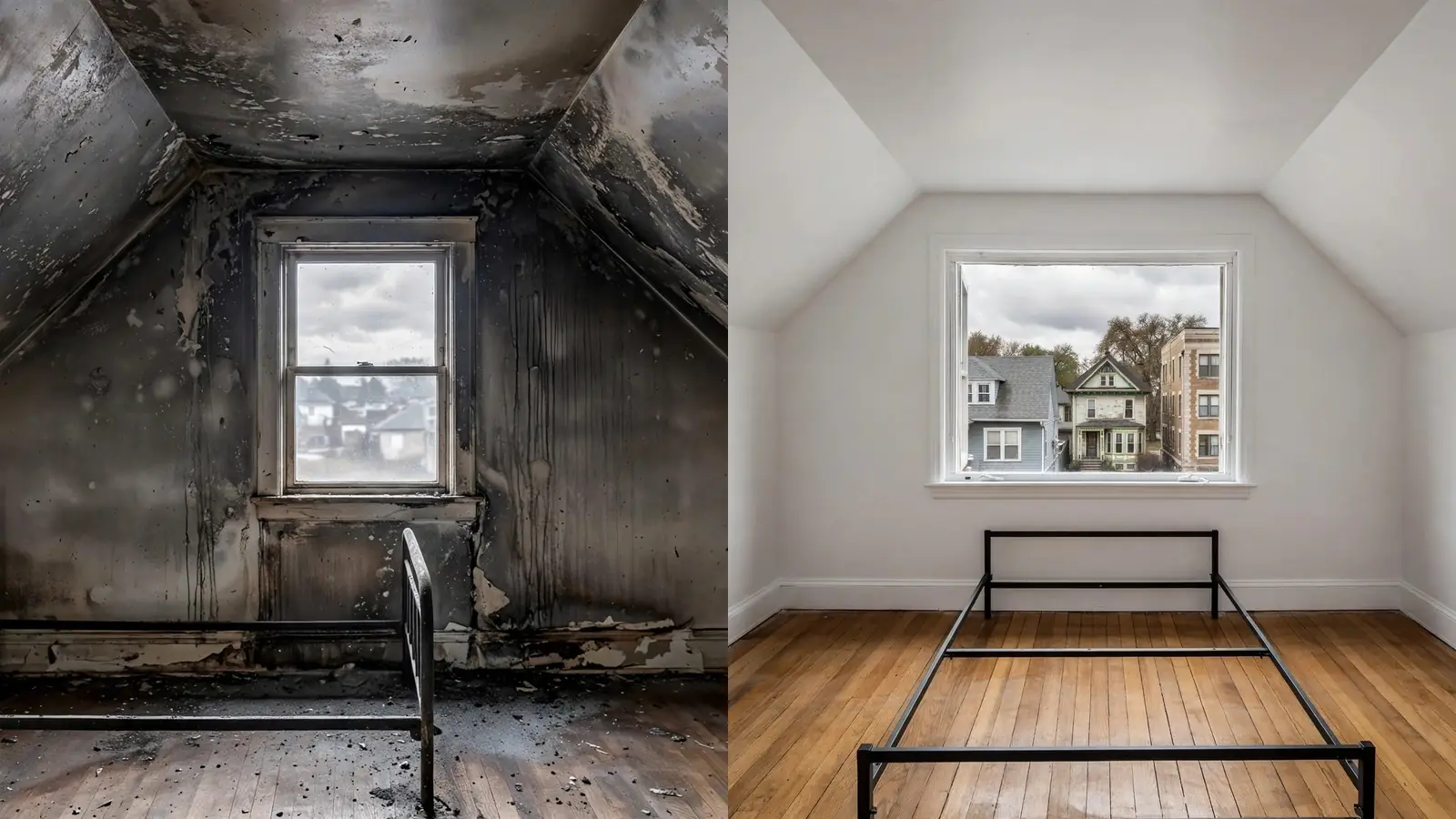
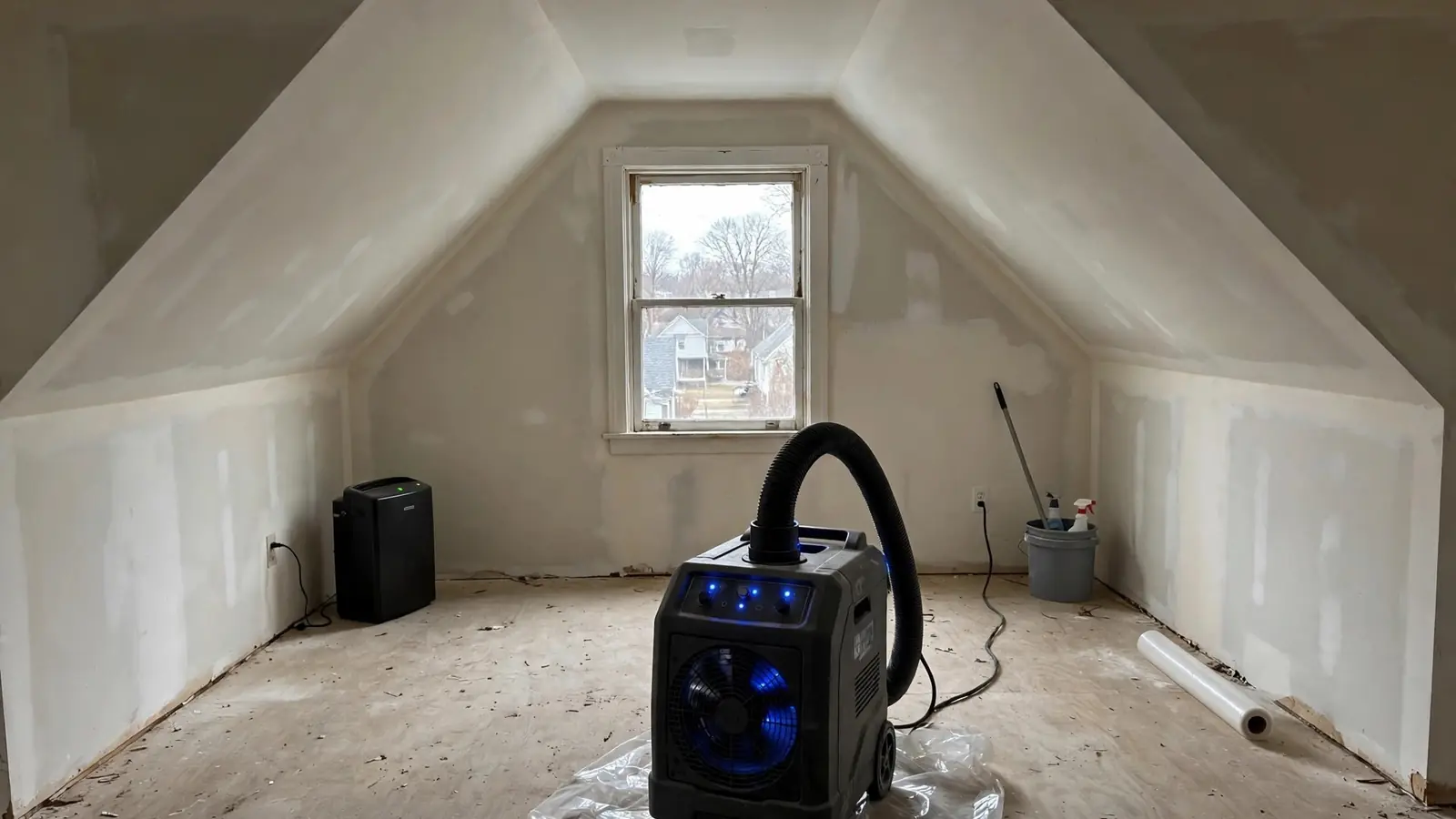
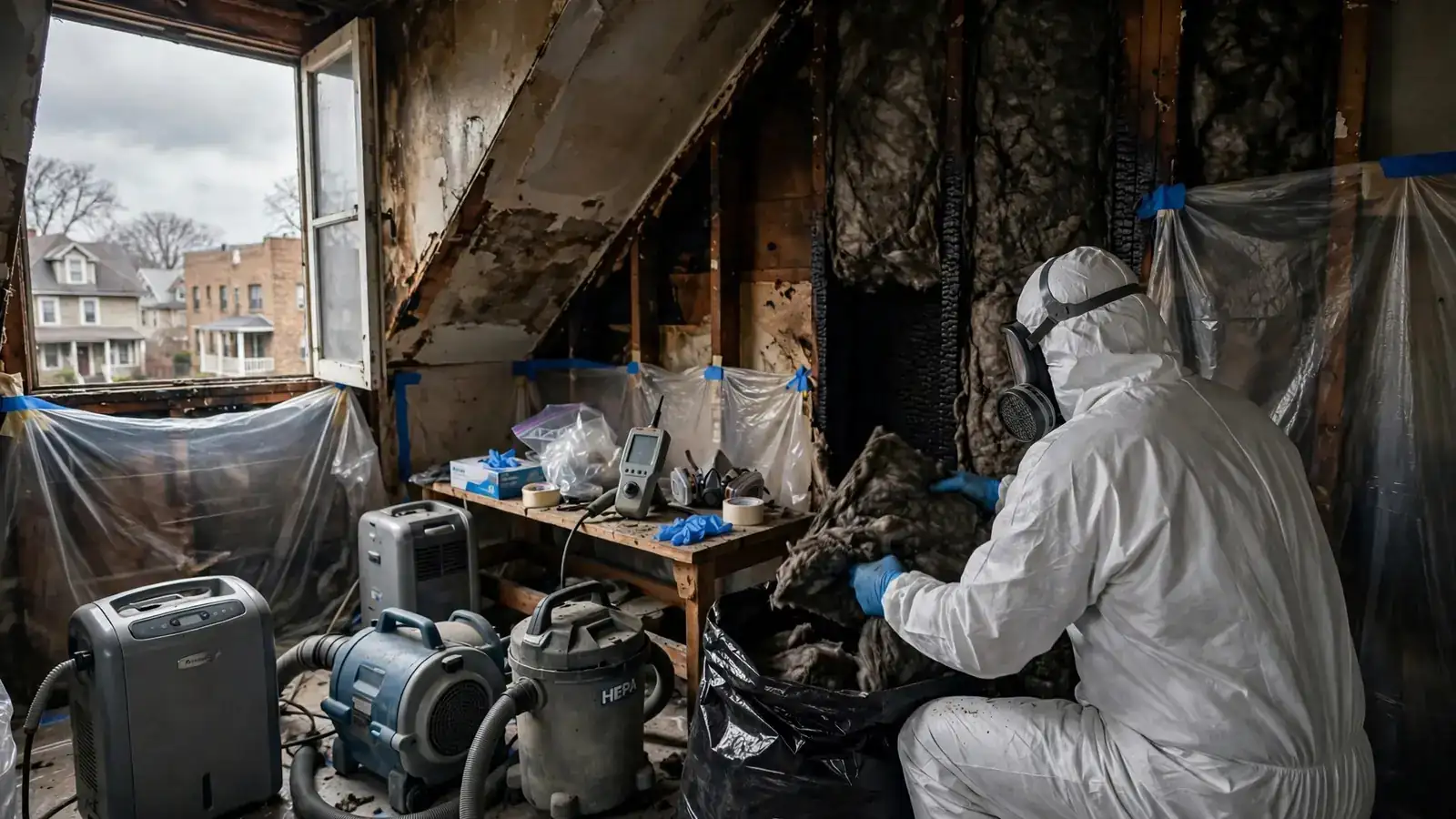
Smoke rising up the stairway collects under the sloped ceilings upstairs and pushes into the knee-wall spaces on either side. Those spaces are full of stored boxes, old insulation and bare roof boards, all of which absorb odor. Families often notice that the upstairs smells worse than the room that burned, and this is usually why.
Fixing it means opening every knee-wall door, emptying the space, bagging insulation that took on smoke and cleaning the roof boards and framing. Once dry, the wood is sealed with an odor-blocking primer. Our guide to smoke odor that won't go away explains why skipping these hidden spaces leads to the smell coming back.
Removing smoke smell from a Nokomis home
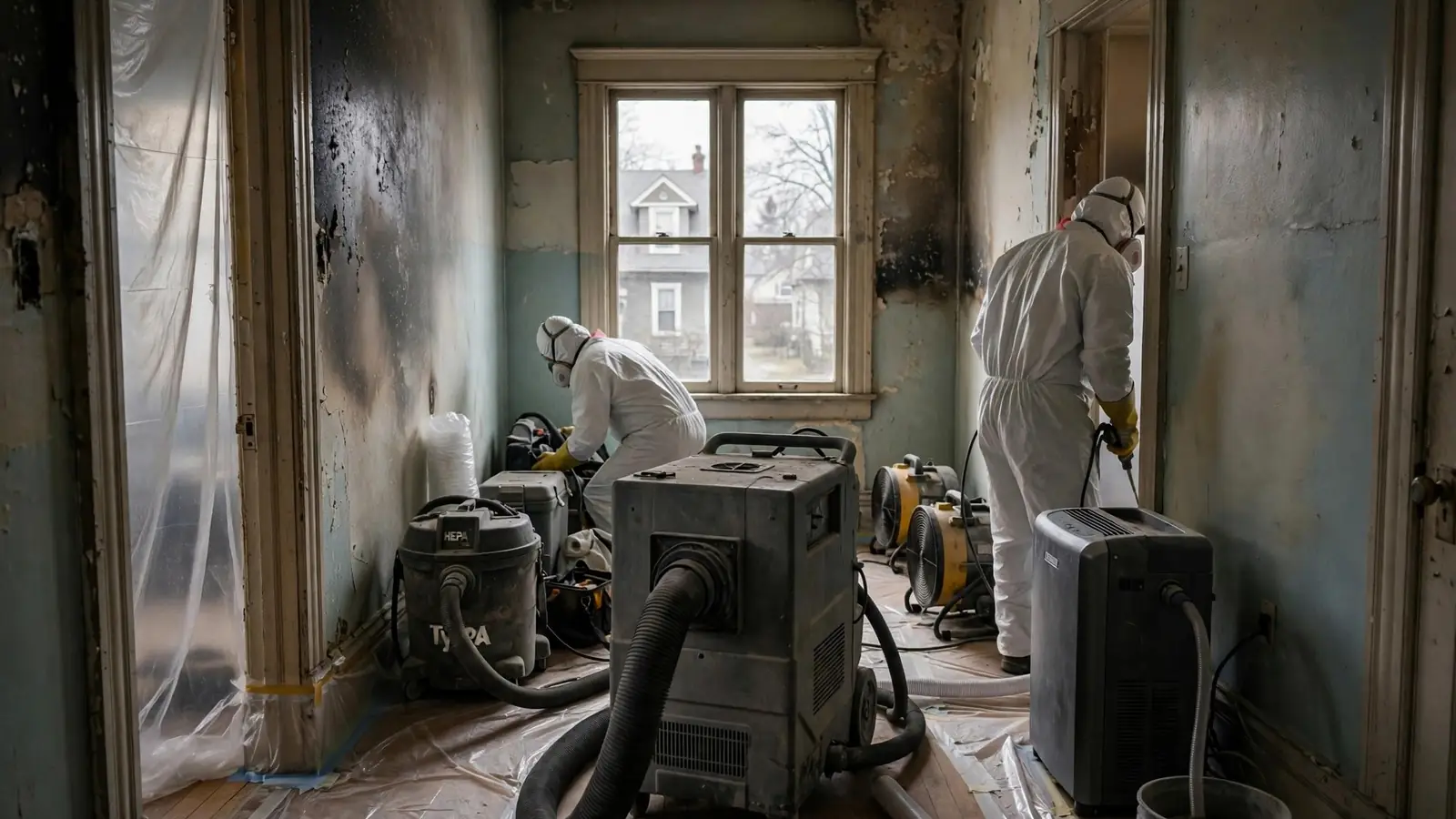
The usual order, from the source outward.
- 1
Find where the Nokomis smoke settled
Check the half story, knee walls, basement, ducts and closets with the contractor.
- 2
Clear out what cannot be saved
Bag smoky insulation, cardboard boxes and soft goods that will not clean.
- 3
Clean surfaces from the top down
Ceilings, walls, trim and floors are cleaned before any deodorizing.
- 4
Seal, deodorize and air out the house
Seal cleaned wood, treat remaining odor and bring in fresh air.
Basement fires and the smell that rises
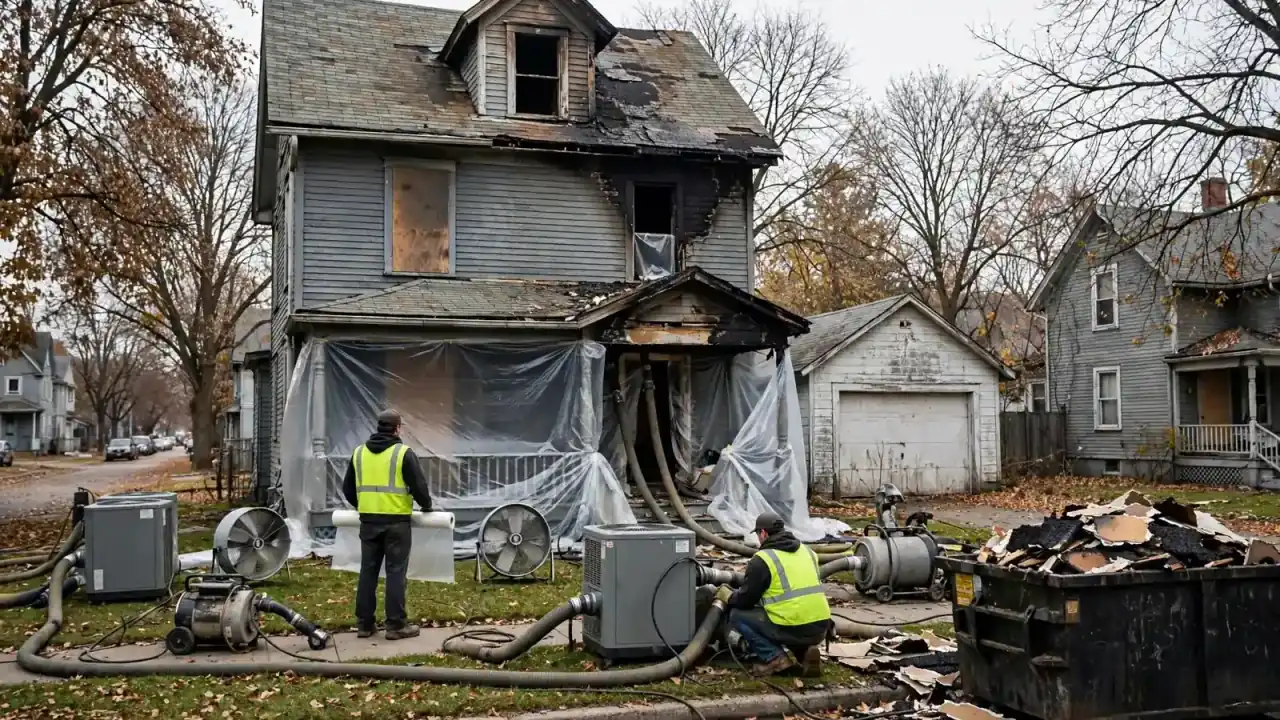
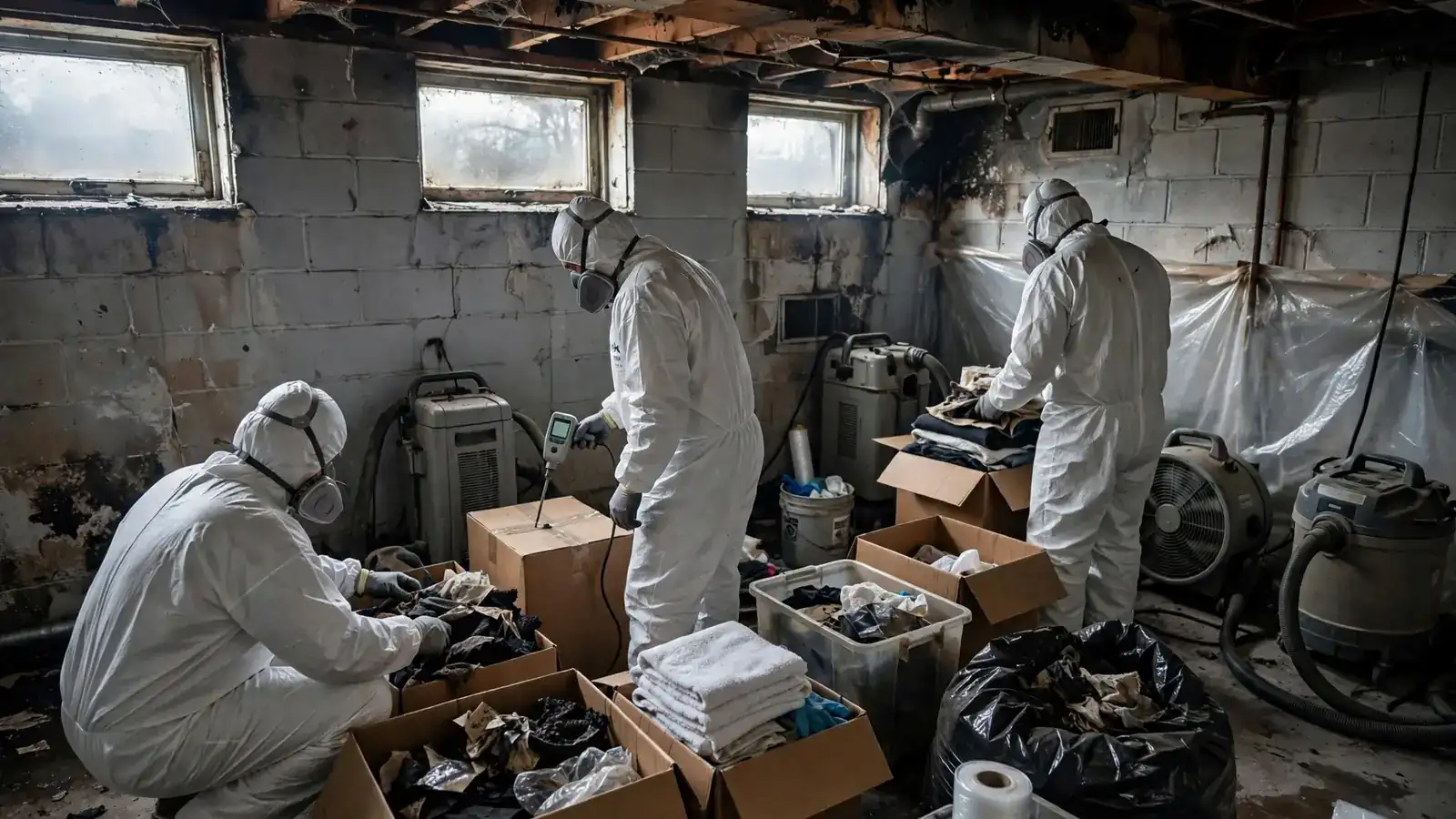
When a fire starts at a dryer or near the furnace in the basement, smoke follows the stairs and floor registers up into the house. The basement itself keeps the strongest smell in its joists, subfloor, block or stone walls and stored belongings. Unless the basement is cleaned thoroughly, the odor keeps rising through the floor long after the main rooms look clean.
The basement ceiling is usually cleaned by blasting or careful scrubbing, then sealed. Storage is sorted, and anything porous that soaked up smoke is set aside. Finished basement rooms with carpet and drywall may need those materials removed, especially if firefighting water also reached them.
Furnaces and ductwork in Nokomis
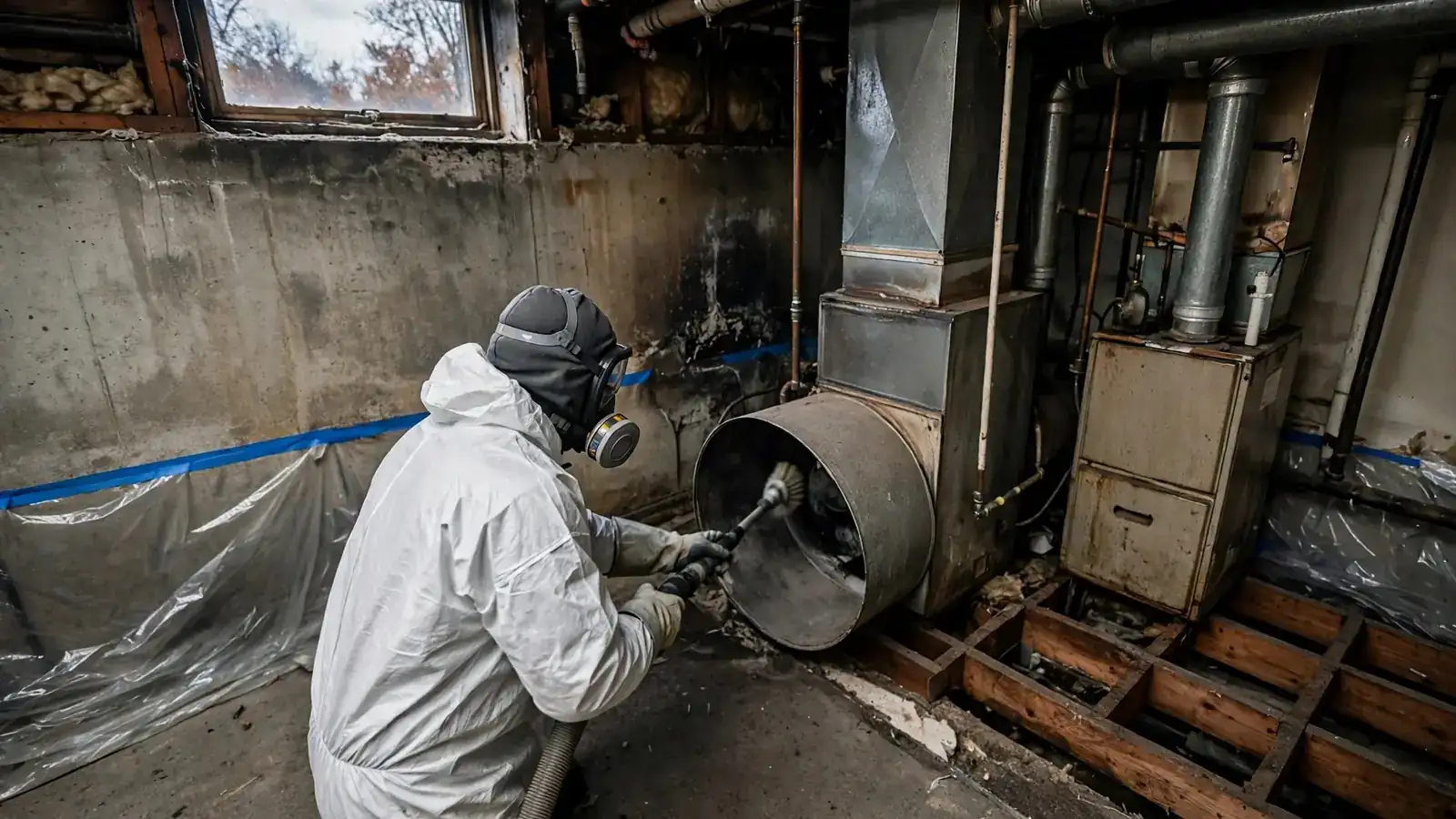
Most Nokomis houses heat with a forced-air furnace in the basement and ducts running up through the walls. If the blower ran during or after the fire, it pulled smoke into the return and pushed it out of every register. Even after the rooms are cleaned, a dirty duct system will blow that smell back into the house each time the heat comes on.
The ducts, furnace cabinet and blower are cleaned, and the filter is changed more than once in the weeks after restart. In winter this work is timed carefully, since the house cannot go long without heat. A heating contractor should confirm the furnace is safe before it is used again.
Air out the house in a Minnesota winter
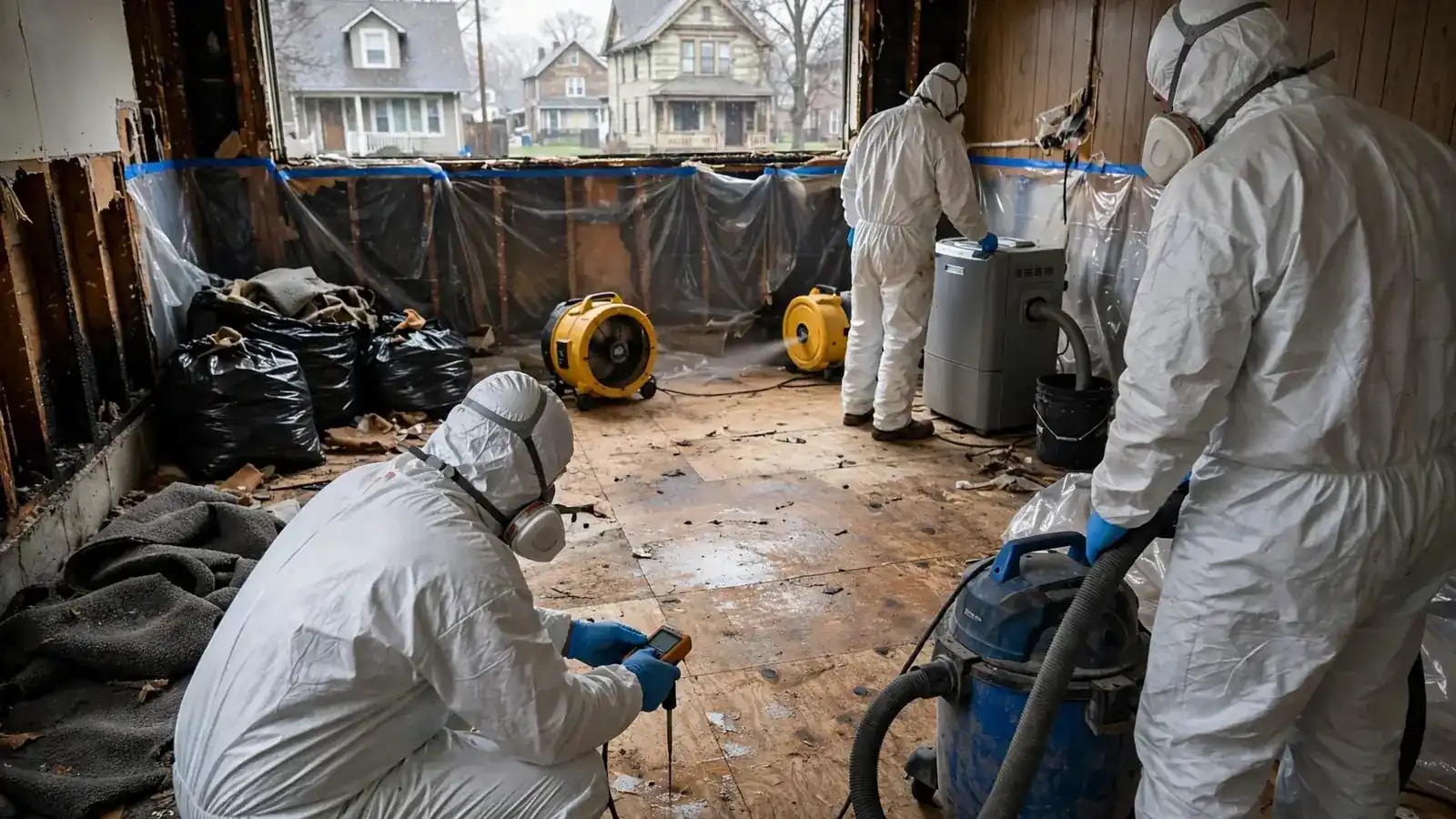
Fresh air is one of the best tools against smoke odor, but opening windows in January is not practical. Contractors often use air scrubbers with HEPA and carbon filters to clean the air inside without losing heat. In milder spells, short bursts of cross-ventilation can help, as long as the house stays warm enough to protect the pipes.
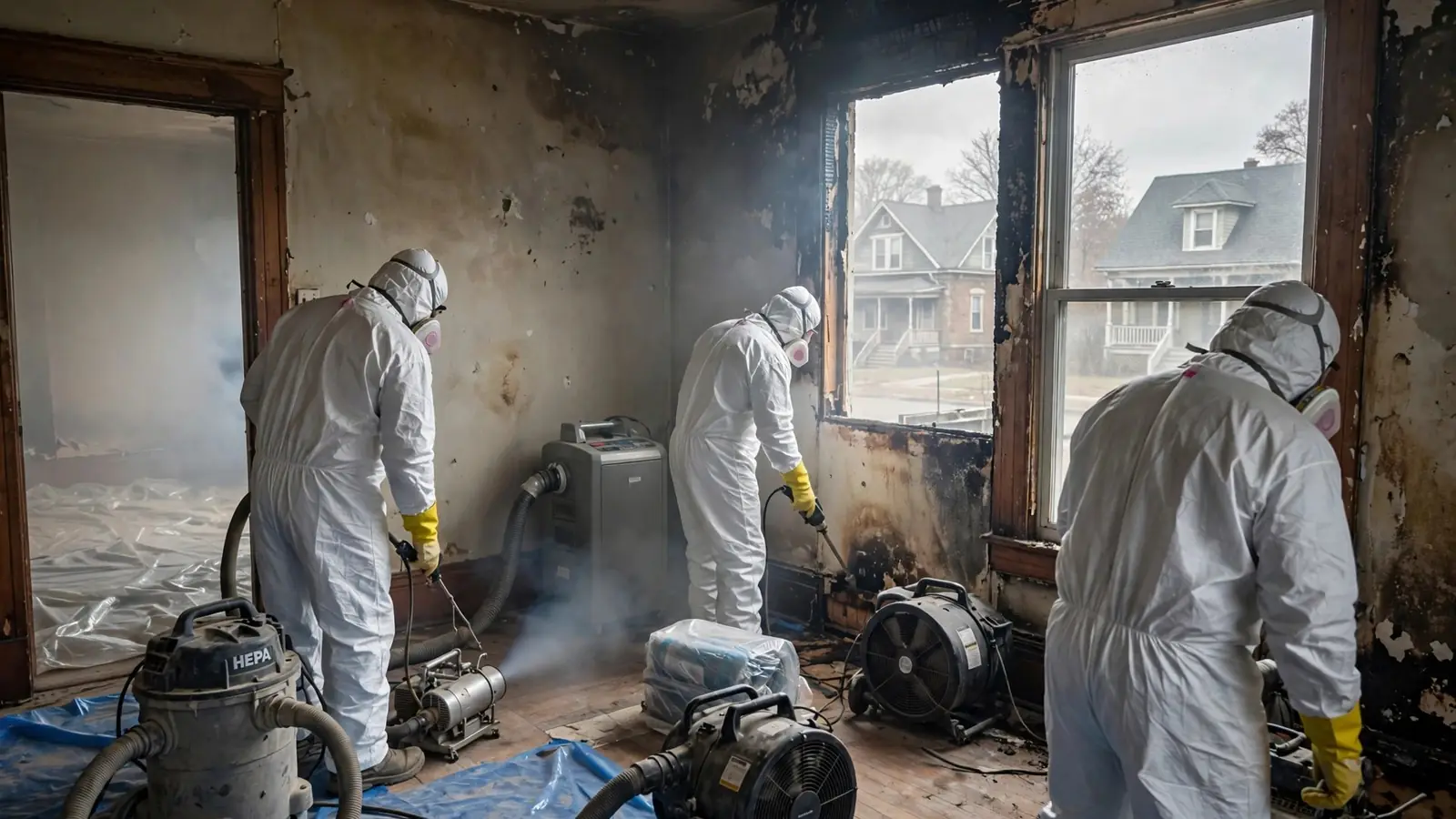
Some odor treatments, such as ozone or hydroxyl machines, are used only in empty houses under the contractor's control. The EPA cautions that ozone can harm the lungs [3], so people, pets and plants stay out until the treatment ends and the house has been aired.
Places Nokomis smoke odor often hides
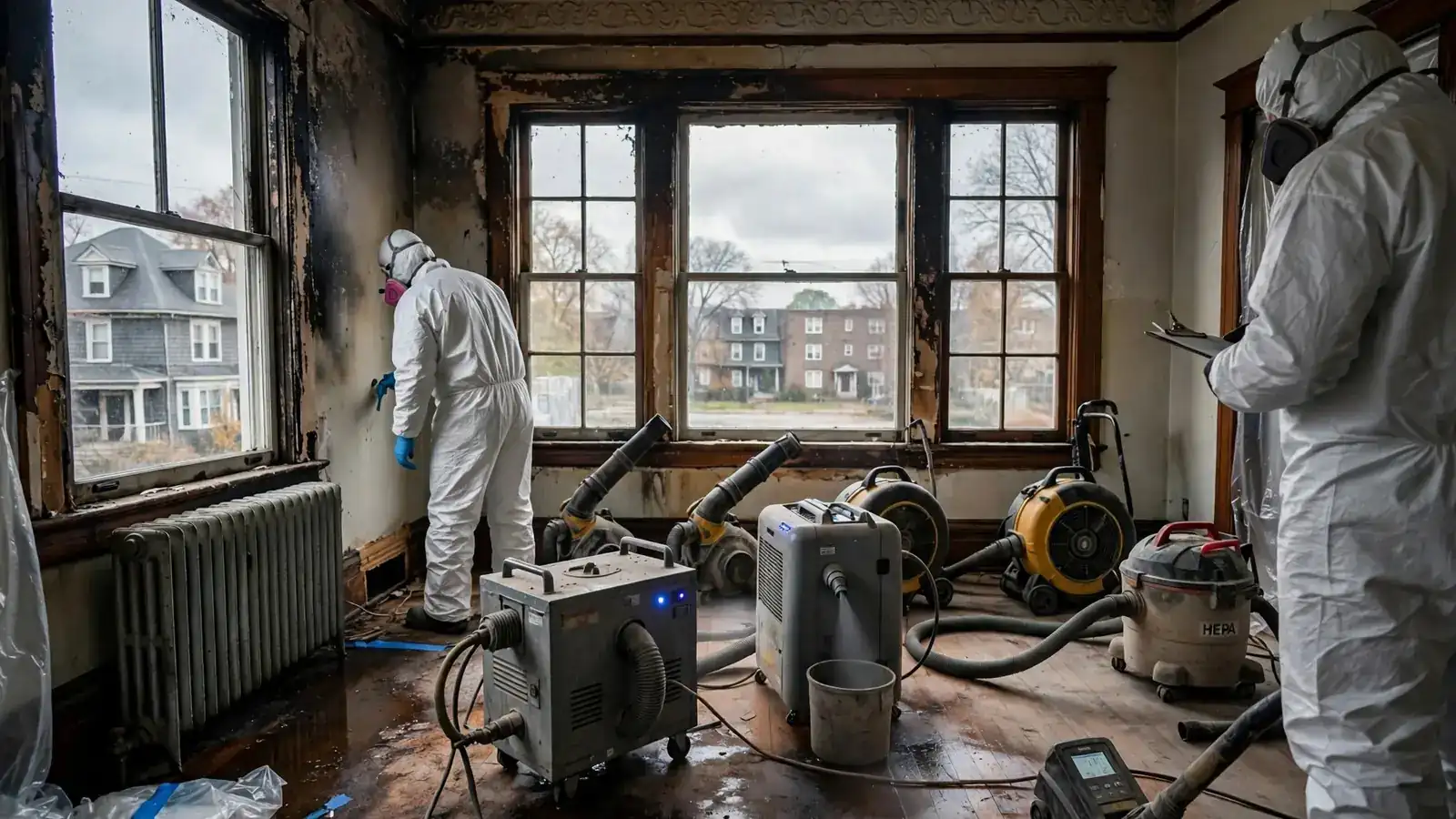
Spots worth checking before you decide the smell is gone.
- Behind Nokomis knee-wall doorsInsulation and roof boards under the eaves.
- Inside the cold-air returnThe return in the hallway pulls smoke into the system.
- Under rugs on oak floorsSmoke settles into the gaps between boards.
- Basement storage shelvesCardboard and fabric stored near the furnace.
Clothing, bedding and soft goods
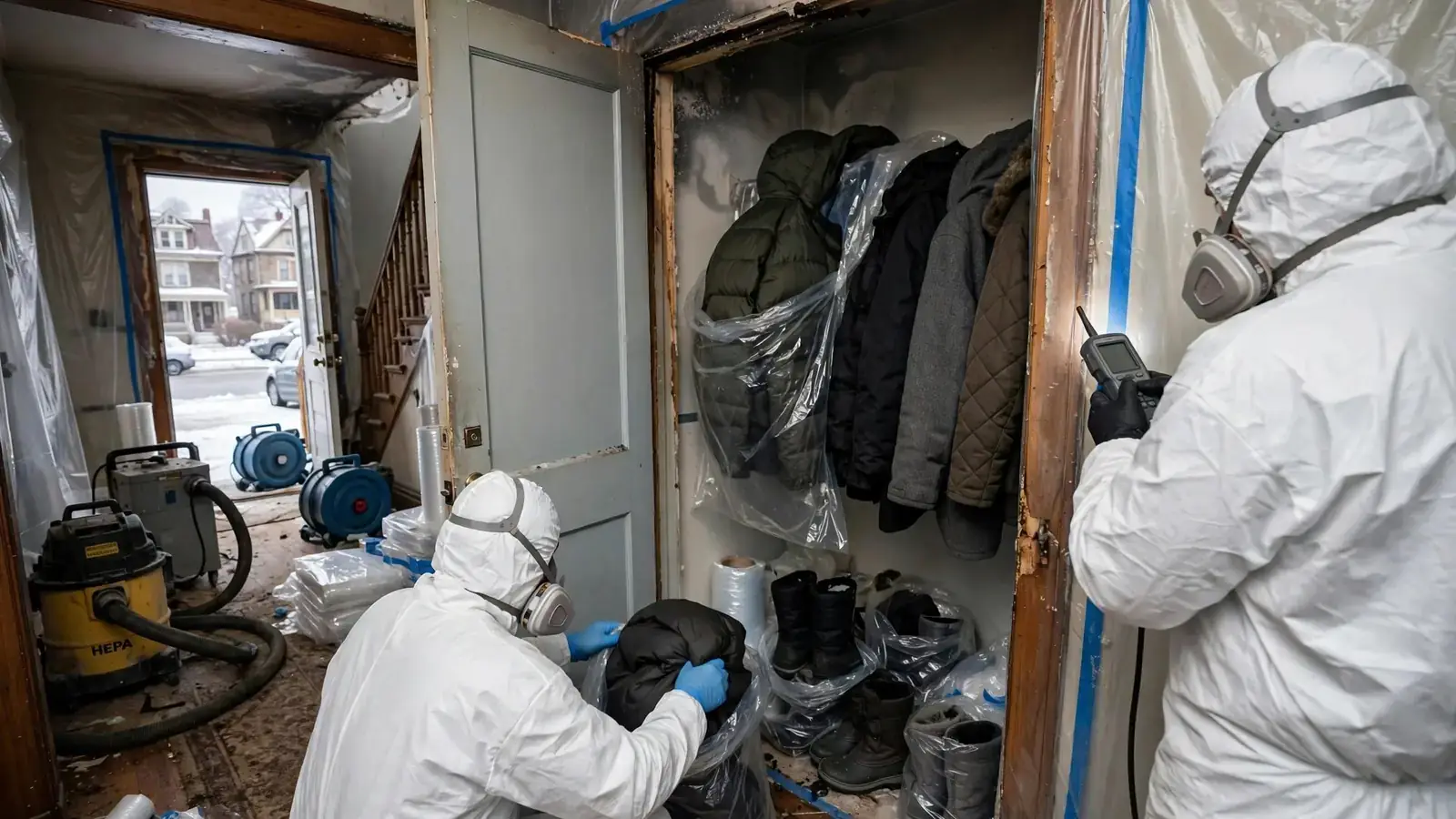
Clothes in upstairs closets and the basement laundry area often smell of smoke even when they look clean. Washing heavily smoked items at home can spread residue into the washer. Professional textile cleaning is usually better for clothing, bedding and curtains, and the contractor can arrange it and keep a list for your claim.
Upholstered furniture and mattresses are harder. Some respond to cleaning and deodorizing, while others hold smoke deep in the padding. The contractor can tell you which items are worth cleaning and which are better replaced, and photos of each item help your insurer follow the decision.
Musty odors in basements near Lake Hiawatha
Homes near Lake Nokomis, Lake Hiawatha and Minnehaha Creek can have damper basements, especially in spring. After a fire, water from the hoses adds to that moisture. A musty smell can then mix with the smoke smell, and the two need different fixes. The Minnesota Department of Health advises fixing moisture problems quickly to keep mold from growing [4].
If the basement smelled musty before the fire, tell the contractor. They will dry the space with dehumidifiers, check for mold and deal with it before sealing anything. Sealing over damp wood can trap both odors and lead to bigger problems later.
Older paint, insulation and safe removal
Many Nokomis homes were built before 1978 and may have lead paint under newer coats. Some also have older insulation or pipe wrap that could contain asbestos. Removing smoky materials can disturb these, so the contractor tests suspect materials before tearing them out. The EPA explains that asbestos is a concern mainly when it is disturbed [6].
If testing finds asbestos, a specialist removes it under the rules for that work. This can add a step to the schedule, but it keeps your family and the crew safe. Ask the contractor what will be tested and when you can expect the results.
Keeping records of the odor work
Odor removal is easier to explain to an adjuster when each step is written down. Ask for a list of what was removed, what was cleaned and sealed, and what treatments were used. Photos of open knee-wall spaces and the basement ceiling before and after cleaning are especially useful.
The Minnesota Department of Commerce reminds policyholders to keep records and ask questions about their claim [5]. If the smell returns after the work is done, call the contractor back. The Nokomis area page has more on how these houses are built and why smoke travels the way it does.
FAQ
Smoke Odor Removal in Nokomis: questions
Why does my Nokomis upstairs still smell after cleaning?
Smoke often settles in knee-wall spaces, insulation and roof boards that are not visible from the rooms. Those spaces need opening, clearing, cleaning and sealing.
Can air fresheners fix smoke odor in a Nokomis house?
No. They only cover the smell for a short time. Lasting results come from removing the residue at its source and sealing what remains.
Is it safe to stay home during odor treatment?
Not during ozone or similar treatments. The contractor will tell you when the house is clear to re-enter after treatment and airing.
Sources and citations
- [1]U.S. Fire Administration: After a fire
- [2]IICRC: S700 Standard for Professional Fire and Smoke Damage Restoration
- [3]U.S. EPA: Ozone generators that are sold as air cleaners
- [4]Minnesota Department of Health: Mold and moisture in homes
- [5]Minnesota Department of Commerce: Disaster Information Center
- [6]U.S. EPA: Protect your family from exposures to asbestos
- [7]Wikipedia: Nokomis, Minneapolis