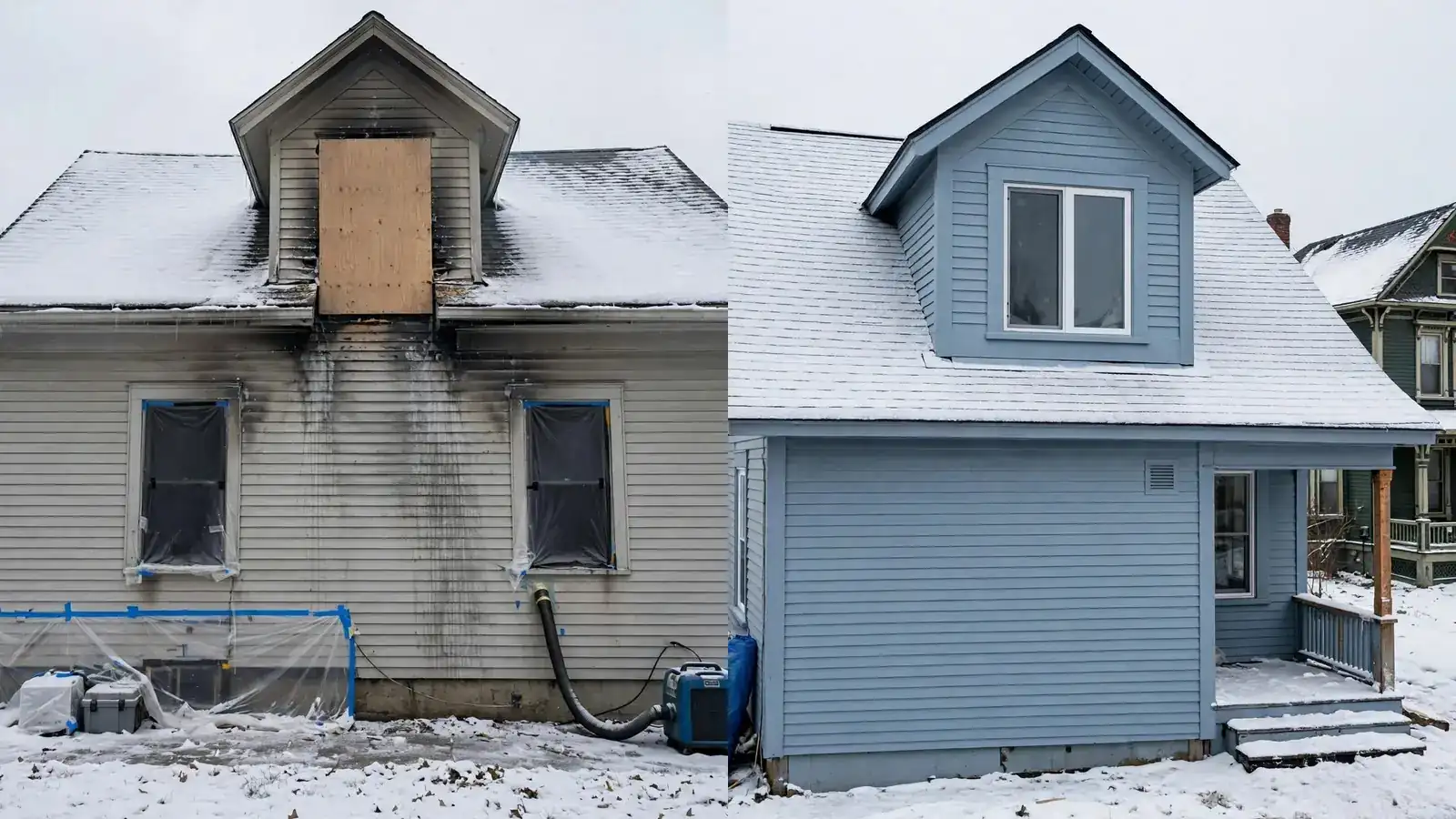
Key facts: Board-Up and Tarping in Powderhorn
Height is the first problem in Powderhorn
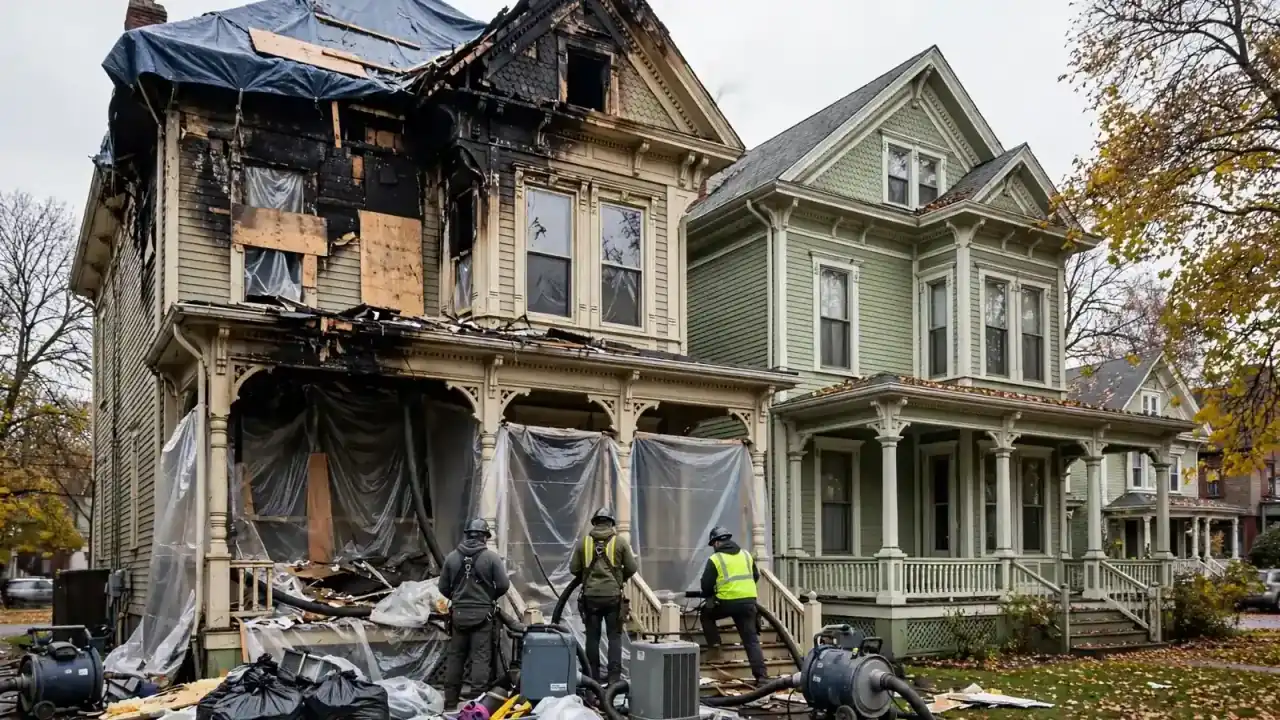
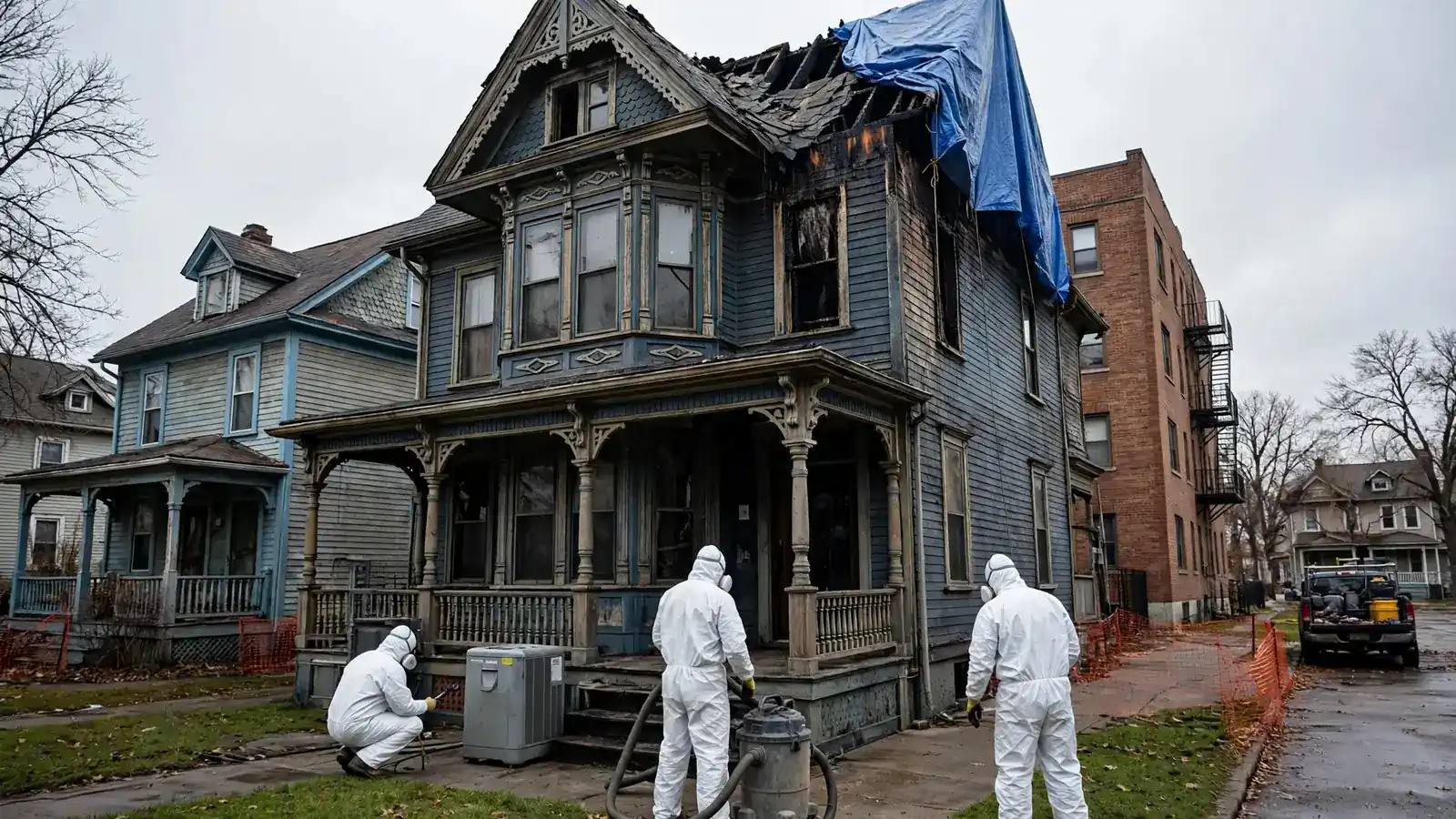
Most Powderhorn houses went up between about 1905 and 1920 [5], and many are two-and-a-half-story foursquares or late Victorian designs. Their attic windows and roof peaks sit well above a normal extension ladder's reach. When firefighters vent the attic or cut the roof, closing those openings safely takes a lift, scaffolding or roof anchors and harnesses.
The crew plans the high work before anything else. They check the roof framing from the attic where they can, decide where to set the lift on a narrow lot, and work out how to keep debris from falling onto the porch roof or the neighbor's yard below.
Wide front porches full of windows
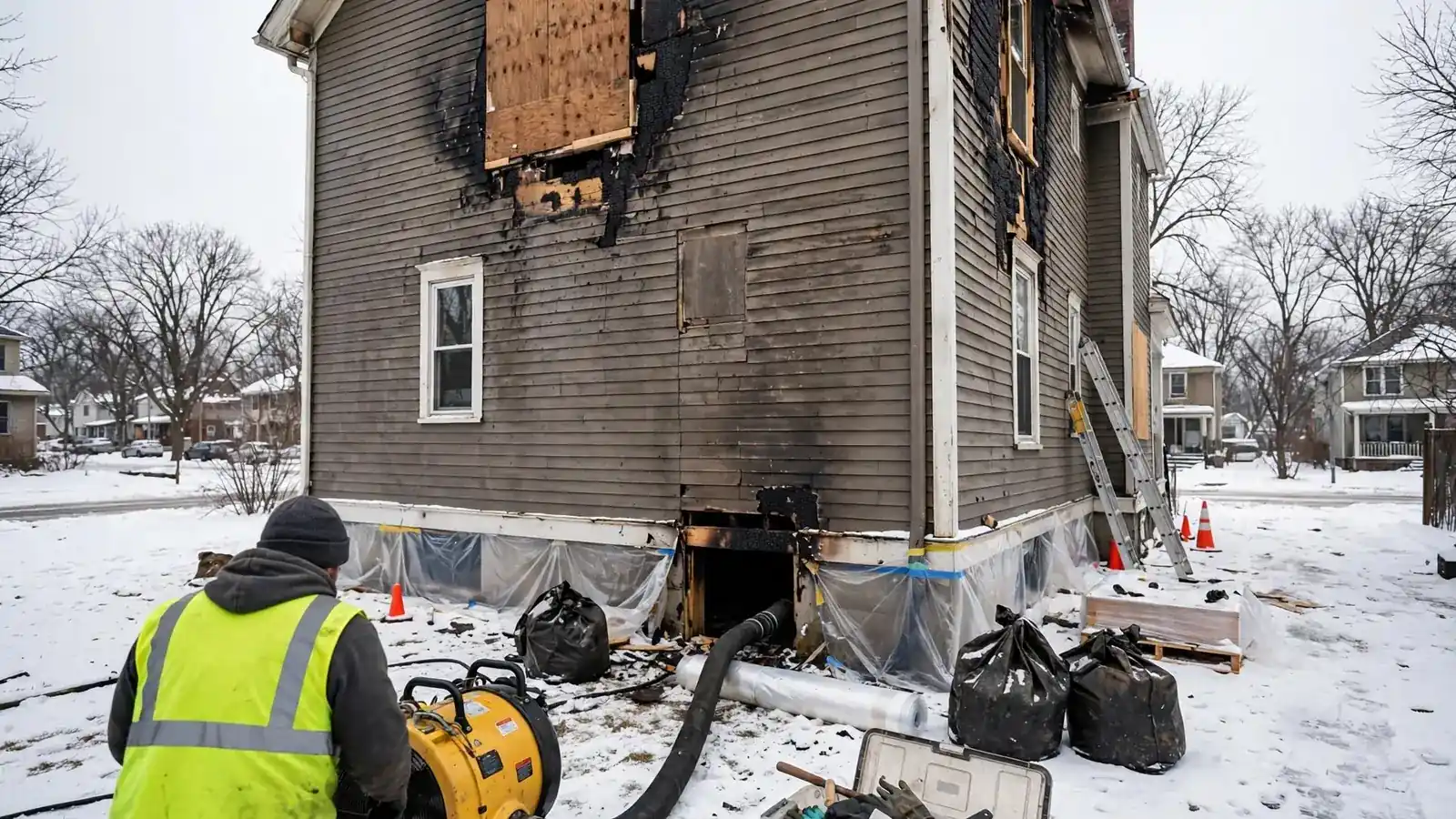
Deep front porches are part of what makes Powderhorn's blocks look the way they do. Enclosed porches often have a long run of windows, and firefighters frequently enter through them. After a fire, a porch with a dozen broken panes leaves cold air against the front door and makes the house look open to anyone walking past.
Each porch opening is boarded with panels sized to the frame. Porch floors and steps damaged by water or heat are made safe early, since the crew will use them throughout the job. If the porch ceiling or roof burned, it may need temporary support before work continues inside.
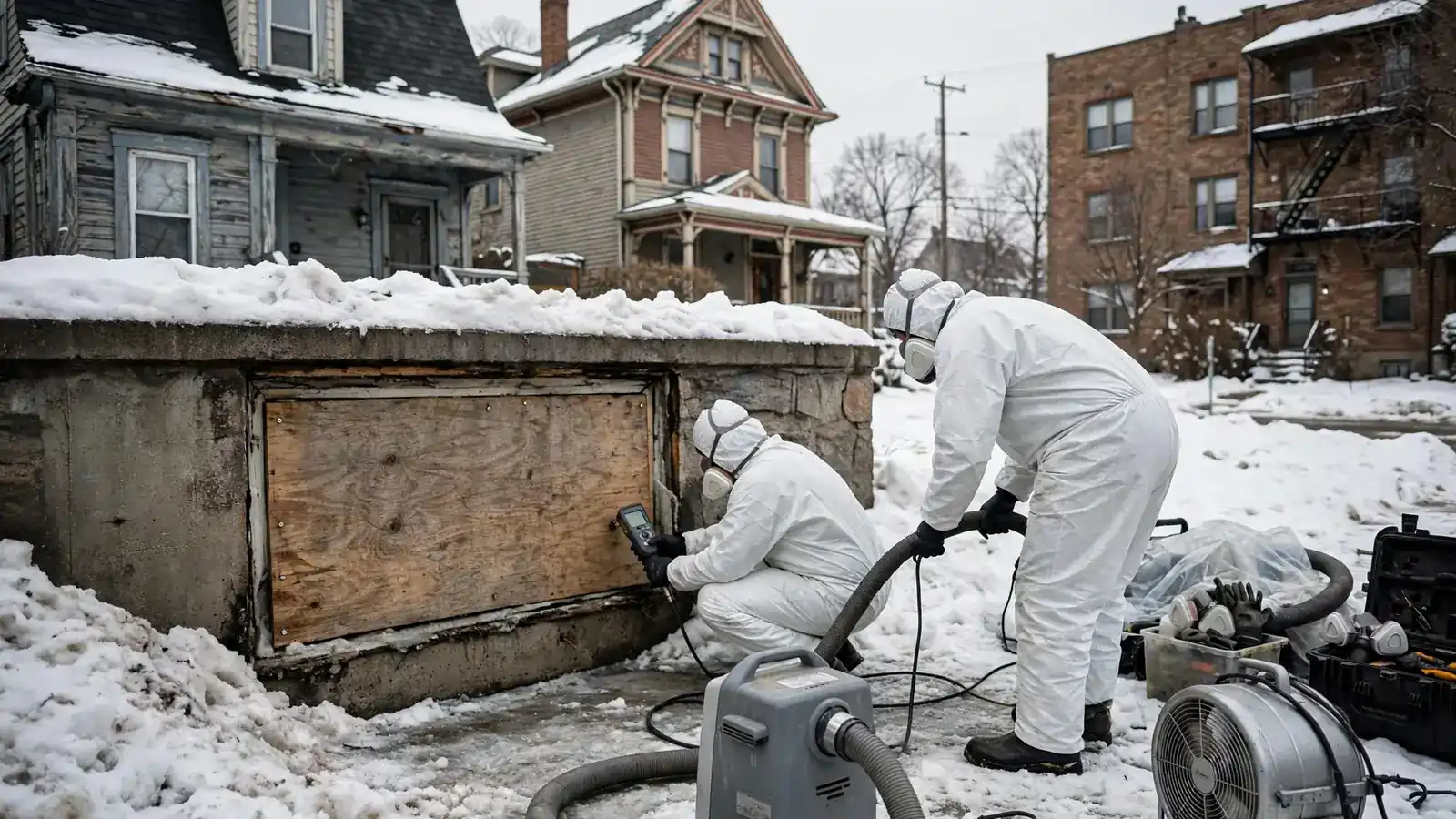
Securing a tall Powderhorn house
How a crew usually works from the top down.
- 1
Confirm the Powderhorn house is released
No work starts until the fire department says entry is safe and utilities are controlled.
- 2
Photograph all three floors and the porch
Capture each side, the roof, the porch and any neighbor's damage.
- 3
Close the attic and roof openings first
Use a lift or roof safety gear to tarp vent holes and board attic windows.
- 4
Board the second floor, porch and main floor
Work downward so nothing falls on finished covers.
Steep roofs and snow load
Powderhorn roofs are steep, with dormers and valleys where snow drifts. A tarp on a steep slope sheds snow better than one on a low roof, but drifts still build at the dormers and ice can form along battens. Heavy reinforced tarps, fastened into sound rafters with battens laid so water runs off, hold up best.
Watch the National Weather Service forecasts for the Twin Cities [2] and check the tarp from the street after storms and high winds. A lifted corner on a third-floor roof is not something to fix yourself. Call the contractor back.
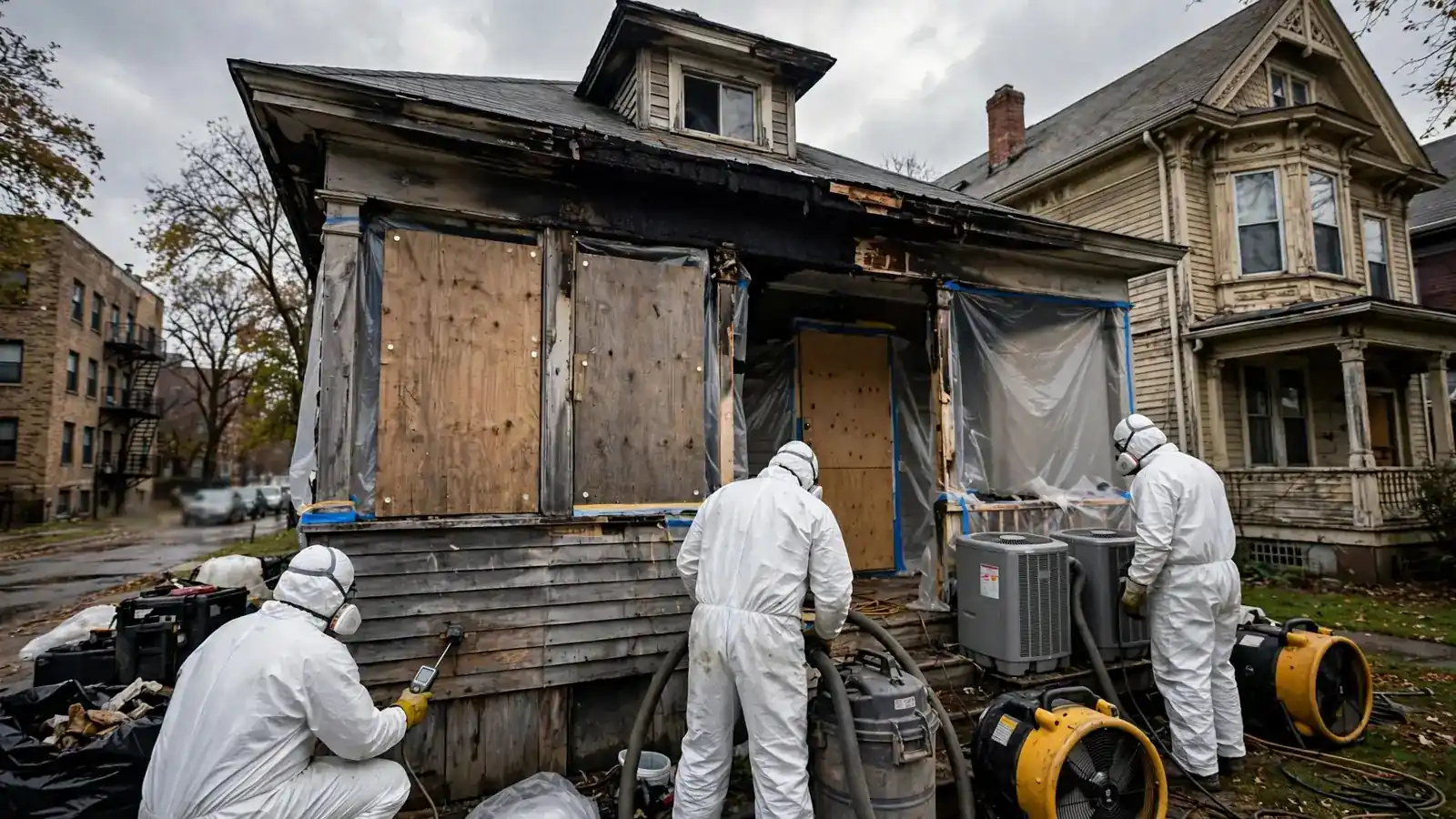
Brick walk-ups of three floors
Powderhorn also has brick walk-up apartment buildings of three floors [5]. Some have flat roofs behind a parapet, which are tarped by tucking the cover under the parapet cap and weighting it. Windows on these buildings are set into brick openings, so panels are fitted inside the opening and braced rather than nailed to the masonry.
In a walk-up, the shared entry and stairwell doors also need securing. The building owner arranges this work, and tenants should talk to the owner or manager about getting to their belongings safely.
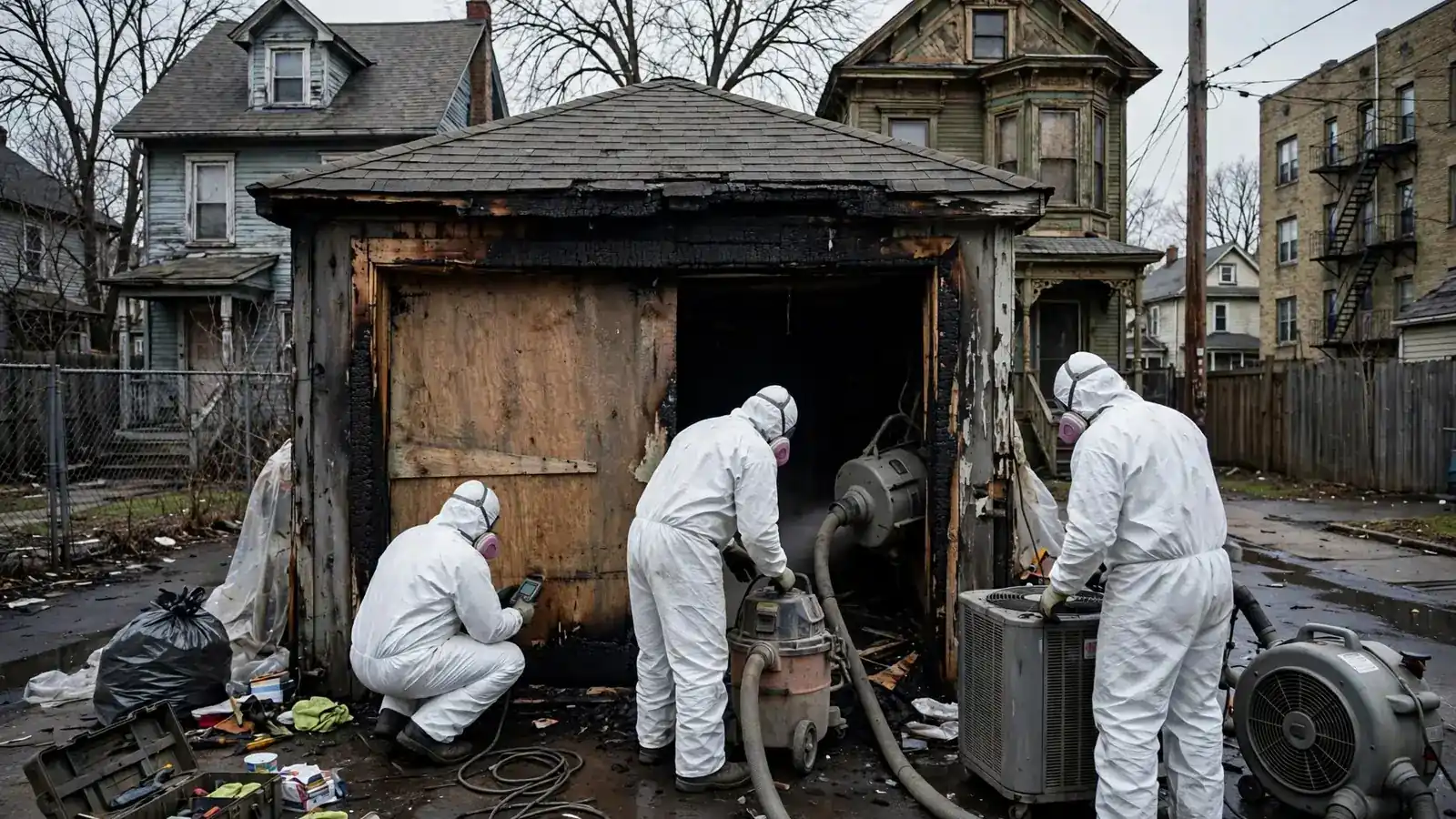
Heat damage to the house next door in Powderhorn
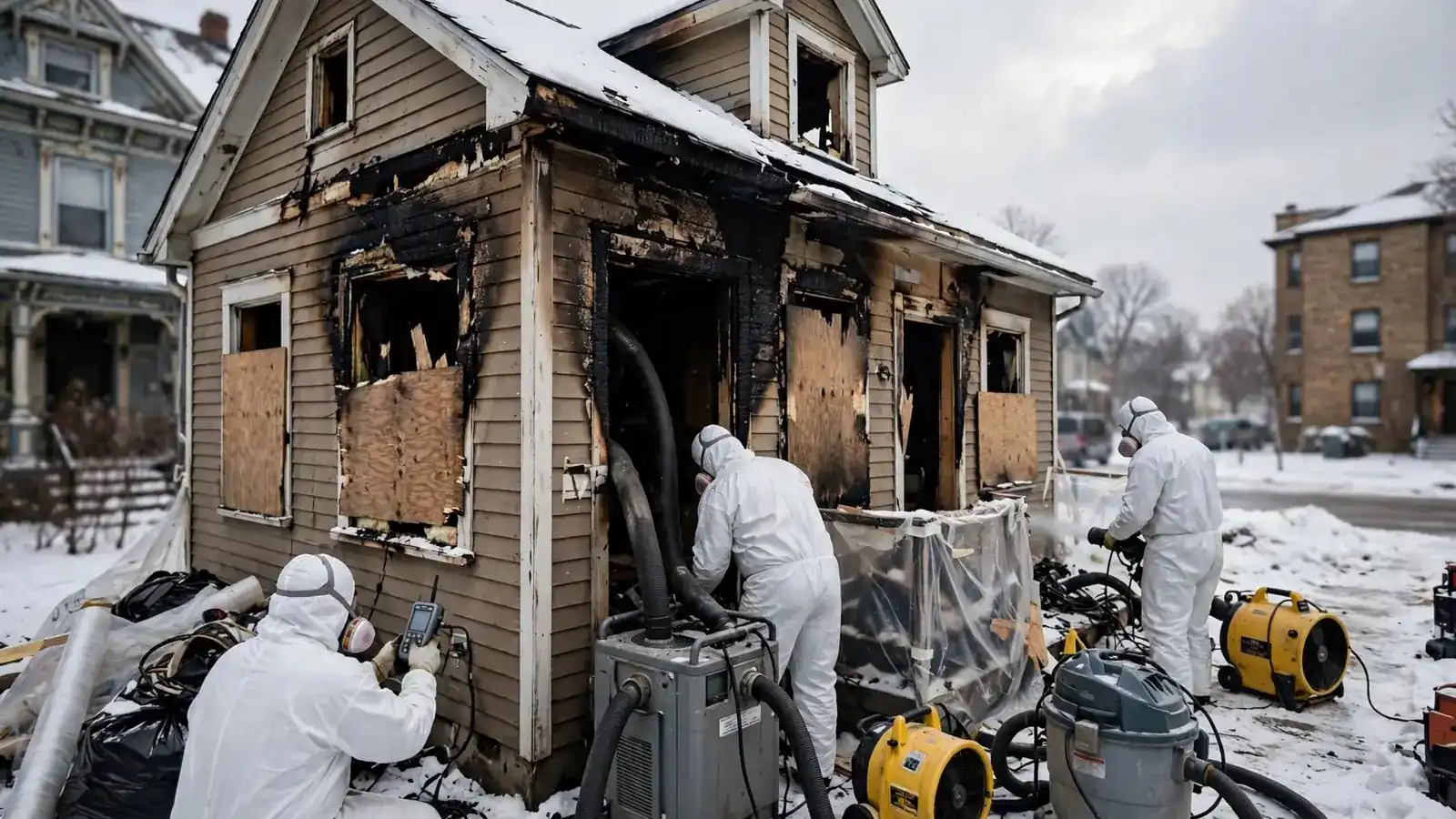
Powderhorn's narrow lots put houses only a few feet apart. A serious fire throws heat onto the house next door, cracking windows and blistering siding. Those windows need boarding too, even if the house never caught fire.
Photograph the side facing the fire before anything is covered. Repairs in the narrow gap may mean working from the neighbor's yard, so a friendly word with them early helps. Contact your own insurer about damage to your house.
Details for a Powderhorn board-up call
What helps the crew plan the visit.
- How many floors the Powderhorn building hasTall houses and walk-ups need lifts or roof gear.
- Whether the front porch windows brokePorches often need many panels.
- Whether the roof or attic was ventedHigh roof work is planned first.
- Alley and street accessParking and snow affect where the lift goes.
Access around Powderhorn Park
Residential streets around the park are often lined with parked cars, so alleys are usually the best route for a lift, a trailer or a debris container. In winter, snow removal limits where equipment can sit, and it has to be placed where plows can pass.
Events in the park, such as the city's May Day festival, draw large crowds on certain days [5]. If your house is close to the park, mention it so the crew can plan around those days.
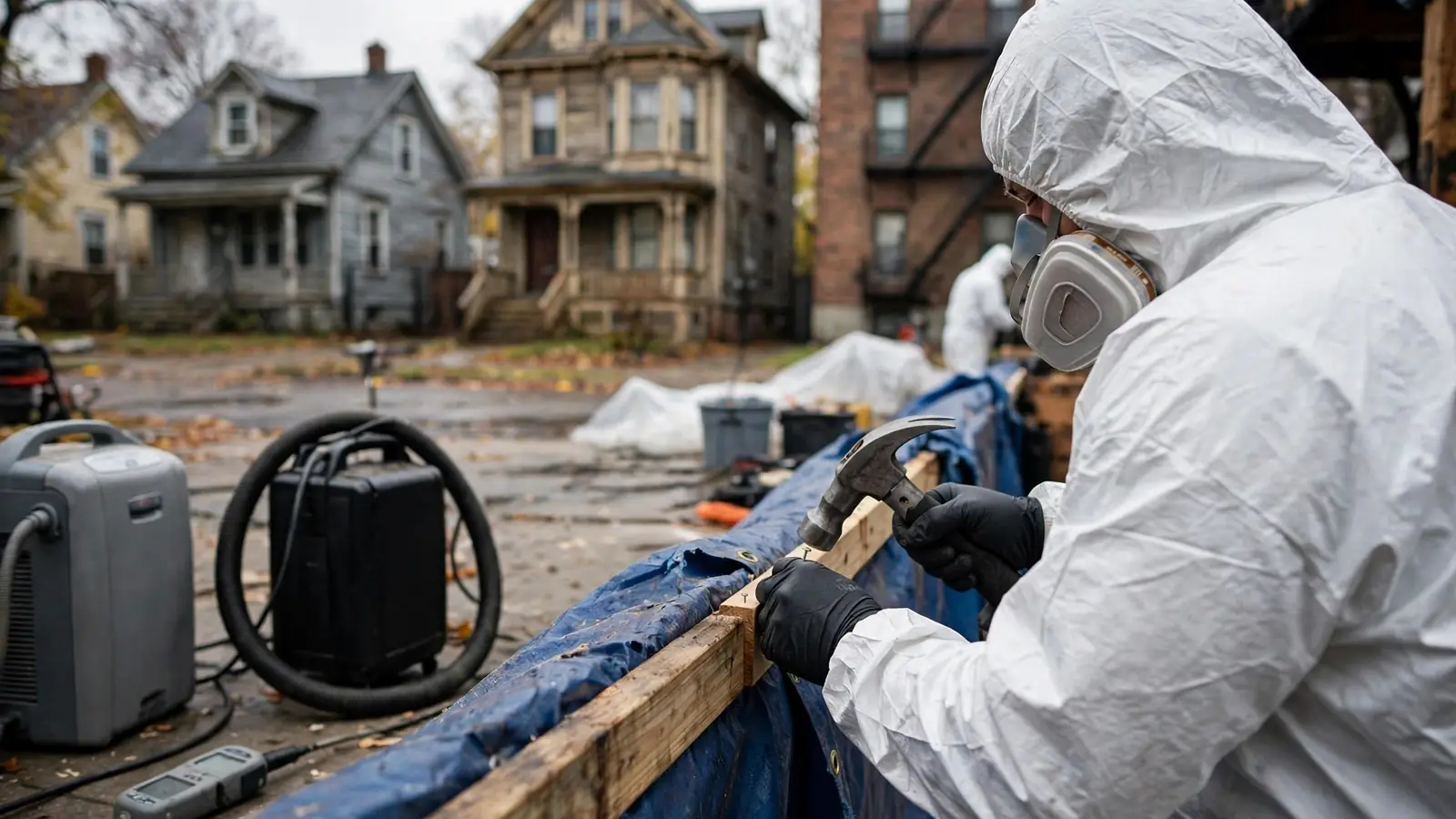
Keeping the house warm and safe
Once the openings are closed, the next priority in cold weather is preventing frozen pipes. Many Powderhorn houses heat with a boiler and radiators or a converted forced-air system. If the heating is out, temporary heat or draining the plumbing comes next. Foam behind the plywood helps hold heat in.
Replace damaged smoke and carbon monoxide alarms before anyone sleeps in the house. Minnesota law requires carbon monoxide alarms near sleeping rooms [4]. Never run fuel-burning heaters or generators indoors.
Photos and records for your Powderhorn claim
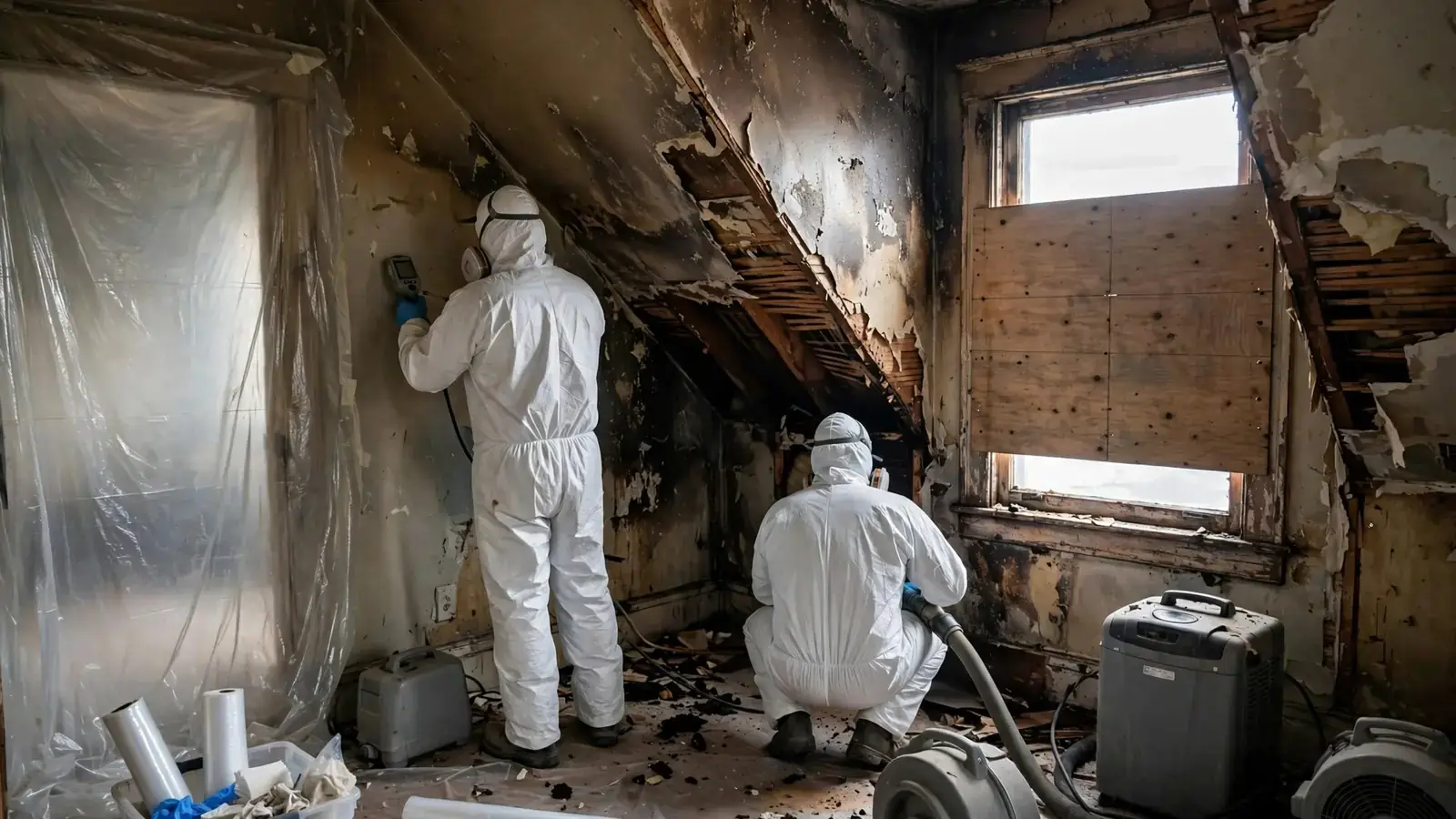
Take photos of every opening, the roof, the porch and the attic before they are covered. Keep the board-up invoice. The Minnesota Department of Commerce encourages policyholders to read their policy and keep records [3].
The Powderhorn area page describes how fires affect these tall houses, and our guide on what to do after a house fire covers the first days.
FAQ
Board-Up and Tarping in Powderhorn: questions
Why does board-up on a Powderhorn house need a lift?
Attic windows and roof vents on two-and-a-half-story houses are too high for a normal ladder. A lift or roof safety gear keeps the work safe.
Should the front porch be boarded up separately?
Yes. Porch windows break easily and leave the front of the house open, so they are covered at the same visit.
Who secures a Powderhorn walk-up after a fire?
The building owner usually arranges it, including the roof, windows and shared doors.