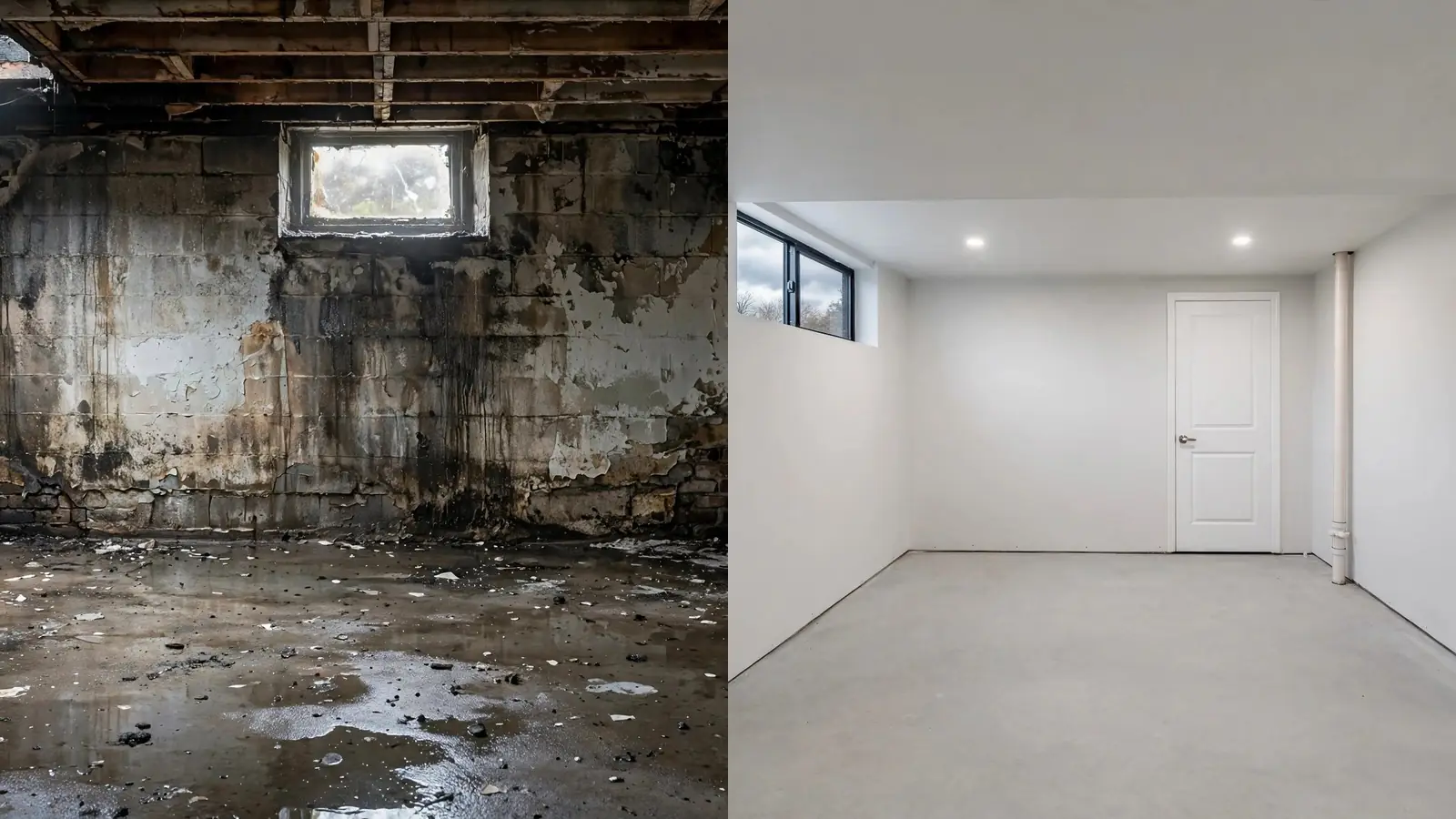

Key facts: Firefighting Water Damage in Powderhorn
Water through three floors
A fire on the upper floor or in the attic of a Powderhorn house sends water down through plaster ceilings and hardwood on each level. Each floor needs moisture checks. Plaster ceilings holding water can sag and fall, so they are checked before anyone works below.
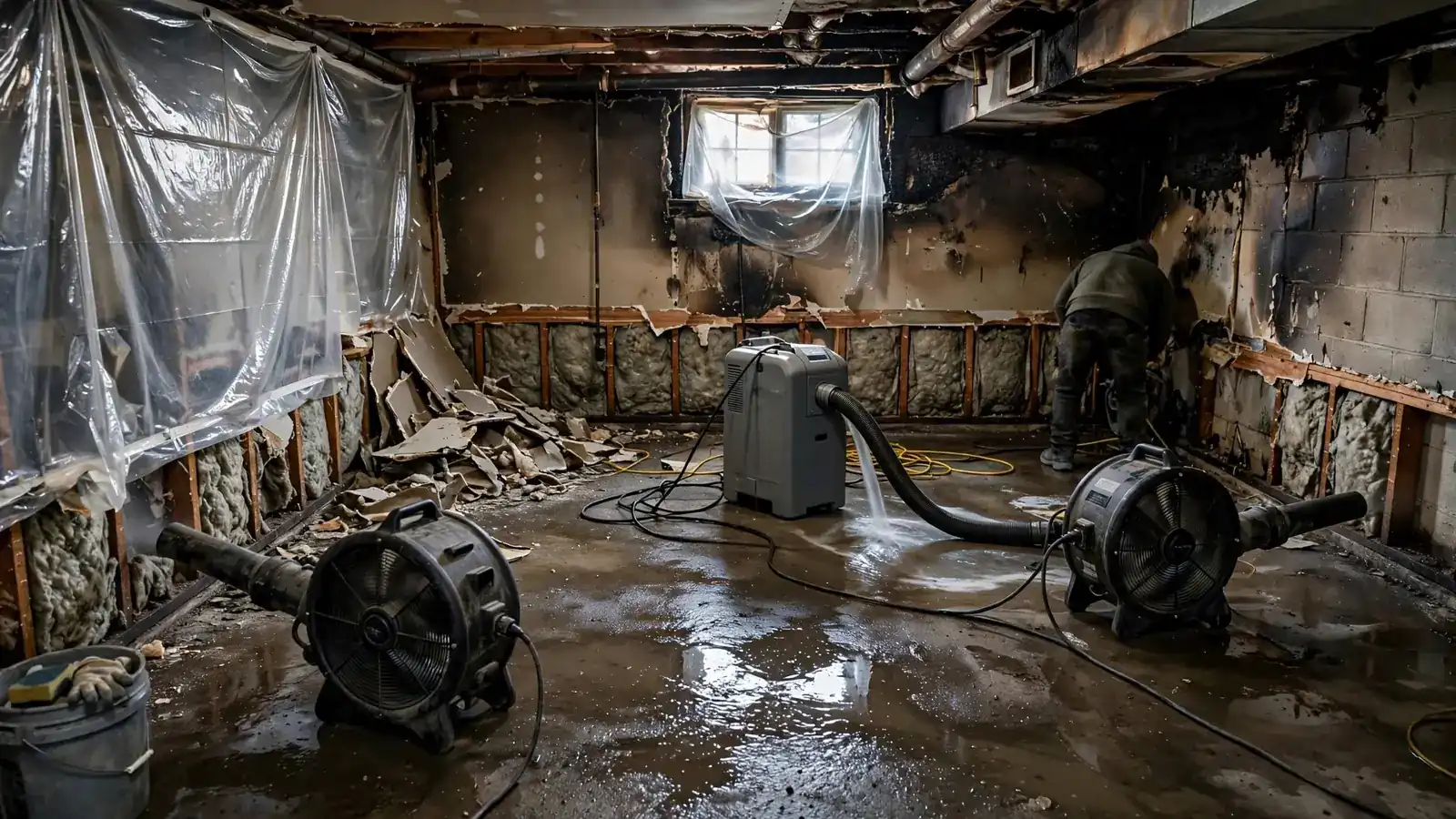
The basement receives the water last, often in quantity. Pumping and clearing the floor drain come first there.
Walk-ups and units below
In Powderhorn's three-floor brick walk-ups, water from an upper unit reaches the units below. Each unit needs drying. The building owner handles the structure and systems; tenants handle their belongings with renters insurance.
Agreeing on access and drying schedules early helps everyone plan.
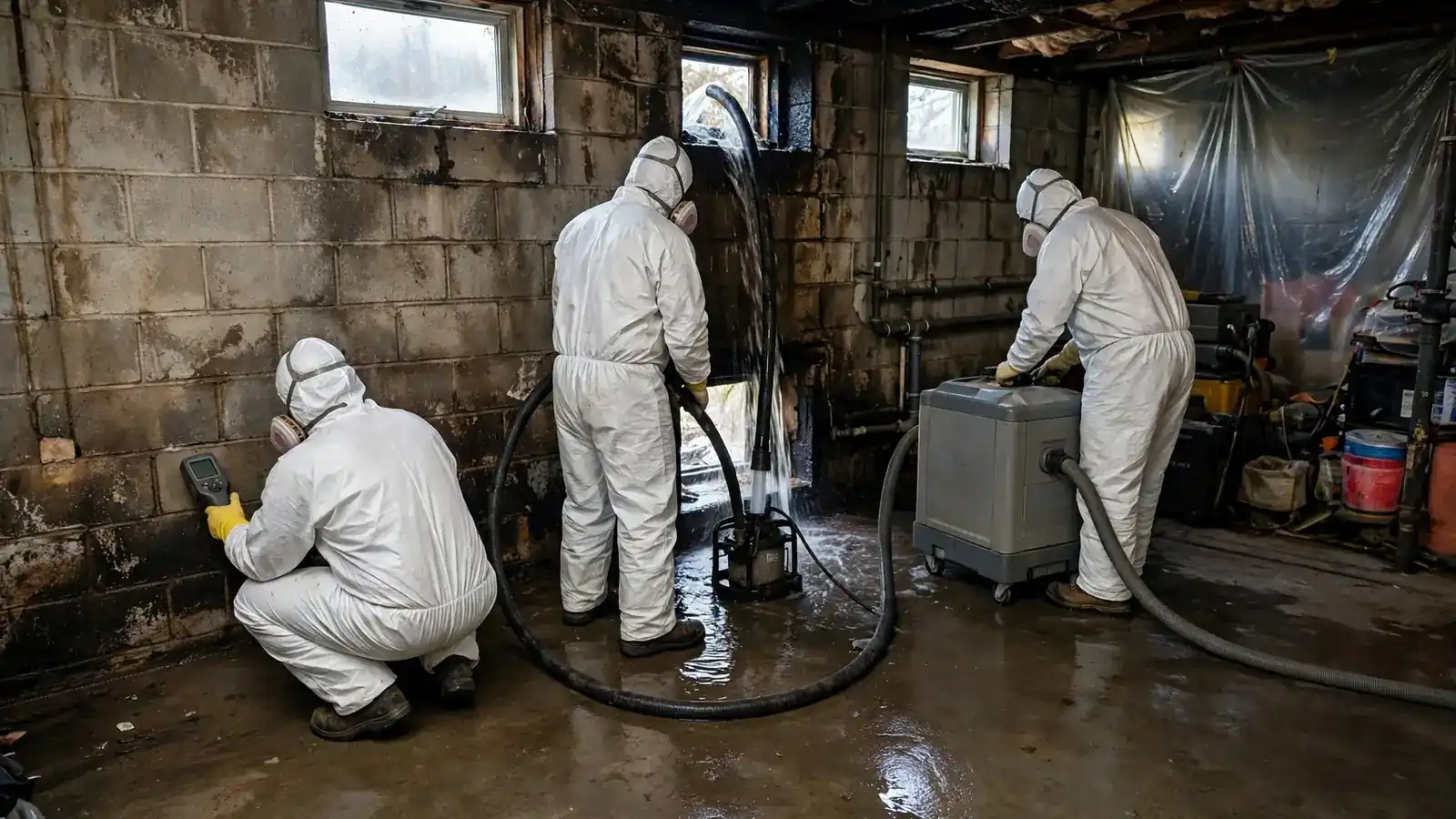
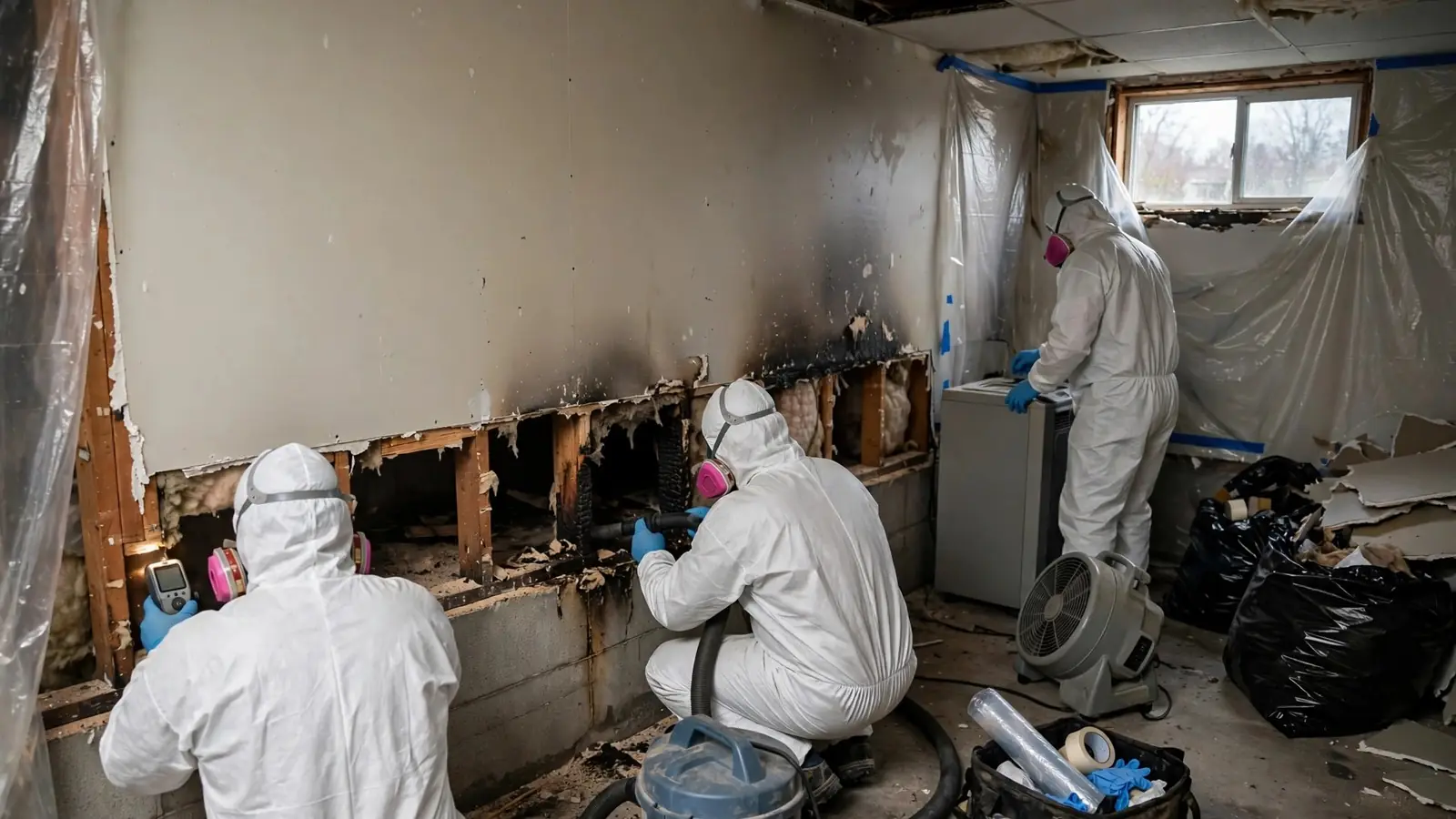
Drying a Powderhorn house after a fire
The usual order.
- 1
Check Powderhorn ceilings for safety
Keep people out from under sagging plaster.
- 2
Pump standing water from the Powderhorn basement
Remove standing water first.
- 3
Remove what will not dry
Soaked rugs, carpet and pad are pulled up and bagged.
- 4
Run dehumidifiers and track moisture
Dry each floor until readings are normal.
Powderhorn boilers and pipes at risk of freezing
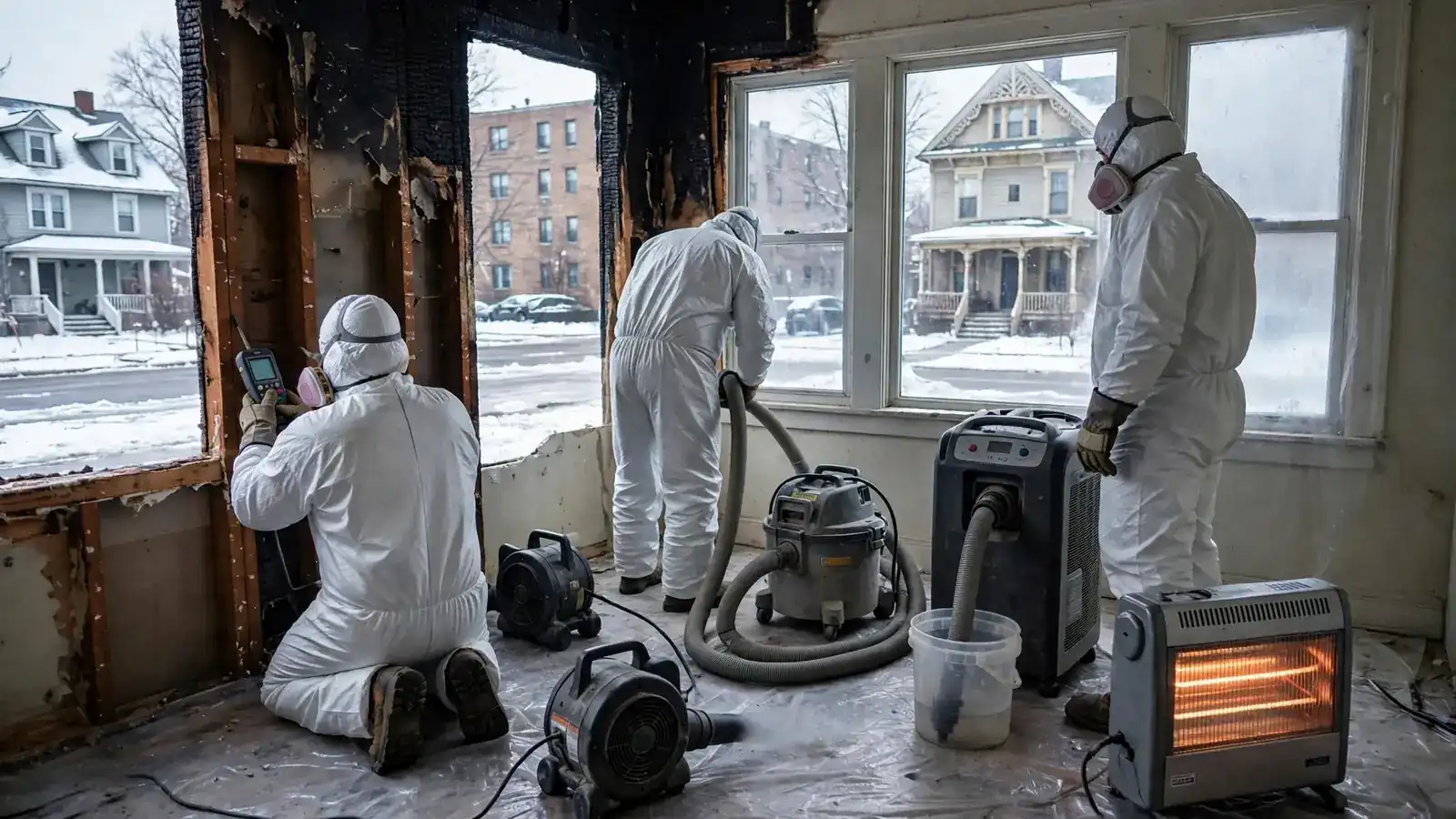
Many Powderhorn houses heat with a boiler and radiators. If the boiler is damaged, the house loses heat, and pipes can freeze within hours in a Minnesota winter.
Temporary heat or draining the plumbing protects the house. The National Weather Service office for the Twin Cities posts cold-weather forecasts that set how urgent this is [5].
Hardwood floors and plaster
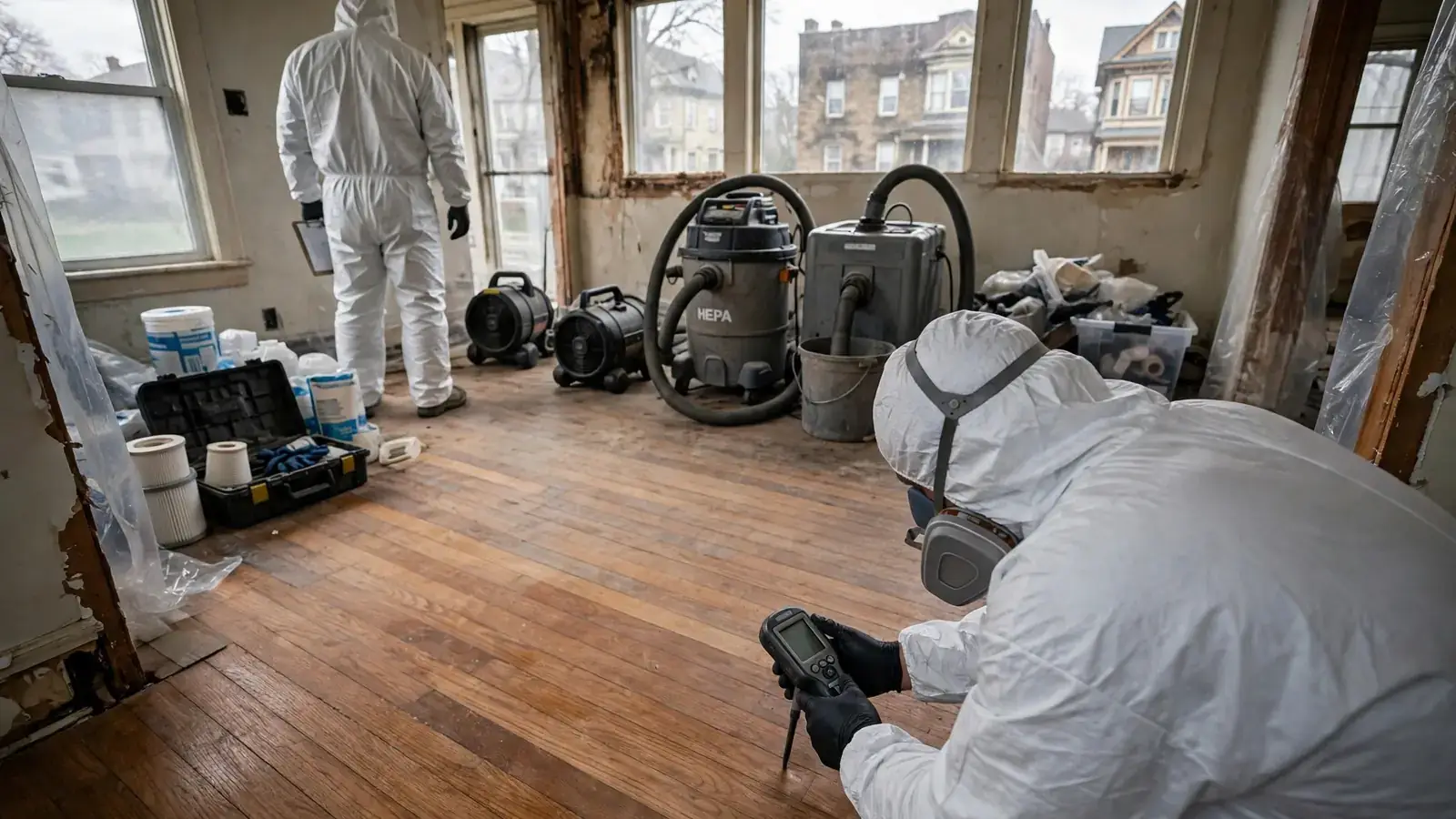
Hardwood floors swell and cup when wet. Careful drying often lets them flatten so they can be refinished. Plaster may dry in place or need repair.
Drying too fast can crack wood, so the pace is controlled.
What to mention about water in Powderhorn
Details that help plan drying.
- Which floor the Powderhorn fire was onWater spreads downward from there.
- Whether the boiler worksHeat loss affects the pipes.
- Whether other units were affectedWalk-ups need each unit dried.
- Where water is pooling nowBasement, stairway or floors.
Stored belongings
Basements and attics hold stored belongings. Wet photos and papers can be frozen until a specialist dries them. Hard goods can be cleaned; cardboard and fabric often cannot.
Take photos of damaged items and list them for your insurer.
Repairs after drying
Electrical, plumbing, mechanical and structural repairs in Minneapolis need permits. Rental units may need inspection before tenants return.
The Powderhorn area page explains more about permits.
Moisture logs for a Powderhorn claim
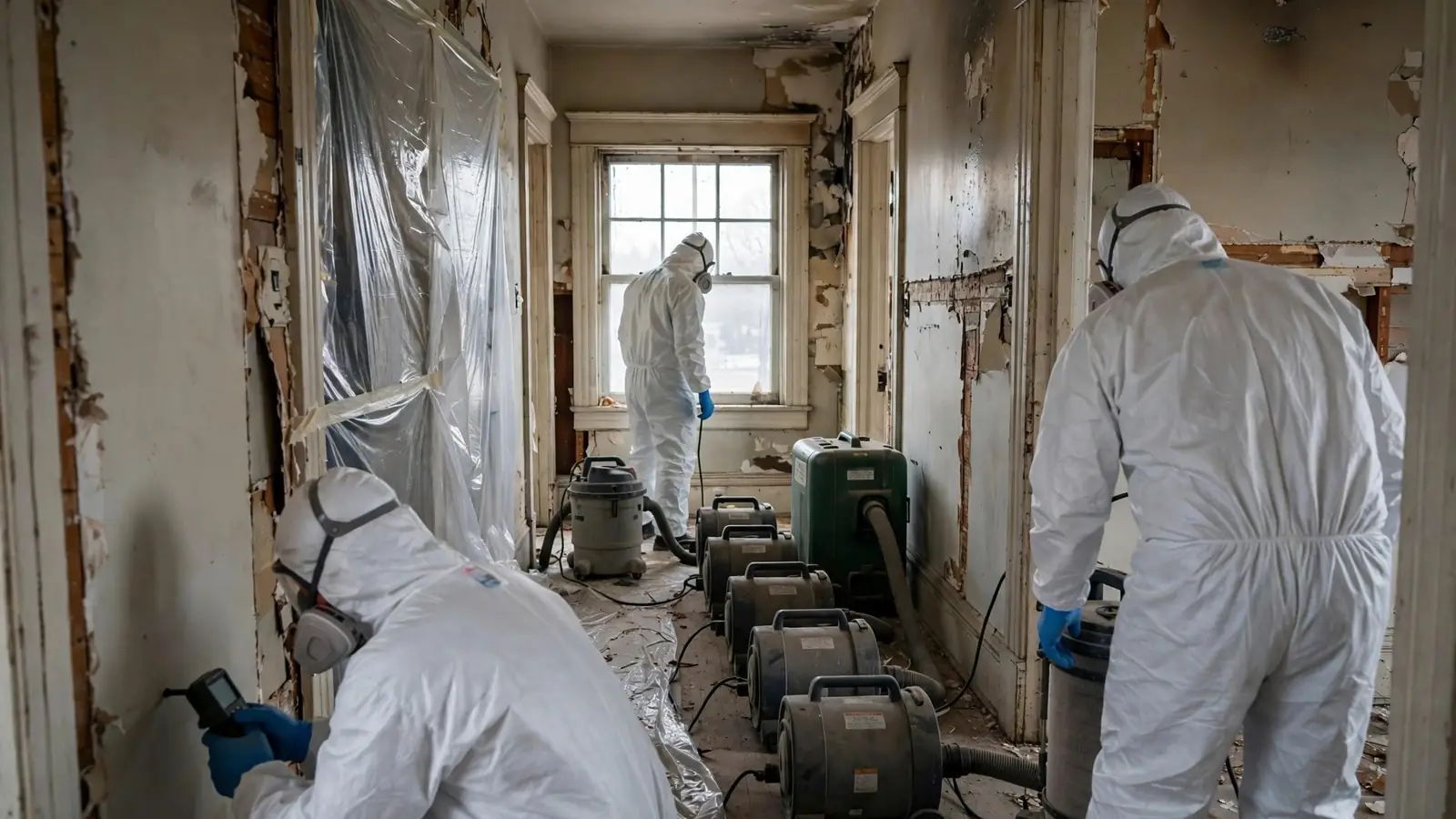
Ask for daily moisture readings and photos of equipment. Keep a list of removed materials. The Minnesota Department of Commerce encourages policyholders to keep records [6].
Our guide to working with your insurance adjuster explains how to stay organized.
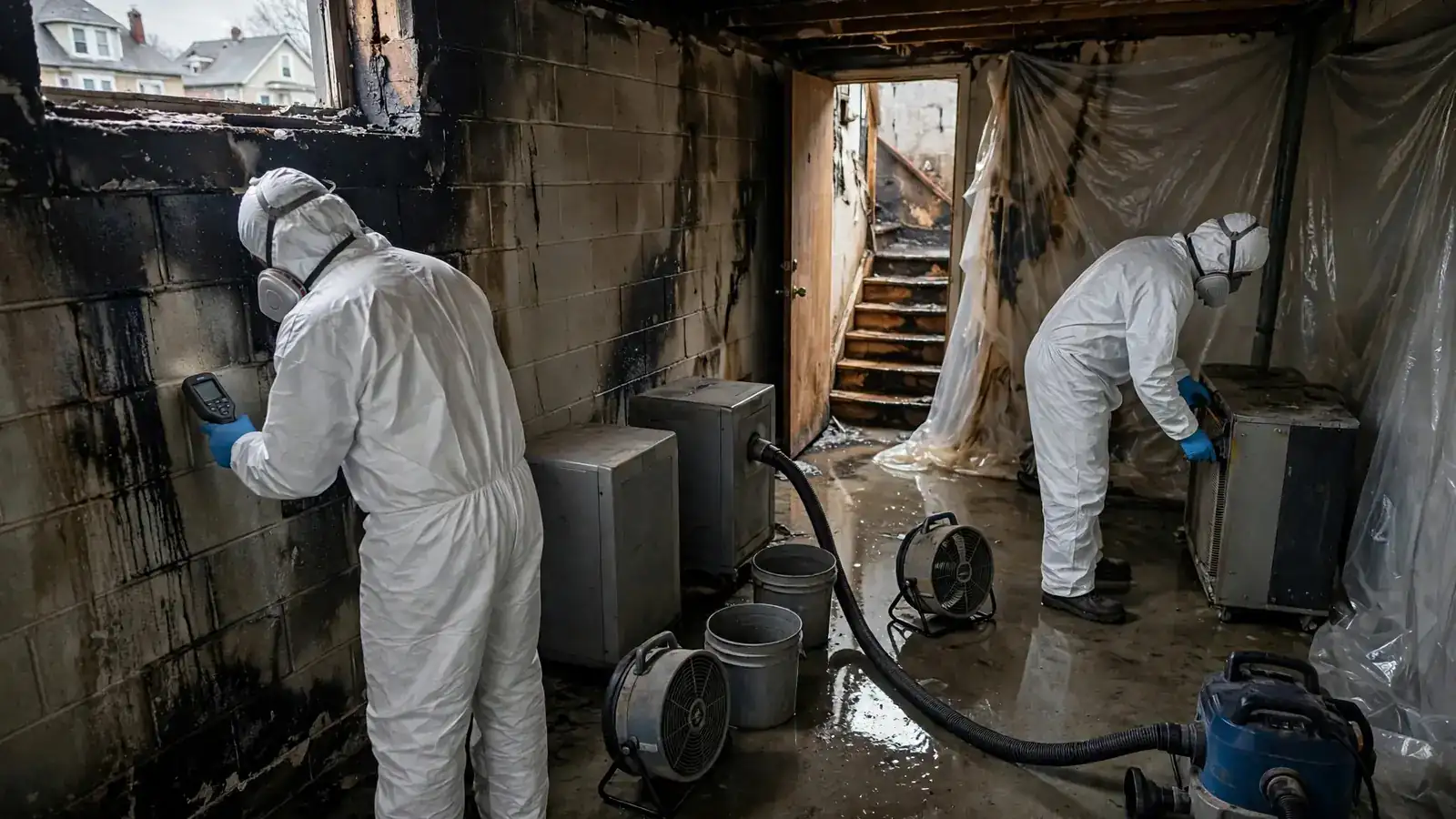
The open stairway as a water channel
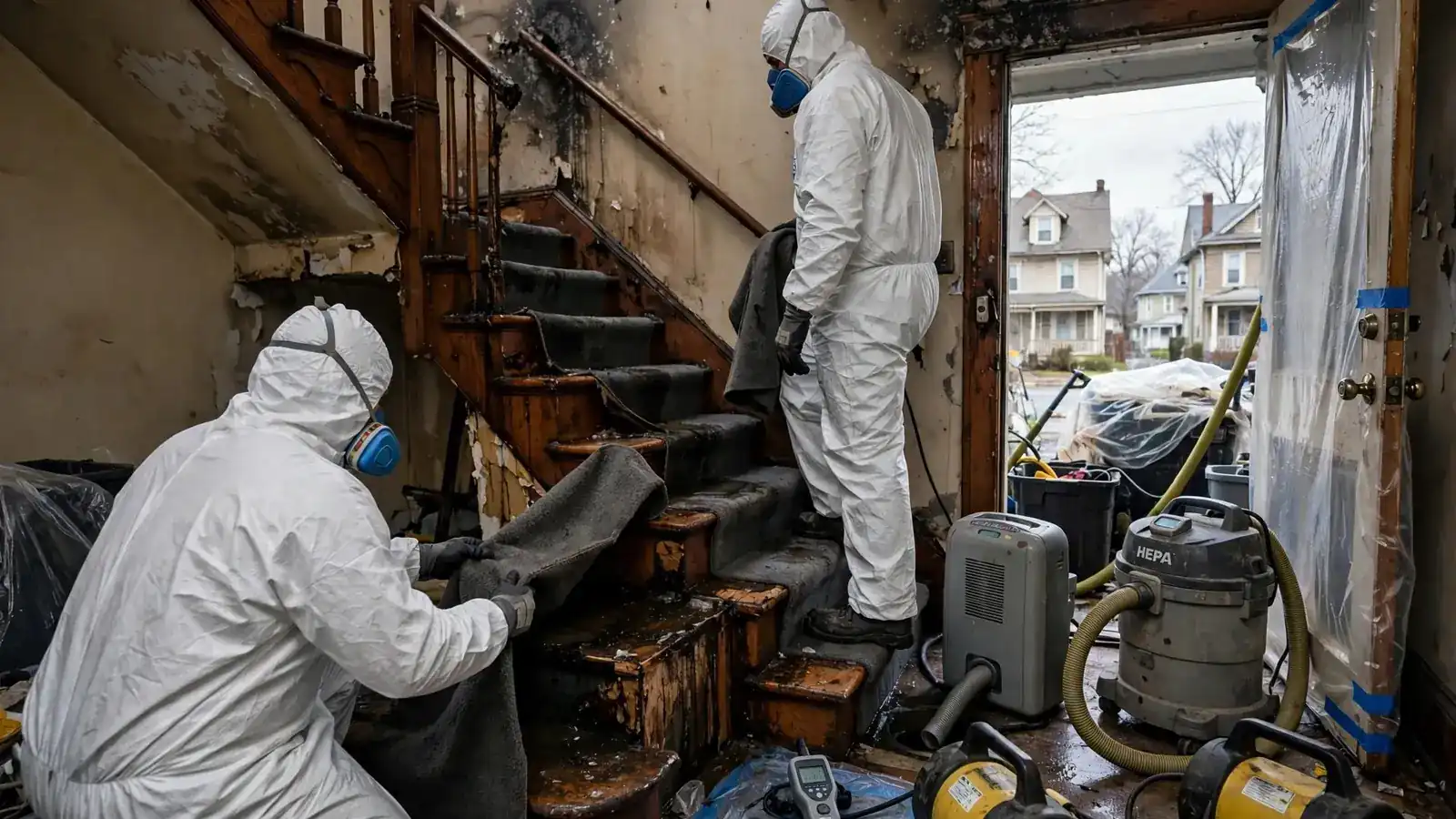
In a two-and-a-half-story Powderhorn house, the main staircase is the easiest path down for water as well as up for smoke. Water from an attic or second-floor fire runs down the treads, soaks the runner and wets the plaster walls along the stair. The landing often holds a puddle long after the hoses stop.
The runner usually comes up so the treads can dry evenly. Moisture readings are taken along the stair walls, where wet plaster can hide behind paint. Drying equipment is placed on each landing so the whole stair dries together.
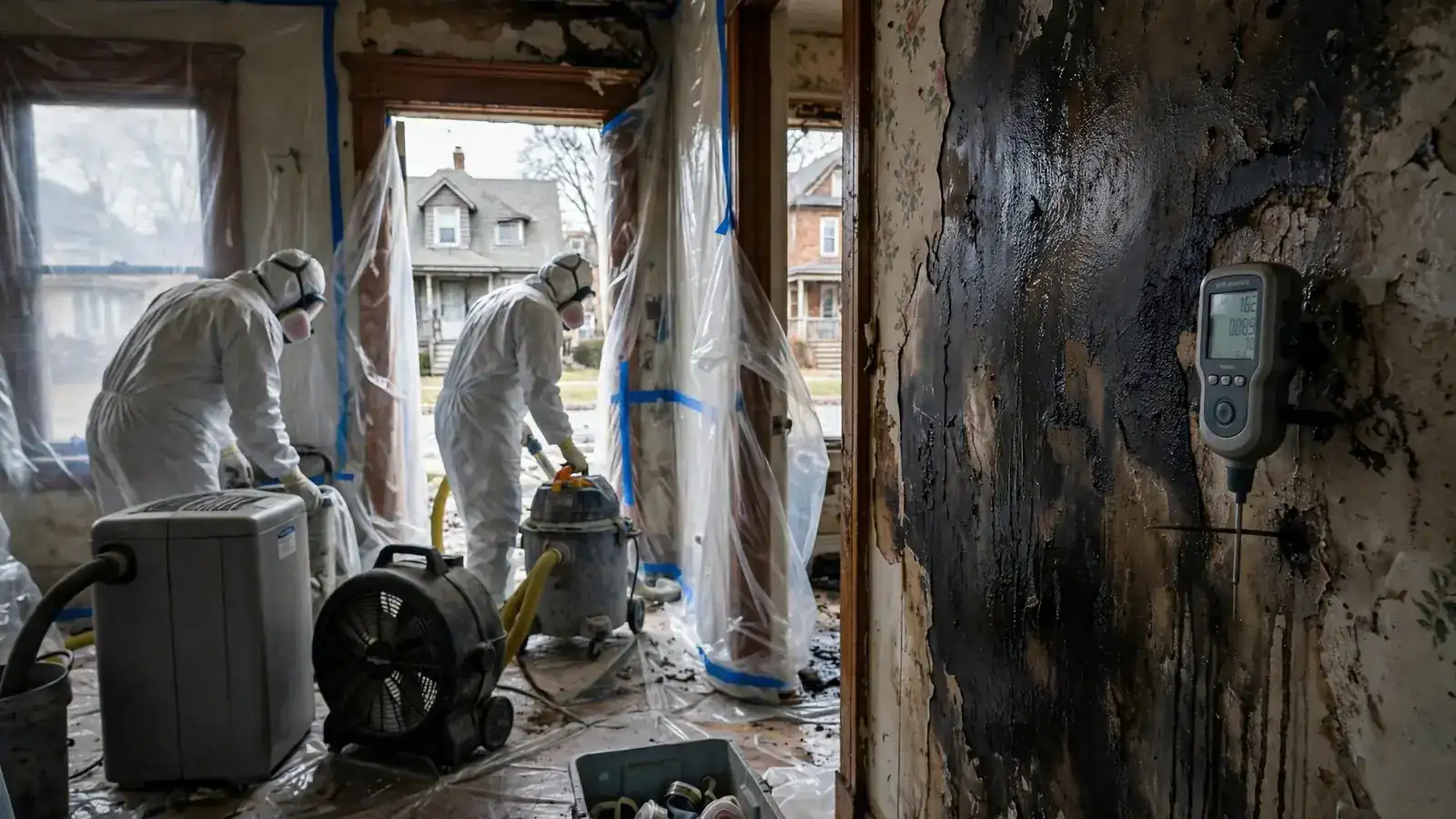
Attic insulation soaked by the hoses
When firefighters attack a fire in the attic, the insulation on the attic floor takes on a great deal of water. Wet insulation is heavy, holds moisture against the ceiling below and dries very slowly. It is usually removed so the second-floor ceiling can dry from above as well as below.
Old loose-fill insulation should be tested before removal, since some types contain asbestos. New insulation goes in after the framing is dry and the roof is repaired.
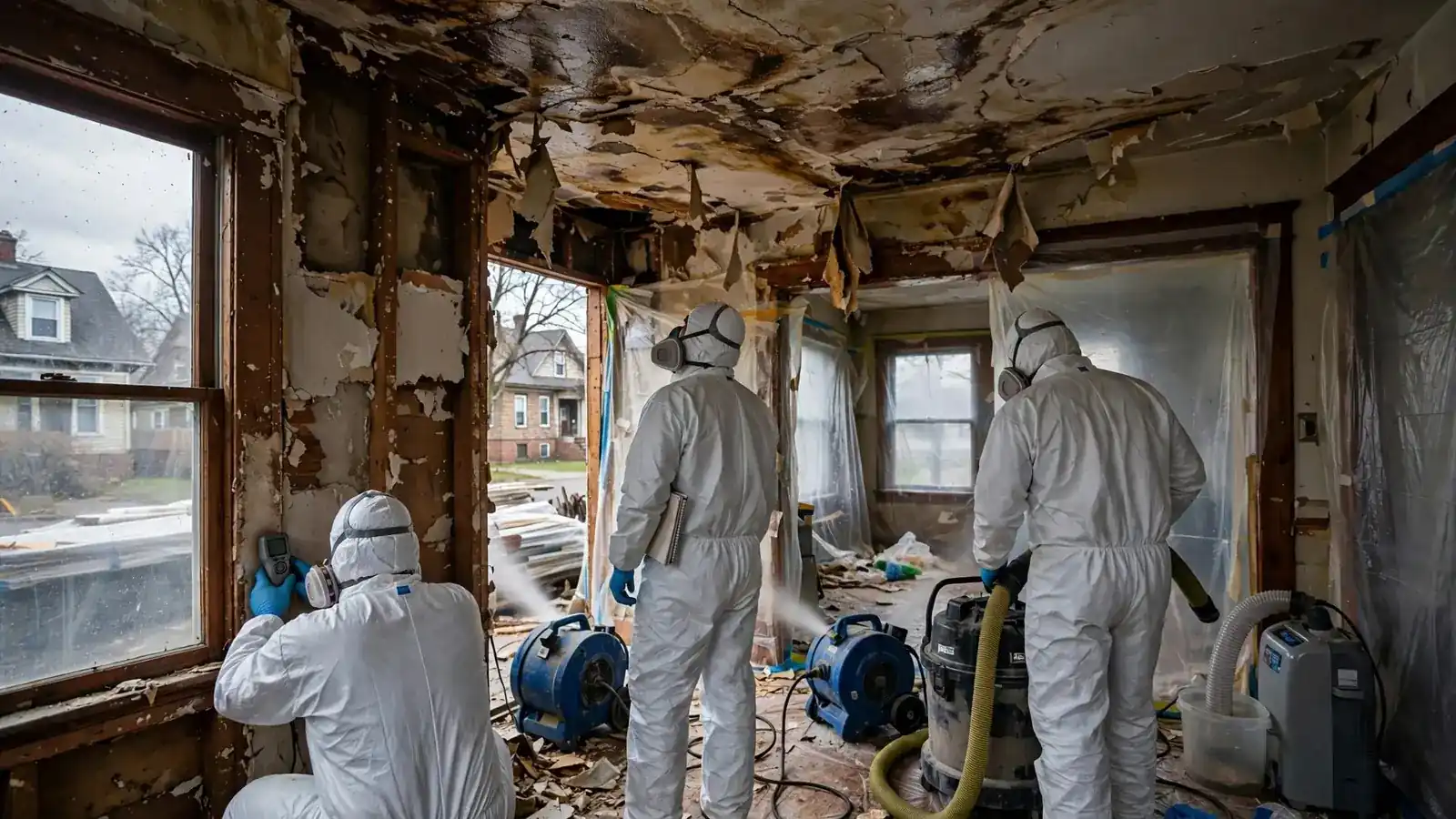
Snow through an open Powderhorn roof
If firefighters cut the roof to vent heat, the opening lets in snow until a tarp is in place. Drifts that melt indoors add to the water already in the attic and upper rooms. A tarp that lifts in a storm can let more in.
Check the tarp after storms, and tell the contractor if you see fresh water stains or dripping. Equipment can then be moved to the newly wet areas before mold has time to start.
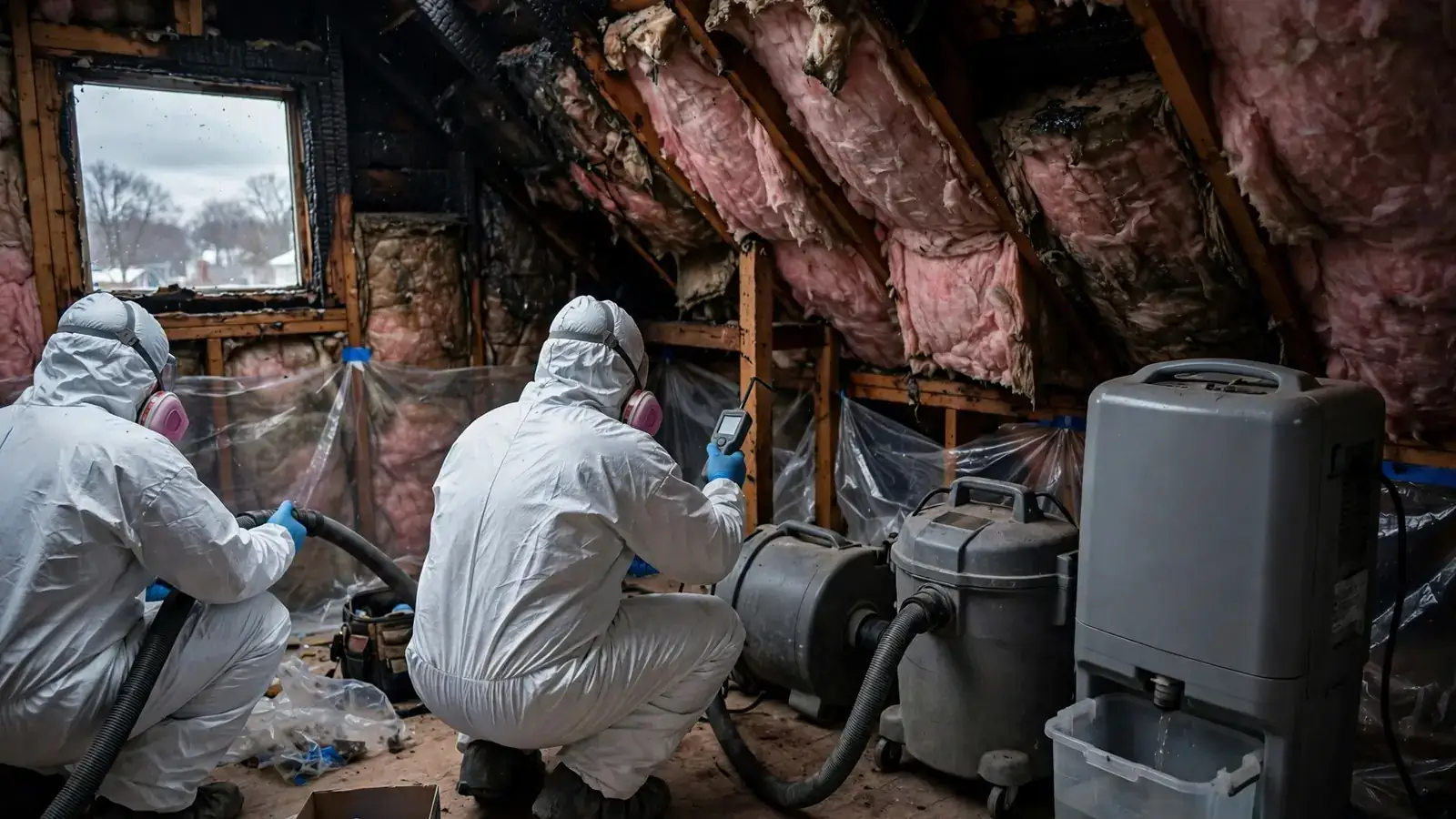
Lake Street buildings with shops below
In mixed-use buildings along Lake Street, water used on an apartment fire can run down into the shop beneath it. Business owners, residents and the building owner each have their own insurance and their own losses to document.
Drying is planned for the whole building, with each space checked for moisture. Residents should photograph their belongings and ask the owner or manager who is coordinating the work.
FAQ
Firefighting Water Damage in Powderhorn: questions
How far can firefighting water travel in a Powderhorn house?
From the attic or upper floor all the way to the basement, through every level in between.
Will the units below mine in a Powderhorn walk-up be affected?
Often yes. Water runs through floors into lower units.
Can my hardwood floors be saved after the fire?
Often, with careful drying. They may flatten enough to be refinished.
Sources and citations
- [1]U.S. EPA: A brief guide to mold, moisture and your home
- [2]IICRC: S500 Standard for Professional Water Damage Restoration
- [3]U.S. Fire Administration: After a fire
- [4]Minnesota Department of Health: Mold and moisture in homes
- [5]National Weather Service: Twin Cities forecast office
- [6]Minnesota Department of Commerce: Disaster Information Center
- [7]Wikipedia: Powderhorn Park, Minneapolis