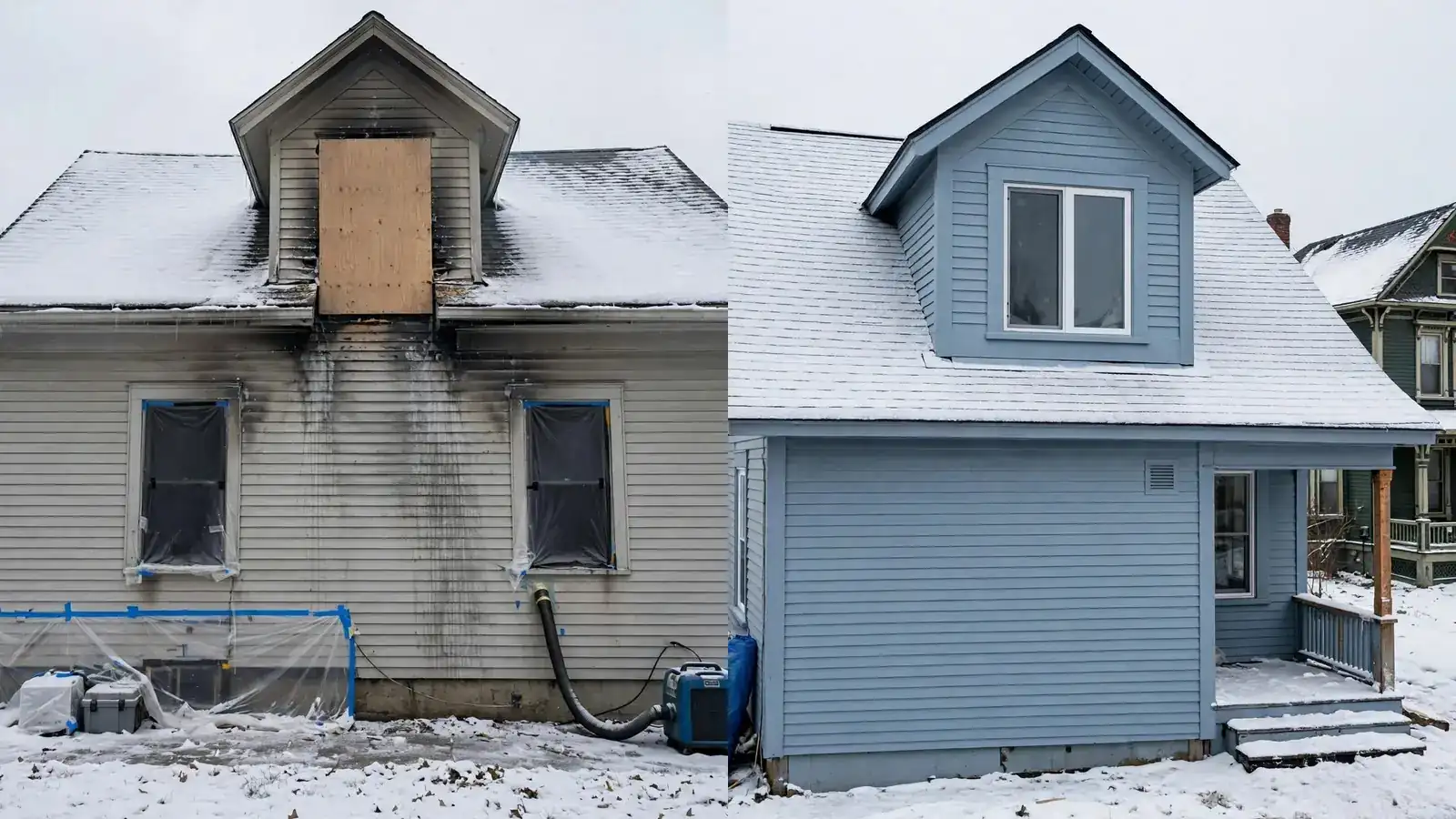
Key facts: Board-Up and Tarping in Marcy-Holmes
- Marcy-Holmes, settled in 1849, sits on the bluff over the Mississippi next to the university's East Bank campus [5].
- A tall roof opened by fire may not hold a worker, so the U.S. Fire Administration advises staying off damaged roofs and floors until checked [1].
- The Twin Cities National Weather Service office issues the snow and wind alerts that temporary covers have to withstand [2].
Many doors, many tenants
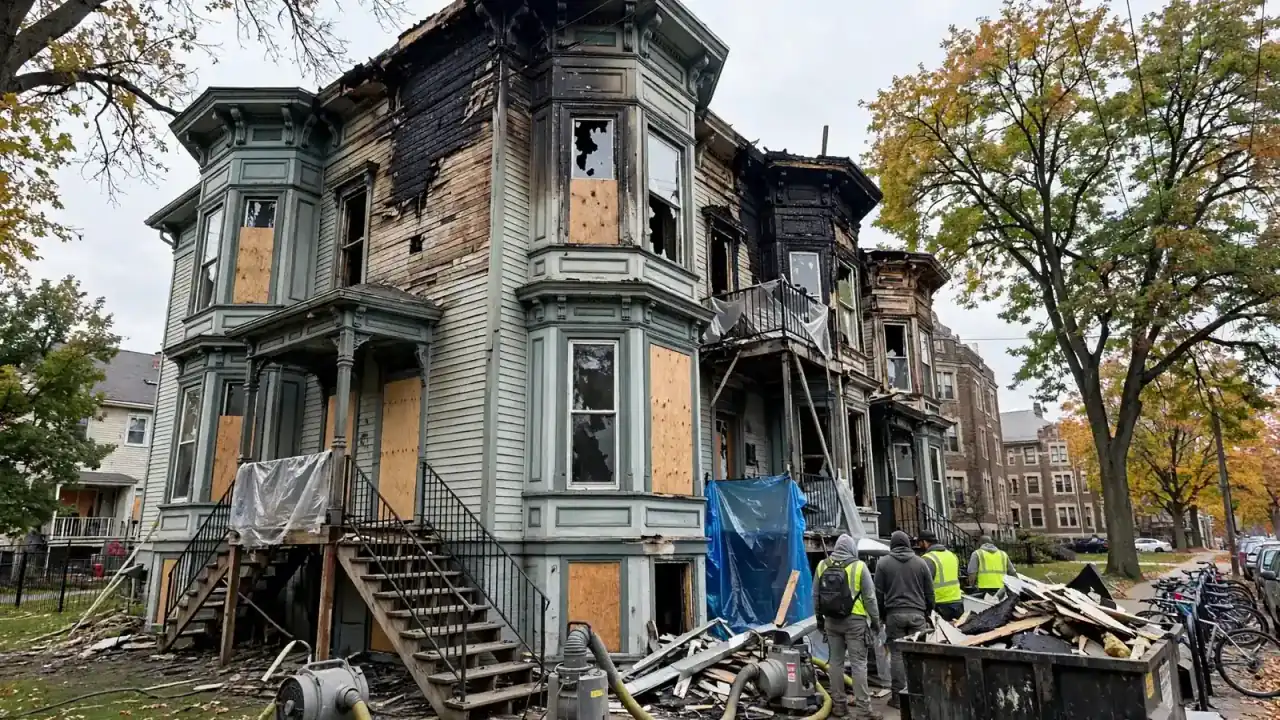
Most Marcy-Holmes households rent, and many older houses here have been split into several apartments [5]. That means a fire building may have three, four or more separate entries, each tied to a different unit. Securing the building means closing every damaged entry while still letting the owner, adjusters and contractors get in.
Crews usually fit one secure, lockable access point and board the rest. The owner or manager keeps the key and controls who goes in. Tenants who need belongings should arrange a time rather than entering on their own.
Tall roofs on old Marcy-Holmes houses
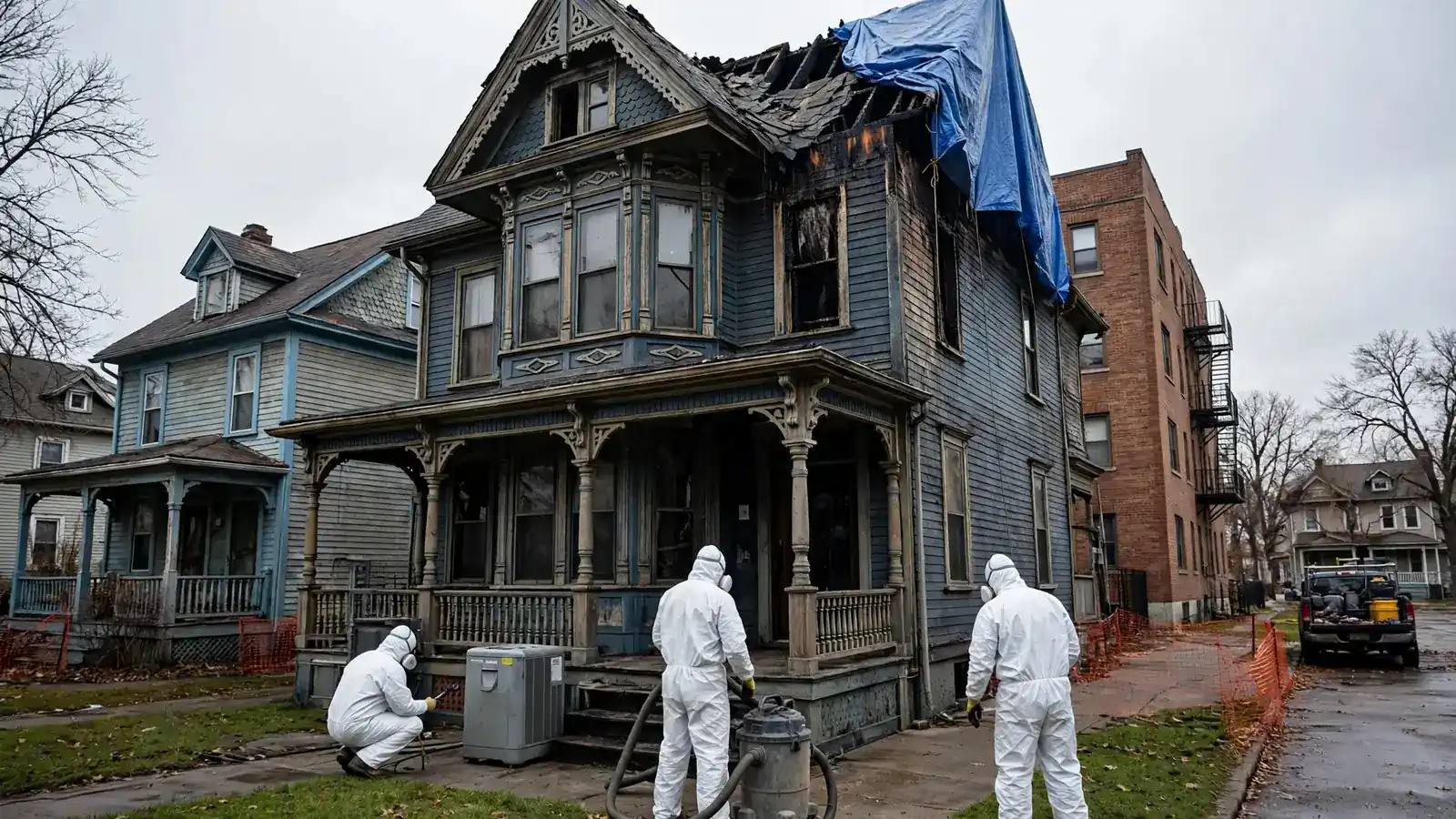
Nineteenth- and early twentieth-century houses in the neighborhood are often two and a half or three stories with steep, complex roofs, turrets or tall gables. A vent hole cut by firefighters near the top is high above the ground and hard to reach. Covering it may need a lift, a roof harness or both.
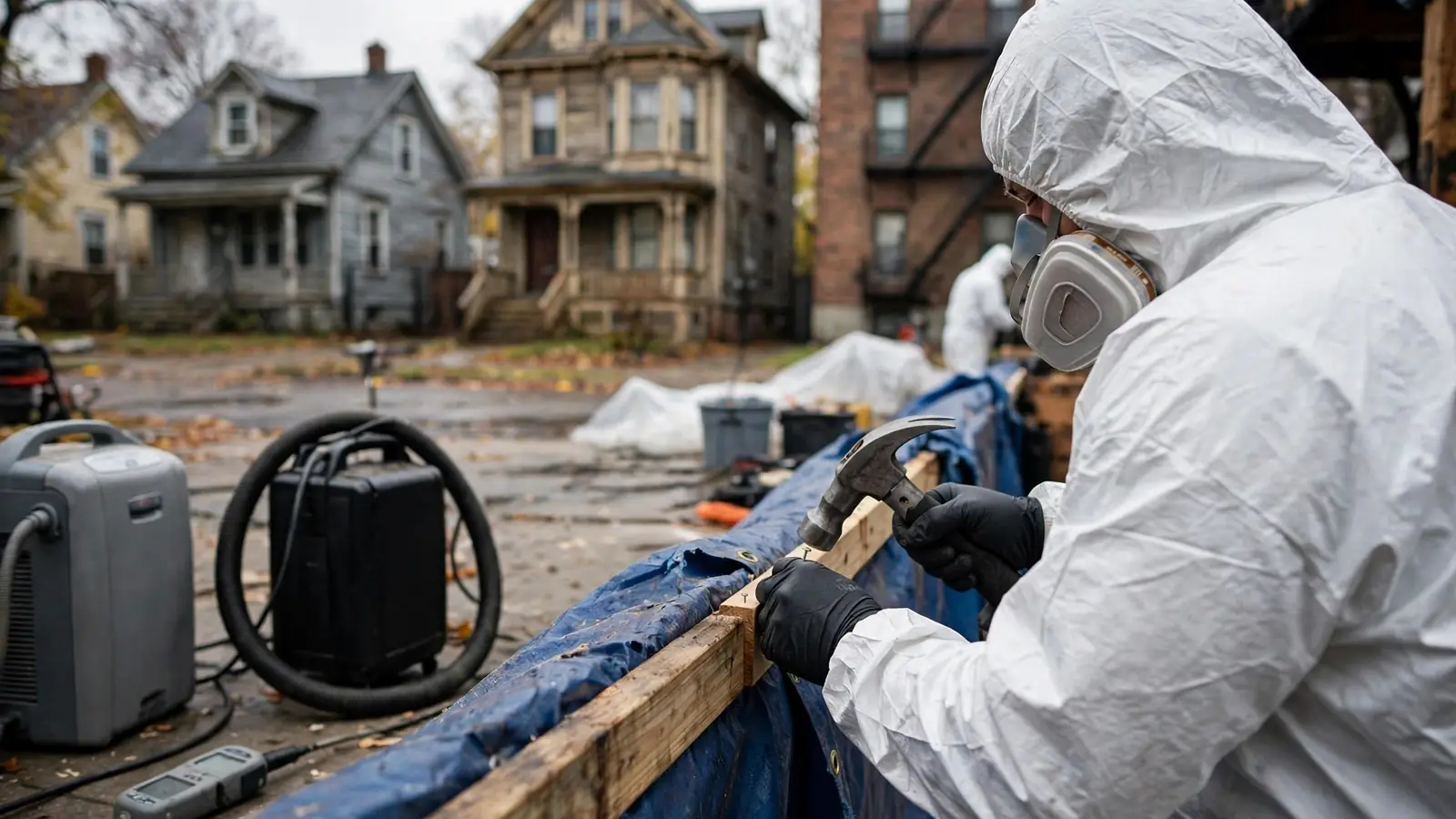
The tarp is run over the ridge where possible and fixed with battens to sound rafters. On a roof with many angles, the crew laps each section so water runs over the cover and not into a valley under it.
Winter covers and snow off a steep roof
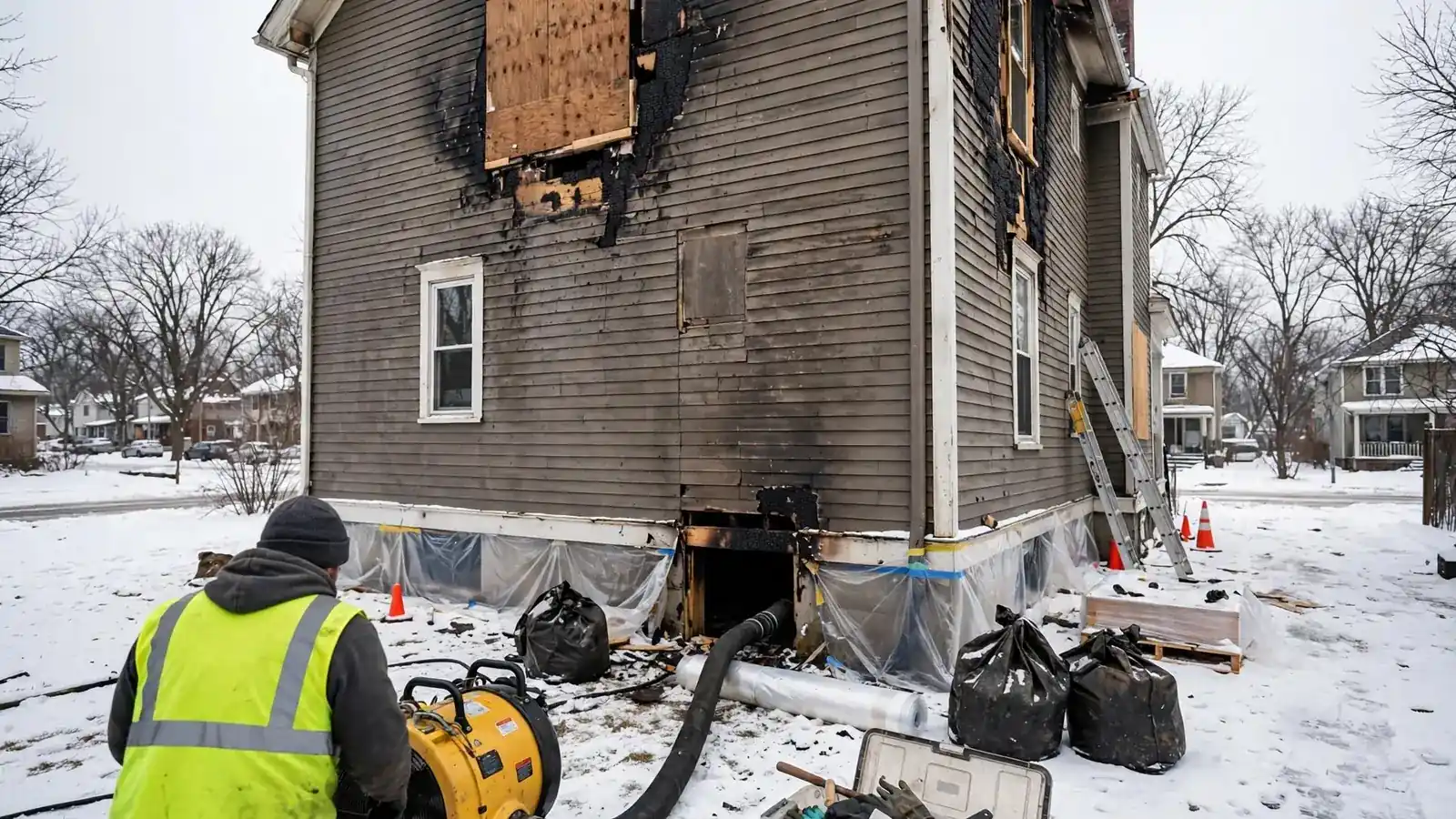
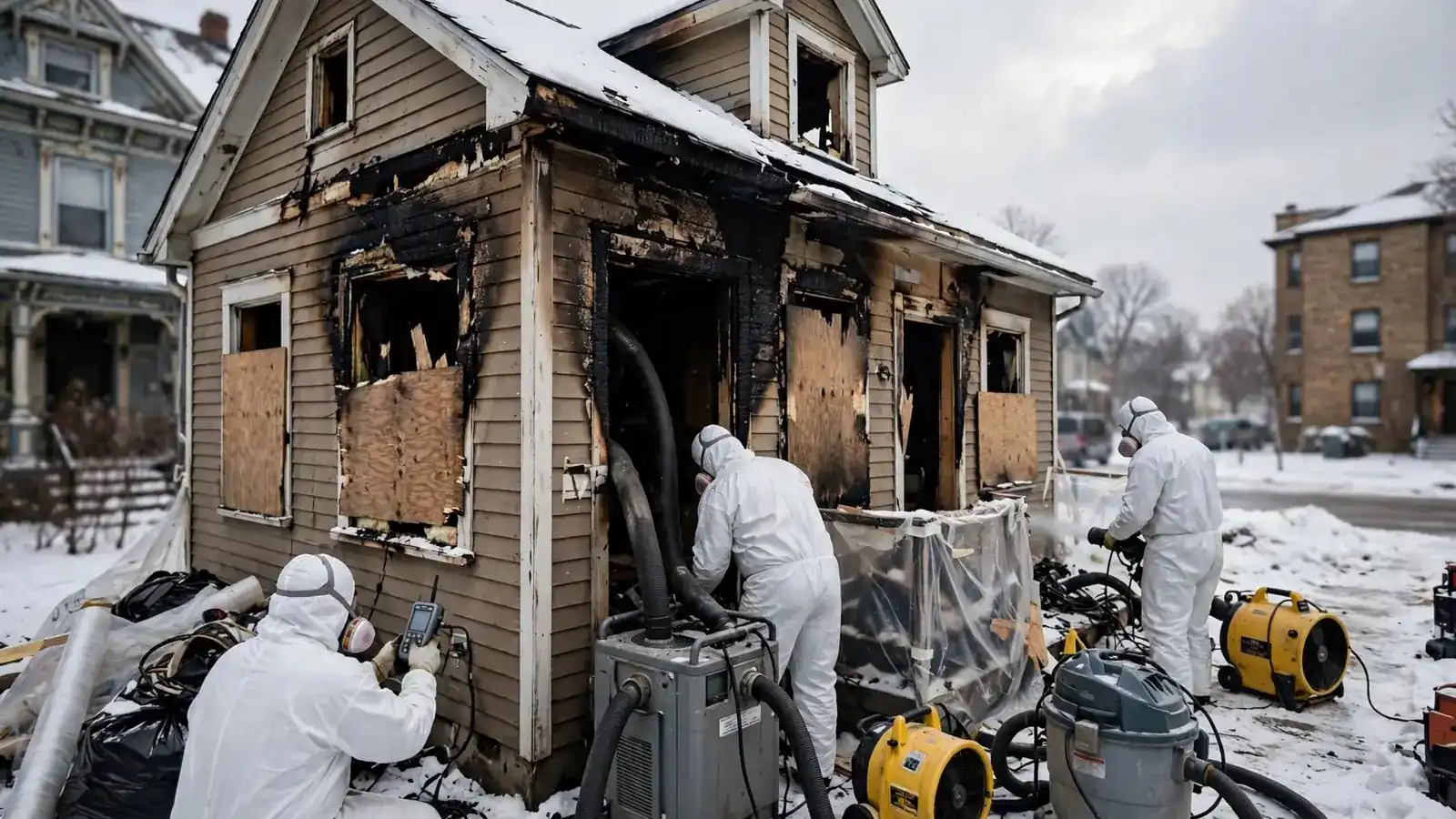
In a Minneapolis winter, a temporary cover carries snow, then meltwater, then ice. On a steep roof, snow may slide off in a sheet and drag a loose tarp edge with it. Extra battens near the eaves and a well-anchored top edge help.
Have the cover checked after every heavy snowfall or high wind [2]. Tenants still living in undamaged units should report new drips right away, since a leak over one unit may quickly reach the units below.
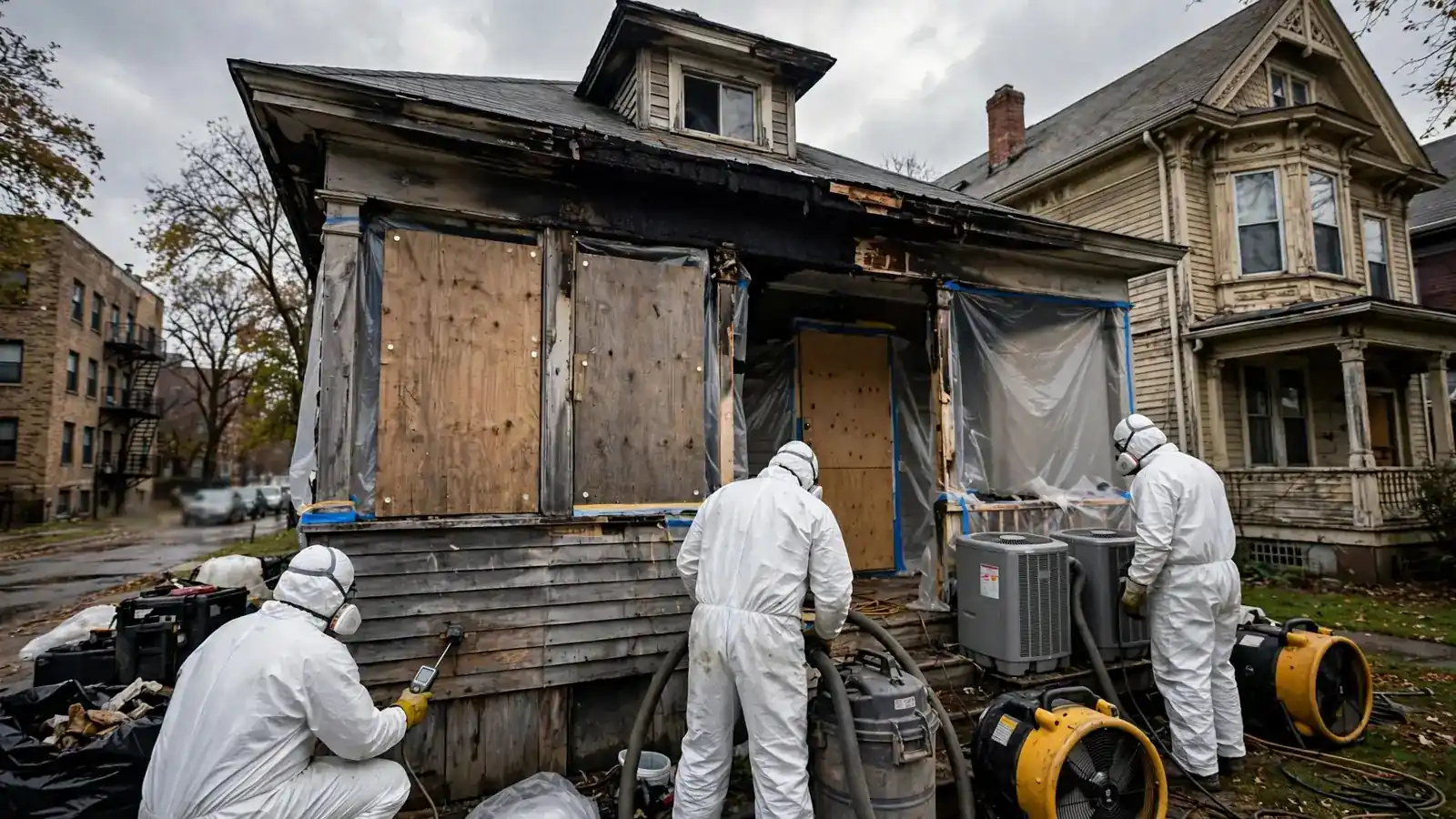
Securing a Marcy-Holmes rental after a fire
A typical order of work.
- 1
Get the release and account for every unit
Confirm with the fire department that the building is clear and utilities are safe.
- 2
Photograph each entry, window and the roof
Every unit's door and the exterior stair, from the street and the alley.
- 3
Board damaged entries and fit one locked access
The owner or manager controls the key.
- 4
Tarp the roof and close upper windows
A lift or harness reaches the high openings.
Exterior stairs and second exits
Many converted houses have wooden exterior stairs so upper units have a second way out. Fire and heat can weaken these stairs, and they may also have been used by firefighters. A damaged exterior stair should be closed off so nobody uses it until it is inspected.
The crew can block the top and bottom with panels or barriers. In winter, snow and ice on a damaged stair make it even more dangerous, so closing it promptly matters.
Historic exteriors and original windows
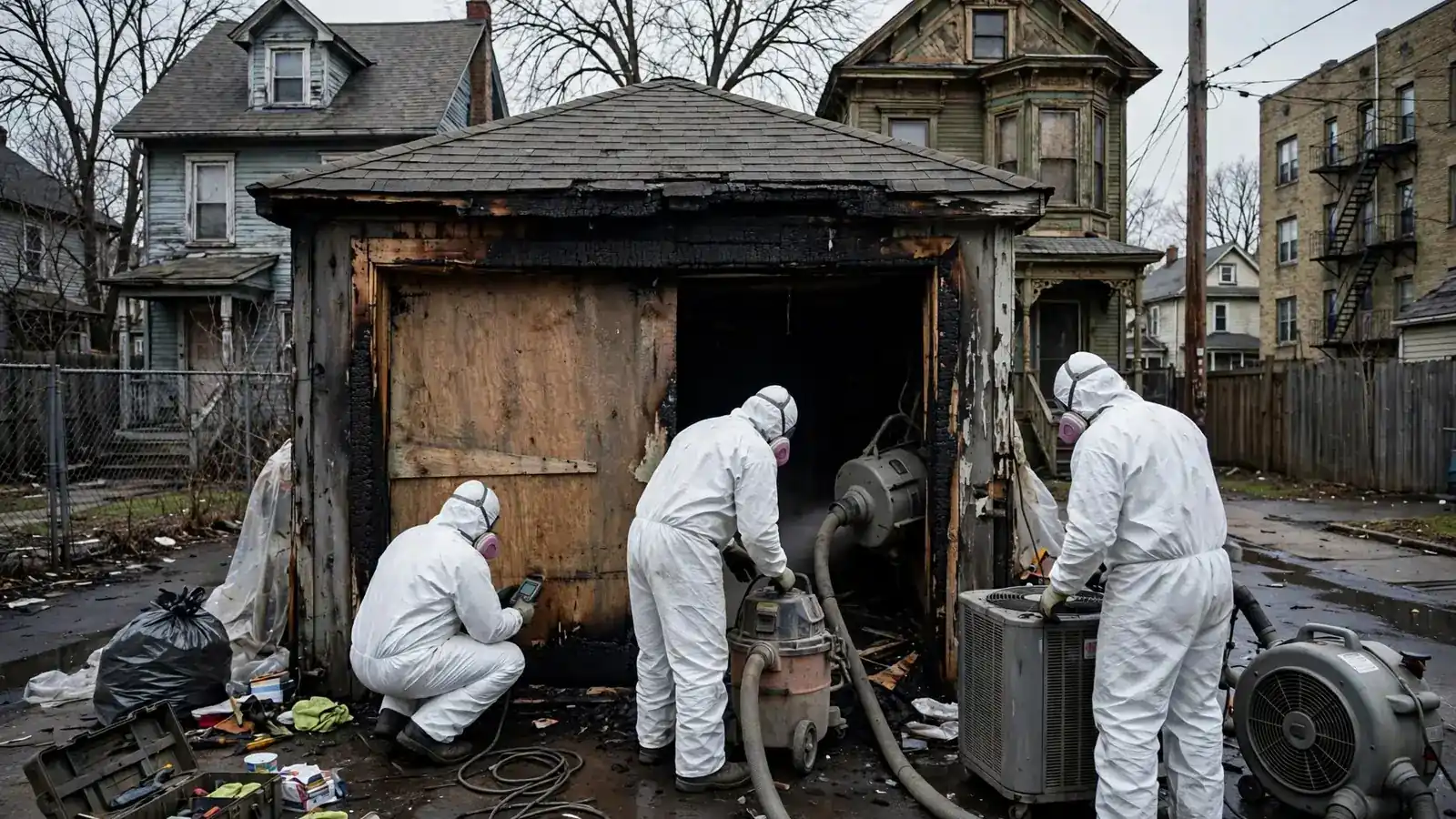
Marcy-Holmes includes historic districts such as Fifth Street Southeast and the Dinkytown Commercial district [5]. Exterior features on buildings in these areas may need review before they are replaced. During board-up, the goal is to protect what is there.
Panels are fixed into window frames rather than through decorative trim. Broken original glass, stained glass or carved pieces should be kept and stored, not thrown out, so they can be matched or restored later.
Access near campus and on busy streets
Streets around Dinkytown and the East Bank are crowded with foot traffic, bikes and parked cars, especially during the school year. Crews may need to work from the alley or plan around game days and move-in weekends.
Tell the contractor where a truck can park and whether there is alley access. Keeping sidewalks clear of debris protects passersby.
Information to have ready for the call
It helps the crew plan for a multi-unit building.
- Number of units and entriesEach damaged door needs covering.
- Exterior stair conditionWhether it was burned or used by firefighters.
- Roof height and shapeSo the crew brings a lift if needed.
- Historic features on the outsideSo they are protected during board-up.
Carbon monoxide in a shared building without heat
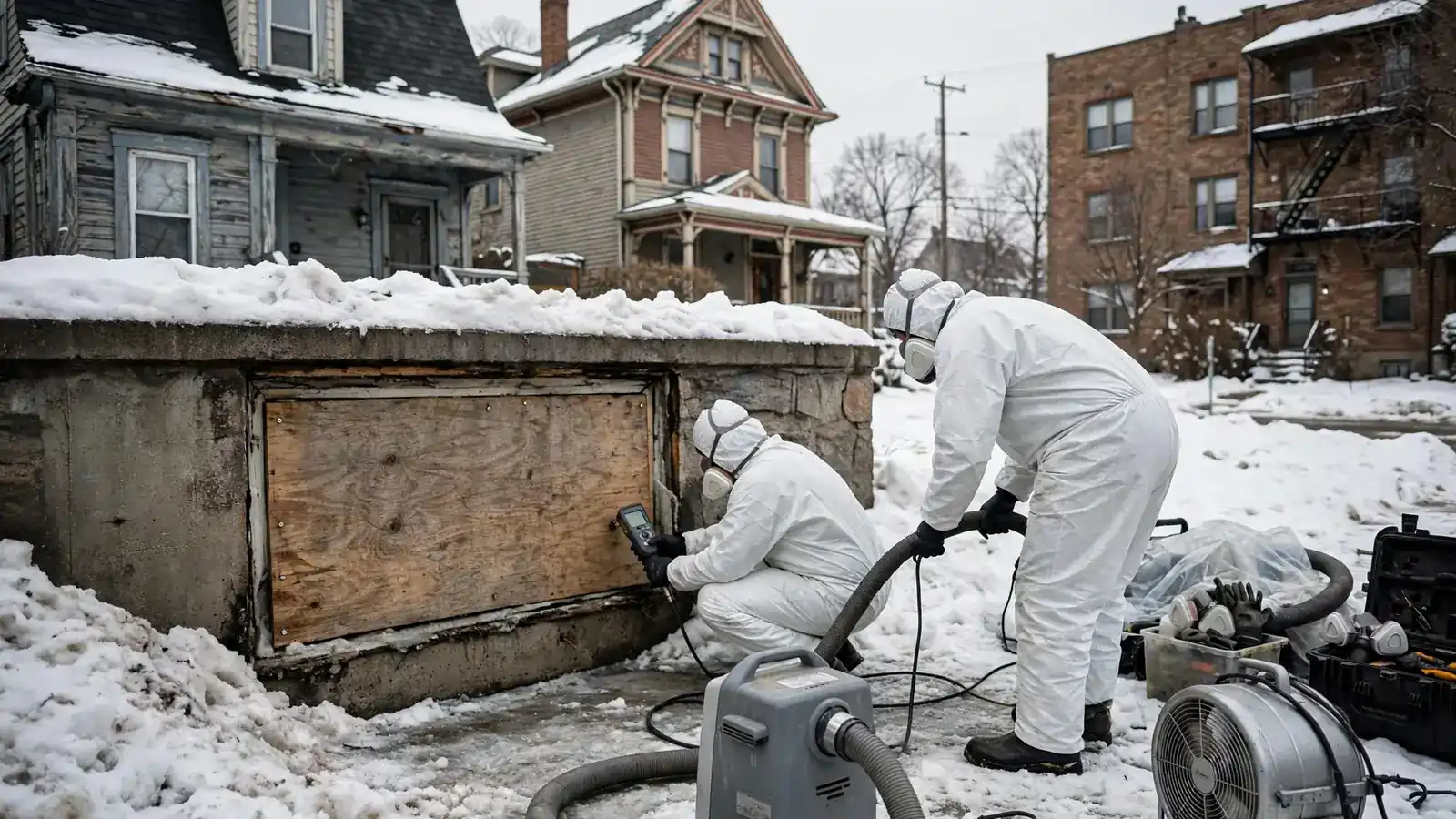
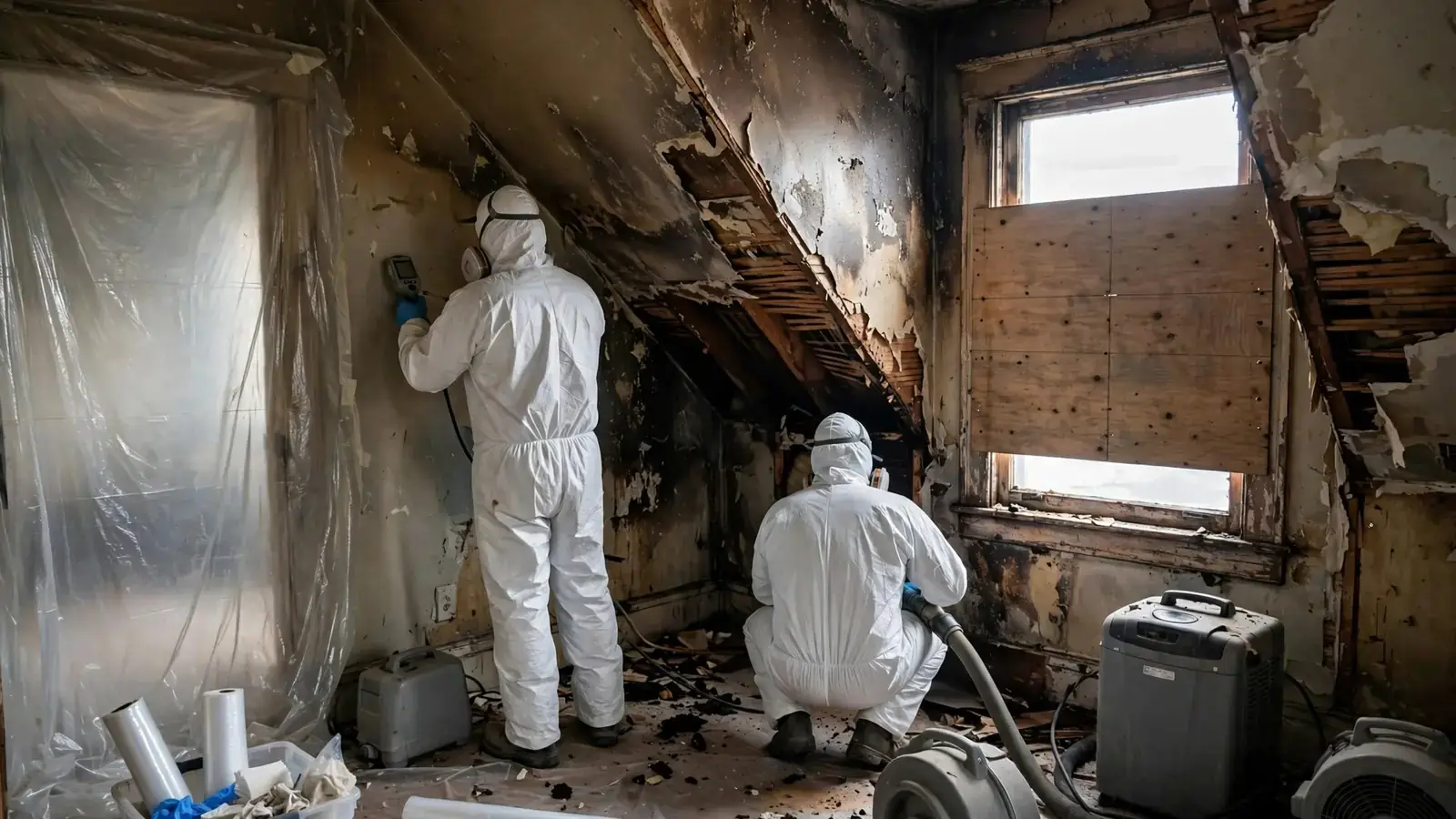
A fire that damages a shared boiler or furnace can leave the whole building cold. Tenants in undamaged units may try space heaters or other heat sources. Fuel-burning heaters and generators can produce carbon monoxide, which can travel between units.
Keep generators outside and away from openings. Minnesota law requires carbon monoxide alarms near sleeping rooms in dwellings, including apartments [4]. Check that every occupied unit has working alarms.
Records for the owner and for tenants
The building owner's policy usually covers the structure, so the owner should keep board-up photos and invoices. The Minnesota Department of Commerce recommends reviewing the policy and documenting every step [3].
Tenants should photograph their own units if they can safely do so. Our guide on working with your insurance adjuster explains more, and the Marcy-Holmes area page covers how rental fires here usually unfold.
FAQ
Board-Up and Tarping in Marcy-Holmes: questions
Who arranges board-up on a Marcy-Holmes rental?
Usually the owner or manager, since the structure is theirs. Tenants should contact the owner and their own insurer.
Can a tarp on a tall Marcy-Holmes roof hold through winter?
With good anchoring and checks after storms, yes. Report new leaks quickly.
Is the exterior stair safe to use after the fire?
Not until it is inspected. It should be closed off if it was damaged.