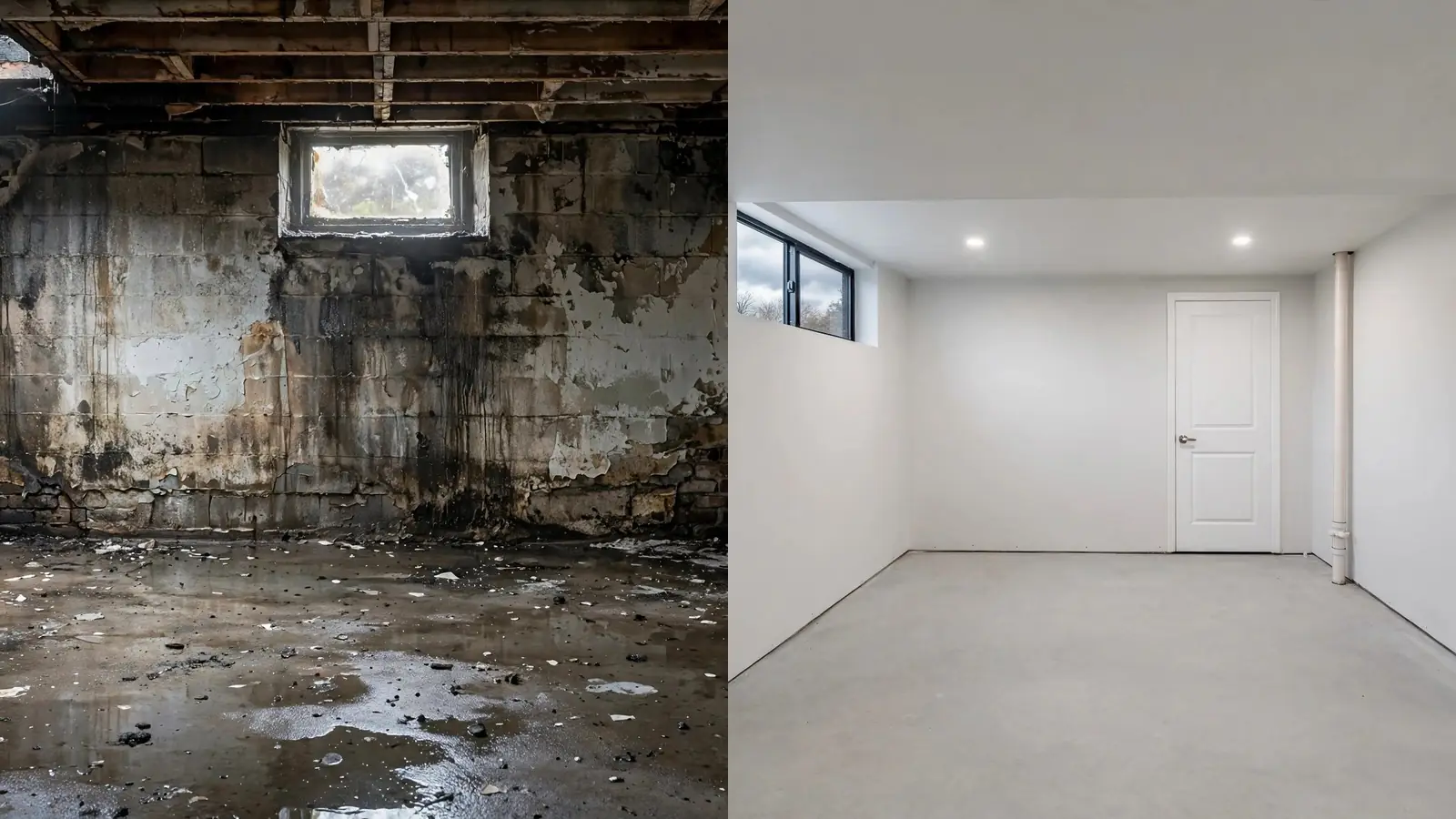
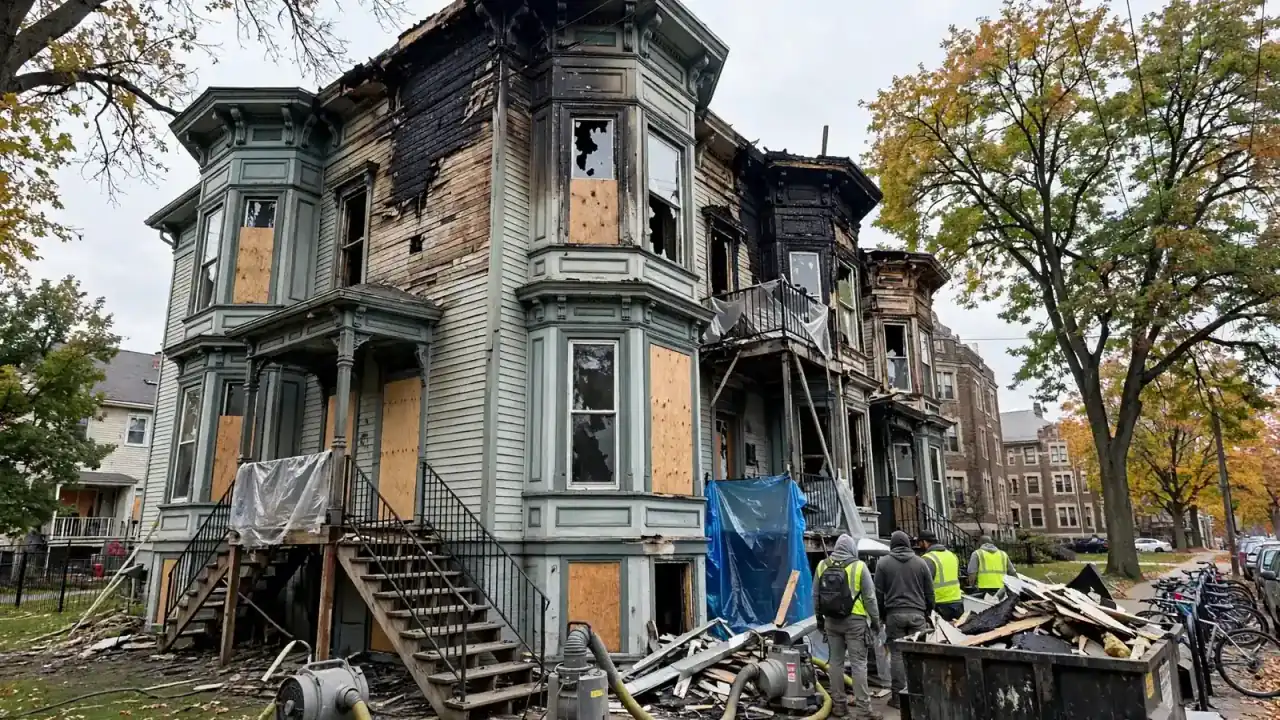
Key facts: Firefighting Water Damage in Marcy-Holmes
Water moving down through stacked apartments
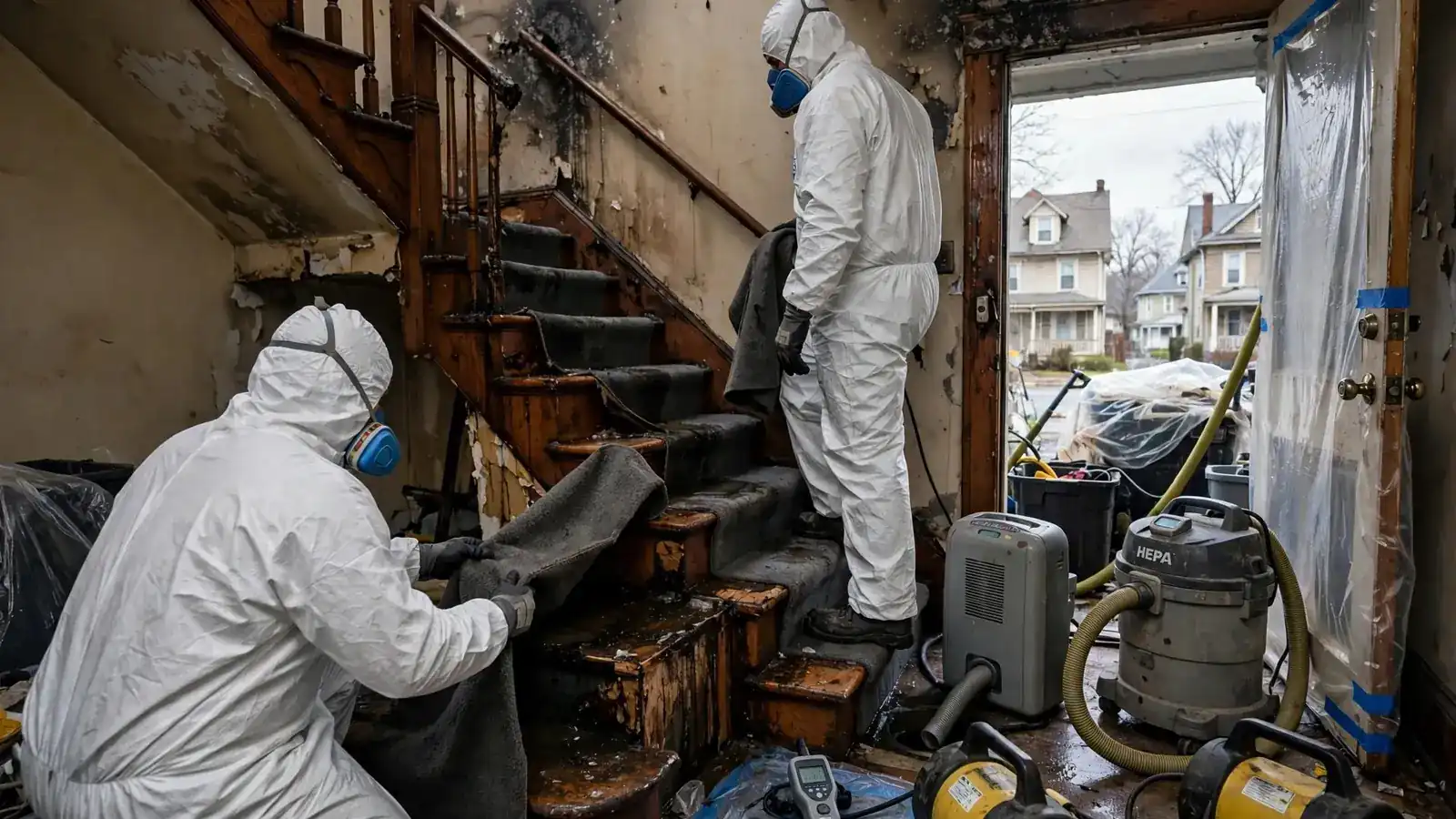
Converted Marcy-Holmes houses stack units on top of each other [7]. Water from hoses on an upper floor soaks the floor, comes through the ceiling of the unit below, runs down walls and pipes and collects in the basement. A fire on the third floor can mean wet ceilings on the second and first floors and standing water downstairs.
Each unit needs to be checked for wet ceilings, walls and floors. Drying usually starts with the lowest, wettest areas and works up, following the S500 approach of measuring, extracting and drying [2].
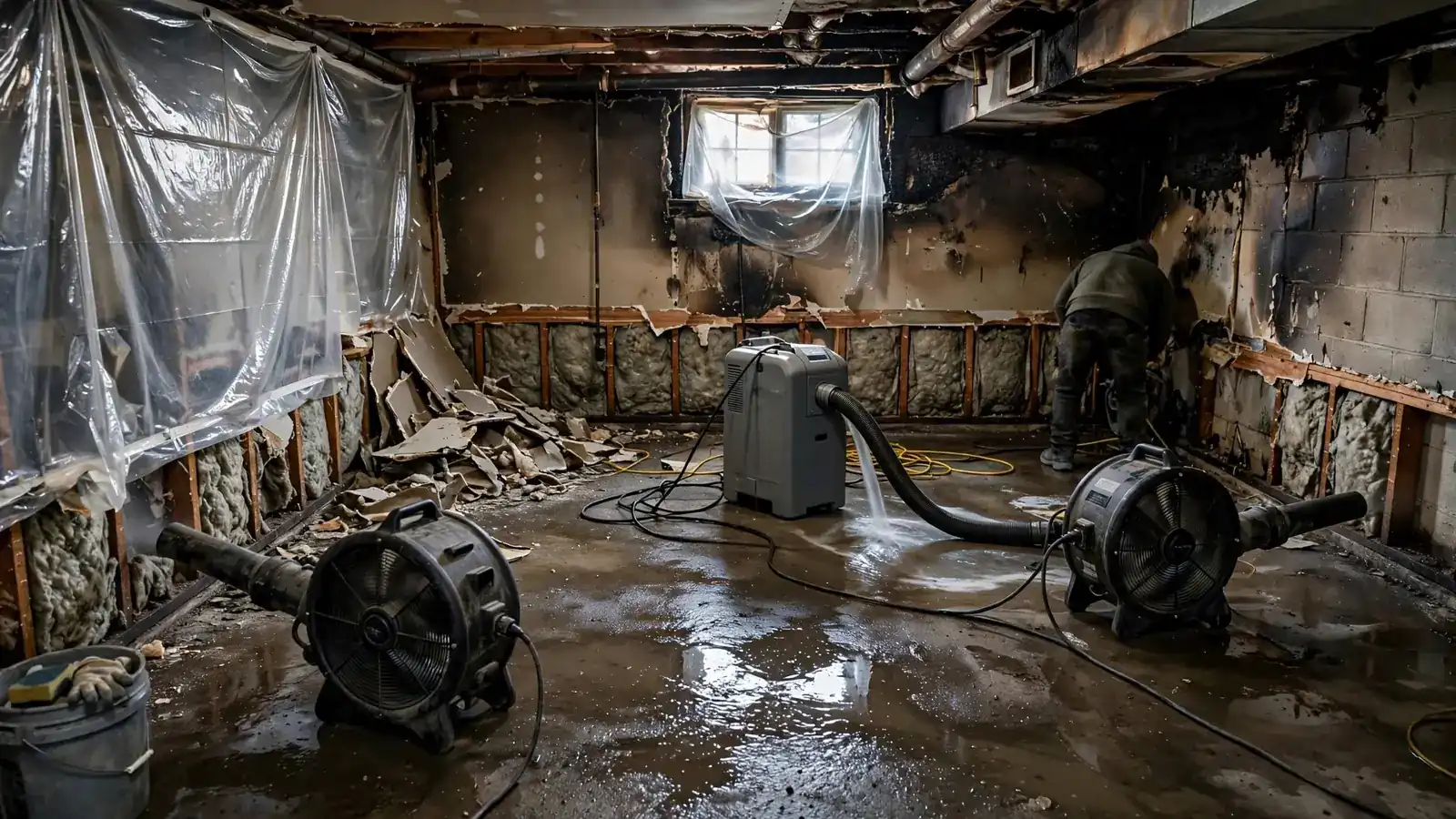
Basement apartments, panels and the boiler
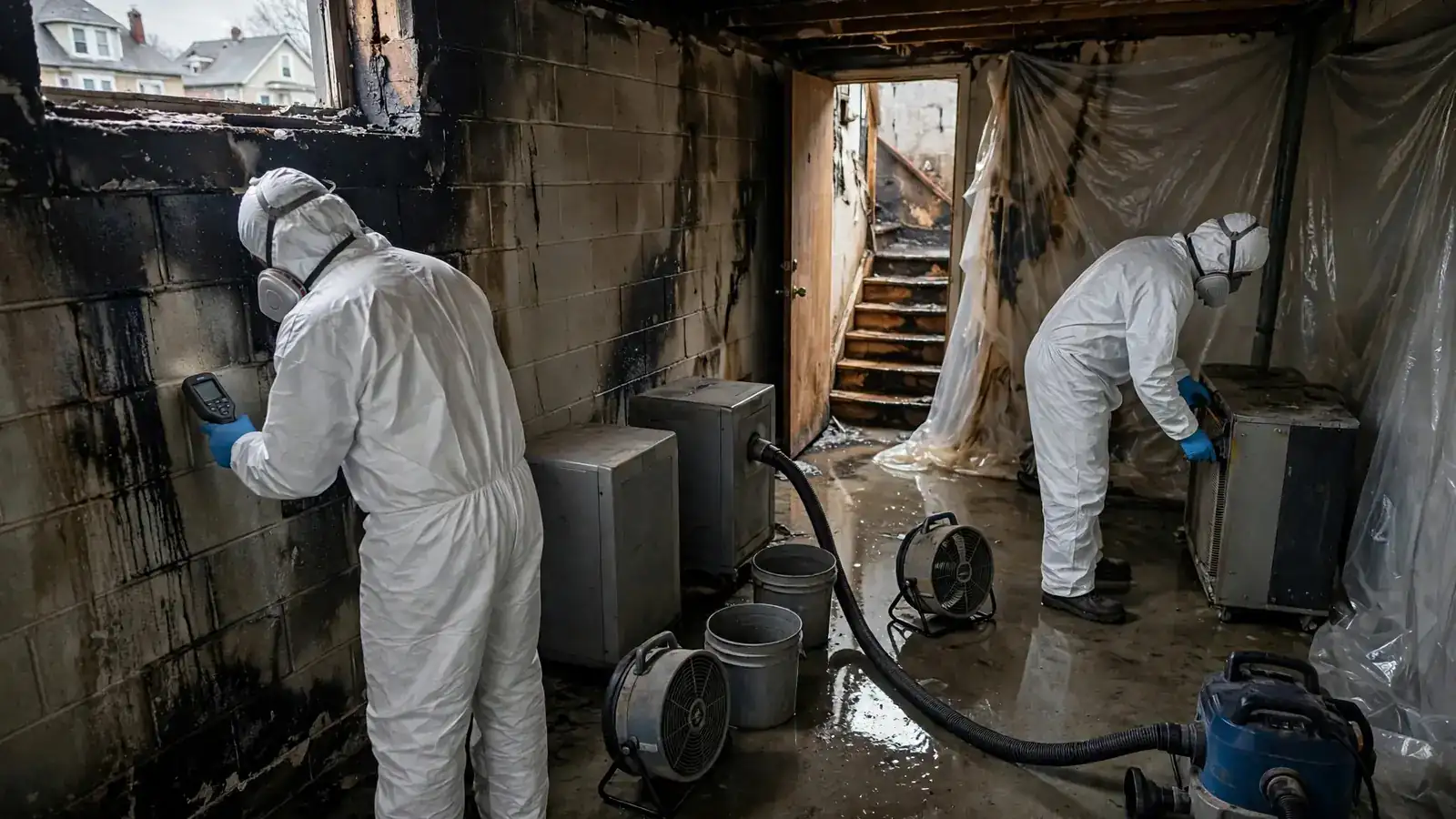
Some converted houses have basement apartments, and most basements also hold the boiler or furnace, water heaters and electrical panels. Water around them is a shock hazard and can damage controls and burners. Nobody should go down until power to that level is off and the space has been checked [3].
After the water is pumped out, a heating contractor should look at the boiler and an electrician at the panels before anything is switched back on.
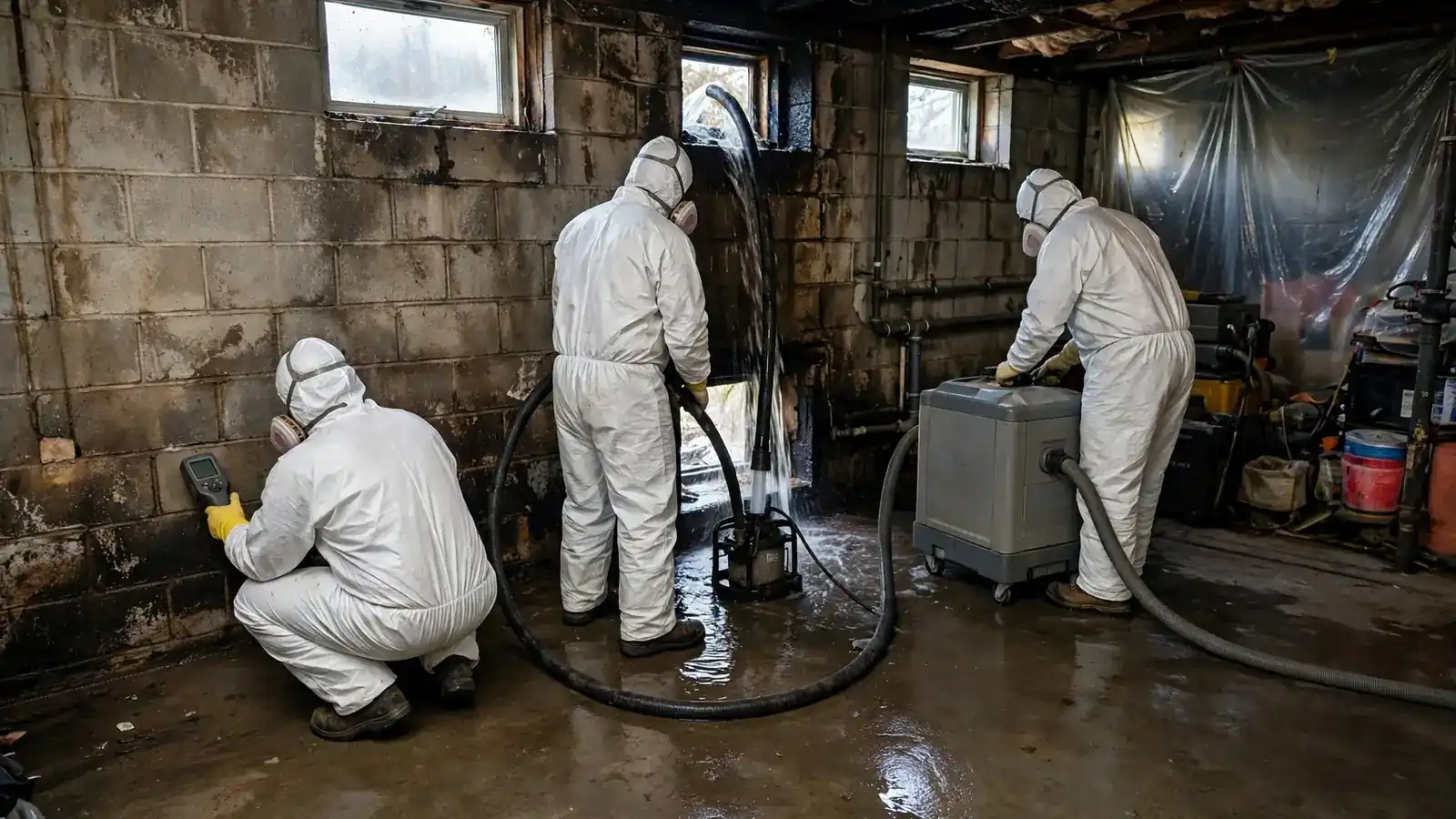
Sagging plaster in the units below
Original rooms on lower floors usually have plaster ceilings. Water collecting above them can make them bulge or pull away from the lath. A sagging ceiling can drop suddenly, so tenants should stay out from under it.
Small drain holes are sometimes drilled to release trapped water. Plaster still bonded to the lath can often be dried and patched. Loose sections are taken down carefully.
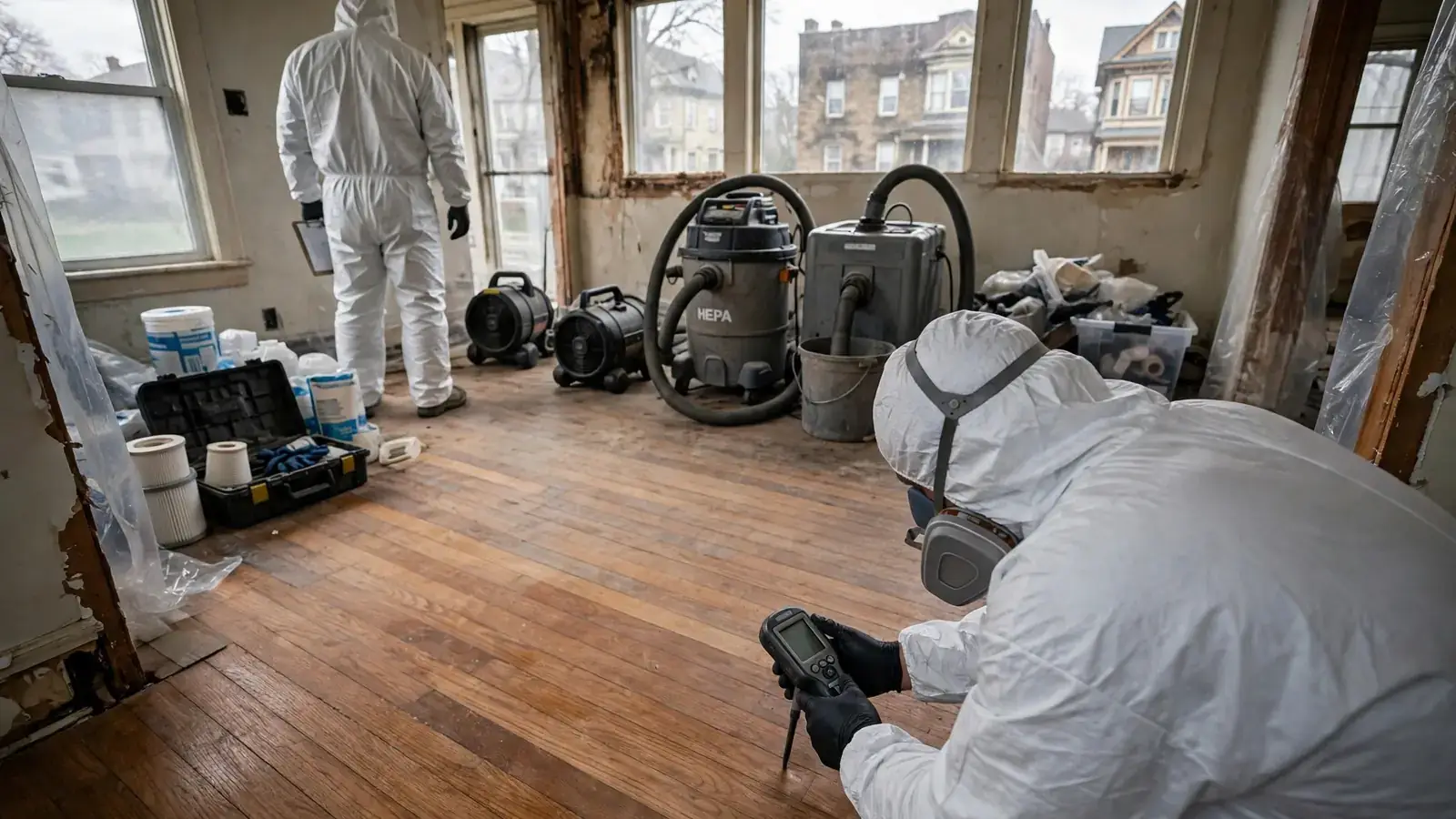
Drying out a Marcy-Holmes building
A common sequence in multi-unit houses.
- 1
Check every unit for hazards
Sagging ceilings and wet electrical are made safe first.
- 2
Pump the Marcy-Holmes basement
Standing water around the boiler and panels goes first.
- 3
Strip wet carpet and drywall in each unit
Materials that cannot dry in time are removed.
- 4
Run dryers and log moisture by unit
Readings are kept for each apartment.
Frozen pipes when the shared boiler is down
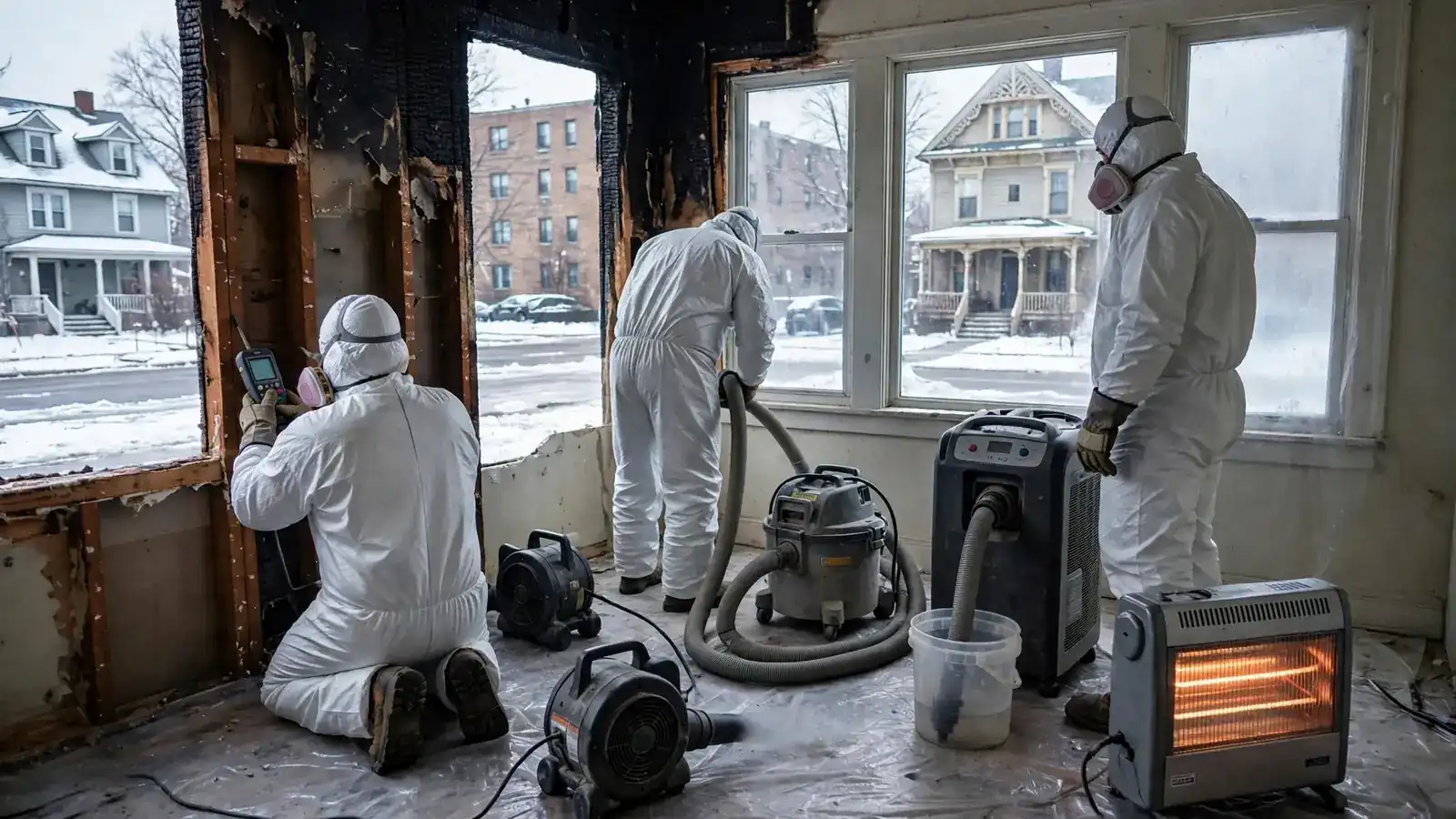
If the fire damaged the boiler or the gas was shut off, the whole building can lose heat. In a Minneapolis winter, pipes in exterior walls and the basement can freeze within hours. A burst pipe adds even more water to a building already soaked.
Temporary heat or draining the plumbing comes before cleanup. The National Weather Service Twin Cities office posts cold warnings that help with planning [5]. Tenants still living in the building should tell the owner right away if their unit is cold.
Mold risk in basement units
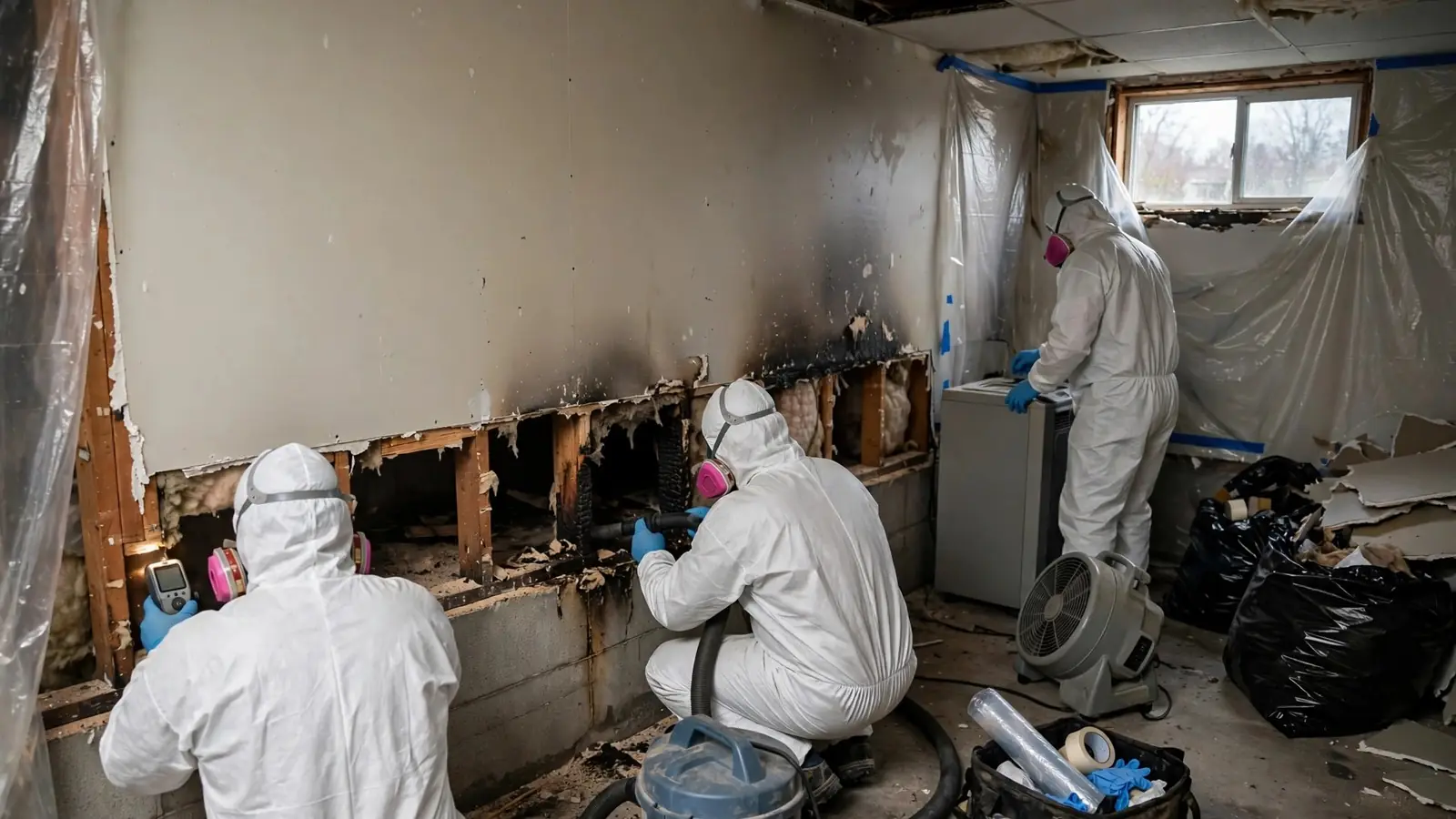
The EPA advises drying wet materials within 24 to 48 hours to limit mold [1]. Basement units are slow to dry and are where mold most often starts. The Minnesota Department of Health recommends fixing moisture quickly and removing moldy materials [4].
Basement units should not be reoccupied until drying is complete and confirmed with readings. Heat and dehumidifiers together speed drying in cold months.
Tenants' belongings in the lower units
Water ruins things on the floor and anything in cardboard. Tenants in lower units should move what they safely can, photograph damaged items and keep a list.
Renters coverage, or a parent's homeowners policy, may cover belongings. The Minnesota Department of Commerce suggests reviewing the policy and keeping records [6].
Rental units and getting tenants back
Units in rental buildings may need inspection before tenants move back in. The owner coordinates this with the city and the contractor. Drying records help show each unit is ready.
If you are a tenant deciding where to stay, read is it safe to stay after a fire. The Marcy-Holmes area page covers who usually handles what in a rental fire.
Starting quickly near campus
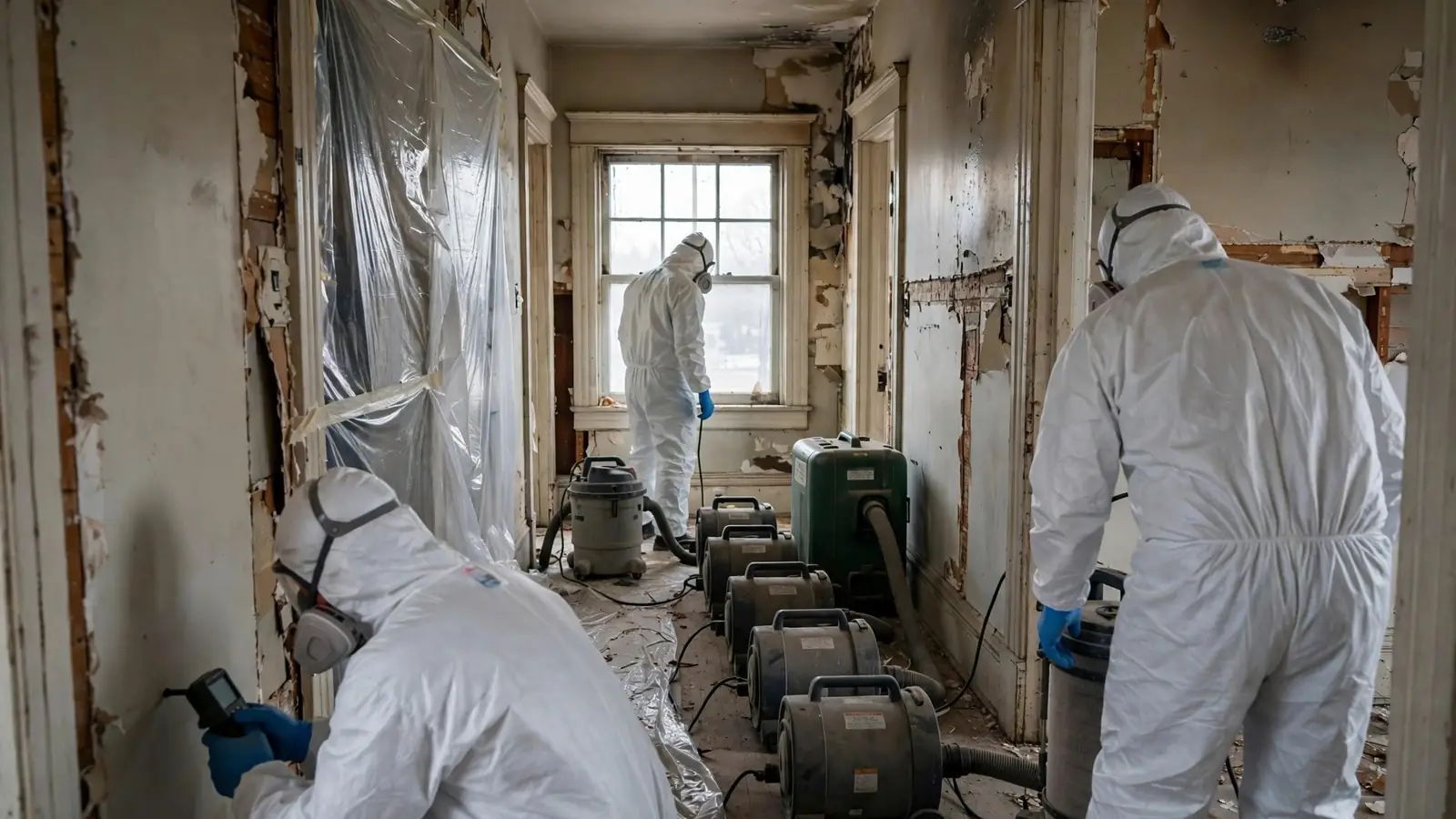
Drying works best when it starts as soon as the building is released. Access near Dinkytown can be tight, so mention where equipment trucks can park and whether there is alley access.
The contractor can document readings and photos from the first day so the owner's adjuster has a clear record. Odor from damp, smoky materials is covered on our odor removal page. Drying records also help the owner show the city and the insurer that each unit is ready. If water reached shared storage lockers, tell the owner so those spaces are dried and checked as well.
FAQ
Firefighting Water Damage in Marcy-Holmes: questions
Does my lower unit need drying if the fire was upstairs?
Very likely. Water from the hoses runs down through floors and ceilings to every unit below.
When can I move back into a Marcy-Holmes basement unit?
Once drying is complete, readings confirm it, and the owner says the unit has passed any needed inspection.
What if our building has no heat after the fire?
Tell the owner and contractor right away. Temporary heat or draining the pipes comes first.
Sources and citations
- [1]U.S. EPA: A brief guide to mold, moisture and your home
- [2]IICRC: S500 Standard for Professional Water Damage Restoration
- [3]U.S. Fire Administration: After a fire
- [4]Minnesota Department of Health: Mold and moisture in homes
- [5]National Weather Service: Twin Cities forecast office
- [6]Minnesota Department of Commerce: Disaster Information Center
- [7]Wikipedia: Marcy-Holmes, Minneapolis