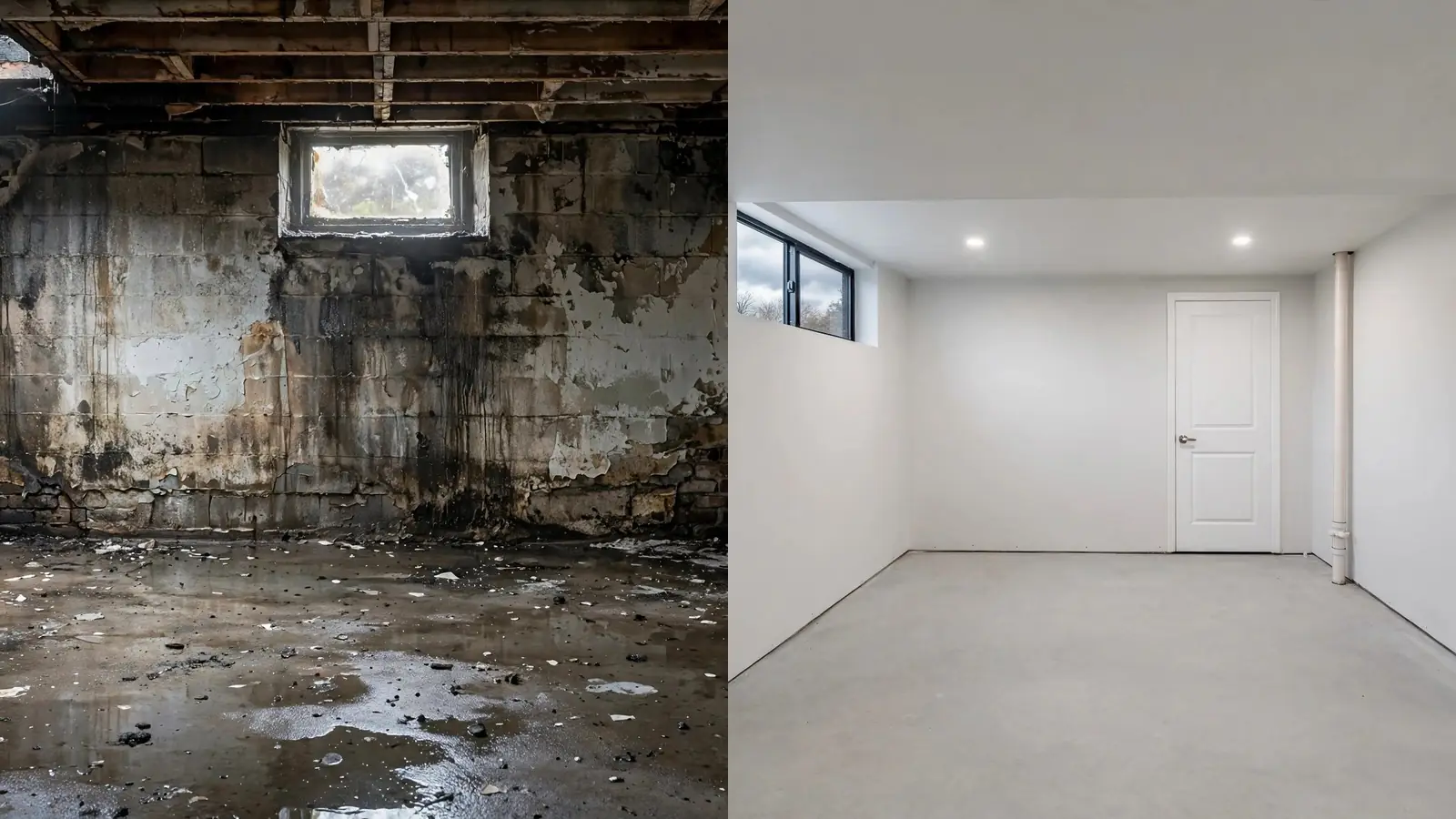
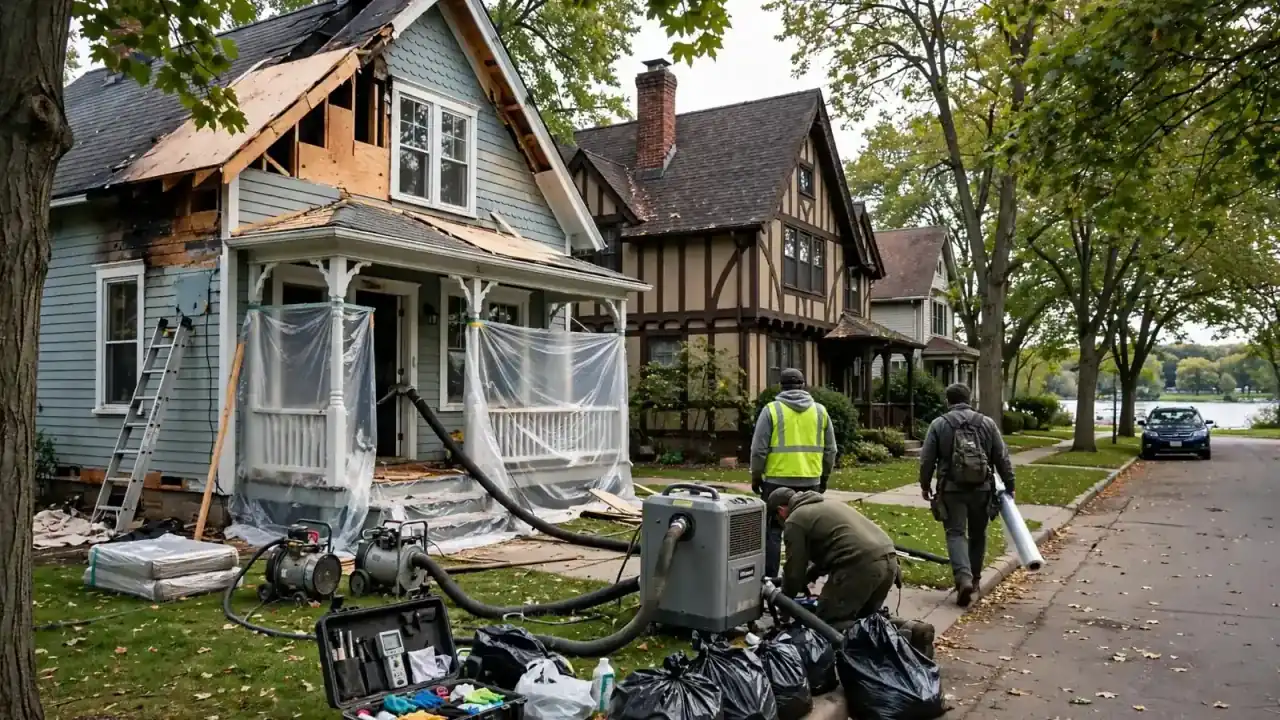
Key facts: Firefighting Water Damage in Linden Hills
Where the water goes in a Linden Hills house
Water from hoses flows down through the floor, along joists and down stairways. It soaks the ceiling below, runs into walls and ends up in the basement. In many Linden Hills homes, that basement is finished with carpet, drywall and furniture [7].
The longer water sits, the more it wicks into materials. Starting extraction and drying quickly is the main way to limit damage [2].
Finished lower levels in older homes
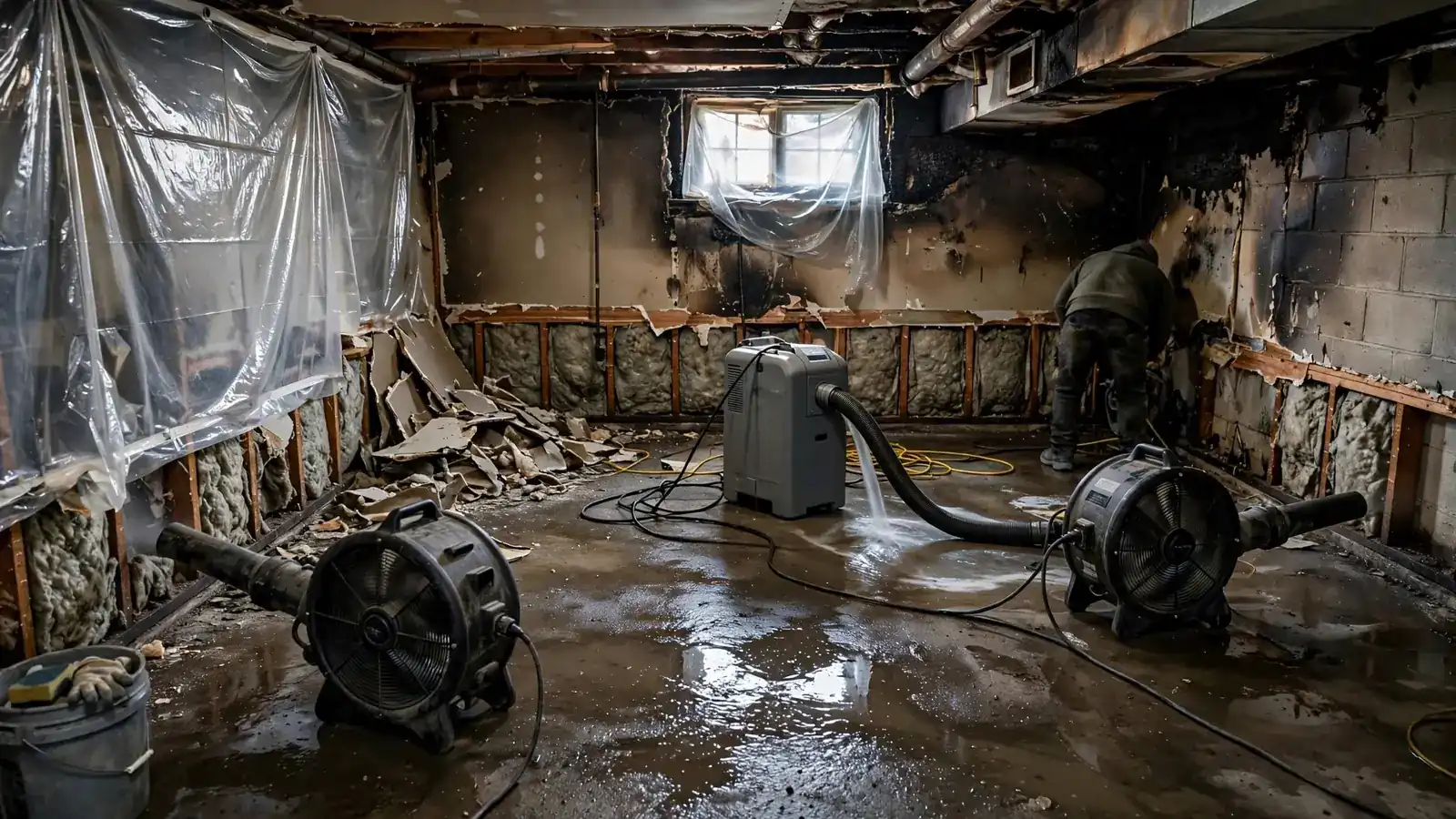
Older homes in the neighborhood often had their basements finished later, with paneling, carpet and a dropped ceiling. These materials hold water. Carpet pad and wet paneling usually come out.
Concrete floors and walls dry slowly. Dehumidifiers and air movers run until moisture readings are back to normal. Ask your contractor to show you the readings.
Plaster ceilings under the fire
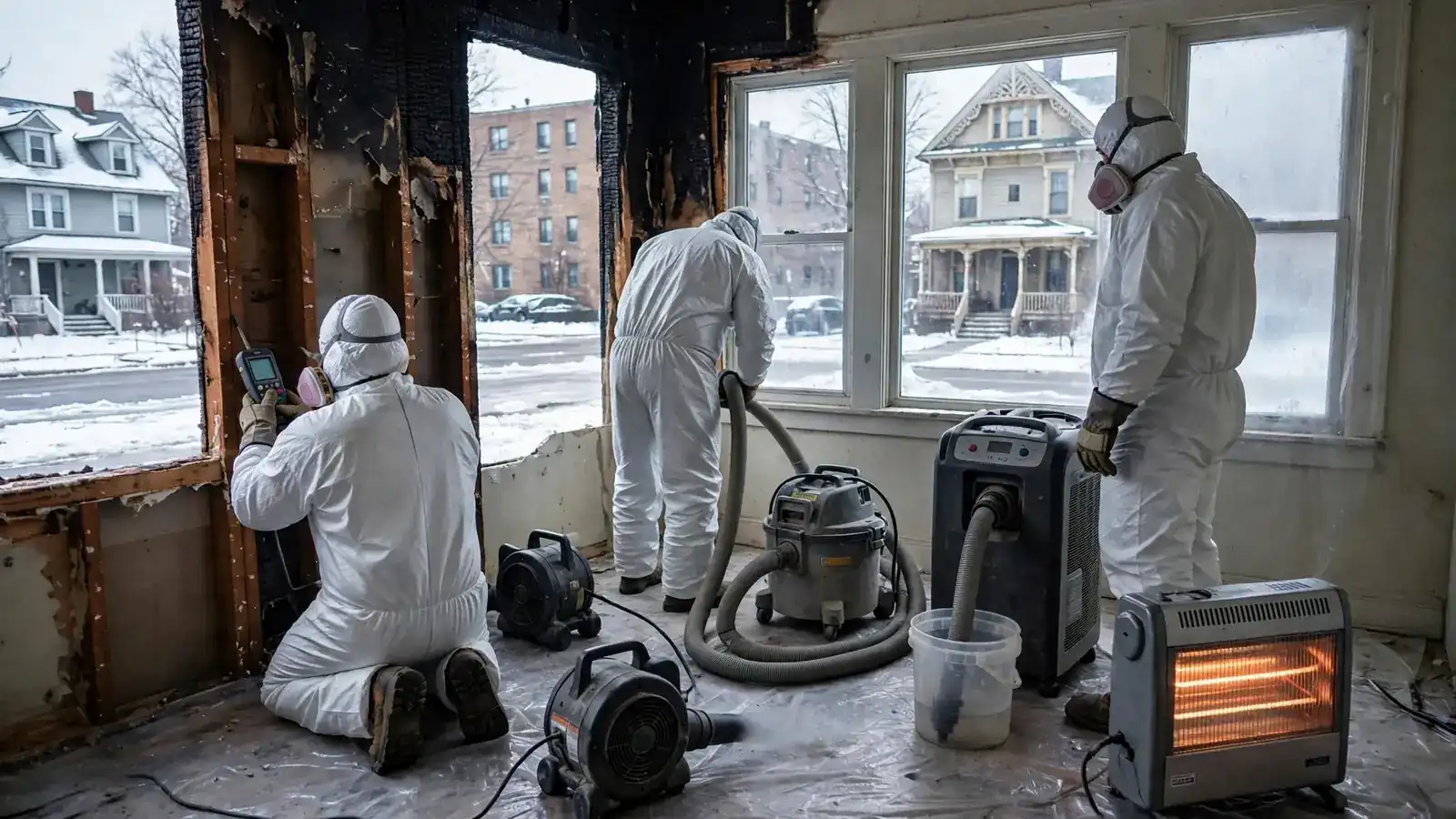
Plaster ceilings can hold water and sag. A sagging ceiling may fall without warning. Stay out from under it until the contractor checks it.
Sometimes small holes are drilled to let water drain. Wet plaster can dry and be repaired, but badly damaged sections are removed.
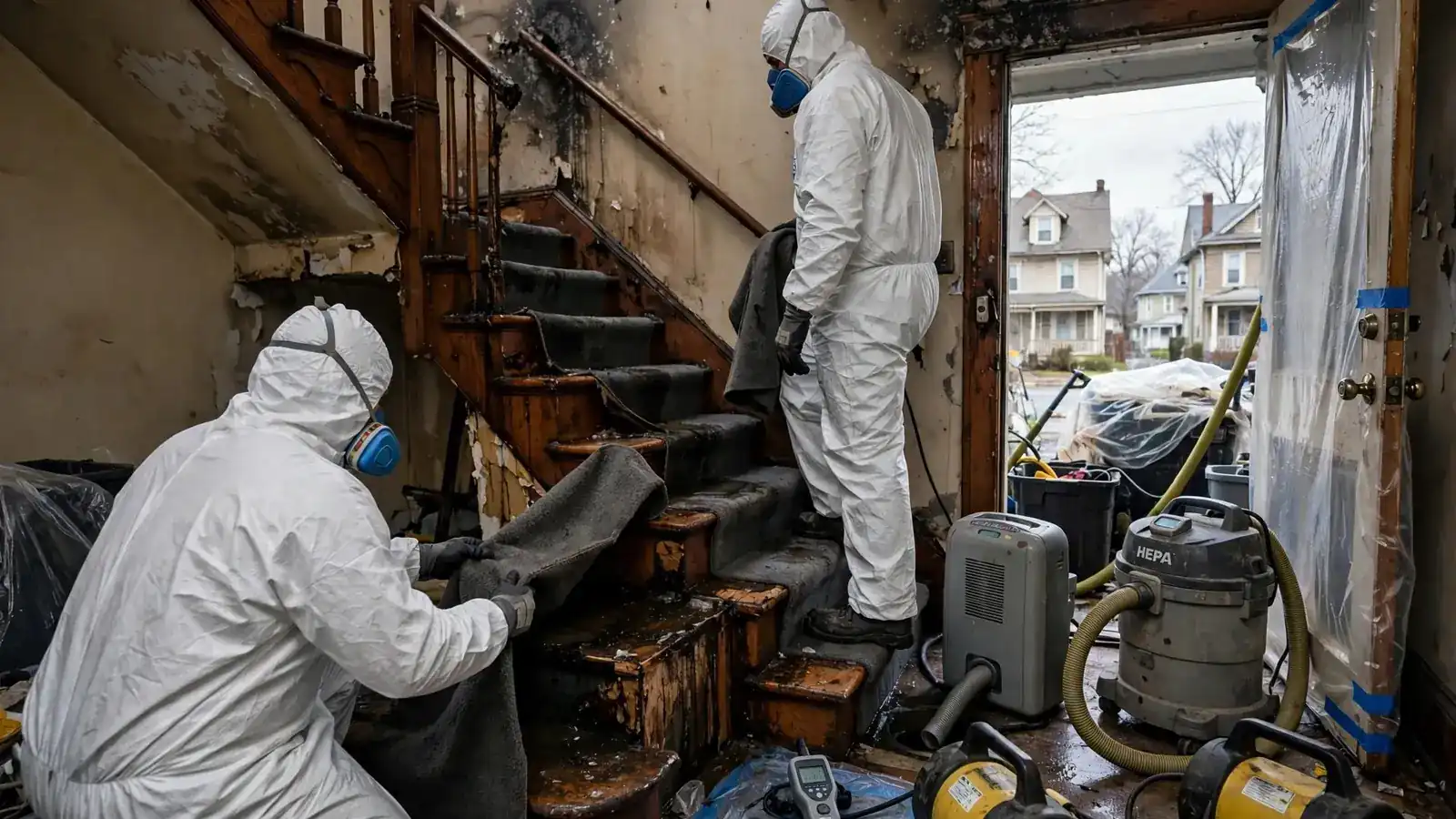
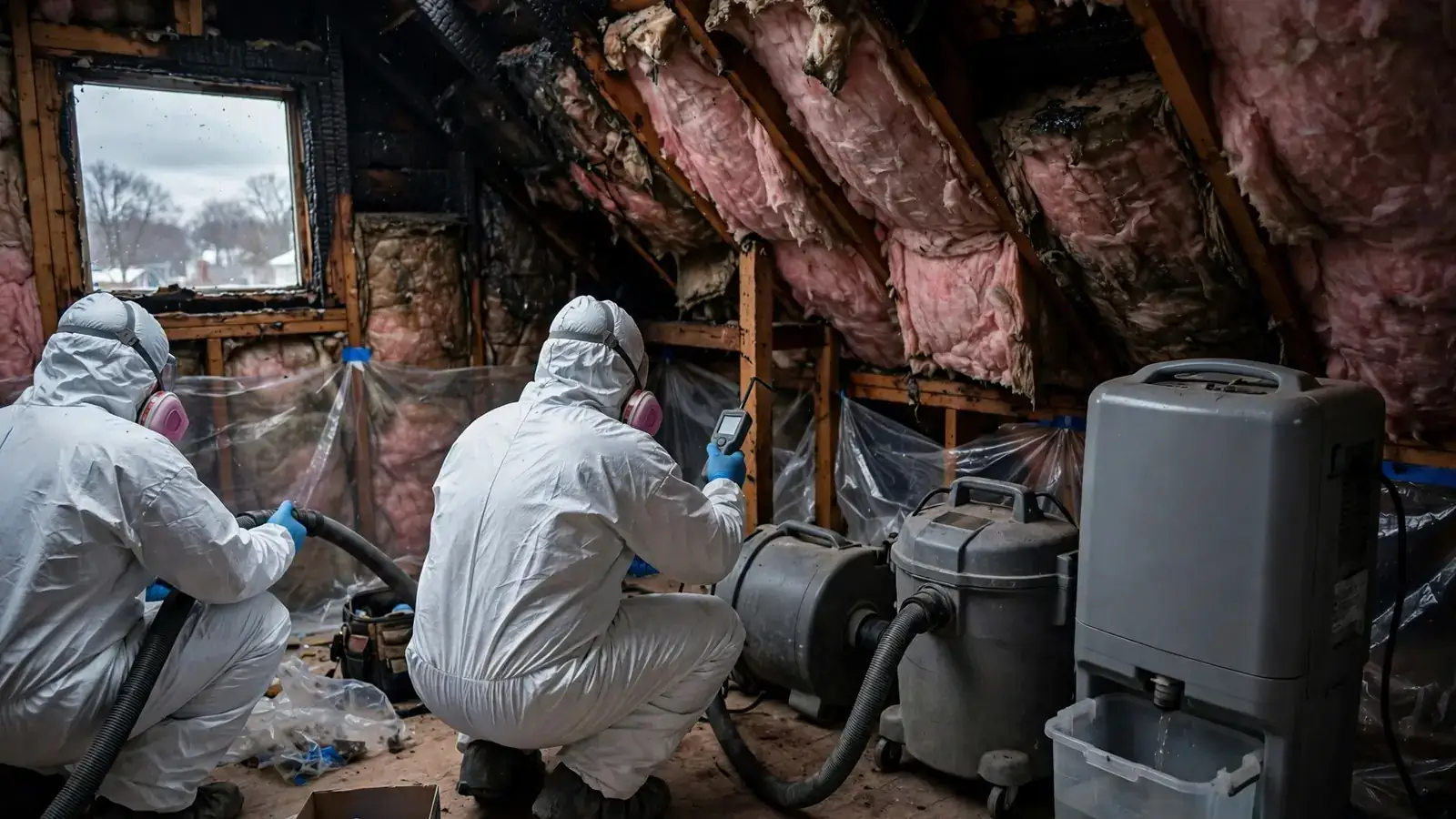
Drying a Linden Hills home after the fire department leaves
A common sequence.
- 1
Make it safe to enter
Power to wet areas is shut off and ceilings are checked.
- 2
Extract standing water
Pumps and extractors remove water from floors and carpet.
- 3
Pull out soaked lower-level finishes
Wet pad, drywall below the waterline and insulation come out.
- 4
Dry and monitor
Equipment runs and moisture is measured daily until dry.
Frozen pipes when the heat goes off
A winter fire often damages the furnace or the gas is shut off. Without heat, pipes in exterior walls and the basement can freeze within hours on a cold night. A burst pipe adds even more water to a house already soaked.
Temporary heat, or draining the plumbing, should come first. The National Weather Service Twin Cities office posts cold warnings that help with planning [5].
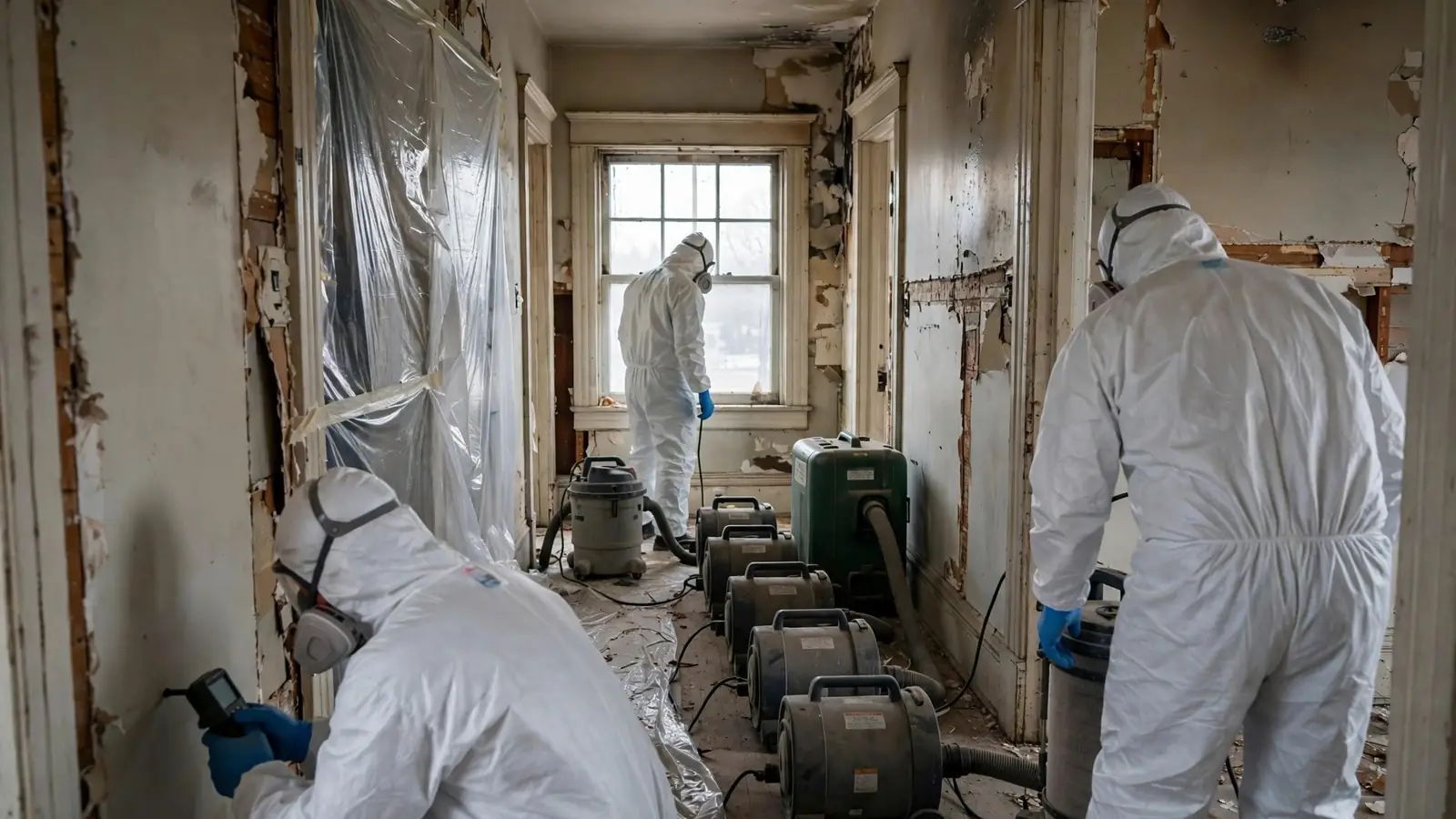
Wood floors and stairs
Hardwood floors in older homes absorb water and may cup or buckle. Careful drying, sometimes with mats that pull moisture from the floor, can save many of them.
Engineered floors in newer homes often cannot be saved once soaked. The contractor will test and advise.
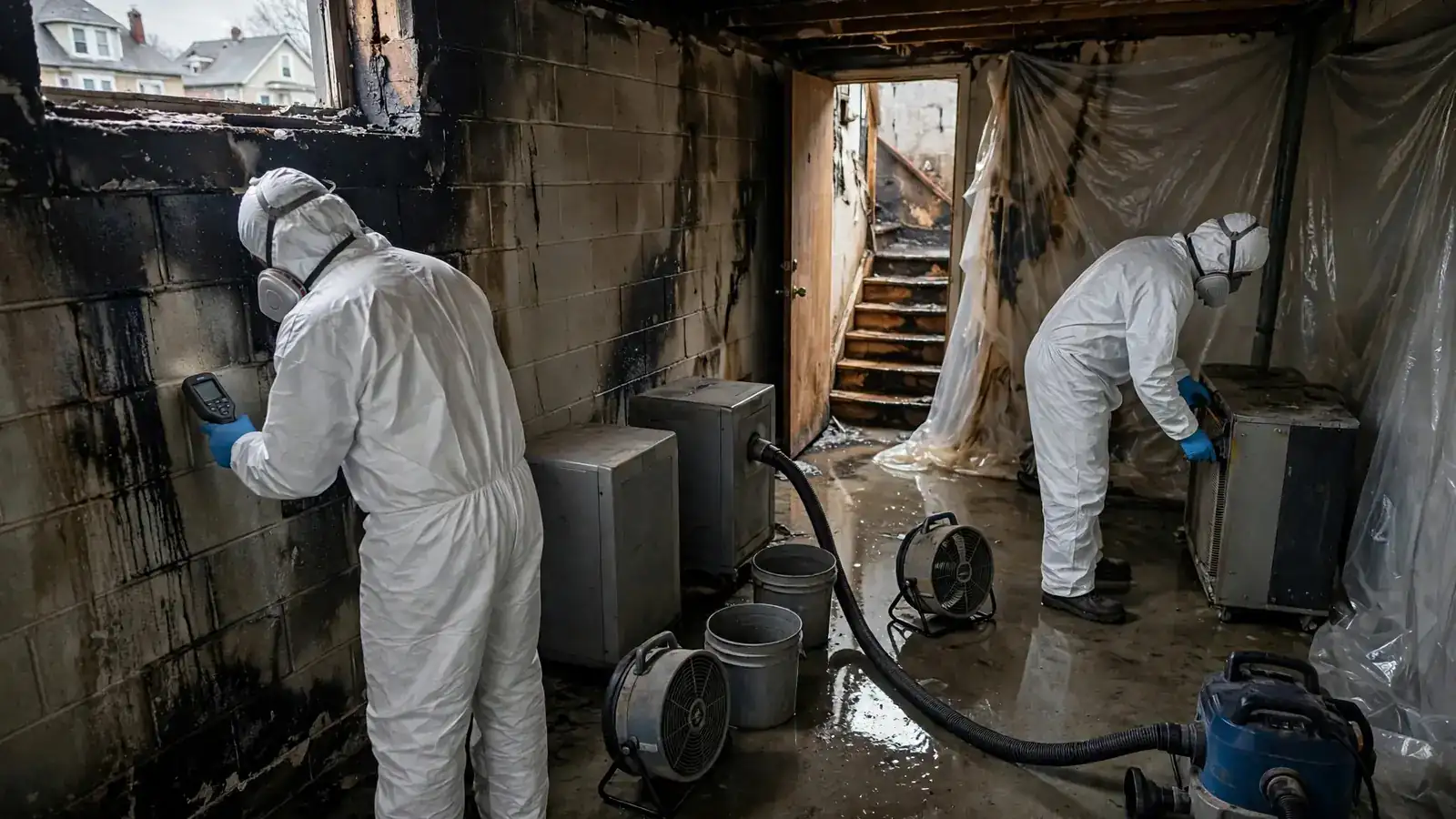
Mold risk in a closed-up house
Once materials stay wet for more than a day or two, mold can start [1]. In winter, a cold, closed-up house with no heat is slow to dry on its own.
The Minnesota Department of Health recommends fixing moisture problems quickly and cleaning or removing moldy materials [4]. Drying equipment and heat together speed things up.
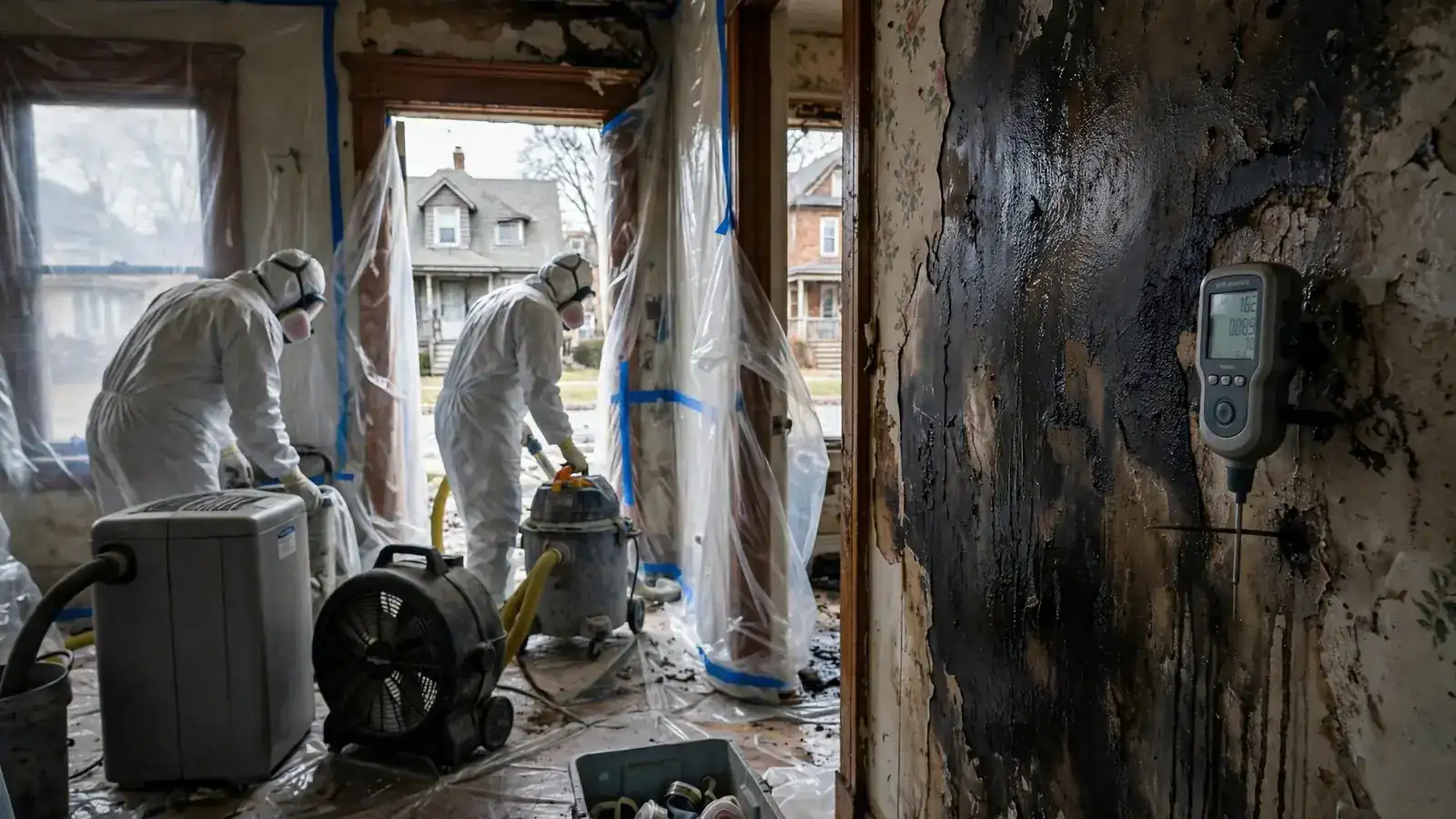
Things to tell the contractor about water in your home
So they bring the right equipment.
- Is the basement finished?Carpet, paneling and drywall change the plan.
- Is the heat working?Freezing is a risk in cold months.
- Are ceilings sagging?Safety comes first.
- Is there standing water?Pumps may be needed.
Belongings in the basement
Basements often hold storage boxes, holiday decorations, books and furniture. Water soaks cardboard and anything on the floor. Move what you can to a dry place, and photograph damaged items first.
The Minnesota Department of Commerce suggests a complete list for the claim [6].
Hardwood stairs and the path water takes to the basement
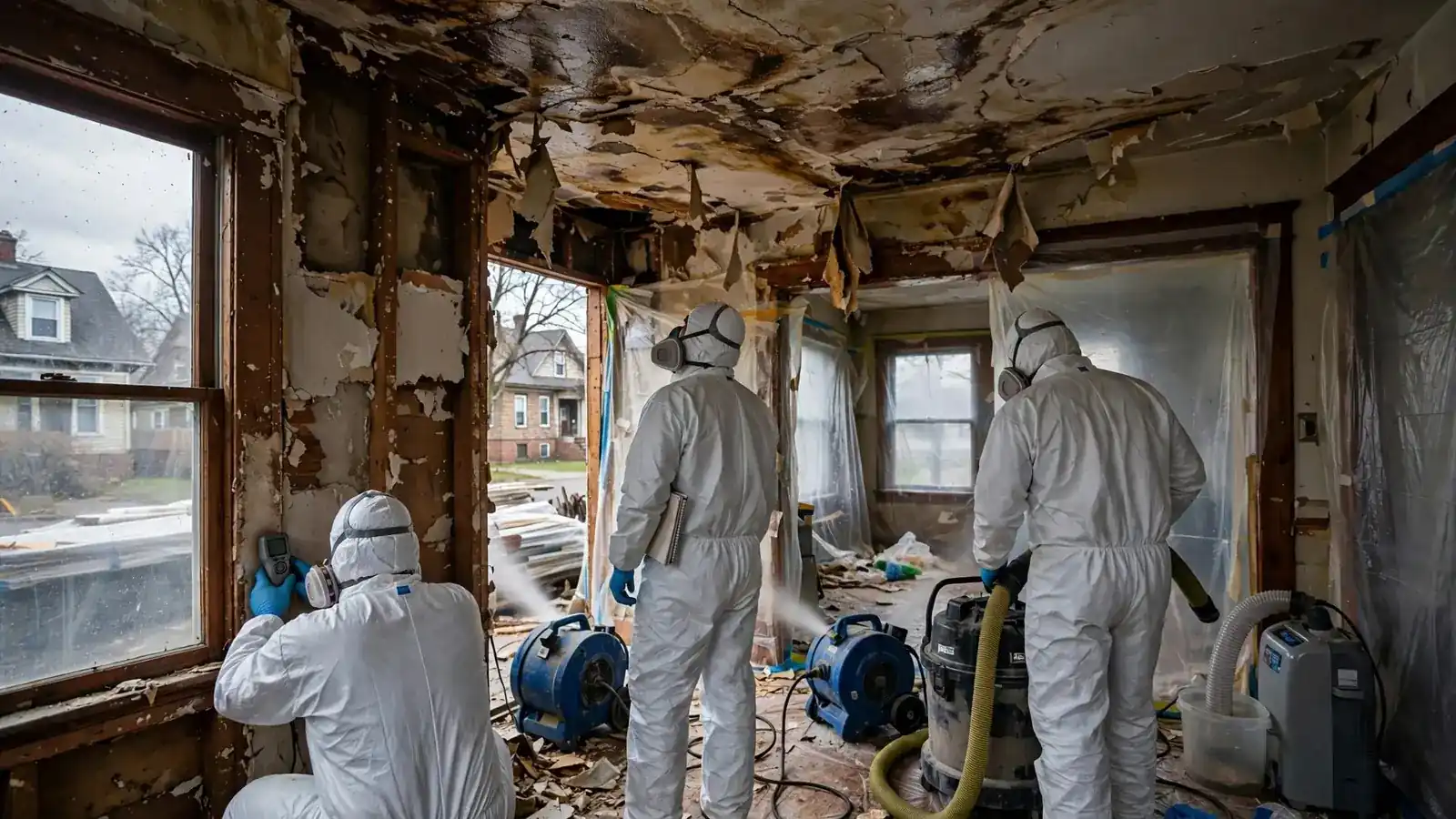
In a typical Linden Hills house, the main stairway sits right below the upper hall and above the basement stairs. Water from the hoses follows that route, running down treads and pooling at the landing. Stair treads, risers and the plaster on the stair walls often need drying and checking separately from the rooms they connect.
Old fir or oak treads can usually be dried in place. Carpet runners on stairs hold water against the wood and are lifted early so the wood can breathe.
Electrical safety in a wet Linden Hills basement
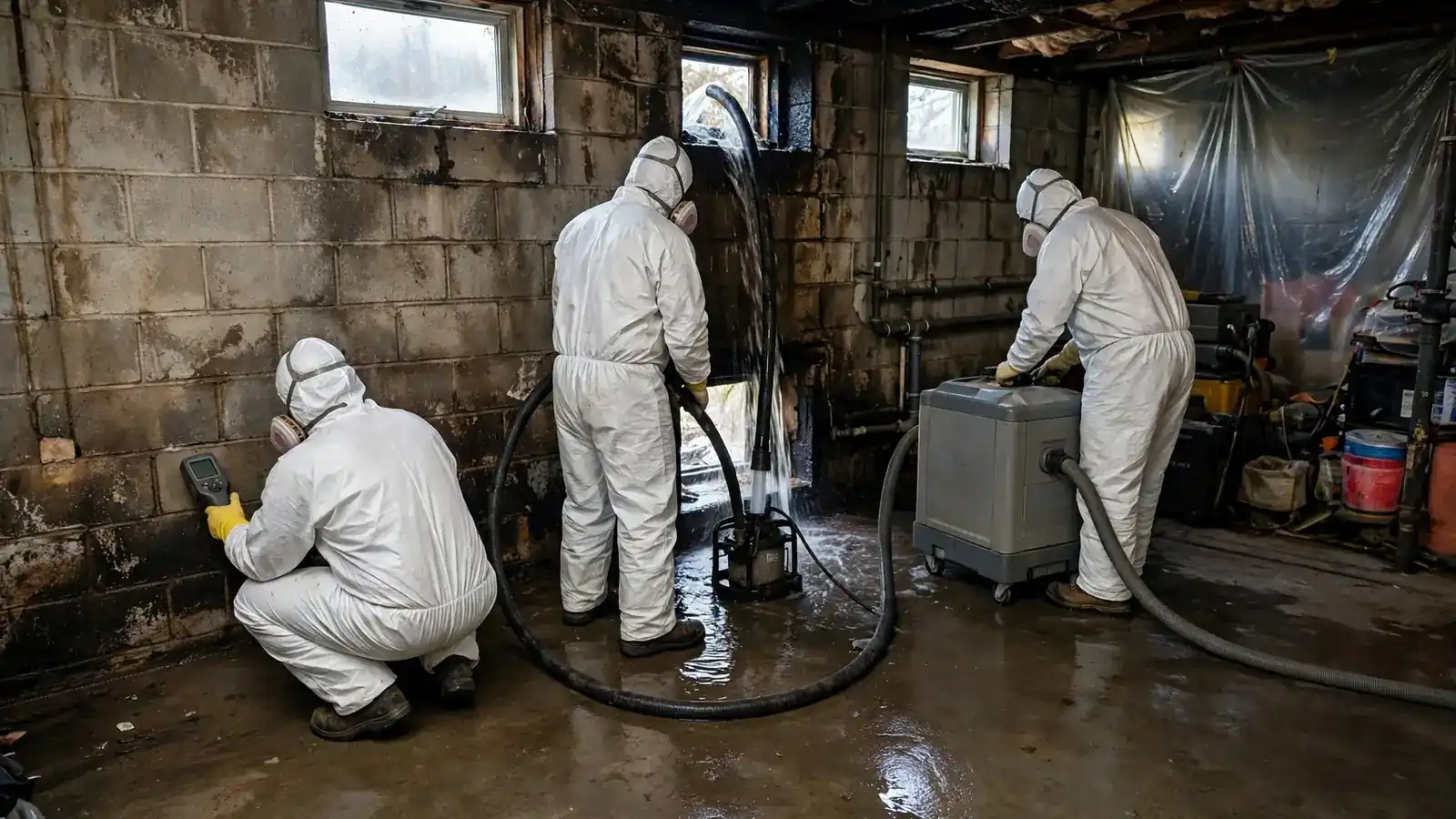
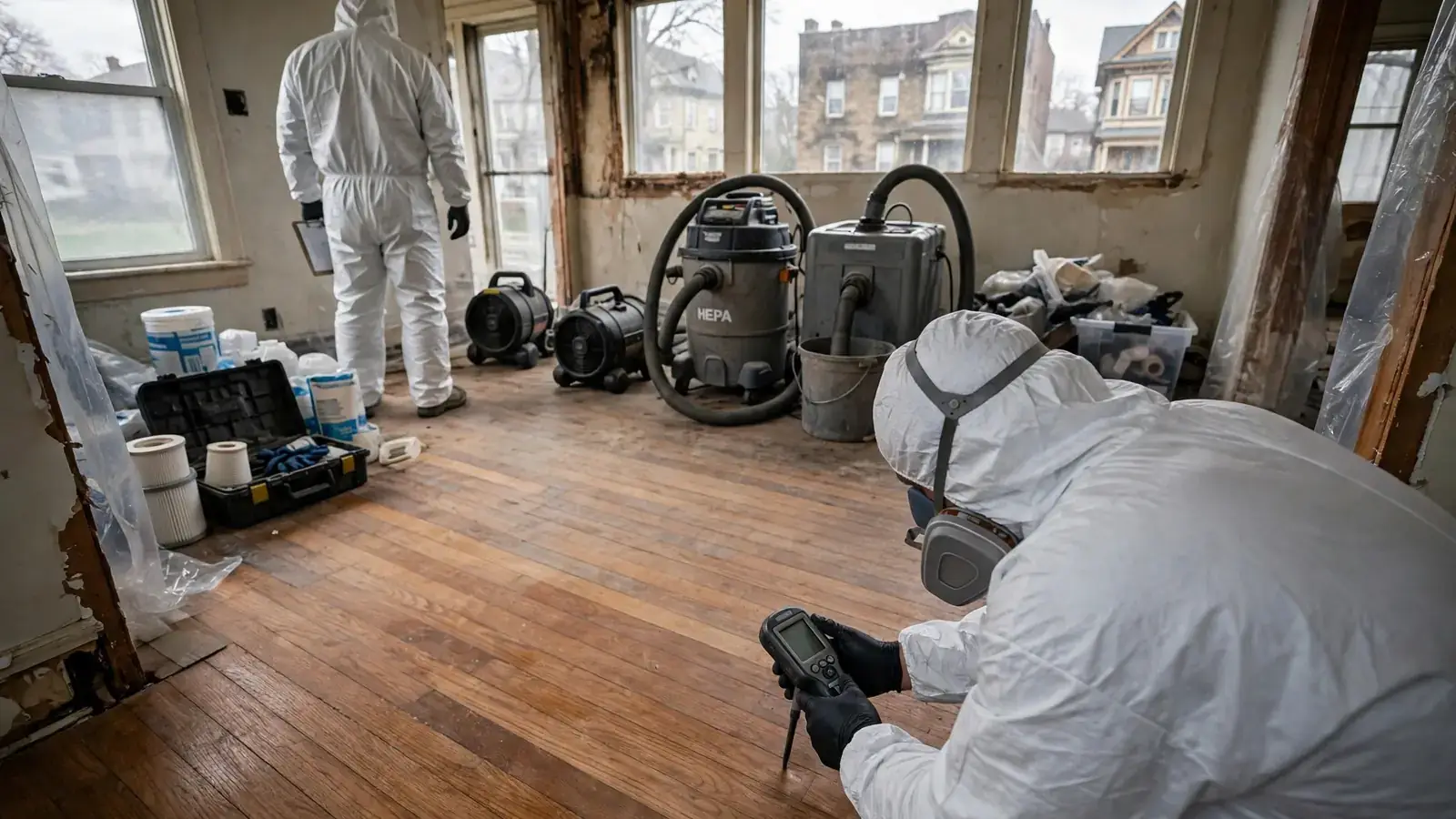
Basements hold the main panel, the furnace, the water heater and often a laundry. Standing water near any of these is a shock hazard. Do not walk into a flooded basement until power to that level is off and the contractor has checked it [3].
Once dry, an electrician should look at any outlets, wiring or equipment that got wet before power is restored to the lower level.
When to call
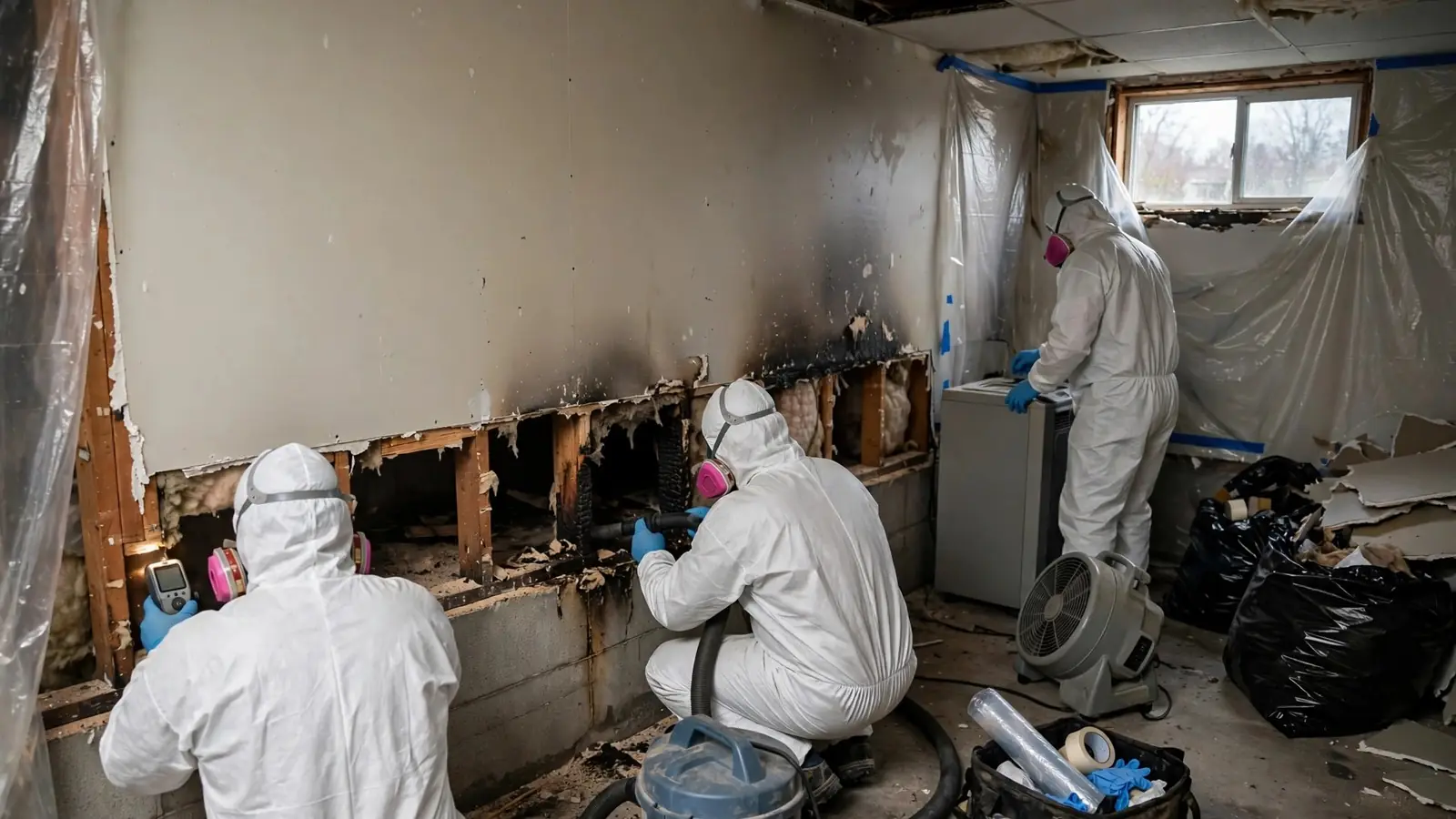
Call as soon as the fire department releases the house. The sooner drying starts, the less material needs to be removed.
Our guide on whether it is safe to stay after a fire can help you decide where to stay while the house dries.
FAQ
Firefighting Water Damage in Linden Hills: questions
How long does it take to dry a Linden Hills basement?
It depends on how much water and what materials. Many basements dry in several days once wet materials are out.
Can my plaster ceiling be saved?
Often, if it is not badly sagging. The contractor will check it.
What if pipes in my Linden Hills house froze after the fire?
Tell the contractor right away. Temporary heat or draining comes first.
Sources and citations
- [1]U.S. EPA: A brief guide to mold, moisture and your home
- [2]IICRC: S500 Standard for Professional Water Damage Restoration
- [3]U.S. Fire Administration: After a fire
- [4]Minnesota Department of Health: Mold and moisture in homes
- [5]National Weather Service: Twin Cities forecast office
- [6]Minnesota Department of Commerce: Disaster Information Center
- [7]Wikipedia: Linden Hills, Minneapolis