Key facts: Smoke Damage Cleanup in Linden Hills
- IICRC S700 is the industry standard for inspecting and cleaning a home after fire and smoke [2].
- Lead paint was sold until 1978, so older woodwork in Minneapolis homes calls for lead-safe cleanup methods [3].
- Repairs that involve structure, wiring, plumbing or heating in Minneapolis need city permits [6].
What smoke does inside a Linden Hills house
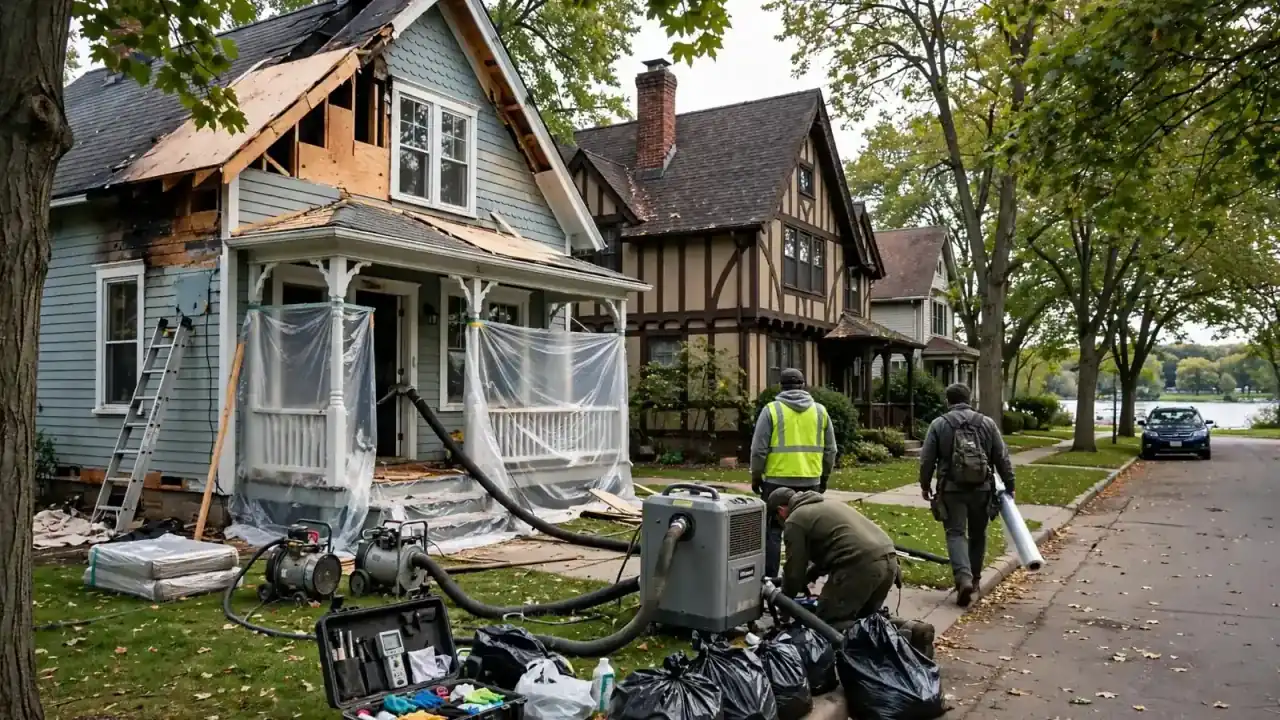
Hot smoke carries fine particles and oily residue. It rises up stairways, spreads along ceilings and is pulled into cooler rooms and closets. When it cools, the residue settles as a film that discolors paint, dulls finishes and leaves the smell behind [1].
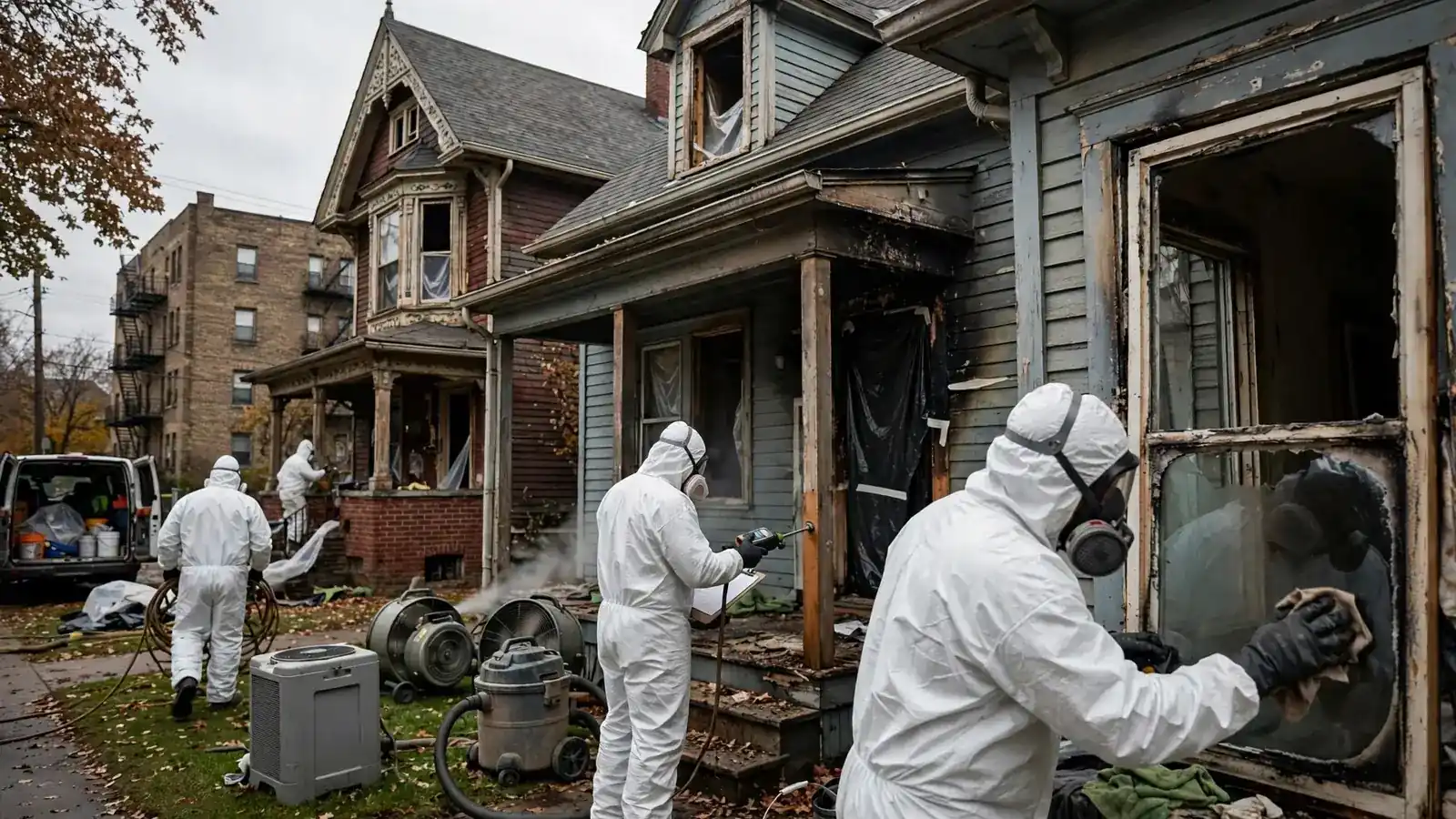
In the neighborhood's mix of homes, that film lands on very different surfaces: plaster and old trim in cottages and Tudors, drywall and wide-open spaces in newer houses [9]. Each needs its own cleaning approach.
Testing before anything is wiped
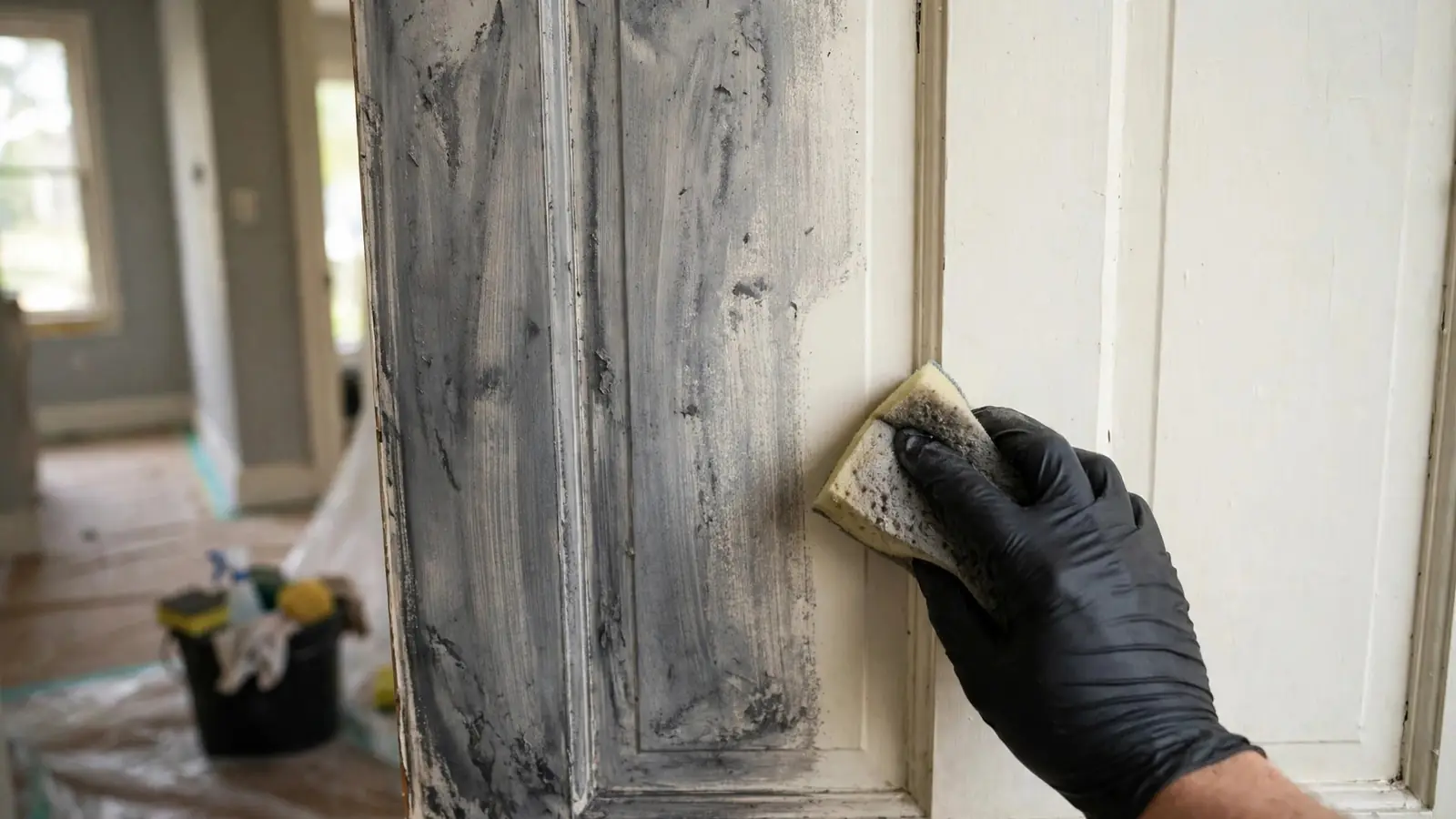
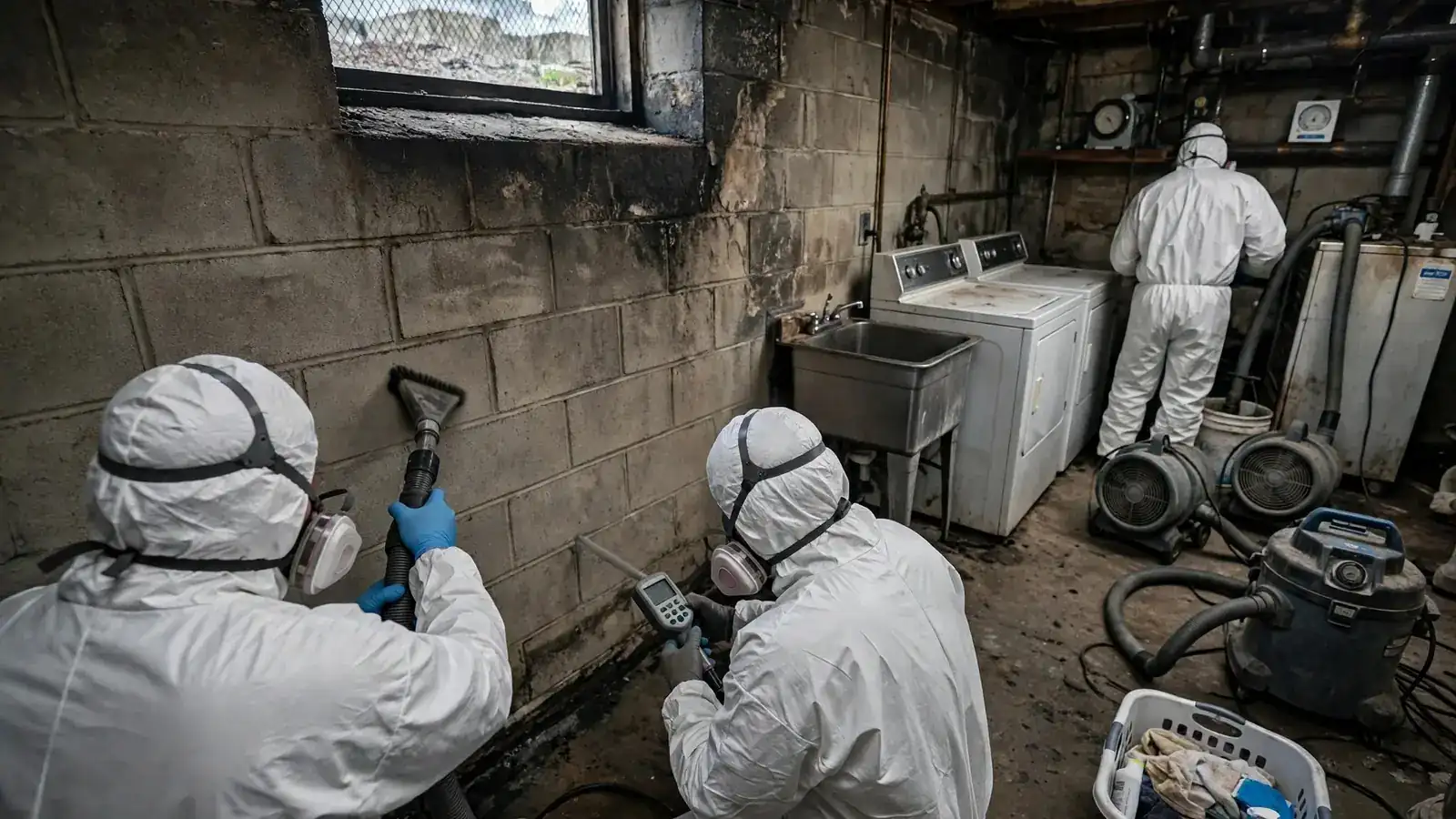
A good cleanup starts with tests. Technicians check whether the residue is dry and powdery or greasy, and how each surface reacts to dry sponges and cleaners. Wiping the wrong residue with water can smear it deeper into paint and plaster.
S700 asks for this kind of inspection before work begins [2]. Ask the contractor what they found and which method they plan for each room.
Cottages, Tudors and colonials
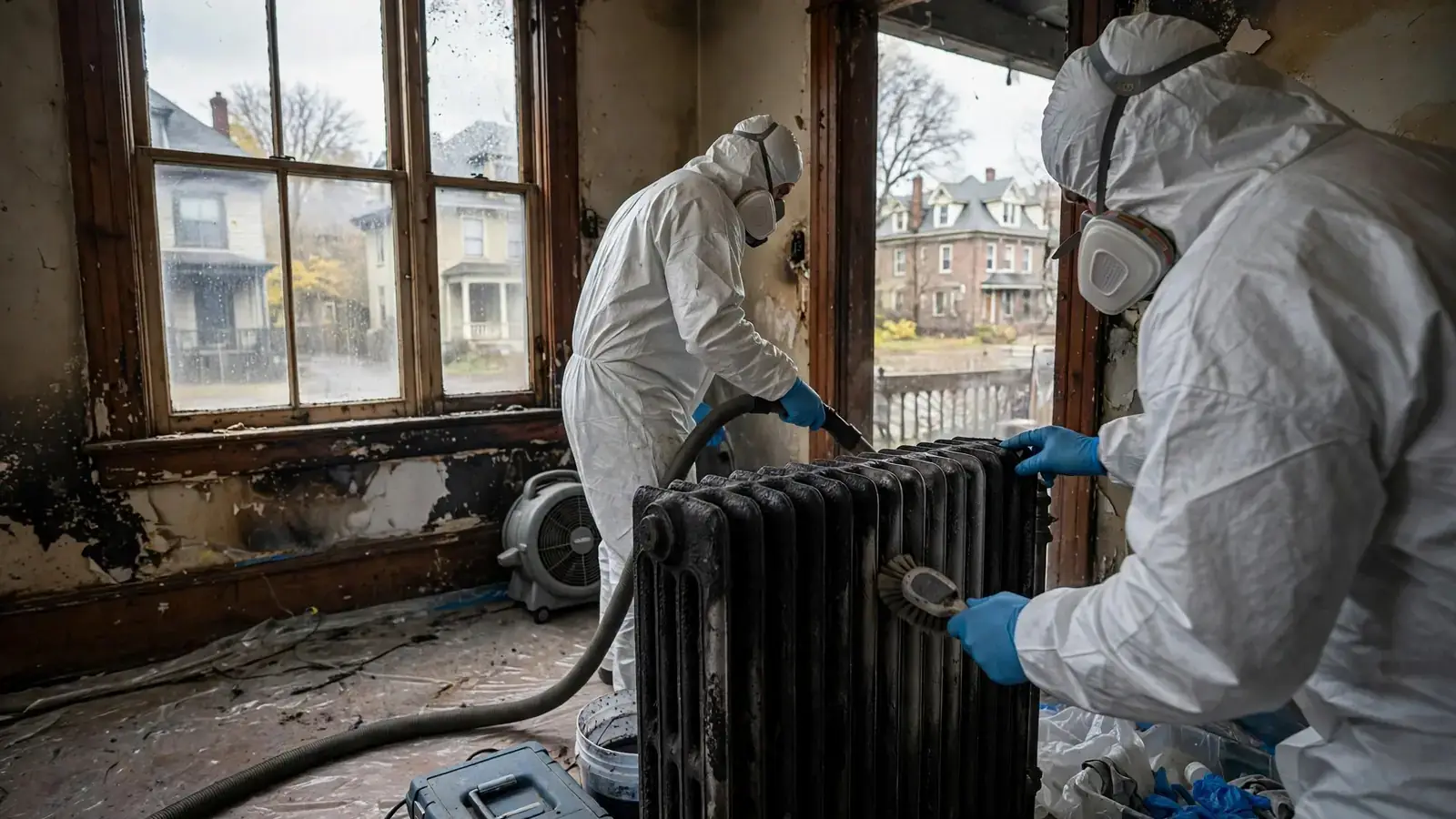
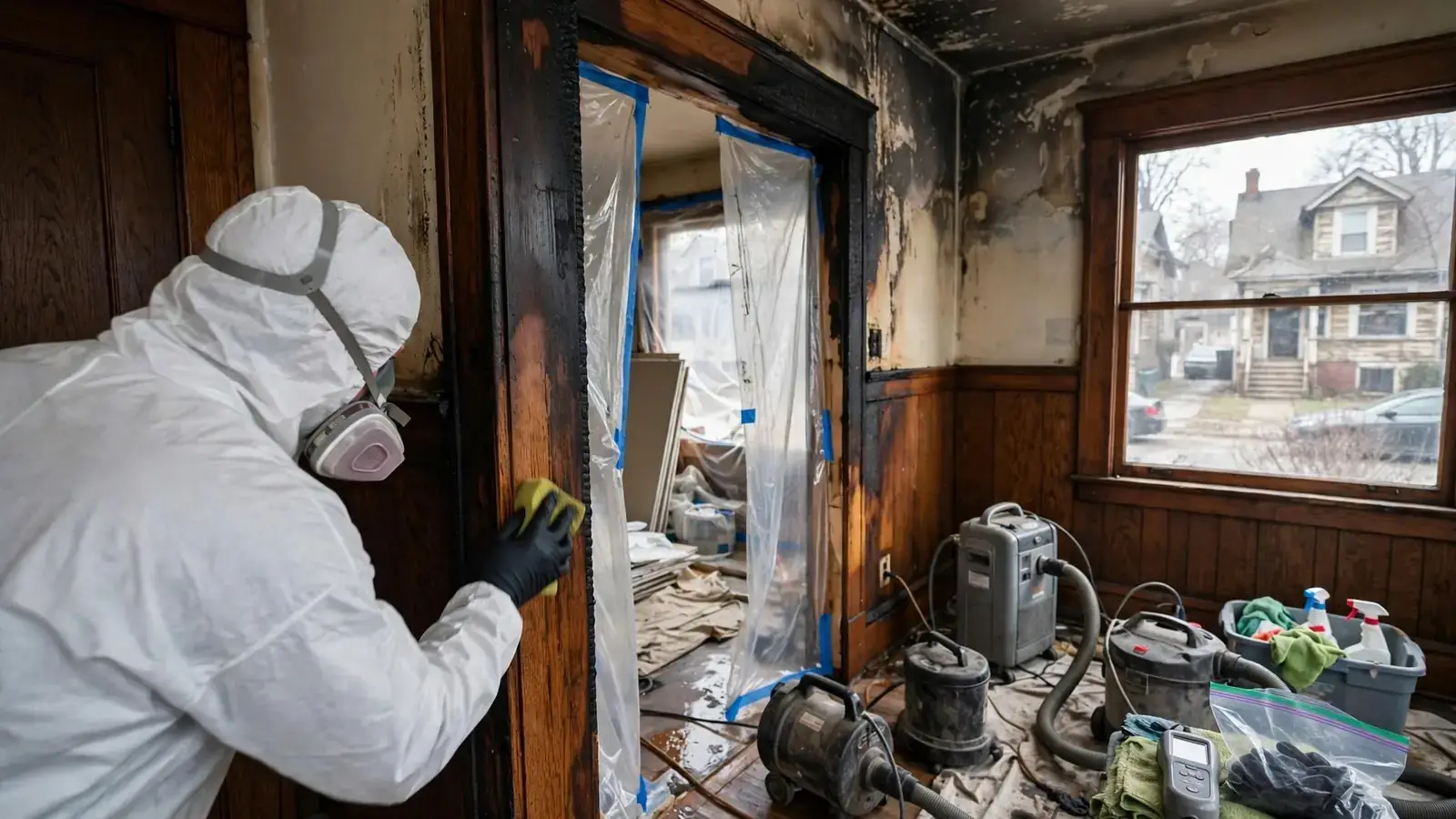
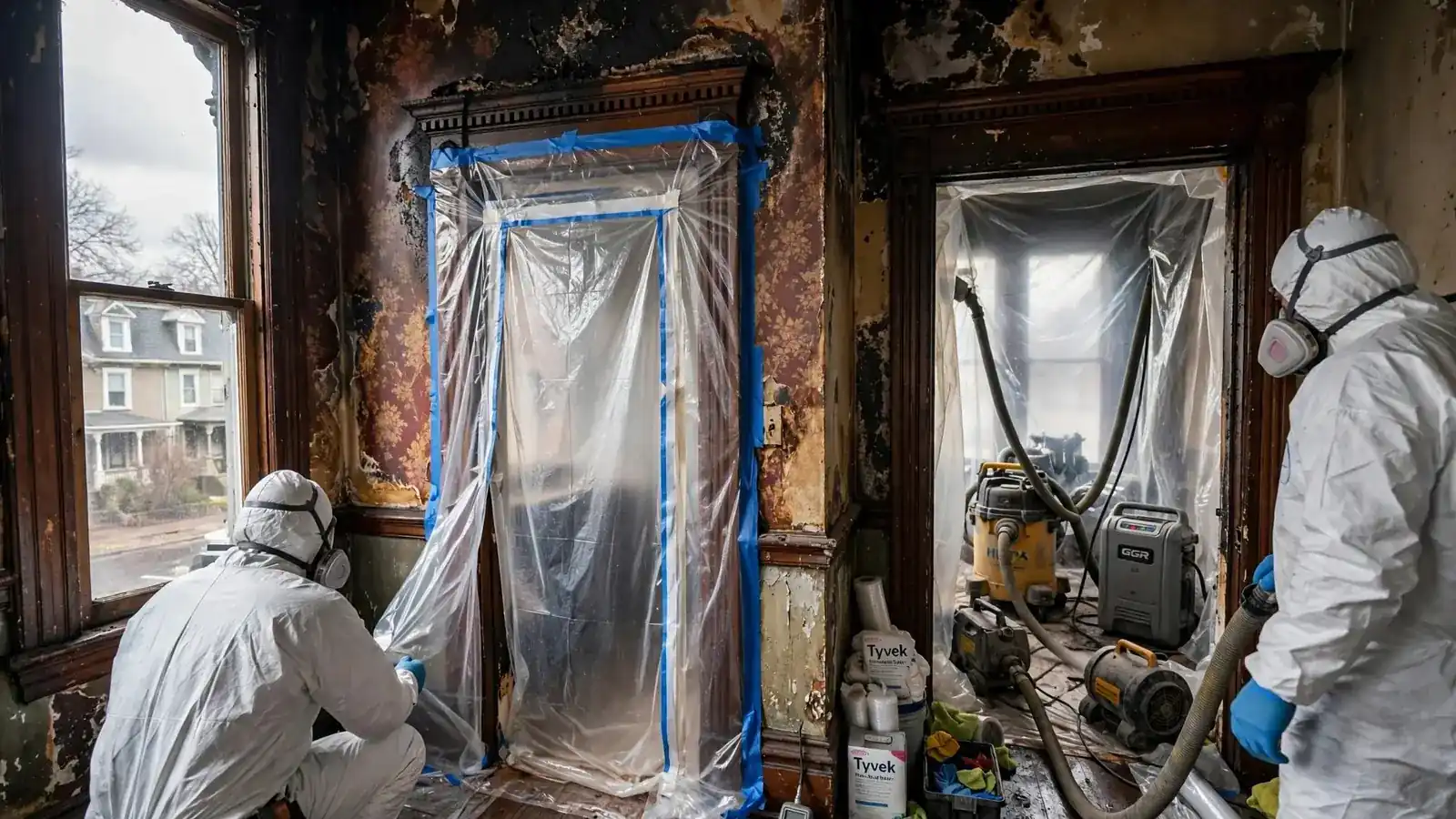
Older homes in Linden Hills often have plaster walls, coved ceilings and stained wood trim. Plaster takes cleaning well, and dry soot sponges lift a lot of residue before any liquid touches it. Stained woodwork is cleaned with gentle products so the finish is not stripped.
Painted trim and walls in these houses may have lead in older layers [3]. Cleaning does not usually disturb it, but if paint is flaking or must be sanded, the contractor should use lead-safe methods and contain the dust.
Open-plan rebuilds near the lake
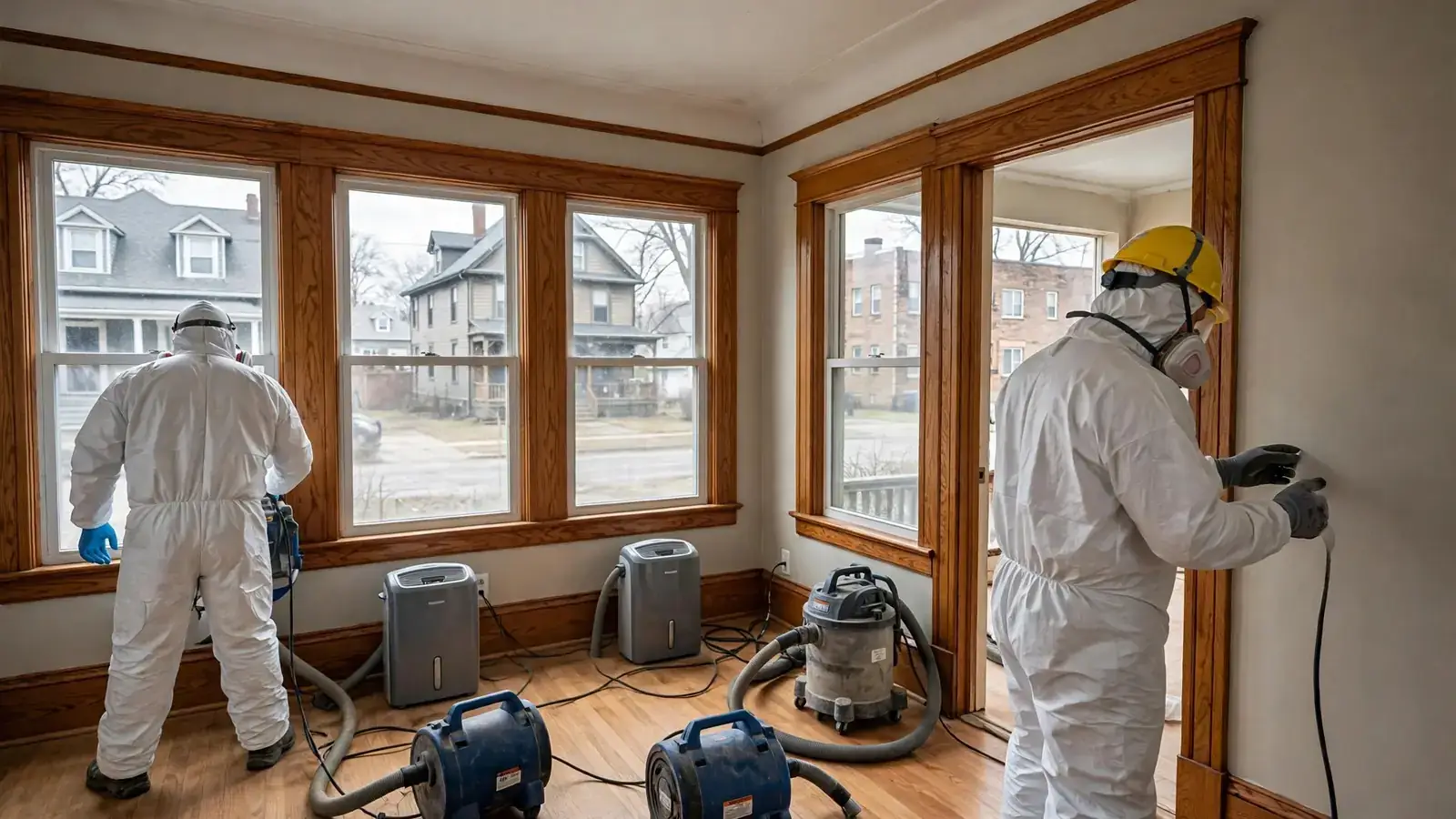
Larger new houses have drywall, painted ceilings that reach high and plenty of glass. Smoke from a kitchen fire travels the length of an open floor. Cleaning means staging or lifts for high ceilings, and careful work on large windows and modern fixtures.
Drywall paper absorbs more residue than plaster. Lightly affected walls can be cleaned and sealed. Heavily stained sections near the fire may be cut out and replaced.
The order of a smoke cleanup in Linden Hills
A typical sequence once the house is safe to enter.
- 1
Inspect and test each room
Residue type and surface are noted before cleaning starts [2].
- 2
Protect floors and pack contents
Belongings are moved, cleaned or listed for the claim.
- 3
Clean from the top down
Ceilings first, then walls, trim, floors and fixtures.
- 4
Clean the heating system and deodorize
Ducts, vents and filters, then odor treatment.
Furnaces, ducts and winter cleanup
Forced-air furnaces pull smoke into return ducts and push it to every room. If the system ran during or after the fire, expect residue throughout. Ducts and the furnace cabinet are cleaned, and the filter replaced, before the system runs again.
In winter, the furnace may need to come back on quickly to protect pipes. The contractor can often clean the system early in the job so heat can be restored while other rooms are still being worked on. The Twin Cities weather office forecast helps plan around cold snaps [5].
Contents, art and lake-house heirlooms
Linden Hills households often have older furniture, books, art and family pieces. Smoke residue on these should not be scrubbed at home. A contractor can pack them out, clean them in a controlled space and bring them back once the house is done.
Photograph items before they leave and keep the inventory list. The Minnesota Department of Commerce suggests detailed records of everything affected [4].
Surfaces that often need extra care in Linden Hills
Mention any of these on the call.
- Stained oak or fir trimGentle cleaning keeps the original finish.
- Plaster ceilings with covesDry sponging first to avoid smearing.
- Large windows in newer homesResidue streaks without the right method.
- Built-in bookcasesContents and shelves both need cleaning.
Permits and the Minneapolis inspection process
Cleaning itself does not need a permit, but repairs often do. Replacing burned framing, rewiring or replacing a furnace in Minneapolis goes through the city's licenses, permits and inspections office [6]. Inspections may be required before walls are closed.
For residential repair work, Minnesota's Department of Labor and Industry issues residential contractor licences, and you can check a company's status on its website [7].
When cleaning is not enough
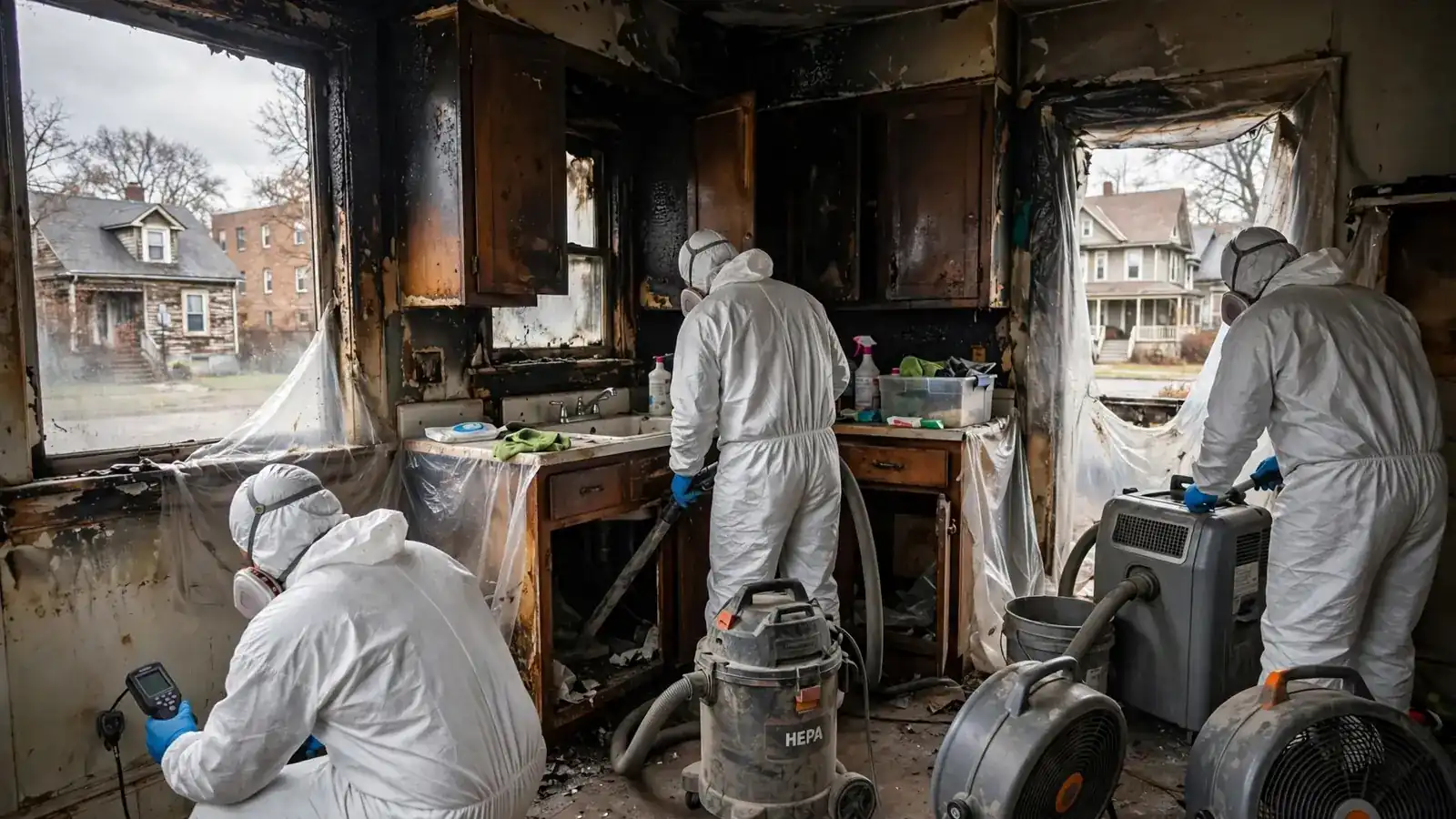
Some materials near the fire will be too damaged to clean. Charred framing, melted fixtures and heavily stained insulation are removed. The cleanup contractor marks these for the repair stage and for the claim.
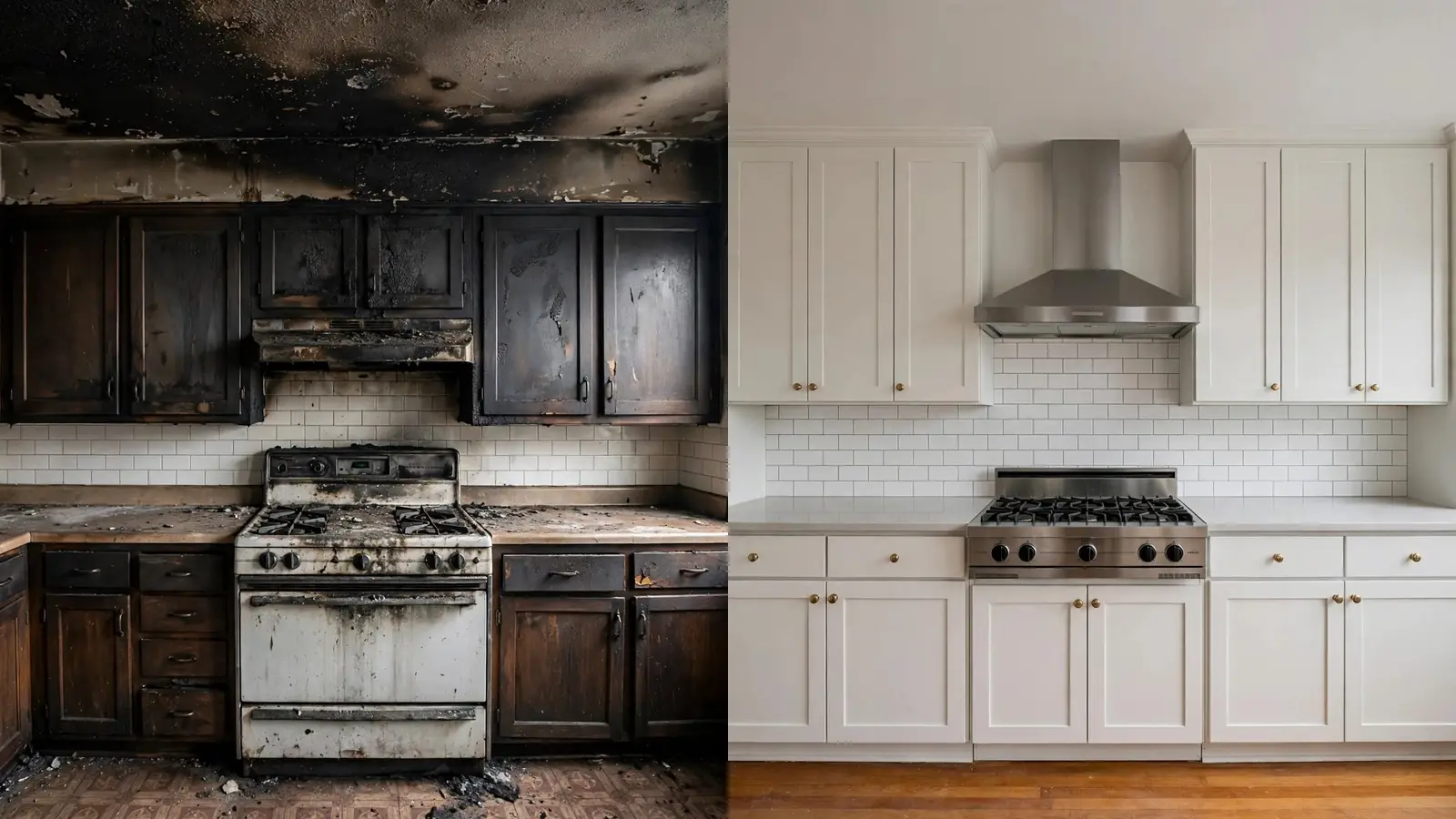
Cooking is the most common starting point for house fires in the United States [8], and a kitchen fire usually means cabinets and the ceiling above the range need the most work. See our guide on soot on walls and ceilings for what to expect.
FAQ
Smoke Damage Cleanup in Linden Hills: questions
Can smoke damage in my Linden Hills house be cleaned without repainting?
Light residue often cleans off well, especially on plaster. Heavier staining usually needs sealing and paint after cleaning.
Do I need a permit for smoke cleanup in Minneapolis?
Not for cleaning alone. Structural, electrical, plumbing and heating repairs do need city permits.
Will the cleanup crew handle my old painted trim safely?
Ask them. In homes painted before 1978, any sanding or scraping should follow lead-safe practice.
Sources and citations
- [1]U.S. Fire Administration: After a fire
- [2]IICRC: S700 Standard for Professional Fire and Smoke Damage Restoration
- [3]U.S. EPA: Protect your family from sources of lead
- [4]Minnesota Department of Commerce: Disaster Information Center
- [5]National Weather Service: Twin Cities forecast office
- [6]City of Minneapolis: Licenses, permits and inspections
- [7]Minnesota Department of Labor and Industry
- [8]NFPA: Home structure fires
- [9]Wikipedia: Linden Hills, Minneapolis