Key facts: Board-Up and Tarping in Camden
- Camden takes in the upper half of north Minneapolis, with the Mississippi River along its eastern edge [5].
- The U.S. Fire Administration warns that roofs and floors can be weakened by fire, so no one should climb onto a burned roof until it is checked [1].
- Minnesota law requires working carbon monoxide alarms in homes, which matters when temporary heaters are used in a damaged house [4].
Camden houses and what a fire opens up
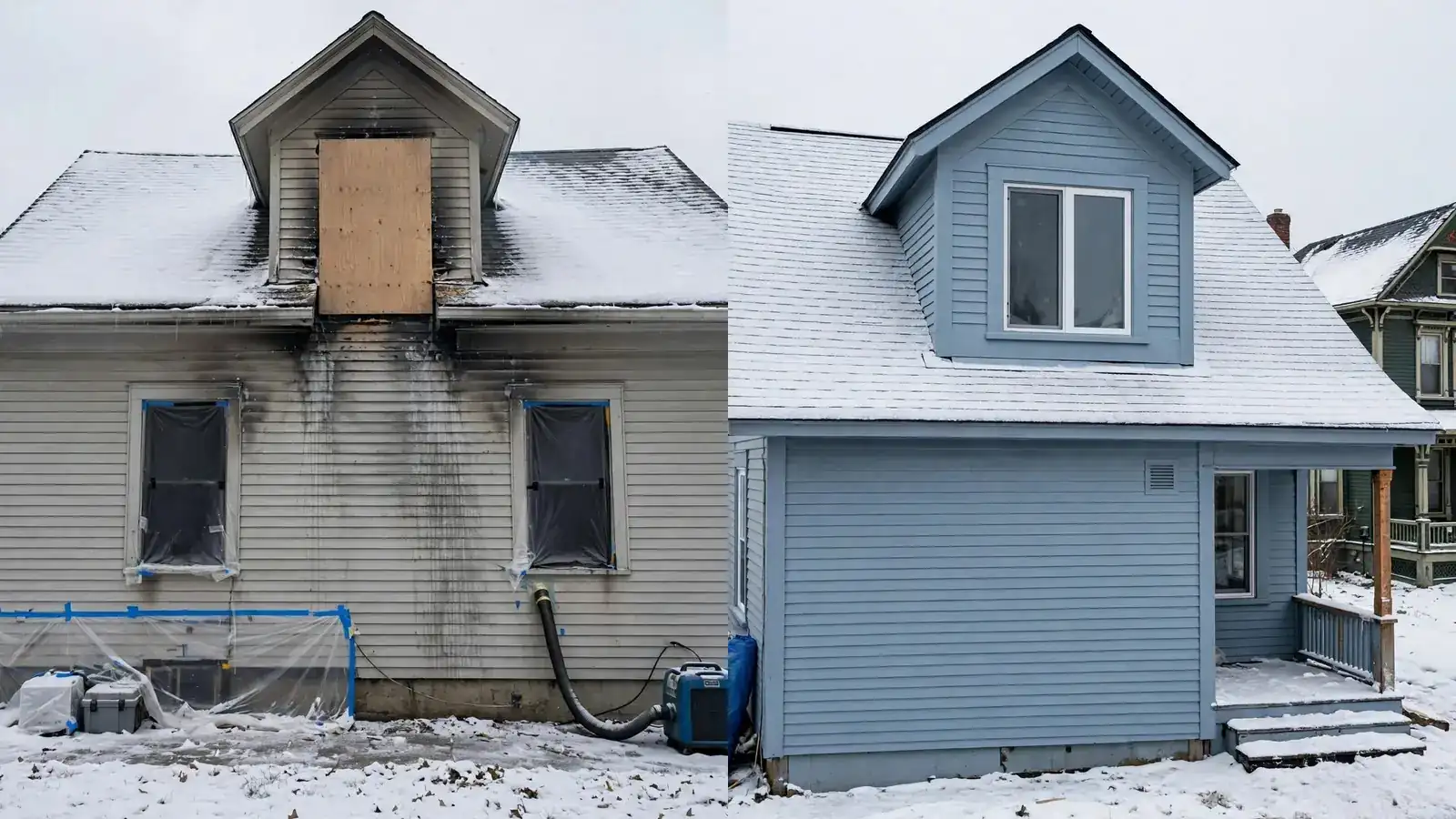
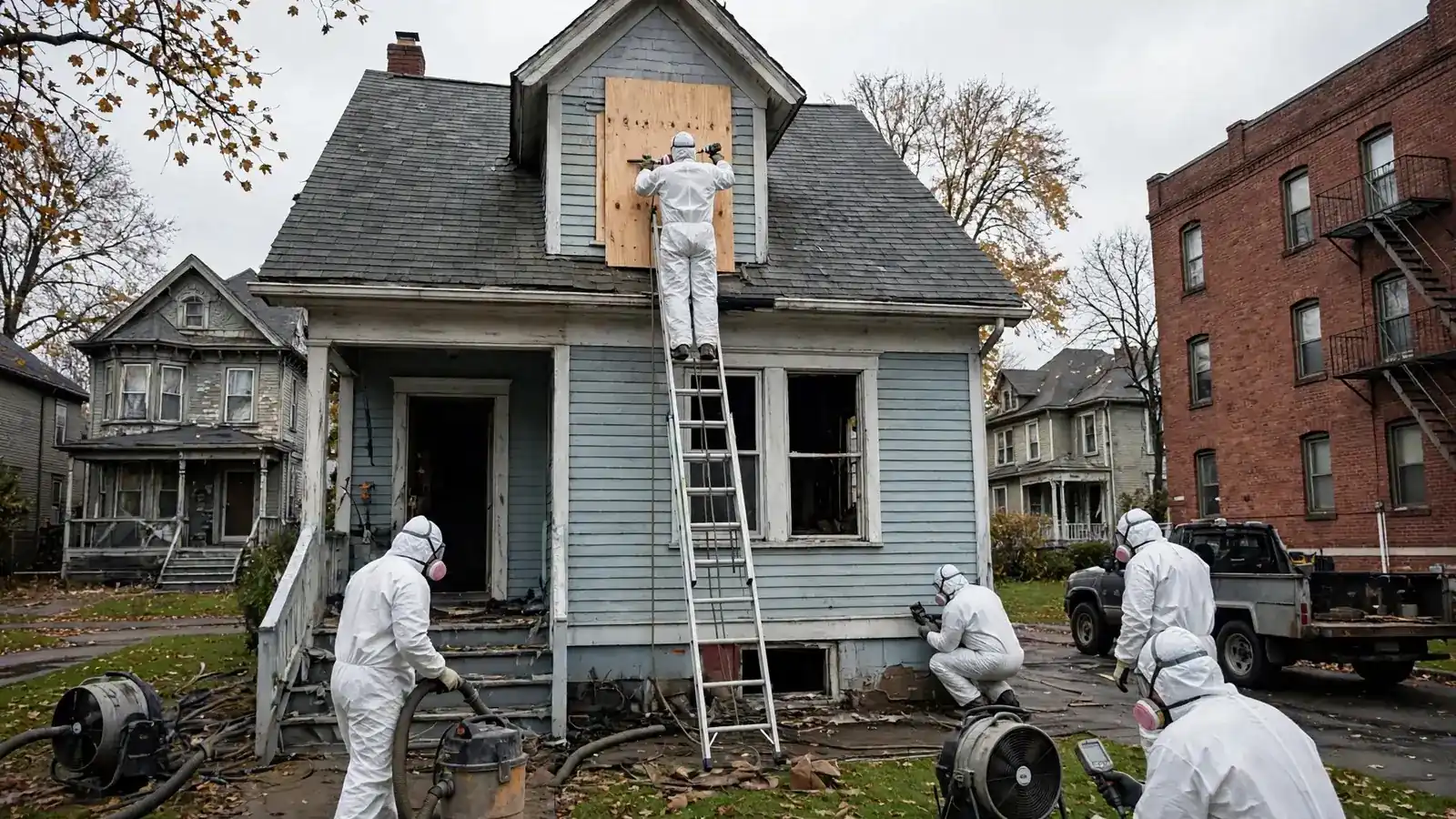
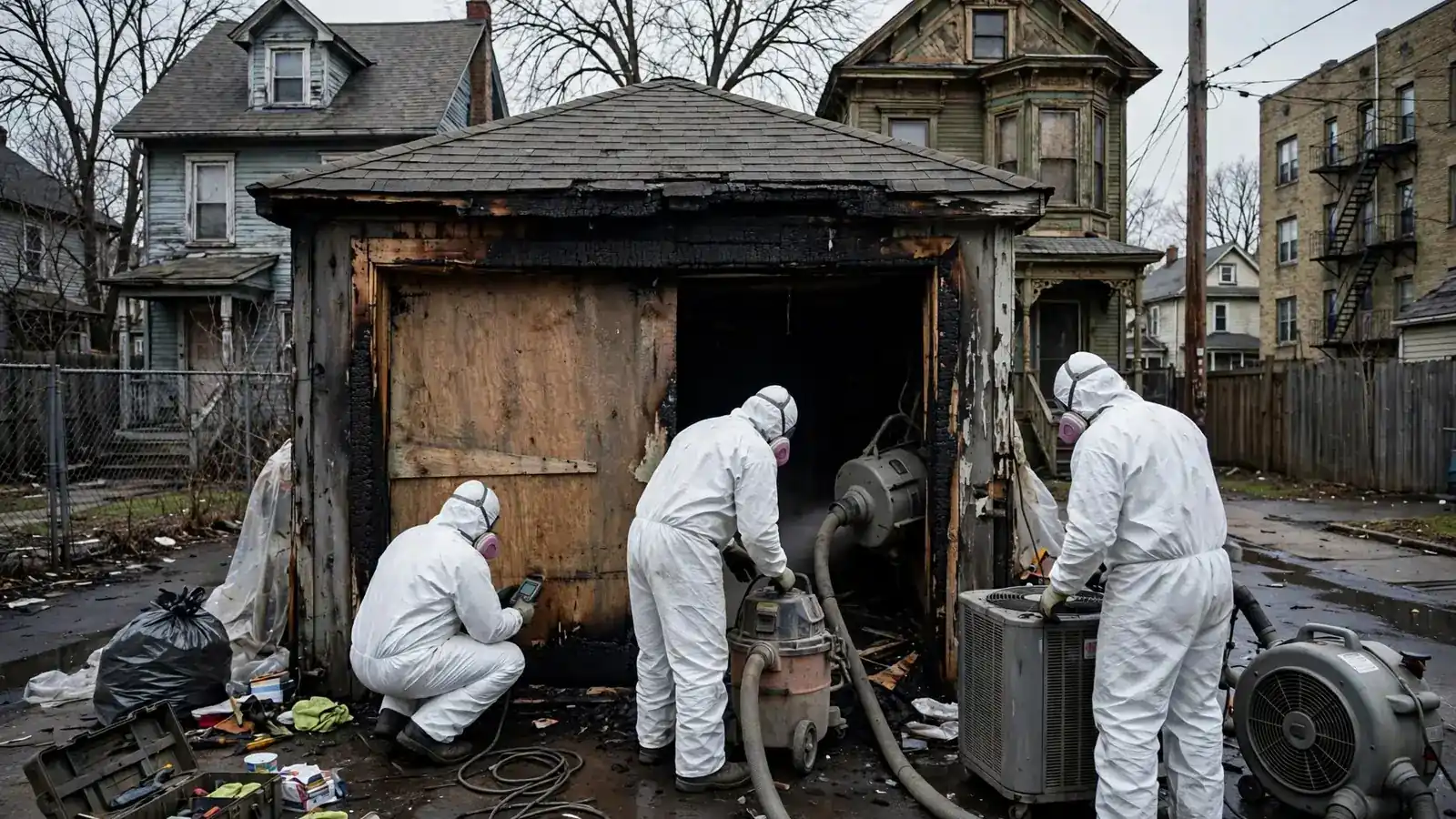
Most of Camden's seven neighborhoods are filled with modest one-and-a-half and two-story houses, many from the early and middle twentieth century, set on narrow lots with detached garages on the alley [5]. A fire usually breaks windows, burns through a door and sometimes opens a hole in the roof or the dormer of a half-story bedroom. Those openings are what let weather and people in.
Plywood fitted to each window and door frame and a tarp over any roof opening close the house until it can be assessed. On these smaller houses one crew can often secure everything in a single visit.
Winter changes the urgency
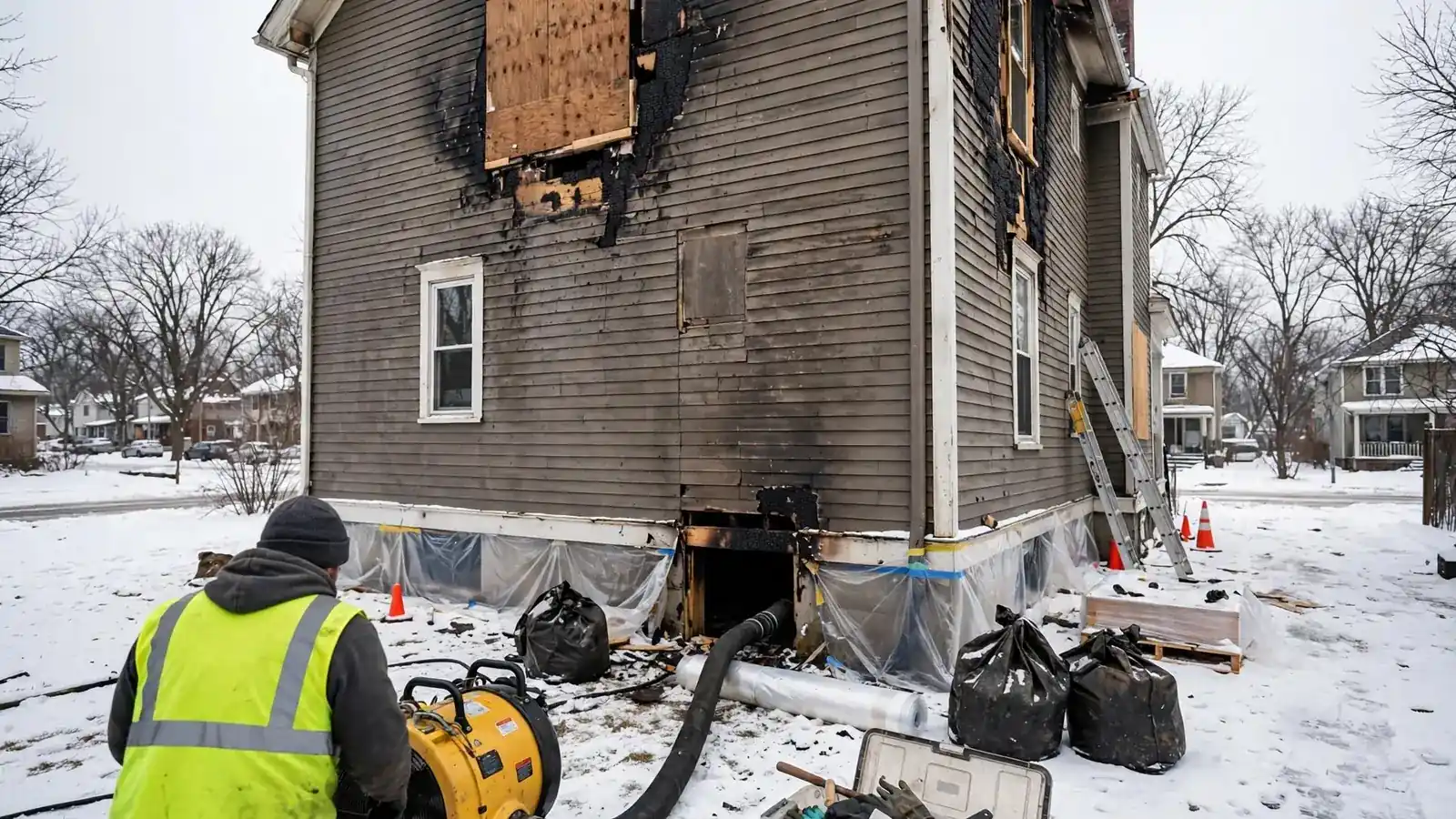
In a Minneapolis winter, a house with broken windows and the furnace shut off loses its heat fast. Water lines in outside walls and in the basement can freeze and split, adding a second kind of damage to the fire. Snow can drift in through open windows and melt into floors and walls when anyone warms the house again.
If the fire happens in cold weather, closing the openings is only half the job. The water may need to be shut off and lines drained, or temporary heat provided safely, until the house is repaired.
Securing a Camden house after a fire
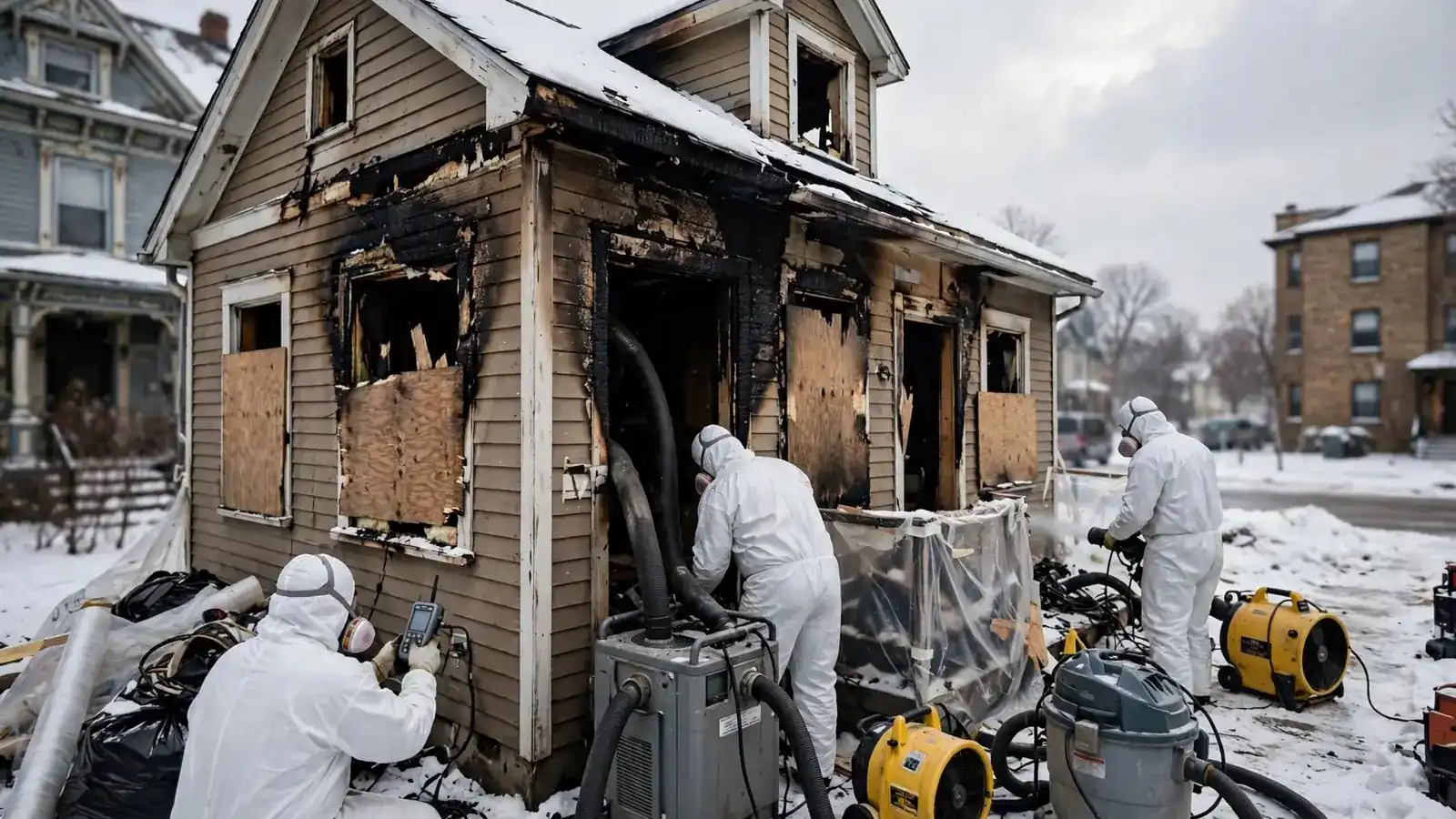
A typical order for a north Minneapolis home.
- 1
Wait for the fire department to release the property
Nobody goes in or onto the roof until the house is released and utilities are checked.
- 2
Photograph every side, the garage and the alley
Pictures before anything is covered support your claim.
- 3
Board windows and doors to the frames
Panels go over every broken opening, including basement windows.
- 4
Cover the roof and protect plumbing from freezing
Tarp any roof opening, then drain lines or arrange safe heat in cold weather.
Basement windows and walkout doors
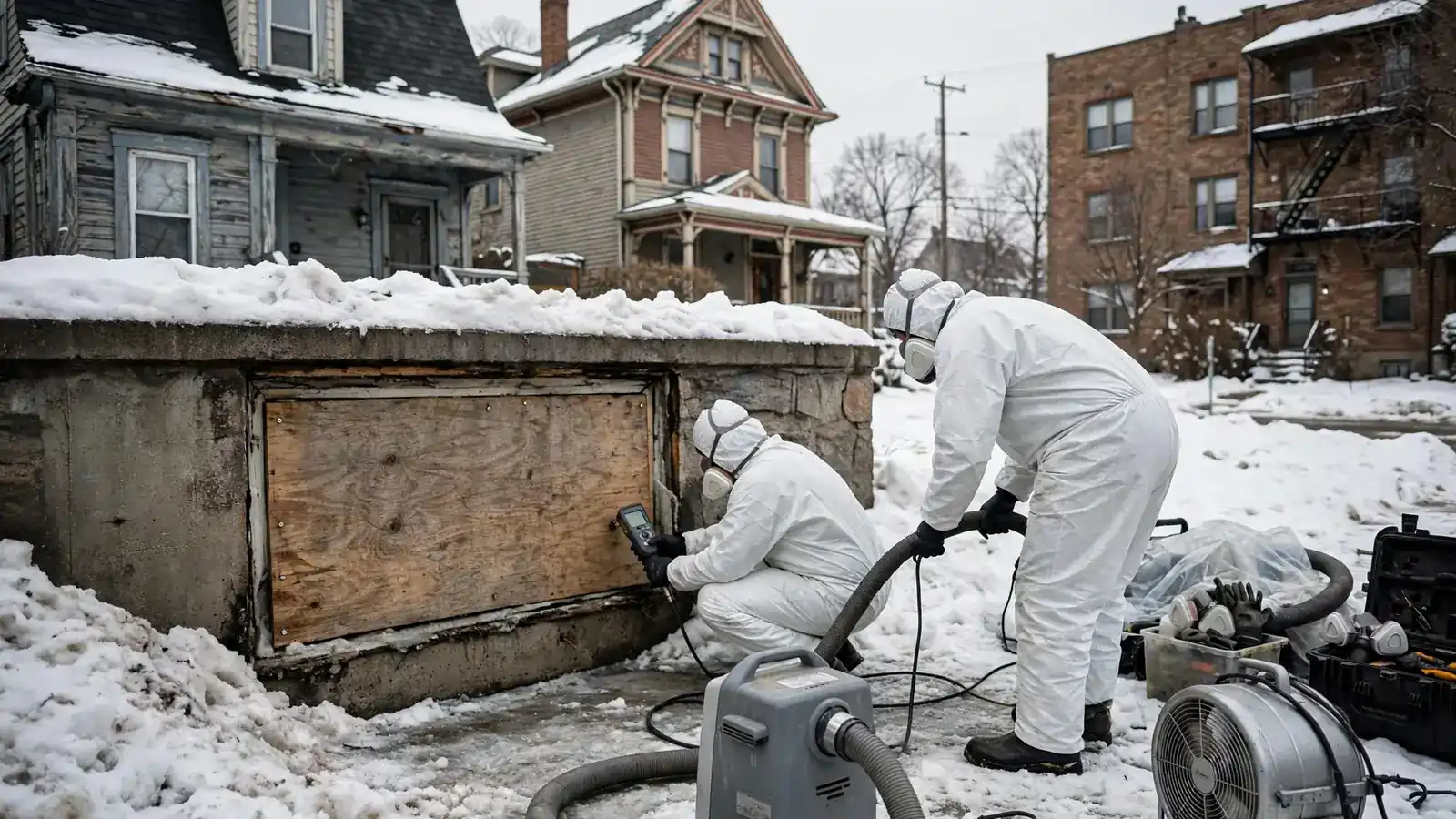
Almost every Camden house has a basement, often with the furnace, water heater and laundry. Small basement windows can crack from heat or be broken by firefighters venting smoke. They are easy to forget, but an open basement window lets cold air reach the pipes and lets animals and snow in.
Covering basement windows with fitted panels and securing any exterior basement door are part of a complete board-up here.
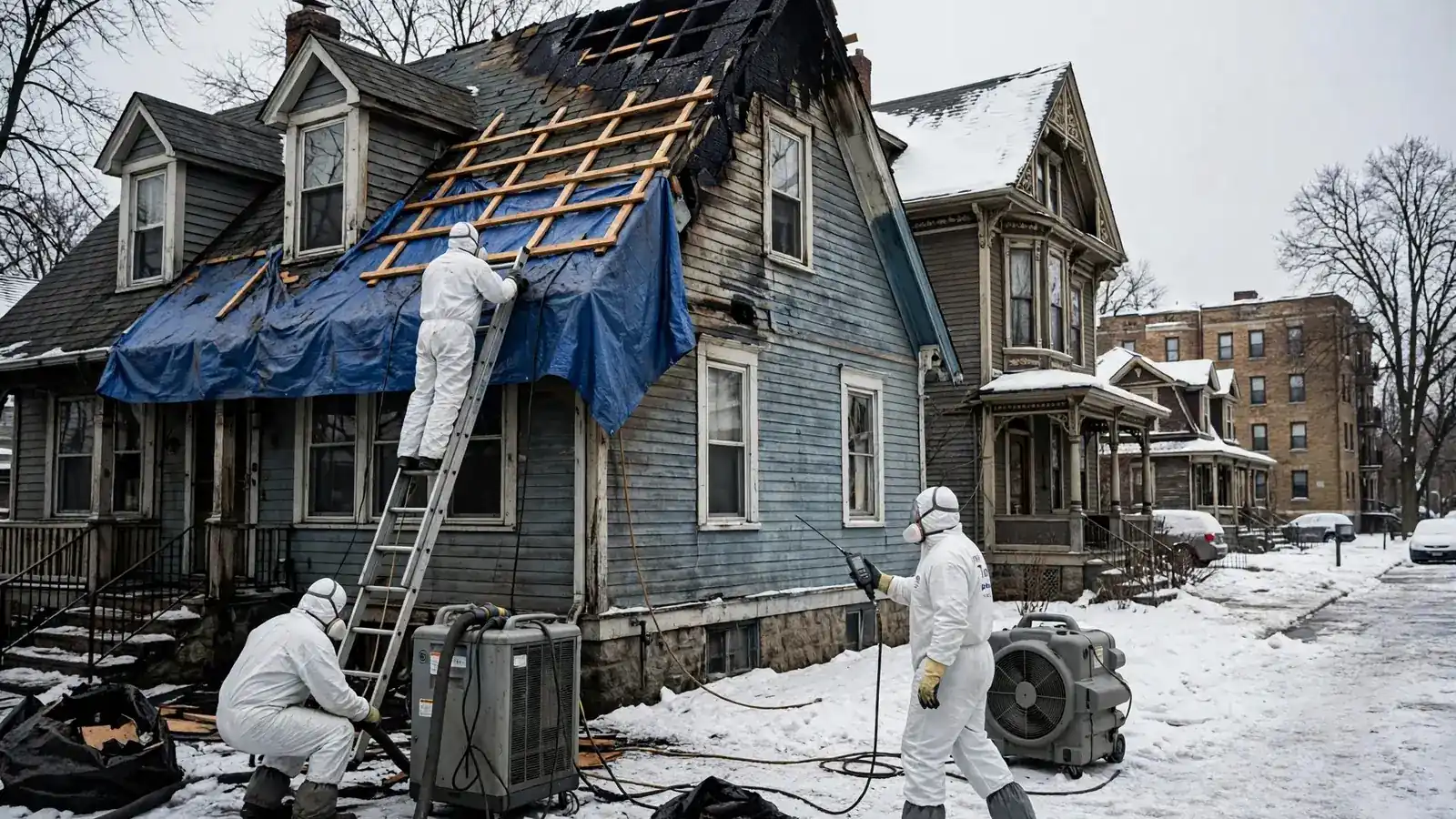
Snow load and tarps on north side roofs
Many Camden houses have steep roofs over a half-story, with dormers. A tarp on a steep roof sheds snow better than one on a flat section, but heavy wet snow can still tear it loose or pond water where the roof is burned. Battens fixed to sound framing and a tarp that runs over the ridge hold up best. The National Weather Service Twin Cities office posts winter storm forecasts that help in planning [2].
After a heavy snowfall, look at the tarp from the ground and photograph it. Do not climb onto a burned roof to clear snow.
Things to mention on your call
These help the crew prepare for a Camden house.
- Is the heat off?In cold weather, pipes and the water heater may need protecting.
- Basement windowsHow many are broken and whether there is a walkout door.
- Detached garage on the alleyWhether it burned or is open.
- Roof and dormersWhere the roof is open and how steep it is.
Detached garages on the alley
Detached garages along Camden alleys are a common place for fires to start, with stored fuel, tools and vehicles inside. A garage fire can spread heat to the back of the house and to neighbors' garages. If the garage is damaged, the overhead door and any side door need covering, and the house wall facing it may need boarding too.
Photograph vehicles before moving them; auto damage is usually handled by a separate policy.
Temporary heat and carbon monoxide
If temporary heaters are used to keep a damaged house above freezing, they need to be the right type and set up safely. Fuel-burning heaters indoors can produce carbon monoxide, and Minnesota requires carbon monoxide alarms in homes [4]. Electric heaters must only be used on circuits that have been checked after the fire.
Ask the contractor what heat source they recommend and how it will be monitored while the house is empty.
After the house is closed in
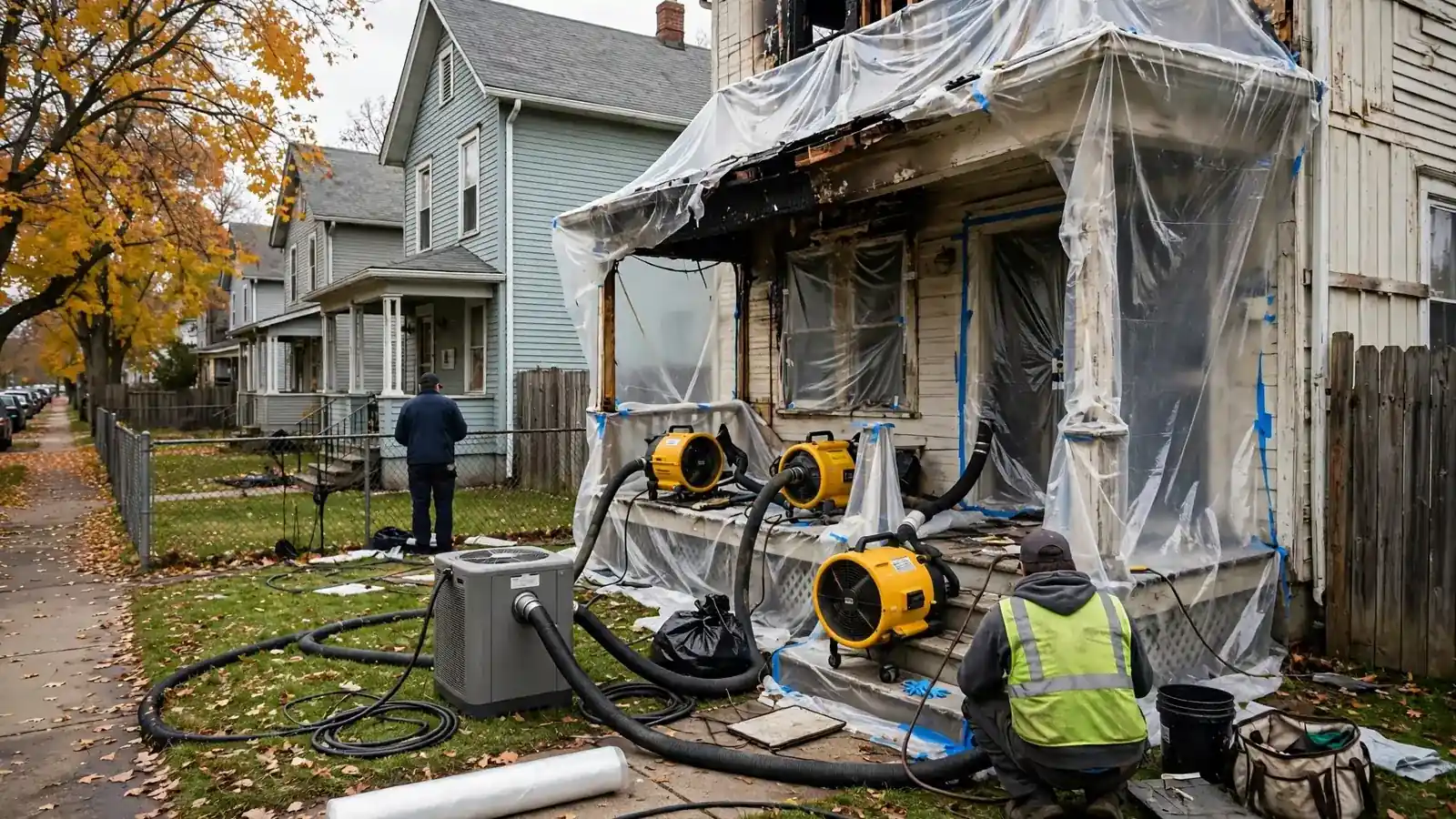
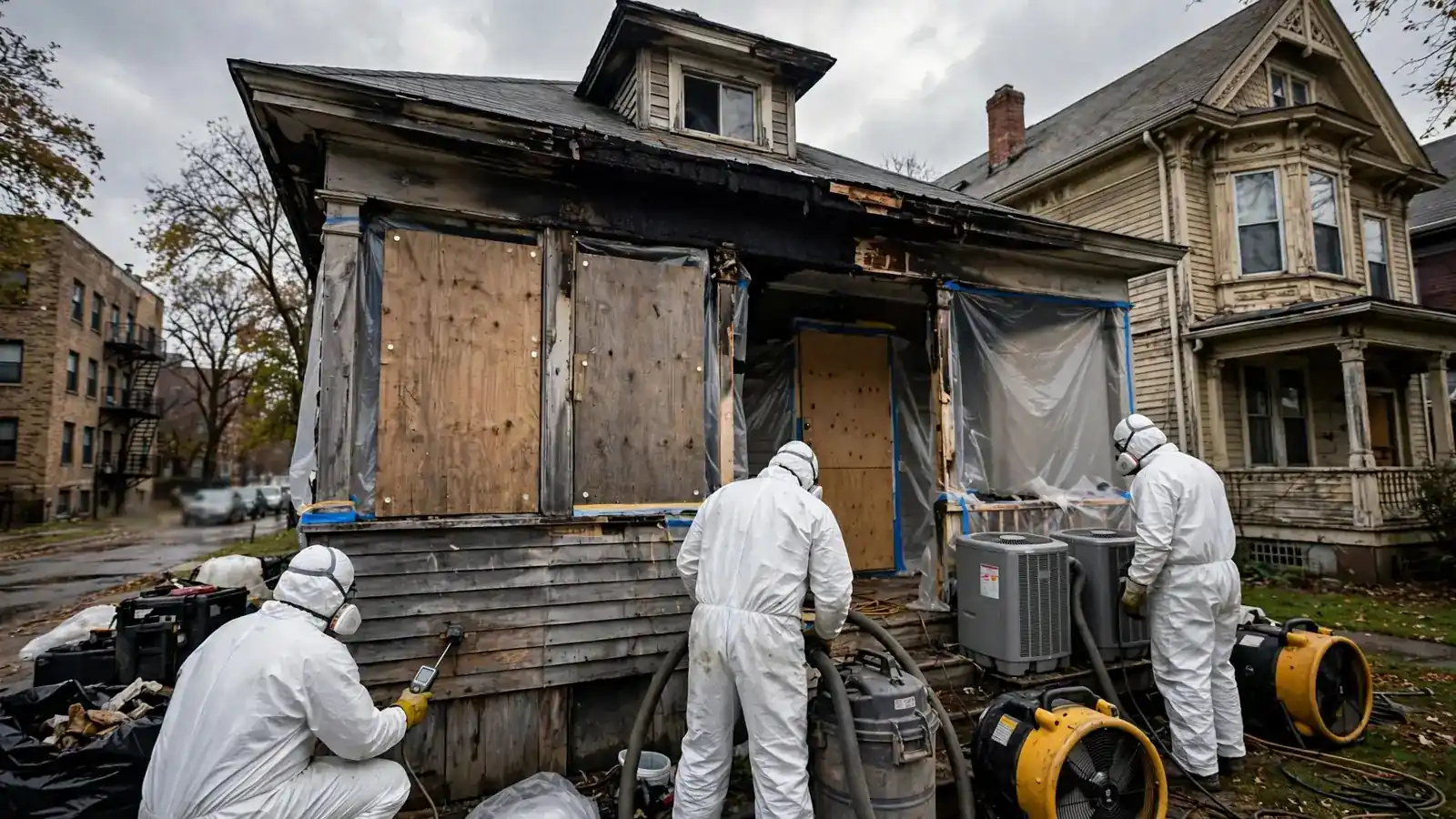
Once the house is secure, the contractor can assess smoke, soot and water throughout, often starting in the basement where firefighting water collects. Our page on water damage from firefighting covers that drying, and the Camden page explains the homes in this part of the city.
The Minnesota Department of Commerce runs a Disaster Information Center with guidance on insurance claims after a loss, including living expenses while you are out of the house [3].
FAQ
Board-Up and Tarping in Camden: questions
Do basement windows need to be boarded too?
Yes, if they are broken. Open basement windows let cold air reach pipes and let snow and animals in.
What if the fire happens in winter?
Besides boarding, the water may need to be shut off and lines drained, or safe temporary heat arranged, so pipes do not freeze.
Can I clear snow off the tarp myself?
Not from the roof. A burned roof may be weak. Check the tarp from the ground and call if it has shifted or torn.