Key facts: Firefighting Water Damage in Camden
- In a closed-up north Minneapolis house, the EPA's guidance to get wet materials dry within a day or two is what keeps mold from taking hold [1].
- The IICRC S500 standard describes professional water damage assessment, extraction and drying [2].
- The Minnesota Department of Health explains that ongoing moisture in homes can lead to mold growth [4].
Water finds the basement
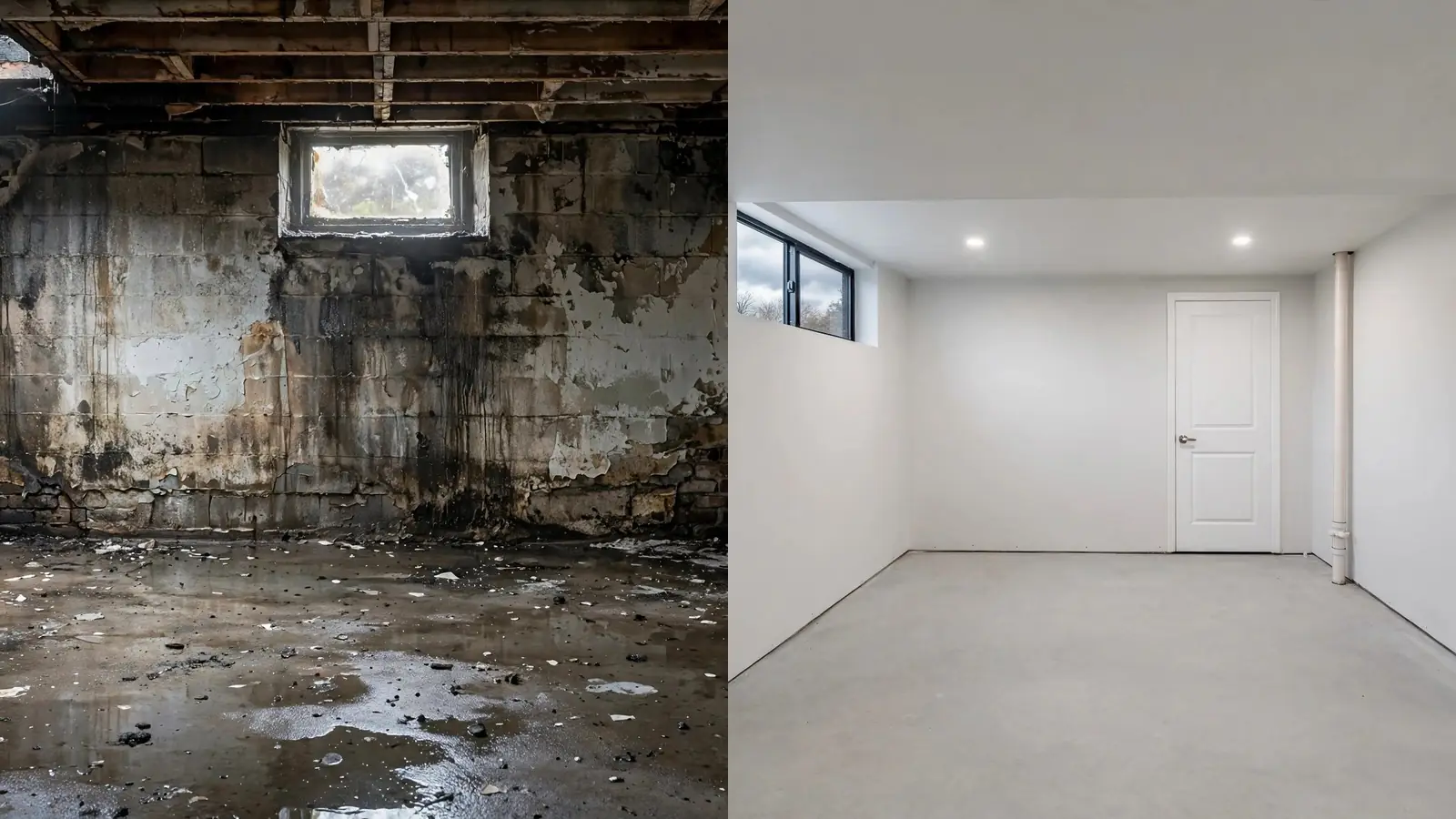
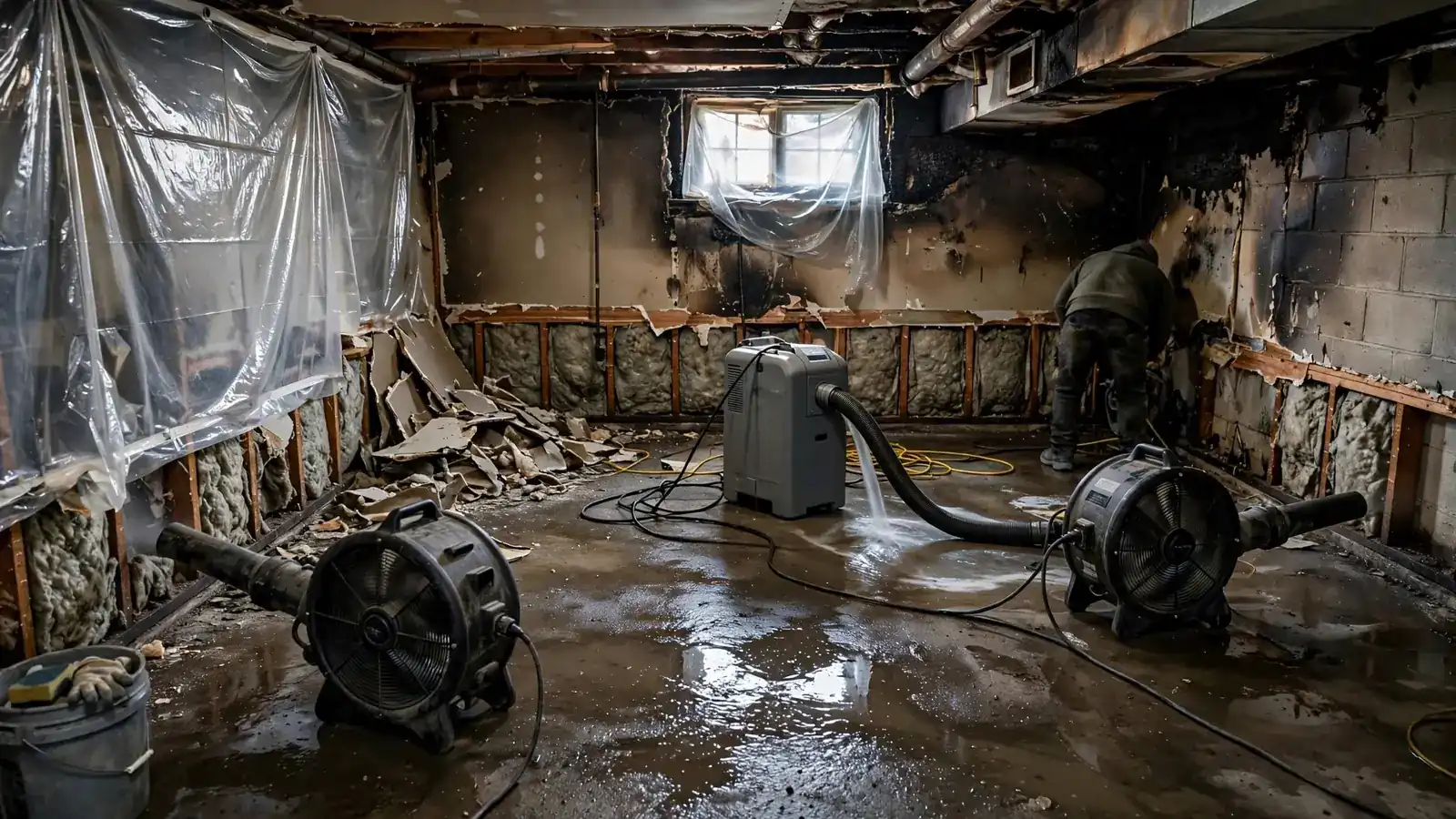
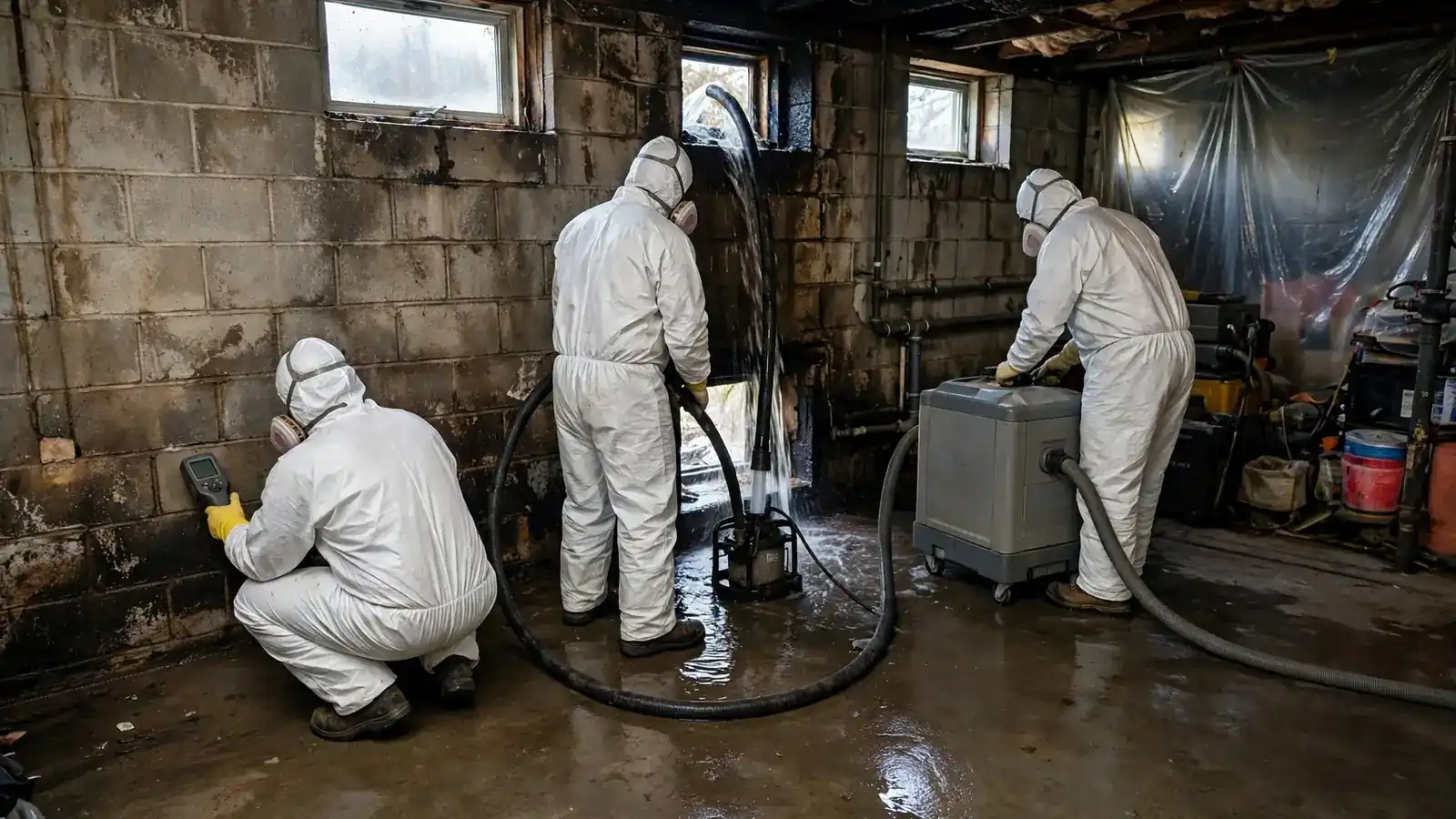
Firefighting water on the main floor or upstairs runs through floor gaps, down stairways and inside walls until it reaches the basement. Camden basements often hold the furnace, water heater, laundry and storage, all of which can be soaked. Standing water must be pumped out before anything else.
Electrical equipment in a wet basement should not be used until it has been checked.
Freezing risk in a damaged house
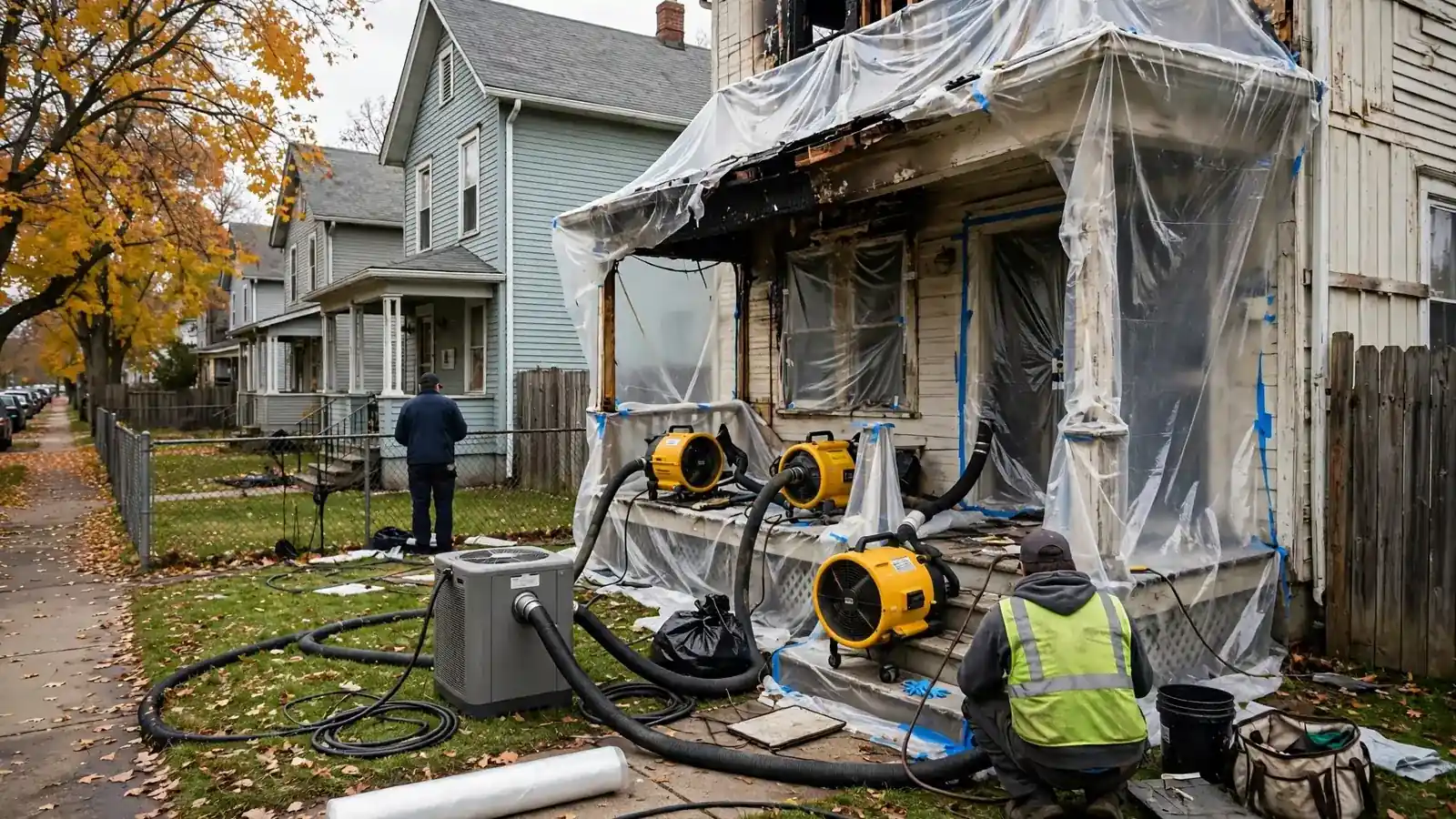
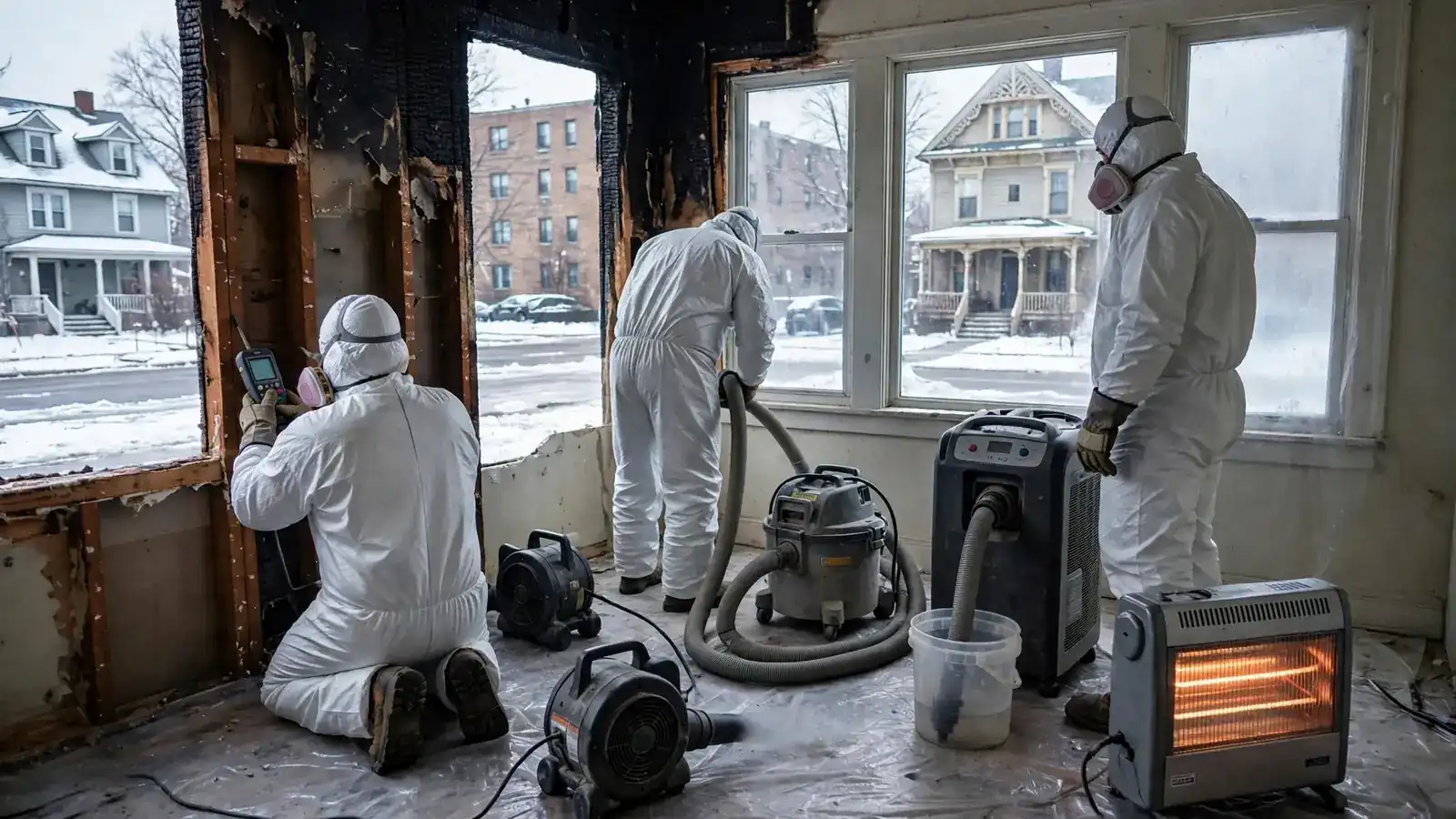
If the fire happens in winter and the heat is off, wet materials can freeze and pipes can burst. Ice in walls expands and damages them further. Temporary heat, used safely, or draining the plumbing may be needed while drying begins. The National Weather Service Twin Cities office posts cold-weather forecasts that help plan this [5].
Drying equipment works poorly in a cold house, so heat is often part of the plan.
Drying a Camden home after a fire
The usual order.
- 1
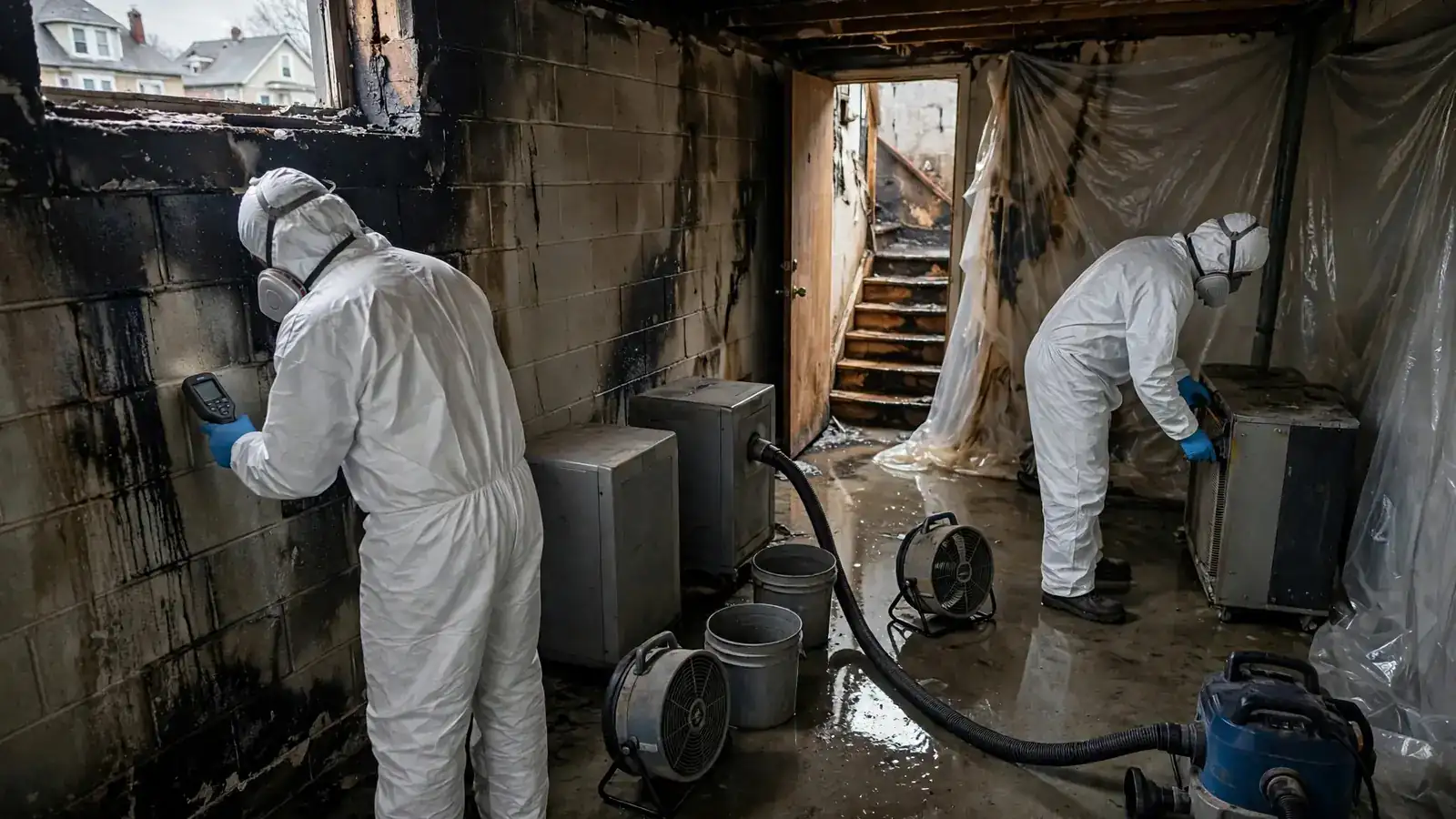
Pump the basement and extract water upstairs
Standing water is removed from every level.
- 2
Protect the house from freezing
Safe temporary heat or drained plumbing in cold weather.
- 3
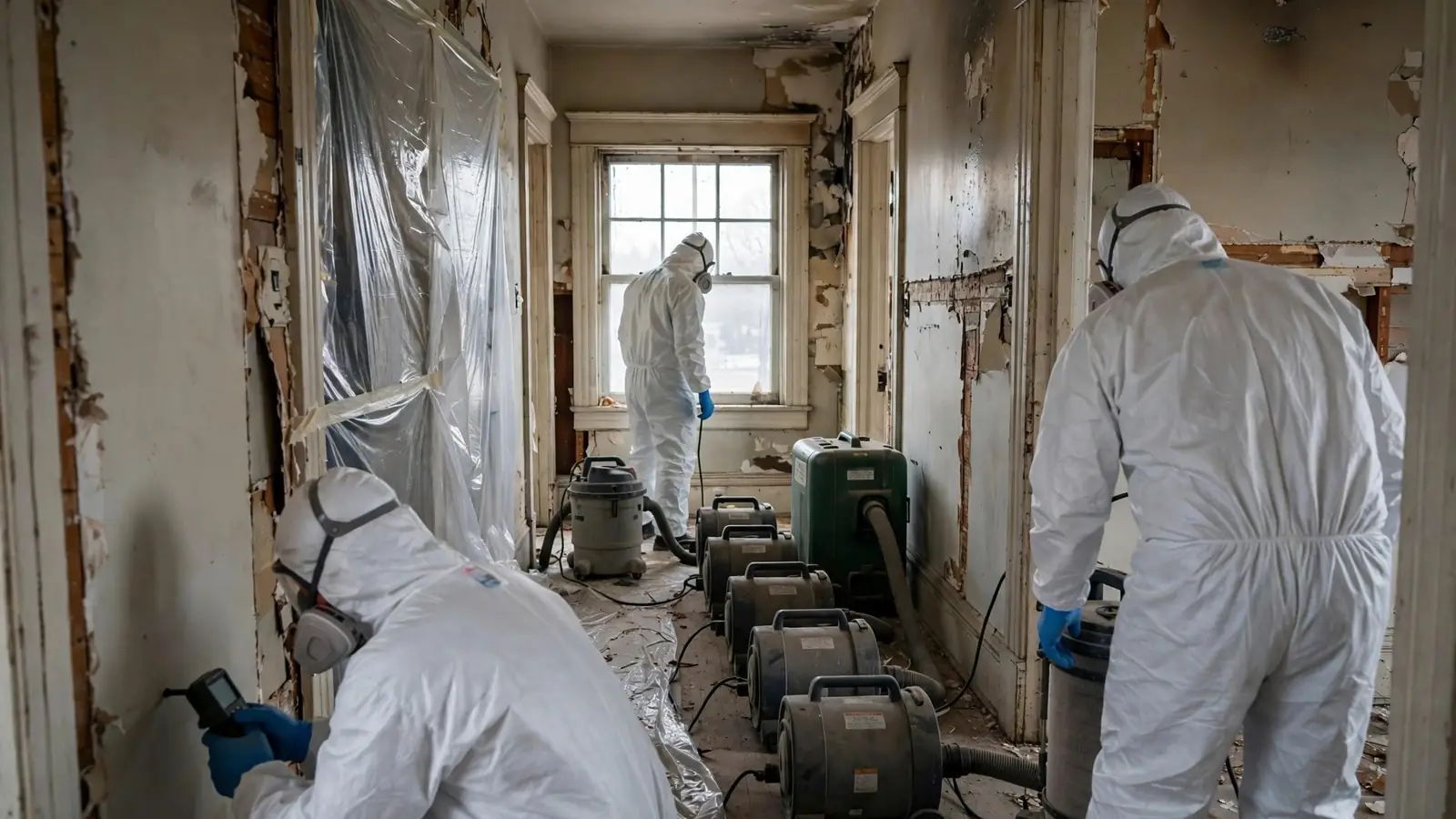
Map moisture in walls, floors and ceilings
Meters show how far water traveled.
- 4
Dry with dehumidifiers until readings are normal
Daily checks until materials return to normal.
Ceilings and plaster
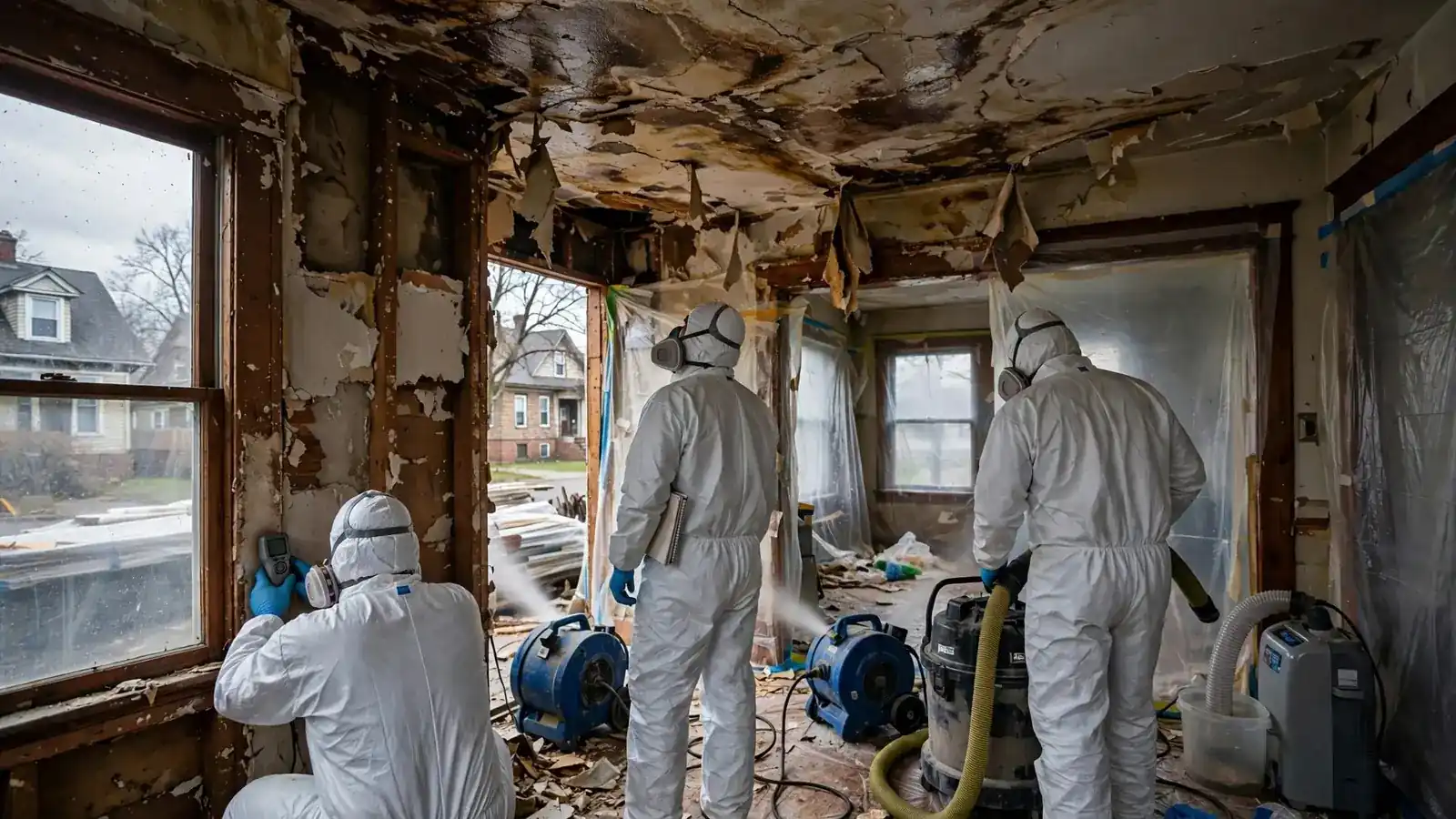
Water used upstairs soaks through floors into the ceilings below. Plaster can hold water and sag; drywall can collapse. Keep people out of rooms with bulging ceilings and tell the contractor right away. Some plaster can be dried in place; badly sagging ceilings come down for safety.
Insulation above ceilings and in walls soaks up water and is usually removed.
Basement finishes and storage
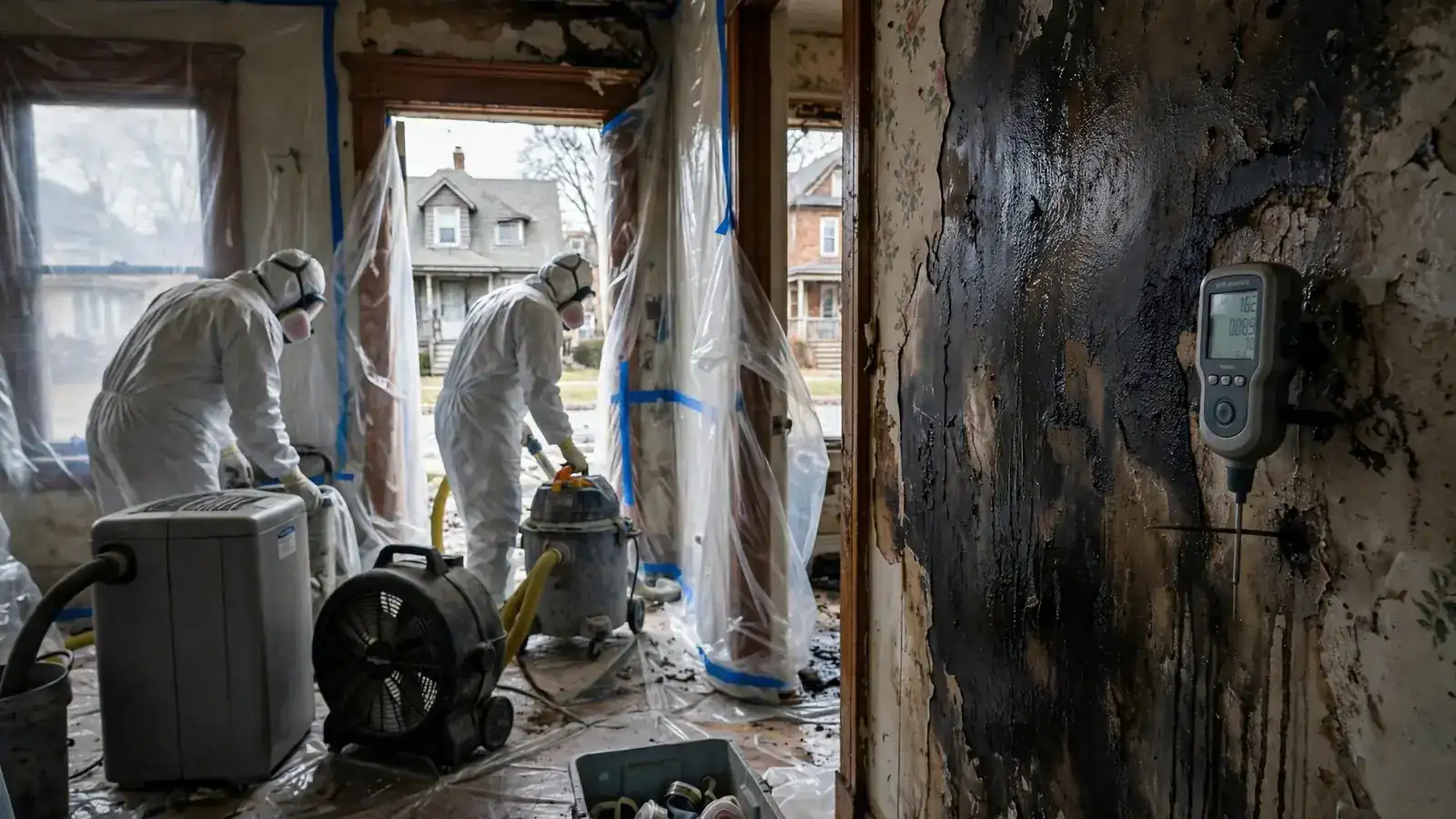
Finished basements with carpet, paneling or drywall soak up water quickly. Carpet pad is usually removed, and drywall may be cut above the water line to let the wall dry. Stored boxes and belongings need sorting; the U.S. Fire Administration notes unburned items can still be ruined by water [3].
Books and papers can be frozen to stop mold until they can be dried.
Signs water is still in a Camden house
Look for these.
- Damp basement walls or floorWater still present below.
- Sagging or stained ceilingsWater held above.
- Musty smellPossible mold.
- Frost or ice on walls in winterWet materials freezing.
Mold and drying deadlines
Furnace, water heater and laundry
If water reached the furnace, water heater or laundry appliances, they should be checked by a qualified technician before use. Wet ductwork may need cleaning or replacement.
Turning on wet equipment can be dangerous.
From drying to cleanup
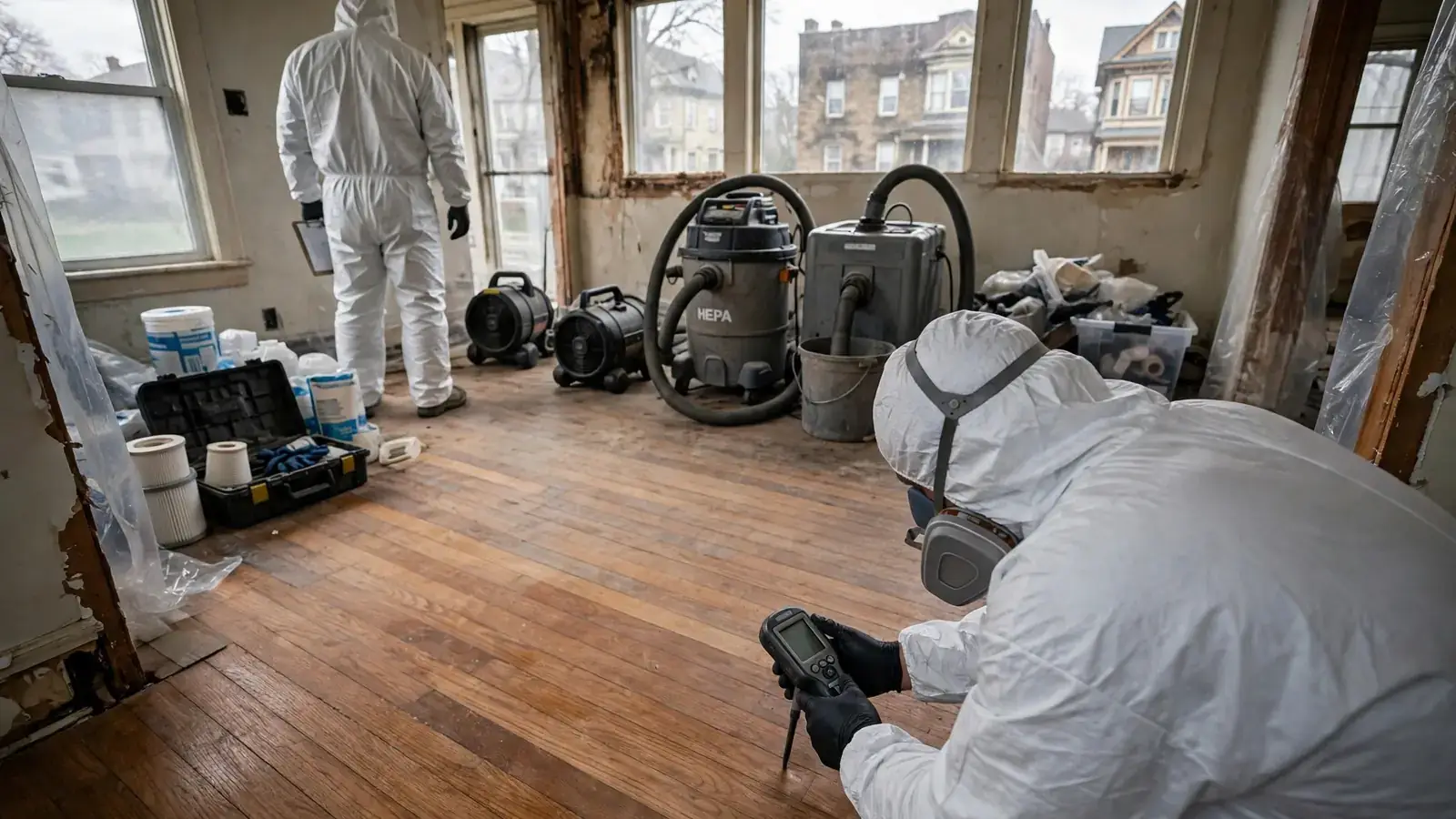
Once readings are normal, smoke damage cleanup and repairs can begin. The Minnesota Department of Commerce Disaster Information Center explains insurance guidance after a loss [6].
Keep photos of standing water and wet contents for your claim.
Walls and insulation on the main floor
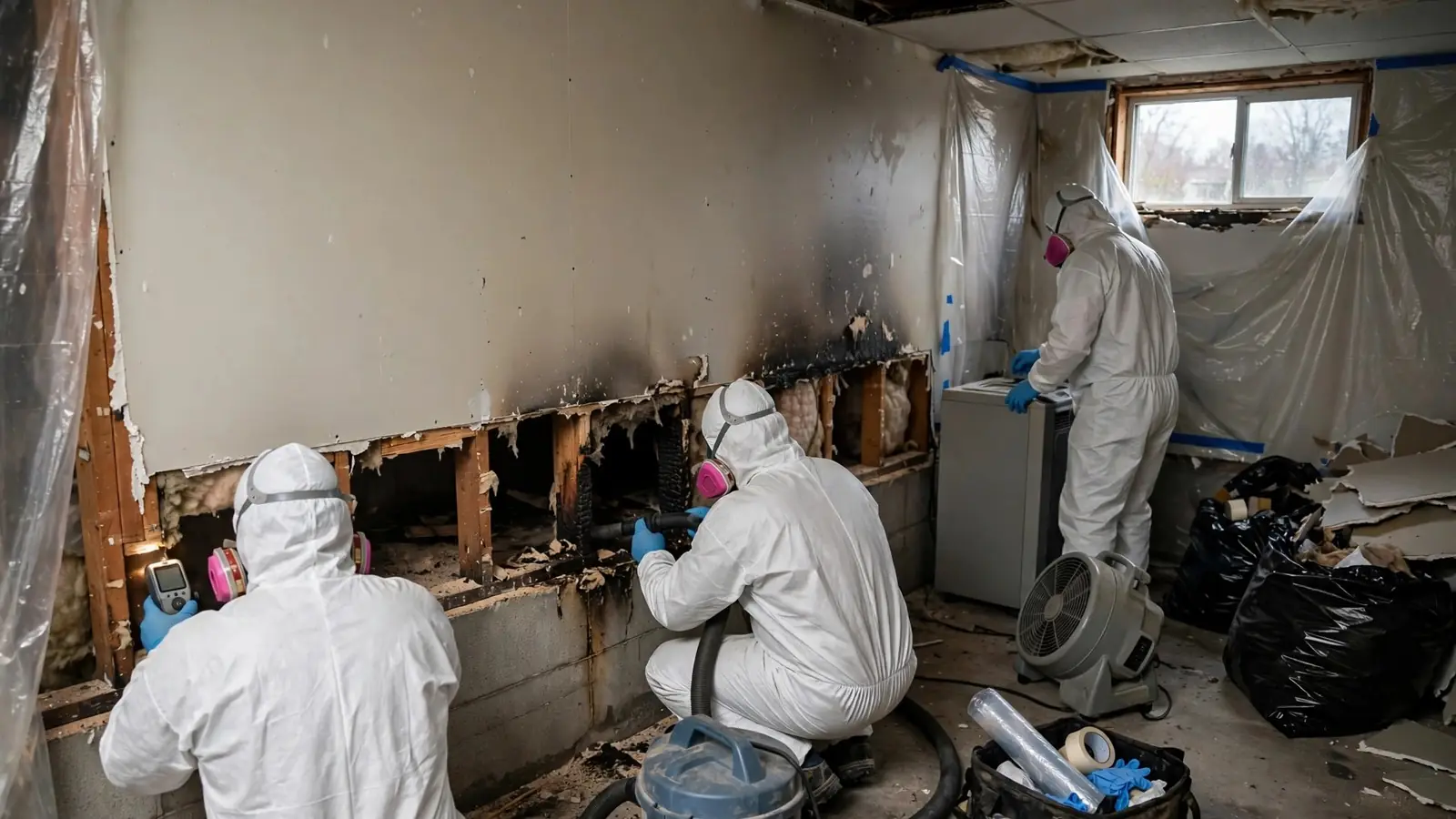
Water running down inside walls soaks insulation and the bottom of drywall or plaster. Wet insulation stays wet for a long time and holds moisture against framing. Removing baseboards, cutting drywall above the wet line or drilling small holes lets air reach the cavity. Wet insulation is usually removed.
Moisture readings guide how much wall needs opening, so no more is removed than necessary.
Hardwood floors and subfloor
Many Camden houses have hardwood floors on the main level. Water soaking into them makes boards swell and cup. Drying them slowly and evenly lets many settle back so they can be sanded and refinished. The subfloor below, visible from the basement, is checked and dried too.
Refinishing should wait until moisture readings are normal.
Keeping records of the water damage
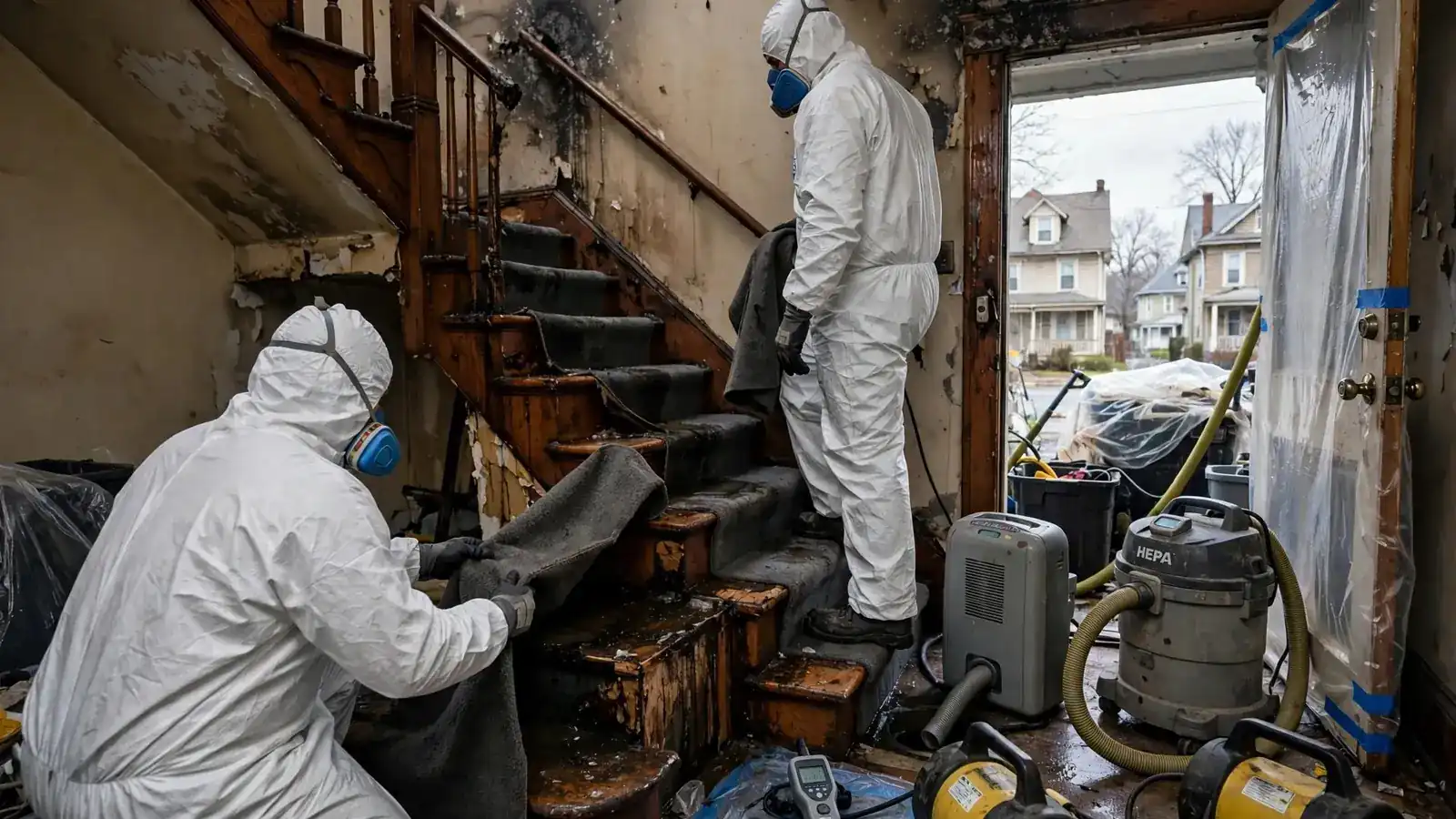
Photos of standing water in the basement, wet ceilings and soaked contents taken before anything is moved are the best record for your claim. Moisture readings from the contractor show how far the water spread and how long drying took. Keep a list of discarded items with photos. Together these help the adjuster understand the water side of the loss, which is easy to underestimate next to the fire damage.
FAQ
Firefighting Water Damage in Camden: questions
Why is my basement flooded after a fire upstairs?
Firefighting water runs down through floors and walls and collects at the lowest level.
Can pipes freeze while the house is being dried?
Yes, in winter, if the heat is off. Safe temporary heat or drained plumbing protects them.
Can I run my furnace to help dry the house?
Not until it has been checked. A wet or smoky furnace can be unsafe or spread residue.
Sources and citations
- [1]U.S. EPA: A brief guide to mold, moisture and your home
- [2]IICRC: S500 Standard for Professional Water Damage Restoration
- [3]U.S. Fire Administration: After a fire
- [4]Minnesota Department of Health: Mold and moisture in homes
- [5]National Weather Service: Twin Cities forecast office
- [6]Minnesota Department of Commerce: Disaster Information Center