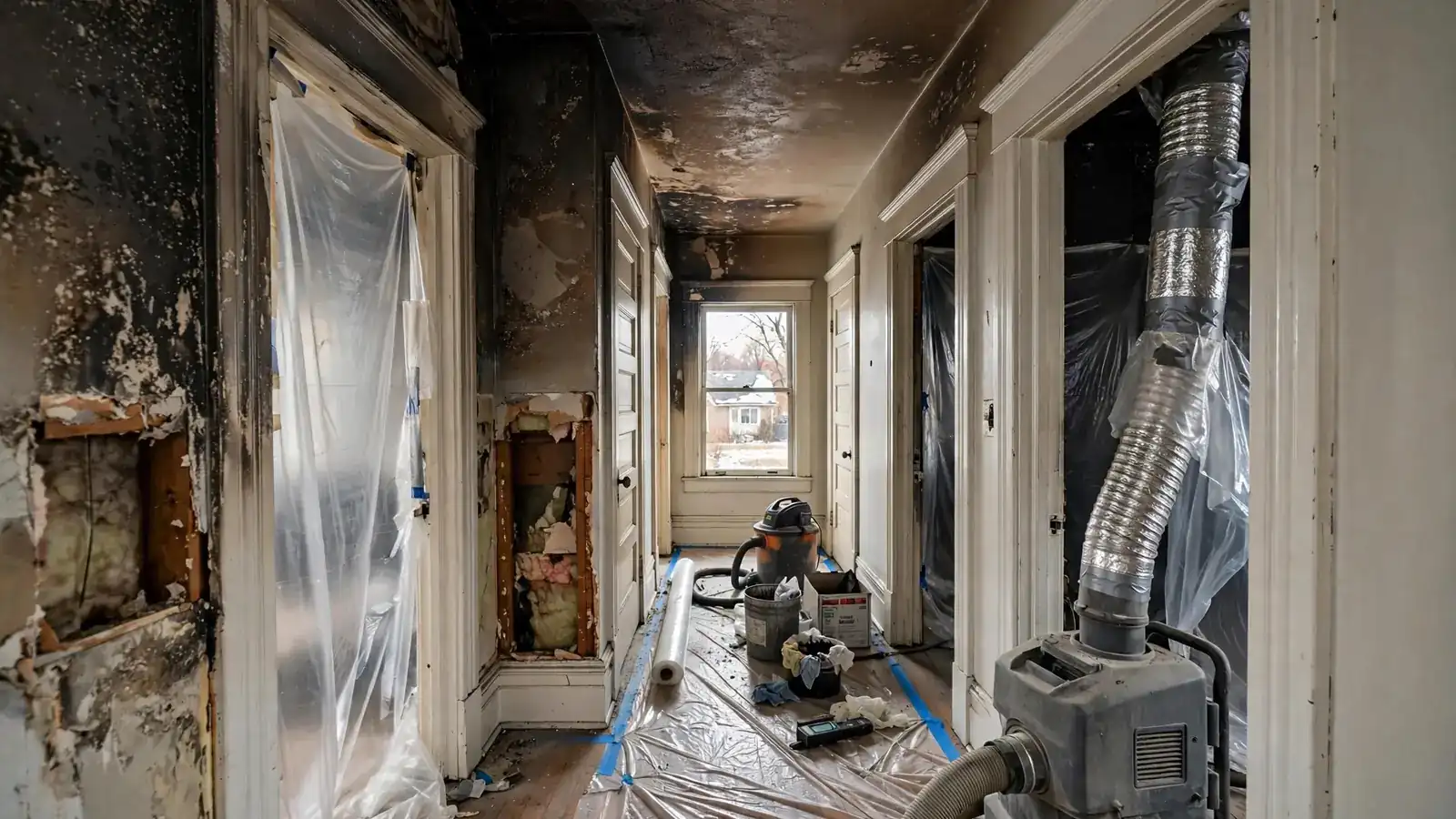
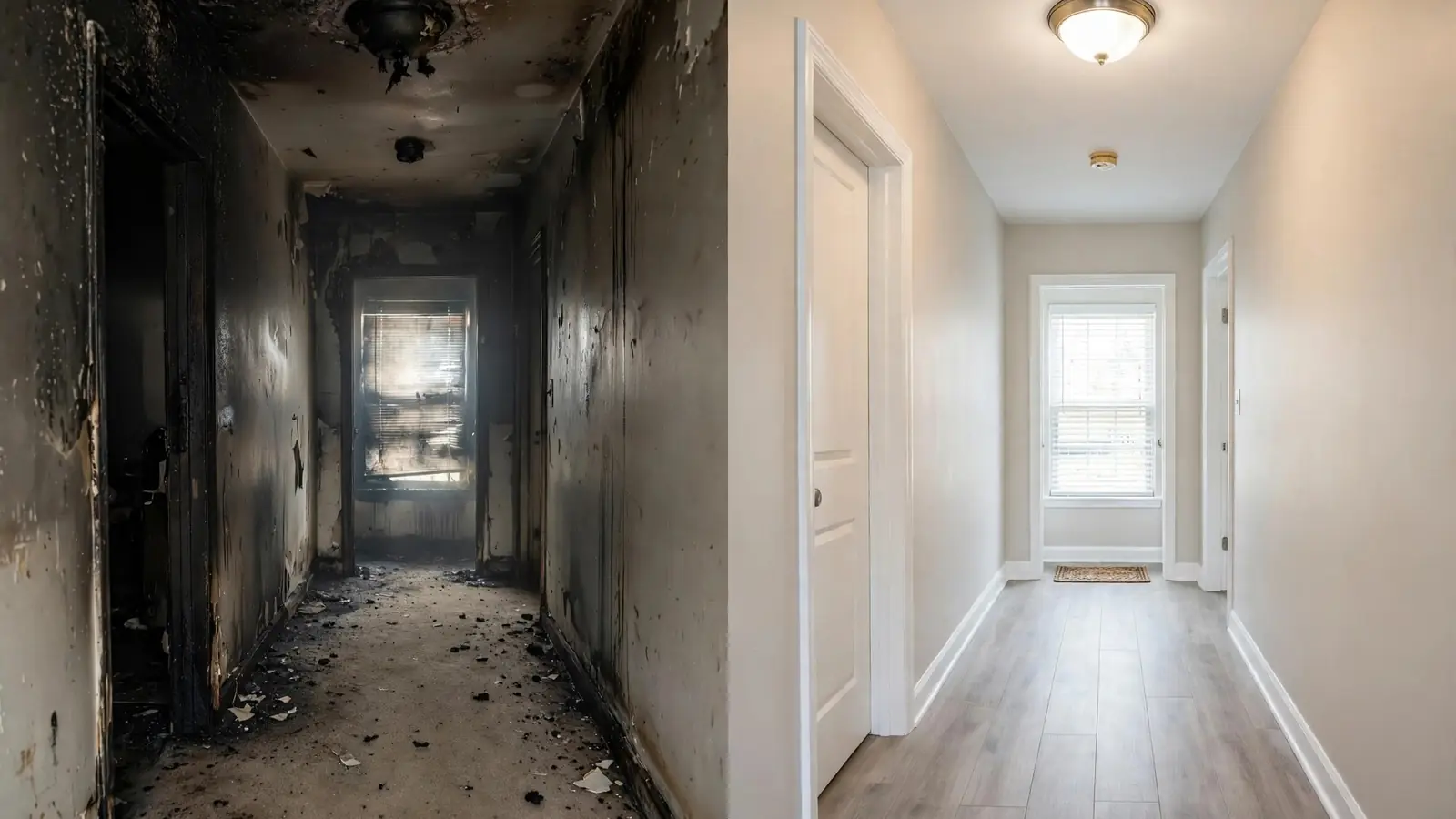
Is it safe to stay in a house that smells strongly of smoke?
It is safer to sleep somewhere else until the residue is removed. The smell comes from fine particles on surfaces and in the air. Children, older adults and anyone with asthma are most affected. Air scrubbers and cleaning, not fresheners, are what make the air better.
Key facts: Emergency Odor Removal
- Smoke smell comes from tiny particles that settle on surfaces and fabrics through a home [1].
- Under IICRC S700, odor control comes after residue removal, not in place of it [2].
- The EPA warns that ozone can harm health, so ozone machines must not run where people are [3].
- Indoor moisture can lead to mold and musty smells, says the Minnesota Department of Health [4].
First steps
What to do about heavy smoke smell today
- 1
Move people who struggle to breathe
Anyone with asthma, a lung condition or a new baby should stay somewhere with clean air for now.
- 2
Turn off fans that recirculate air
Furnace blowers and bathroom fans can push smoky air into rooms that were spared.
- 3
Bag soft items you need right away
Coats, bedding and school clothes soak up smell fast. Seal a few essentials in plastic and leave the rest.
- 4
Skip the scented candles and sprays
They add a new smell on top of the old one and can leave residue of their own.
- 5
Say on the call where the smell is worst
Upstairs rooms, closets and the basement often smell strongest. That tells the crew where to start.
Why now
When smoke smell needs attention right away
Smell is strong in bedrooms
People sleeping in smoky air breathe residue all night.
Read moreThe heat is about to come on
Warm radiators and ducts release more odor from residue.
Read moreA musty note under the smoke
Damp from firefighting water may be starting mold.
Read moreClosets full of winter gear
Wool and down soak up smoke and hold it for months.
Read more
The call
How an urgent odor job is planned
When you call, an independent local contractor talks with you on that call. They will ask what burned, how strong the smell is in each room and whether anyone in the house has trouble breathing. They may ask whether the heat is forced air or radiators.
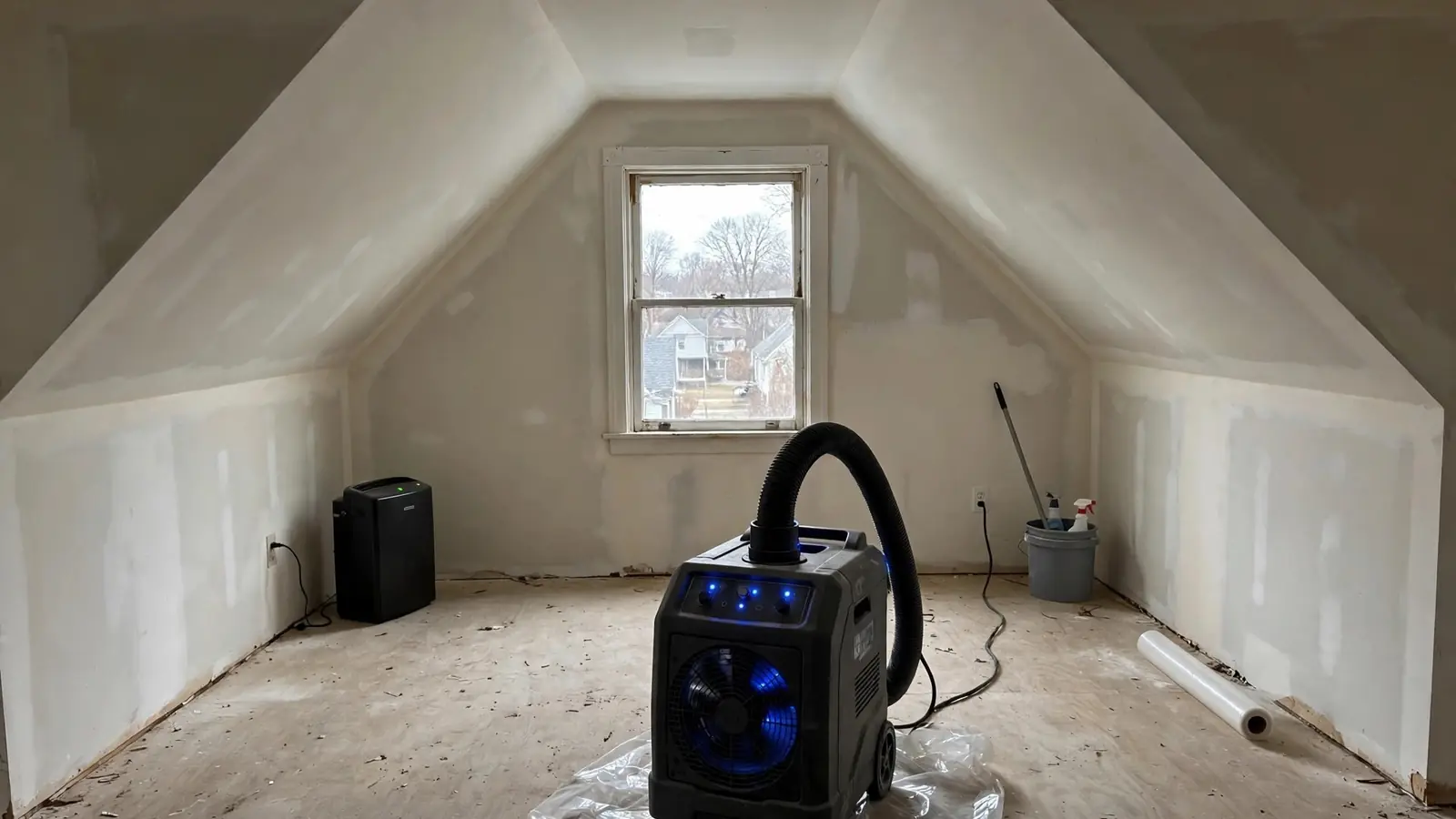
The first visit often starts with air scrubbers fitted with HEPA filters, set up in the rooms that smell worst. Soft items people need may be bagged for cleaning. The crew looks for the sources of the smell: soot on surfaces, smoky insulation, ducts and stored belongings.
Removing the residue is the main work. The IICRC S700 approach treats odor control as a step that follows cleaning [2]. Treatments like thermal fogging or hydroxyl generators come after the sources are cleaned, sealed or removed.
Local factors
Why smoke smell lingers in Minneapolis homes
Houses here spend months shut tight against the cold. Storm windows go up, doors stay closed and the heat runs. That keeps any leftover odor inside and keeps warming the residue that causes it.
Older houses also have many hiding places: knee-wall storage, laundry chutes, attics with old insulation and basements full of boxes. These are the spaces covered in odor removal in Camden and across the city.
Damp basements add a second smell. The Minnesota Department of Health links indoor moisture to mold and musty odors [4]. Drying has to be finished before any odor treatment can work.
Closets
Coats and closets that soak up smoke
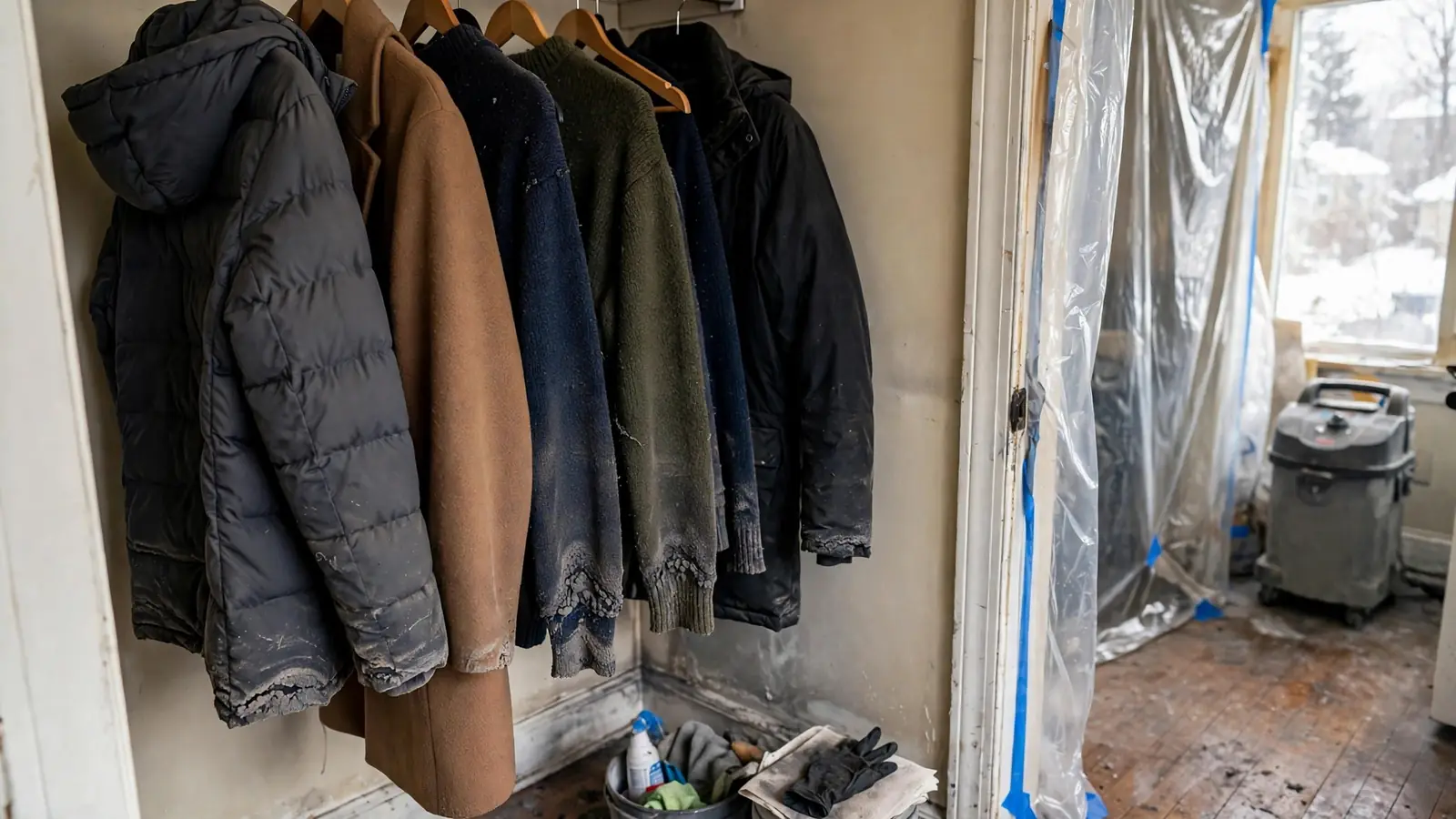
A Minneapolis closet in winter is full of wool, down and fleece. These fabrics hold smoke for a long time and release it whenever the room warms. Washing them at home rarely gets the smell out.
Restoration cleaners use deodorizing washes and treatment rooms made for smoke. Closet walls and shelves are cleaned and often sealed before clothes go back.
- Fabrics bagged and listed
- Closet walls cleaned
- Shelves sealed if needed
Upstairs rooms
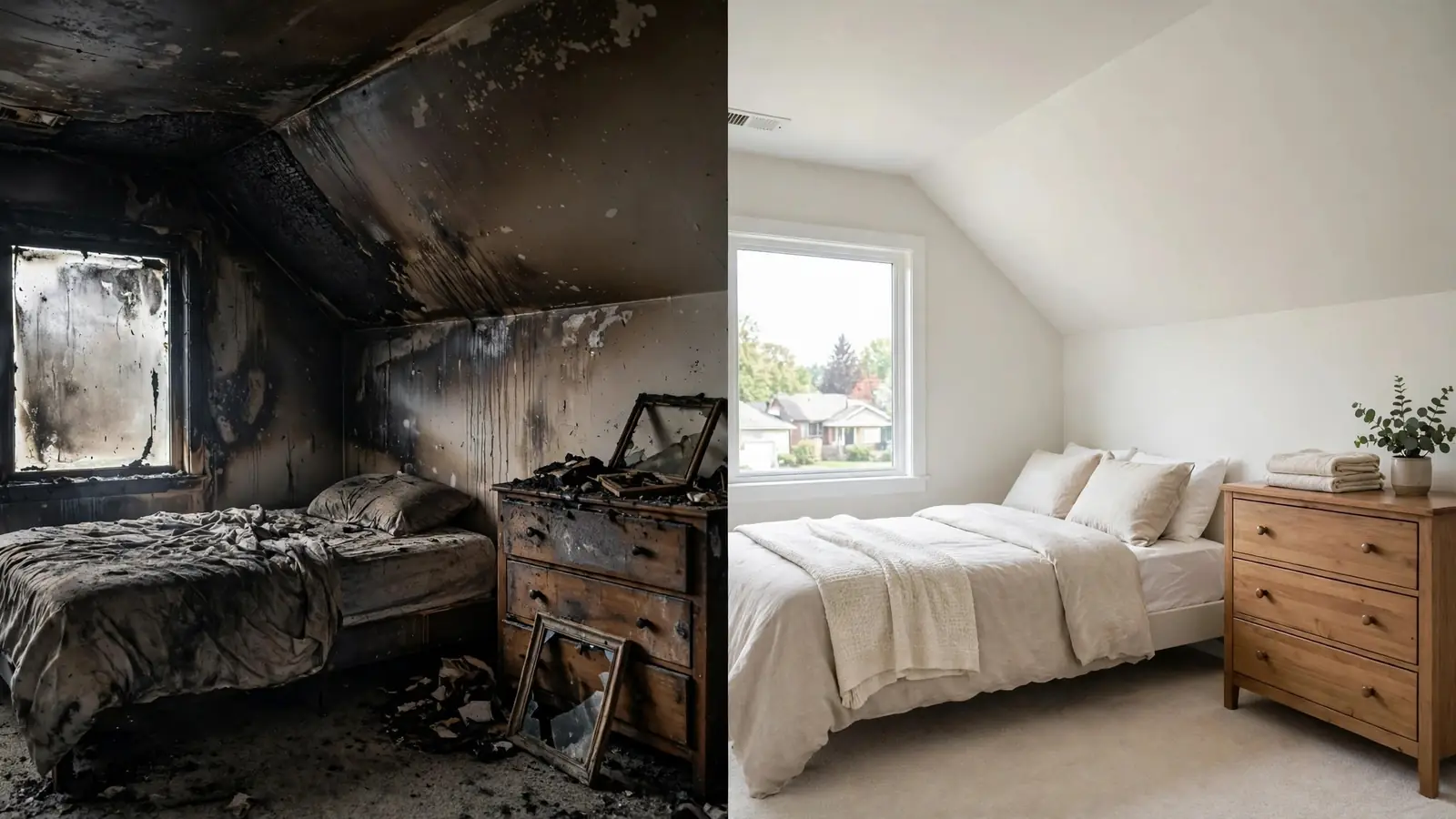
Sloped bedrooms where the smell collects
In a story-and-a-half house, smoke rises into the upstairs rooms and the storage behind the knee walls. These rooms often smell worse than the room that burned.
Knee-wall spaces are opened, emptied and cleaned. Smoky insulation is usually removed. Read about this in smoke odor removal in Longfellow.
- Knee walls opened
- Insulation checked
- Sealer on roof boards
Next steps
From the first odor visit to a house that stays fresh
The urgent visit makes the air easier to breathe. Lasting results come from the full process on our odor removal service page: cleaning every source, sealing what cannot be cleaned and treating the air last.
Smell and residue go together, so the plan usually includes smoke damage cleanup as well. If the smell keeps coming back, our guide to smoke odor that will not go away explains where it hides.
Keep a list of soft items cleaned, sent out or thrown away, with photos [5]. For local detail, see smoke odor removal in Powderhorn.
Expect the smell to fade in stages rather than all at once. Rooms that are cleaned and sealed usually improve first, while closets, the attic and the basement can take longer. The real test comes when the heating season starts and the house warms up with the windows shut. If any room still smells then, ask the contractor to look again for the source before any more treatment is used.
What helps
Simple steps that ease the smell while you wait
- Keep doors to smoky rooms shutThis keeps the smell from drifting into rooms that were spared.
- List the soft items in each roomBedding, curtains, rugs and toys. It helps with the claim and the cleaning plan [5].
- Let the crew check the atticSmoke that rises into the attic coats insulation, which usually has to come out.
- Mention old pipe insulationBasement pipe wrap in older homes should be tested for asbestos before anyone removes it [6].
FAQ
Urgent questions about smoke smell
Will opening the windows get rid of the smoke smell?
Not for long. The smell comes from residue on surfaces. Fresh air helps for a while, but the odor returns until the residue is cleaned.
Why is the smoke smell stronger once the radiators warm up?
Warmth releases odor from residue on radiators, ducts and walls. That is why the heating system is part of any odor plan.
Can my family stay home while the odor is treated?
That depends on the method. Some treatments need an empty house. Ask the contractor what they will use and how long rooms must stay empty.
How do I know the smell is really gone?
Check after the heat has run for a few days with the windows closed. If the smell comes back, some source was missed.
Sources and citations
- [1]U.S. Fire Administration: After a fire
- [2]IICRC: S700 Standard for Professional Fire and Smoke Damage Restoration
- [3]U.S. EPA: Ozone generators that are sold as air cleaners
- [4]Minnesota Department of Health: Mold and moisture in homes
- [5]Minnesota Department of Commerce: Disaster Information Center
- [6]U.S. EPA: Protect your family from exposures to asbestos