Who can I call right after a house fire in Minneapolis at night?
You can call the number on this page at any hour. Your call connects to an independent local restoration contractor who handles urgent fire jobs and talks with you on that call. Say first whether the heat works and whether any openings are broken, because those two answers set the order of work.
Key facts: Emergency Fire Damage
- Re-entry waits until the fire department says the house can be entered [1].
- Wet materials should be dried within 24 to 48 hours to keep mold from starting [2].
- The IICRC S700 standard sets out how fire and smoke damage is assessed and cleaned [3].
- You pick the contractor who repairs your home, a point the Minnesota Department of Commerce makes [4].
First hour
The first hour after the fire trucks leave
Work through these in order. Skip anything the fire department told you not to do.
- 1
Wait for the all-clear before going back in
The fire department decides when the house can be entered. Fire can weaken floors and roofs in ways you cannot see, so stay out until they release it [1].
- 2
Ask about power, gas and water
Find out which utilities were shut off and who will turn them back on. Do not restore power or gas yourself until each system has been checked.
- 3
Think about the pipes straight away
If it is below freezing and the furnace or boiler is off, plumbing can freeze within hours. Say this first when you call, so heat or draining comes before anything else.
- 4
Take photos before anything moves
Walk the outside first, then each room you are allowed into. Photograph broken windows, the roof, wet ceilings and the basement. Your insurer will want them.
- 5
Call your insurer and a restoration contractor
Report the loss to your insurance company. Then call the number on this page to reach a local contractor who handles urgent fire work.
Is it urgent?
Signs that fire damage cannot wait until morning
Broken windows or a vented roof
Snow, rain and wind get in, and heat escapes. Openings need covering tonight.
Read moreWater on floors or in the basement
Firefighting water spreads down through the house. Drying has to start quickly.
Read moreNo heat in cold weather
Pipes, radiators and the boiler can freeze and burst, adding a second flood.
Read moreHeavy soot or a strong smoke smell
Residue keeps working on finishes and spreads with every footstep.
Read more
Your call
What to expect on the phone and at the house
When you call, an independent local restoration contractor answers and talks with you on that same call. They will ask what burned, which rooms smell of smoke, whether the heat works and whether water reached the basement. Short, plain answers are fine. You do not need to know the trade words.
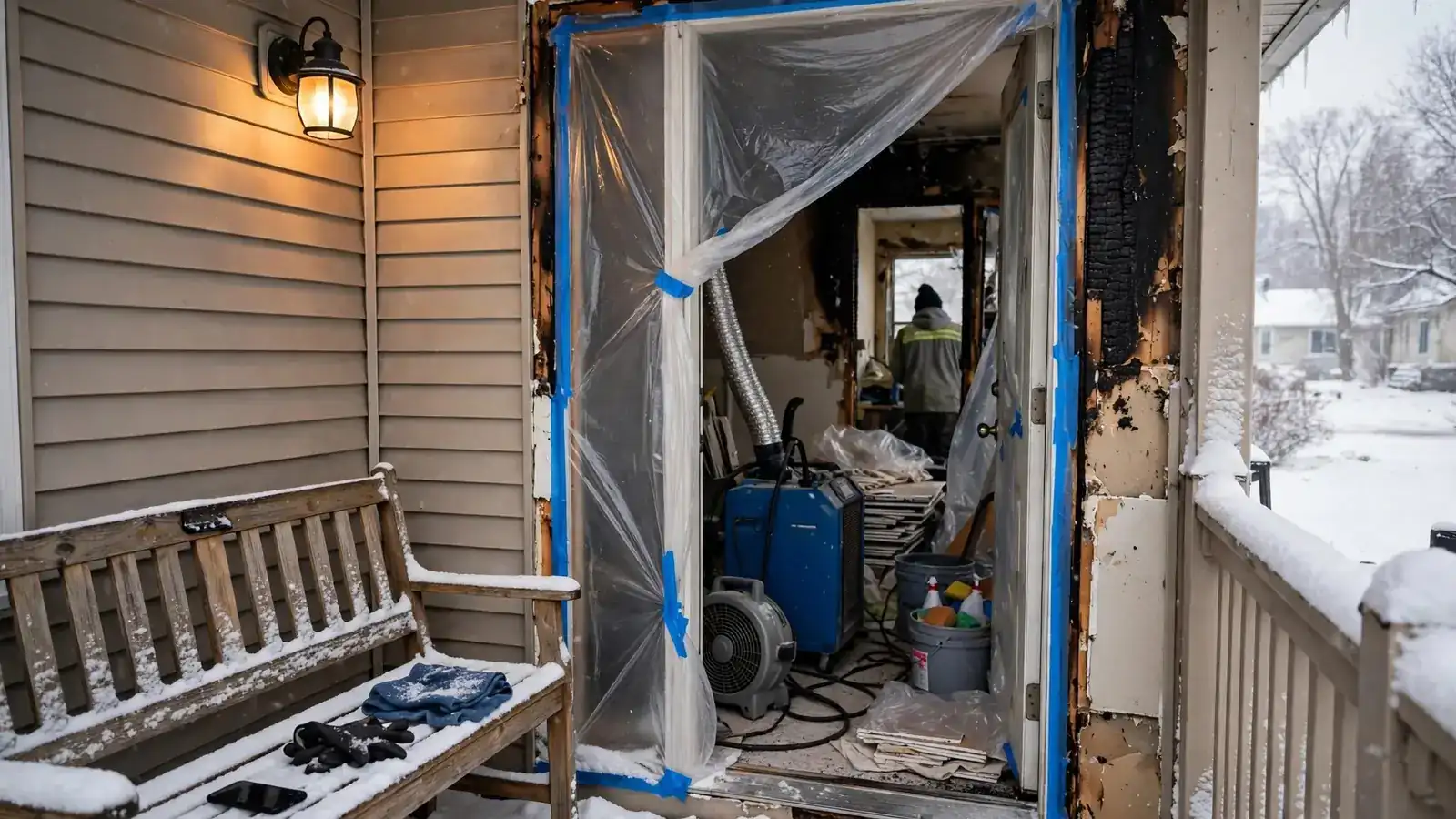
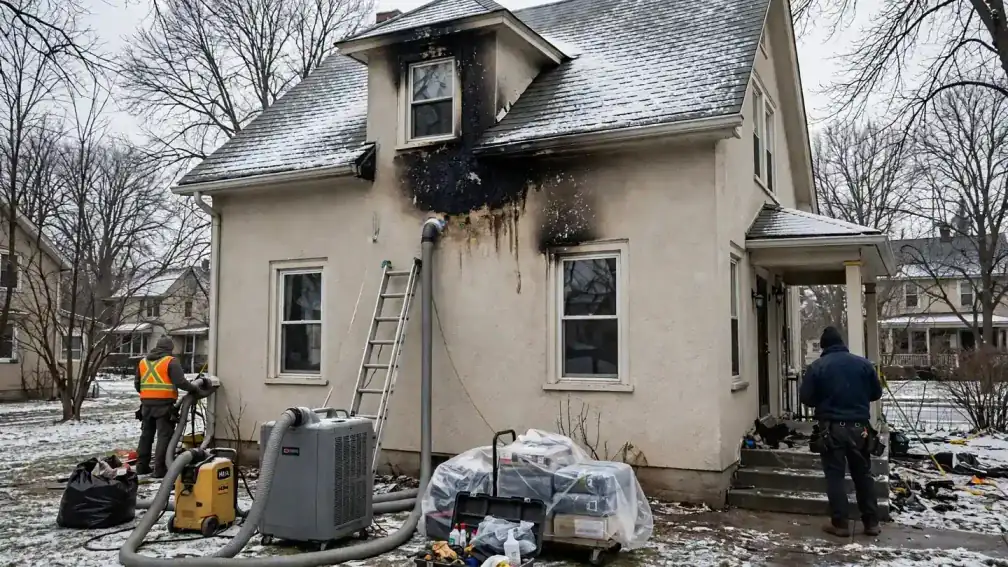
Together you agree what happens next. For many fires, the first visit covers the urgent work: covering openings with board-up and tarping, pumping water, and setting up temporary heat or air scrubbers. The crew photographs and measures as they go, which helps with your claim.
Cleaning comes after the house is stable. Smoke and soot are handled following the IICRC S700 approach, which starts with assessment and moves from dry cleaning methods to wet ones [3]. Ask the contractor to explain each step before it starts, and to write down what is kept and what is removed.
Minneapolis
Why a Minneapolis fire turns urgent so quickly
Most houses in the city are old. Plaster on wood lath, oak trim, radiators and a full basement are normal, from smoke damage in Kenwood to board-up work in Camden. Those features take smoke and water in their own ways, and a stone basement collects nearly all the water used upstairs.
Winter is the bigger factor. A fire in January can leave the house open to air far below freezing. Water in pipes, traps and radiators then freezes, and a burst pipe adds a flood to the fire. That is why protecting the plumbing sits at the top of every cold-weather plan.
Moisture is a risk in warm months too. Wet materials should be dried within 24 to 48 hours to stop mold from starting [2], and Twin Cities basements are often damp to begin with.
Stabilizing
Getting a damaged house through its first night
The goal of the first visit is simple: stop the damage from growing. Openings are closed, water is pulled out, and the house is kept warm enough to protect the plumbing. Cleaning and rebuilding wait until that is done.
If you cannot stay in the house, agree on one locked entry point and who holds the key. A neighbor who knows the house is empty can tell you if a panel blows loose.
- Openings closed
- Water extracted
- Plumbing protected
- One secure entry
Smoke and soot
Why residue is part of the urgent work
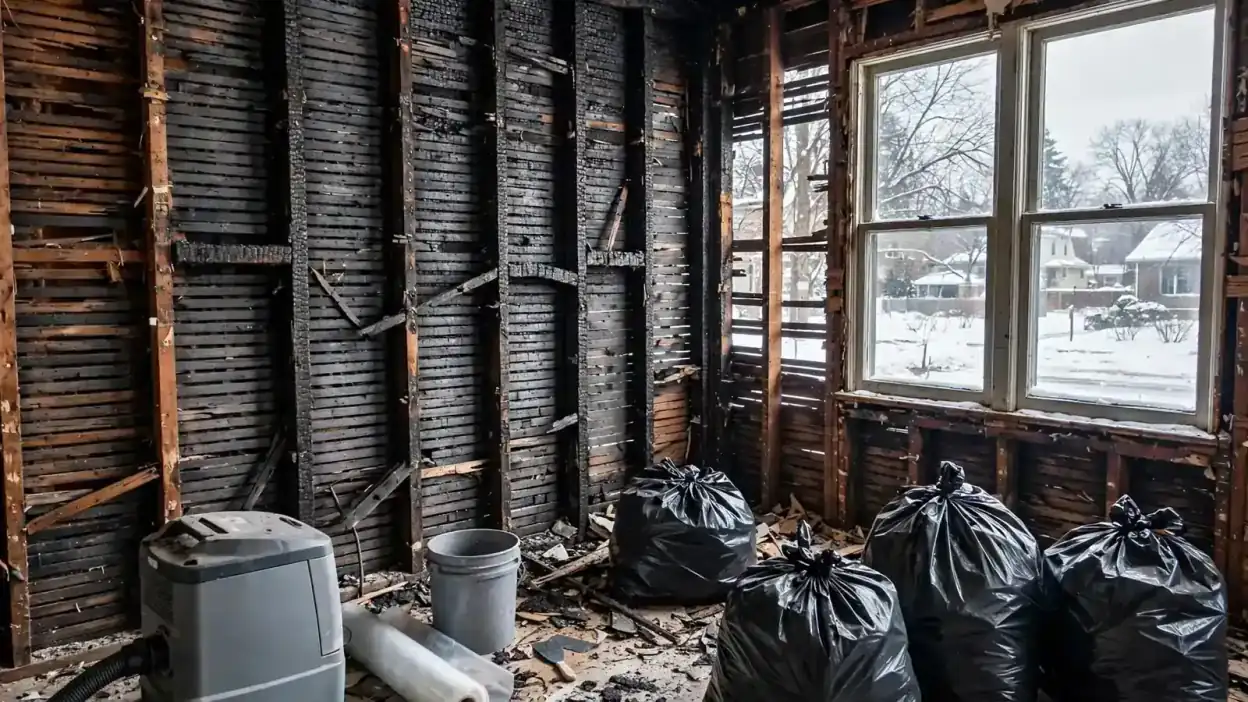
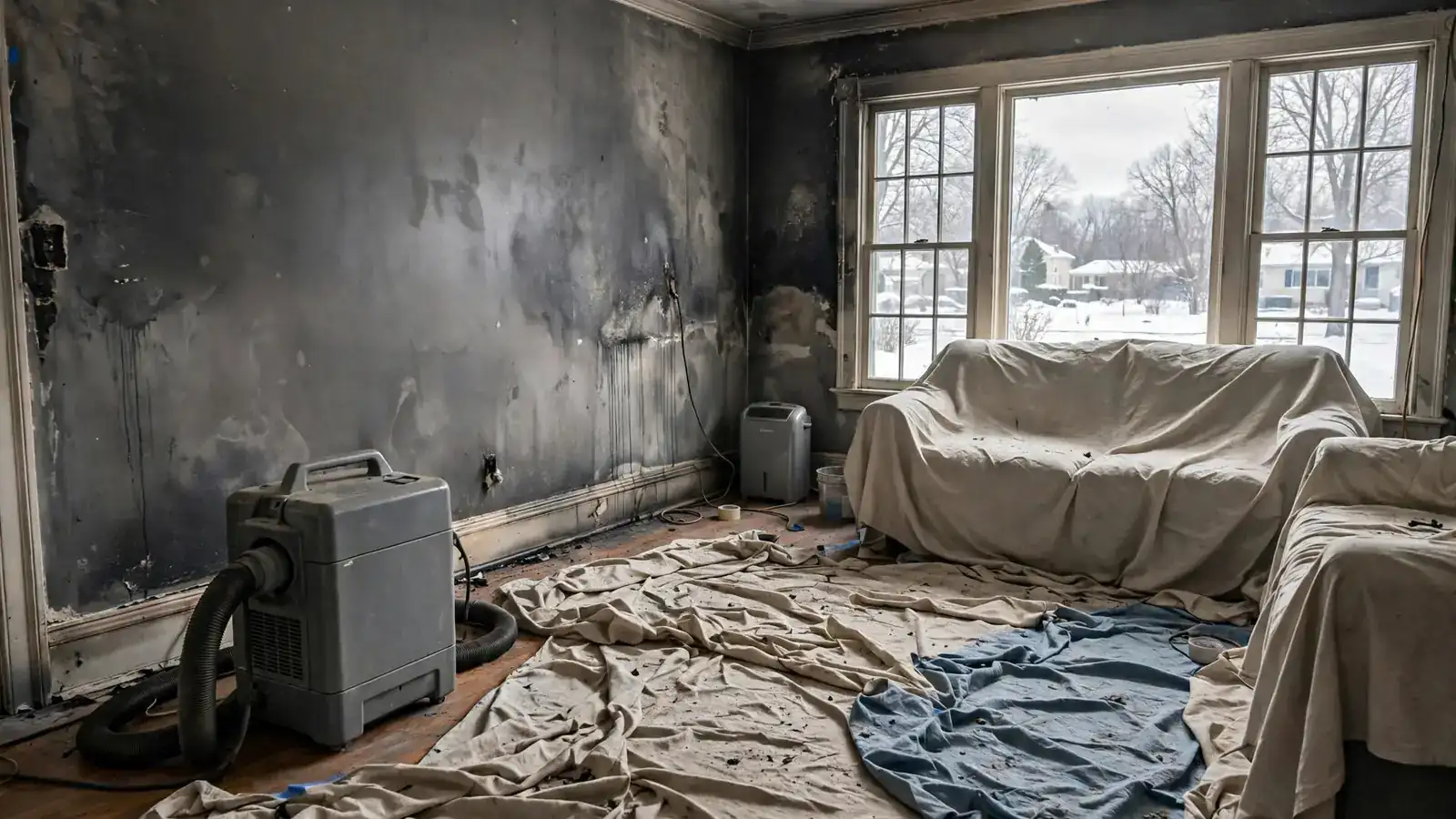
Soot is acidic and oily. Left in place, it can etch glass, tarnish metal and stain plaster and paint more deeply over time. Wiping it with a wet cloth usually smears it into the surface.
Early steps are gentle: HEPA air scrubbers, plastic over doorways to keep clean rooms clean, and dry methods before any washing. Read more on emergency soot removal and urgent smoke cleanup.
- Air scrubbers running
- Clean rooms sealed off
- Dry methods first
After the first night
Moving from urgent work to full restoration
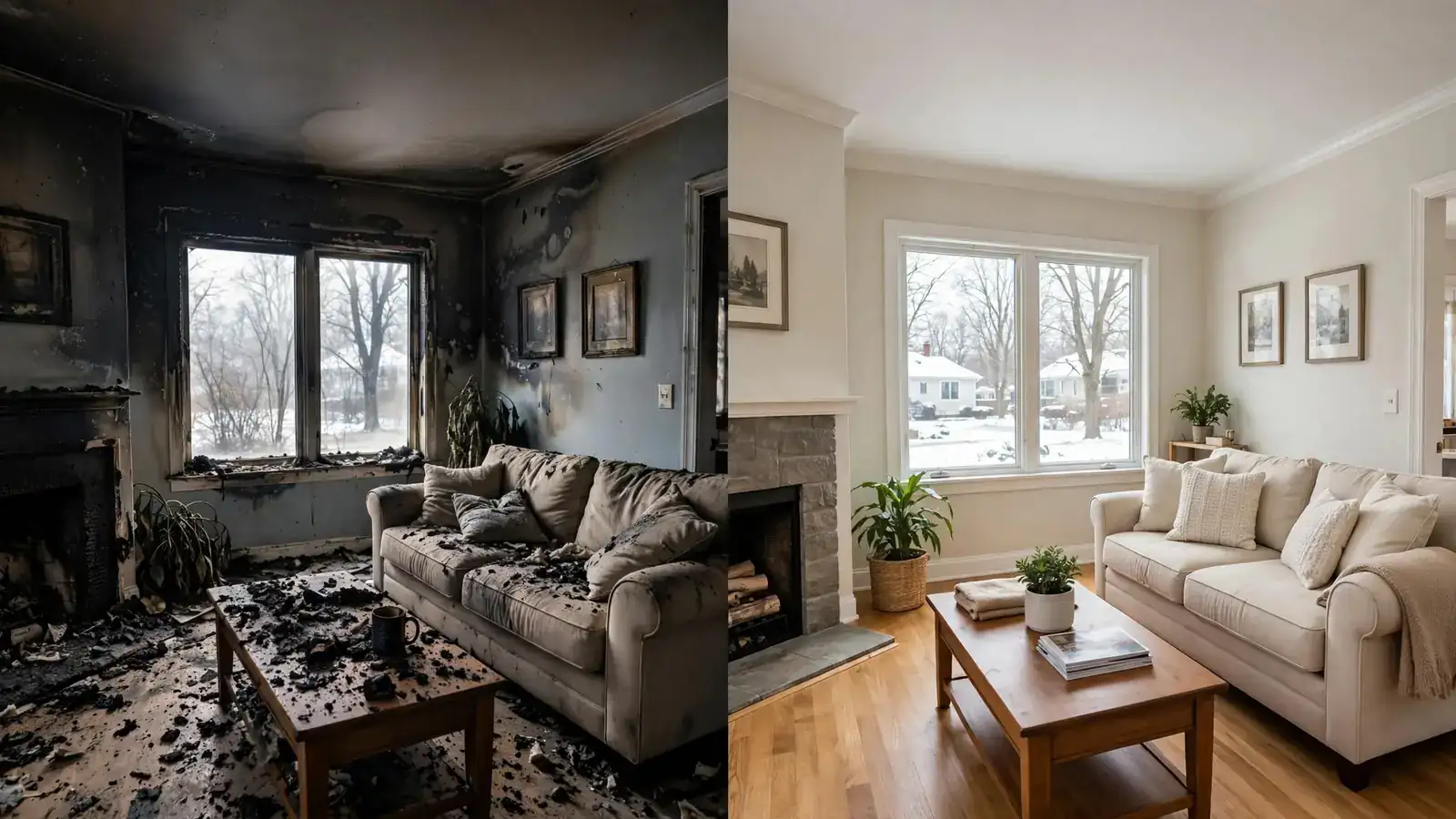
Once the house is stable, the work turns to cleaning and repair. Smoke residue is removed room by room through smoke damage cleanup, and lingering smell is handled through odor removal. Wet areas keep drying under the plan for water damage from firefighting.
Keep the photos, the notes from each visit and the list of removed items together. The Minnesota Department of Commerce reminds homeowners to keep records and that they choose their own contractor [4]. If you are unsure what to ask the adjuster, our guide to working with your insurance adjuster helps.
Each neighborhood has its own housing. The pages on fire restoration in Longfellow and fire restoration in Northeast Minneapolis describe what crews tend to find there.
While you wait
Small things that help before the crew comes
- Keep a list of callsWrite down who you spoke to and when: the fire department, your insurer and the contractor.
- Gather medicines and papersIf you are allowed in, take medicines, ID, glasses and chargers. Leave everything else in place.
- Leave soot aloneDo not wipe walls or wash curtains. Untouched soot is easier to remove properly.
- Find somewhere warm to sleepIf the house has no safe heat, stay with family or ask your insurer about temporary housing.
FAQ
Urgent fire damage questions from Minneapolis homeowners
Is someone really there to answer at three in the morning?
Yes. Calls are answered 24/7, and your call connects to an independent local restoration contractor who takes urgent jobs. You speak with them on that call.
Should I wait for the adjuster before anything is done?
No. Steps that stop more damage, like covering openings and removing water, are usually expected right away. Photograph everything first and keep a record of the work.
Can I sleep in the house tonight?
Only if the fire department has released it, the heat is safe and working, and the air where you sleep does not smell of smoke. Our guide on staying after a fire walks through the checks.
What should I tell the contractor first?
Say whether the heat works, whether any windows or the roof are open, and whether there is water in the basement. Those three answers decide what happens first.