What should I do first about smoke damage in my house tonight?
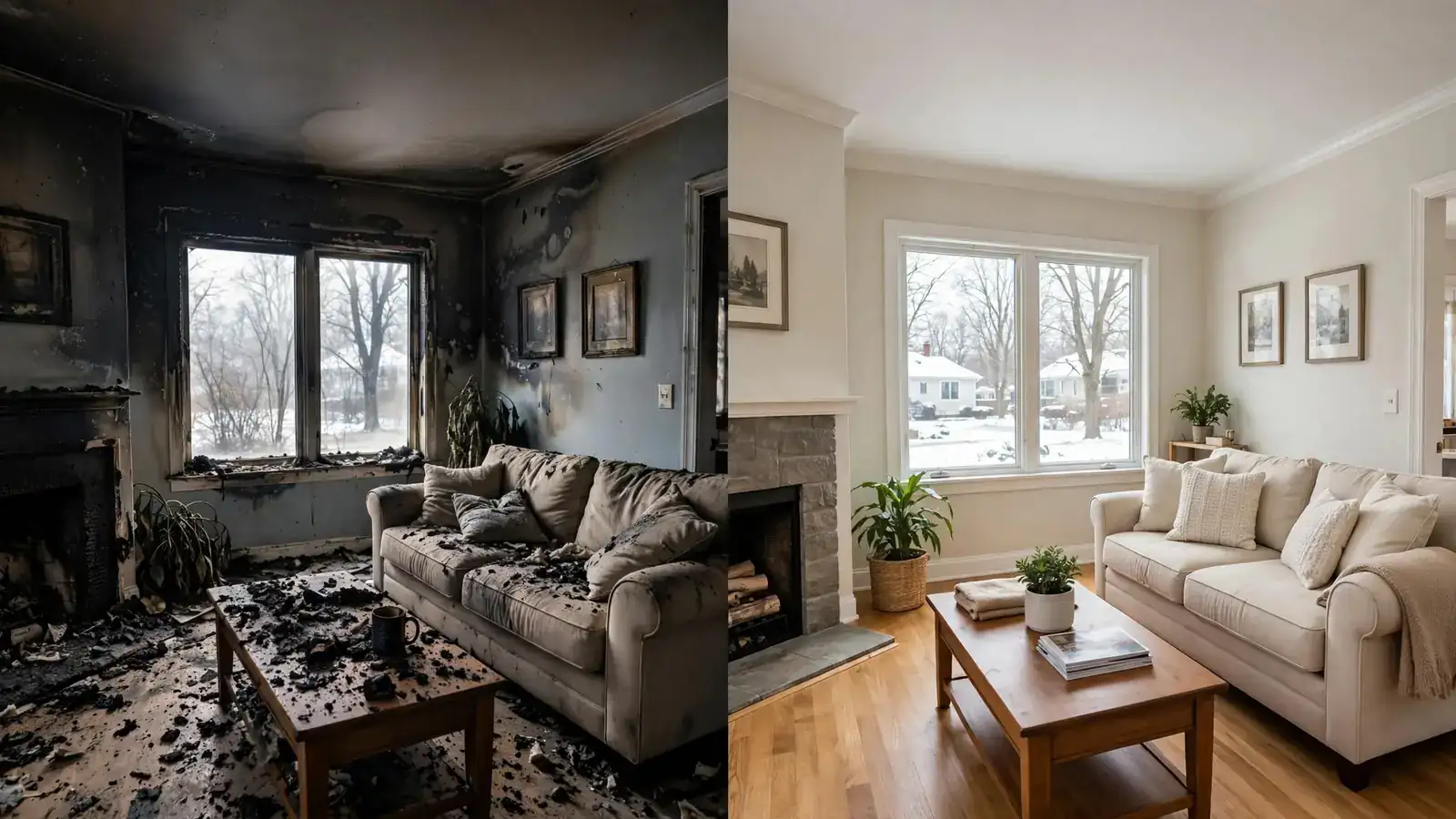
Keep the furnace off, close doors to rooms the smoke did not reach and leave sooty surfaces alone. Then call a restoration contractor. Smoke residue spreads with moving air and with every touch, so containing it early limits how many rooms need cleaning.
Key facts: Emergency Smoke Cleanup
- Smoke odor comes from tiny particles that cling to walls, floors, furniture and clothes [1].
- IICRC S700 describes how professionals inspect, clean and deodorize after fire [2].
- Painted woodwork in homes built before 1978 may contain lead and needs lead-safe handling [3].
- Minnesota homeowners choose which contractor repairs their home [4].
Tonight
Containing smoke in the hours after a fire
- 1
Leave the heating blower switched off
A forced-air furnace pulls smoky air into its return and pushes it through every register. Keep it off until it is inspected.
- 2
Close the laundry chute and upstairs doors
Chutes and open stairwells move smoke between floors. Shut what you can.
- 3
Set aside the clothes you need
If you are allowed in, bag a few outfits and medicines. Keep the bags closed until they can be cleaned.
- 4
Note where the smell is strongest
Walk the house once and write it down room by room. It helps the crew plan the work.
- 5
Report the loss and call for help
Tell your insurer what happened [4], then call the number on this page to reach a local contractor.
Act soon
Smoke situations that call for a quick response
The furnace ran during the fire
Ducts and the blower may now carry residue to every room.
Read moreGrey film on upstairs walls
Smoke rose through the stairwell and settled where people sleep.
Read moreA sharp, sour smell after a kitchen fire
Protein smoke leaves a thin, greasy film that is easy to miss.
Read moreSmoke from plastics or electronics
Oily residue clings to everything and smears at a touch.
Read more
On the phone
Talking through smoke damage on the call
An independent local contractor answers your call and talks with you on it. Expect questions about what burned, how long the fire lasted, whether the furnace ran and which floors smell of smoke. If you have a boiler with radiators instead of ducts, say so. It changes the cleaning plan.
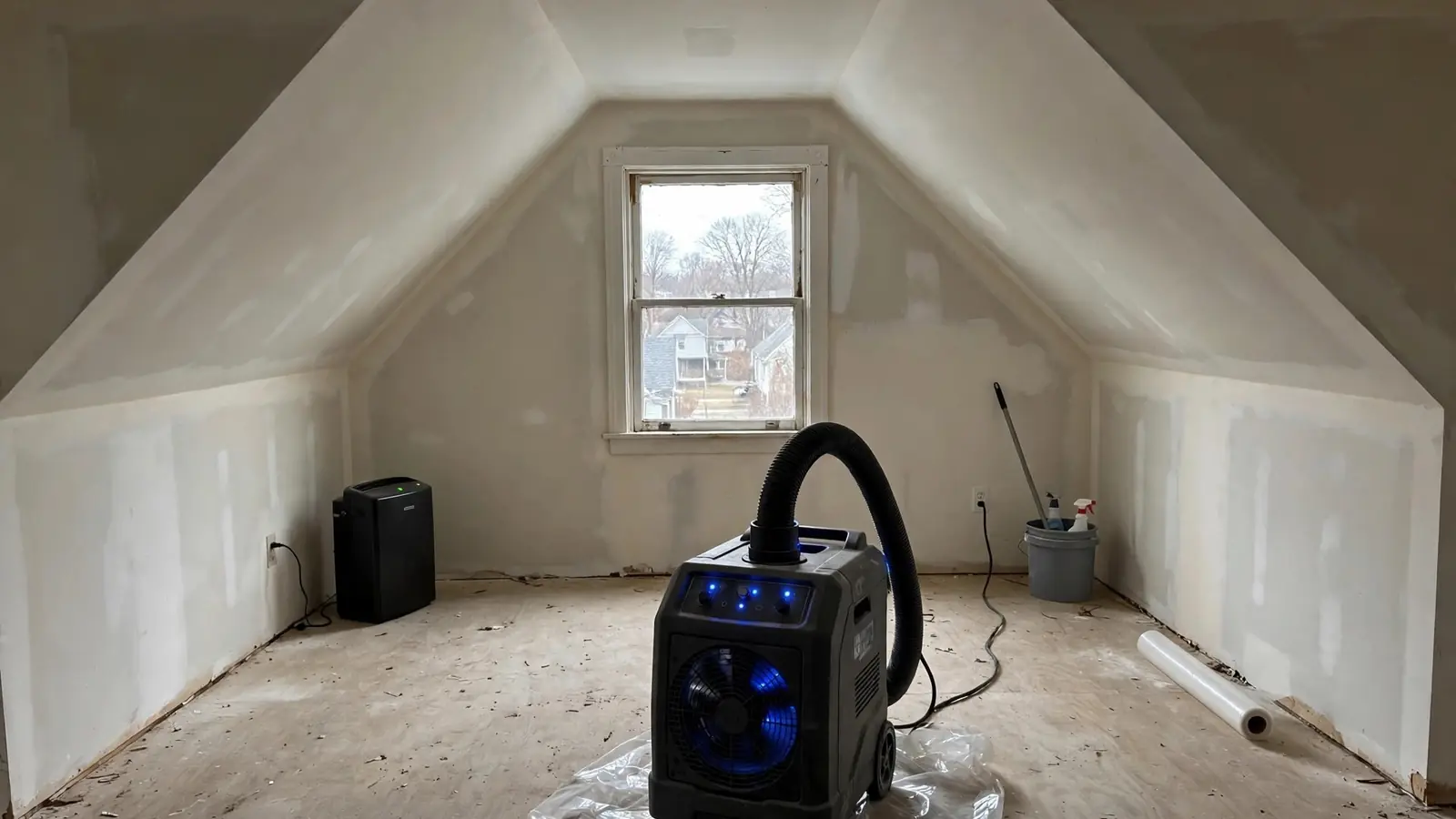
The first visit usually focuses on stopping the spread. Plastic barriers go up at doorways. Air scrubbers with HEPA filters start running. The crew checks the rooms you think are clean, because smoke often reaches them too.
Cleaning then follows a set order. The IICRC S700 standard guides how residue is assessed, removed and deodorized [2]. Ask for a room-by-room plan that names the closets, the attic, the basement and the laundry chute.
Older homes
How Minneapolis houses move smoke between floors
In a foursquare or a story-and-a-half bungalow, the stairwell works like a flue. Smoke rushes up it and fills the bedrooms first. Laundry chutes carry it down to the basement. Old plaster has fine cracks that hold residue.
Houses with radiators do not move smoke through ducts, but radiator fins trap soot and the heat bakes smell out of it. Houses converted to forced air need the ducts checked. You can read how this plays out in smoke cleanup in Longfellow.
Winter adds pressure. A cold house with no heat can freeze its pipes. The National Weather Service office for the Twin Cities posts the cold warnings that help decide how fast temporary heat is needed [5].
Kitchens
Kitchen fires and the film they leave
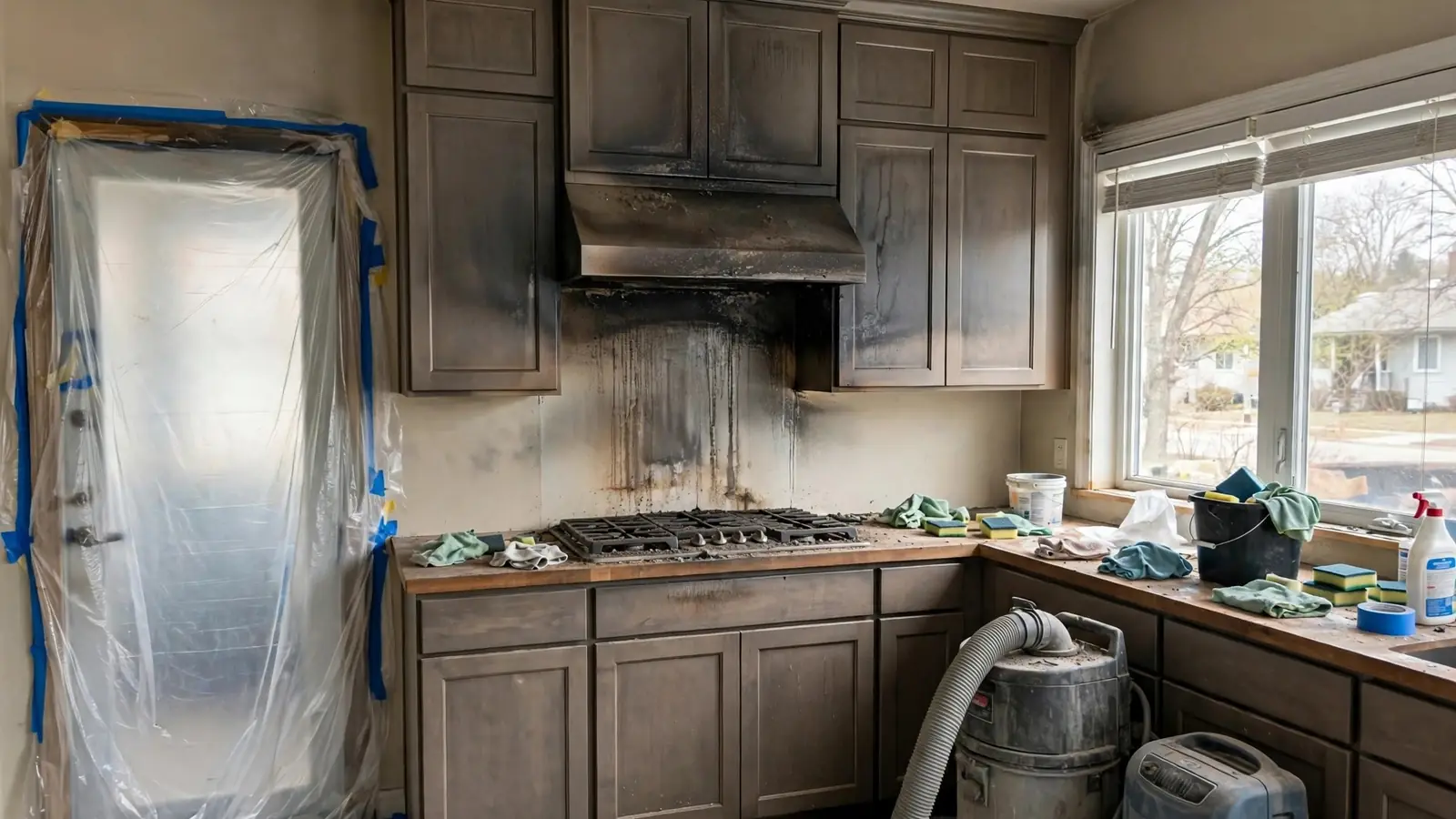
Cooking fires are among the most common home fires [8]. They leave a pale, greasy film on cabinets, ceilings and the rooms beyond the kitchen. It can be hard to see on painted walls, so people often miss it.
Protein residue needs cleaners made to break it down. Cabinet insides and ceilings may need sealing after cleaning so the smell does not come back.
- Cabinets inside and out
- Ceilings beyond the kitchen
- Seal if the smell stays
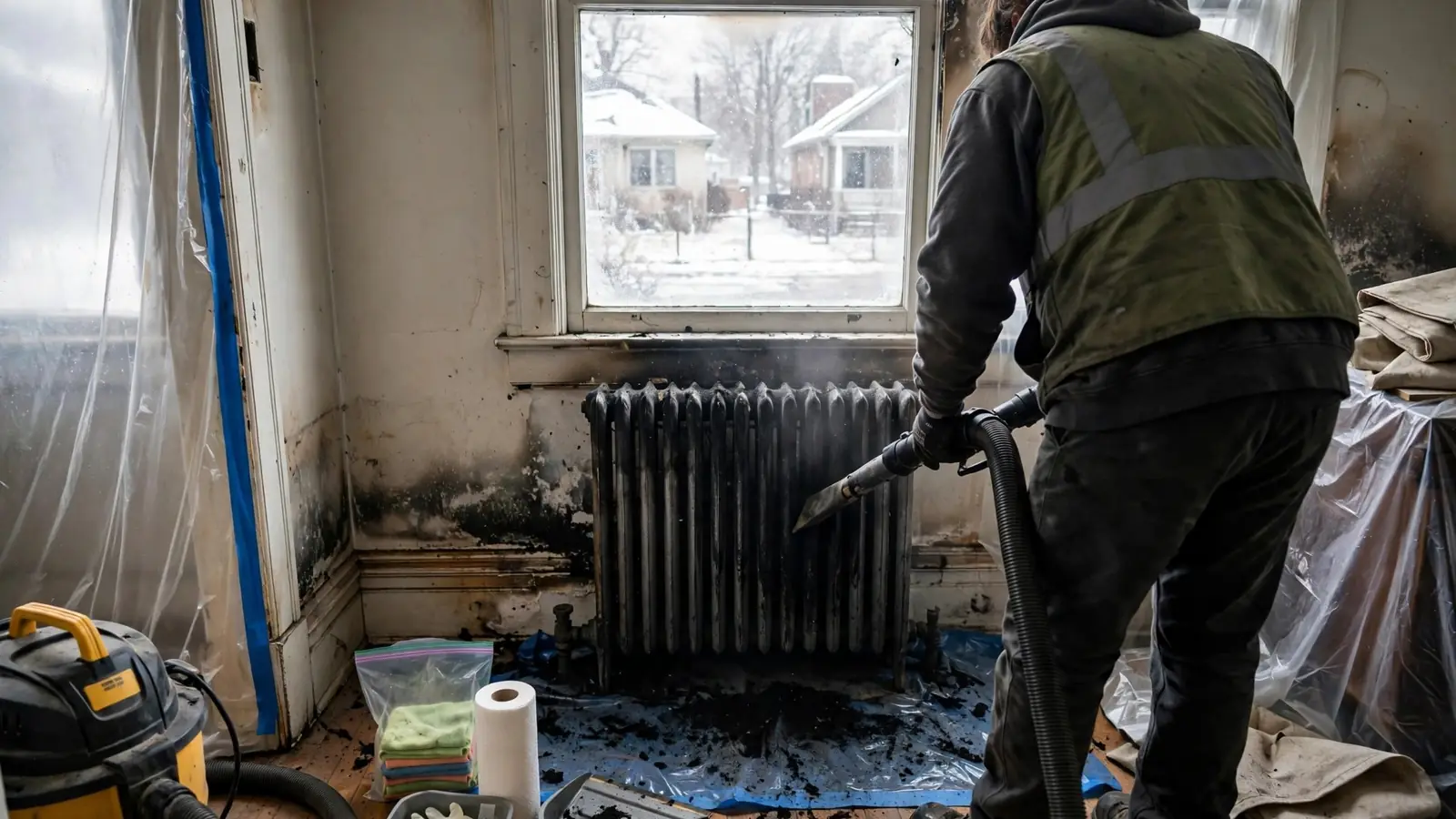
Radiators
Cast iron radiators after smoke exposure
Radiator fins collect soot like a filter. When the boiler runs again, the heat brings the smell back into the room. Each radiator needs vacuuming between the fins before it is cleaned.
The wall behind each radiator often needs cleaning and sealing too. For more on lingering smell, see urgent odor removal.
- Vacuum between fins
- Clean the wall behind
- Covers cleaned separately
Next steps
From urgent containment to a full smoke cleanup
Containment buys time. The full cleaning plan on our smoke damage cleanup page then works through every room, closet and duct. Heavy black residue is handled through soot removal, and lasting smell through odor work.
Your claim needs the hidden areas as well as the fire room. Show the adjuster the upstairs, the attic, the basement and the laundry chute. The Minnesota Department of Commerce suggests keeping records throughout a claim [4]. Our first 48 hours guide has a checklist.
For neighborhood detail, see smoke cleanup in Northeast Minneapolis, where older duplexes and converted houses bring their own challenges.
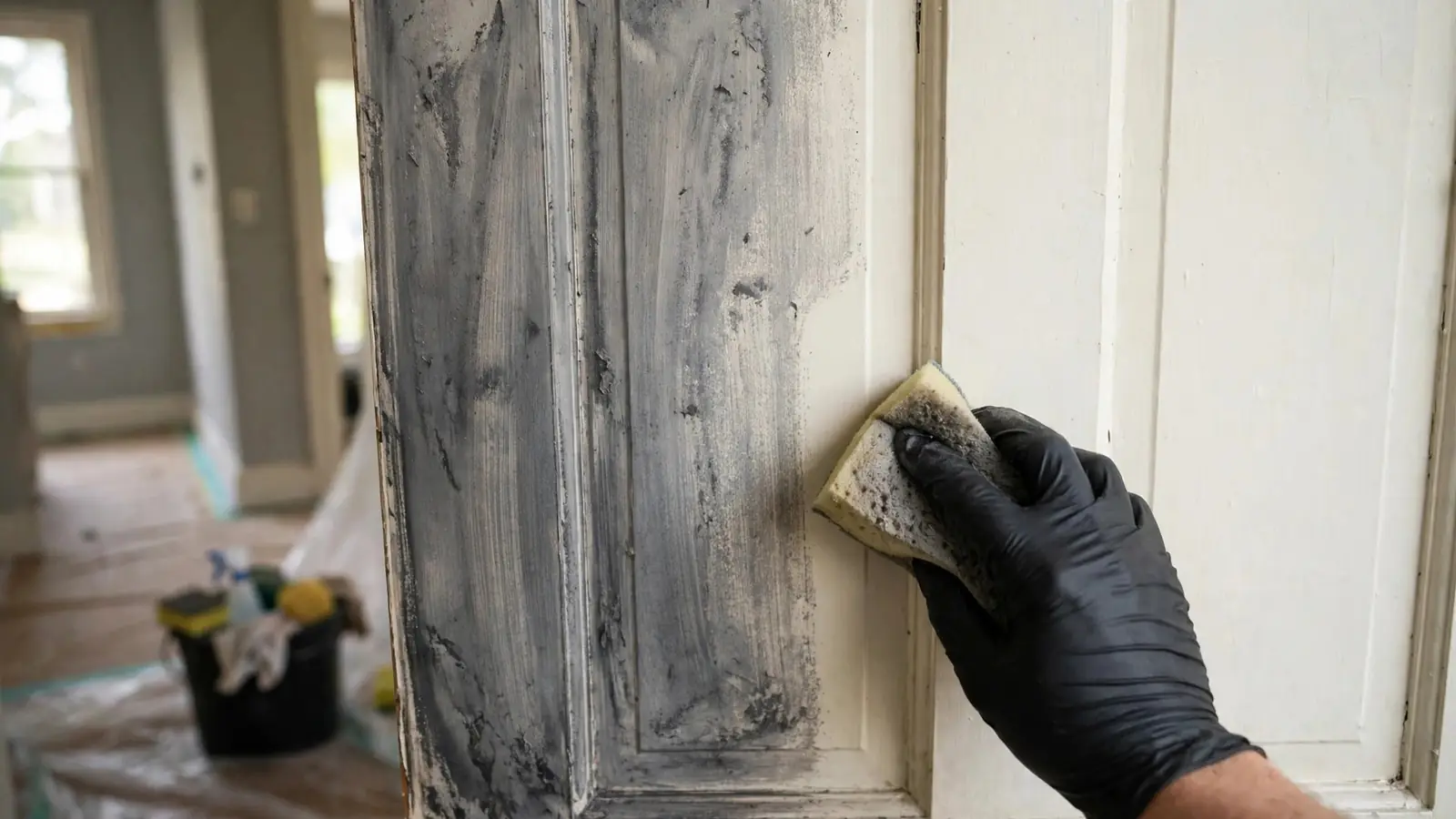
Smoke work in an older house is slow by nature. Trim has to be cleaned by hand, plaster tested before it is scrubbed and painted woodwork treated with lead-safe care [3]. Rushing any of these steps can strip finishes that took a century to build up. Ask the crew which rooms they will tackle first and how long each is likely to stay closed off, so you can plan where to keep the things you need day to day.
Avoid
Habits that spread smoke residue further
- Opening every window in winterIt lets in freezing air and can stir soot without removing it. Air scrubbers do the job better.
- Moving smoky boxes into clean roomsResidue travels with them. Leave contents where they are until they are sorted.
- Covering the smell with scentFresheners mask odor for a short time and add another film to surfaces.
- Starting the dryer or furnaceBoth move air through the house and can pull smoke into new places.
FAQ
Quick answers about urgent smoke damage
Why does my bedroom upstairs smell worse than the kitchen that burned?
Smoke rises. In older Minneapolis houses it climbs the stairwell and collects in the upper rooms and under the roof. Those rooms often need as much work as the fire room.
Can I turn the heat on if the house is cold?
Not the furnace or boiler until it has been inspected. Ask the contractor about safe temporary heat to protect the pipes in the meantime.
How do I know which rooms the smoke reached?
A white tissue wiped across a surface shows grey residue that is hard to see otherwise. Photograph it before cleaning so the adjuster sees it too.
Should my clothes go to a laundromat?
It is better to wait. Smoke-damaged fabrics often need special cleaning. Bag what you need now and ask the contractor about textile cleaning.
Sources and citations
- [1]U.S. Fire Administration: After a fire
- [2]IICRC: S700 Standard for Professional Fire and Smoke Damage Restoration
- [3]U.S. EPA: Protect your family from sources of lead
- [4]Minnesota Department of Commerce: Disaster Information Center
- [5]National Weather Service: Twin Cities forecast office
- [6]City of Minneapolis: Licenses, permits and inspections
- [7]Minnesota Department of Labor and Industry
- [8]NFPA: Home structure fires