How quickly does water from putting out a fire need to be dried?
Within a day or two. The EPA advises drying wet materials within 24 to 48 hours to keep mold from growing. In a cold house, protecting the pipes from freezing comes first, then pumping and drying. A crew measures moisture until the readings are normal.
Key facts: Emergency Water Damage
- The EPA says drying wet materials within 24 to 48 hours keeps mold from starting [1].
- Water damage professionals work to the IICRC S500 standard [2].
- Dirty water left after a fire can hold substances that make people ill [3].
- The Minnesota Department of Health advises fixing indoor water problems quickly to limit mold [4].
First hours
Handling firefighting water before mold starts
- 1
Stay out of standing water near power
Water and live wiring do not mix. Keep out of a flooded basement until the power is confirmed off.
- 2
Look up at the ceilings
A bulging or sagging plaster ceiling may be holding water. Keep people out from under it.
- 3
Protect the plumbing from the cold
If the heat is off below freezing, pipes, traps and radiators can freeze. Say so first on the call.
- 4
Lift what you can off wet floors
If it is safe, move photos, papers and small items to a dry shelf. Leave heavy furniture.
- 5
Photograph the waterline
Take pictures of wet walls, floors and the basement before pumping starts [6].
Act fast
Water damage signs that cannot wait
Standing water in the basement
Boxes, the furnace and the water heater sit in it and soak it up.
Read moreA sagging plaster ceiling
Water above can pull plaster off its lath and bring it down.
Read moreNo heat and falling temperatures
Frozen pipes burst and add a new flood to the old one.
Read moreA musty smell already
Damp is starting to turn into mold growth.
Read more
The call
What happens when you call about the water
An independent local contractor answers and talks with you on that same call. They will ask how much water is in the basement, whether any ceilings are sagging and whether the heat is working. They will also want to know if the floor drain is clear.
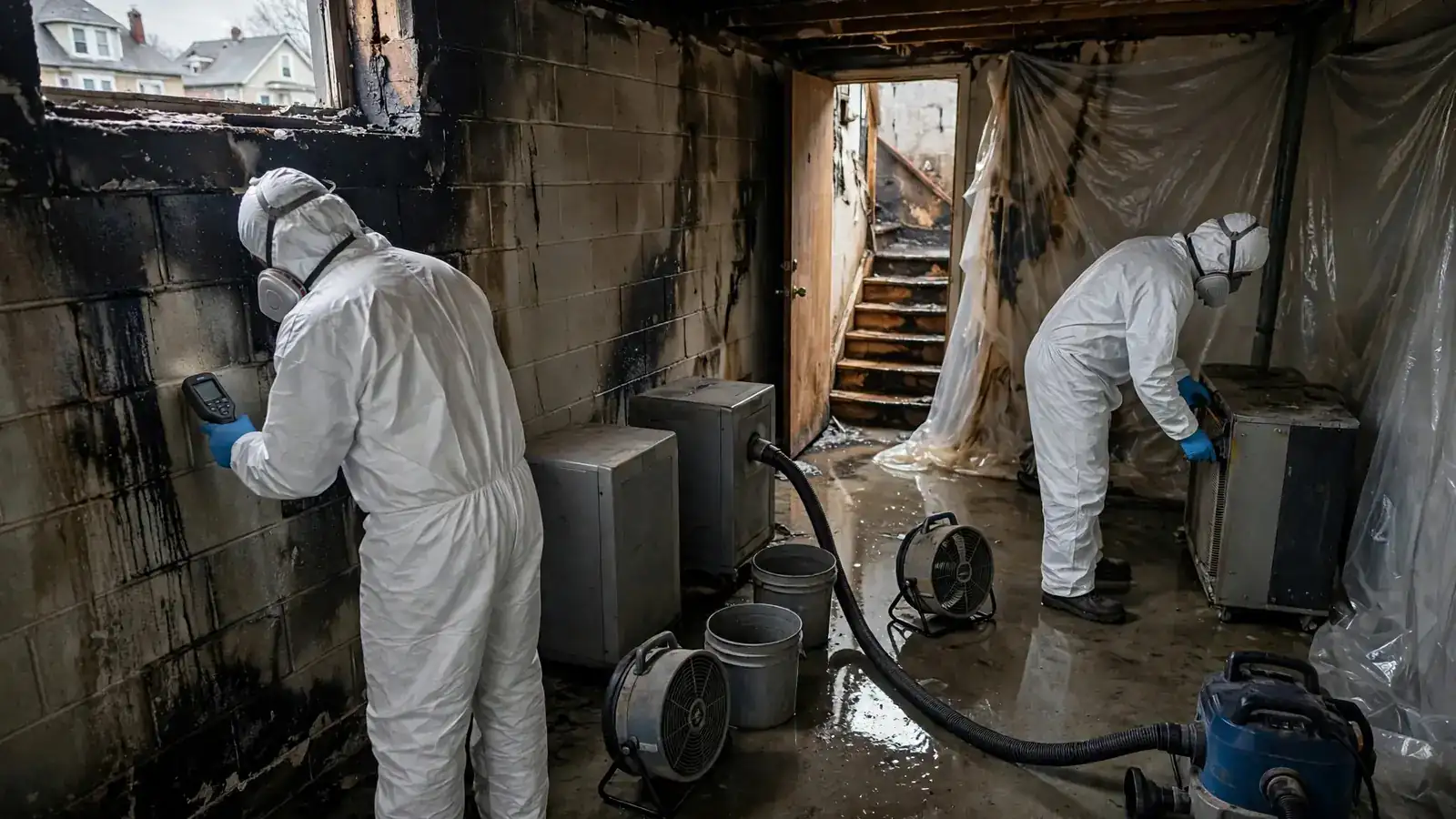
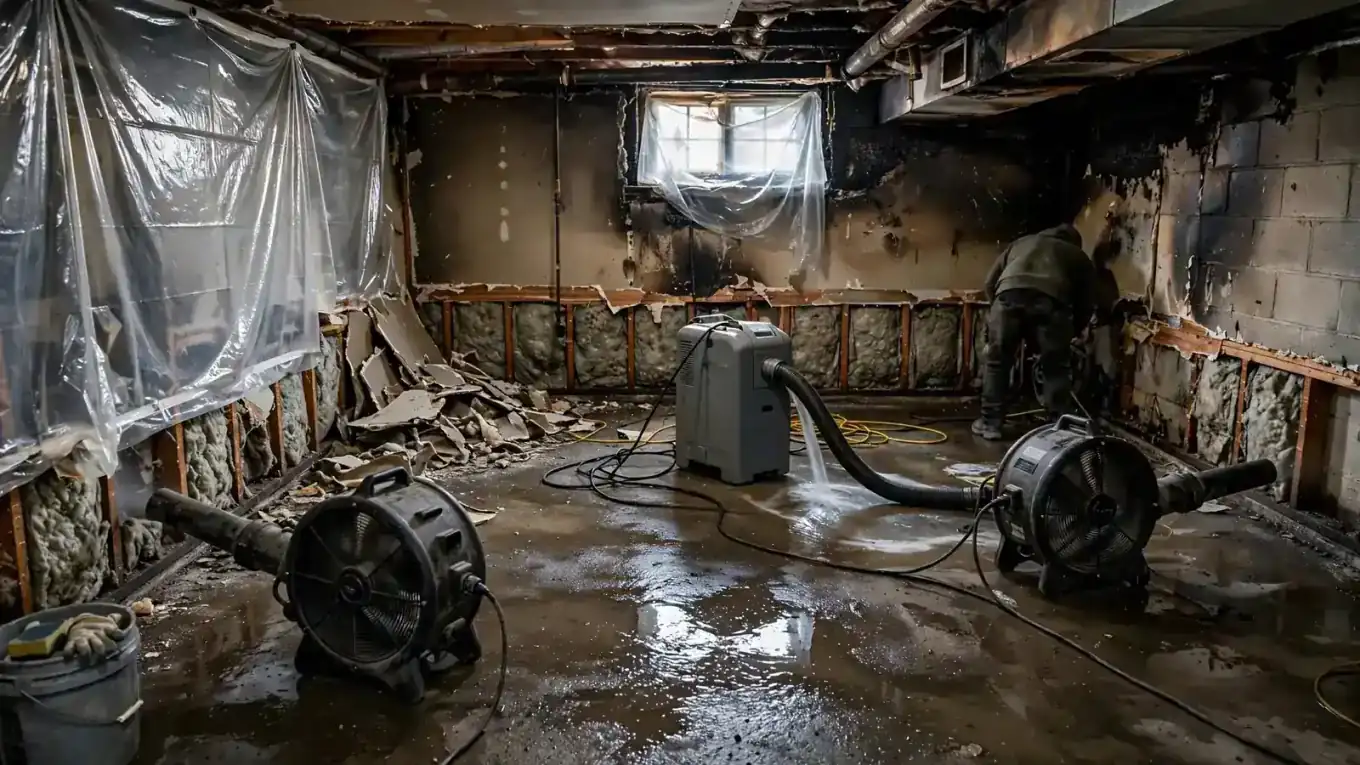
If the house is cold, the first job is heat or draining the plumbing. Then standing water is pumped out. Wet carpet and pad are pulled up, and wet drywall in finished basements is cut above the waterline. Dehumidifiers and air movers are set up.
Drying is checked with moisture meters, not by touch. The IICRC S500 standard guides how professionals extract water and dry a structure [2]. Ask for the daily readings so you can see the progress.
Local factors
Firefighting water in a Minneapolis house
Nearly every older house in the city has a full basement, and nearly all the water used upstairs ends up there. Stone and block walls soak it up. Floor drains help only if debris has not blocked them.
Plaster on wood lath can hold water before it lets go, and oak floors swell and cup when wet. Laundry chutes and radiator pipes give water extra routes between floors. You can see how this plays out in water damage in Nokomis.
Weather matters in every season. Winter brings freezing, while damp basements in spring and summer make mold more likely [4]. The National Weather Service office for the Twin Cities posts the cold warnings that shape the first steps [5].
Measuring
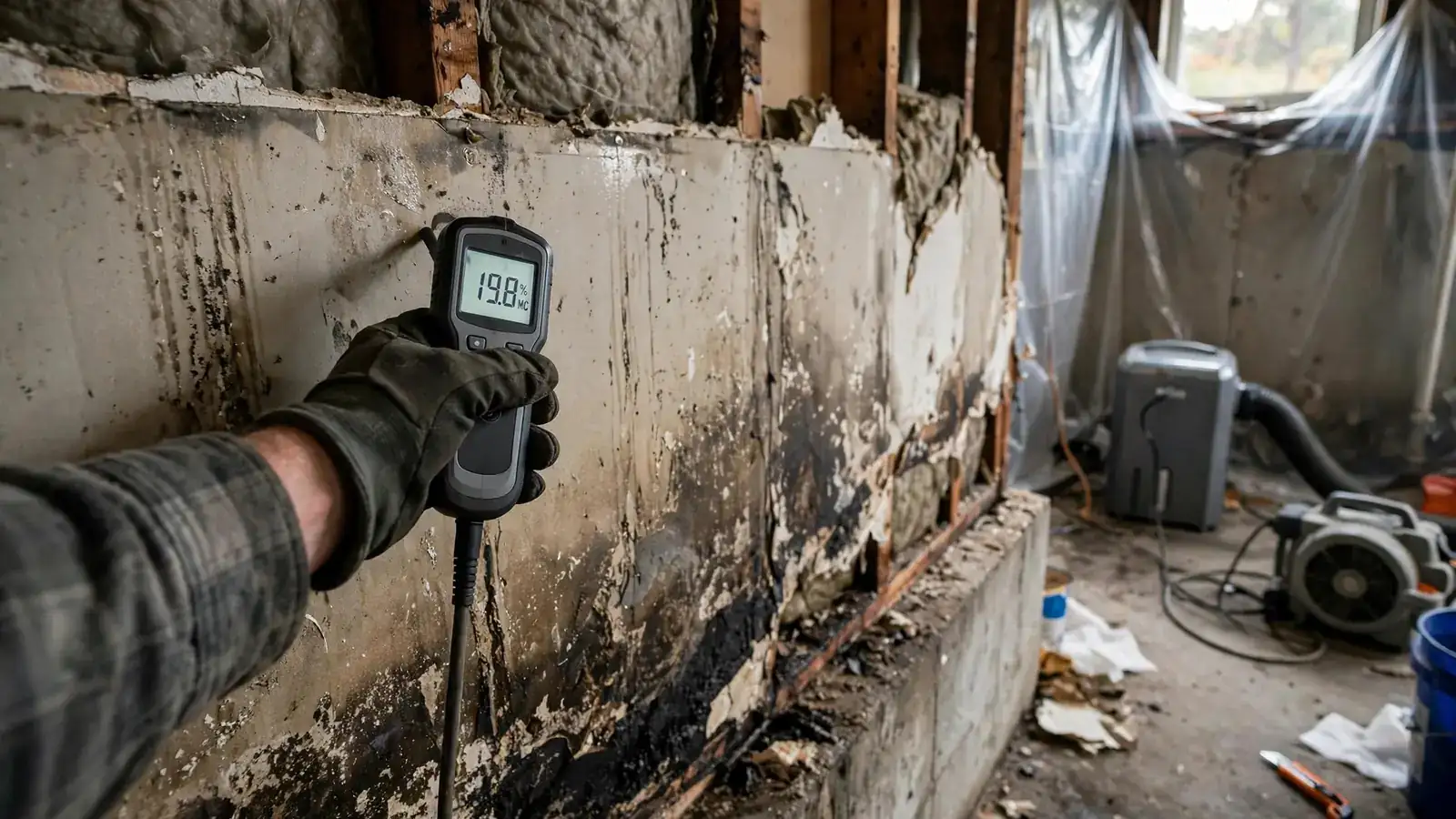
Checking walls and floors with a moisture meter
A wall can feel dry and still hold water inside. Moisture meters show where the damp is and when it is gone.
Crews take readings at the start, mark the wet areas and check them each visit. Equipment stays until the readings match dry parts of the house.
- Readings at the start
- Wet areas marked
- Checked each visit
Basements
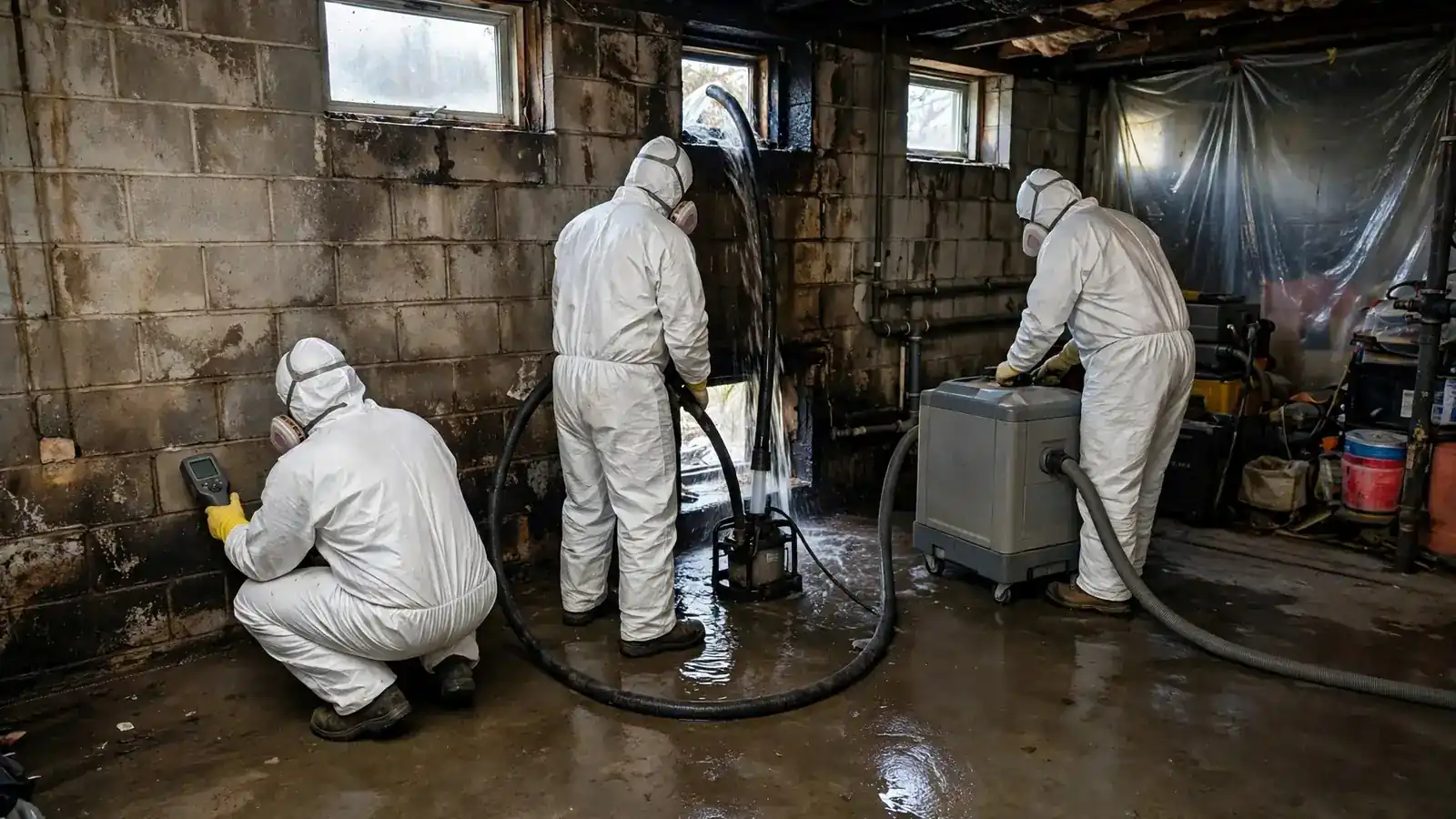
Pumping out a flooded basement after a fire
Standing water is pumped out first, and the floor drain is cleared. Then belongings are sorted into what can dry and what has to go.
Furnaces, boilers and water heaters that got wet are inspected before they run again. Read the full method on firefighting water damage.
- Pump and clear the drain
- Sort belongings
- Equipment inspected
Next steps
Once the water is out and the drying starts
Pumping and drying are the start. The full method for plaster, hardwood and basements is on our firefighting water damage page. Openings in the house should be covered first, through urgent board-up and tarping if needed.
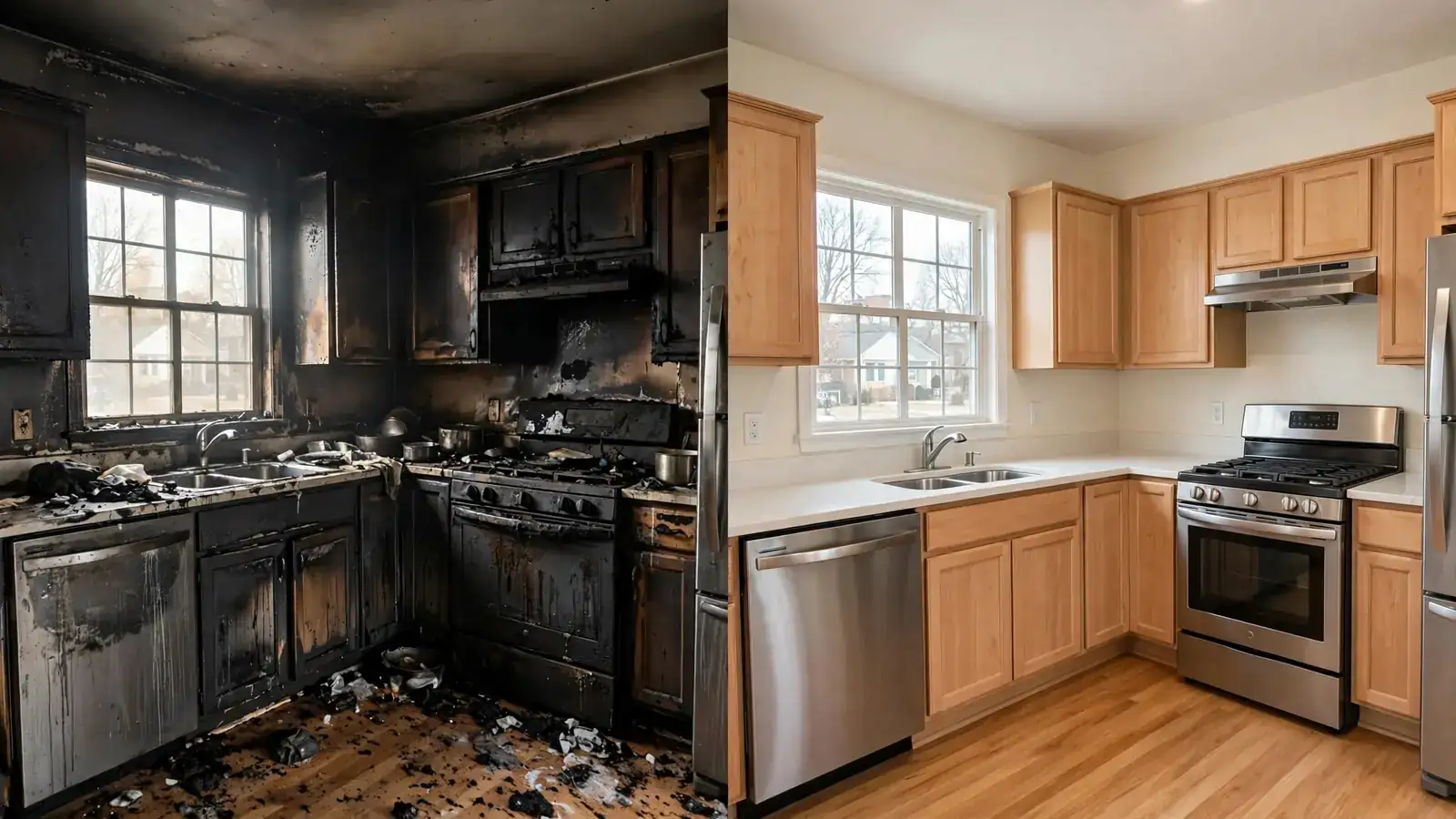
Wet rooms often carry smoke residue too, so the plan usually includes cleaning once things are dry. Our guide on staying in a house after a fire explains when damp and cold make it a reason to leave.
Keep the moisture readings, photos and receipts in one place [6]. For local detail, see water damage in Camden.
Drying an older house takes patience. Stone foundation walls, thick plaster and old-growth floorboards give up water slowly, so equipment may run longer than you expect. Resist the urge to close up walls or lay new flooring early. Once the readings are normal, the crew can decide what stays, what is repaired and what has to be replaced, and the rebuild can be planned with fewer surprises. Keep the drying log with your claim papers, since it shows the adjuster when each area was finally dry.
Avoid
Mistakes that slow drying down
- Using a household vacuum on waterOrdinary vacuums are not made for water and can be an electrical hazard.
- Leaving wet carpet in placeCarpet and pad hold water against the floor and slow drying of the wood beneath.
- Turning the heat up highHeat without dehumidifiers can push moisture into other rooms. Follow the crew's plan.
- Painting before the walls are dryTrapped moisture causes peeling and mold behind new paint.
FAQ
Questions about urgent water after a fire
There are inches of water in my basement. Is that normal after a fire?
It is common. Firefighting water runs down through the house and collects in the basement. It needs pumping and drying soon to limit damage and mold.
Will my hardwood floors be ruined?
Not always. If drying starts promptly, many boards flatten out. Floors that stay cupped or badly stained may need some boards replaced.
Can the furnace in the wet basement be used?
Not until a qualified heating contractor has inspected it. Ask about temporary heat to protect the pipes until then.
How long will the fans and dehumidifiers run?
Until moisture readings are back to normal. Older stone basements can take longer. The crew should show you the readings.
Sources and citations
- [1]U.S. EPA: A brief guide to mold, moisture and your home
- [2]IICRC: S500 Standard for Professional Water Damage Restoration
- [3]U.S. Fire Administration: After a fire
- [4]Minnesota Department of Health: Mold and moisture in homes
- [5]National Weather Service: Twin Cities forecast office
- [6]Minnesota Department of Commerce: Disaster Information Center