How do I cover a broken window after a house fire in winter?
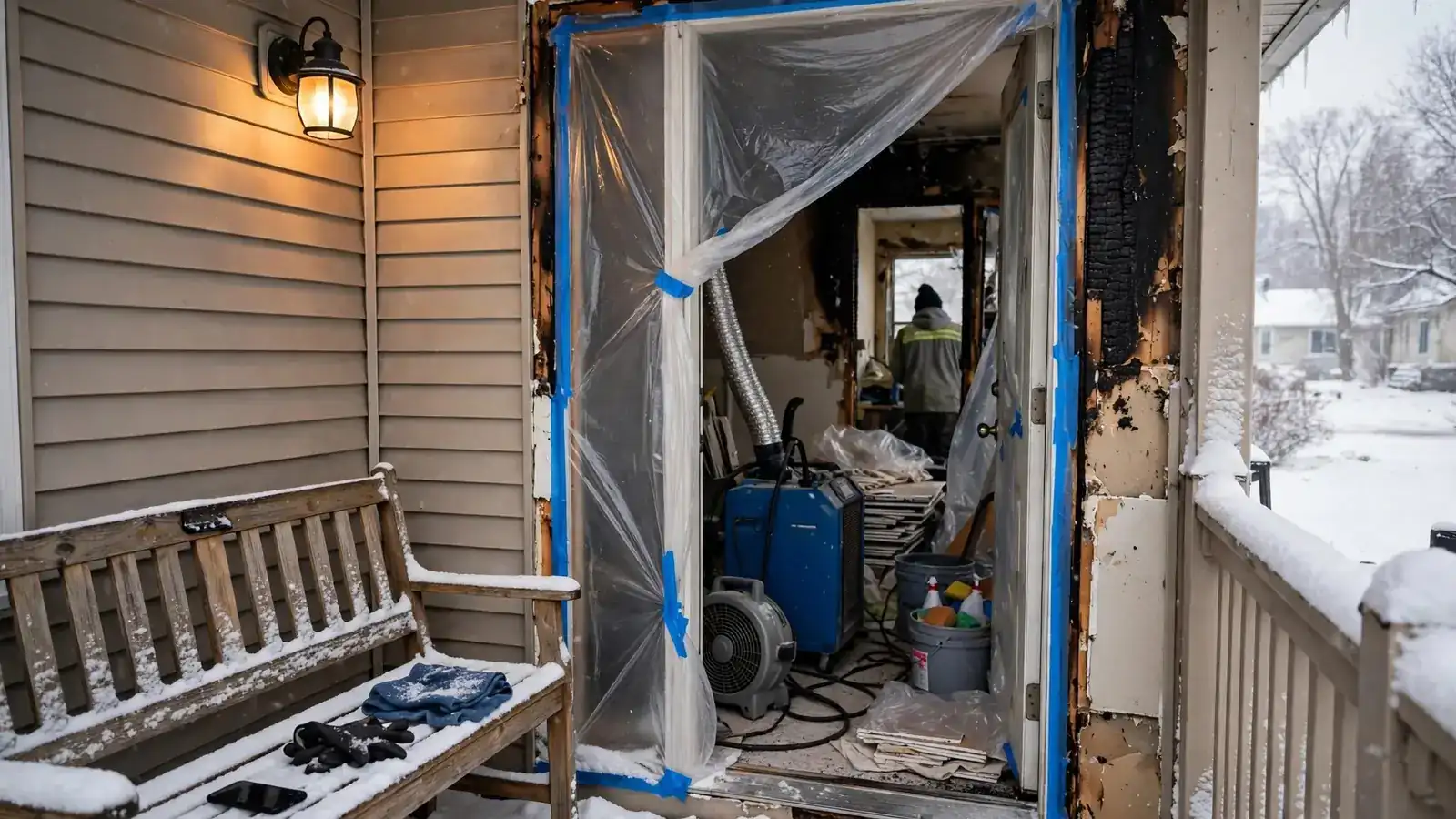
Leave it to a crew with plywood and the right fasteners. Panels are fixed to the frame, not the sash, and gaps are sealed to hold heat in. Photograph the opening first. In freezing weather, covering openings and protecting the pipes come before any cleaning.
Key facts: Emergency Board-Up
- A fire-damaged roof or floor may not hold weight, so roof work needs the right equipment [1].
- Board-up and tarping are temporary steps that hold off further damage while repairs are planned.
- The Twin Cities National Weather Service office issues the snow, wind and cold warnings that affect covers [2].
- Keep records of every step after a loss, as the Minnesota Department of Commerce suggests [3].
Right away
Securing the house in the first hours
- 1
Stay off the roof and ladders
A roof can look sound from the street while the boards beneath are charred [1]. Leave roof work to a crew.
- 2
Photograph each opening from outside
Windows, doors, the roof and the garage. Pictures taken before covering help your claim [3].
- 3
Count the broken windows and doors
Include basement windows and storm windows. The number tells the crew how much material to bring.
- 4
Take out what you cannot replace
If the fire department allows it, remove papers, medicines and valuables before the house is closed up.
- 5
Tell the contractor if the heat is off
In cold weather, closing openings and keeping the pipes above freezing go together.
Why tonight
Openings that should be covered tonight
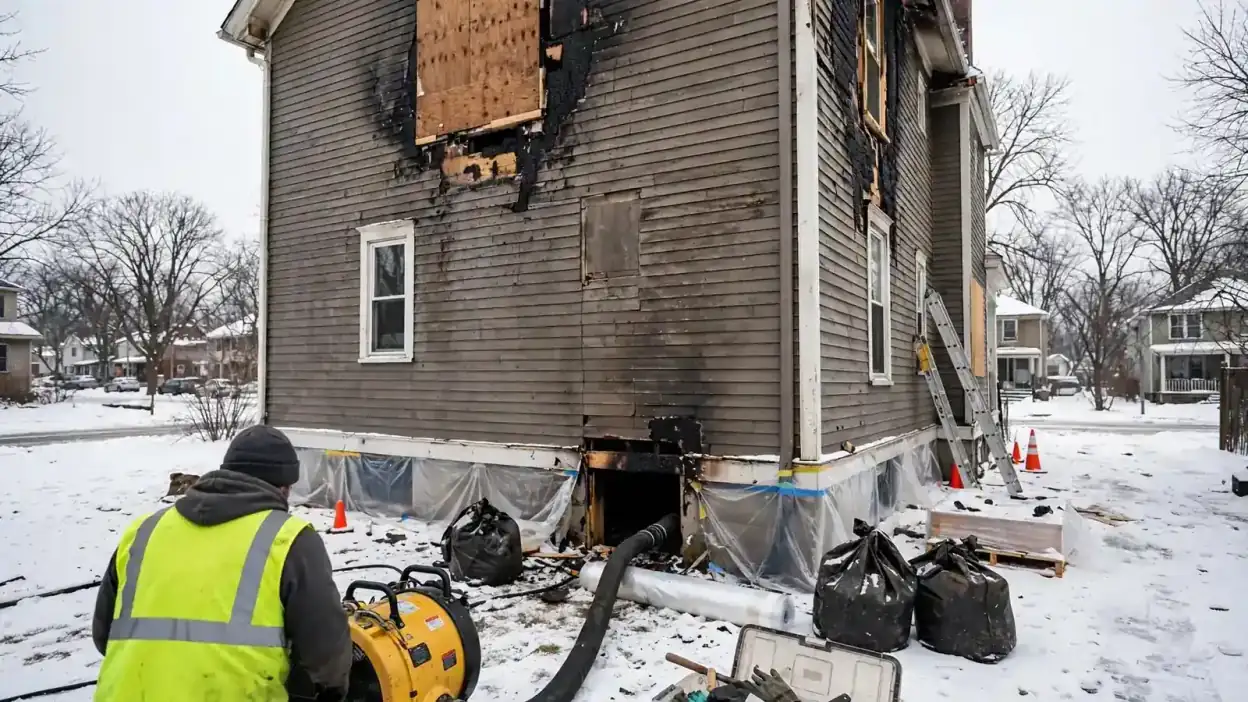
A hole cut in the roof
Firefighters may vent the roof. Snow and rain fall straight in.
Read moreA forced front or back door
The house cannot be locked, and heat pours out.
Read moreBroken basement windows
Cold air reaches the pipes, boiler and water heater first.
Read moreA burned alley garage
Openings in the garage and the back of the house need covering too.
Read more
The call
How urgent board-up work is arranged
When you call, an independent local contractor talks with you on that call. They will ask how many openings there are, which floor they are on, whether the roof was vented and whether the house has heat. If you live in a duplex or have an enclosed porch, say so.
At the house, the crew usually covers the lowest and easiest openings first, then the upper windows and the roof. Plywood is fixed to the frames. Roof openings get plywood or tarps held with battens. In cold weather, foam board may go behind the plywood to hold heat.
Before leaving, the crew should agree with you on one lockable entry point and who holds the key. Ask for photos of each opening once it is covered.
Minnesota weather
Snow, wind and ice on temporary covers
A tarp that sheds summer rain can fail under wet snow. Snow piles up, sags the cover and pulls the fasteners loose. In winter, many crews put plywood under the tarp over roof openings so it can carry the weight.
Wind is the other risk. Loose edges flap and tear. The National Weather Service office for the Twin Cities posts the snow and wind forecasts that help time checks and repairs [2]. After a storm, look at the covers from the ground and call about anything that moved.
Story-and-a-half houses and tall Victorians, like many in board-up work in Kenwood, have dormers and steep roofs that need ladders, brackets or lifts.
Garages
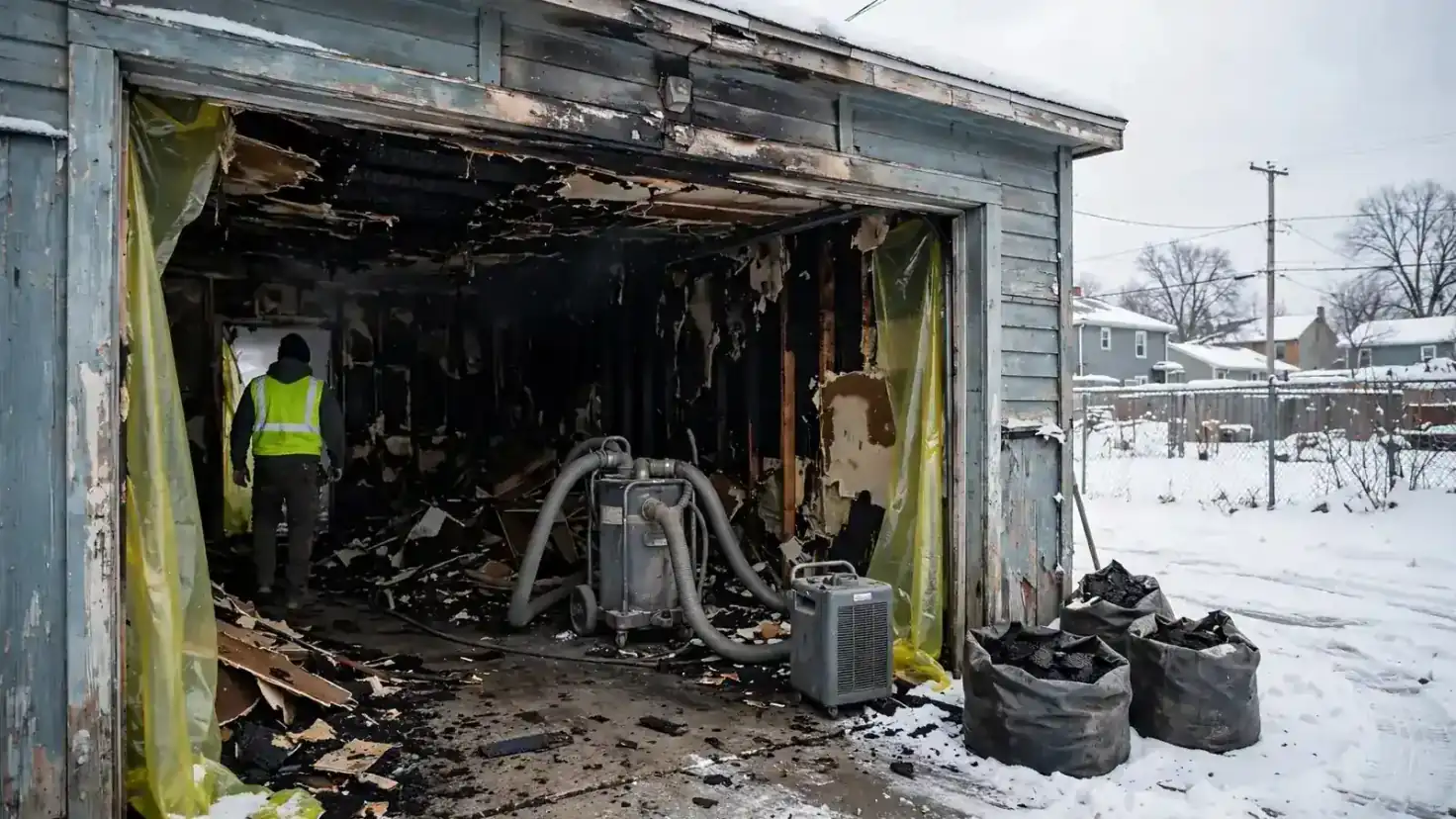
When the fire was in the alley garage
Detached garages line Minneapolis alleys. A garage fire can break windows on the back of the house and leave the garage itself open to the alley.
Both get covered. The garage door opening and any broken windows are boarded so the space can be locked. The back of the house is checked for cracked glass and scorched trim.
- Garage openings boarded
- Back of house checked
- Alley side secured
Upper floors
Dormers and upstairs windows after a fire
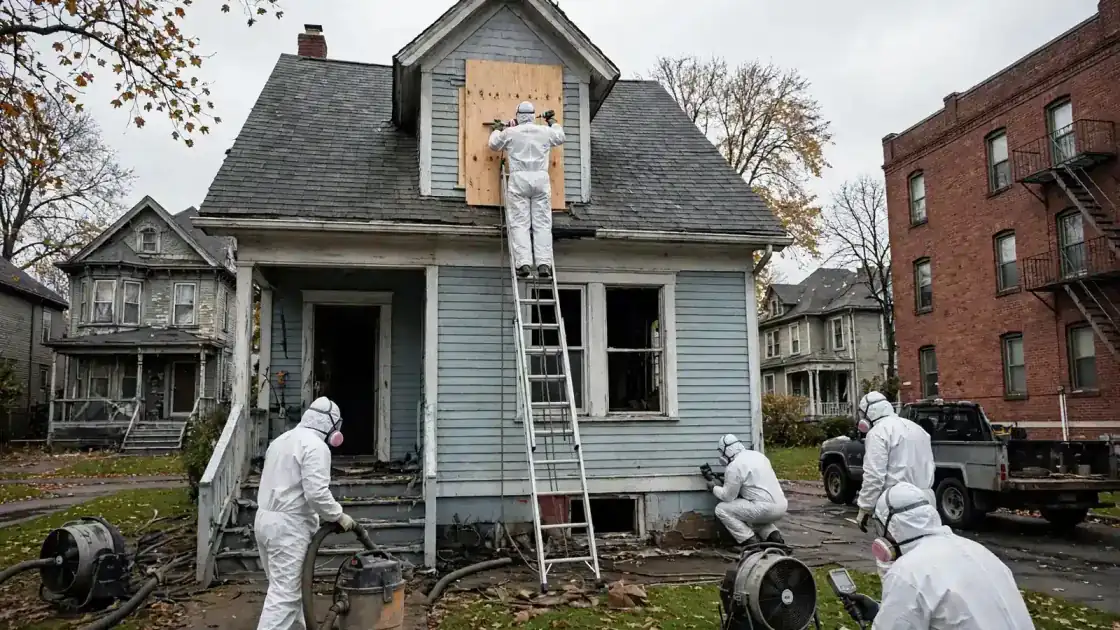
Heat breaks upper windows first, and dormers are hard to reach. Crews work from ladders set on firm ground, never from a damaged roof.
Panels are cut to fit and fixed to the frame so old sashes are not damaged. Intact storm windows may be removed and stored safely before covering.
- Ladders on firm ground
- Panels fixed to frames
- Storm windows stored
Next steps
What follows once the openings are covered
Board-up and tarping hold the house while repairs are planned. The full approach, from materials to winter checks, is on our board-up and tarping service page. With the house closed, drying and cleaning can begin.
Water often comes in with the fire and the weather, so see urgent firefighting water damage if the basement is wet. Our guide on whether it is safe to stay helps you decide where to sleep tonight.
Neighborhood housing changes the job. Tall Victorians and porches are common in board-up work in Linden Hills, while compact bungalows are typical further south.
Covers are temporary by design, so the next step is planning the permanent repairs. Windows, doors and roof sections that were boarded will be measured and replaced later. If your house has original wood windows or decorative trim, keep the damaged pieces where you can. They help a carpenter match profiles when the rebuild begins, and some may be repairable rather than replaced.
Afterward
Looking after a boarded house
- Visit when you canLook for loose panels, sagging tarps and signs that someone got in.
- Clear snow from the ground onlyNever climb onto a covered roof. Call the contractor if snow builds up.
- Tell a neighborSomeone nearby who knows the house is empty can tell you if anything changes.
- Keep the paperwork togetherPhotos, dates and the list of materials belong in one folder for your claim [3].
FAQ
Questions about urgent board-up and tarping
Can I just tape plastic over the broken window myself?
Plastic alone tears in wind and does not keep anyone out. If you do it as a stopgap, stay on the ground and call for proper boarding soon.
Will boarding damage my old wood windows?
It should not. Panels are fixed through the frame rather than the sash, and contact points can be padded. Ask the crew how they plan to fix them.
Does the insurer expect the house to be secured?
Policies usually expect you to take steps that limit further damage. Covering openings is one of the most common. Keep the photos and the bill of work.
How long do boards and tarps stay up?
Until the repairs that replace them are done. That can be weeks. The covers should be checked after storms and heavy snow.