How fast does soot need to come off after a house fire?
As soon as the house is safe to enter. Soot is acidic and oily, so it stains plaster, varnish and metal more deeply the longer it sits. Careful dry removal in the first days usually lifts most of it, while wiping it with water tends to set it for good.
Key facts: Emergency Soot Removal
- Soot and firefighting water may hold substances that harm health [1].
- Professional soot work follows the IICRC S700 standard for fire residue [2].
- Suspect plaster and textured coatings in older homes should be tested for asbestos before they are disturbed [3].
- Pre-1978 paint may contain lead, so sanding or scraping sooty woodwork needs lead-safe methods [4].
Right now
Five things to do about fresh soot today
- 1
Keep hands and cloths off every sooty surface
A single wipe can push soot into plaster pores and leave a grey streak. Leave walls, ceilings and lampshades as they are.
- 2
Shut the furnace fan off
A running blower carries loose particles into every room. Keep forced-air systems off until the ducts and filter are checked.
- 3
Close doors to the cleaner rooms
Closed doors slow the spread. A towel at the gap under the door helps too.
- 4
Walk as little as you can on sooty floors
Foot traffic grinds residue into hardwood finish and carries it to the stairs. Use one path in and out.
- 5
Photograph the soot in good light
Take pictures of ceilings, trim, windows and the fireplace wall before cleaning starts. Your adjuster will want them [5].
Warning signs
When soot needs a same-week response
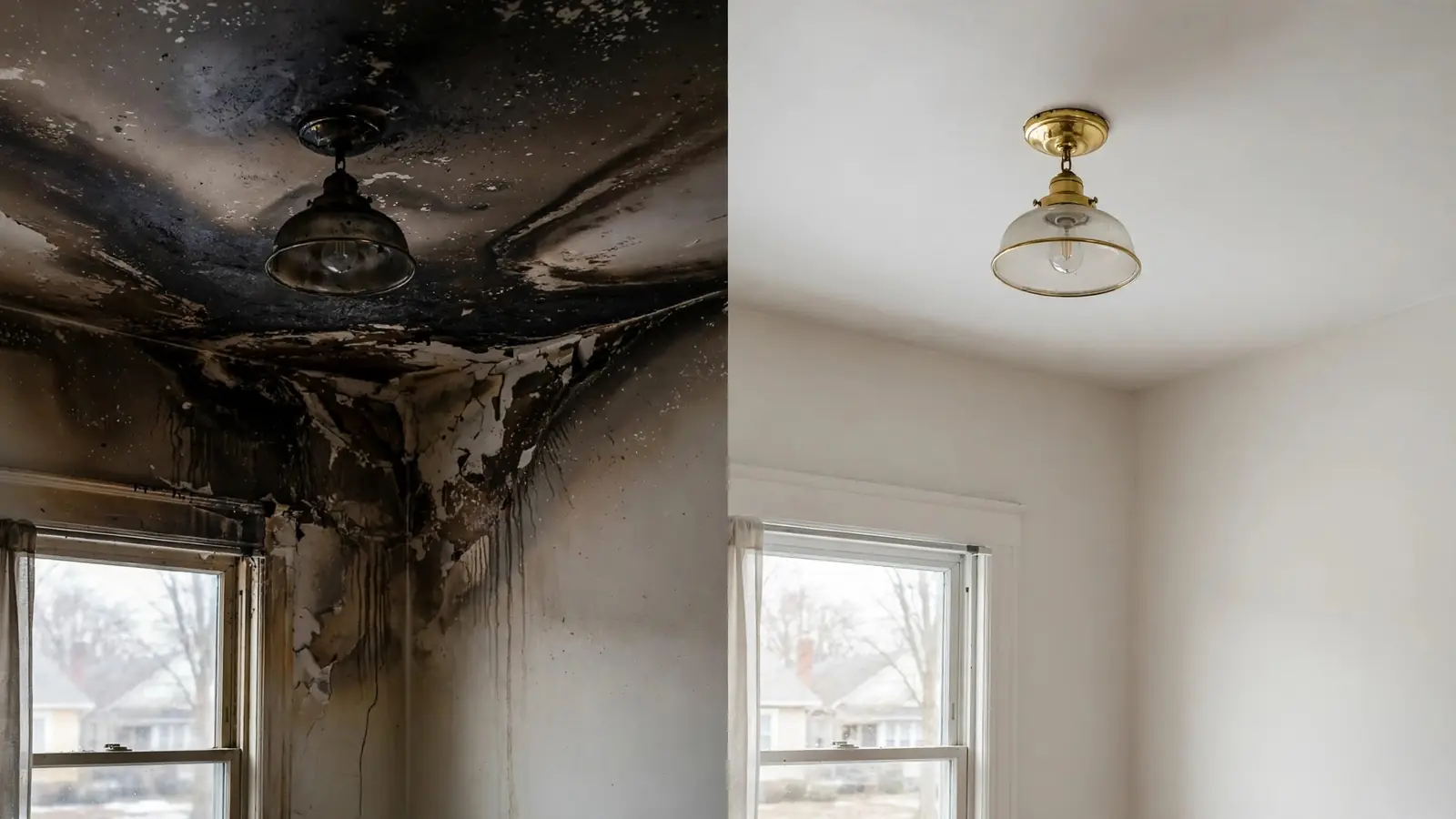
Greasy black streaks
Oily soot from plastics and furniture smears at a touch and sets quickly.
Read moreSoot on glass and metal
Acidic residue can etch windows and dull hardware if it stays on.
Read moreHanging soot webs
Black strands on ceilings show heavy residue. Brushing them leaves long marks.
Read moreSoot near people who sleep there
Fine particles are easy to breathe in. Bedrooms need attention first.
Read more
The call
How an urgent soot visit usually goes
You call, and an independent local contractor talks with you on that same call. They will want to know what burned, how far the soot spread and whether it lifts dry or smears. They may also ask about fireplaces, radiators and leaded glass, because those take extra care.
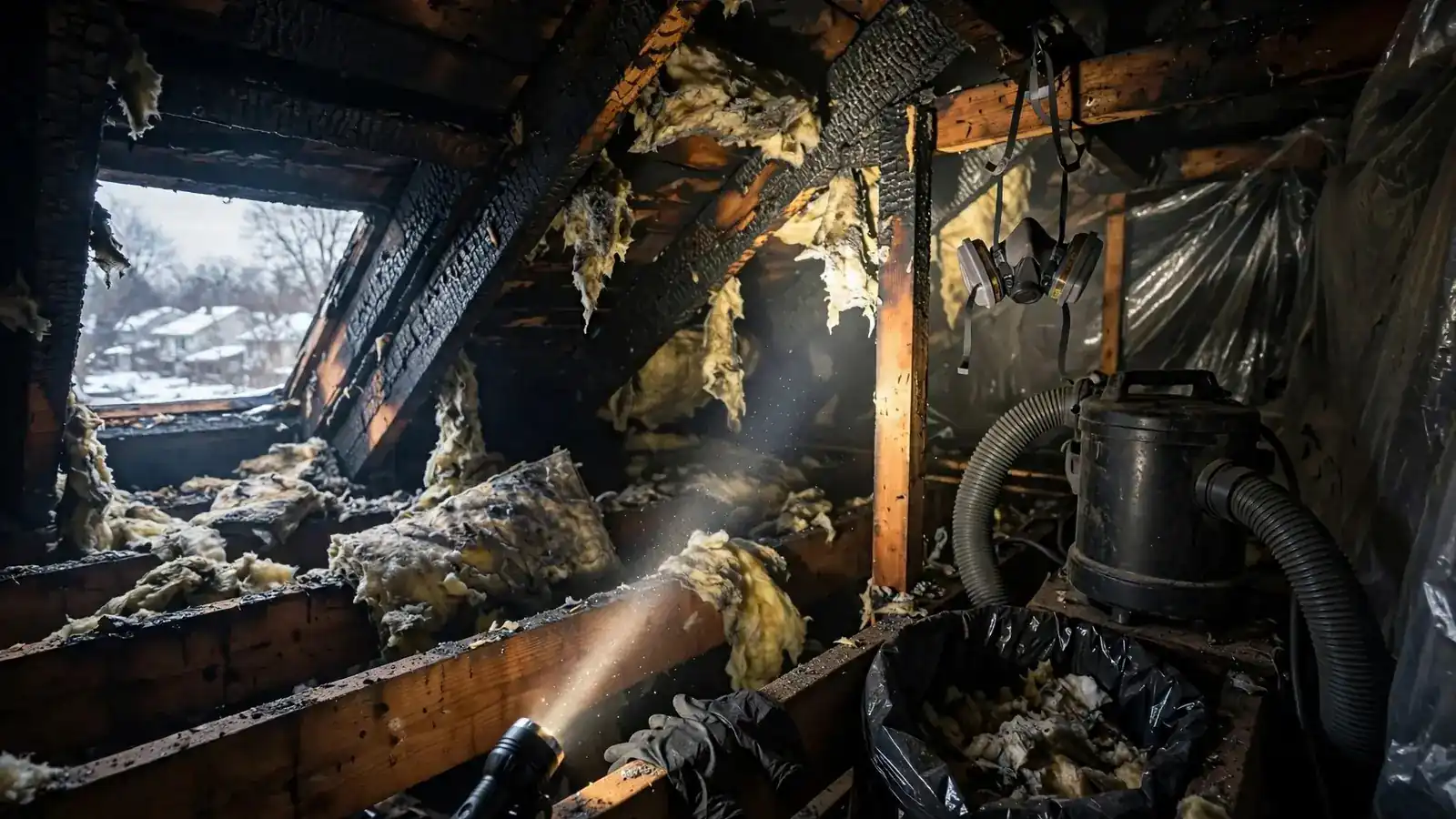
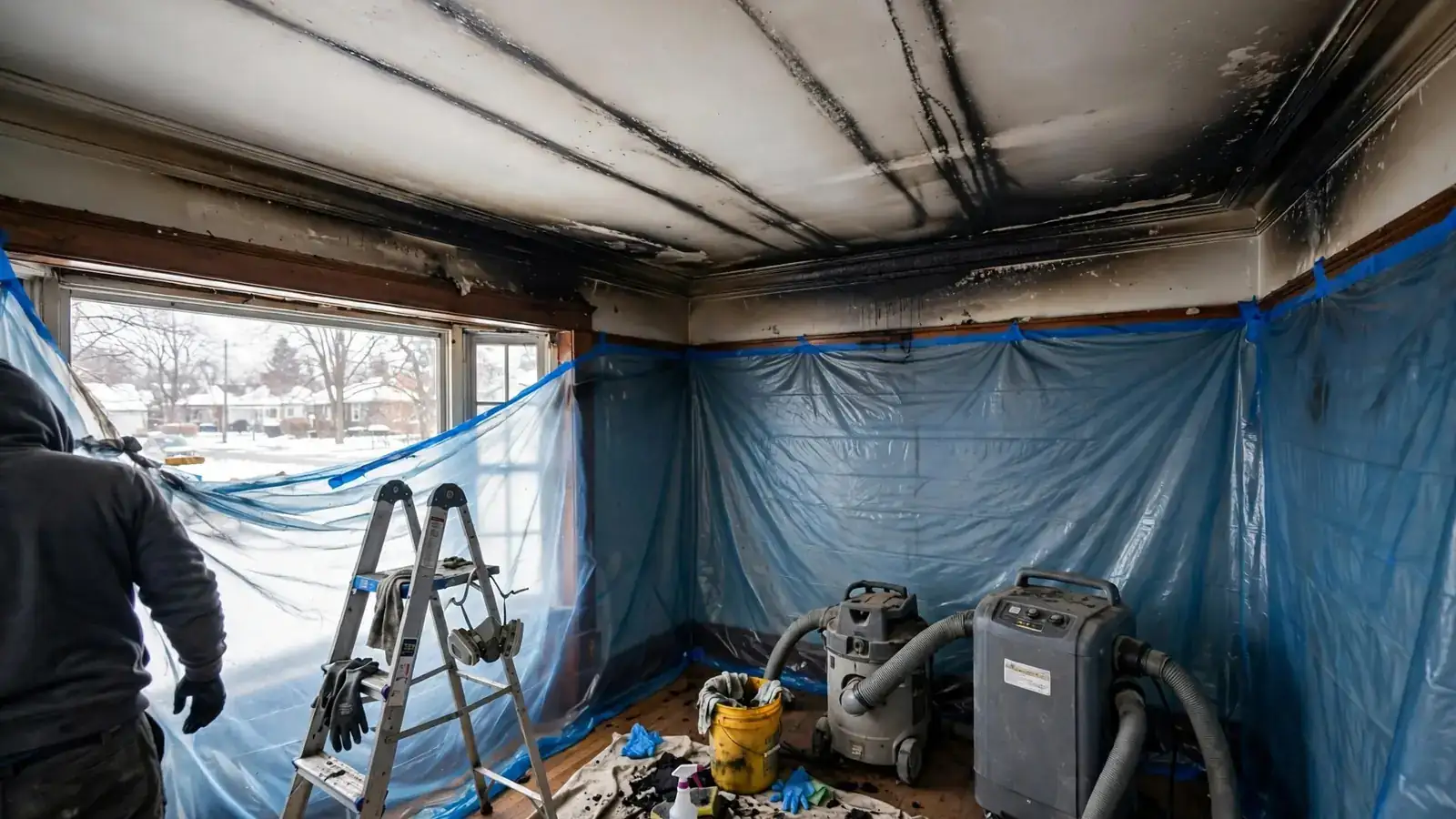
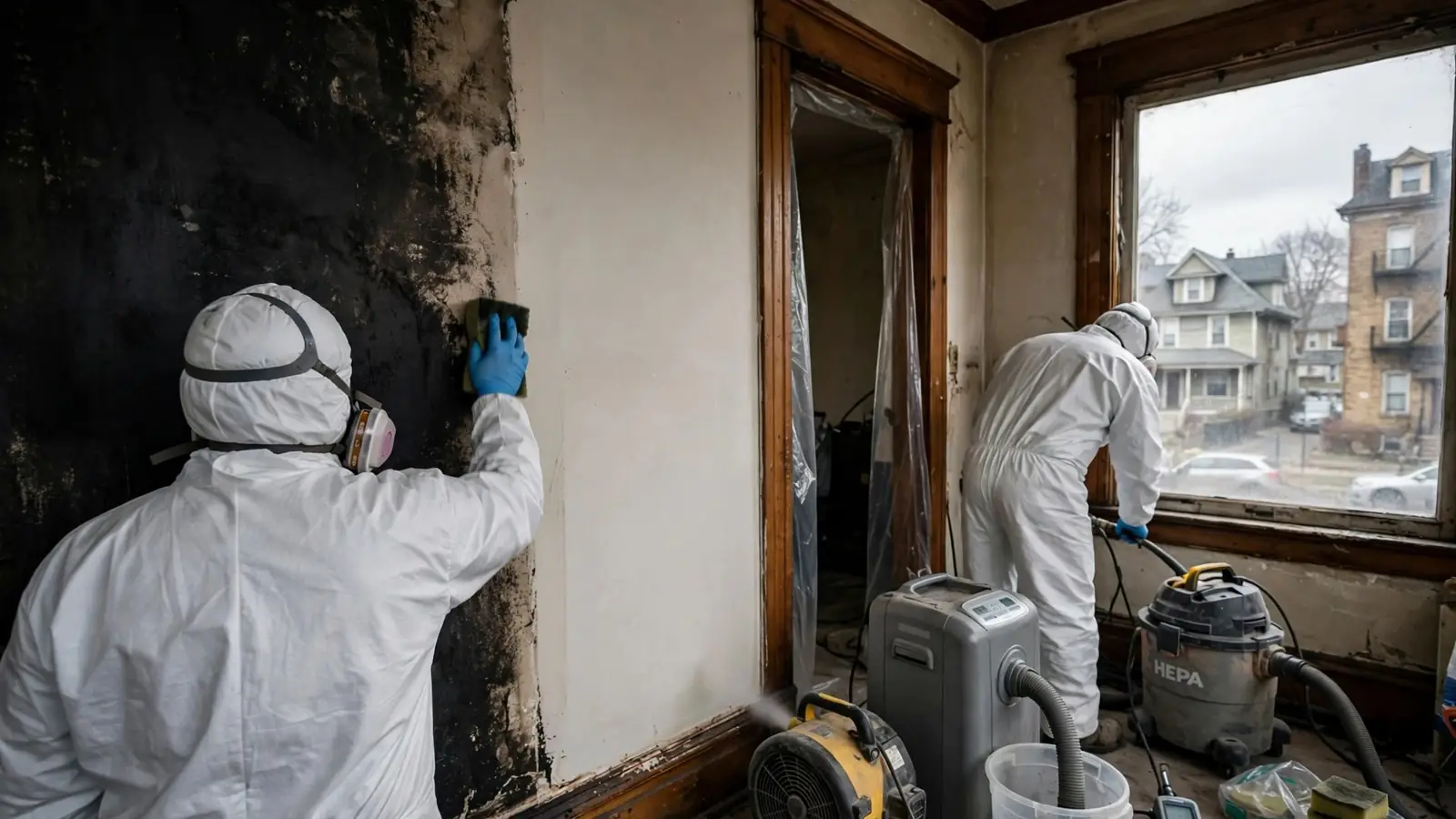
On the first visit, the crew usually protects the house before cleaning anything. Plastic goes over doorways to keep soot out of clean rooms. HEPA air scrubbers start pulling particles from the air. Then the crew tests a small area on each surface to see how the soot behaves.
Dry removal comes first: HEPA vacuums with soft brushes, then dry chemical sponges on walls and ceilings. Wet cleaning follows only where it is needed. This order follows the IICRC S700 approach to fire residue [2]. Ask the crew to show you a test patch before they move on to a whole room.
Local homes
Soot in Minneapolis houses built a century ago
Plaster ceilings, carved oak trim and brick fireplaces are common across the city, from soot cleanup in Kenwood to the bungalows of Nokomis. They are durable, but they do not like harsh chemicals or hard scrubbing. Careful work early saves more of the original finish.
Ceilings under cold attics often show dark lines over the joists, because soot settles more on cooler surfaces. In winter, the house may also be cold when the crew arrives, and cleaning products work poorly on cold surfaces. Temporary heat and protecting the pipes may come first.
Story-and-a-half houses send soot up the stairwell into sloped upstairs rooms and knee-wall storage. Those spaces are easy to miss. Make sure they are on the list.
Fireplace walls
Brick, tile and mantels after a fire
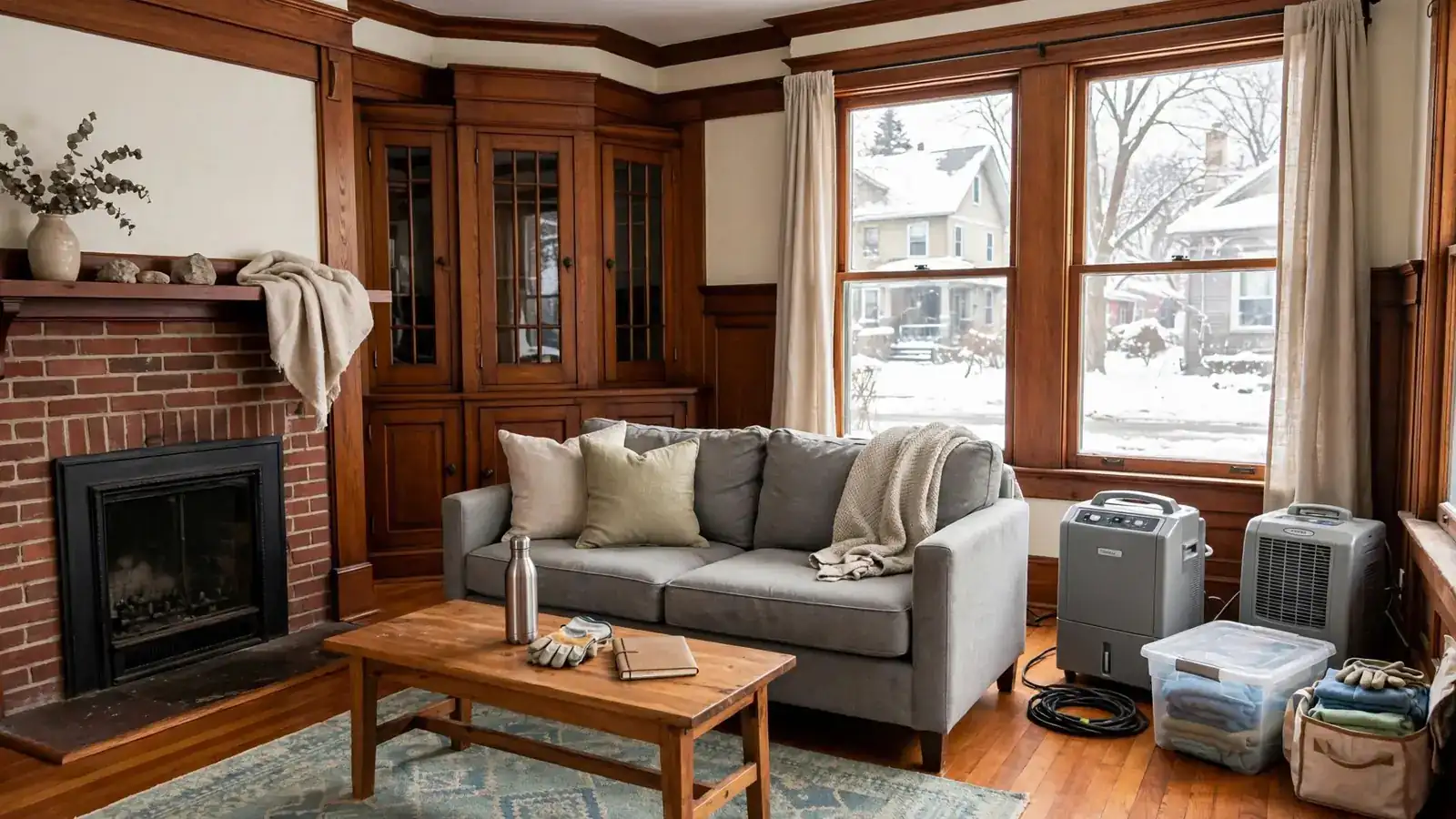
The fireplace wall often takes the heaviest soot, whether the fire started there or smoke backed up from the chimney. Porous brick and old tile soak residue in. Masonry cleaning works best before the soot has time to settle deep.
Do not light the fireplace again until the chimney has been inspected. Wood mantels and built-ins beside the fireplace are cleaned gently so old varnish is not stripped.
- Chimney checked first
- Masonry cleaned early
- Varnish protected
Dry first
Lifting fresh soot from plaster without smearing
Dry sponges pull loose soot off painted plaster in long, even strokes. Each pass picks up residue rather than pressing it into the surface. On many walls, this step removes most of the visible soot.
What remains is then cleaned with products matched to the surface, and sealed before paint if a stain or odor stays. Our page on soot removal in Powderhorn shows how this works in older homes.
- HEPA vacuum
- Dry sponge
- Targeted wet clean
- Seal if needed
After the urgent visit
What comes after the first soot cleanup
The first visit stops the soot from spreading and spoiling more surfaces. The full job follows the method set out on our soot removal service page: room-by-room cleaning, sealing where stains remain, and painting last.
Smoke and soot usually travel together, so plan for both. Our page on emergency smoke damage cleanup covers the wider house, and the soot on walls and ceilings guide explains what the marks on your plaster mean.
Keep a record of what was cleaned and when. Photos before and after each room help the adjuster see the work [5]. Ask for a written list of anything removed and the reason. Neighborhood details are on soot removal in Nokomis.
Common mistakes
Things that make fresh soot harder to remove
- Household sprays and wipesMost of them add moisture and spread the residue into a thin film.
- Painting over sootPaint will not hold well on residue, and the stain and smell often bleed back through.
- Running a home vacuumOrdinary vacuums blow fine particles back into the room. Use HEPA equipment only.
- Washing smoky clothes at homeHome machines can set soot and odor into fabric. Ask about textile cleaning first.
FAQ
Urgent soot questions people ask after a fire
Can I start cleaning the soot myself tonight?
It is better not to. Wiping or washing fresh soot usually smears it deeper. Leave it for dry removal with the right tools, and keep people out of the sooty rooms.
Is it safe to breathe in a room with soot on the walls?
Soot particles are fine and easy to inhale. Keep children, older relatives and anyone with asthma out of those rooms until the air has been cleaned.
Will soot ruin my plaster ceilings?
Usually not, if it is removed carefully and soon. Most plaster cleans well with dry methods first. Stains that stay are sealed before painting.
Does urgent soot work include the attic and basement?
It should. Soot rises into attics and drifts into basements. Ask the contractor to inspect both, and to check knee-wall storage in a story-and-a-half house.